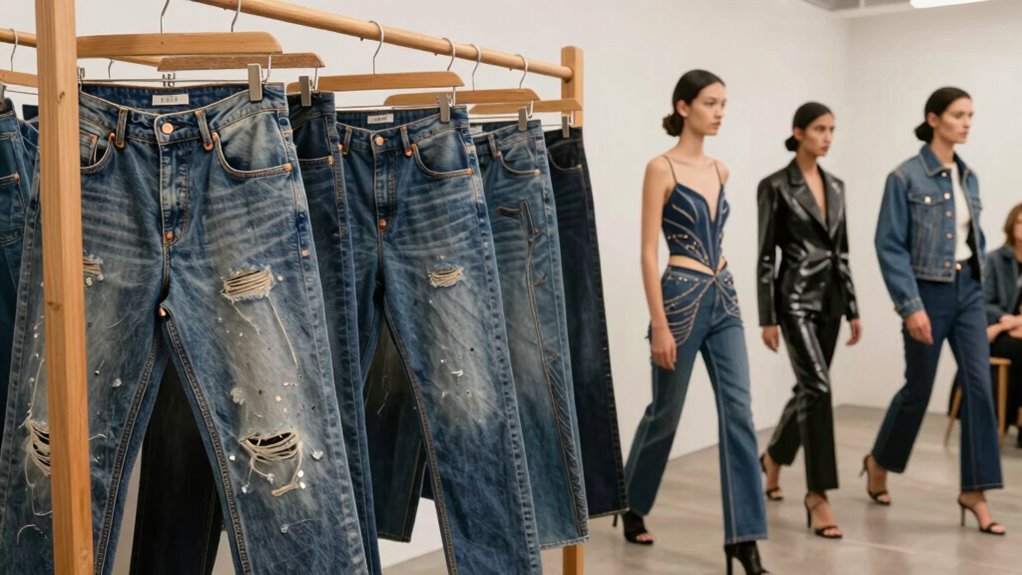

Denim started as tough, functional workwear in 17th-century France, with innovations like rivets and mass production making it essential for laborers. After WWII, it became a symbol of youthful rebellion and fashion, evolving through styles from straight to skinny and distressed. Today, designers elevate denim with high-fashion treatments and sustainable practices. If you explore further, you’ll discover how denim continues to blend tradition with innovation on and off the runway.
Key Takeaways
- Denim originated in 19th-century France as durable workwear, initially used for overalls and overgarments.
- Innovations like rivets and rope-dyeing in the 19th and 20th centuries enhanced denim’s strength and colorfastness.
- Post-WWII, denim shifted from functional workwear to a symbol of youth rebellion and cultural expression.
- Fashion trends from the 1950s to the 2000s transformed denim into diverse styles, from slim fits to distressed and oversized looks.
- Today, sustainable innovations and high-fashion collaborations have redefined denim as both eco-friendly and runway-ready.
The Origins of Durable Twill Weave and Its Roots in 17th-Century France

The origins of the durable twill weave that became denim trace back to 17th-century France, specifically Nîmes. You see, weavers there developed a sturdy fabric called “serge de Nîmes,” using a twill weave pattern known for its strength and durability. They aimed to replicate the “jean” fabric from Genoa, Italy, but their version was coarser and of higher quality. This fabric was mainly used for overgarments like smocks and overalls, valued for its resilience in tough work environments. The name “de Nîmes” means “from Nîmes,” highlighting its geographic roots. Over time, this fabric gained recognition for its toughness, laying the foundation for what would eventually become the iconic denim used worldwide today. Cultural heritage from the region played a role in preserving traditional weaving techniques that contributed to the fabric’s durability. Additionally, the twill weave pattern itself is a key factor in the fabric’s exceptional strength and longevity.
Pioneering Innovations: The Riveted Jean and the Birth of Workwear Denim
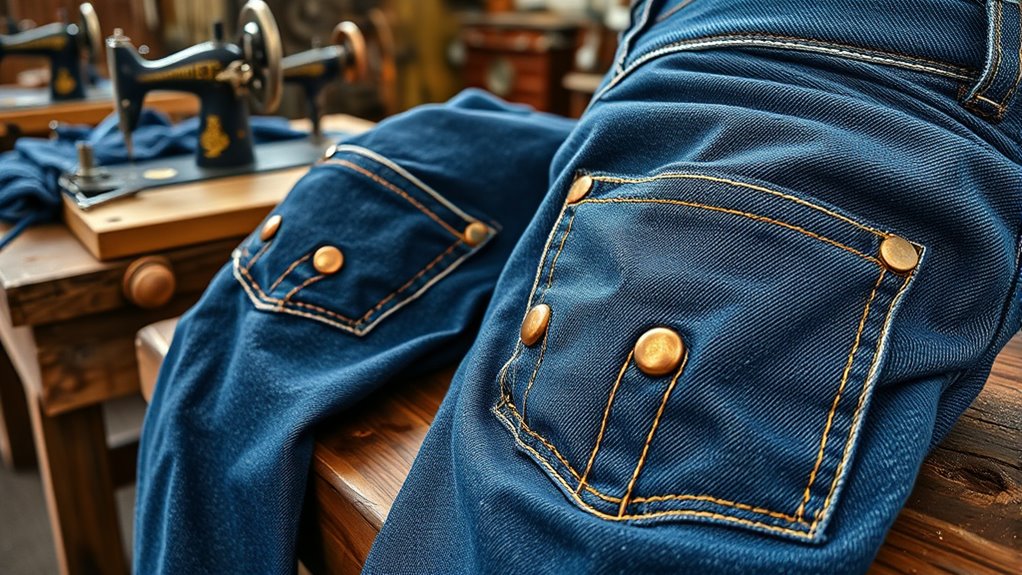
Innovations in denim craftsmanship took a significant leap forward in the 19th century when Levi Strauss and Jacob Davis teamed up to create the first riveted jeans. Strauss, a dry-goods merchant, supplied fabric, while Davis, a tailor, sought stronger reinforcement for workers’ rugged pants. Davis added copper rivets at stress points, especially pockets and flys, to prevent tearing. They patented this design in 1873, revolutionizing workwear durability. You now hold a pair of jeans that could withstand the toughest labor, thanks to this pioneering technique. These riveted jeans became essential for miners, farmers, and industrial workers, offering both practicality and resilience. This innovation marked the start of denim’s transformation from simple workwear to a symbol of durability and utility. Gold IRA markets have also seen a surge in innovative investment options, reflecting a broader trend of evolving financial strategies. The introduction of rivets fundamentally changed the fabric reinforcement process, making denim more durable than ever before. Furthermore, the development of industrial manufacturing methods allowed for mass production, further cementing denim’s role in workwear history. Additionally, advancements in fabric technology continue to influence denim’s evolution, blending traditional methods with modern innovation. The ongoing research into sustainable materials is also guiding future trends in eco-friendly denim production.
Denim in the Early 20th Century: Mass Production and Industry Standardization
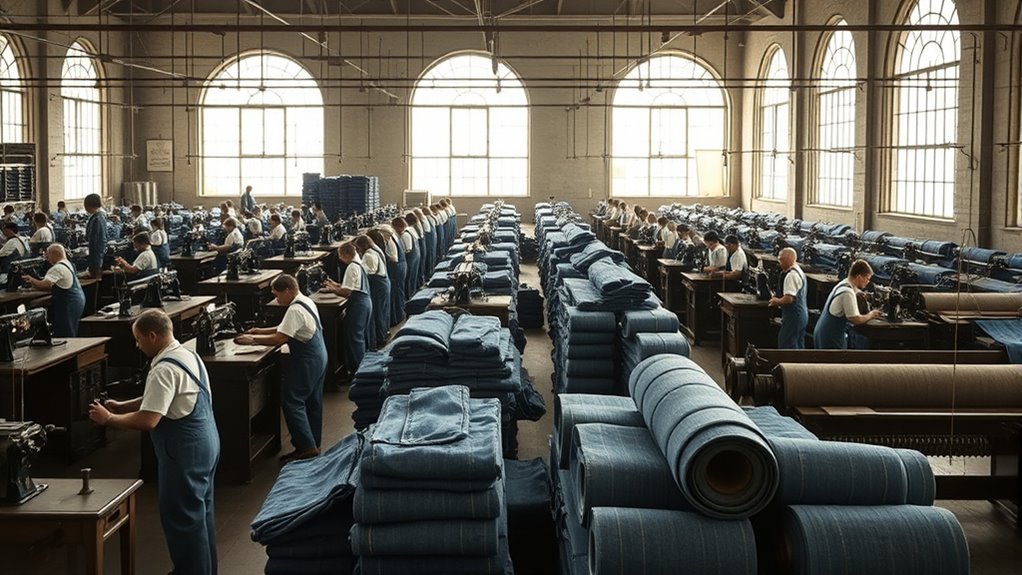
As denim gained popularity in the early 20th century, manufacturers began mass-producing jumpsuits and overalls to meet the rising demand for durable workwear. Factories standardized denim production, emphasizing uniform quality and fit across brands. The rope-dye technique, introduced in the 1930s, became industry standard, providing consistent color and durability. Zippers, first used in children’s clothing during the 1930s, soon found their way into workwear and casual garments, replacing buttons for convenience. Yellow topstitching became a hallmark detail, enhancing visibility and branding. Cotton threads replaced linen, and synthetic fibers started appearing, improving strength and flexibility. This period marked a shift from bespoke, handcrafted garments to industrialized mass production, making denim more accessible and affordable to a broader audience. The adoption of European cloud innovation in manufacturing processes further optimized production efficiency and quality control.
Post-War Cultural Shifts: Jeans as a Youthful Rebellion and Fashion Statement

After World War II, denim transformed from workwear into a powerful symbol of youth rebellion and fashion. You see, movies like “Rebel Without a Cause” made jeans iconic, connecting them with teenage angst and nonconformity. Suddenly, denim wasn’t just for labor; it became a statement of identity. As the 1950s and 1960s progressed, jeans adopted new styles—slim, bootcut, and distressed—reflecting rebellious attitudes. You could express your individuality through washes, fits, and accessories. Women’s jeans evolved too, shorter and fitted to show personality and independence. Denim became a canvas for cultural movements, symbolizing freedom, resistance, and style. It shifted from practical workwear to a bold, versatile fashion staple embraced by youth worldwide. Additionally, the potential side effects of different denim treatments and styles have become a consideration for consumers seeking both fashion and comfort. Moreover, innovations in denim manufacturing techniques have contributed to the wide variety of styles and finishes available today. The development of sustainable denim practices has also gained importance as consumers and manufacturers seek environmentally friendly options. Furthermore, the adoption of innovative dyeing methods has helped reduce environmental impact while expanding creative possibilities in denim design.
The 1980s-2000s: Style Revolutions and Material Innovations in Denim Fashion

Have you noticed how denim underwent a dramatic transformation during the 1980s and 1990s? During this period, styles shifted from classic workwear to bold fashion statements. In the 1980s, stone-washing and acid-washing became huge trends, giving jeans a worn, rebellious look. Fabrics incorporated elastane and polyester blends, making denim stretchier and more comfortable. The 1990s brought streetwear influence, with cargo pants, baggy fits, and distressed finishes gaining popularity. Brands like Diesel pioneered “dirty wash” and distressed styles, pushing denim’s edgy appeal. The focus expanded beyond durability, emphasizing aesthetics and individual expression. Material innovations introduced softer, more flexible fabrics, allowing for diverse styles—from grunge to hip-hop fashion—making denim a versatile staple embraced across youth subcultures and mainstream fashion alike. Additionally, these fabric enhancements contributed to the comfort and fit of denim, encouraging more people to wear it daily. Furthermore, the incorporation of innovative materials allowed designers to experiment with a wide range of textures and finishes, broadening denim’s appeal. The integration of AI-driven design tools has also played a role in creating innovative denim textures and styles in recent years. Moreover, sustainable fabric practices have become increasingly important, leading to eco-friendly denim production methods. Innovations in body jewelry measurements and materials have also influenced fashion design, allowing for more customized and comfortable wearable styles.
Sustainable and Technological Advances: Modern Materials and Eco-Friendly Practices

Modern denim manufacturing increasingly focuses on sustainability and technological innovation to reduce environmental impact. You’ll find brands now use organic cotton, hemp, and recycled PET fibers, cutting down water and chemical use. Waterless dyeing techniques and ozone washing save thousands of liters per batch, minimizing pollution. Digital printing allows for precise designs with less waste and fewer dyes. Innovations like stretch fabrics incorporate recycled fibers, maintaining comfort while boosting eco-friendliness. Manufacturers also implement eco-friendly practices like solar-powered facilities and biodegradable finishes. Additionally, essential oils are sometimes used in natural fabric treatments to enhance sustainability and fabric care. These advances help reduce the carbon footprint of denim production without sacrificing quality or style. As a consumer, your choices support brands committed to greener practices, encouraging the industry to adopt sustainable, tech-driven methods that preserve resources and protect the environment. Sustainable manufacturing processes are becoming increasingly common, making eco-conscious choices more accessible to consumers. Furthermore, advancements in fabric recycling technology enable the reuse of denim fibers, reducing waste and promoting circular economy principles. Incorporating innovative textiles further enhances the durability and environmental friendliness of denim products. Integrating technological innovations into production also improves efficiency and reduces resource consumption.
Iconic Styles and Fit Variations Through the Decades
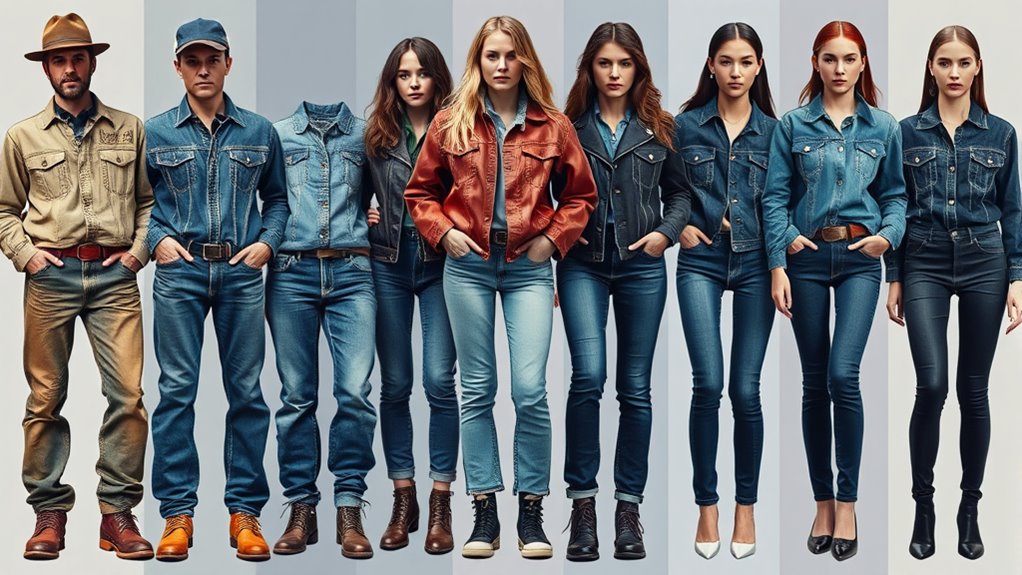
Over the decades, denim styles and fits have shifted to reflect changing cultural trends and personal expression. You’ve seen the rise of straight-leg jeans in the 1960s, flares in the mid-60s, and the popularity of skinny jeans in recent years. These variations show how denim continues to evolve while maintaining its status as a versatile wardrobe staple. Additionally, innovations in denim fabrication have contributed to new textures and sustainable production methods that influence contemporary designs. Modern denim manufacturing techniques have also enabled greater customization and durability in denim products.
Decades of Style Shifts
Decades of style shifts in denim reflect cultural trends, technological advances, and evolving tastes, transforming a humble workwear fabric into a symbol of rebellion, fashion, and self-expression. In the 1950s, straight-leg jeans became popular among youth, fueled by Hollywood icons like James Dean. The 1960s introduced slight flares and lighter washes, echoing the era’s free spirit. The 1980s saw oversized, acid-washed styles, while the 1990s embraced baggier, relaxed fits influenced by streetwear and grunge culture. The early 2000s favored low-rise, skinny jeans, aligning with pop trends. Recently, the 2020s have brought sustainable fabrics, stretch materials, and diverse fits, from slim to wide-leg, reflecting inclusivity and eco-consciousness. Each shift mirrors society’s changing attitudes and technological progress shaping denim’s identity.
Fit and Silhouette Trends
Throughout history, denim silhouettes have evolved to reflect changing cultural ideals and fashion trends, shaping how different fits convey identity and attitude. In the early 20th century, straight-leg jeans dominated, emphasizing practicality and durability. By the 1960s, slight flares emerged, aligning with the era’s free-spirited vibe. The 1980s saw the rise of baggy, oversized styles, embodying rebellion and streetwear influences. In the 1990s and early 2000s, low-rise and skinny jeans became mainstream, highlighting sex appeal and youth culture. Recently, sustainable fabrics and stretch blends have allowed for more comfortable, versatile fits. Today, the trend favors a mix of slim, relaxed, and cropped styles, enabling you to express individuality while balancing comfort and fashion. Denim’s fit evolution mirrors societal shifts and personal expression across generations.
Denim on the Runway: High Fashion Meets Classic Workwear
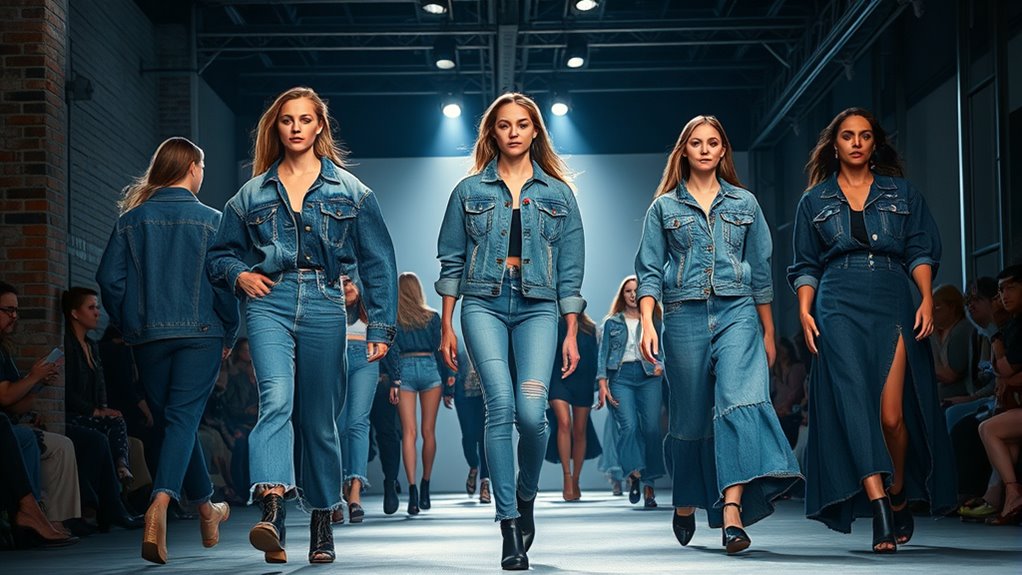
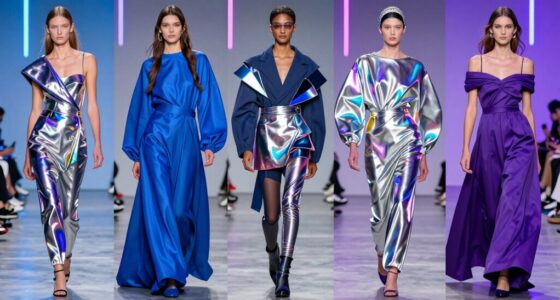
You’ll notice how designers now transform rugged denim into high fashion statements on the runway, blending workwear roots with couture innovation. They experiment with cuts, embellishments, and fabric treatments to elevate classic styles into bold, runway-ready looks. This fusion showcases how denim’s history continues to inspire and adapt within the world of luxury fashion.
Runway Innovations in Denim
Denim has seamlessly shifted from rugged workwear to a staple on high-fashion runways, where designers push boundaries by reimagining its classic silhouette. They experiment with innovative cuts, fabrics, and embellishments, transforming denim into high art. Here’s how they do it:
- They incorporate unexpected materials like leather, sequins, or metallic threads to create eye-catching contrasts.
- They experiment with oversized, deconstructed, or asymmetric shapes that challenge traditional fits.
- They add intricate embroidery, appliqué, or digital prints to elevate simple denim into statement pieces.
These innovations allow denim to evolve beyond its origins, blending streetwear attitude with couture craftsmanship. As a result, denim on the runway becomes a symbol of creative freedom, merging tradition with avant-garde design.
Couture Influences on Classics
High fashion designers are now transforming denim’s rugged roots into couture statements by incorporating sophisticated details and innovative techniques. They elevate classic workwear by adding embroidery, embellishments, and luxurious fabrics, blending tradition with modernity. You’ll see tailored silhouettes, intricate stitching, and unexpected textures on runways worldwide. This fusion challenges the boundaries between casual and high-end fashion, making denim a versatile staple for couture collections. To deepen this transformation, designers often combine contrasting elements:
| Technique | Effect |
|---|---|
| Embroidery & Beading | Adds luxury and craftsmanship |
| Laser Etching | Creates detailed, precise patterns |
| Fabric Mixes | Combines denim with silk or velvet |
The Future of Denim: Trends, Sustainability, and Technological Integration
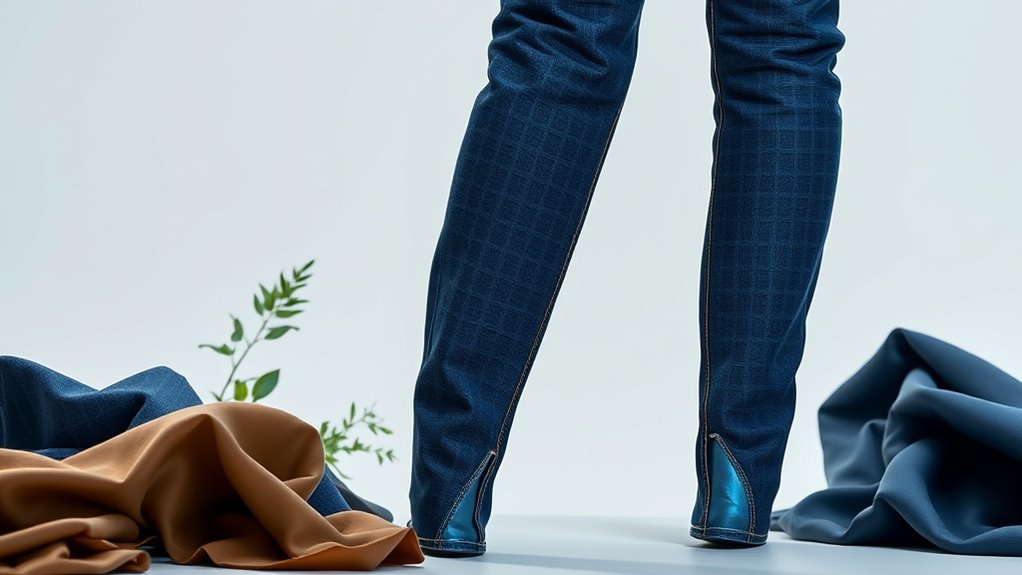
As the fashion industry increasingly prioritizes sustainability and innovation, the future of denim is set to blend eco-friendly materials with cutting-edge technology. You’ll see trends like:
- Recycled fibers: Expect more jeans made from recycled PET bottles, hemp, and organic cotton to reduce environmental impact.
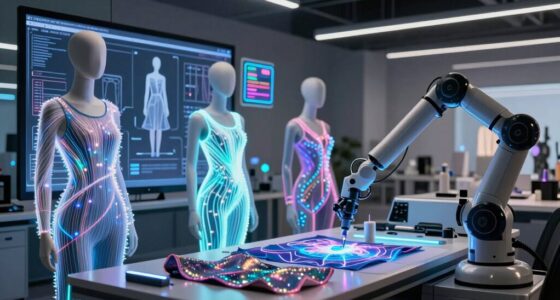
- Smart textiles: Wearable tech integrated into denim, such as temperature regulation or stain resistance, will become more common.
- Digital printing: Custom, detailed designs will be created with less water and chemicals, making fashion more sustainable and personalized.
This shift not only supports eco-conscious choices but also enhances durability and functionality. You’ll be able to enjoy denim that’s stylish, innovative, and kinder to the planet—shaping its evolution into a truly future-ready fabric.
Frequently Asked Questions
How Did the Original Twill Weave Contribute to Denim’s Durability?
The original twill weave makes denim highly durable by creating a tight, diagonal pattern that strengthens the fabric. You’ll notice this weave distributes stress across the material, preventing tears and fraying. Its closely woven structure resists wear and tear, making denim suitable for demanding workwear. This durability is why denim has lasted centuries, remaining a reliable choice for clothing that needs to withstand tough conditions.
What Role Did Copper Rivets Play in Enhancing Jeans’ Strength?
Copper rivets play a vital role by reinforcing stress points, preventing tearing, and extending the lifespan of your jeans. They secure fabric layers at pockets, seams, and fly areas, making your jeans more durable against daily wear and heavy labor. By adding rivets, manufacturers guarantee your jeans hold up under pressure, providing strength, resilience, and confidence with every wear, turning functional workwear into lasting, iconic fashion.
How Did Denim Manufacturing Evolve With Industrialization in the Early 20TH Century?
As industrialization advanced in the early 20th century, you see denim manufacturing become more efficient with mass production techniques. Factories adopted sewing machines, standardized patterns, and automated processes, allowing you to produce large quantities of overalls and jumpsuits quickly and consistently. This shift lowered costs, made denim more accessible, and helped it evolve from workwear to everyday fashion, setting the stage for its cultural and style evolution in later decades.
Why Did Denim Become a Symbol of Youth Rebellion After WWII?
After WWII, denim became a symbol of youth rebellion because it represented independence and nonconformity. You see, actors like Marlon Brando wore jeans in movies like “Rebel Without a Cause,” inspiring young people to adopt the look. Denim’s rugged, utilitarian style challenged traditional fashion norms and connected with the rebellious spirit of the 1950s and 1960s youth movements, making it an iconic symbol of counterculture.
What Sustainable Materials Are Currently Transforming Denim Production?
Imagine denim as a blank canvas, now being revitalized with eco-friendly paints. You’ll find sustainable materials like hemp, recycled PET bottles, and Tencel transforming denim production. These innovations breathe new life into old fabrics, making them softer and more eco-conscious. By choosing denim made with these materials, you help reduce environmental impact, turning fashion into a force for good and helping the planet stay vibrant for future generations.
Conclusion
As you trace denim’s journey from humble workwear to runway star, you see how it’s woven into every thread of history and culture. Like a resilient tapestry, denim’s evolution reflects our spirit—bold, rebellious, and ever-changing. Embrace its timeless story, knowing each stitch tells a tale of innovation and rebellion. Denim isn’t just fabric; it’s a living canvas, forever transforming, forever yours to wear and cherish.