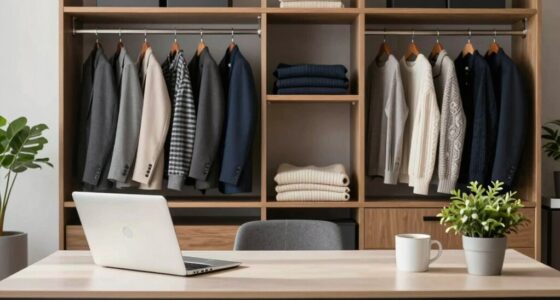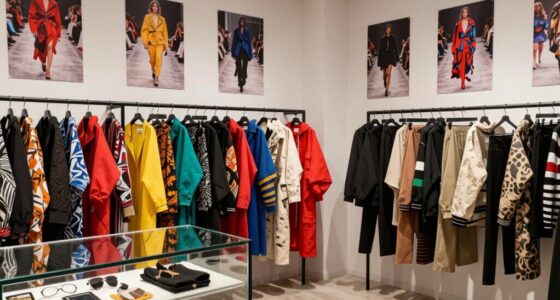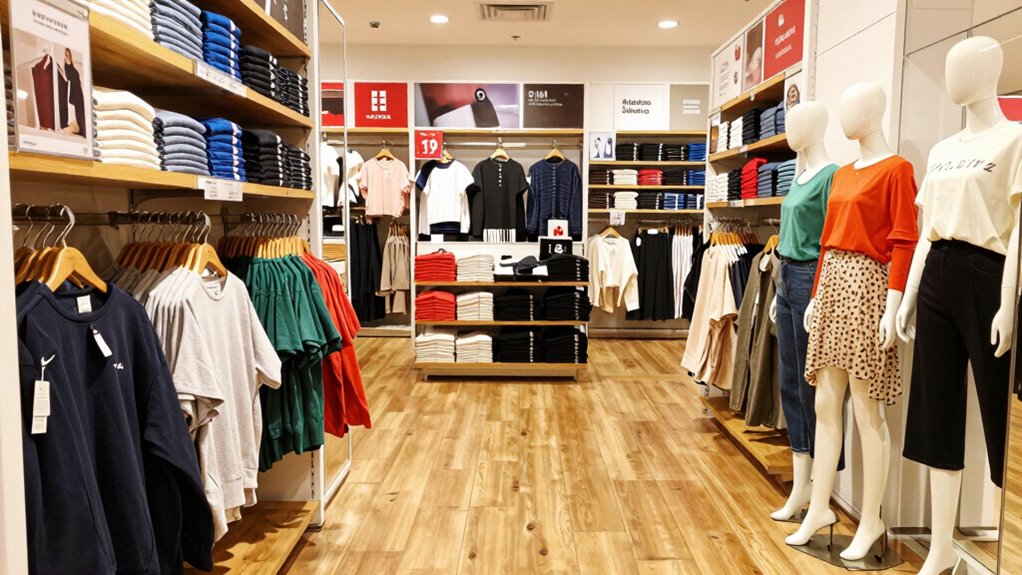

Retail stores are designed to subtly influence your shopping behavior through sensory cues like appealing scents, soft music, and warm lighting that create a relaxing atmosphere, encouraging you to stay longer. Strategic layouts and visual signals, such as sale signs and product placement, guide you toward impulse buys. Urgency tactics like limited offers and scarcity trigger quick decisions. Recognizing these tricks can help you resist. If you want to understand how to stay in control, there’s more to uncover.
Key Takeaways
- Store layouts with maze-like pathways and strategic product placement increase wandering and impulse purchases of clothes.
- Sensory cues like appealing scents, soft lighting, and background music create a relaxed atmosphere, encouraging longer browsing.
- Visual signals such as sale signs, limited editions, and high-traffic displays boost perceived scarcity and urgency to buy.
- Mannequins and high-visibility clothing displays influence perceptions of current fashion trends and desirability.
- Point-of-sale areas stocked with inexpensive, tempting items exploit decision fatigue and impulsivity to increase clothing sales.

Superio Clear Storage Boxes with Wheels (2 Pack), 85 Qt Heavy Duty Containers with Lids, Stackable Rolling Bins for Home, Garage, Closet Organization- Linen, Tools, Clothing, Supplies
Specifications- The exterior dimensions from these bins are 27" (L) x 18.5" (W) x 13.5" (H). The interior…
As an affiliate, we earn on qualifying purchases.
As an affiliate, we earn on qualifying purchases.
Sensory Tricks That Draw You In
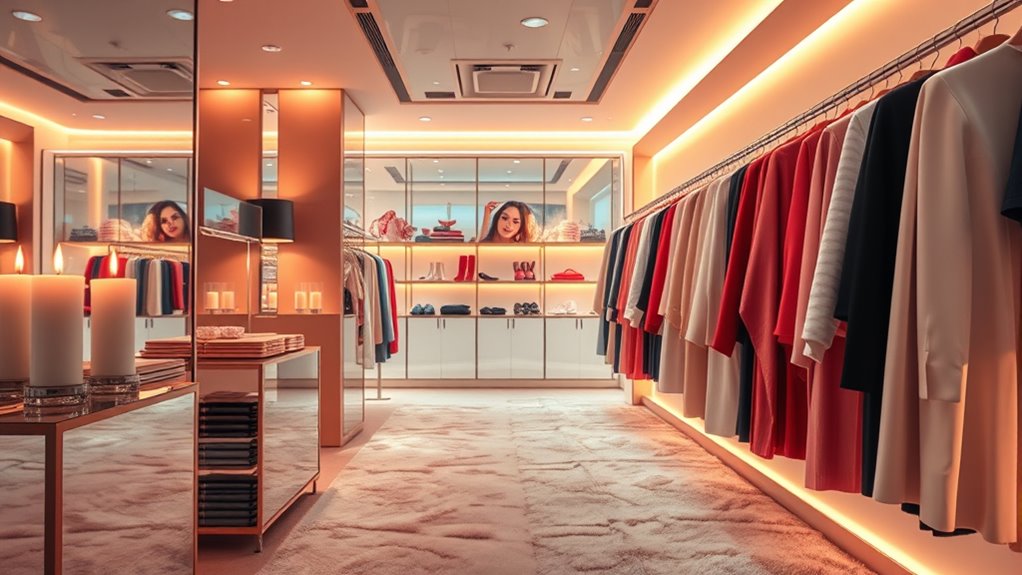
Sensory tricks play a powerful role in drawing you into a store and encouraging spontaneous purchases. You might notice the warm scent of freshly baked bread wafting through the air, designed to override your rational thoughts and create a sense of comfort. Bright, colorful displays are intentionally placed to catch your eye and tempt you into browsing longer. Soft background music acts as psychological warfare, subtly setting a relaxed mood that keeps you shopping. Meanwhile, soft lighting reduces cognitive strain, making it easier for you to focus on products without feeling overwhelmed. These sensory cues work together to influence your emotions and decision-making, nudging you toward impulse buys without you even realizing it. Retailers expertly craft these sensory triggers to keep you engaged and spending more, often using environmental psychology principles to enhance their effectiveness.

3 Sided Rotating Body Jewelry Display
Product note: Holds (156) pieces in snap lock clips.
As an affiliate, we earn on qualifying purchases.
As an affiliate, we earn on qualifying purchases.
The Layout Strategies That Keep You Wandering
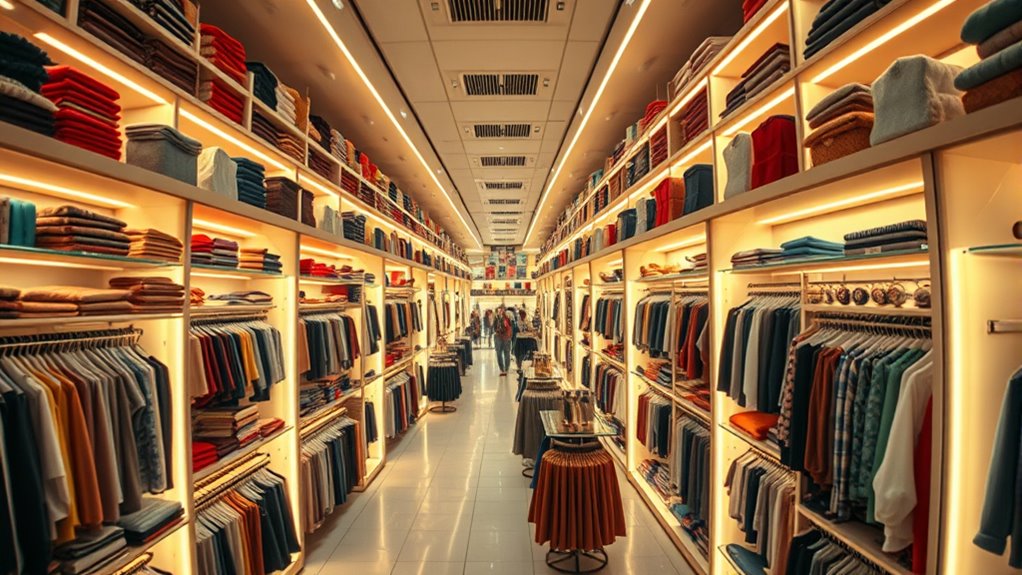
You’re often led through maze-like pathways that encourage longer wandering and more impulse purchases. Strategic product placement, like essentials at the back and eye-level shelves for pricier items, keeps you browsing. These layout tricks make you stay longer, increasing the chances you’ll buy more than you planned. Additionally, store layout design is carefully optimized to subtly influence your movement and attention within the space.
Maze-like Pathways
Maze-like pathways are a deliberate design tactic that encourages you to spend more time wandering through a store. As you navigate twisting corridors and dead ends, your curiosity is piqued, making you less likely to leave quickly. These layouts disrupt your sense of direction, so you get lost in the experience, increasing exposure to products. The longer you stay, the more likely you are to make impulsive purchases. Retailers rely on this confusion to distract you from the overall store layout, subtly guiding you past tempting displays and slow-moving sections. This strategy transforms shopping from a quick errand into an immersive journey, increasing your engagement and, ultimately, your spending. Maze-like pathways serve as a psychological trap that keeps you wandering and buying more. Additionally, some stores incorporate energy-efficient layouts that maximize the use of space and lighting to subtly influence your movement patterns while reducing operational costs.
Strategic Product Placement
Strategic product placement is a powerful technique retailers use to guide your movement through the store and encourage impulsive buying. By positioning high-margin items at eye level, they grab your attention instantly. Essentials like milk and bread are tucked in the back, forcing you to pass tempting displays along the way. End caps showcase sale items, creating false urgency and making you think you’re missing out. Larger carts subtly encourage bigger purchases, while model rooms and displays evoke the Gruen effect, prompting unplanned buys. Visual cues, such as “sale” signs and price endings like .99, reinforce perceived discounts. This placement strategy manipulates your focus and decision-making, leading you to buy more than you initially intended without even realizing it. Additionally, store layout and proper ventilation considerations can influence your comfort and shopping duration, subtly affecting how much you purchase.

Adjustable Shirt Display Stand 32-63 Inch, Foldable Clothing Display Stand Mannequin Torso for Retail Vendors, Multi-Use Steamer Rack Stand for Cap Gown Graduation Clothes Garment
Premium Dual-Material Design: Our clothing display stand combines upper solid wooden hanger with lower sturdy metal tripod, ensuring…
As an affiliate, we earn on qualifying purchases.
As an affiliate, we earn on qualifying purchases.
How Visual Cues Influence Your Choices
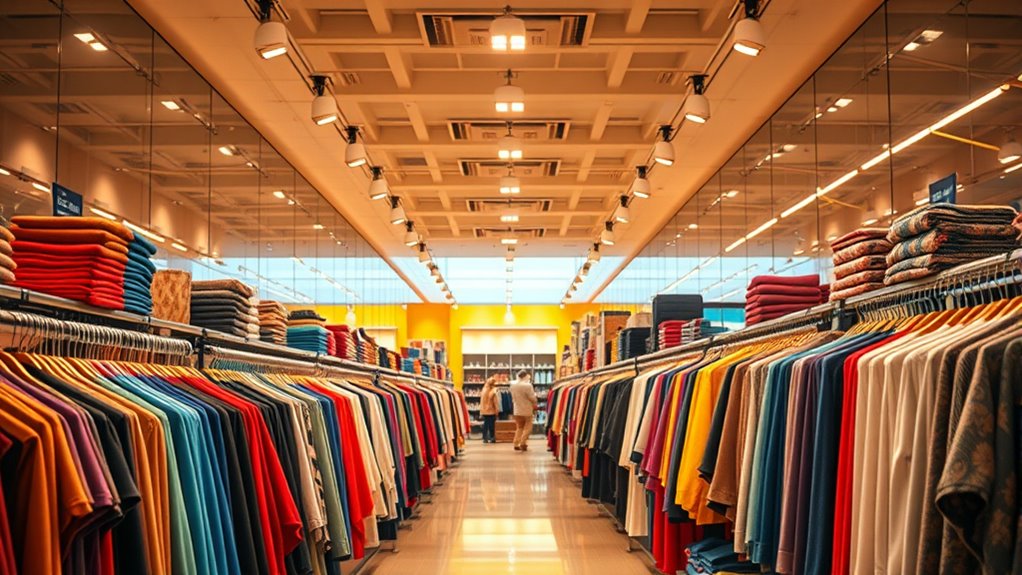
You’re often influenced by sale signage tricks that make discounts seem more appealing than they are, nudging you to buy more. Product placement strategies, like positioning expensive items at eye level or near popular products, subtly guide your choices without you noticing. These visual cues work together to shape your perceptions and encourage unplanned purchases. Understanding how visual cues and store layouts influence decision-making can help you shop more consciously and resist impulse buying.
Sale Signage Tricks
Have you ever wondered how sale signs subtly influence your purchasing decisions? Retailers use visual tricks to create urgency and attraction. Bright colors like red and yellow draw your eye, signaling discounts and scarcity. They often display percentage off, making savings seem bigger. Limited-time offers and countdown timers increase pressure to buy now. Strategic placement, such as at eye level or on end caps, boosts visibility. Signs with bold fonts and clear messages override rational thought, nudging you toward impulse buys. Additionally, psychological cues are carefully employed to tap into emotions and subconscious biases that drive shopping behavior.
Product Placement Strategies
Ever wonder how stores subtly steer your attention to certain products? They use clever placement tactics to influence your choices without you realizing. For example, you’ll find:
- Eye-level shelves stocked with pricey brands, making them hard to ignore.
- End caps designed to highlight discounted or promoted items, creating a false sense of sale.
- Model rooms or displays that evoke the Gruen effect, encouraging unplanned purchases by simulating a home-like environment.
These strategies work together to guide your gaze and subconscious decisions. By positioning high-margin products at eye level, stores increase their visibility and desirability. End caps draw your eye with bright signage, while model displays create aspirational scenes. All these cues subtly push you toward more spending. Additionally, visual cues like lighting and signage play a crucial role in directing your focus and influencing your shopping behavior.
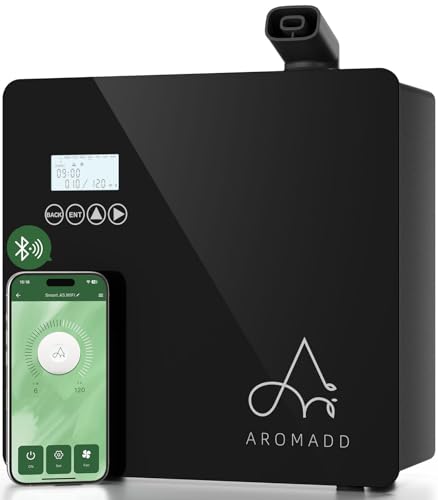
2025 Upgraded 3500 Sq.Ft Smart Scent Diffuser – HVAC System, Whole House Aroma & Hotel Collection Diffuser, Waterless Essential Oil Diffuser for Home Large Room, Cold Air Tech, 600mL (Black)
AROMADD 2025 NEWLY UPGRADED: The Aromadd waterless essential oil diffuser utilizes the latest cold air diffusion technology, combining…
As an affiliate, we earn on qualifying purchases.
As an affiliate, we earn on qualifying purchases.
The Power of Impulse and Urgency Tactics
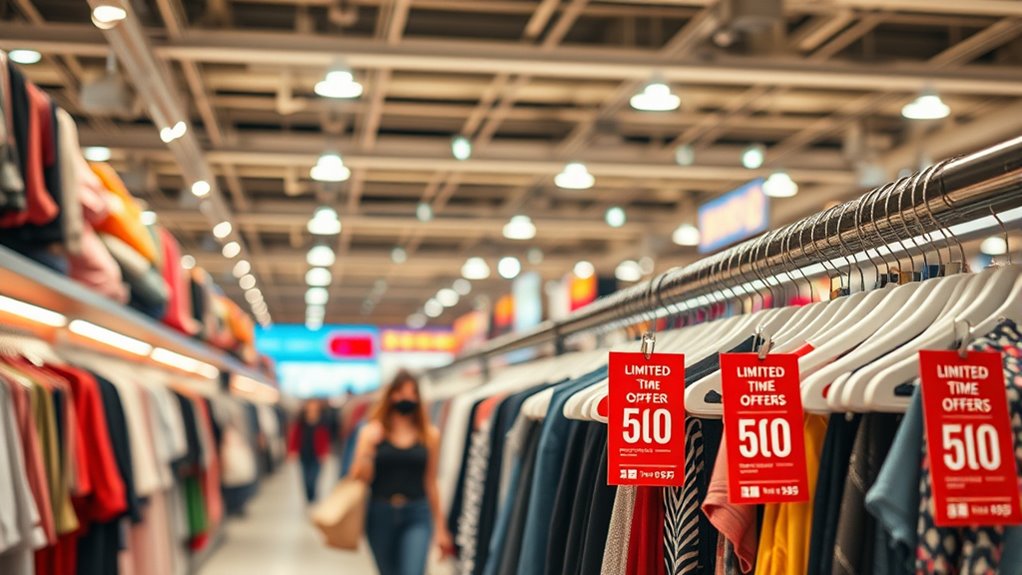
Why do certain moments in a store prompt immediate purchases? Retailers create a sense of urgency to tap into your fear of missing out. Limited-time offers, countdown timers, and scarce stock signals make you feel like you need to act fast. Flash sales and “only a few left” signs exploit your desire to grab deals before they disappear. These tactics trigger a rush of adrenaline and dopamine, pushing you to buy impulsively. You might not fully realize it, but the environment is designed to make hesitation uncomfortable. By intensifying the feeling that delay equals lost opportunity, stores encourage quick decisions. This sense of urgency short-circuits your usual rational thinking, increasing the chances that you’ll add extra items to your cart—often clothes you hadn’t planned to buy. Understanding consumer psychology helps explain why these strategies are so effective at influencing your purchasing behavior.
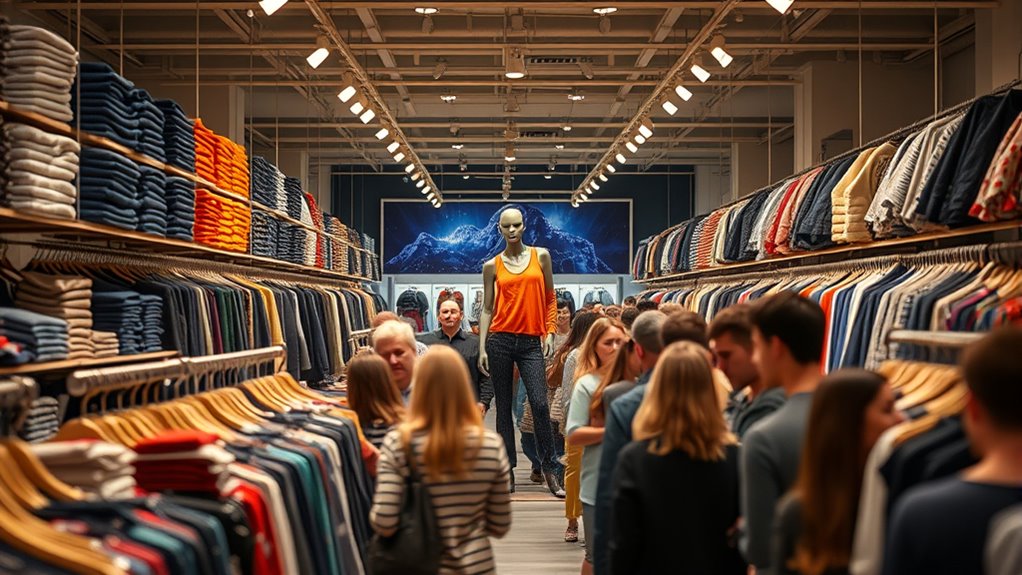
Retailers harness social proof to influence your choices by making products and trends seem popular and desirable. When you see mannequins dressed in stylish outfits, you assume they’re in fashion and want the same. Signs that label items as “bestsellers” tap into your desire to conform. Product seals and awards boost perceived authority, making you trust those choices more. Stores also display “limited edition” tags or show high sales figures to create a sense of exclusivity and urgency. These cues push you to follow the crowd, believing that if many people buy it, it must be good. Essentially, you’re guided to imitate others’ preferences, reducing your hesitation and increasing your likelihood of making a purchase. Additionally, stores often use vetted cues like wave and wind to subconsciously influence your mood and decision-making processes.
The Psychology Behind Store Displays and Signage
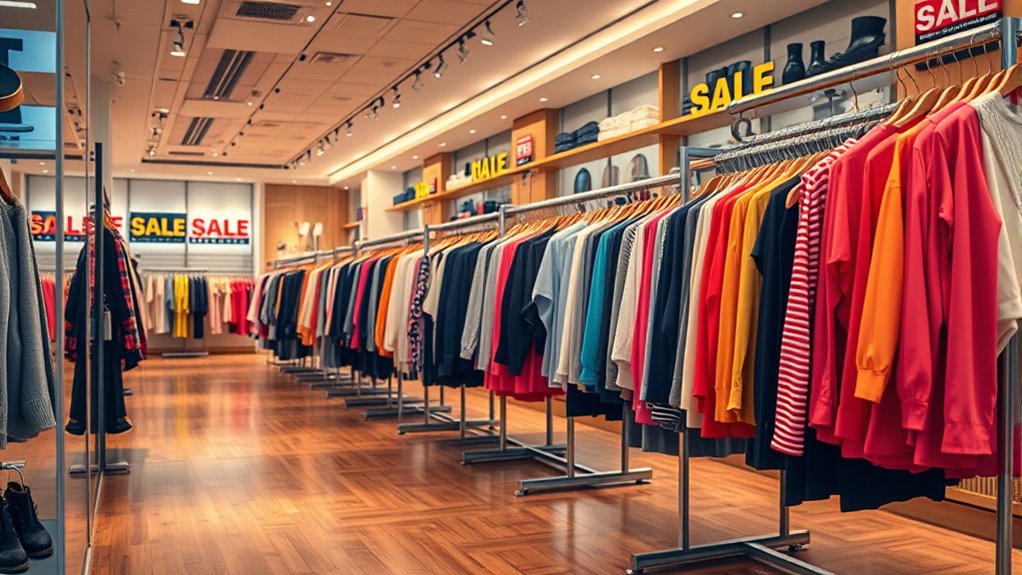
Have you noticed how store displays and signage are strategically designed to catch your eye and influence your choices? Bright colors, bold fonts, and eye-catching shapes draw your attention to specific products. Signage often highlights discounts, creating a sense of urgency and making you feel like you’re missing out if you don’t act quickly. Placement plays a key role too—products at eye level or on end caps seem more appealing, encouraging spontaneous purchases. Visual cues like arrows or directional signs guide your path through the store, subtly steering your toward high-margin items. These displays are carefully crafted to tap into your subconscious, making you more receptive to buying more than you planned. The goal? Keep you engaged, distracted, and ultimately, buying more clothes. Additionally, these tactics can foster positive change by encouraging more mindful shopping habits.
Checkout Strategies That Increase Your Spending
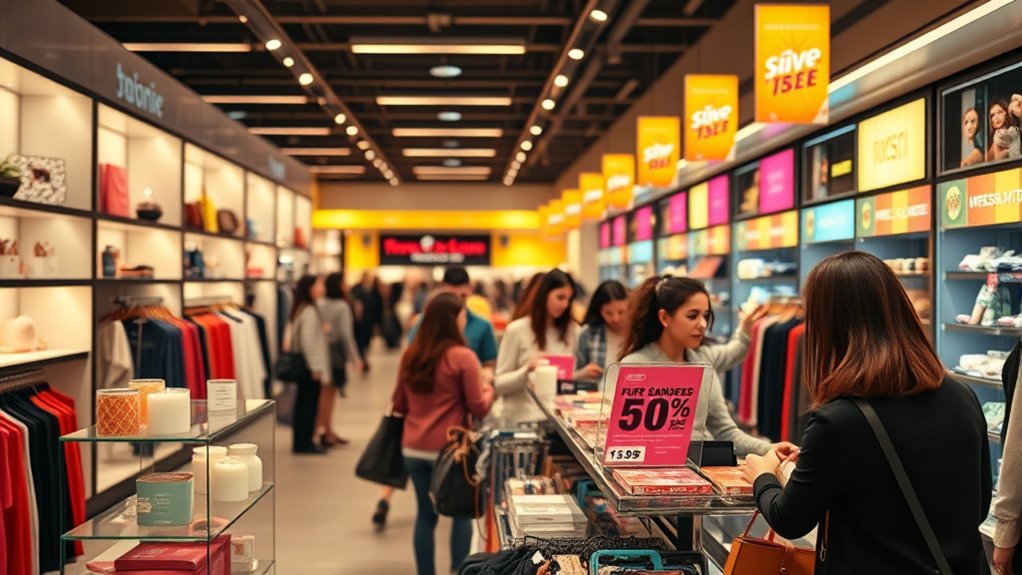
Checkout strategies are carefully designed to maximize your spending by exploiting decision fatigue and impulse triggers. As you approach the register, you’re subtly nudged to make quick, often unnecessary purchases. Retailers place tempting items like candy bars and magazines within easy reach, knowing your willpower is low. Scarcity phrases such as “limited edition” create urgency, pushing you to buy on impulse. The checkout lane itself becomes a trap, causing decision fatigue that makes it harder to resist additional purchases.
You might notice:
- Candy bars and small gadgets positioned for quick grabs
- Scarcity cues like “only a few left” or “sale ends soon”
- Small, inexpensive items that seem insignificant but add up fast
The Role of Atmosphere in Shopping Behavior
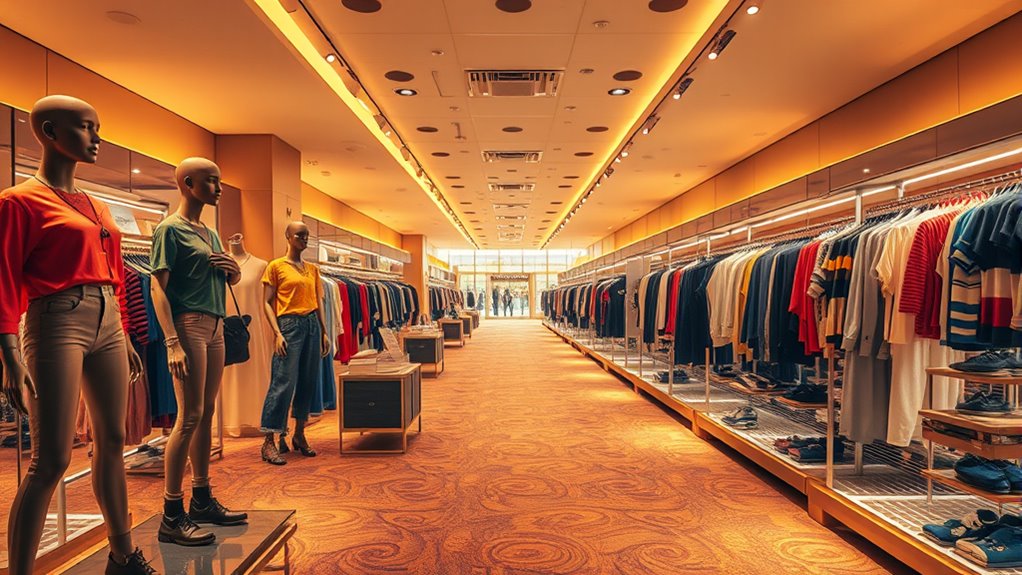
The atmosphere inside a store plays a crucial role in shaping your shopping behavior, often influencing you without conscious awareness. Warm lighting and soft music create a relaxed mood, encouraging you to linger longer and spend more. Bright, colorful displays attract your attention to impulse buys, while pleasant scents like baked bread subtly trigger cravings and positive feelings. Spacious aisles give a sense of freedom, making you comfortable and more likely to explore. The overall environment is carefully crafted to reduce decision fatigue and increase your willingness to purchase. Every detail, from lighting to background sounds, works together to influence your mood and perception, subtly steering you toward buying more clothes without you realizing it.
Tips to Recognize and Resist Manipulative Techniques
Recognizing manipulative techniques in shopping requires heightened awareness of how stores subtly influence your decisions. Stay alert to tactics designed to sway your choices, like sensory cues and layout tricks. To resist these, keep these tips in mind:
Be aware of store tactics that influence your choices; stay vigilant and shop intentionally.
- Pause before buying: Take a moment to assess if the item is truly necessary or just a reaction to impulse triggers.
- Shop with a list: Avoid wandering aisles aimlessly, reducing exposure to enticing displays and end caps.
- Be skeptical of discounts: Question whether sales and limited-time offers are genuine or just marketing ploys.
Frequently Asked Questions
How Do Stores Use Lighting to Influence Your Mood and Purchasing Behavior?
You notice how stores use soft lighting to create a calm, inviting atmosphere that makes you feel comfortable and less overwhelmed. This relaxed mood encourages you to browse longer and feel more open to making impulsive purchases. The gentle lighting reduces cognitive strain, helping you focus on products without feeling rushed. As a result, you’re more likely to buy more clothes because the environment feels soothing and easy to explore.
What Psychological Principles Make End Caps and Sale Signs so Effective?
End caps and sale signs draw your attention by creating a sense of urgency and exclusivity. They leverage principles like scarcity, social proof, and perceived value, making you think you’re missing out if you don’t buy now. Bright, bold signs and strategic placement trigger impulse decisions, while limited-time offers tap into your fear of missing out, encouraging quicker, less rational purchases. All these tactics manipulate your psychological responses to boost sales.
How Do Store Layouts Encourage Unplanned or Impulse Buying?
Imagine stepping into a store designed to gently sway your choices. The layout guides you through a maze, increasing wandering time and curiosity. Essentials are placed at the back, encouraging you to pass tempting displays. End caps showcase enticing offers, while wide aisles and model rooms create a sense of spaciousness and inspiration. These clever arrangements subtly influence your impulses, making unplanned purchases feel natural and satisfying.
In What Ways Do Social Proof Elements Like Mannequins Affect Your Shopping Choices?
Mannequins influence your shopping choices by showcasing desirable styles and creating aspirational images you want to emulate. You’re more likely to pick items that resemble what you see on mannequins, as they set social norms and trend expectations. Their strategic placement makes you feel like you’re missing out if you don’t follow the “popular” look, nudging you toward impulsive purchases to align with perceived fashion standards.
How Can Shoppers Recognize and Resist Environmental Manipulation Tactics?
To resist environmental manipulation tactics, stay aware of store layouts, pricing tricks, and sensory cues. Take a moment before shopping to set a list and stick to it, avoiding impulse buys. Be cautious of bright displays, music, and lighting designed to influence your mood. Compare prices, question limited-time offers, and avoid browsing when tired. Recognizing these tactics helps you make mindful choices instead of falling for store tricks.
Conclusion
Now that you know how stores subtly influence your choices, you might feel wary about shopping. But understanding these tricks empowers you to shop smarter, not less. You can enjoy browsing and purchasing clothes while staying in control. Remember, awareness is your best tool—so next time, take a moment to pause and consider your decisions. By doing so, you’ll enjoy shopping more and avoid falling into trap of manipulation.