When transforming a sketch into a finished garment, you start by gathering inspiration and creating visual sketches. Then, you develop detailed technical drawings, select and source materials, and make patterns or prototypes. After fitting sessions and adjustments, you finalize the design with quality checks. The manufacturing process involves cutting, sewing, assembling, and inspecting the garments before they reach stores. If you continue, you’ll discover how each step guarantees your design moves seamlessly from concept to customer.
Key Takeaways
- Designers develop initial concepts and sketches based on trends, mood boards, and research to establish a clear vision.
- Technical development involves creating detailed patterns and tech packs, sourcing materials, and preparing for prototype sewing.
- Prototypes are fitted and refined through multiple adjustments to ensure proper fit, style, and construction quality.
- Final quality checks verify garment standards, assembly accuracy, and adherence to specifications before production.
- Manufacturing and logistics coordinate fabric cutting, assembly, finishing, packaging, and delivery to stores or clients.
Gathering Inspiration and Ideation
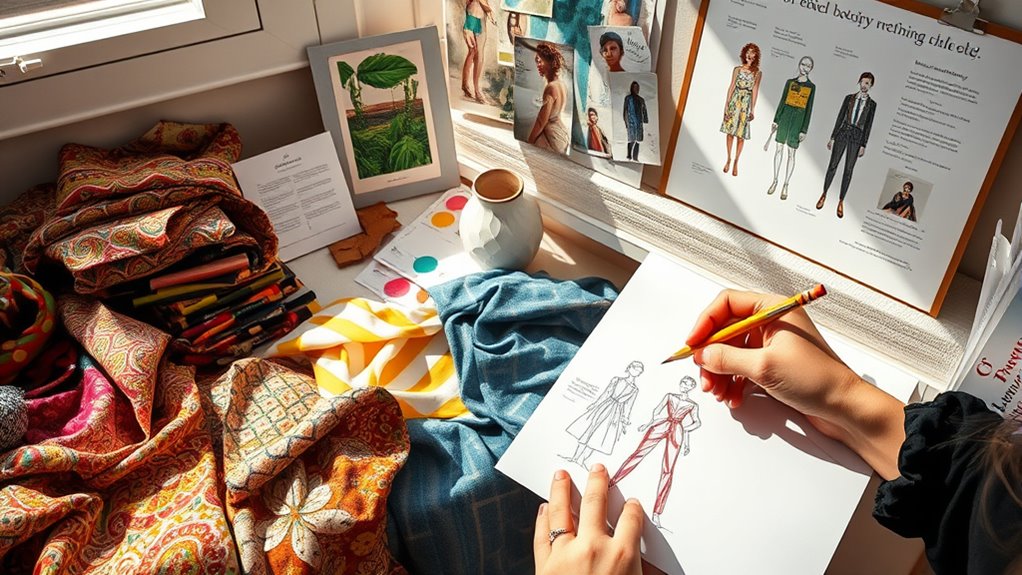
How do designers start transforming ideas into a cohesive concept? It begins with gathering inspiration through mood boards. You collect images, color palettes, textures, and trends that resonate with your vision. Market research and trend analysis help you understand what your target audience wants and needs. You analyze fashion shows, street style, and cultural influences to identify patterns and themes. This process narrows your focus and clarifies your design direction. As you compile these elements, you create a visual collage that captures the mood and personality of your collection. This mood board becomes your reference point, guiding your initial sketches and helping you stay true to your concept throughout the design process. Incorporating effective visual aids can further clarify your ideas and enhance your understanding of space and style.
Crafting Initial Fashion Illustrations
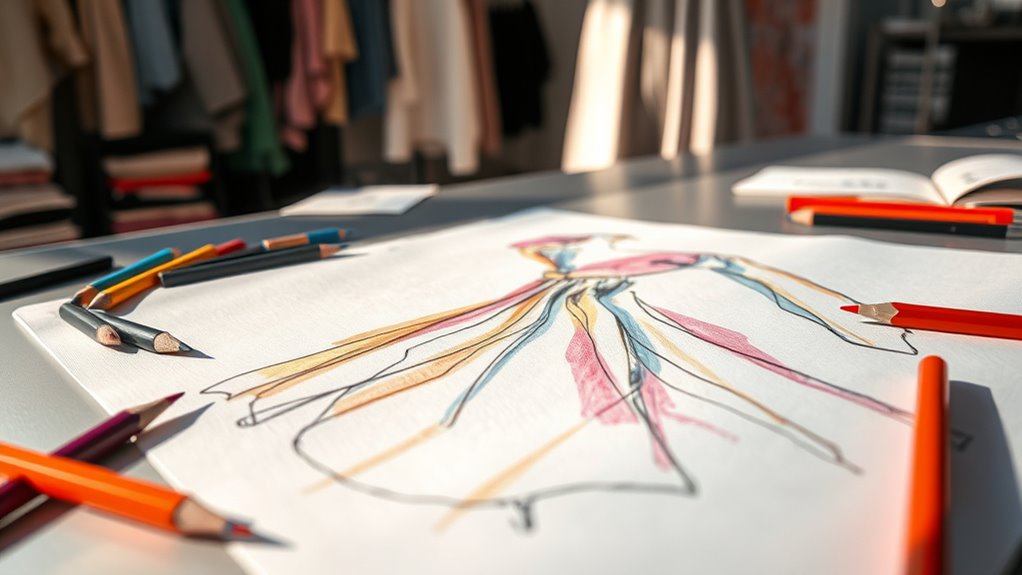
When you start crafting initial fashion illustrations, focus on developing a clear concept that captures your design vision. Choose a medium that best expresses your ideas, whether pencil, marker, or digital tools, to bring your sketches to life. As you translate concepts visually, guarantee your drawings effectively communicate details like silhouette, embellishments, and overall style. Incorporating energy-efficient technology into your design process can also promote sustainable fashion practices.
Concept Development Process
Have you ever wondered how designers bring their concepts to life visually? It all begins with the concept development process. You gather inspiration from mood boards, analyzing trends, colors, and textures that resonate with your target audience. Next, you translate these ideas into initial fashion illustrations, sketching out silhouettes, details, and overall aesthetics. These sketches are often rough at first but become more refined as you experiment with different styles and elements. You focus on capturing the garment’s essence—its shape, embellishments, and attitude. This iterative process helps you visualize the design’s potential and communicate your vision clearly. Once satisfied, you select the best sketches to move forward into technical development, ensuring your concept is ready for the next steps. Free Floating
Choosing the Right Medium
Selecting the right medium for your initial fashion illustrations sets the foundation for bringing your design ideas to life. You need to contemplate what best captures your style and communicates your vision clearly. Pencil sketches offer flexibility and detail, perfect for exploring silhouettes and ideas quickly. Markers provide vibrant colors and bold lines, ideal for highlighting key features and mood. Digital tools like tablets and illustration software streamline revisions and enable easy sharing, making them great for refining concepts. Watercolors and mixed media add texture and depth, giving your sketches a unique, artistic touch. Choose a medium that matches your skill level, project needs, and the message you want to convey. The right choice helps you translate your imagination into compelling, professional illustrations.
Translating Ideas Visually
Translating your design ideas into visual forms is an essential step that brings your concepts to life. You begin with initial sketches, capturing the overall silhouette, details, and mood of your garment. Use quick, loose drawings to explore different shapes and features, focusing on proportion and style. As ideas develop, refine these sketches into more detailed illustrations, adding embellishments, fabric drapes, and color schemes. This visual process helps you communicate your vision clearly to team members, such as pattern makers and tech designers. Multiple versions allow you to experiment and select the strongest concept. This stage transforms abstract ideas into tangible images, serving as a blueprint for technical development and bringing your original inspiration closer to reality. Incorporating color accuracy considerations during your visualizations ensures that your fabric choices and color schemes will translate well into the final garment.
Developing Technical Sketches and Specs
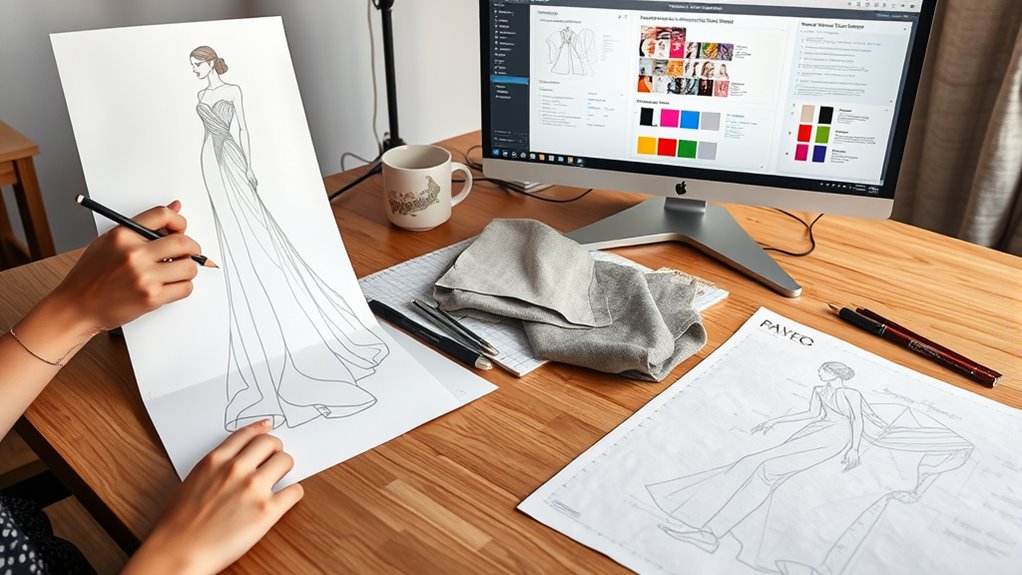
How do designers transform rough sketches into precise technical drawings that guide production? You start by using CAD software like Adobe Illustrator to create detailed tech sketches. These drawings specify every element—measurements, seams, fabric types, trims, and construction details—so manufacturers know exactly what to produce. You incorporate feedback from pattern makers and sample sewists to refine these specs, ensuring accuracy. The tech pack, a exhaustive document, includes all details needed for manufacturing and prototypes. It’s a living document, updated as you make adjustments through sampling and fitting. Your goal is to provide clear, unambiguous instructions that translate your creative vision into a functional, producible garment, minimizing errors and ensuring consistency across production runs.
Selecting and Sourcing Materials
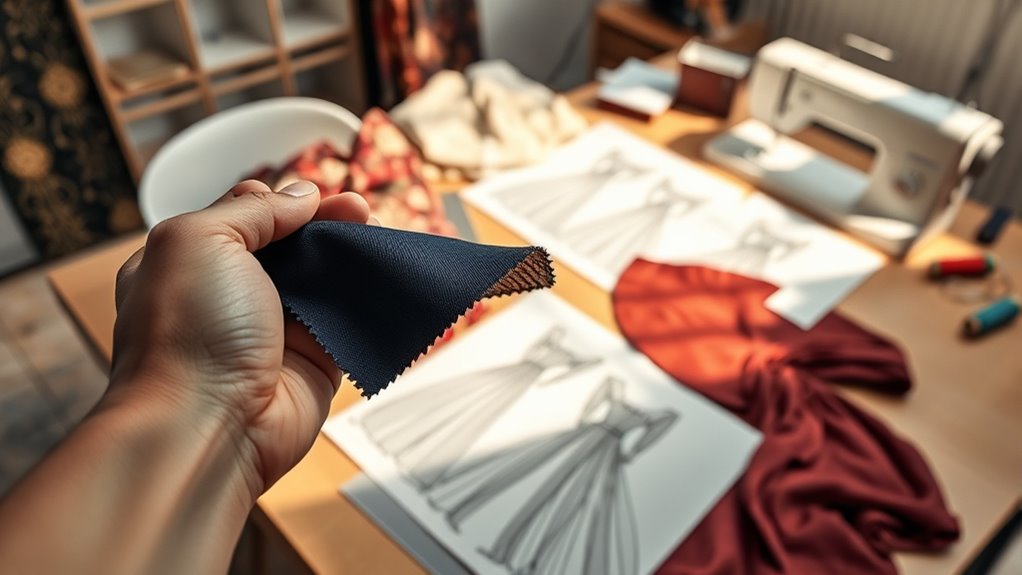
When selecting fabrics, you consider criteria like texture, durability, and how well they match your design’s aesthetic. You evaluate suppliers by reviewing their samples, quality standards, and reliability to guarantee consistent material sourcing. Making informed choices at this stage helps you produce a high-quality, cohesive final garment. Additionally, understanding the regulatory environment can ensure compliance with industry standards and standards for sustainable sourcing.
Fabric Selection Criteria
Selecting the right fabrics is an essential step in the fashion design process, as it directly impacts the look, feel, and functionality of your final garment. You need to consider aesthetic qualities like color, texture, and drape to match your design vision. Durability and care requirements are critical to ensure the garment withstands wear and washing. Functionality, such as stretch or breathability, should align with the garment’s purpose, whether casual, formal, or activewear. Cost and availability influence your sourcing options, so balancing quality with budget is necessary. You’ll also evaluate how fabrics behave during cutting and sewing to prevent issues later in production. Reliable suppliers providing accurate samples and detailed specifications help you make informed choices that ultimately bring your design to life. Understanding fabric behavior during sewing ensures a smoother production process and a better-quality finished product.
Supplier Evaluation Process
Evaluating suppliers effectively is crucial to sourcing high-quality materials that meet your design and production needs. You begin by researching potential suppliers, checking their reputation, reliability, and capacity to deliver consistent quality. Request samples to assess texture, color, and durability, ensuring they match your specifications. Verify their certifications for quality standards and compliance with safety regulations. Assess lead times and minimum order quantities to fit your production schedule. Communicate clearly about pricing, payment terms, and flexibility for custom requests. Visit supplier facilities if possible, to observe their processes and quality controls firsthand. Building strong relationships with trusted suppliers ensures you receive reliable materials, minimizes delays, and maintains the integrity of your designs throughout production. Additionally, understanding network infrastructure can help you establish effective communication channels with your suppliers, ensuring seamless coordination.
Creating Patterns and Prototypes
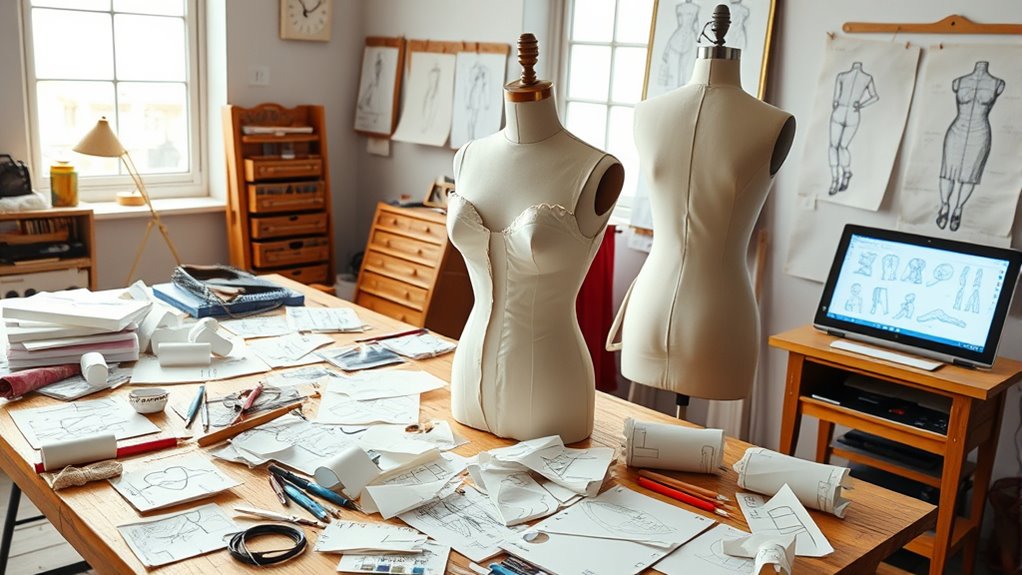
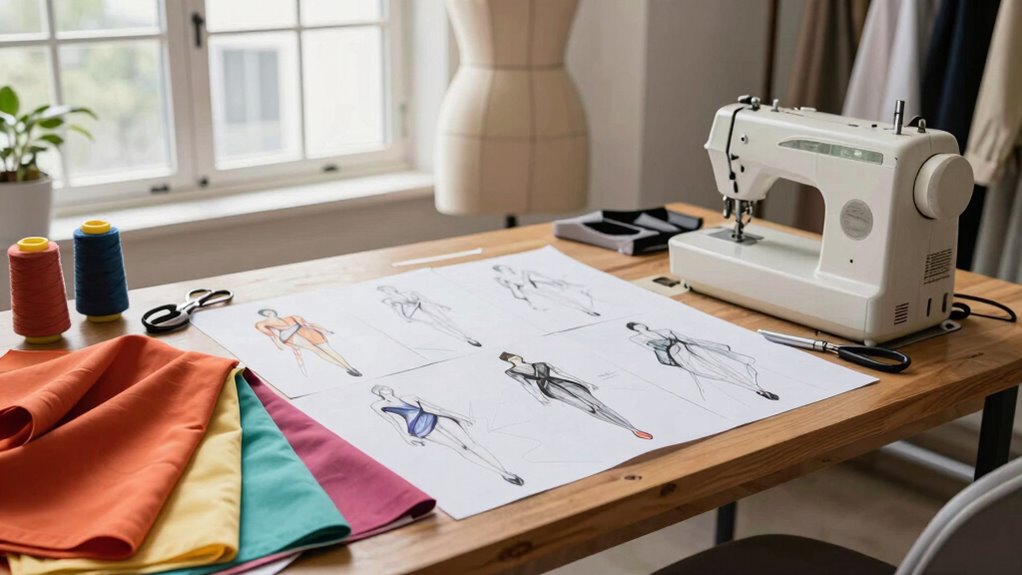
Creating patterns and prototypes transforms design concepts into tangible garments. You start by translating technical sketches into detailed patterns, either by hand or using CAD software like Adobe Illustrator. These patterns serve as blueprints, guiding fabric cutting and assembly. Next, you sew initial prototypes, often with substitute materials, to evaluate fit, silhouette, and construction. You develop size charts and grading to guarantee proper fit across sizes. Multiple prototypes are produced, allowing you to conduct fit sessions and identify necessary adjustments. Feedback from these sessions leads to revisions in patterns and tech packs. This iterative process refines the design, ensuring the final garment matches your vision, fits well, and is ready for production. Understanding how deep-sky imaging works can inspire innovative approaches to pattern-making and fabric selection.
Conducting Fitting Sessions and Refinements
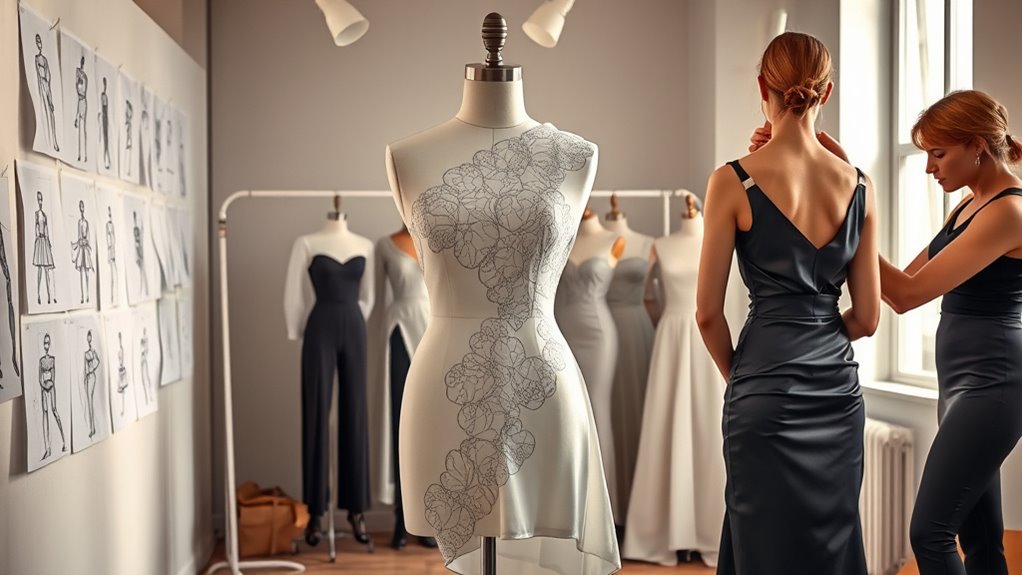
Once your prototypes are ready, conducting fitting sessions becomes a crucial step to assess how the garment performs on a live body. During these sessions, you’ll observe how the fabric moves, how the fit feels, and if any areas need adjustment. Take detailed notes on any tight spots, bunching, or gaps, and compare the prototype to your design intent. You may find that seams need to be taken in, hemlines adjusted, or darts repositioned for a better fit. Use this feedback to refine your pattern and construction details. Multiple fittings might be necessary to perfect the silhouette, comfort, and overall aesthetic. This iterative process ensures the final garment aligns with your vision while fitting comfortably on the target body. Additionally, paying attention to local craftsmanship can inspire subtle enhancements that reflect Italian artisanal quality.
Finalizing Production and Quality Checks
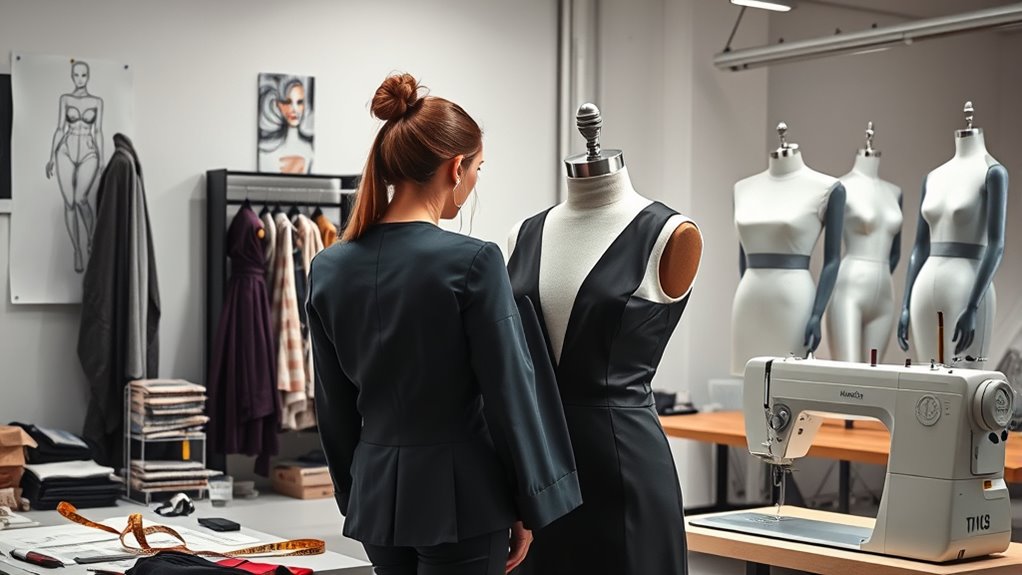
As you approach the final stage of production, it’s essential to implement thorough quality checks to guarantee your garments meet all standards. Begin with detailed inspections during sewing and finishing, ensuring seams are secure, hems are even, and labels are correctly attached. Conduct consistency checks on color, fabric, and measurements across batches. Use checklists to verify each item adheres to your tech pack specifications. Before packaging, perform final visual reviews for defects, stains, or inconsistencies. Label and tag garments accurately, and prepare documentation for shipping. Quality control teams should inspect a sample of each batch to catch any issues early. Once everything passes, coordinate logistics to meet your shipment deadlines. This meticulous process ensures your finished garments are high-quality and ready for market. Implementing quality control processes throughout the final stages helps maintain standards and reduces the risk of defects.
Manufacturing and Assembly Processes
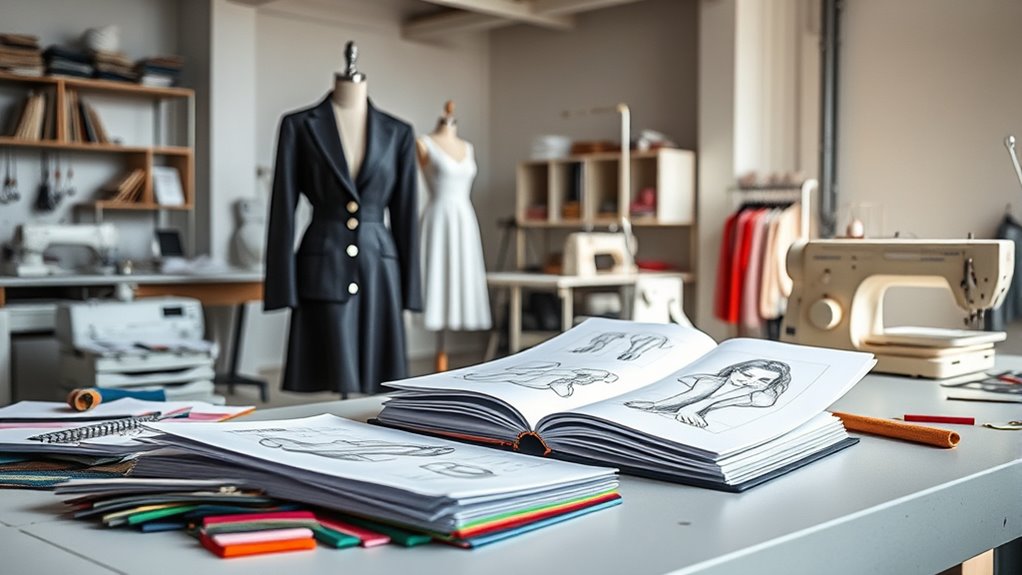
Manufacturing and assembly are the critical steps where your designs come to life through precise coordination of processes. You begin by translating your approved tech packs into cutting patterns, ensuring fabric usage is optimized. Cutting fabric pieces accurately is essential for consistent fit and quality. Next, skilled seamstresses or automated machines sew the pieces together, following detailed instructions. During assembly, attention to detail ensures seams, hems, and finishes align with your design vision. Finishing touches like pressing, labeling, and packaging happen as the garments move toward completion. Quality checks continue throughout, catching any issues early. This stage transforms your technical specifications into tangible garments, ready for final inspection and shipment. Precision and efficiency here are vital to deliver high-quality products that meet your standards and satisfy your customers.
Preparing for Delivery and Retail Display
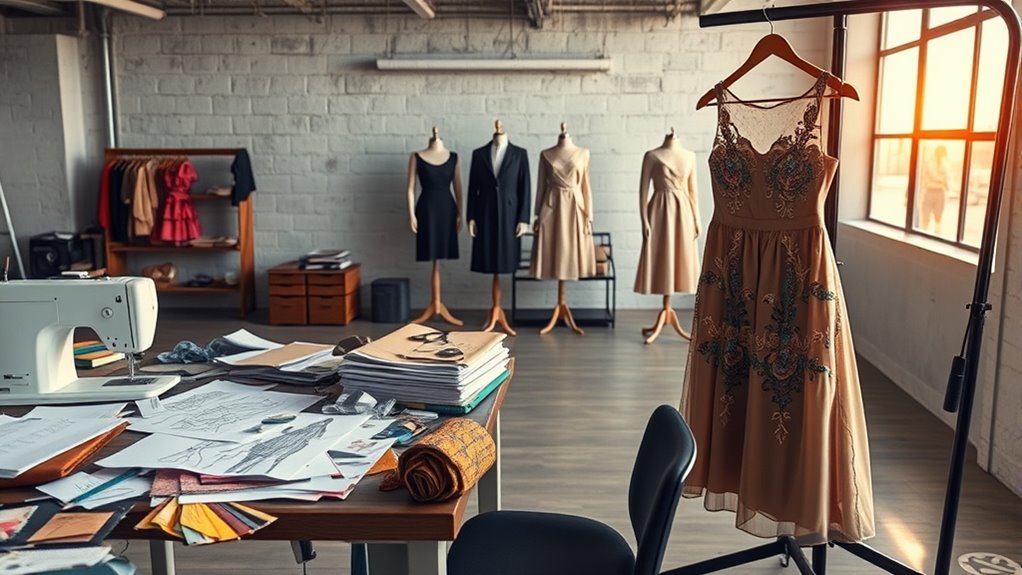
Preparing for delivery and retail display involves meticulous planning to make certain your garments arrive in perfect condition and are showcased effectively. You’ll organize packaging, labeling, and shipping logistics to ensure timely delivery. Quality checks confirm all items meet standards before dispatch. Presentation is key—prepare tags, hangers, and display fixtures that complement your brand. Consider how garments will appear on racks or mannequins to attract customers. Proper packaging protects from damage and maintains quality during transit. Coordinate with logistics partners to meet deadlines. Use this table to streamline your process:
| Step | Action | Purpose |
|---|---|---|
| Packaging | Use protective wraps and branded tags | Prevent damage and promote brand |
| Labeling | Attach care labels and barcodes | Inform customers and track inventory |
| Display Preparation | Arrange fixtures and signage | Highlight key features and attract attention |
Frequently Asked Questions
How Do Designers Choose the Most Effective Color Palettes for Their Collections?
You choose the most effective color palettes by analyzing current trends, market research, and your target audience’s preferences. You create mood boards to gather inspiration and test different color combinations. You also consider the season, fabric choices, and how colors work together in your collection. Testing prototypes and gathering feedback helps you refine your palette, ensuring it’s visually appealing, cohesive, and aligned with your overall design vision.
What Factors Influence the Decision Between Manual and Digital Pattern Making?
You decide between manual and digital pattern making based on your project’s complexity, timeline, and skill set. If you need quick adjustments or precise measurements, digital tools like CAD software are ideal. Manual pattern making offers tactile control and suits detailed, handcrafted designs. Consider your experience and resources, balancing speed and craftsmanship, to choose the method that best aligns with your design goals and production needs.
How Are Sustainable or Eco-Friendly Materials Integrated Into the Production Process?
You enthusiastically swap out conventional fabrics for eco-friendly ones like organic cotton or recycled polyester, making sustainability your new best friend. You source these materials from suppliers who brag about their green credentials, ensuring your process stays eco-conscious. During sourcing, you test textures and durability, seamlessly weaving sustainability into your tech packs and prototypes. It’s like giving your garments a guilt-free glow-up—because fashion should be fabulous and eco-friendly, right?
What Are Common Challenges Faced During the Sampling and Fitting Stages?
During sampling and fitting, you often face challenges like achieving the perfect fit, as initial prototypes may not match your vision. Fabric behavior and construction issues can cause delays, requiring multiple revisions. Time constraints and coordinating feedback from various stakeholders add pressure. Additionally, balancing aesthetics with functionality can be difficult, especially when trying to maintain design integrity while making necessary adjustments to improve comfort and fit.
How Does Technology Enhance Quality Control During Manufacturing?
Technology enhances quality control during manufacturing by enabling real-time monitoring and precise inspections. You can use digital tools like cameras and scanners to detect defects early, guaranteeing consistency across batches. Automated systems track fabric and sewing quality, reducing human error. Data analytics help identify patterns, allowing you to address issues proactively. Overall, tech streamlines QC processes, improves accuracy, and ensures your garments meet high standards before shipping.
Conclusion
Now, with your finished garment ready to conquer the world, you’ve transformed a simple sketch into a fashion masterpiece that could make heads turn and jaws drop. Every stitch, every detail, has been carefully crafted through an epic journey of creativity and precision. So, get ready to see your design walk off the rack and into the spotlight — because your fashion creation is about to make the runway blush and the streets its new runway!