To stay comfortable in stilettos, choose heels around 4 cm to reduce strain and improve stability. Look for shoes with a broad, chunky heel base for better support and balance. Use insoles or inserts to cushion your feet and provide extra arch support. Pay attention to your body’s signals — take breaks, stretch, and switch to flats when needed. Keep your posture upright and take smaller steps for added stability. For more practical tips, keep going—you’ll find helpful advice to keep your feet happy all day.

Get your wardrobe favorites delivered free with Prime
- Fast, free delivery on millions of items
- Prime Video, Amazon Music and more included
- Member-only deals all year
Key Takeaways
- Opt for heel heights around 4 cm and avoid heels over 7.5 cm to reduce pain and improve stability.
- Use insoles, padding, and supportive inserts to cushion feet and distribute pressure evenly.
- Choose shoes with wider, chunkier heel bases for better balance and reduced ankle strain.
- Maintain proper posture, engage core muscles, and take smaller steps to enhance comfort and stability.
- Take regular breaks, stretch calves and feet, and switch to flatter shoes to prevent discomfort and injury.
Choosing the Right Heel Height for Comfort and Stability
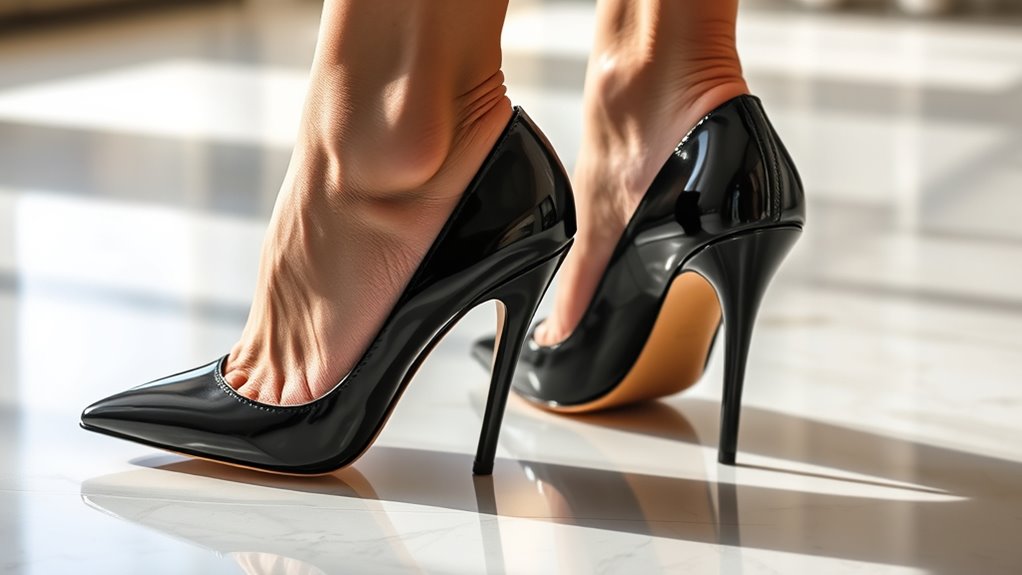
When selecting high heels, it’s important to prioritize both comfort and stability. Aim for heel heights between 3.76 and 4.47 centimeters, as they help maintain balance and reduce fatigue. Heights under 7.5 centimeters avoid causing significant body pain, making them a safer choice for extended wear. Research shows that around 4.13 centimeters, with a small margin, optimizes your heart rate and minimizes gait disturbance. A heel height close to 4 centimeters offers a stable center of pressure and less plantar pressure after an hour of walking. Avoid heels over 7.5 centimeters to steer clear of pain thresholds. Keep in mind, a heel height of about 3.9 centimeters can impair postural control, so choose a height that supports both comfort and stability during your day. Incorporating lifestyle habits like proper foot exercises and stretching can further enhance comfort and reduce strain.
Selecting Shoes With a Stable Heel Base for Better Gait Support
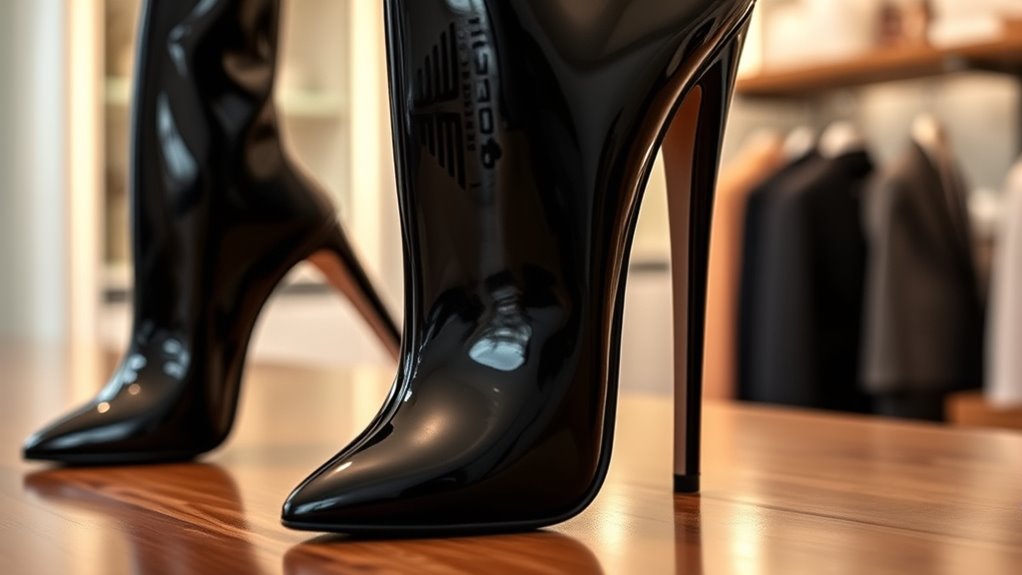
A stable heel base plays a crucial role in supporting your gait and preventing injuries. When choosing high heels, look for shoes with a wider, broader heel base. A larger heel base distributes your weight more evenly, reducing pressure on your ankles and lowering the risk of twists or sprains. It also enhances overall stability, helping you walk confidently without wobbling. Shoes with a stable heel base, such as block or chunky heels, provide better balance than narrow stilettos. This added support minimizes fatigue and promotes better posture. Always check that the heel base feels secure and firm under your foot. Prioritizing stability in heel design ensures a safer, more comfortable walking experience, especially during extended wear. Additionally, considering footwear stability features can help you select shoes that offer optimal support and comfort for long-term wear. Incorporating proper fit is equally important to prevent discomfort and ensure your heels stay supportive throughout the day. Using shoes with a broader heel base can significantly improve your overall comfort and reduce strain on your feet. Moreover, selecting shoes with reliable security features can further prevent slips and falls, enhancing safety during prolonged use. To further enhance stability, some brands now incorporate innovative sole technology that provides better grip and balance.
Enhancing Comfort With Proper Insoles and Inserts

Using the right insoles and inserts can considerably boost the comfort and support of your high heels. Total contact insoles distribute pressure evenly across your foot, reducing pain and fatigue. Shock-absorbing materials can soften impact forces, helping you stay steadier and more balanced. Inserts with arch support improve stability and reduce strain on your plantar fascia. For added comfort, choose cushioned soles that absorb shock and decrease pressure points. Replacing your existing insoles with supportive, well-designed inserts can also help prevent common issues like heel slippage and foot pain. When selecting inserts, focus on those that match your foot shape and heel height. Proper insoles make a noticeable difference, allowing you to wear your favorite stilettos longer without discomfort. Pressure distribution plays a key role in overall foot comfort during prolonged wear, especially when combined with proper fit and supportive materials. Incorporating customized orthotics can further enhance comfort by addressing specific foot needs.
Recognizing and Avoiding Pain Thresholds in High-Heel Wear
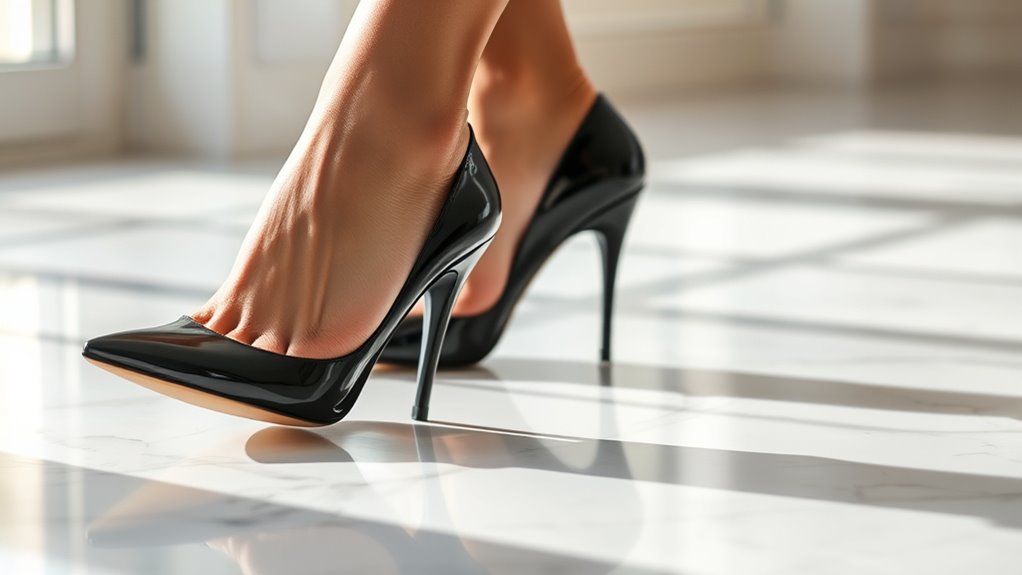
Pay attention to how your feet and body feel as you wear high heels, so you can spot early signs of discomfort. Keep an eye on heel height and avoid pushing beyond your pain thresholds, especially around 7.5 cm or longer wear. Recognizing discomfort signals early helps you prevent pain and maintain better stability throughout the day. Additionally, understanding your pain thresholds can help you choose more comfortable footwear options and prevent long-term foot issues. Monitoring your body’s response during wear can further aid in avoiding strain and discomfort over time, especially when selecting shoes with appropriate fit and support. Being aware of your foot anatomy and biomechanics can also improve your overall comfort and reduce the risk of injury. Incorporating aquatic exercise into your routine can also strengthen your feet and legs, making high-heel wear less taxing on your body.
Identifying Pain Thresholds
Recognizing your pain thresholds when wearing high heels is essential to avoid discomfort and injury. You need to listen to your body’s signals before pain escalates. Here are three key indicators:
- Persistent aching or burning sensation — if your feet or legs hurt continuously, it’s time to pause.
- Numbness or tingling — these signs suggest nerve compression or poor circulation, risking long-term damage.
- Unsteady gait or imbalance — feeling wobbly indicates your stability is compromised, increasing fall risk.
Pay attention to these cues. Once you notice any of these symptoms, remove your heels, stretch, and give your feet a break. Recognizing your pain thresholds helps you enjoy stilettos safely without sacrificing comfort.
Monitoring Heel Heights
Monitoring heel height during wear helps prevent discomfort and injury by keeping you aware of when your body signals that a threshold has been reached. Keep track of your heel’s height, aiming for around 4 cm, which offers ideal balance and stability. Heights over 7.5 cm tend to increase pain and compromise posture, so avoid prolonged wear at these heights. Use your own comfort cues—if you start feeling strain, soreness, or fatigue, it’s time to lower the heels or take a break. Consider measuring your heels regularly to ensure they stay within safe limits. Staying mindful of heel height helps you avoid crossing pain thresholds, allowing you to enjoy stylish shoes without sacrificing comfort or safety.
Recognizing Discomfort Signs
Being attentive to your body’s signals during high-heel wear is essential to prevent discomfort and injury. If you notice persistent pain, numbness, or tingling, it’s a clear sign you’re reaching your body’s pain threshold. Ignoring these signs can lead to long-term damage. To avoid this, watch for:
- A burning or stabbing sensation in your feet or calves, indicating overexertion.
- Numbness or tingling that persists after removing your shoes, signaling nerve compression.
- Unusual fatigue or instability, which shows your muscles are overstressed or your balance is compromised.
Being aware of the pain thresholds in your feet can help you recognize early warning signs and prevent injury. Pay close attention when these symptoms appear. Take breaks, stretch, or change into flatter shoes to prevent injury and keep your feet healthy while enjoying your heels. Additionally, understanding the importance of proper footwear choices can significantly reduce discomfort during prolonged heel wear. Incorporating foot support strategies, such as insoles or padding, can further enhance comfort and reduce strain. Using essential oils for foot care, like lavender or peppermint, may also help soothe tired feet and promote relaxation after wearing heels. Recognizing the signs of fatigue early can help you adjust your footwear or activity accordingly, minimizing discomfort.
Improving Postural Stability While in Stilettos
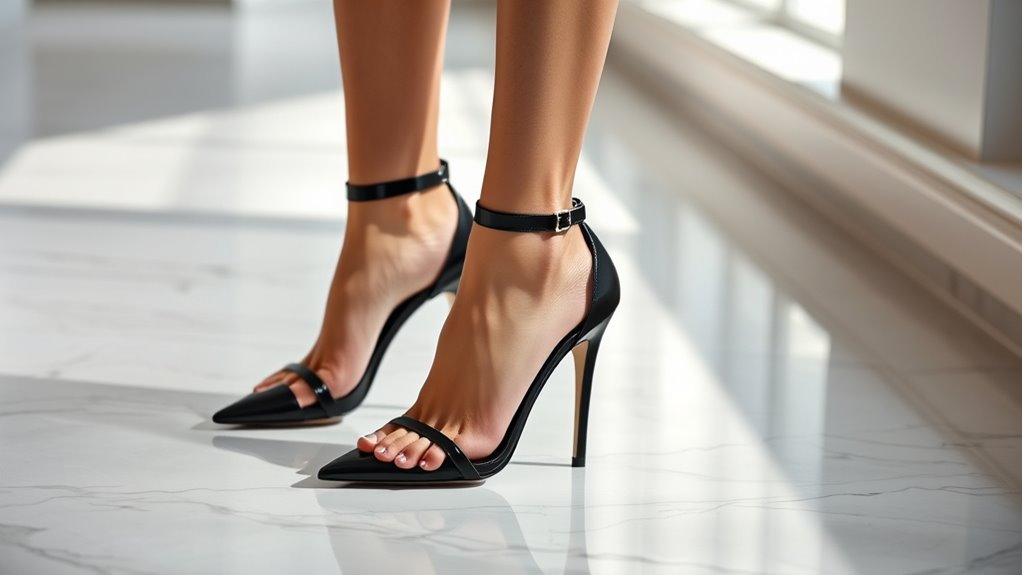
Improving postural stability while wearing stilettos requires mindful strategies to counteract the balance challenges these high heels introduce. Start by engaging your core muscles before walking; a strong core helps maintain alignment and control. Focus on your posture—keep your shoulders back, chest lifted, and gaze forward—to distribute your weight evenly. When standing, place your feet firmly on the ground and avoid locking your knees, which can cause wobbling. Take smaller, controlled steps to improve balance and reduce sway. Practice shifting your weight smoothly from heel to toe during each stride. Wearing shoes with a wider heel base can also enhance stability. Incorporating energy-efficient footwear options designed for better support can further improve comfort and balance. Additionally, practicing postural stability exercises regularly can strengthen stabilizer muscles, making it easier to stay steady in stilettos. Incorporating balance training into your routine helps develop proprioception and coordination, which are essential for maintaining stability. Finally, perform gentle balance exercises regularly to strengthen stabilizer muscles, making it easier to stay steady in stilettos.
Practical Tips for Reducing Foot and Body Strain

Wearing high heels can put significant strain on your feet and body, but you can reduce discomfort by adopting simple, practical habits. First, choose heels no higher than 2 inches (5 cm) to lower strain and protect your joints. Second, take regular breaks—remove your shoes, stretch your calves, and wiggle your toes to prevent tightness and fatigue. Third, walk heel-to-toe, rolling smoothly from heel to ball of foot; this enhances balance and reduces stress on your arches. Additionally, consider using insoles or inserts to cushion your feet and distribute pressure evenly. Staying mindful of your posture and avoiding prolonged standing in heels will also help minimize aches and prevent injuries. Incorporating proper footwear choices and supportive accessories can further improve comfort. Remember that ergonomic footwear can make a noticeable difference in comfort levels. Small changes can make high heels more comfortable and keep you feeling confident all day.
Maintaining Foot Health With Smart High Heel Practices

Maintaining foot health while wearing high heels requires adopting smart practices that reduce strain and prevent injuries. Keep heel height around 4 cm to balance stability and comfort, avoiding heels over 7.5 cm that increase pain and postural issues. Choose shoes with a wider heel base to improve gait stability and lower injury risk. Use insoles or inserts designed to distribute pressure evenly and absorb shock, especially if you’ll be standing or walking for hours. Regularly stretch your calves and plantar fascia to prevent tightness and injuries. Walk heel-to-toe to promote better balance and reduce strain on your feet. Take breaks to remove your shoes, wiggle your toes, and stretch your feet, helping to prevent fatigue and maintain overall foot health during long wear.
Frequently Asked Questions
How Do Heel Height and Base Size Interact to Affect Stability?
You’ll find that a lower heel height combined with a larger heel base greatly improves stability. When your heel is under 7.5 cm and has a broad base, you experience better balance and reduced ankle injury risk. The bigger base distributes pressure more evenly and shifts the center of pressure medially, supporting dynamic stability. So, choosing a moderate heel with a wider base keeps you steadier and more comfortable during wear.
Can Specific Insoles Prevent Common High Heel Injuries?
Yes, specific insoles can help prevent common high heel injuries. You should look for insoles that offer total contact support to evenly distribute pressure, reducing plantar pain and impact forces. Shock-absorbing materials improve balance and stability, while arch supports and cushioned soles lessen foot pressure. These features help prevent injuries like ankle sprains, plantar fasciitis, and fatigue, making your heel-wearing experience safer and more comfortable.
What Are Signs of Exceeding Pain Thresholds in Heels?
Think of your feet as a delicate balancing act on a tightrope; when you push beyond comfort, the tension becomes clear. Signs you’re exceeding pain thresholds include persistent aching, numbness, or tingling, especially after wearing heels over 7.5 cm or for more than 3 hours. You may also notice increased fatigue, swelling, or instability. Trust these signals—your body’s way of telling you to ease up before injury strikes.
How Does Experience Influence Postural Control in High Heels?
Your experience considerably influences your postural control in high heels. As you gain more practice, you’ll develop better ankle strategies, helping you maintain balance despite increased sway. Experienced wearers tend to adapt faster and use different muscle activation patterns, making walking in heels feel more natural and stable. However, regardless of experience, heels over 3.9 cm can still challenge your stability, so stay mindful and practice safe walking techniques.
Are There Differences in Gait Efficiency Between Heel Heights?
Ever wonder if your heel height affects your gait efficiency? Yes, it does. Lower heels, around 4 cm, promote better energy use and stability, making walking easier and less tiring. As heel height increases beyond 7.5 cm, gait becomes less efficient, with more energy expenditure and instability. To stay comfortable, opt for moderate heights, and incorporate supportive insoles and proper walking techniques to enhance your gait.
Conclusion
Wearing high heels can be as smooth as walking on a tightrope if you follow these tips. Choose the right height, add supportive insoles, and pay attention to your body’s signals. Keep your posture steady and take breaks when needed. With smart practices, you can enjoy stylish heels without the pain—like a dancer gliding effortlessly across the stage. Stay mindful and confident, and your high heel experience will always be comfortable and chic.
Fall Picks
fall essentials
As an affiliate, we earn on qualifying purchases.