
To keep your feet healthy while staying stylish, choose well-fitting shoes with proper support, like good arch support and a comfortable fit. Look for trendy designs that incorporate cushioning, breathable materials, and ergonomic features. Avoid tight shoes that can cause discomfort and long-term issues. Regular foot care, stretching, and using innovative, eco-friendly footwear options can also make a difference. Keep these tips in mind, and you’ll discover how style and foot wellness go hand in hand.
Key Takeaways
- Choose well-fitting shoes with proper arch support and sufficient toe box space to prevent discomfort and long-term issues.
- Opt for stylish footwear made with supportive, breathable, and eco-friendly materials that promote foot health.
- Incorporate foot exercises and routine inspections to maintain flexibility, strength, and identify early signs of problems.
- Rotate shoes regularly and avoid tight or narrow styles to reduce pressure and prevent deformities.
- Use innovative features like orthotic insoles, moisture-wicking fabrics, and smart technology for personalized comfort and health monitoring.
Understanding Common Foot Issues and Their Causes
Understanding common foot issues begins with recognizing how footwear choices directly impact foot health. Ill-fitting shoes, especially those that are tight or poorly structured, can cause a range of problems like bunions, corns, and plantar fasciitis. High heels often contribute to foot pain, deformities, and lasting damage by putting excess pressure on the toes and arches. Flat shoes lacking proper support can lead to flat feet or exacerbate existing conditions. Conditions like arthritis and peripheral neuropathy are also linked to footwear, especially when shoes don’t accommodate swelling or nerve issues. Lifestyle habits, such as prolonged standing or wearing unsupportive footwear, increase your risk of developing foot problems. Paying attention to how your shoes fit and support your feet is essential for preventing these common issues and maintaining foot health. Additionally, choosing footwear with appropriate arch support can significantly reduce strain on your feet and prevent long-term issues.
The Role of Stylish Shoes in Foot Health
Many people believe that stylish shoes must compromise foot health, but this isn’t necessarily true. Advances in footwear design now combine fashion with function, helping you stay trendy without risking damage. Modern stylish shoes often include features like better arch support, cushioned insoles, and ergonomic shapes, which promote foot stability and comfort. The growing market for orthopedic and recovery footwear shows that you don’t have to sacrifice style for health. You can find fashionable options made with breathable, sustainable materials that support your feet’s natural anatomy. Additionally, Free Floating design principles allow for better weight distribution and flexibility, further enhancing comfort. When you choose shoes that blend sleek design with proper support, you reduce your risk of developing common foot issues like bunions, plantar fasciitis, or heel pain. Staying stylish while caring for your feet is more achievable than ever.
Choosing the Right Fit and Support for Your Feet
Choosing the right fit starts with proper shoe sizing to prevent discomfort and long-term issues. You should also prioritize arch support, which helps maintain foot stability and reduce pain. Additionally, pay attention to materials and cushioning, as they influence comfort and foot health throughout the day. Using the right shoe materials can also help improve overall foot support and durability.
Proper Shoe Sizing
Getting the right fit and support from your shoes is essential for maintaining foot health and comfort. Ill-fitting shoes can lead to blisters, bunions, and long-term issues like deformities. To ensure proper sizing, always measure your feet at the end of the day when they’re most swollen. Try shoes on both feet, as one might be larger. Walk around to test comfort, ensuring there’s enough space for your toes to move freely.
- Check for a thumb’s width of space at the toe box.
- Feel for snugness around the heel without slipping.
- Prioritize support over style to prevent discomfort and injury.
- Remember that proper shoe support plays a key role in preventing foot problems and maintaining overall foot health.
Proper shoe sizing isn’t just about length; width and arch support matter equally for overall foot health.
Arch Support Importance
Proper shoe sizing goes beyond length and width; arch support plays a key role in maintaining foot health. When your shoes lack proper support, it can lead to pain, fatigue, and long-term issues like flat feet or plantar fasciitis. Good arch support helps distribute pressure evenly across your foot, reducing strain on your arches and heels. It stabilizes your foot’s natural alignment, preventing overpronation or supination that can cause discomfort. Whether you’re wearing heels, sneakers, or flats, choosing shoes with adequate arch support ensures better shock absorption and stability. This support not only enhances comfort but also protects your feet from injury and deformities. Prioritize arch support to keep your feet healthy, especially if you’re on your feet often or dealing with existing foot conditions. Incorporating appropriate footwear features can further improve overall foot health and comfort.
Material and Cushioning
Selecting the right material and cushioning in footwear is essential for guaranteeing a comfortable fit and adequate support. The materials you choose influence breathability, flexibility, and durability, while proper cushioning absorbs shock and reduces pressure on your feet. When shopping, consider soft, breathable fabrics like leather or mesh for everyday comfort. Gel or memory foam insoles provide extra padding and help prevent fatigue.
- Choose materials that breathe to reduce moisture buildup and prevent blisters.
- Opt for cushioning that matches your activity level and foot sensitivity.
- Prioritize supportive soles that absorb impact and promote proper alignment.
Balancing material quality and cushioning ensures your shoes support your foot structure and style preferences, minimizing discomfort and foot problems over time.
Fashion Meets Function: Trends in Orthopedic and Recovery Footwear
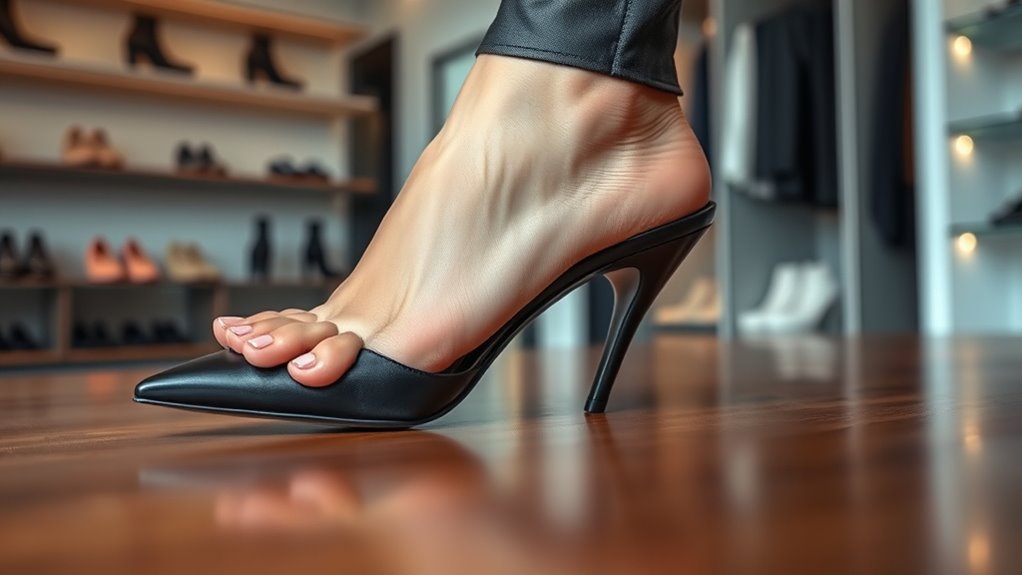
As fashion and function increasingly converge, orthopedic and recovery footwear are evolving to meet both style demands and health needs. Designers now incorporate trendy elements, like sleek silhouettes and modern materials, into supportive shoes. Customized orthopedic options blend comfort with aesthetics, appealing to those seeking both health benefits and style. Recovery shoes, once purely utilitarian, now feature lightweight designs, vibrant colors, and fashionable details, making them suitable for everyday wear. Sustainable and eco-friendly materials are gaining popularity, aligning with current trends. Smart shoes equipped with health monitoring tech are emerging, combining functionality with high-tech appeal. Additionally, the integration of innovative European cloud servers ensures that these footwear brands can provide advanced customization and personalized shopping experiences online. These innovations make it easier to prioritize foot health without sacrificing style, ensuring your footwear supports your well-being while keeping you fashionable.
Tips for Comfortable and Healthy Shoe Wearing
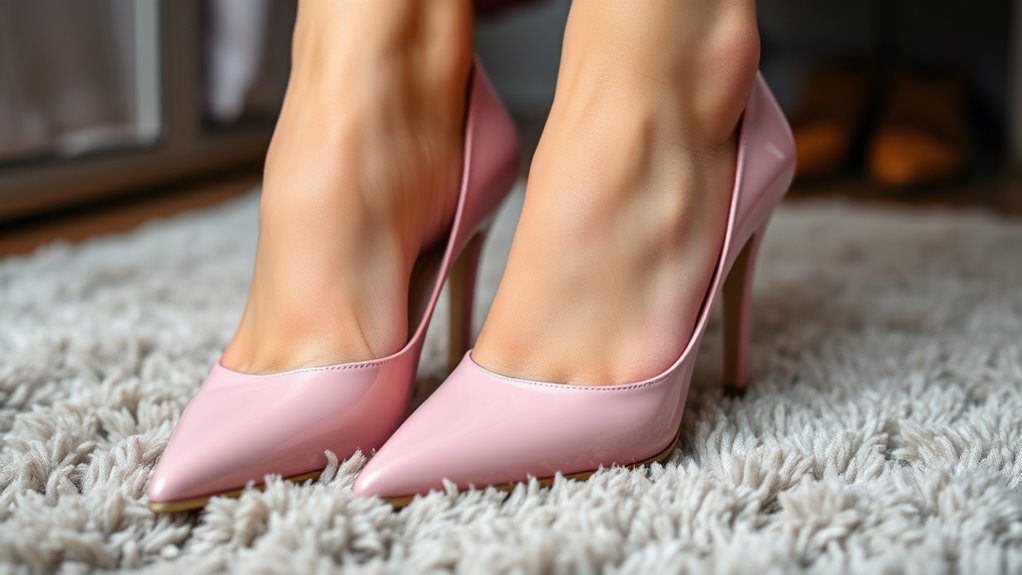
Combining style with health benefits is now easier than ever, thanks to innovative footwear designs that prioritize both comfort and support. To keep your feet happy and healthy, choose shoes that fit well and provide proper arch support. Avoid tight or narrow models that squeeze your toes, leading to bunions or discomfort. Break in new shoes gradually, and don’t wear them all day initially. Rotate footwear to prevent strain and allow your feet to breathe. Remember to check for cushioning and a firm heel counter, which stabilize your foot. Additionally, selecting safety glasses with proper impact resistance can help protect your eyes during activities that may pose hazards.
Innovative Technologies and Sustainable Materials in Footwear
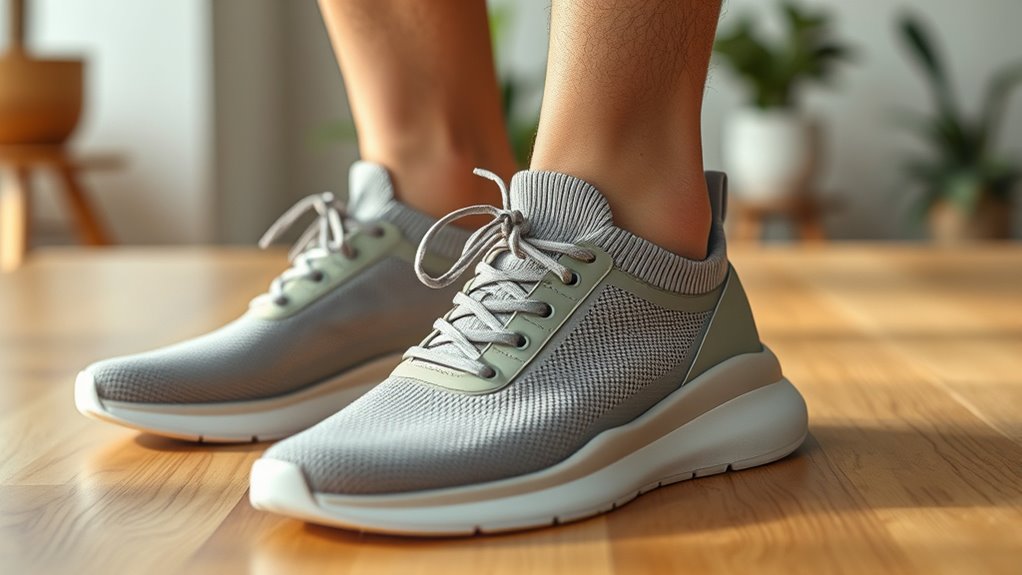
Innovative technologies are transforming footwear by enhancing comfort, support, and health benefits. You’ll find smart insoles that monitor foot pressure and gait, helping prevent injuries and improve posture. Adaptive cushioning materials absorb shock efficiently, reducing fatigue during long wear. Sustainable materials like recycled plastics, plant-based leathers, and biodegradable foams are now common, making shoes eco-friendly without sacrificing style. 3D printing allows customization, ensuring a perfect fit and personalized design. Companies are integrating moisture-wicking fabrics and antimicrobial treatments to keep feet dry and odor-free. Additionally, safety standards are increasingly incorporated into shoe design to ensure reliable support and durability, aligning with consumer health and safety concerns. These advancements make stylish shoes more functional, supporting foot health while aligning with eco-conscious values. By choosing footwear built with innovative tech and sustainable materials, you’re not only elevating your style but also contributing to environmental preservation and long-term foot wellness.
Preventive Measures to Keep Your Feet Happy and Healthy

Taking proactive steps to care for your feet can prevent common problems like bunions, calluses, and heel pain before they develop. Choosing well-fitting shoes with proper arch support is essential. Regularly inspect your feet for signs of discomfort or irritation. Incorporate stretching and strengthening exercises to improve flexibility and prevent strain. Prioritize foot hygiene to avoid infections and skin issues. Consider visiting a podiatrist for routine check-ups, especially if you have existing health conditions. Additionally, understanding the role of proper footwear in preventing foot issues can help you make informed choices for ongoing foot health.
Frequently Asked Questions
How Can I Identify if My Shoes Are Causing Foot Pain?
You can tell if your shoes cause foot pain by paying attention to discomfort during or after wearing them. If you experience sharp or dull aches, numbness, or tingling, your shoes might not fit well or lack proper support. Check for tightness, pinching, or uneven pressure points. Also, note if pain persists after removing the shoes—this signals they may be contributing to your foot issues.
Are There Specific Styles That Support Foot Health Without Sacrificing Fashion?
You can find stylish shoes that support foot health by looking for designs with good arch support, cushioned insoles, and a wide toe box to prevent pinching. Opt for brands that blend fashion with orthopedics, and choose materials that are breathable and flexible. Avoid high heels and narrow-toed options, and prioritize comfort without sacrificing style. Trendy, supportive shoes help you stay fashionable while protecting your feet.
What Natural Remedies Help Alleviate Common Foot Issues?
Your feet deserve a royal treatment to banish common issues like pain, bunions, and plantar fasciitis. You can try soaking in warm Epsom salt baths to reduce inflammation and soothe soreness. Massaging with essential oils like peppermint or tea tree boosts circulation and relieves discomfort. Applying natural remedies like aloe vera gel calms inflammation, while stretching exercises improve flexibility. Consistent care with these remedies can transform your foot health dramatically.
How Often Should I Replace My Orthopedic or Recovery Shoes?
You should replace your orthopedic or recovery shoes every 6 to 12 months, depending on wear and tear. Regularly inspect for signs of deterioration, like worn-out soles, loss of support, or discomfort. If you notice any of these issues, it’s time for new shoes to maintain proper foot support and prevent injuries. Proper replacement guarantees your feet stay healthy, comfortable, and protected, especially if you rely on these shoes for medical reasons.
Can Custom Orthotics Be Integrated Into Stylish Footwear Options?
Yes, you can definitely integrate custom orthotics into stylish footwear options. Many brands now offer fashionable shoes designed to accommodate personalized insoles, combining comfort with style. You just need to look for shoes with removable insoles or flexible interiors that fit your orthotics snugly. This way, you get the support you need without sacrificing your look, making your foot health and style priorities align seamlessly.
Conclusion
Think of your feet as the roots of your personal garden—when nurtured with care and the right footwear, they flourish. By choosing supportive shoes and paying attention to your foot health, you’re planting seeds for comfort and confidence. With each stylish step, you’re tending this garden, ensuring it stays vibrant and strong. Remember, happy feet grow a confident you—so treat them well and walk your path with pride.