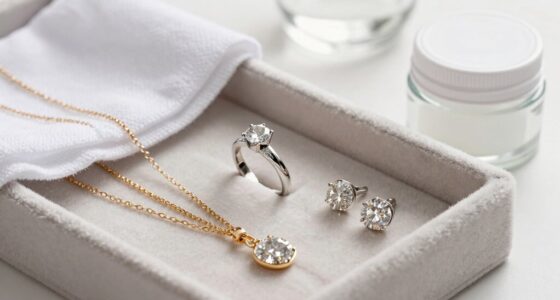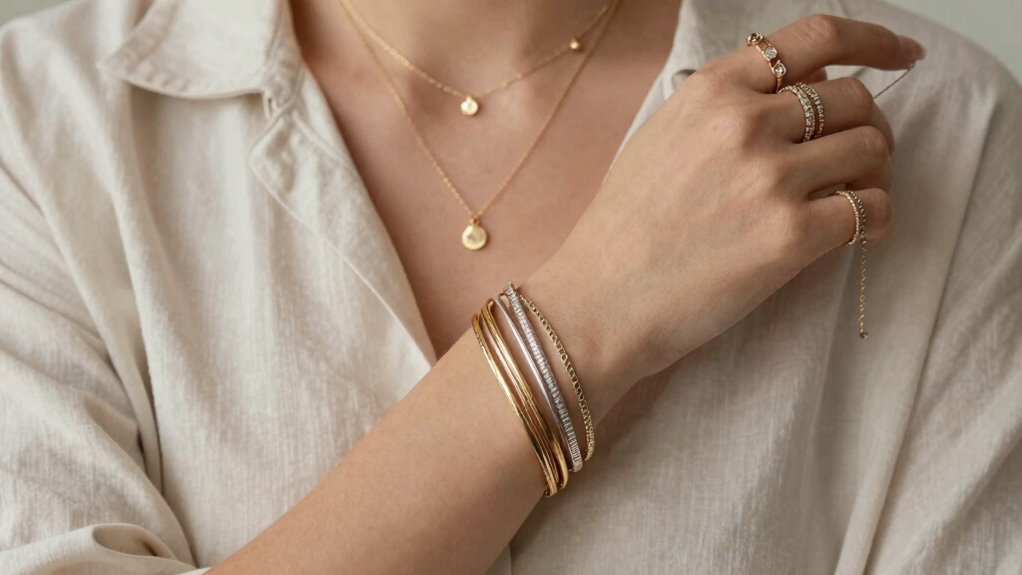
To master jewelry layering, focus on balancing different lengths, textures, and metals, starting with a versatile base piece and adding 2-3 complementary items. Keep necklaces spaced 1-2 inches apart, mix delicate with bold styles, and vary chain textures and finishes for depth. For bracelets and rings, start with basic pieces and build gradually, ensuring each item stands out without clutter. Keep your look cohesive and stylish—explore more tips to perfect your layers.
Key Takeaways
- Vary chain lengths, styles, and textures, spacing necklaces 1-2 inches apart for balanced layering.
- Mix bracelet widths, finishes, and metals, starting with a versatile base piece for a cohesive stack.
- Highlight specific fingers with different ring styles and sizes, stacking close or spaced for visual interest.
- Limit the number of jewelry pieces to maintain balance, using contrast and intentional spacing to prevent clutter.
- Select pendants and clasps that complement your style, positioning them at different heights to avoid overlapping.
Mastering Necklace Layering Techniques
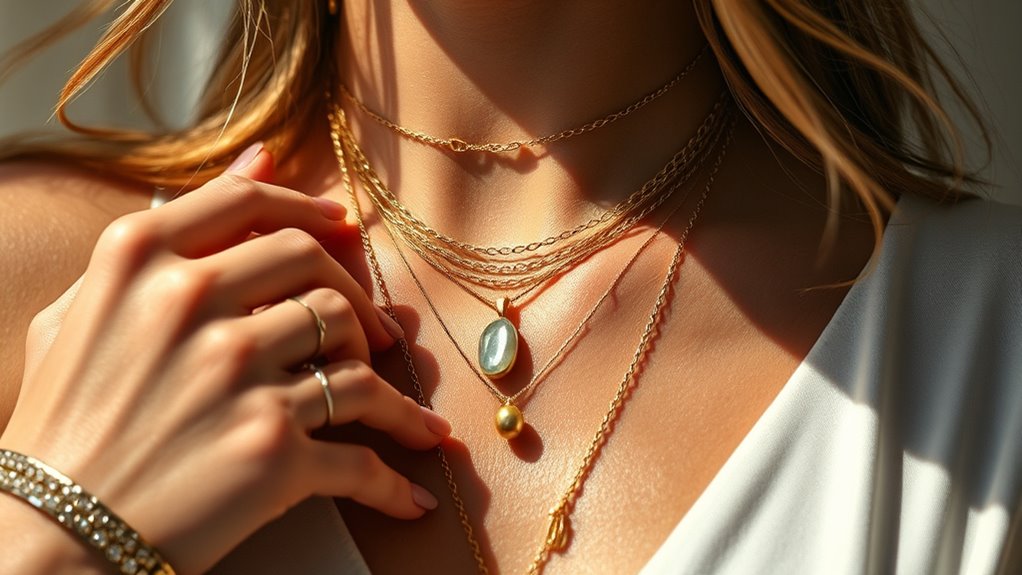
To master necklace layering, you need to understand how to create a balanced and visually appealing cascade of chains. Start by varying chain lengths to achieve a natural flow—think choker, mid-length, and long chains. Begin with the shortest necklace first, then layer outward, ensuring each piece sits comfortably without overlapping too much. Keep necklaces spaced 1-2 inches apart; this separation enhances each piece’s visibility and prevents tangling. Use extenders to fine-tune lengths for perfect spacing and comfort. Opt for different chain styles and textures to add subtle contrast. Remember, your goal is harmony, so avoid overcrowding. A well-layered necklace look balances simplicity with interest, making your jewelry feel curated and intentional without feeling cluttered. Incorporating layering techniques can further elevate your jewelry styling for a cohesive look.
Combining Metals and Textures for Visual Interest
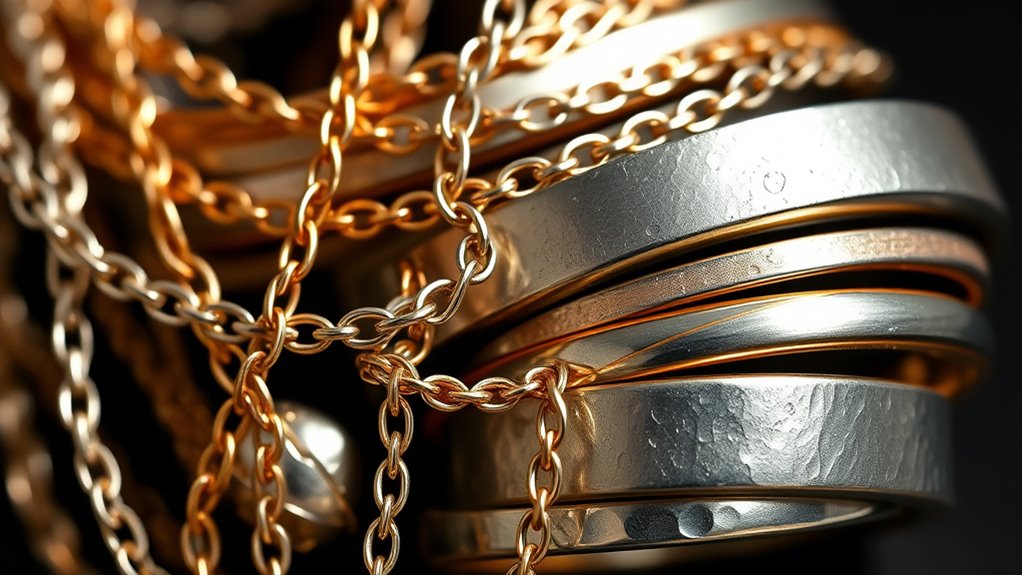
Mixing metals and textures in your necklace collection instantly adds visual interest and depth to your layered looks. It creates a dynamic, personalized style that stands out. To master this, try these tips:
- Combine thick and thin chains to create contrast and dimension.
- Pair smooth metal pieces with textured ones like rope, snake, or cable chains for variety.
- Mix different metals—gold, silver, rose gold—while repeating one metal across your layers for cohesion.
- Add gemstones or beads to simple chains to introduce sparkle and color without overwhelming the overall look.
- Incorporate metal finishes such as matte, polished, or brushed to further enhance your layered style.
Choosing and Arranging Pendants and Clasps
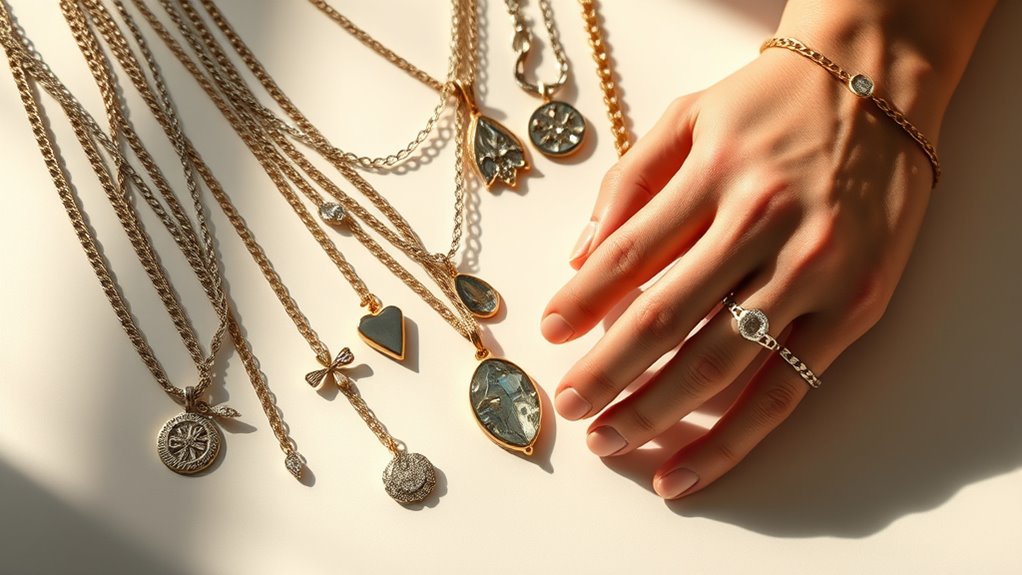
Choosing the right pendants and clasps can elevate your layered jewelry look by adding focal points and ensuring stability. Start by selecting pendants that complement your overall style and other pieces in your stack. Mix shapes and sizes to create visual interest without overcrowding. A large, standout pendant can serve as a statement piece, while smaller charms add subtle detail. When arranging, position your pendants at different heights along the chain to prevent overlapping. Opt for sturdy clasps like lobster or toggle clasps for better security and ease of use. Avoid spring rings for heavier necklaces. Use layered clasp designs or extender chains to prevent twisting and tangling, keeping your jewelry comfortable and well-organized. Additionally, choosing high-quality jewelry components can help ensure your pieces last longer and maintain their appearance over time.
Creating a Cohesive Bracelet Stack
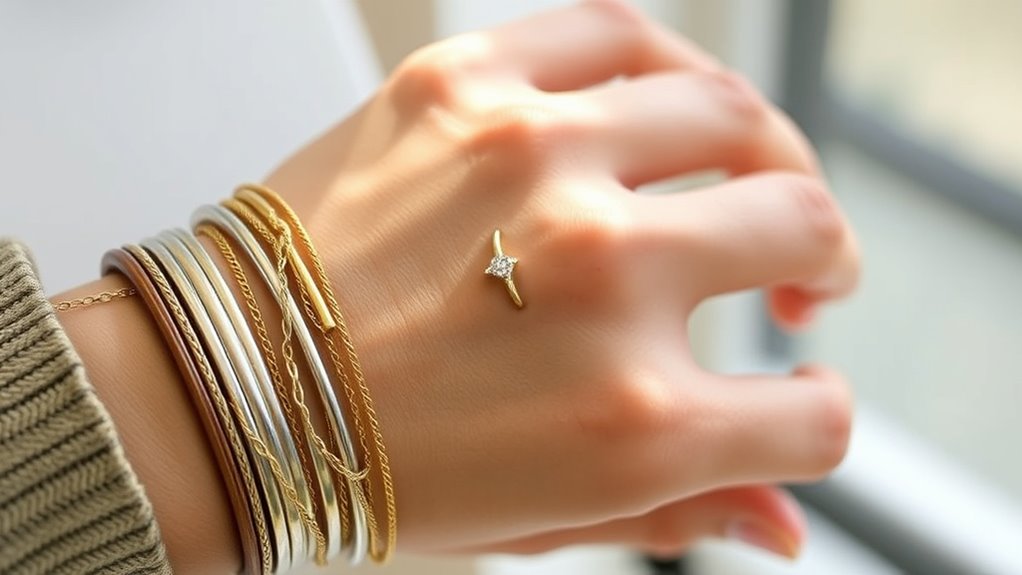
Creating a cohesive bracelet stack starts with selecting a versatile base piece, like a sleek metal cuff or a simple bangle, that sets the tone for your look. From there, you can build with these tips:
- Mix widths and textures, combining thin chains with wider cuffs to add interest.
- Balance materials by pairing delicate bracelets with bold statement pieces for contrast.
- Incorporate different finishes—matte, polished, or textured—to create depth.
- Vary colors subtly by mixing metals or adding small accents like beads or charms for cohesion.
- Consider the layering techniques to ensure your stack remains harmonious and stylish.
Keep in mind, the key is harmony; avoid overcrowding and ensure each piece complements the others. By thoughtfully layering, you create a bracelet stack that feels intentional, stylish, and uniquely yours.
Strategies for Ring Stacking and Placement
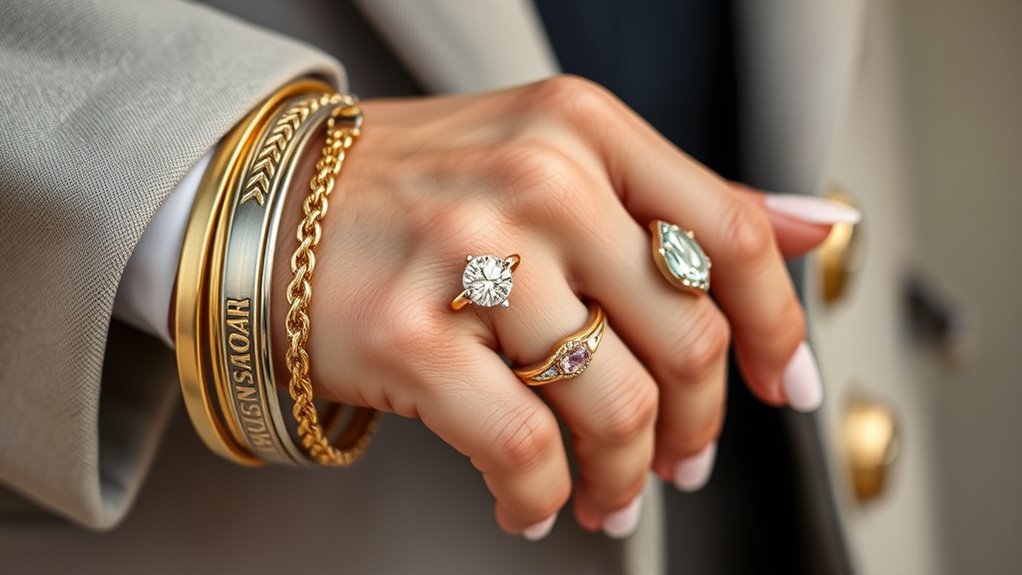
When stacking rings, consider which fingers to highlight and how to balance different styles for a cohesive look. Mixing delicate bands with bold statement pieces adds visual interest, but be mindful of placement to avoid clutter. Experiment with finger combinations to find a style that feels personal and polished. Incorporating variety in styles can help achieve a harmonious layered effect.
Finger Choice and Placement
Selecting the right fingers for ring stacking can elevate your jewelry game by adding intentionality and balance to your look. Focus on these strategies to perfect your placement:
- Prioritize your ring finger for classic elegance, but don’t shy away from stacking on your index or middle finger for a bolder statement.
- Keep some fingers free to prevent clutter and allow each ring to stand out.
- Vary your placements across fingers to create visual interest and harmony.
- Consider the size and style of rings—chunky pieces work best on wider fingers, while dainty bands suit slimmer ones.
- Remember that free floating jewelry arrangements can add a modern touch by allowing rings to appear less confined to traditional stacking methods.
Mixing Ring Styles
Mixing ring styles adds visual interest and personal flair to your stacking game. To create a balanced look, combine dainty bands with chunky statement rings, mixing metals and textures. Place larger, bold rings on middle or index fingers, and use slimmer bands on pinky or ring fingers for subtle contrast. Vary shapes—geometric, floral, or abstract—to keep it fresh. Experiment with stacking rings close together or spaced out for different effects. Use the table below as a quick guide:
| Style | Placement | Metal | Texture | Size |
|---|---|---|---|---|
| Dainty Bands | Middle, Pinky | Gold, Silver | Smooth, Matte | Thin |
| Statement | Index, Ring finger | Rose Gold, Silver | Textured, Beaded | Thick |
| Mixed Textures | Any finger | Mixed metals | Rope, Beaded | Varying |
| Geometric | Middle, Index | Gold, Silver | Geometric Shapes | Medium to Thick |
| Delicate | Pinky, Ring finger | Gold, Rose Gold | Smooth or Textured | Thin |
Adding layering techniques can enhance your overall jewelry aesthetic and help you achieve a cohesive look.
Establishing a Balanced Layering Foundation
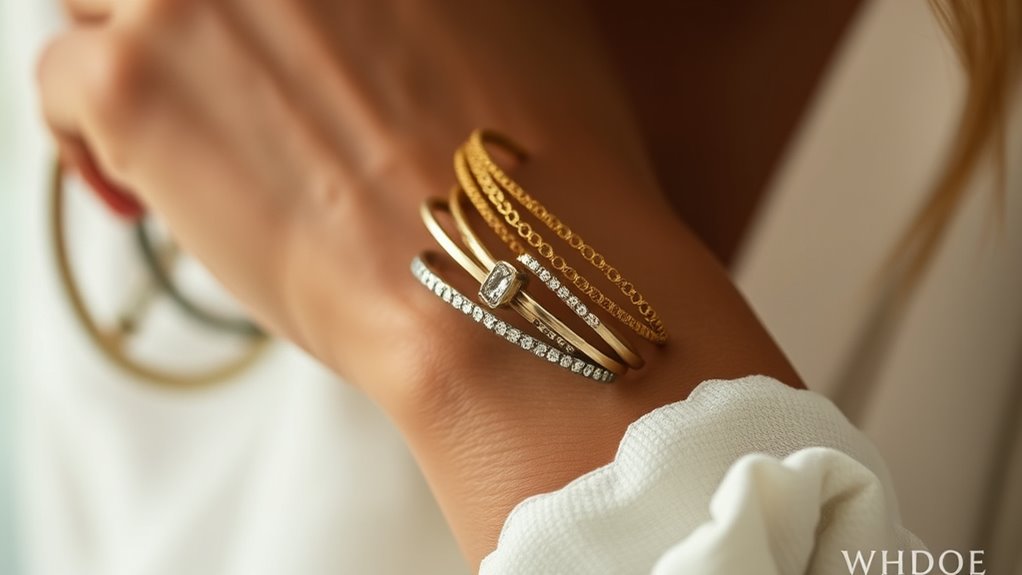
Establishing a balanced layering foundation starts with choosing a focal piece that reflects your style and draws attention. This piece anchors your look and sets the tone for the rest of your jewelry. To build a cohesive base, consider these steps:
- Select a statement necklace or ring that resonates with your personality.
- Keep your color palette simple—stick to neutral metals or a single tone to maintain harmony.
- Vary chain or bracelet lengths to create visual interest without clutter.
- Space your pieces 1-2 inches apart for clarity and to prevent tangling.
- Incorporate energy-efficient jewelry materials that are both sustainable and stylish, aligning with eco-conscious fashion trends.
Matching Jewelry Layers to Your Outfits
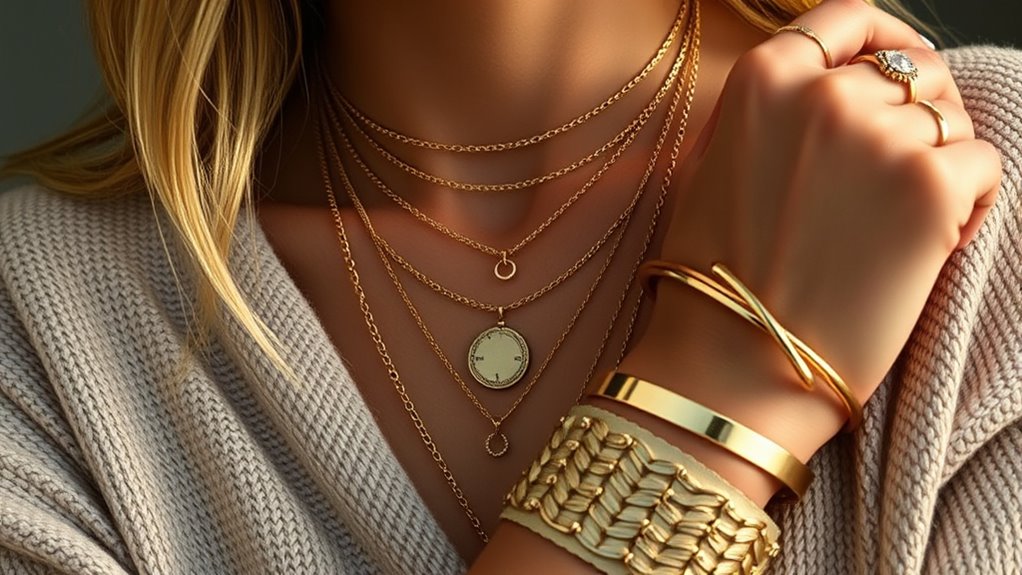
Matching your jewelry layers to your outfits guarantees a cohesive and polished look. Consider the occasion and overall style when choosing your pieces. For casual daytime looks, opt for delicate necklaces, simple bracelets, and minimal rings in coordinating metals. If you’re dressing up, layer statement necklaces with complementary rings and bold bangles that echo the outfit’s color palette. Neutral tones pair well with mixed metals and textures, adding interest without overwhelming the look. Bright colors or patterns call for subtle jewelry that enhances rather than competes. Keep the balance in mind—avoid overlayering if your outfit is busy, and add more jewelry if your outfit is minimalist. The key is harmony, ensuring your jewelry complements your clothing without creating visual clutter. Layering techniques can help you achieve a balanced and stylish jewelry ensemble.
Tips for Avoiding Clutter and Overstacking

To keep your jewelry looks polished, limit the number of pieces you wear at once. Focus on creating a balanced arrangement by mixing contrasting textures and lengths, so your layers don’t overwhelm your outfit. Pay attention to spacing, leaving enough room between pieces to prevent clutter and highlight each necklace’s unique charm. Incorporating visual cues can also help in selecting complementary pieces that enhance your overall look.
Limit Number of Pieces
Limiting the number of jewelry pieces you layer is key to avoiding clutter and maintaining a polished look. Too many pieces can overwhelm your style and make your outfit feel chaotic. To keep it simple and elegant, follow these tips:
- Choose a focal piece that stands out, then add only 2-3 complementary pieces.
- Stick to a consistent metal or color palette to create harmony.
- Avoid stacking multiple large or chunky pieces at once.
- Remove excess jewelry once you’ve reached a balanced, cohesive look.
Focus on Balance and Contrast
Achieving a balanced layered jewelry look requires paying close attention to contrast and proportion. You want each piece to complement the others without overwhelming your overall style. Mix different textures, like smooth and textured chains, to create visual interest. Combine metals—gold with silver or rose gold—to add subtle contrast, but keep a unifying element, like a shared metal tone, for cohesion. Vary chain lengths and sizes to avoid clutter, ensuring each piece stands out individually. Use bold statement jewelry sparingly, balancing it with delicate pieces. Remember, contrast isn’t just about style—it’s about creating harmony, so each layer enhances the next without competing. Aim for a curated look that feels intentional, polished, and well-balanced.
Use Intentional Spacing
Spacing your jewelry thoughtfully guarantees your layered look remains polished and intentional. Proper spacing prevents clutter and helps each piece stand out. To achieve this:
- Keep necklaces 1-2 inches apart to avoid overlapping and tangling.
- Space bracelets with enough room so they don’t look crowded, typically a few millimeters between each.
- For rings, leave some fingers bare or only stack a few rings to maintain balance.
- Adjust lengths using extenders or spacing tools to create a clear separation, ensuring each piece has its own space.
Personalizing Your Jewelry Combinations
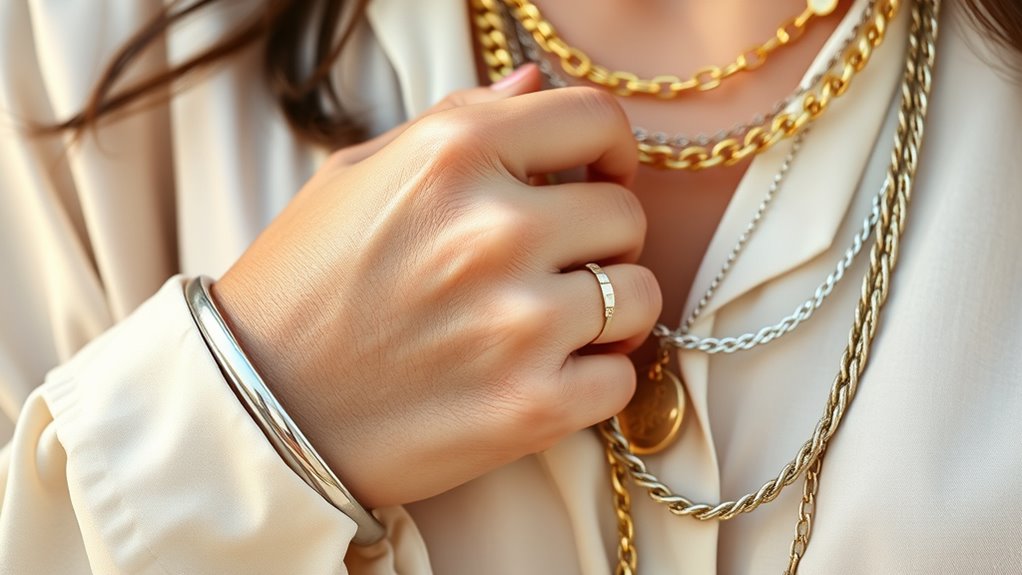
Personalizing your jewelry combinations allows you to express your unique style and create meaningful looks. To do this, choose pieces that reflect your personality, whether it’s a vintage pendant, a family heirloom, or a symbol of a hobby. Mix metals and textures intentionally to add depth and interest. Incorporate meaningful charms or gemstones that hold personal significance. Play with contrast—pair delicate rings with bold statement pieces or layer subtle necklaces with bold pendants. Consider your outfit and mood, customizing your stack for each occasion. Don’t be afraid to experiment; the goal is to craft a look that feels authentic to you. Personal touches make your jewelry more than accessories—they become a reflection of your identity.
Frequently Asked Questions
How Do I Choose the Right Necklace Lengths for My Neckline?
You should choose necklace lengths based on your neckline to highlight your features. For a crew neck, opt for a choker or short necklace to frame your face. V-necks look great with mid-length chains, creating a elongating effect. T-shirts pair well with longer, layered necklaces for a casual vibe. Always consider your outfit’s neckline, and aim for a balance that enhances your look without overwhelming it.
Can I Mix Vintage and Modern Jewelry in One Layered Look?
Absolutely, mixing vintage and modern jewelry adds unique charm. You might find a vintage necklace with intricate details pairs beautifully with sleek, contemporary pieces. Focus on blending metals and textures to create cohesion. Let one vintage piece be the statement, balanced by modern accents. This contrast highlights your style and makes your layered look truly personalized, showing that history and now can coexist effortlessly in your jewelry collection.
What Are the Best Ways to Prevent Necklaces From Tangling During Wear?
To prevent necklaces from tangling, start by choosing chains with different lengths and textures. Always clasp each necklace securely before wearing, and avoid wearing multiple pieces that are too similar. Use a jewelry organizer or individual pouches to keep necklaces separated when not in use. When wearing, fasten necklaces to a single clasp and gently adjust to prevent twisting. Applying a detangling spray can also help reduce chain friction.
How Do I Ensure My Bracelet Stacks Stay Comfortable All Day?
To keep your bracelet stacks comfortable all day, make sure they aren’t too tight or too loose. Choose flexible designs that move easily with your wrist, and layer a few pieces at a time to avoid bulkiness. Use lightweight bracelets and mix textures to prevent irritation. Adjust the fit throughout the day if needed, and consider using softer materials or stretchable bands for added comfort.
What Techniques Can I Use to Make Rings Look More Cohesive When Stacked?
Did you know that stacking rings can instantly boost your style by up to 50%? To make your rings look more cohesive, stick to a unifying metal or finish, like all gold or silver. Mix dainty and chunky styles intentionally, and keep a consistent theme—such as geometric shapes or nature-inspired designs. Balance your stack across fingers and avoid overcrowding for a polished, harmonious look.
Conclusion
By mastering these layering techniques, you’ll create jewelry looks as effortless and refined as a perfectly composed symphony. Think of your accessories as a canvas—each piece adding depth and personality without overwhelming. With a little practice, you’ll find the perfect balance, turning everyday outfits into stunning statements. Remember, layering your jewelry is like fine wine—about harmony and personal taste, making every ensemble uniquely yours.