To get the perfect fit without trying on shoes online, start by measuring your feet accurately at home using a ruler or Brannock device, and record details like length, width, and arch. Compare these measurements to brand size charts and look for fit notes. Use digital tools or customer reviews for insights on sizing and fit, and shop from stores with flexible return policies. Keeping a record of your best fits can help; explore more tips below.
Key Takeaways
- Measure both feet accurately at day’s end and record detailed dimensions including length, width, and arch profile.
- Consult specific brand sizing guides and compare your measurements to their charts for better fit predictions.
- Use online tools like 3D foot scans or AI size recommenders that incorporate your past fit data.
- Choose retailers with flexible return and exchange policies to easily adjust if the shoes don’t fit perfectly.
- Regularly update and organize your foot measurements and fit notes to inform future online shoe purchases.

YVZOTCK Foot Measurement Device | Kids Foot Length Measure Gauge Shoe Sizer Measuring for Infants Kids Men Women Adults | US Standard Shoe Size
The foot measurement device Applicable to Man Woman and Youth,US Size,and accurate way to keep track of your…
As an affiliate, we earn on qualifying purchases.
As an affiliate, we earn on qualifying purchases.
Measure Your Feet Accurately at Home
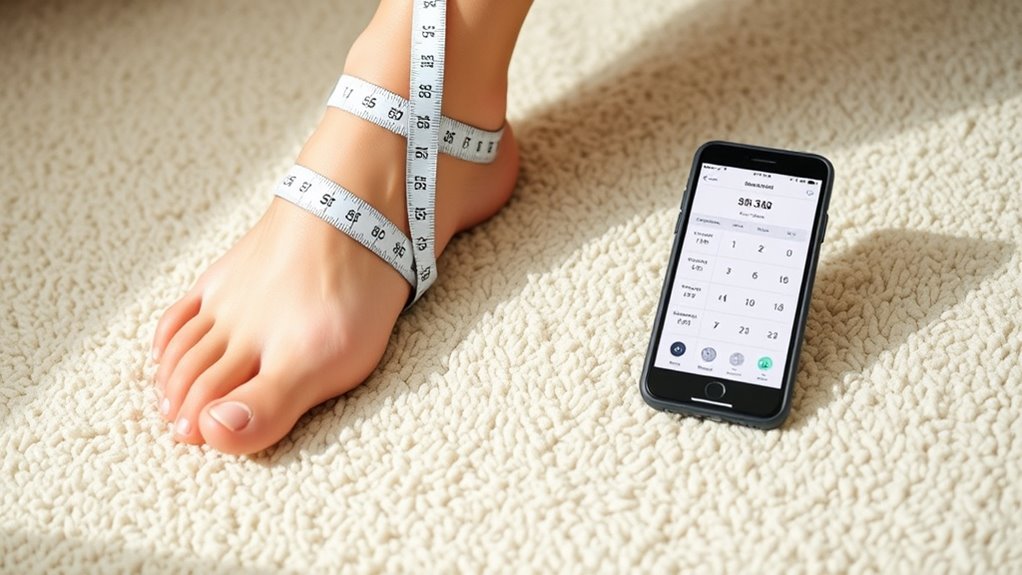
To measure your feet accurately at home, start by gathering the right tools—preferably a Brannock-type device or a sturdy ruler. Sit on a chair and place a piece of paper on a hard, flat surface. Step onto the paper with your heel against a wall or straight edge. Use a pen or pencil to mark the tip of your longest toe and the back of your heel. Measure the distance in centimeters from heel to toe for consistent sizing. Repeat with your other foot because feet often differ in size. Remember to do this at the end of the day when your feet are most swollen. Add an extra 0.5–1 cm for comfort, especially for standing or active shoes. Understanding proper sizing can help improve overall fit and comfort. Accurate measurements help you select the right size online.

Vaikby Foot Measurement Device, Shoe Sizer Measuring Devices Ruler Sizer for Kids Adults, Buy Kids Shoes Online Simply with a Foot Measuring Device
【US STANDARD SHOE SIZE】: our feet length measuring rulers are designed with clear US size printed, come with…
As an affiliate, we earn on qualifying purchases.
As an affiliate, we earn on qualifying purchases.
Understand Brand and Model Size Charts
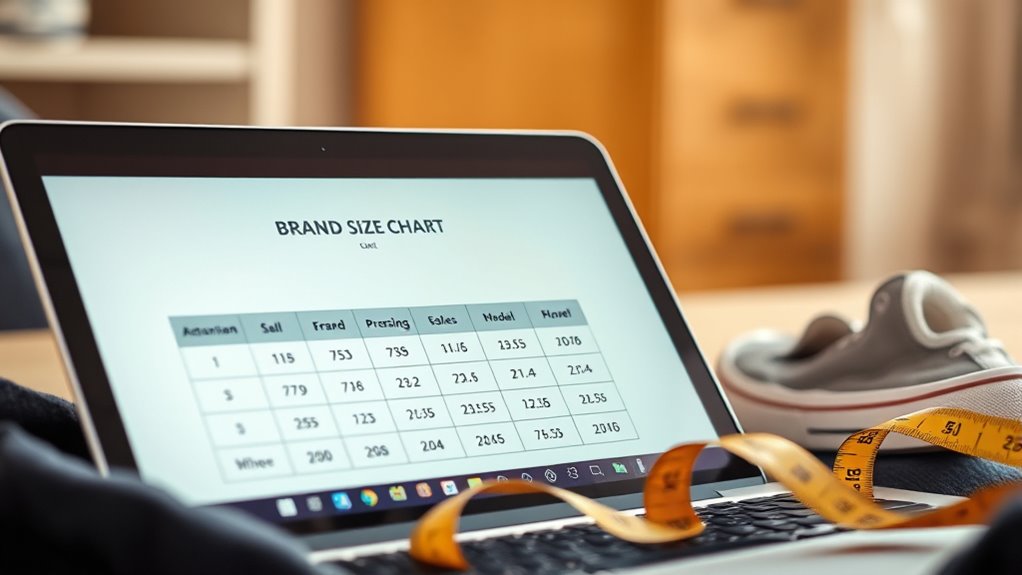
You should always check each brand’s sizing guides rather than relying on generic size labels, as sizing varies across manufacturers. Comparing internal dimensions, like insole or last measurements, helps you find a better fit than just matching your foot size to a chart. Pay attention to fit notes and model-specific info to choose the right size for your foot shape and activity. Additionally, understanding deep-sky imaging principles can be likened to selecting the proper footwear—both require careful measurement and consideration of specific requirements for optimal results.
Check Brand Sizing Guides
Understanding brand and model size charts is essential because sizing varies markedly across manufacturers. You can’t rely solely on standard sizes like US or EU, as each brand may have different internal dimensions. To get it right, consider these steps:
- Compare your foot measurements directly to each brand’s specific size chart, not generic size labels.
- Look for detailed insole or last dimensions provided by the manufacturer to better predict fit.
- Check product descriptions for fit notes—whether the shoe runs small, true to size, or roomy—and adjust your size choice accordingly.
- Use size-conversion tools that incorporate model-specific fit data, especially when switching between brands or styles.
- Keep in mind that brand consistency can influence sizing, so sticking to one brand when possible may simplify your selection process.
These actions help ensure your chosen size matches the shoe’s internal shape, reducing returns and increasing comfort.
Compare Internal Dimensions
Comparing internal dimensions such as insole length and last width is essential because sizing labels alone often don’t reflect how a shoe will fit your foot. Brand and model size charts provide specific measurements that help you understand the actual internal space. Look for details like insole length in centimeters or inches, and note the last width—whether narrow, regular, or wide—since these influence comfort and fit. Some brands publish last shape or internal volume, which can be more accurate than generic size conversions. Always match your foot measurements to the internal dimensions listed, especially if you have wide or narrow feet. Understanding internal dimensions and how they relate to your foot shape can greatly improve your shoe fit. This comparison helps you select a size that offers a better fit, reducing the need for returns and improving overall comfort.

zepongLN Foot Measurement Device for Kids and Adults, Blue Shoe Sizer Measuring Tool with Soft Tape Ruler, shoe conversion chart, shoe sizer measuring devices
The shoe sizes of the whole family can be measured: Foot measurement device features both kids and adults…
As an affiliate, we earn on qualifying purchases.
As an affiliate, we earn on qualifying purchases.
Leverage Digital Fit Technologies and Data Tools
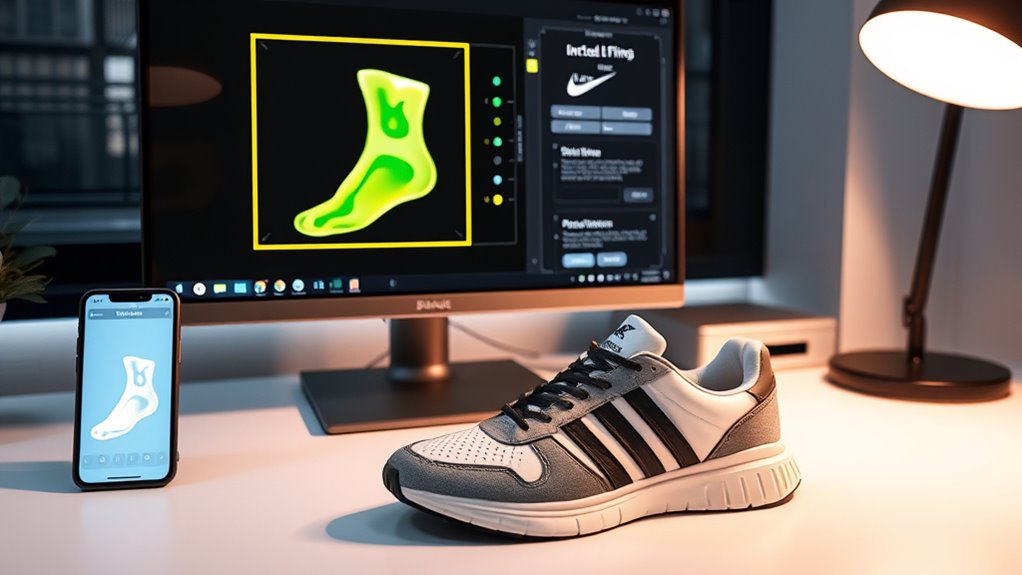
Digital fit technologies, such as photo-based foot scans and AI-driven size recommenders, are transforming online shoe shopping by providing more accurate and personalized fit suggestions. These tools analyze your foot’s shape, volume, and measurements to improve size accuracy. Here are four ways to leverage them:
- Use 3D foot scans or photo-based apps to get precise measurements, reducing guesswork.
- Trust AI recommenders that incorporate your past returns and fit data across brands for tailored suggestions.
- Look for platforms showing validation metrics like reduced return rates or increased conversion rates after adopting these tools.
- Combine automated recommendations with customer reviews and your measurements to confirm the best fit, especially for unique foot shapes.
- Incorporate Soul Sanctuaries insights into wellness and self-care practices to enhance overall confidence and satisfaction with your footwear choices.
This approach minimizes returns and boosts confidence in your online shoe purchases.

SERNIAL Womens White Tennis Shoes PU Leather Sneakers Casual Walking Shoes for Women(White,US7.5)
【Water-Resistant Upper】:Womens white tennis shoes use PU leather upper,PU upper is water-resistant and easy to clean.
As an affiliate, we earn on qualifying purchases.
As an affiliate, we earn on qualifying purchases.
Interpret Customer Reviews for Fit Insights

Customer reviews are one of the most valuable sources of fit information when shopping for shoes online. Look for reviews that include your foot measurements, such as width, arch height, and usual size, as these details help determine if the shoe will fit similarly. Pay attention to comments about whether the shoe runs true to size, small, or large, and note recurring issues like heel slip or tight toe boxes. Prioritize recent reviews, as manufacturing updates can change fit over time. Seek out reviews from users with similar foot characteristics to improve relevance. Use these insights to decide whether to size up, down, or stick with your usual size. Considering the shoe’s material composition can also influence fit and comfort, as different fabrics may expand or contract over time. Combining review feedback with your measurements increases your chances of finding a comfortable, well-fitting shoe.
Choose Retailers With Flexible Return Policies

Choosing retailers with flexible return policies is essential to guarantee you can find the perfect fit without risking your money. A good return policy allows you to try multiple sizes and styles safely. Here are four key points to contemplate:
- Free returns and exchanges—reduces costs and encourages testing different options.
- Extended return windows—gives you more time to evaluate comfort after wear.
- Clear return instructions—ensures you understand the process, avoiding delays or fees.
- No restocking fees—saves money if you need to send shoes back or exchange sizes.
Prioritize retailers that provide straightforward, customer-friendly policies. This approach minimizes risks, helps you find the right fit, and makes online shoe shopping more confident and convenient. Additionally, opting for stores that offer glycolic acid products can enhance your skincare routine to complement your overall self-care.
Consider Activity and Shoe Type in Sizing

Different activities and shoe types demand specific sizing considerations to guarantee comfort and performance. For running shoes, you should size up half a size to allow toe splay during long-distance or downhill runs, reducing the risk of pressure points. Athletic footwear for sports like basketball or tennis often require a snug fit for stability, so follow brand-specific sizing charts and consider wider widths if necessary. Dress shoes and formal footwear typically have narrower lasts, so you may need to size up or select wider options for comfort. Sandals and open styles focus more on strap placement and footbed shape than precise length, so adjustable straps help accommodate width. Boots should be tested with thicker socks or orthotics in mind, possibly requiring extra length. Tailoring your sizing approach based on activity guarantees better fit and lasting comfort. Additionally, understanding proper shoe fit and how to measure your foot accurately can lead to improved comfort and reduce the risk of foot problems over time.
Keep a Record of Successful Fits for Future Purchases
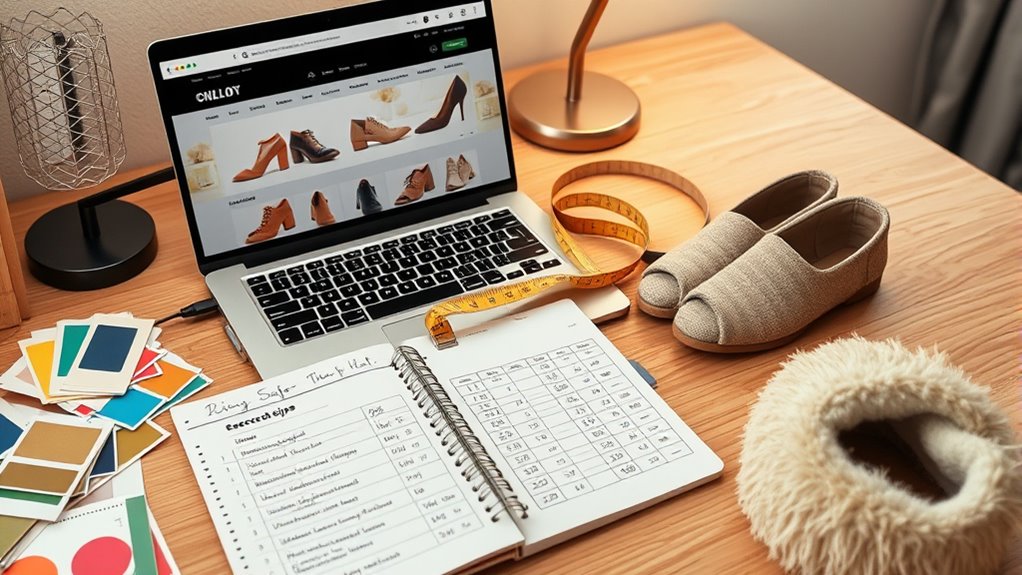
Keeping a detailed record of your successful shoe fits streamlines future shopping and minimizes returns. It helps you quickly identify what works and avoid repeated sizing mistakes. To create an effective record, consider these steps:
Tracking your best shoe fits simplifies shopping and reduces returns.
- Note the brand, model, and size that fit well.
- Record specific measurements like insole length, width, and arch profile.
- Include details about fit notes, such as “true to size” or “runs small.”
- Track any adjustments needed, like sizing up for comfort or width modifications.
- Be aware of Free Floating factors that can influence shoe fit, such as different shoe shapes and materials across brands.
Use this information each time you shop online, especially when trying new brands or models. Over time, your records will help you make smarter choices, save money, and find perfect fits faster. Keep your notes organized for easy reference on future purchases.
Frequently Asked Questions
How Do Foot Measurements Vary Throughout the Day?
Your foot measurements can change throughout the day, usually getting slightly larger and wider as you stand and move. Feet tend to swell, especially in the afternoon or evening, which can affect fit. To get the most accurate size, measure your feet at the end of the day when they’re most swollen. Adding a little extra length and width during measurement helps guarantee your shoes stay comfortable all day long.
What if My Feet Are Different Sizes?
Your feet are like siblings with different shoe sizes, so measure both and choose based on the larger foot. Use the larger foot’s measurements to find your size, adding a little extra length for comfort. Prioritize brands with detailed size charts and reviews from people with similar feet. For the best fit, consider adjustable styles or reputable return policies, so you can try a couple of options risk-free.
How Reliable Are Digital Fit Tools Compared to Reviews?
Digital fit tools are quite reliable, especially when they incorporate 3D scans, AI algorithms, and validated data. They reduce guesswork by estimating foot measurements accurately, often matching internal shoe dimensions better than generic sizing charts. However, reviews add valuable context, highlighting comfort and fit issues specific to your foot shape. Combining both guarantees a more precise fit—use digital tools as your primary guide but double-check with reviews, especially for unusual feet or models.
Should I Size up or Down for Wide or Narrow Feet?
You should size up for wide feet and size down for narrow feet. When your feet are wider, a half to full size larger helps prevent tightness and discomfort, especially in shoes with standard widths. For narrow feet, going a half size smaller can guarantee a snug fit without excessive looseness. Always consider your foot measurements and check brand-specific size charts to find the best fit for your foot width.
How Does Shoe Activity Influence Sizing Recommendations?
Think of your shoes as tools for your daily adventure—different activities demand tailored fits. For running or high-impact sports, you need a bit more room—about half a size up—to allow natural toe splay and prevent blisters. Formal shoes should hug your feet snugly, but not tight, especially if you’ll be on your feet all day. Choose activity-specific sizes to keep your journey comfortable and injury-free.
Conclusion
By following these tips, you can turn online shoe shopping into a seamless experience, revealing the secret to the perfect fit without stepping into a store. Think of it as your treasure map—each step bringing you closer to footwear that feels made just for you. So, trust your measurements, read reviews carefully, and embrace flexible return policies. After all, isn’t finding the perfect shoe a journey worth taking? Happy shopping!