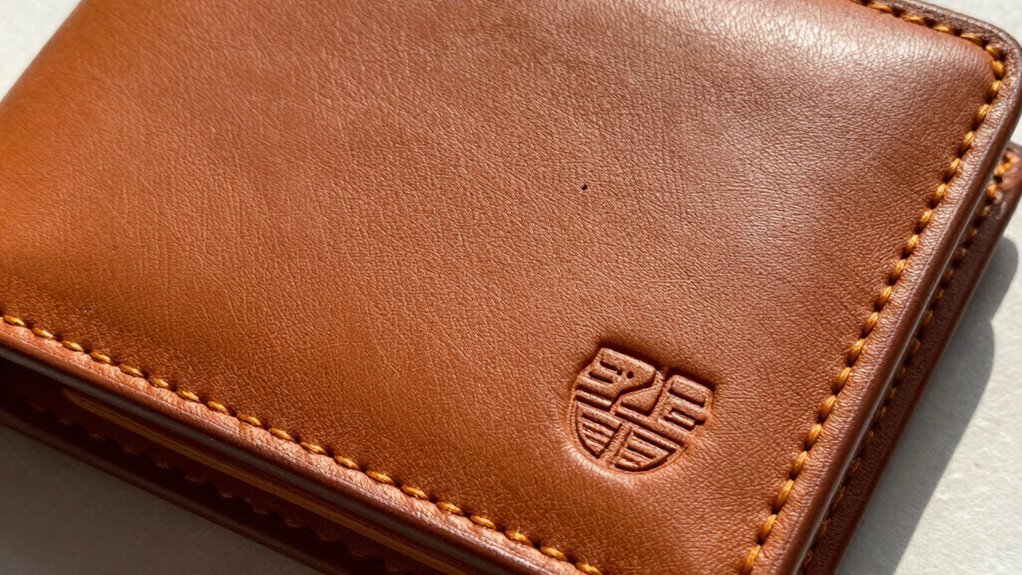
To spot well-made leather goods, look for natural, irregular grain patterns and minor imperfections that indicate full-grain or top-grain leather. Feel the material—genuine leather is dense, soft, and warm, not plasticky or stiff. Check the edges—they should be smooth and burnished. Inspect the stitching—tight and even shows quality craftsmanship. Confirm authenticity with certifications or labels, and test water absorption and smell. Keep exploring to uncover more tips for identifying true quality.
Key Takeaways
- Examine surface patterns; genuine leather shows irregular grains with natural scars and imperfections.
- Check edges; well-made leather has smooth, burnished or painted edges, not frayed or rough.
- Feel the material; authentic leather is dense, warm, flexible, and develops a rich smell over synthetic odors.
- Inspect hardware; high-quality pieces have smooth-operating, solid metal fittings with reinforced stress points.
- Review labels and certification; genuine leather products often have clear markings, provenance, and safety compliance reports.
Examining Surface Patterns and Grain Details

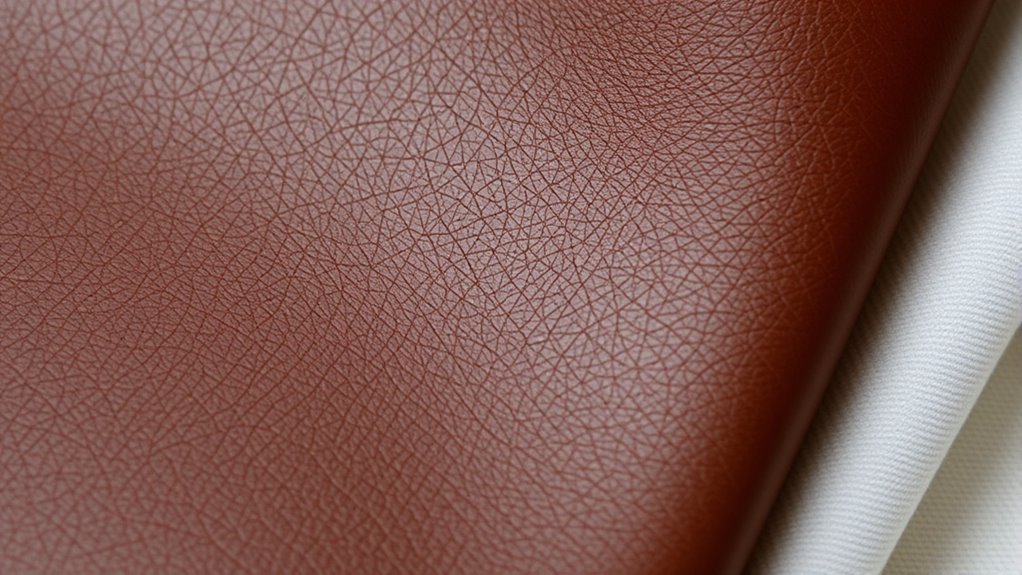
How can you quickly tell if a leather surface is genuine or synthetic? Look closely at the surface patterns and grain details. Genuine leather shows irregular, non-repeating grain patterns that reflect natural imperfections like scars, veins, or blemishes. If the pattern repeats perfectly, it’s likely embossed or synthetic. Check for scars or variations—these signal full-grain or top-grain leather, not corrected or bonded surfaces. The surface finish sheen also matters: a high, uniform shine often indicates plastic coatings, while a subtle luster suggests quality aniline or semi-aniline finishes. Examine the edges; rough, fibrous cut edges are typical of real leather, whereas smooth, painted edges usually point to synthetic materials. These visual cues help you differentiate authentic leather from imitations instantly. Additionally, understanding surface finishes can provide further insight into the leather’s quality and treatment.
Assessing Feel and Flexibility of Leather
You can start by pressing your finger into the leather to see how it wrinkles and recovers—real leather wrinkles slowly and bounces back, while synthetic materials tend to rebound immediately or hold creases. Flex the material repeatedly to check for cracks or uneven creasing, which indicate lower quality or compromised durability. Feeling the weight and density also helps; genuine leather usually feels heavier and more substantial than PU or bonded alternatives. Additionally, authentic leather often exhibits a natural European leather certification that guarantees quality standards.
Finger Wrinkle Test
The Finger Wrinkle Test is a straightforward method to assess leather’s natural feel and flexibility. To do it, press your finger firmly onto the surface for a few seconds, then lift it and observe the skin’s reaction. High-quality leather wrinkles naturally and slowly, then gradually recovers its shape. If the surface forms permanent creases or rebounds immediately, it’s likely synthetic or heavily coated. Genuine leather has a soft, supple feel, and the wrinkles indicate the material’s ability to stretch and bend without cracking. This test helps you gauge the leather’s resilience and natural characteristics. Remember, a slow recovery and visible but not permanent wrinkles are signs of well-made, high-quality leather. Regularly checking the integrity of adhesive products used in leather goods can also ensure their durability over time.
Flexibility and Cracks
Evaluating leather’s flexibility involves examining how well the material bends and curves without cracking or showing signs of damage. Gently bend the leather back and forth; high-quality leather will crease smoothly and recover without cracking or splitting. Pay attention to any visible cracks or fissures that appear during repeated flexing; these indicate low durability or poor treatment. Feel for resistance—genuine leather offers some resistance but should not feel stiff or brittle. If the surface develops cracks easily or the leather feels overly rigid, it’s likely lower quality or heavily coated. Remember, well-made leather maintains its flexibility over time, showing fine, even creases instead of cracks, which signals it’s crafted with care and suitable for long-term use. Additionally, contrast ratio plays a role in how well the leather’s appearance is preserved under various lighting conditions, influencing overall visual appeal.
Hand-Feel and Density
Hand-feel and density are key indicators of leather quality that you can assess through tactile examination. When you touch the leather, pay attention to how it responds under your fingers, feeling for weight and flexibility. Genuine leather feels substantial, heavier for its thickness, and offers a warm, soft touch that molds slightly to your pressure. It should bend easily without cracking or feeling overly stiff. Low-quality or synthetic leathers often feel lighter, colder, and less pliable. By evaluating these aspects, you can quickly determine the leather’s authenticity and durability. Assessing leather characteristics can help you better understand the quality of the material.
- Feel the weight: real leather feels dense and weighty.
- Test flexibility: it should bend smoothly without cracking.
- Check warmth: quality leather warms quickly to your touch.
- Notice texture: smooth, natural feel indicates genuine hide.
- Observe rebound: real leather recovers slowly from pressure.
Performing Smell and Chemical Spot Tests
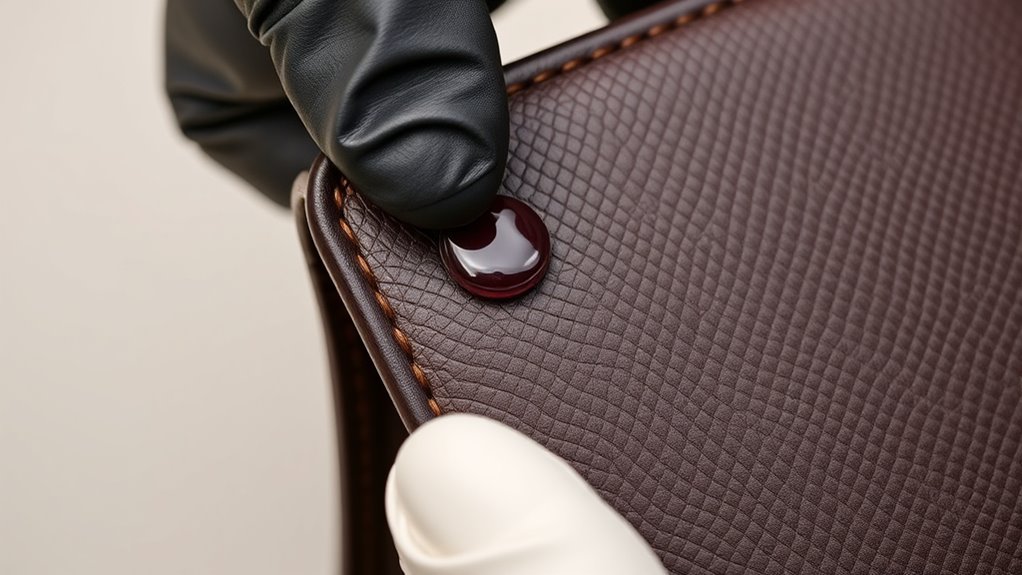
You can often identify genuine leather by its rich, animalic smell, while synthetic materials tend to have sharp, chemical odors. Performing simple burn and spot tests helps confirm the material’s authenticity—real leather scorches with a burnt hair scent, whereas synthetics melt and produce plastic fumes. Keep in mind that these tests should be done cautiously and only on inconspicuous areas to avoid damage. Additionally, water absorption characteristics can further aid in distinguishing genuine leather, as authentic leather tends to absorb moisture more readily than synthetic alternatives.
Leather Odor Clues
Have you ever noticed that genuine leather has a distinctive, rich smell that’s hard to replicate? This natural aroma comes from tannins and animal fats, setting authentic leather apart from synthetic alternatives. When you smell a leather item, look for that characteristic tannery scent—warm, slightly musky, and earthy. Beware of chemical or plastic odors, which indicate synthetic or bonded materials. Free floating leather often has a more complex and genuine scent profile compared to bonded or faux options. Here are some clues to identify real leather by smell:
- A tannery-like, animalic scent that lingers
- No chemical or synthetic odors
- A burnt hair smell when tested with fire (only on inconspicuous areas)
- Minimal color change with alcohol spots
- Water absorption that doesn’t alter the smell or surface
Trust your nose—it’s a reliable tool for spotting genuine leather.
Burn and Spot Tests
Burn and chemical spot tests are essential for verifying leather authenticity because they reveal how the material responds to heat and chemicals, distinguishing genuine hide from synthetic or bonded alternatives. To perform a burn test, carefully select an inconspicuous area, use a lighter or match to hold a small flame briefly, and observe the reaction. Genuine leather scorches and smells like burnt hair, while synthetics melt, emit plastic fumes, or produce a chemical odor. For the chemical spot test, apply a small amount of rubbing alcohol or solvent to a hidden area. Real leather resists color change and shows minimal bleeding, whereas fake materials may dissolve, discolor, or bleed dye. Conducting these tests helps ensure ethical material sourcing and confirms the authenticity of leather products. Always exercise caution, and avoid damaging the product. These simple tests provide quick insights into the material’s true nature.
Inspecting Construction and Stitching Quality
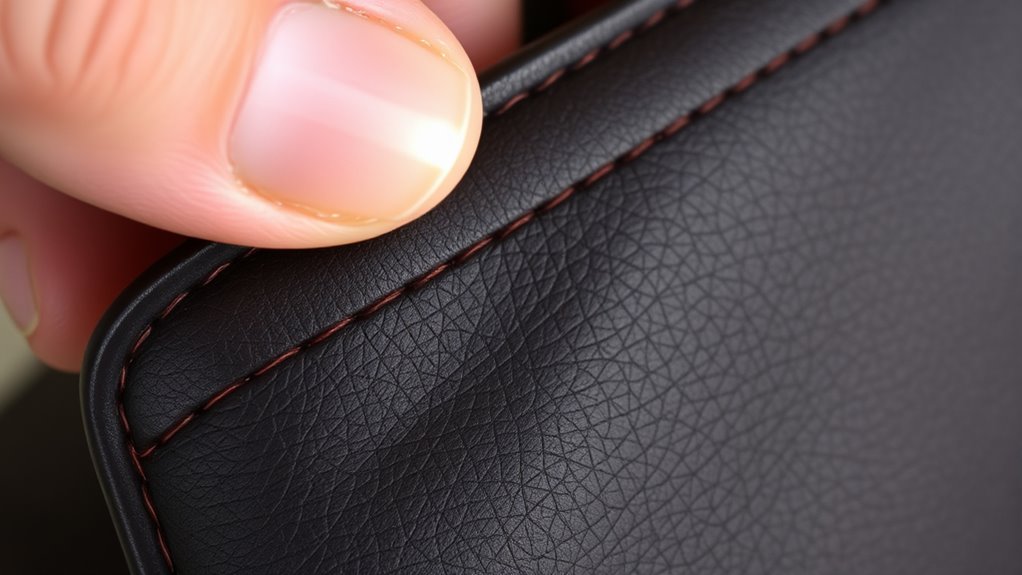
Inspecting construction and stitching quality is essential to assess a leather product’s durability and craftsmanship. You want to look for tight, even stitches that show skill and attention to detail. Loose or uneven stitching indicates poor craftsmanship and lower durability. Check the edges: well-finished edges are smooth, burnished, or painted, while raw or frayed edges suggest shortcuts. Reinforcements like rivets or bartacks at stress points boost longevity, especially on handles and straps. Hardware should feel heavy and operate smoothly—solid brass or stainless steel signals quality. The interior lining should be neatly sewn, preferably leather or high-quality fabric, with no loose threads or glue marks. Overall, well-constructed leather goods exhibit consistent stitching, reinforced stress points, and attention to edge finishing. Paying attention to the construction process helps ensure you select durable, well-made items that will last over time.
Analyzing Edges and Finishing Touches
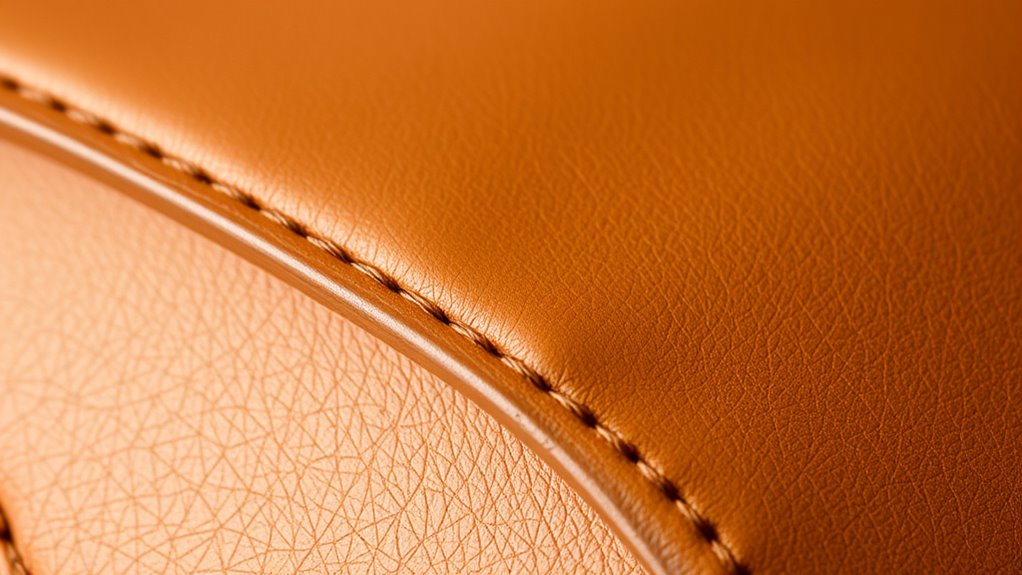
Edges and finishing touches reveal much about a leather product’s craftsmanship and durability. Carefully examined edges should be smooth, burnished, or painted without fraying or glue residues. Well-finished edges often show consistent coloring and a clean, polished look, indicating attention to detail. If edges are rough, raw, or uneven, it signals rushed or low-quality work. Pay attention to how the edges are sealed—burnished edges are a hallmark of skilled craftsmanship, offering protection against moisture and wear. Look for clean, tight seams and neat paint or edge coating. Additionally, finishing touches like reinforced stress points, secure rivets, and smoothly operating hardware reflect thoughtful construction. Well-executed edges and refined finishes not only enhance aesthetics but also contribute markedly to the product’s longevity and overall quality. Recognizing quality details helps ensure you select durable, well-made leather goods that stand the test of time.
Checking Hardware and Reinforcements
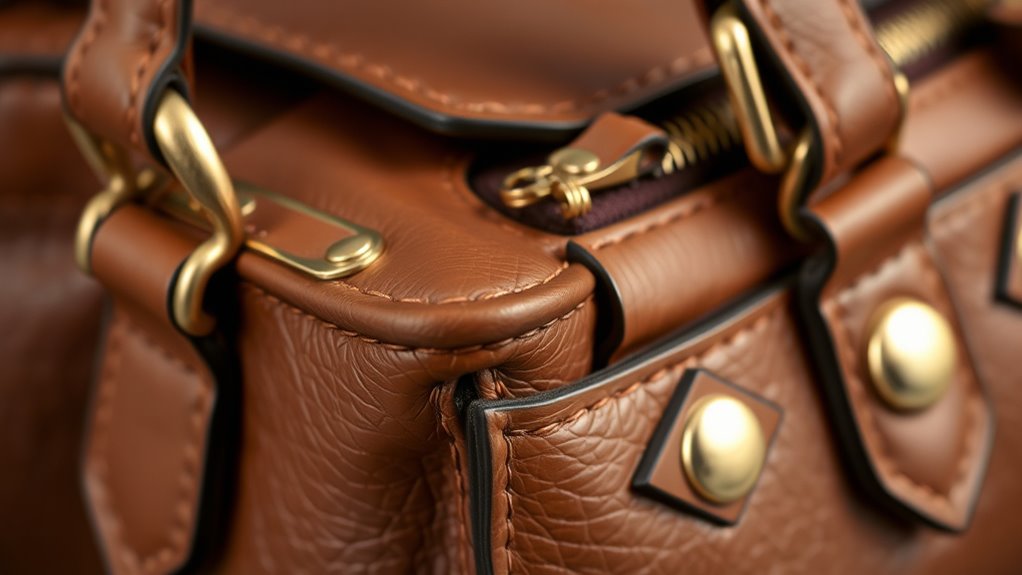
When inspecting hardware, feel the weight of metal closures—solid brass or stainless steel should feel heavy and operate smoothly. Check the stitching around stress points; tight, even stitches and well-finished edges indicate quality reinforcement. Pay attention to how hardware is attached; secure rivets and reinforced seams guarantee durability and longevity.
Hardware Material & Feel
High-quality hardware and reinforcements are key indicators of a product’s durability and craftsmanship. You should feel the weight—heavier hardware like solid brass or stainless steel signals better quality, while lightweight plated or plastic pieces often mean lower grade. Check the smoothness of the finish; premium hardware operates effortlessly without sticking or squeaking. Inspect for tight, secure attachments—loose or wobbly hardware suggests poor craftsmanship. Look at the reinforcements at stress points: rivets, bartacks, and folded seams enhance longevity, unlike glued or weakly attached parts. Examine metal parts closely for corrosion or tarnishing, which indicates quality issues. Finally, verify the hardware’s consistency; mismatched or uneven pieces can reveal rushed assembly or inferior materials.
Stitching & Edge Finish
Inspecting the stitching and edge finish reveals much about a leather product’s craftsmanship and durability. Look for tight, even stitches—preferably saddle or lock-stitches—that show skill and attention to detail. Loose threads or uneven lines suggest rushed or low-quality work. Check the edges; well-finished edges are burnished, painted, or folded smoothly, indicating careful craftsmanship. Raw, frayed, or glued edges point to shortcuts and poor quality. Reinforcements at stress points, like rivets, bartacks, and folded seams, strengthen the construction and boost longevity. Examine the hardware too: solid brass or stainless steel pieces that feel hefty and operate smoothly indicate premium quality, while lightweight or plated hardware often signals lower-grade products. Overall, precise stitching and clean edges are hallmarks of well-made leather goods.
Measuring Thickness and Durability Metrics
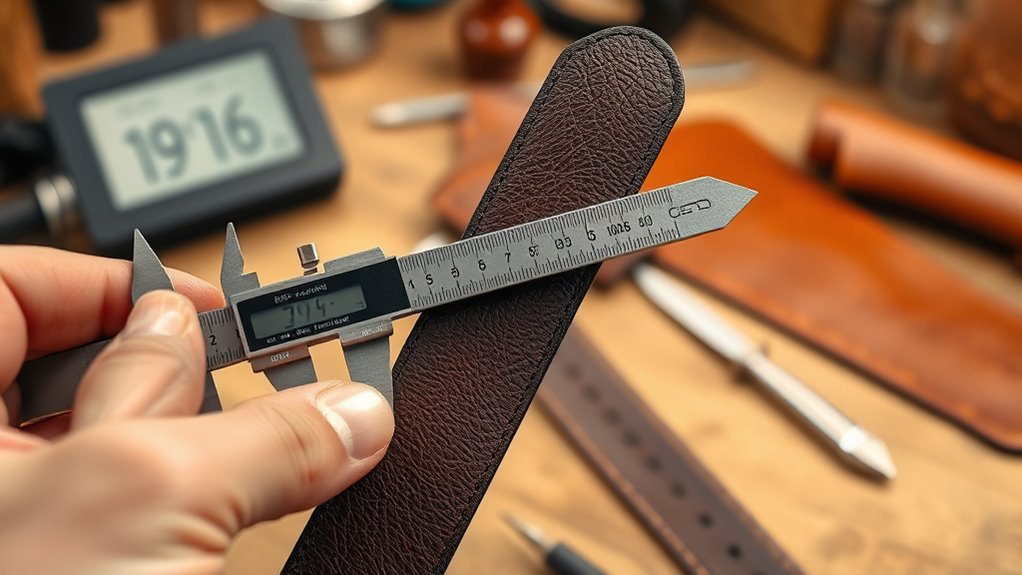
Measuring thickness and durability metrics is essential to assess a leather’s strength and long-term performance. You want to guarantee your leather will hold up over time, so pay attention to specific indicators. Use a micrometer to check consistent thickness, especially for footwear and upholstery. Look for high tensile and tear strength values, which indicate resistance to ripping and stretching. Conduct abrasion resistance tests—higher scores mean better wearability. Check light- and color-fastness ratings to ensure the dye won’t fade quickly. Also, observe water absorption; untreated leather should absorb drops, while synthetic surfaces repel water. Finally, review lab reports or certifications for chemical and moisture resistance.
- Consistent thickness measurement with a micrometer
- High tensile and tear strength values
- Good abrasion resistance scores
- Water absorption capacity
- Certified testing reports
Reviewing Labels, Provenance, and Tanning Methods
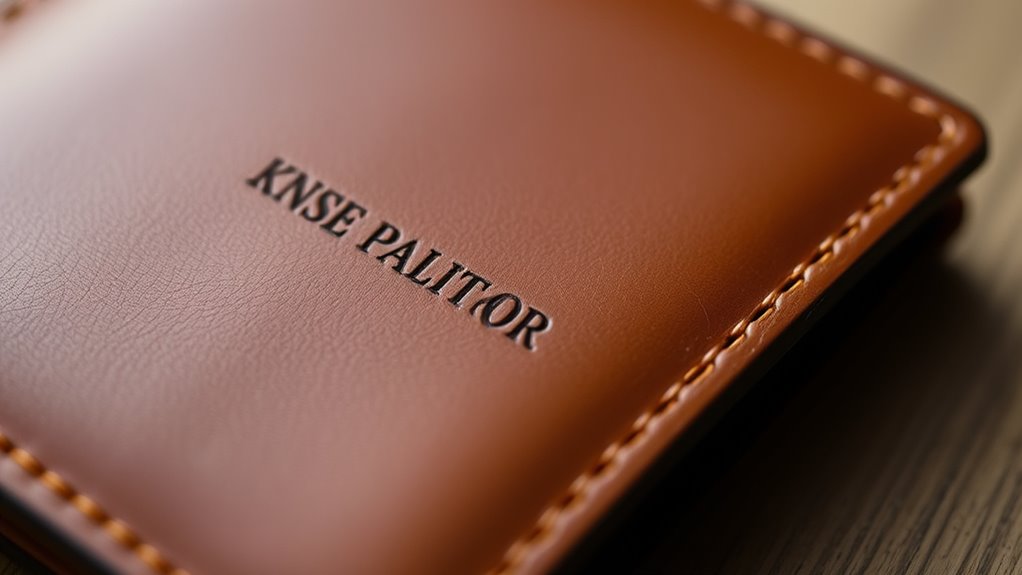
Labels and provenance provide immediate clues about a leather’s authenticity and quality. Check for clear, accurate labeling—terms like full-grain, top-grain, or vegetable-tanned indicate genuine craftsmanship. Be cautious of vague or missing info, which suggests lower-quality or synthetic materials. Provenance from reputable tanneries or countries known for leather craftsmanship boosts confidence; look for certifications or test reports confirming safety standards and material composition. Tanning methods reveal a lot: vegetable-tanned leather ages beautifully and develops a rich patina, while chrome-tanned hides are more uniform and resistant to environmental damage. Knowing the origin and tanning process helps you gauge durability and care requirements. Trusted labels, transparent provenance, and disclosed tanning techniques are strong indicators of well-made, authentic leather goods.
Conducting Water Absorption and Resistance Tests
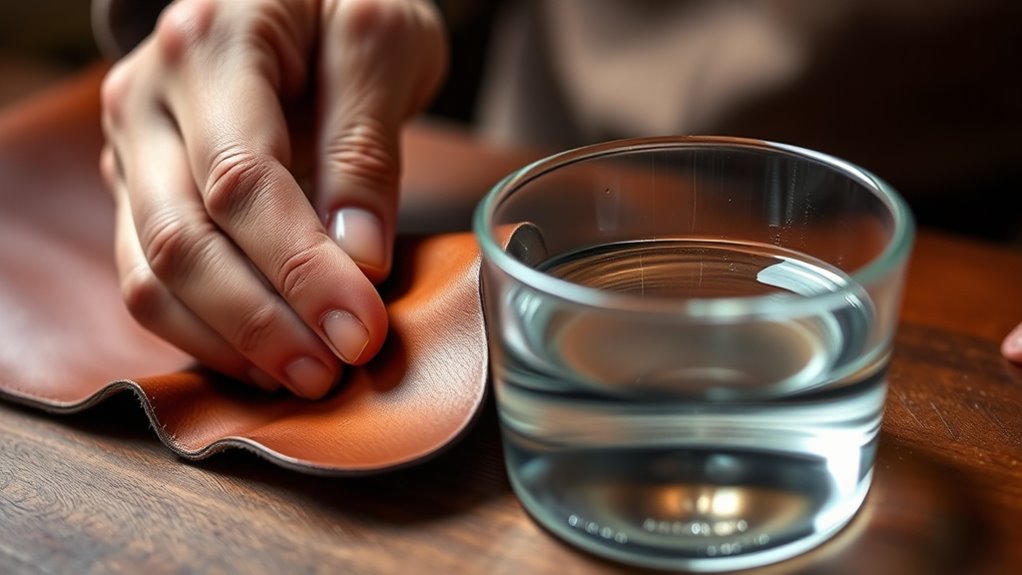
To assess a leather’s water resistance effectively, you should perform simple absorption and bead tests on inconspicuous areas of the material. These quick checks reveal whether the leather is untreated, coated, or synthetic.
- Drop a few water droplets onto the surface and observe: real leather absorbs quickly, while synthetic or coated materials cause water to bead or roll off.
- Press lightly with your finger; natural leather absorbs moisture gradually, whereas synthetics stay dry or develop immediate, permanent impressions.
- Check the edges; genuine leather tends to absorb moisture unevenly at cut edges, while bonded or synthetic materials resist penetration.
- Test hidden areas like the underside or backside for more accurate results.
- Remember, untreated, high-quality leather will show some absorption, but excessive soaking indicates poor water resistance.
Verifying Certification and Documentation
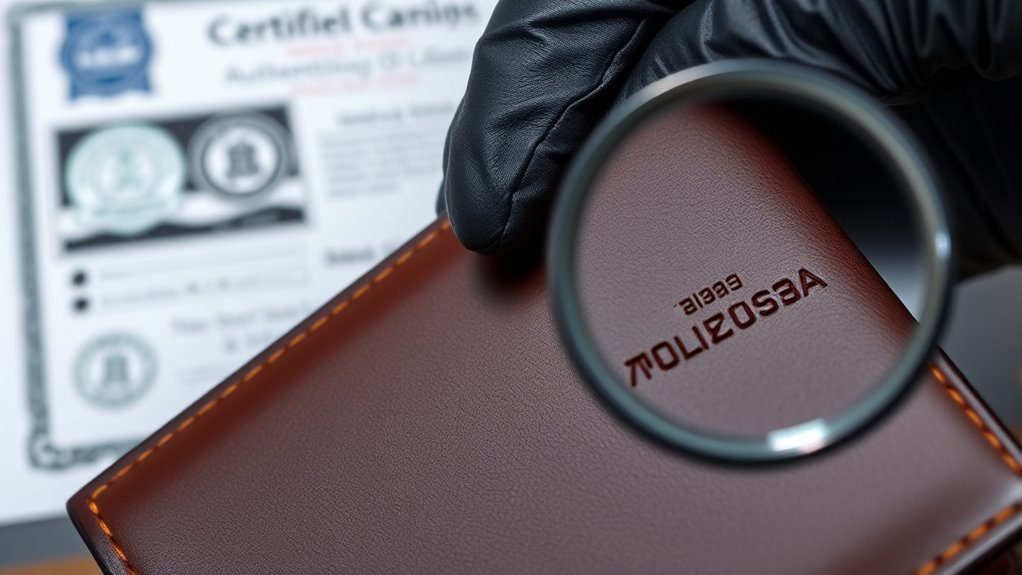
Verifying certification and documentation is crucial to guarantee the leather’s authenticity and quality. You should check labels, receipts, or product sheets for clear details about the leather type, tanning method, and origin. Reputable brands often provide third-party testing reports confirming safety and compliance, like REACH or heavy-metal tests. Look for proper identification of full-grain, top-grain, or split leather, and verify if the tanning process matches your preferences—vegetable or chrome-tanned. Absence of accurate labels or inconsistent documentation raises red flags. Here’s a quick reference:
| Documentation Aspect | What to Look For |
|---|---|
| Material Labeling | Clear, specific leather type |
| Tanning Method | Vegetable or chrome tanning info |
| Provenance | Country and tannery details |
| Certification | Lab reports (REACH, heavy metals) |
| Price Consistency | Fair market value for claimed quality |
Frequently Asked Questions
How Can I Distinguish Genuine Leather From High-Quality Synthetic Alternatives?
You can tell genuine leather from high-quality synthetics by feeling its warmth and flexibility; real leather warms quickly and wrinkles naturally when pressed. Check the surface for irregular grain patterns and scars, which indicate authentic hide. Smell it—genuine leather has a rich, animalic scent, while synthetics often smell chemical or plasticky. Also, observe the edges; rough, fibrous cut edges suggest real leather, whereas smooth, painted edges point to synthetic materials.
What Signs Indicate a Poorly Constructed or Cheaply Assembled Leather Product?
You’ll notice poorly constructed leather products have uneven or loose stitching, frayed edges, and raw or glued seams. Cheap hardware feels lightweight and operates roughly, while stress points lack reinforcement like rivets or bartacks. The surface may be uneven, shiny plastic-looking, or overly smooth, and the finish might crack or peel easily. These signs reveal low-quality craftsmanship and shortcuts, so inspect closely before buying.
How Does the Leather’s Backside or Flesh Side Reveal Its Authenticity?
You notice the backside or flesh side of genuine leather, revealing a soft, suede-like texture, which speaks to its authenticity. This fibrous surface hints at natural materials crafted with care, unlike synthetic or bonded leathers that hide a paper-like or textile backing. When you run your finger over it, the genuine flesh side feels warm, flexible, and slightly textured, affirming the product’s quality and the craftsmanship behind it.
What Impact Do Tanning Methods Have on Leather’s Appearance and Durability?
Tanning methods greatly influence leather’s appearance and durability. Vegetable-tanned leather develops a rich patina over time, gaining character, and tends to be thicker and stiffer initially. Chrome-tanned leather has a more uniform, softer finish, and is more flexible and water-resistant from the start. While vegetable-tanned ages beautifully, it’s less resistant to moisture, whereas chrome-tanned offers greater durability but may lack the same depth of aging.
How Reliable Are Water Resistance and Absorption Tests for Authenticating Leather?
Water resistance and absorption tests can be quite revealing, but they’re best viewed as helpful hints rather than absolute proof of authenticity. Genuine leather often absorbs water quickly, developing a slight darkening, but some high-quality finishes can temporarily repel moisture. Keep in mind, a leather piece’s true nature reveals itself over time and with proper testing methods—so use these tests as part of a broader assessment, not the sole decision-maker.
Conclusion
Think of quality leather like a finely woven tapestry—each thread, each detail, telling a story of craftsmanship. By examining surface patterns, feeling its flexibility, and inspecting stitching, you become a skilled artisan yourself. Trust your senses, just like a seasoned detective uncovering clues. When you spot the signs of genuine quality, you’ll hold a piece of artistry in your hands, timeless and resilient—proof that true craftsmanship endures beyond the surface, like a classic masterpiece.