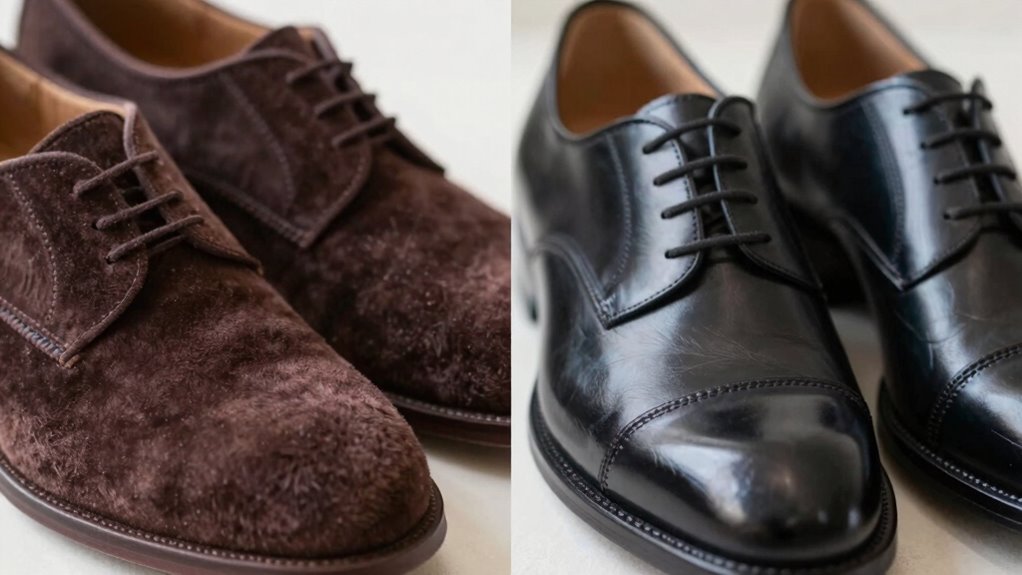

To care for suede and leather shoes, understand their differences: suede is softer and more porous, needing gentle brushing and stain removal with special erasers, while leather is smoother, requiring regular wiping and conditioning. For longevity, keep them clean, protect with sprays, and store them properly in cool, dry places. Avoid harsh chemicals or excessive water. If you want to learn more about proper maintenance techniques, continue exploring how to keep each material looking their best.
Key Takeaways
- Suede requires gentle brushing, stain removal with erasers, and spray protectors, while leather benefits from wiping, conditioning, and breathable storage.
- Clean suede with a suede brush and avoid water; clean leather with a damp cloth and leather-specific cleaners.
- Regularly brush and fluff suede to maintain nap and appearance; leather should be kept clean and conditioned to prevent cracking.
- Air dry both materials away from direct heat; use shoe trees for leather and protect suede with spray protectors.
- Avoid harsh chemicals and excessive water on suede; over-conditioning leather can cause greasiness; always test products first.

Kattee Women's Soft Leather Tote Bag, Top Satchel Purses and Handbags
MATERIAL: 100% Brand New and Top Grain Pebbled Cowhide Leather; High quality silver hardware and zipper closure. Interior...
As an affiliate, we earn on qualifying purchases.
Understanding the Differences Between Suede and Leather
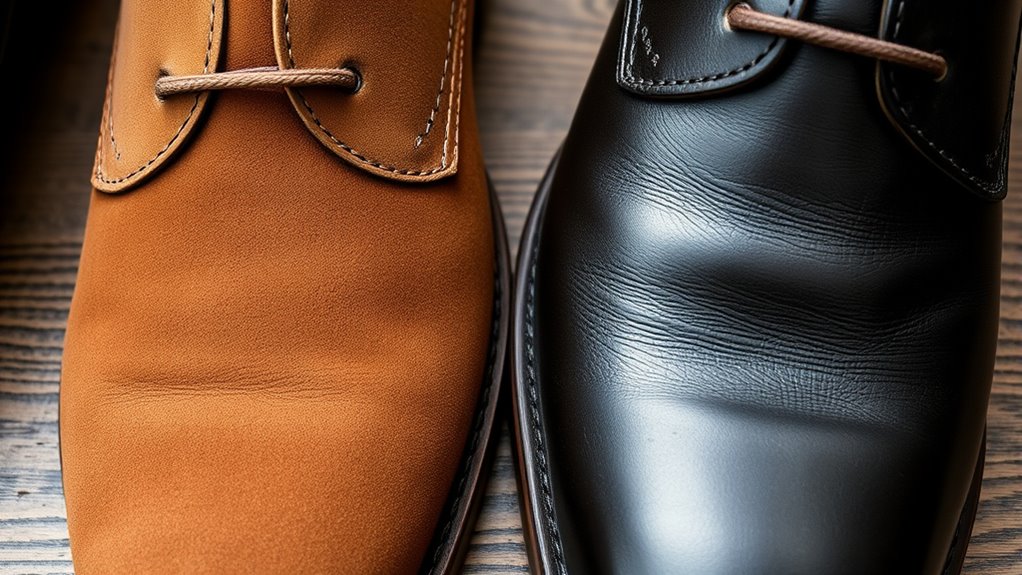
Understanding the differences between suede and leather is essential for proper shoe care because each material has unique properties that affect how you should clean and maintain them. Suede comes from the underside of the hide, giving it a soft, velvety texture that’s thinner and more delicate than leather. It’s porous and prone to dirt buildup, making it more vulnerable to stains. Leather, on the other hand, uses the full-grain outer side, which is smooth, firm, and more resistant to wear. Suede tends to be more affordable but less durable, requiring gentle handling. Nubuck is similar but comes from the grain side, with a tighter nap. Knowing these differences helps you choose the right cleaning methods and protect your shoes effectively.

Michael Kors Women's Bryant Small Convertible Crossbody Bag, Gold-Tone Hardware/Optic White
For grab-and-go glamour all day long, look no further than our convertible Bryant shoulder bag. It’s made from...
As an affiliate, we earn on qualifying purchases.
Daily Maintenance Routines for Suede and Leather Shoes
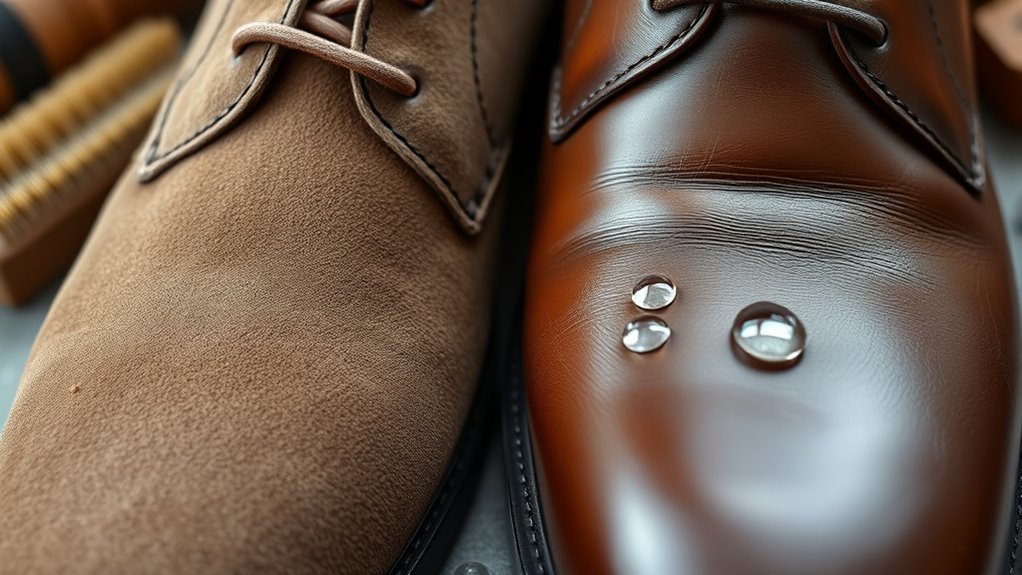
To keep your shoes looking their best, you should develop a daily routine that includes brushing and fluffing, especially for suede, to remove dirt and restore the nap. Proper storage, like using shoe trees and keeping shoes away from heat and sunlight, helps maintain their shape and condition. Regular cleaning, tailored to each material, guarantees your shoes stay fresh and durable over time. Additionally, understanding the specific care requirements of suede versus leather can significantly extend their lifespan and appearance.
Brushing and Fluffing Techniques
Brushing and fluffing are essential daily routines that keep your suede and leather shoes looking their best. For suede, use a suede brush with firm bristles to remove dirt and lift the nap, brushing in one direction to restore its velvety texture. Do this morning and evening to prevent dirt from settling and to maintain the soft pile. Be gentle but thorough, focusing on areas prone to scuffs. For leather, a softer brush or a microfiber cloth works best for wiping away dust and dirt. Use light circular motions to polish the surface and keep it looking fresh. Fluff the suede regularly to keep the nap looking even, and avoid pressing too hard on leather to prevent damage. Consistent brushing and fluffing preserve both materials’ appearance and longevity. Additionally, incorporating proper maintenance practices can enhance the durability of your footwear over time.
Proper Storage Practices
Proper storage is essential to keep your suede and leather shoes in top condition. Store them in a cool, dry place away from direct sunlight and heat sources to prevent fading and cracking. Use shoe trees to maintain shape and absorb moisture, especially for leather shoes. Keep shoes in breathable cloth bags or boxes to prevent dust buildup and allow air circulation. Avoid stacking shoes directly or placing heavy objects on top, which can deform materials. For suede, ensure they are completely dry and brushed before storing to prevent mold. Use separate compartments or boxes for different materials to avoid cross-contamination. Proper storage preserves appearance, prolongs lifespan, and keeps your shoes looking their best. Additionally, proper ventilation helps prevent humidity buildup that can damage both suede and leather over time.
Regular Cleaning Schedule
Establishing a regular cleaning schedule is essential to keep your suede and leather shoes looking their best and extending their lifespan. For suede shoes, brush them vigorously with a suede brush morning and evening to remove dirt and fluff the nap. Use a suede eraser or sandstone for stains and grease spots as needed. Always wear a shoehorn to prevent creasing and insert shoe trees after wearing to maintain shape. Leather shoes require less frequent brushing; just wipe them down with a damp cloth and use a cleaner periodically. Both materials benefit from regular attention: suede needs more frequent brushing, while leather benefits from occasional wiping. Additionally, understanding the importance of color accuracy can help you select appropriate cleaning products that preserve the natural hues of your shoes. Keeping up with this routine helps prevent grime buildup, preserves appearance, and prolongs the life of your shoes.

LOVEVOOK Travel Duffle Bag, Weekender Bags for Women with Shoe Compartment, Carry on Overnight Bag with Toiletry Bag, Gym Duffel Bag with Wet Pocket, Hospital Bags for Labor and Delivery, Black
【TRAVEL TOTE BAG WITH SHOE COMPARTMENT+FREE SEPERATE TOILETRY BAG】This travel bags for women comes with a $15 toiletry...
As an affiliate, we earn on qualifying purchases.
Effective Cleaning Methods for Suede Footwear
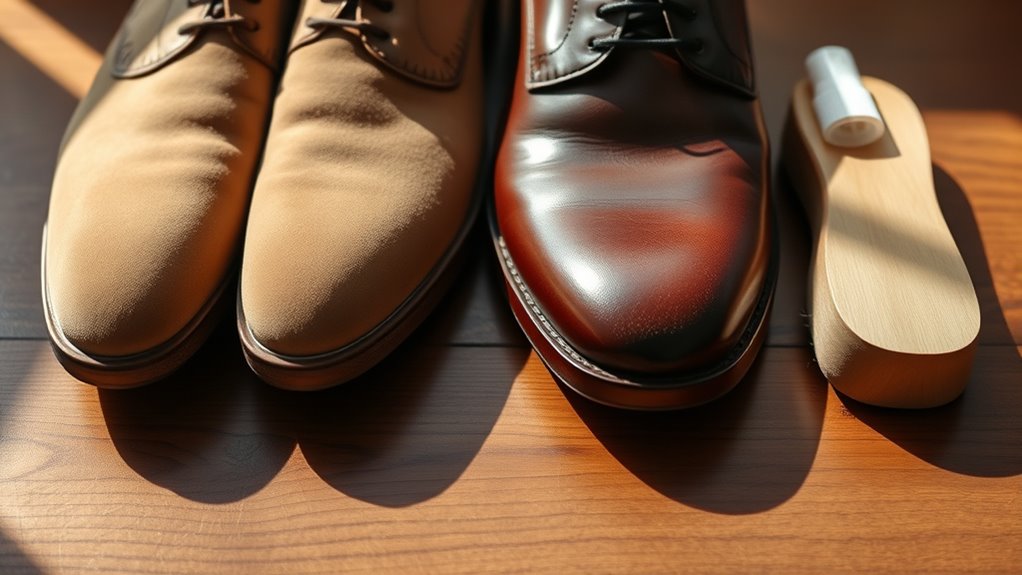
To keep your suede shoes looking their best, start by regularly removing surface dirt with a suede brush. When stains or grease appear, use a suede eraser or sandstone to treat them gently without damaging the material. Proper cleaning techniques help maintain the texture and extend the life of your footwear. Additionally, utilizing specialized cleaning tools can further improve your suede maintenance routine.
Removing Surface Dirt
Wondering how to keep your suede shoes looking their best? Start by removing surface dirt regularly. Use a suede brush with firm bristles to sweep away loose dust and debris. Always brush in one direction to lift the nap and restore texture. For stubborn dirt, gently use a suede eraser or Gommadin sandstone on affected areas—avoid liquids initially to prevent staining. Keep a small cleaning kit handy for quick touch-ups. Incorporating sustainable materials in your cleaning routine can also help maintain eco-friendly footwear care.
Treating Stains and Grease
Are stains and grease stubborn enemies for suede shoes? Absolutely. To tackle these, start by gently blotting the stain with a clean cloth—don’t rub, as that can push it deeper. For greasy spots, use a suede eraser or a Gommadin sandstone, applying light pressure to lift the residue. Avoid liquids initially; instead, brush the affected area with a suede brush to restore the nap. If stains persist, try a mild suede shampoo, let it air dry, then brush again to refresh the texture. Remember these tips:
- Use an eraser or sandstone for grease and stains
- Avoid soaking suede with liquids
- Brush lightly after cleaning
- Air dry and restore nap with a suede brush
- Regular maintenance and proper cleaning techniques help prolong suede’s appearance and durability.
Consistency keeps your suede looking fresh and stain-free.

Michael Kors Jet Set Travel Large Packable Tote Bag, Gold-Tone Hardware/Black
Designed for frequent travelers, this tote bag is made from lightweight yet durable nylon gabardine in a generous...
As an affiliate, we earn on qualifying purchases.
Proper Cleaning Techniques for Leather Shoes
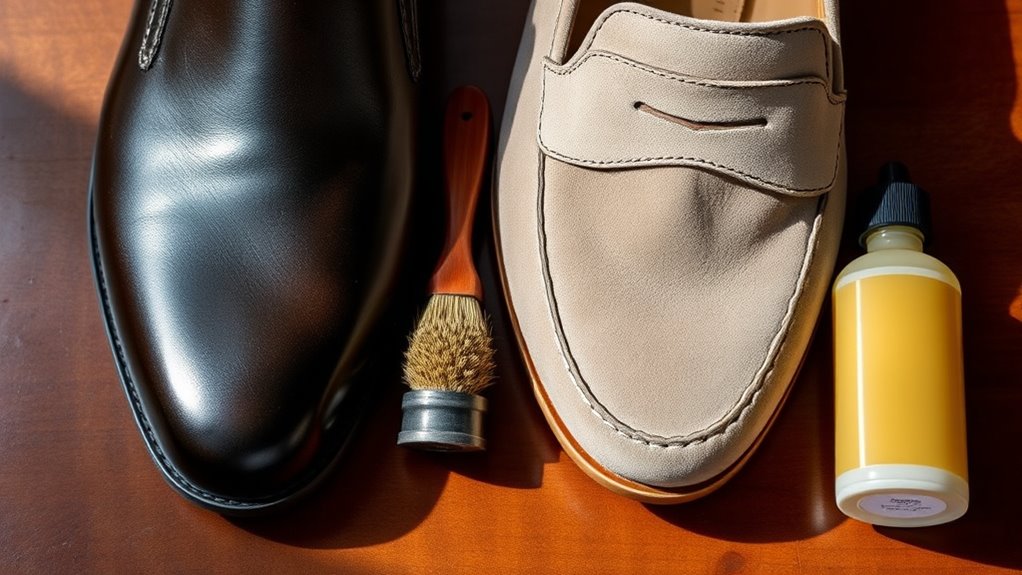
Cleaning leather shoes properly involves a straightforward process that helps maintain their appearance and prolong their lifespan. Start by removing loose dirt with a soft brush or damp cloth. Dampen a microfiber cloth with water and apply a small amount of leather cleaner, working in gentle circular motions to lift dirt and stains. Avoid soaking the leather, as excess moisture can damage it. Once cleaned, wipe away any residue with a clean, dry cloth. For added protection, apply a leather conditioner or cream to nourish and keep the material supple. Allow the shoes to air dry naturally away from direct heat or sunlight. Regular cleaning prevents dirt buildup, preserves the leather’s luster, and extends the life of your shoes. Additionally, understanding market trends and insights can help you choose the best products and techniques for maintaining your footwear.
Conditioning and Protecting Your Shoe Materials
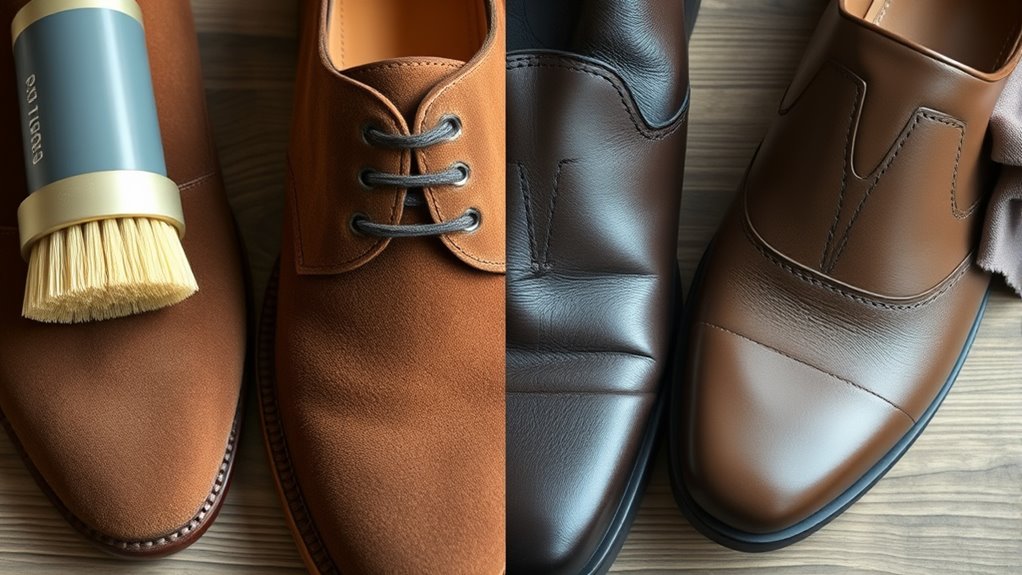
After cleaning your shoes, it’s important to focus on conditioning and protecting the materials to keep them looking their best. Proper conditioning helps maintain flexibility, prevents cracking, and extends the lifespan of your shoes. For leather, apply a suitable cream or conditioner with a soft cloth, then allow it to air dry. Suede benefits from a spray protector, applied 1-2 times annually, to repel water and stains. Regular maintenance is key to preserving both material quality and appearance. Consider these key steps: – Use a dedicated leather cream or conditioner for leather shoes. – Spray suede protector evenly to shield against moisture. – Avoid silicone sprays on suede to prevent damage. – Store shoes in a cool, dry place, away from sunlight. Regular conditioning preserves material quality and enhances appearance.
Best Practices for Drying and Storing Shoes
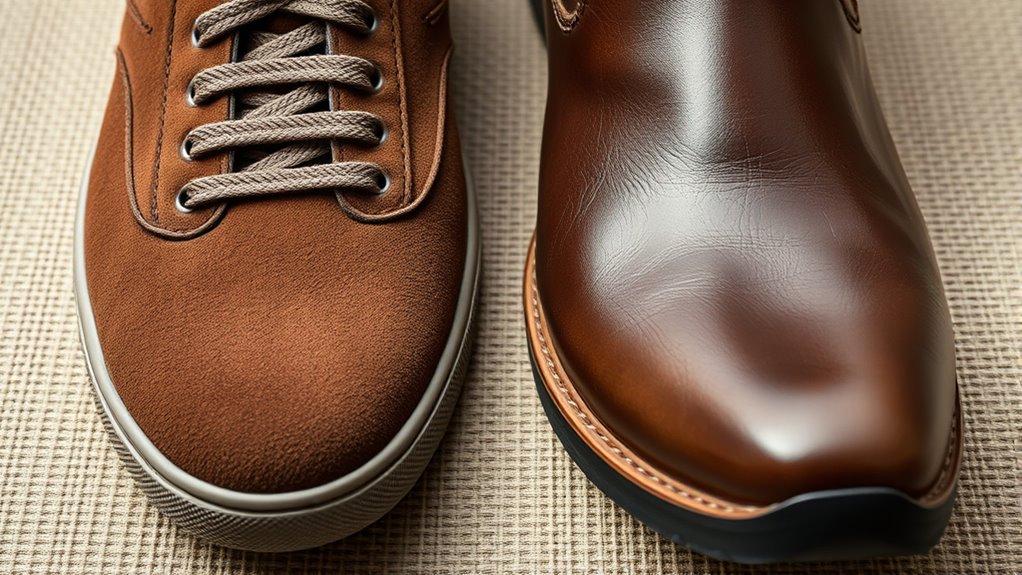
To keep your shoes in great shape, you need to dry and store them properly. Make sure you air dry your shoes completely, away from direct heat or sunlight, to prevent damage. Store them in a cool, dry place with proper support to preserve their shape and longevity. Using appropriate storage solutions can also help maintain their condition over time.
Proper Air Drying Techniques
Proper air drying is essential to maintain the shape and integrity of your shoes, especially after exposure to moisture. To do this effectively, you should always use shoe trees to help preserve the form and absorb excess moisture. Keep your shoes away from direct heat sources like radiators or sunlight, which can cause cracking or fading. Allow your shoes to dry naturally in a well-ventilated space. If they’re wet inside, remove insoles to speed up drying. You can also stuff your shoes with newspaper to absorb moisture and retain shape. Additionally, avoid handling your shoes excessively during drying, as this can deform them. Remember, patience is key to preventing damage and ensuring your shoes stay in great condition.
- Use shoe trees to maintain shape and absorb moisture
- Dry shoes in a ventilated, cool area away from heat
- Remove insoles to expedite drying process
- Avoid direct sunlight to prevent fading or cracking
Ideal Storage Conditions
Ensuring your shoes are stored correctly after drying helps maintain their shape and prolong their lifespan. Store them in a cool, dry place away from sunlight and heat sources to prevent fading and cracking. Use shoe trees or stuff them with tissue paper to keep their form. Avoid stacking shoes directly on top of each other to prevent deformation. Keep shoes in breathable fabric bags or boxes to protect them from dust and moisture. Proper storage minimizes dirt buildup and damage. Here’s a quick overview:
| Storage Environment | Recommended Practice | Common Mistake |
|---|---|---|
| Cool, dry area | Use shoe trees | Store in plastic bags |
| Away from sunlight | Keep in breathable box | Hanging shoes without support |
| Moderate humidity | Use silica gel packs | Storing wet shoes |
| Ventilated space | Avoid crowded storage | Overpacking shelves |
| Consistent temperature | Keep away from heat sources | Leaving in direct sunlight |
Avoiding Heat and Sun
Avoiding heat and direct sunlight is essential when drying or storing your shoes because exposure can cause materials to fade, crack, or warp. Sunlight and heat weaken fibers, leading to irreversible damage. To protect your footwear, keep these practices in mind:
- Store shoes in a cool, shaded place away from windows or heat sources.
- Avoid leaving shoes in the car on hot days, as temperatures can rise quickly.
- Allow shoes to air dry naturally, using shoe trees to maintain shape.
- Use protective covers or boxes to shield shoes from sunlight during storage.
Frequency of Cleaning and Long-Term Durability
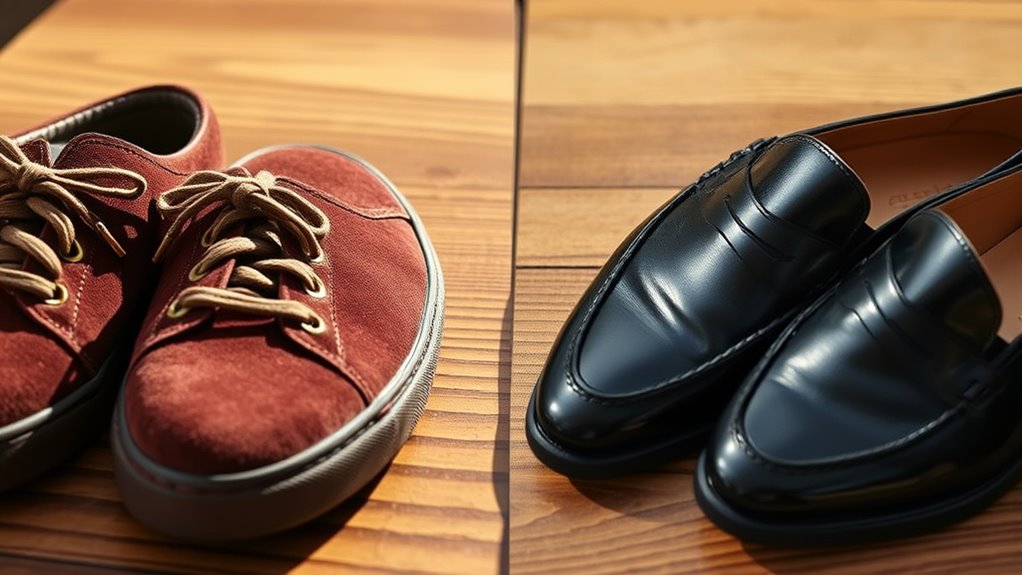
The frequency with which you clean your shoes substantially impacts their long-term durability. Regular cleaning helps prevent dirt and grime from embedding, especially in suede’s porous surface, which can lead to faster wear and staining. For suede, aim to clean at least once a month or more if you wear them frequently, using a suede brush and eraser for stains. Leather shoes require cleaning every 2-3 weeks, focusing on wiping with a damp cloth and applying protective creams. Proper cleaning preserves the material’s integrity, maintains appearance, and extends lifespan. Neglecting regular upkeep accelerates deterioration, causes discoloration, and reduces comfort. Consistent maintenance ensures your shoes stay in good shape longer, making your investment more worthwhile and saving you money on replacements.
Common Mistakes to Avoid When Caring for Suede and Leather
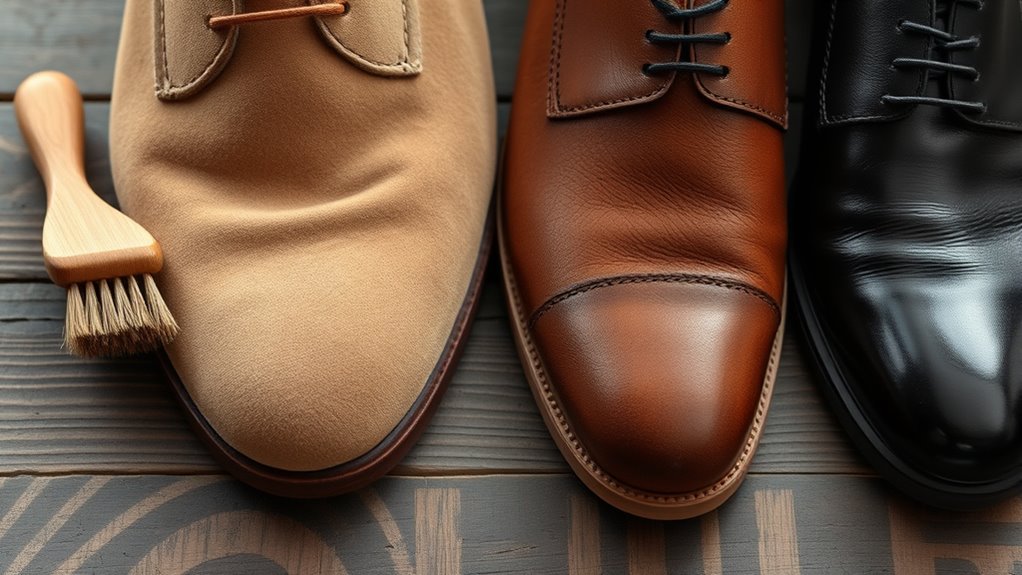
Many people make the mistake of using liquids or water-based products directly on suede, which can cause staining and damage its porous surface. Suede is delicate and requires gentle treatment. Avoid using harsh chemicals or excessive water, as they can leave permanent marks or darken the material. Additionally, rushing cleaning processes often leads to improper results. Be cautious not to over-condition leather, which can leave it greasy or weaken the material. Failing to protect suede with a suitable spray can result in stains from dirt or moisture. Ultimately, storing shoes improperly, such as in direct sunlight or damp areas, accelerates deterioration. To prevent damage, follow these best practices:
- Use appropriate cleaning tools like suede erasers
- Test products on small areas first
- Avoid soaking shoes in water
- Store shoes in cool, dry places away from sunlight
Tips for Extending the Life of Your Shoes
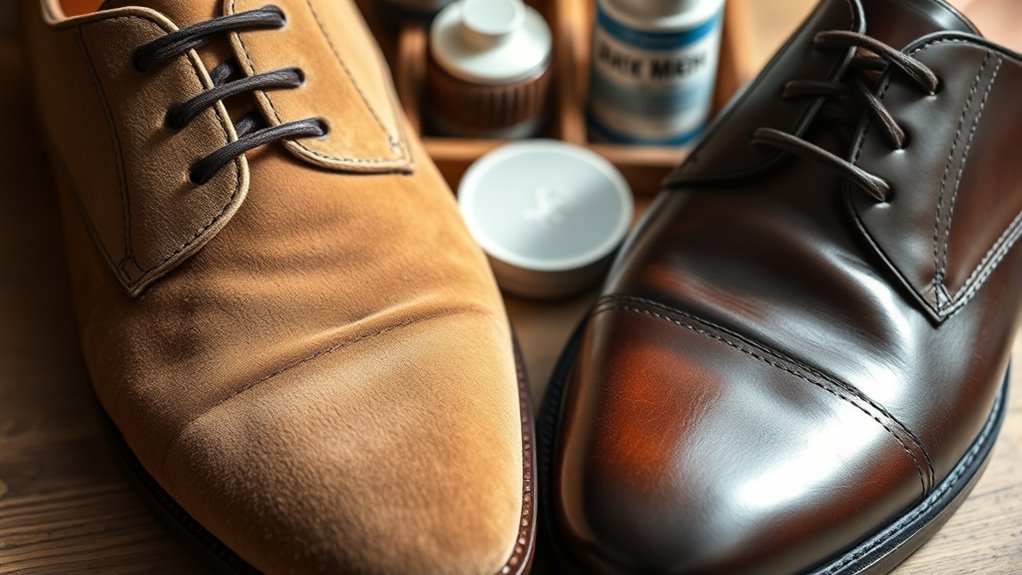
Proper maintenance and regular care considerably extend the lifespan of your shoes. To keep your footwear in top condition, brush suede daily with a suede brush to remove dirt and fluff the nap, and use a shoehorn each time you put them on to prevent creasing. After wearing, insert shoe trees to help maintain shape and absorb moisture. For leather shoes, wipe with a damp cloth and apply conditioner periodically. Protect suede with a spray once or twice a year, avoiding silicone-based products. Store both materials in a cool, dry place away from sunlight and humidity. Regularly inspect your shoes for signs of wear or damage, addressing issues early to prevent further deterioration. These simple steps ensure your shoes stay comfortable and look good longer.
When to Seek Professional Care for Shoe Repairs
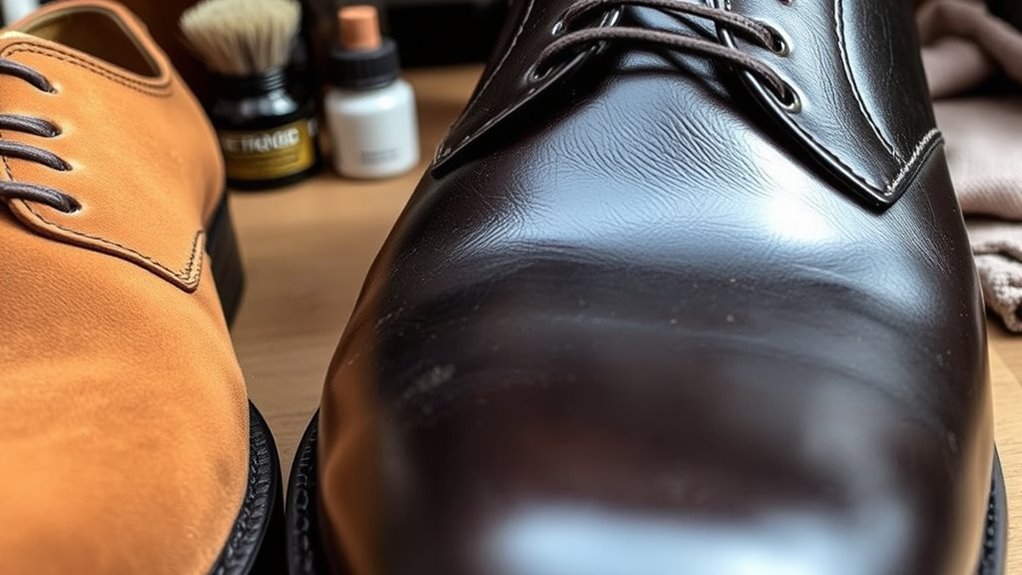
Knowing when to seek professional care for your shoes can save you time and money by preventing minor issues from becoming major problems. If you notice persistent damage or signs of extensive wear, it’s time to see an expert. For example:
- Deep cuts or tears that compromise the shoe’s structure
- Significant sole separation or detachment
- Persistent stains that cleaning can’t remove
- Cracks or severe leather drying that affects durability
In these cases, professional repair guarantees proper restoration and extends your shoes’ life. Attempting DIY fixes may worsen the damage or lead to uneven results. Trust specialists for complex repairs like resoling, stitching, or leather conditioning. Recognizing these signs helps you maintain your shoes’ appearance and functionality efficiently.
Frequently Asked Questions
Can I Use Water-Based Products on Suede Shoes Safely?
You should avoid using water-based products on suede shoes because they can cause staining, darkening, or damage to the delicate nap. Instead, stick to specialized suede cleaners, erasers, or gentle brushing. If you need to clean light stains, use a suede eraser or a damp cloth sparingly, but always test in a small area first. Regular brushing and protective sprays help keep suede looking its best without risking water damage.
How Do I Remove Salt Stains From Leather Footwear?
Salt stains on leather are like icy cracks marring a mirror’s surface. To remove them, dampen a soft cloth with a mixture of equal parts water and white vinegar. Gently wipe the stained area, then dry with a clean towel. Apply a leather conditioner afterward to restore moisture. Regular cleaning keeps your shoes looking pristine, preventing salt from causing long-term damage to your precious footwear.
Is It Necessary to Use a Conditioner on Suede Shoes?
Yes, you should use a protector on your suede shoes, but conditioner isn’t necessary. Applying a suede protector 1-2 times a year helps repel water and stains, keeping your shoes looking good longer. Avoid silicone sprays and limit wet products to prevent darkening. Regular brushing and occasional cleaning are enough to maintain suede’s appearance, so focus on protection rather than conditioning.
What’s the Best Way to Store Shoes in Humid Environments?
In a humid environment, your shoes are practically begging for protection from the relentless moisture. Store them in a cool, dry place, ideally in breathable shoe bags or boxes with silica gel packets to absorb humidity. Keep them away from direct sunlight and heat sources, which can cause warping or cracking. Using shoe trees helps maintain shape, and regularly check for dampness to prevent mold or odor buildup—your shoes deserve nothing less.
How Often Should I Replace the Protective Spray on Suede?
You should reapply the protective spray on your suede shoes every 1-2 years, depending on how often you wear them and exposure to elements. If you notice the spray wearing off or after cleaning, it’s a good idea to reapply. Regularly protect your shoes to maintain their look and prevent stains, especially if you live in a rainy or humid area. Keep an eye on the condition and spray as needed.
Conclusion
Caring for your shoes is like tending a delicate garden—you must nurture each material uniquely to keep them thriving. Suede and leather each have their own dance, requiring gentle steps and mindful attention. With proper care, you’ll guarantee they age gracefully, telling stories of your journeys. Treat your shoes as trusted companions, and they’ll continuously mirror your style’s resilience and elegance, standing as timeless symbols in your wardrobe’s evolving masterpiece.