
TL;DR
Carbios has successfully validated its enzymatic process for textile recycling, demonstrating its potential for sustainable fashion. This marks a significant step toward scalable, eco-friendly textile reuse.
Carbios, a biotechnology company specializing in enzymatic solutions, has confirmed that its textile recycling technology has successfully demonstrated its use case in a practical setting. This validation signifies a major step forward for sustainable fashion, as the company aims to scale its process for broader industry adoption.
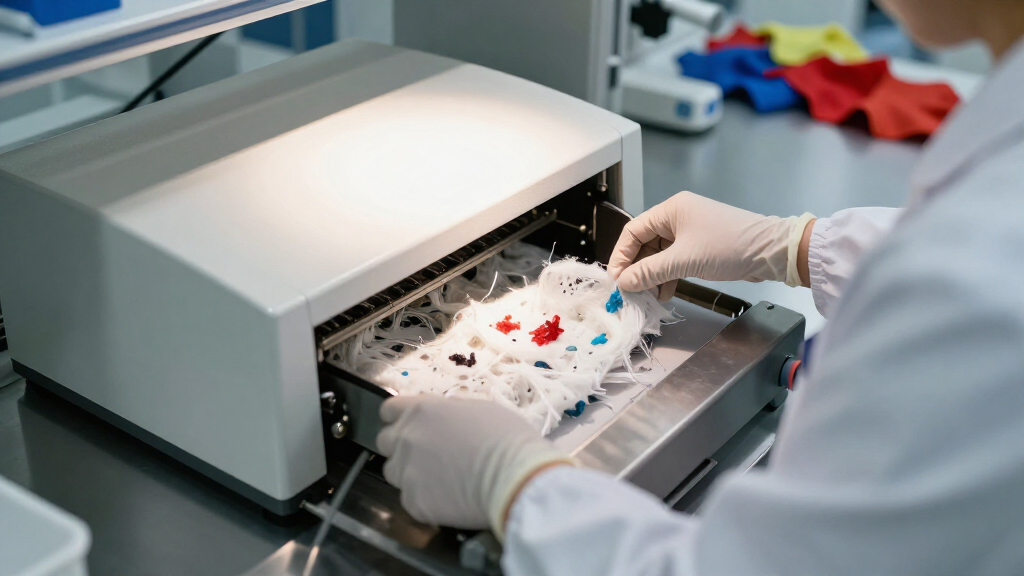
According to Carbios, their enzymatic recycling process can break down polyester-based textiles into their basic monomers, which can then be repolymerized into new fibers. The company reported that this process has been successfully tested on various textile samples, including post-consumer garments, under controlled conditions. This achievement was announced in a recent validation report, marking a milestone in the development of environmentally friendly textile recycling methods.
Carbios’s process uses specific enzymes to depolymerize polyester fibers without the need for harmful chemicals or high energy input, potentially offering a more sustainable alternative to traditional textile recycling methods. The company emphasized that their technology could be integrated into existing recycling infrastructure, making it scalable for industrial use. The validation results suggest that the process maintains fiber quality, which is crucial for commercial viability.
Potential Impact on Sustainable Fashion Industry
This development is significant because it addresses a key challenge in the fashion industry’s environmental footprint: textile waste. Traditional recycling methods often degrade fiber quality or require energy-intensive processes. Carbios’s enzymatic approach offers a promising alternative that could enable the industry to recycle polyester textiles efficiently while maintaining fiber quality. If scaled successfully, this technology could reduce reliance on virgin plastics, lower greenhouse gas emissions, and support circular economy initiatives in fashion.
As an affiliate, we earn on qualifying purchases.
Background on Enzymatic Textile Recycling Efforts
Enzymatic recycling of textiles is an emerging field, with several companies and research institutions exploring biological solutions to textile waste. Carbios, founded in 2011, has previously developed enzymatic processes for plastic waste, notably PET bottles. Their recent focus on textiles builds on this expertise, aiming to create a closed-loop system for polyester-based fabrics. Prior to this validation, the company conducted small-scale tests, but the recent report confirms the process’s effectiveness at a larger, more practical scale.
Industry stakeholders have expressed interest in enzymatic recycling as a more sustainable alternative to chemical or mechanical methods. However, challenges remain in scaling up and ensuring economic viability. Carbios’s validation provides a crucial proof of concept that could accelerate commercial adoption in the coming years.
“This validation confirms that our enzymatic process can effectively recycle textiles, opening new pathways for sustainable fashion. We are now moving toward industrial-scale testing and partnerships.”
— Carbios CEO Jean-Claude Lumaret

Jecqbor 6.5lb/104oz Premium Polyfill Stuffing, Fluffy Polyester Fiber Fill, Machine-Washable Pillow Stuffing for Pillows, Crochet Toys, Stuffed Animals, Couch Cushions, Cloud Decorations & DIY Crafts
- Safety Certified for Babies: OEKO-TEX certified, non-toxic and hypoallergenic
- Premium Polyester Material: 100% original polyester fiber
- Skin-Friendly and Safe: Gentle, chemical-free, odorless, suitable for sensitive skin
As an affiliate, we earn on qualifying purchases.
As an affiliate, we earn on qualifying purchases.
Uncertainties Around Commercial Scalability and Cost
While the validation confirms technical feasibility, it remains unclear how quickly the process can be scaled to commercial levels and whether it will be economically competitive with existing recycling methods. Details about the cost of enzyme production, integration into existing facilities, and overall throughput are still being evaluated.
Additionally, the long-term durability of recycled fibers produced via this method and their acceptance in the market are still under assessment. Industry observers note that further pilot projects and partnerships are necessary to address these uncertainties.
eco-friendly textile recycling equipment
As an affiliate, we earn on qualifying purchases.
As an affiliate, we earn on qualifying purchases.
Next Steps Toward Industrial Adoption
Carbios plans to conduct larger-scale pilot projects in partnership with textile manufacturers and recyclers to test the process in real-world settings. The company aims to demonstrate economic viability and establish supply chain collaborations over the next 12 to 18 months. Simultaneously, regulatory and certification processes are expected to be pursued to facilitate commercial deployment.
Industry stakeholders will be watching for updates on these pilots, which could pave the way for broader industry adoption if successful.
biotech textile recycling technology
As an affiliate, we earn on qualifying purchases.
As an affiliate, we earn on qualifying purchases.
Key Questions
What types of textiles can Carbios’s technology recycle?
The process is primarily designed for polyester-based textiles, which are common in many garments and fabrics. Compatibility with blended fabrics or other fibers remains under investigation.
How does enzymatic recycling compare environmentally to traditional methods?
Enzymatic recycling uses biological catalysts to break down fibers without harmful chemicals or high energy input, potentially reducing environmental impact. However, comprehensive lifecycle assessments are still ongoing.
When might this technology be available commercially?
Carbios expects to begin larger-scale pilot projects within the next 12 months, with potential commercial deployment possibly within 3-5 years, depending on scalability and market factors.
Will this process affect the quality of recycled textiles?
The validation indicates that the process can maintain fiber quality suitable for reuse in textile manufacturing, but long-term testing and market acceptance are still in progress.
What are the main challenges remaining for this technology?
Key challenges include scaling up production, reducing costs, ensuring fiber quality consistency, and integrating into existing recycling infrastructure.
Source: rss