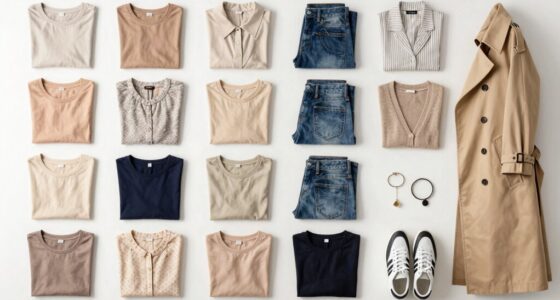

Global warming is changing what you wear by pushing the fashion industry to adopt sustainable practices as emissions rise and resources deplete. Fast fashion accelerates climate impacts with short-lived clothes and increased waste, while synthetic fibers from fossil fuels worsen pollution. Innovations like eco-friendly dyes and recycling offer hope, but industry commitments still lag. Your choices, from buying less to supporting sustainable brands, can help shape a cooler, cleaner future—discover how further actions impact climate and clothing.
Key Takeaways
- Global warming influences clothing choices by increasing demand for eco-friendly fabrics and sustainable production methods.
- Rising temperatures lead to the development of clothing designed for warmer climates and heat-resistant materials.
- Climate change accelerates industry shifts toward recycled and plant-based fibers to reduce environmental impact.
- Extreme weather events prompt brands to adopt innovative, resilient, and climate-adaptive manufacturing practices.
- Consumer behavior towards sustainability and eco-conscious brands is crucial in mitigating the fashion industry’s climate footprint.
The Sustainable Fashion Business: Launching an Ethical and Eco-Friendly Clothing Brand
As an affiliate, we earn on qualifying purchases.
As an affiliate, we earn on qualifying purchases.
The Growing Carbon Footprint of Fashion

The fashion industry’s carbon footprint is expanding rapidly, driven by soaring production and consumption. In 2023, apparel emissions increased by 7.5%, reaching 944 million tonnes—nearly 2% of global emissions. Since 2018, the sector has generated 2.1 billion tonnes of GHGs, accounting for about 4% of the world’s total. It’s responsible for 2-8% of global CO2 emissions, surpassing international flights and shipping. Textile manufacturing emissions are projected to grow 60% before 2030, fueling the industry’s environmental impact. With fashion representing around 10% of the global carbon footprint, your choices directly influence this surge. As demand for new clothes rises, so does the strain on our planet’s resources, highlighting the urgent need for change. Additionally, the growing carbon footprint of fashion underscores the importance of adopting sustainable practices and supporting eco-friendly brands.

Roadmap to Sustainable Textiles and Clothing: Eco-friendly Raw Materials, Technologies, and Processing Methods (Textile Science and Clothing Technology)
As an affiliate, we earn on qualifying purchases.
As an affiliate, we earn on qualifying purchases.
Fast Fashion’s Role in Emissions Surge
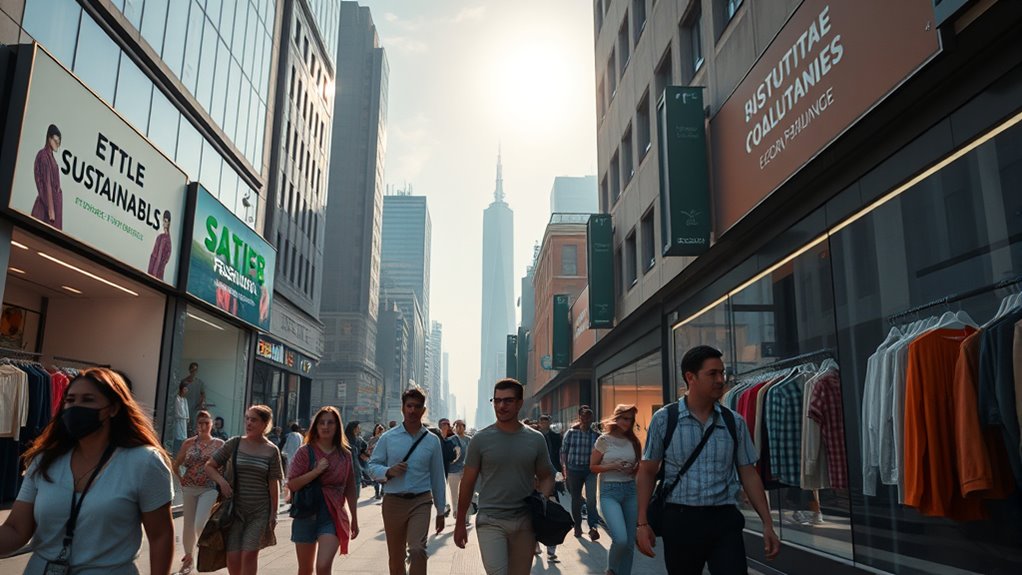
Fast fashion has driven clothing sales to double annually since 2000, with garments now kept for just a few wears before being discarded. This rapid production cycle leads to a 7.5% emissions spike in 2023 alone, as factories churn out more cheap clothing. Shorter garment lifespans mean more waste and higher emissions per item, fueling the industry’s growing climate impact. Additionally, the use of low-cost, mass-produced materials often results in lower color accuracy and durability, further decreasing the lifespan of garments.
Rapid Production Growth
Rapid growth in clothing production, driven by the rise of fast fashion, markedly fuels emissions increases. As you buy more garments, manufacturers respond by ramping up output, leading to a surge in greenhouse gases. Global fiber production has doubled since 2000, with polyester dominating over half of all fibers, mainly derived from fossil fuels. This rapid expansion results in higher energy use, water consumption, and plastic waste. The industry’s emissions grew 7.5% in 2023 alone, contributing nearly 2% of global greenhouse gases. Faster production cycles mean clothes are made and discarded quicker, intensifying environmental impacts. The reliance on fossil fuel-based synthetic fibers further exacerbates the environmental footprint. Without significant changes, these trends will continue, further accelerating global warming and straining Earth’s resources. Your consumption choices directly influence this growth and its environmental consequences.
Shortened Garment Lifespan
As clothing production accelerates to meet the demands of fast fashion, garments are not only made more quickly but also kept for far shorter periods. You buy more clothes, discard them after just a handful of wears, and replace them with new styles. This rapid turnover means garments have a much shorter lifespan, often lasting only 7-10 wears. As a result, more clothing ends up in landfills, increasing waste and pollution. The quick disposal cycle fuels the cycle of overproduction, driving emissions higher. This constant churn of cheap, disposable fashion leads to a surge in textile waste and greenhouse gases. Your buying habits directly contribute to the cycle, making it harder to curb the fashion industry’s environmental impact and meet climate targets. Additionally, the ventilation considerations in manufacturing facilities can influence the overall carbon footprint of garment production.

ANBOSON BBQ Gloves Disposable-Heat Resistant Cooking & Grilling Gloves Set (100 Black Nitrile, 4 Cotton Liners)-10Mil Heavy Duty Meat Handling Smoker Accessories for Hot Food Prep,Non-Slip Grip,Large
Dual-Layer Heat Protection for Safe Grilling: ANBOSON grilling gloves combine 10mil nitrile gloves with cotton gloves BBQ liners…
As an affiliate, we earn on qualifying purchases.
As an affiliate, we earn on qualifying purchases.
The Dominance of Synthetic Fibers and Environmental Impact

Why do synthetic fibers dominate the global textile market, and what does this mean for the environment? You might notice that over 69% of fibers are synthetic, with polyester making up 85% of those. This dominance stems from synthetic fibers’ low cost, durability, and versatility, making them popular in fast fashion. However, their environmental impact is significant. Most synthetic fibers are made from virgin polyester, derived from crude oil, contributing to greenhouse gas emissions and plastic pollution. Recycled polyester’s share is falling, and less than 1% of clothes are recycled into new garments. When you wear synthetic clothes, you’re supporting an industry that heavily relies on fossil fuels, drains resources, and pollutes ecosystems through microplastics, all while fueling climate change. Additionally, innovations in comparative advantage are encouraging countries to prioritize synthetic fiber production for economic gains despite environmental costs.

Pact Men's Organic Softspun Standard Fit Crew Neck T-Shirt, Pack of 5 – Maritime Navy – Medium
ORGANIC COTTON: The crew neck t-shirts for men pack of 5 is the perfect choice for men who…
As an affiliate, we earn on qualifying purchases.
As an affiliate, we earn on qualifying purchases.
Progress and Gaps in Industry Climate Commitments

Despite the growing awareness of the environmental harm caused by synthetic fibers, the fashion industry’s climate commitments remain inconsistent and often insufficient. Many brands lack transparency, with 24% of the largest 250 companies not disclosing any decarbonization efforts. Only four brands—H&M, Patagonia, ASICS, and Marks & Spencer—are on track to meet the UN’s 55% emissions reduction goal by 2030. Meanwhile, over half of brands show little to no progress toward climate targets. Some, like H&M, have made notable reductions—cutting scope 3 emissions by 23%—but overall, commitments fall short of needed action. Progress exists, but significant gaps remain, especially in transparency, scope coverage, and ambitious targets, leaving the industry’s climate impact only partially addressed. Additionally, many companies are not incorporating sustainable materials like recycled fibers, which could significantly reduce their carbon footprint.
Resource Depletion and Water Usage in Clothing Production
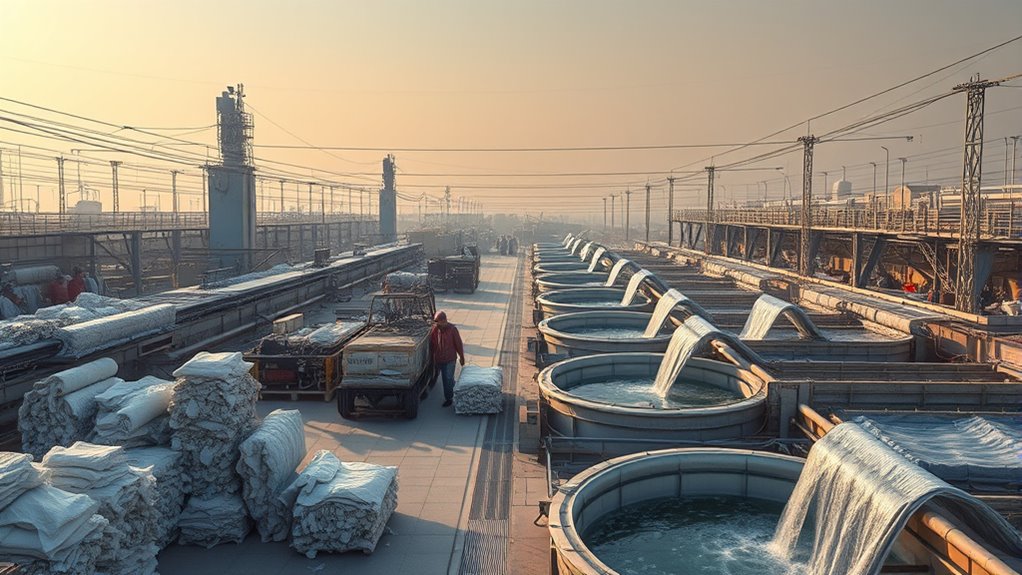
The fashion industry ranks as the second-largest consumer of water globally, putting immense pressure on finite water resources. Your clothing choices contribute to this strain, as textile production requires vast amounts of water. Here’s what you should know:
- High Water Footprint: Producing a single cotton t-shirt can use up to 2,700 liters of water, depleting local water supplies and harming ecosystems.
- Resource Depletion: Manufacturing textiles relies heavily on non-renewable resources like fossil fuels, accelerating resource exhaustion.
- Plastic Pollution: The sector’s textile value chain causes about 9% of plastic leakage into oceans annually, impacting marine life and ecosystems.
Reducing consumption and choosing sustainable fabrics can help lessen this environmental toll.
Innovations Driving Sustainable Fashion Practices

You can make a difference by supporting innovations like eco-friendly dyeing techniques that cut water use and emissions profoundly. Recycling and circular design also help extend garment life and reduce waste, keeping resources in circulation longer. Embracing these practices allows you to participate in creating a more sustainable fashion industry. Incorporating sustainable materials into your wardrobe choices can further reduce your environmental impact and promote eco-conscious fashion.
Eco-Friendly Dyeing Techniques
Innovations in eco-friendly dyeing techniques are transforming sustainable fashion by substantially reducing environmental impacts. You can now choose fabrics dyed with methods that cut water use by up to 65%, energy consumption by 57%, and decrease greenhouse gas emissions by 70%. Here are three key advancements:
- Digital printing allows precise color application with minimal water and dye waste.
- Bio-based dyes derived from plants, algae, or fungi eliminate toxic chemicals and reduce pollution.
- Supercritical CO2 dyeing uses carbon dioxide instead of water, drastically lowering water and chemical use. Additionally, these innovative techniques support the use of sustainable fabrics, further minimizing ecological footprints.
These innovations not only lessen the fashion industry’s footprint but also promote healthier ecosystems. By adopting these techniques, you contribute to a more sustainable wardrobe, helping combat climate change while maintaining stylish choices.
Recycling and Circular Design
Recycling and circular design are reshaping sustainable fashion by transforming waste into valuable resources and extending the lifespan of garments. You can participate by choosing brands that prioritize recycled materials and support closed-loop systems. Innovations like fabric recycling reduce waste and lower reliance on virgin fibers. Circular design encourages products to be easily repaired, reused, or recycled, minimizing environmental impact. This approach also fosters new business models, like rental and resale platforms, keeping clothes in circulation longer. Here’s a quick overview:
| Innovation | Impact | Future Potential |
|---|---|---|
| Fabric recycling | Reduces waste, saves resources | Expands recycled fiber use |
| Design for disassembly | Easier recycling, repair | Extends garment life |
| Circular business models | Keeps clothes in use longer | Promotes reuse and resale |
By adopting sustainable manufacturing practices, the fashion industry can significantly reduce its environmental footprint and promote a more circular economy.
Consumer Behavior and Its Influence on Climate Goals

How much do consumer choices shape the climate impact of the fashion industry? A lot. Your purchasing decisions directly influence production scales, waste, and emissions. Here’s how your behavior impacts climate goals:
- When you buy faster and more, you fuel overproduction, leading to a 7.5% increase in fashion emissions in 2023 alone.
- Opting for cheap, disposable clothes encourages the growth of ultra-fast fashion, which accounts for a significant rise in textile fiber production projected to reach 147 million tonnes by 2030.
- Choosing synthetic fibers like polyester, especially new virgin polyester, increases reliance on fossil fuels and plastic pollution, further hindering global decarbonization efforts.
Your habits can either accelerate or slow down progress toward climate targets. Every choice matters.
Rethinking Fashion for a Cooler Planet

Rethinking fashion is essential if we want to reduce its climate impact and build a sustainable future. You can start by choosing quality over quantity, buying fewer but better-made clothes that last longer. Supporting brands committed to eco-friendly practices, like using recycled materials and renewable energy, makes a difference. Consider secondhand shopping or swapping clothes with friends to extend the lifespan of garments. Embrace timeless styles rather than fleeting trends, and prioritize sustainable fibers like organic cotton or hemp. Reducing reliance on synthetic fibers, especially polyester, helps cut emissions and plastic waste. Your choices, from where you shop to how often you buy, directly influence the industry’s shift toward lower emissions. Together, these small but impactful changes can help transform the fashion world into a more sustainable industry.
Frequently Asked Questions
How Can Consumers Reduce the Environmental Impact of Their Clothing Choices?
You can reduce your clothing impact by choosing quality over quantity, buying less, and selecting sustainable brands. Opt for secondhand or upcycled items, and prioritize natural fibers like cotton or wool over synthetics like polyester. Wash clothes in cold water, avoid dry cleaning, and always repair or repurpose garments. By making mindful decisions, you help cut emissions, save resources, and support a more sustainable fashion industry.
What Policies Are Governments Implementing to Regulate Fashion Industry Emissions?
Governments are implementing policies to reduce fashion industry emissions by setting emission reduction targets, encouraging transparency, and promoting sustainable practices. You can expect stricter regulations on textile manufacturing, incentives for using recycled fibers, and requirements for companies to disclose their carbon footprints. Some nations are also supporting innovations in eco-friendly dyes and renewable energy adoption, helping the industry cut emissions while fostering sustainable growth.
Are There Sustainable Materials That Can Replace Synthetic Fibers Effectively?
You can replace synthetic fibers with sustainable options like organic cotton, hemp, and Tencel, which offer durability and comfort. Unlike polyester, these materials are biodegradable, require less water and energy to produce, and don’t shed microplastics. While they may cost more upfront, they markedly reduce environmental impact. Embracing these fibers helps you make eco-conscious choices, supporting a fashion industry that’s healthier for the planet and future generations.
How Does Fast Fashion Influence Global Resource Depletion and Waste?
Fast fashion accelerates resource depletion and waste by encouraging overproduction and quick disposal. You buy more garments, often discarding them after only a few uses, which leads to massive textile waste. It also drives increased demand for water, energy, and synthetic fibers, depleting non-renewable resources and polluting the environment. This cycle results in higher emissions, plastic leakage, and a significant strain on global ecosystems, making sustainable consumption essential.
What Role Do Corporations Play in Advancing Sustainable and Low-Carbon Fashion?
Corporations can catalyze change by committing to conscious consumption and championing cleaner, greener practices. They should spearhead sustainable sourcing, slash emissions, and support circularity—transforming trash into treasures. By setting strict standards, sharing transparent stats, and investing in innovative ideas, they can inspire industry-wide improvement. Your role is to support brands that prioritize planet-positive progress, encouraging corporations to lead the charge toward a low-carbon, eco-friendly fashion future.
Conclusion
As you choose your wardrobe, imagine the world you’re shaping—a lush forest or a smog-filled city. Every garment you buy impacts the planet’s future, like a drop in an ever-widening ocean. By opting for sustainable fabrics and mindful consumption, you can turn the tide from pollution to renewal. Your choices hold the power to transform fashion from a contributor to a champion of our warming planet.