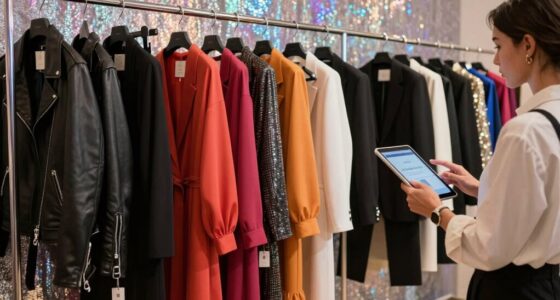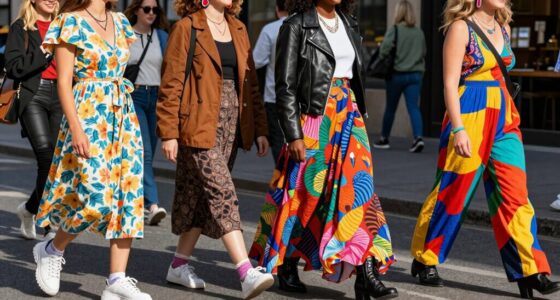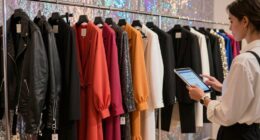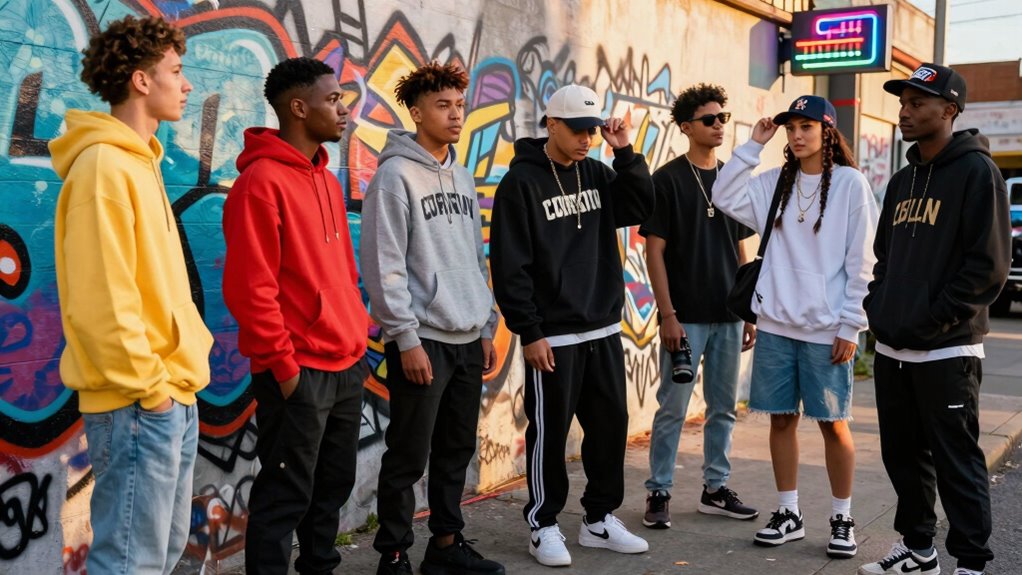

Fashion trends are shaped by a network of influencers, designers, and gatekeepers who decide what’s appealing. Editors and creative leaders set seasonal tones, while celebrities and social media stars spread styles fast. Cultural signals from street style and online buzz also play a role. Retailers translate runway ideas into products, fueling the cycle. If you want to discover how these players influence what’s considered cool, keep exploring the behind-the-scenes process.
Key Takeaways
- Fashion editors and magazine gatekeepers shape trends by selecting and highlighting specific styles and designers.
- Designers act as trend incubators, experimenting with ideas that influence industry directions and consumer tastes.
- Influencers, celebrities, and social media platforms rapidly accelerate trend diffusion and determine what’s perceived as “cool.”
- Retail strategies and visual merchandising translate trend signals into consumer-ready displays and shopping experiences.
- Cultural signals and street style observations serve as early indicators of emerging fashion trends before mainstream adoption.
The Role of Editorial Gatekeepers in Shaping Trends

Have you ever wondered who truly dictates what becomes fashionable? Editorial gatekeepers—fashion editors and magazine editors—play a vital role in shaping trends. They select which looks and designers receive spotlight, curating runway-to-street narratives that influence public perception. By choosing specific styles for editorial shoots and covers, they elevate certain aesthetics, making them desirable and aspirational. Their editorial decisions set the tone for upcoming seasons and steer consumer preferences. These gatekeepers act as tastemakers, filtering countless options to highlight what they see as forward-thinking or culturally relevant. Their influence extends beyond magazines, impacting social media, retail displays, and brand strategies. Additionally, many leverage innovative digital tools like AI-driven trend forecasting platforms to identify emerging styles and predict future popularities. In essence, editorial gatekeepers decide which trends gain momentum and become part of the mainstream conversation, often leveraging AI tools for trend forecasting and content curation.
Designers and Creators as Trend Incubators

You recognize that designers and creators spark trends through their inspiration and ideation, often drawing from cultural, social, and artistic sources. They showcase their concepts using storytelling techniques that capture attention and shape narratives. Their influence sets the stage for trends to emerge, spread, and ultimately become mainstream. Understanding the farming tips behind resource management can also inform sustainable practices in fashion production and distribution. Additionally, recognizing passive voice helps clarify how ideas are communicated, emphasizing active roles in trend creation. For example, the choice of color accuracy in visual presentations can significantly impact how trends are perceived and adopted. By exploring how air quality impacts health and lifestyle, creators can integrate wellness into their designs and messaging. Knowing about water chemistry can also inform how materials are sourced and treated to promote sustainability and durability in fashion products.
Inspiration and Ideation Processes
Designers and creators serve as the primary incubators of fashion trends, transforming inspiration into innovative concepts that set the tone for upcoming seasons. You often start by scanning cultural, artistic, and social sources—music, art, politics, or street style—to identify emerging themes. They experiment with materials, silhouettes, and techniques, pushing boundaries to develop fresh ideas. Brainstorming sessions, mood boards, and collaborations fuel this process, blending personal vision with market signals. You also draw from historical references or subcultural movements, remixing old ideas into new forms. This ideation phase is dynamic, involving rapid sketching, prototyping, and testing concepts. Incorporating creative influences from various disciplines can further inspire designers to explore uncharted territories and innovate beyond conventional boundaries. Ultimately, your goal is to craft a compelling narrative that resonates with both your creative team and future consumers.
Showcasing and Storytelling Techniques
How do designers turn their innovative concepts into powerful trend incubators? They craft compelling stories and showcase their ideas through strategic presentation. By blending visuals, runway shows, and digital content, they create immersive narratives that resonate emotionally. This storytelling sparks curiosity and inspires consumers to adopt new styles. Effective showcasing emphasizes authenticity and cultural relevance, making trends feel organic. Here’s how different techniques work together:
| Technique | Impact |
|---|---|
| Runway Shows | Creates spectacle, sets tone |
| Digital Campaigns | Reaches broad audiences quickly |
| Collaborations | Builds buzz through partnerships |
| Visual Merchandising | Enhances in-store storytelling |
| Social Media Teasers | Generates anticipation and hype |
Trend Setting and Influence
Creative leaders in fashion play a pivotal role in shaping trends by pushing boundaries and introducing fresh ideas that challenge conventions. You look to designers and creators as trend incubators—they craft concepts that ignite change and inspire adoption. Their runway collections, innovative silhouettes, and bold themes serve as signals for the industry and consumers alike. These visionaries constantly experiment, setting the stage for what’s next.
- They challenge norms, encouraging others to rethink style boundaries
- They act as cultural catalysts, reflecting societal shifts in their work
- They influence retail and consumer behavior through their daring ideas
How Retailers Turn Runway Into Retail Shelves

Retailers carefully align their inventory with emerging trends by analyzing runway signals and consumer demand. They then plan stock levels and timing to capitalize on trend momentum while managing risks. Through strategic visual merchandising, they create engaging displays that encourage shoppers to adopt the latest styles quickly. Understanding the significance of consecration in the Bible helps retailers recognize the importance of dedication and commitment to quality and style, ultimately influencing consumer trust and loyalty. Additionally, staying informed about current fashion trends enables retailers to adapt swiftly to shifting consumer preferences and maintain a competitive edge.
Trend Alignment Strategies
To effectively turn runway trends into retail shelves, retailers employ a variety of strategic alignment methods that bridge the gap between high-fashion innovation and consumer demand. You analyze trend signals from social media, sales data, and cultural observations to identify what’s gaining traction. Then, you coordinate with designers, supply chains, and merchandisers to ensure availability aligns with timing. This involves:
- Prioritizing fast-moving trends with high demand potential
- Adjusting product development based on at‑home beauty technology feedback
- Balancing exclusivity with mass accessibility to maximize reach
Inventory Planning Processes
Effective inventory planning bridges the gap between trend identification and product availability. You analyze sales data, social media signals, and market forecasts to determine how many units to produce and when to launch them. You consider production lead times, supplier capacity, and logistics to guarantee products arrive on shelves at the right moment. Fast fashion retailers, in particular, prioritize quick turnarounds, adjusting stock levels based on real-time demand signals. You also evaluate margin potential and inventory risks, avoiding overstocking or stockouts. Using demand forecasts and sales trends, you decide the mix of core, trending, and microtrend items to optimize shelf space and meet consumer expectations. Your goal: align inventory precisely with market demand to maximize sales and minimize waste.
Visual Merchandising Tactics
Visual merchandising transforms runway trends into compelling shopping experiences by strategically arranging products and creating immersive displays. You’ll notice how retailers use visual cues—color blocking, thematic props, and focal points—to draw attention to key styles. They craft narratives that guide your journey through the store, encouraging you to envision how pieces work together.
- Highlight trending items with bold displays, making them impossible to ignore
- Use storytelling environments that evoke the aesthetic mood of runway collections
- Incorporate lighting and signage to emphasize exclusivity and urgency
These tactics shape your perception, making runway concepts feel accessible and desirable. By controlling the visual environment, retailers influence your shopping behavior, turning fleeting trends into everyday wardrobe staples.
The Power of Influencers and Celebrities in Trend Diffusion
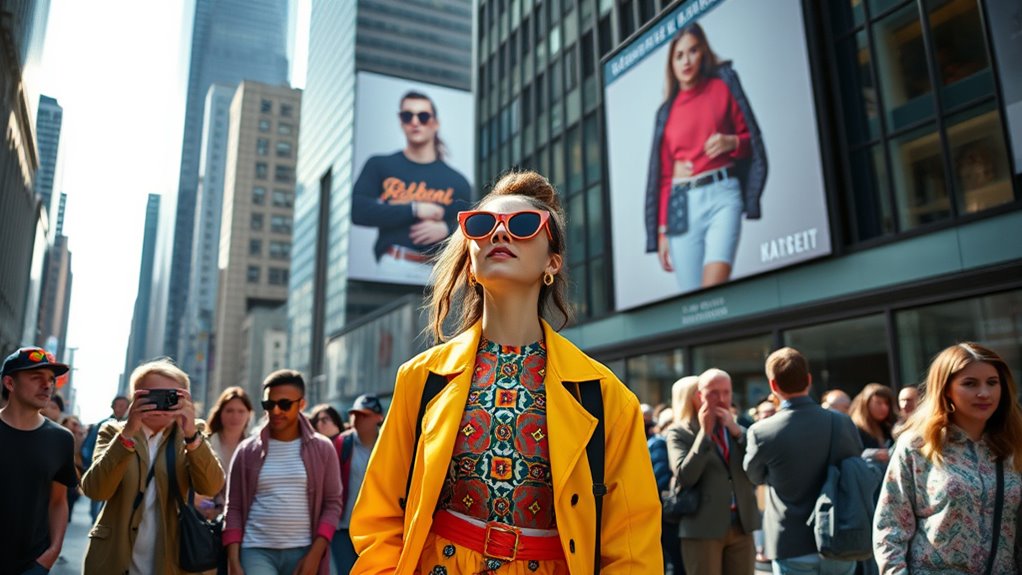
Influencers and celebrities hold immense power in shaping fashion trends by leveraging their massive social followings and media presence. When they showcase a new look or endorse a product, it instantly gains visibility across platforms like Instagram, TikTok, and YouTube. Their posts serve as a stamp of approval that can turn a niche style into a mainstream phenomenon overnight. You notice how quickly items sell out after a celebrity wears them? That’s their influence in action. They act as trend accelerators, turning creative ideas into must-have items. Retailers and brands closely monitor their choices, often designing collections that mirror their preferences. This direct line from influencer to consumer shortens the trend cycle, making their role central in the diffusion process.
Cultural and Street-Style Observations as Trend Signals
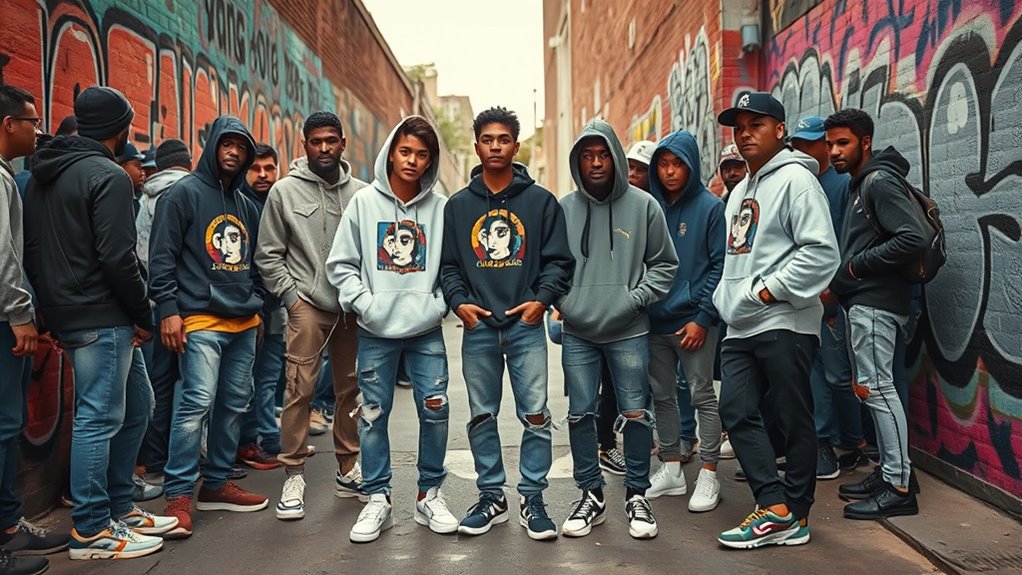
Cultural and street-style observations serve as immediate barometers for emerging fashion trends, often before they hit mainstream channels. You can spot these signals by paying attention to what people wear at events, neighborhoods, or online communities. These on-the-ground cues reveal aesthetic shifts that haven’t yet been commercialized. Paying attention to body jewelry measurements and materials can also provide insights into current style preferences and innovations. Additionally, observing the best rated pinball machines of 2024 can reflect broader cultural shifts, as retro and modern gaming influences often intersect with fashion and style trends. Exploring sound healing science offers a deeper understanding of how sensory experiences influence aesthetic preferences, which can be reflected in emerging fashion expressions. Furthermore, tracking hair trends 2025 can offer clues about evolving aesthetics and self-expression patterns in society. Recognizing subtle cues, such as changes in ear wax odor, can also signal shifts in personal or cultural hygiene practices that influence style choices.
The Impact of Social Media on Emerging Styles
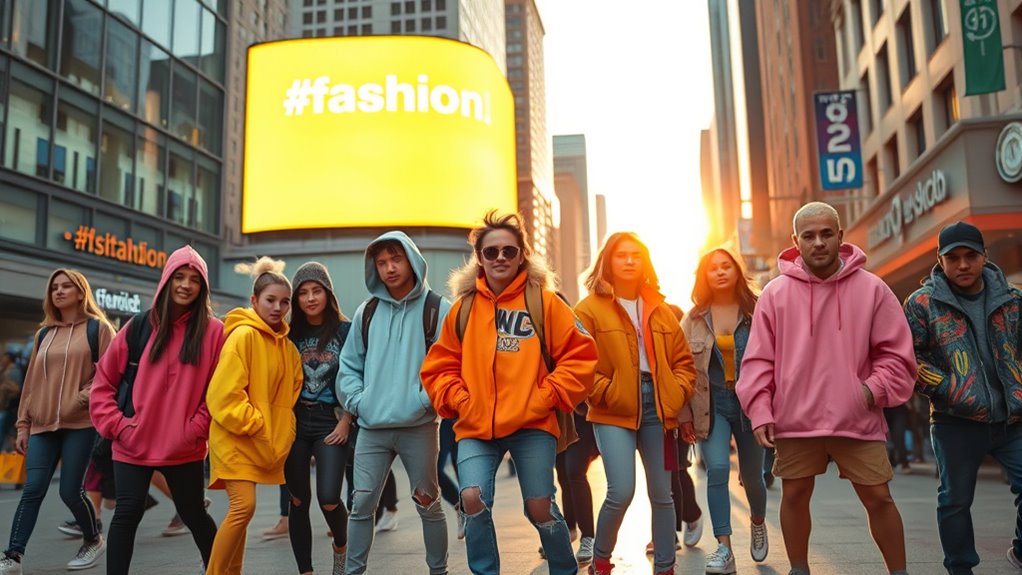
Social media fuels emerging styles through viral hashtag trends that quickly capture public interest. Influencers have the power to amplify these looks, turning niche ideas into mainstream sensations almost overnight. Platform algorithms further accelerate this process by prioritizing popular content, making it easier for new styles to spread rapidly. Additionally, understanding the herbal properties of various plants can inspire new fashion trends rooted in natural aesthetics and wellness themes. Recognizing the market trends driving consumer interest helps designers and brands stay ahead in the ever-evolving fashion landscape. Moreover, monitoring crypto market trends can provide insights into consumer behavior shifts that influence fashion demands.
Viral Hashtag Trends
Viral hashtag trends have become a powerful catalyst for shaping emerging styles in today’s fashion landscape. When you see a hashtag gaining traction, it signals a shift in consumer interests and cultural moments. These trends spread rapidly, influencing what gets mainstream attention. You can observe:
- How quick engagement can turn a niche look into a global phenomenon
- The role of user-generated content in validating new styles
- The acceleration of trend adoption due to easy sharing and viral challenges
Your participation, whether through posting or sharing, amplifies these trends, making them more visible. Brands monitor these hashtags closely to gauge interest and predict upcoming styles. Ultimately, viral hashtags act as real-time barometers of cultural relevance, shaping the future of fashion in moments.
Influencer Amplification Power
Influencers hold significant power to amplify emerging styles through their social media presence. When they showcase a new look or trend, their followers quickly notice and imitate it, creating rapid momentum. Their posts, stories, and videos serve as real-time endorsements that legitimize and spread styles far beyond traditional fashion channels. Because influencers often have highly engaged audiences, their adoption can trigger viral cycles, pushing a niche look into mainstream awareness overnight. Their ability to generate buzz through hashtags, comments, and shares accelerates the trend’s visibility and desirability. As a result, brands often collaborate with influencers early on to capitalize on this amplification, knowing that their endorsement can turn a small idea into a widespread fashion phenomenon almost instantly.
Platform Algorithm Impact
Platform algorithms play a crucial role in shaping how emerging styles gain traction by controlling what content reaches you and how it’s prioritized. They determine which posts, videos, and images surface on your feed, amplifying popular trends and surfacing niche styles. This process accelerates the spread of new looks and influences consumer behavior.
Algorithms favor content with high engagement, making viral posts more visible and encouraging repeated sharing. They also personalize content based on your interactions, reinforcing trends you’re already interested in.
- Prioritize trending hashtags and topics to maximize visibility.
- Engage with niche communities to influence algorithmic promotion.
- Consistently share authentic and high-quality content to stay relevant.
Understanding this dynamic helps you leverage social platforms to spot and shape emerging styles.
Forecasting Methods That Predict the Next Big Thing
Forecasting the next big trend requires a combination of data-driven analysis and creative intuition. You analyze social media activity, sales data, and search trends to identify early signals of emerging styles. Social listening tools help you gauge public sentiment and spot viral hashtags or influencer endorsements. Monitoring sales and inventory movements reveals which products gain traction quickly. Qualitative research, like focus groups and cultural ethnography, adds depth by uncovering underlying motivations and aesthetic shifts. Hybrid forecasting blends these insights with designer intuition, balancing creativity with market evidence. Trend lifecycle mapping provides a framework to time your launches and plan markdowns. This integrated approach enables you to anticipate trends before they hit mainstream, giving your brand a competitive edge in the fast-paced fashion landscape.
Economic Factors Influencing Trend Adoption
Economic factors play a crucial role in determining which fashion trends gain widespread adoption. Your ability to access affordable materials, production capacity, and distribution channels directly impacts how quickly a trend spreads. When supply chains are flexible and scalable, brands can launch new styles faster, increasing trend momentum. Retail economics also influence trend adoption; high-margin items or those with quick turnover attract more investment. Additionally, the price point affects how rapidly a trend reaches mass markets:
- Lower prices accelerate diffusion, reaching more consumers quickly.
- Production costs and lead times limit which trends can scale globally.
- Sustainability costs and regulations can redirect trend development or slow adoption.
Understanding the design and production processes involved helps clarify how economic conditions shape what’s fashionable and how fast it becomes mainstream. Furthermore, the ability to adapt quickly depends on the flexibility of supply chains, which can be affected by global economic shifts. Supply chain resilience determines whether brands can respond swiftly to changing market demands and sustain trend momentum. A robust supply chain system can also enable brands to incorporate cost-effective materials, making trends more accessible to a broader audience.
Consumer Behavior and the Spread of Fashion Trends
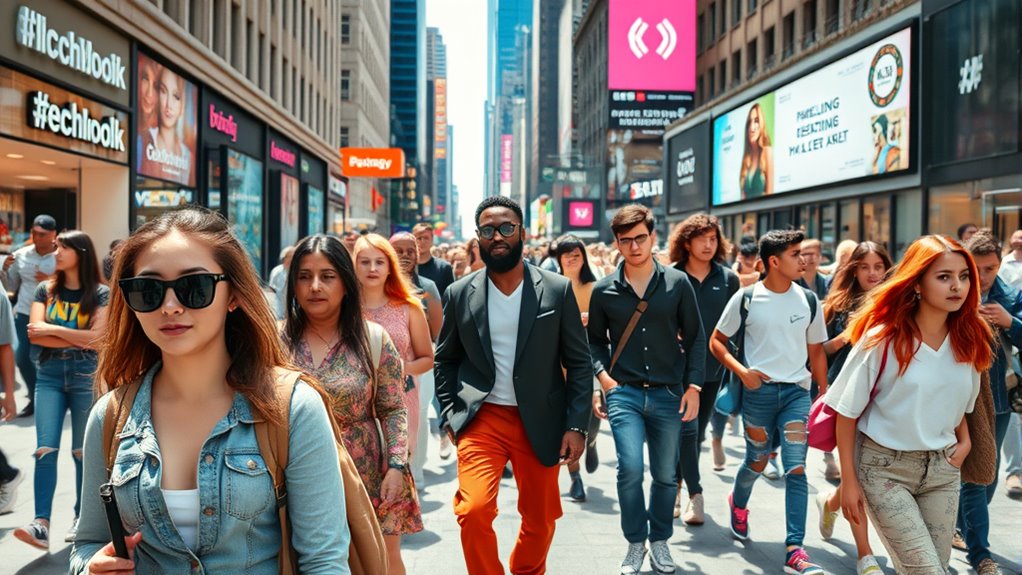
How do consumers decide which fashion trends to embrace and how quickly they spread? Your choices are influenced by early adopters, like influencers or trendsetters, who showcase new styles and create social proof. When you see friends, celebrities, or online personalities adopting a look, you’re more likely to follow suit, especially if it’s readily available. Retailers play a role by quickly making trending items accessible, encouraging imitation. Generation differences matter too—Gen Z and Millennials tend to adopt trends faster through social media, sharing and commenting in real time. Geographic and subcultural variations also shape diffusion, with trends spreading unevenly across regions before hitting the mainstream. Ultimately, visibility, availability, and social validation drive how quickly a trend moves from niche to norm.
Metrics That Measure the Success of Trend Cycles
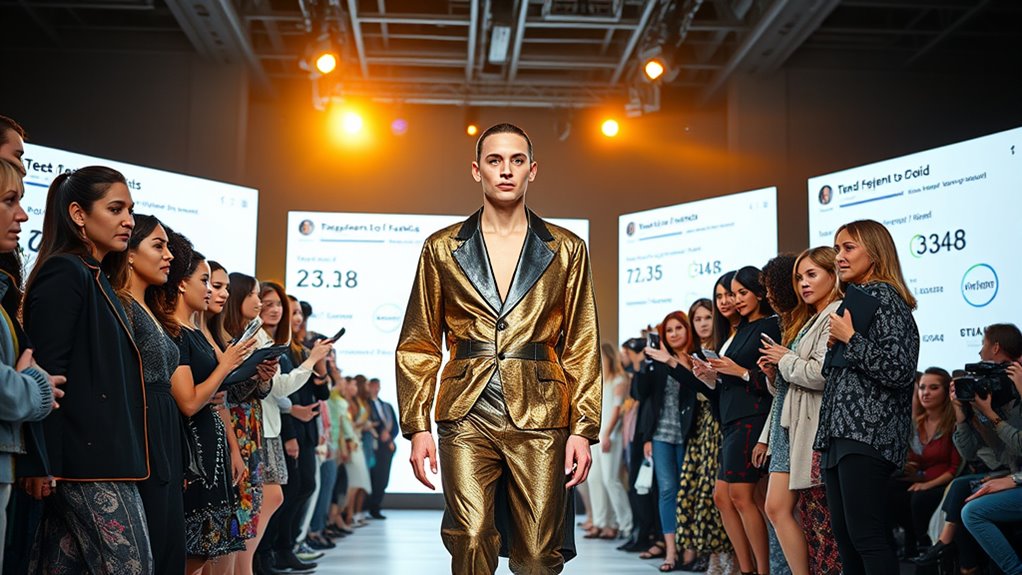
When a fashion trend gains momentum through widespread adoption, brands and retailers need clear indicators to evaluate its success. You look at key metrics to determine if a trend is thriving or fading.
- Sell-through rate and weeks of supply show how quickly products move and if demand matches forecasts.
- Social engagement and share growth track online buzz, indicating cultural relevance.
- Inventory variance and forecast accuracy reveal how well predictions align with actual sales, guiding future decisions.
These metrics help you assess the trend’s commercial performance and cultural impact. They inform whether to scale production, adjust marketing, or pivot to new ideas. By monitoring these signals, you stay ahead of market shifts and capitalize on what’s resonating with consumers.
Frequently Asked Questions
How Do Trends Evolve Differently Across Various Cultural and Geographic Markets?
You notice that trends evolve differently across cultures and regions because local influencers, cultural values, and social norms shape what’s appealing. In some markets, streetwear or traditional styles dominate, while others embrace high fashion or minimalism. Retail availability, language, and media consumption patterns also impact how quickly trends spread. As you observe, regional identity and economic factors influence the pace and direction of trend adoption, creating diverse fashion landscapes worldwide.
What Role Do Small or Emerging Brands Play in Trend Creation?
Nearly 40% of fashion trends originate from small or emerging brands, so you play a vital role in shaping what’s new. You experiment with innovative styles and materials, often pushing boundaries mainstream brands haven’t yet explored. When your designs catch on, influencers and retailers pick up on them, accelerating adoption. Your fresh perspectives can spark the next big trend, proving that even the smallest brands have the power to influence the entire industry.
How Do Sustainability Concerns Influence Trend Development and Adoption?
You’re seeing sustainability concerns shape trend development and adoption because consumers demand eco-friendly options. Brands and designers now prioritize sustainable materials, ethical manufacturing, and transparency, which influence new styles. Social media amplifies these shifts, making eco-conscious choices go viral quickly. Retailers favor sustainable products for their long-term viability, and trend forecasters incorporate environmental factors into predictions. Overall, sustainability drives innovation and filters what becomes popular, shaping the future of fashion.
What Technological Innovations Are Shaping Future Trend Forecasting?
The future of trend forecasting is in the palm of your hand thanks to technological innovations. You can leverage AI and machine learning to analyze social media, sales, and search data in real time, enabling faster predictions. Wearable tech provides insights into consumer behavior, while 3D printing speeds up prototyping. These tools help you stay ahead of the curve, proving that the early bird catches the worm in fashion.
How Does Consumer Feedback Directly Impact Ongoing Trend Cycles?
Your feedback directly influences trend cycles by shaping what brands and designers prioritize. When you share opinions on social media or engage with certain styles, it signals demand and popularity, prompting brands to produce more of what resonates. Your choices, reviews, and online conversations accelerate trends, making them more mainstream faster. Fundamentally, your active participation creates the momentum that sustains and evolves ongoing trends in real time.
Conclusion
So, next time you’re decked out in that “cool” outfit, remember—you’re part of a massive, secret society of trend makers! From editors to influencers, everyone’s fighting to decide what’s hot—like fashion’s version of a Hollywood blockbuster. Your choices? They’re the ultimate plot twist. You hold the power to turn a flash in the pan into an eternal icon. So go ahead, break the rules—you’re the real trendsetter in this wild, stylish world!