

Smart fabrics are evolving fast, incorporating sensors, energy-harvesting materials, and wireless connectivity to create responsive clothing. Artificial intelligence enhances this by enabling garments to adapt in real time, monitor health, and offer personalized feedback. Embedded sensors, advanced textiles, and eco-friendly innovations are transforming industries like healthcare, sports, and defense. If you explore further, you’ll discover how these powerful tech innovations are shaping a smarter, more sustainable future for fashion and wearables.
Key Takeaways
- Integration of conductive fibers and embedded sensors enables real-time health monitoring and responsive apparel.
- AI algorithms analyze sensor data for personalized feedback, predictive insights, and adaptive garment functionalities.
- Smart textiles incorporate energy-harvesting tech, reducing reliance on batteries and enhancing sustainability.
- Connectivity via Bluetooth and 5G allows garments to transmit data seamlessly for enhanced performance and safety.
- AI-driven design tools accelerate innovation, optimize fabric properties, and streamline sustainable fashion development.
The Rise of Smart Textiles and Their Market Trajectory
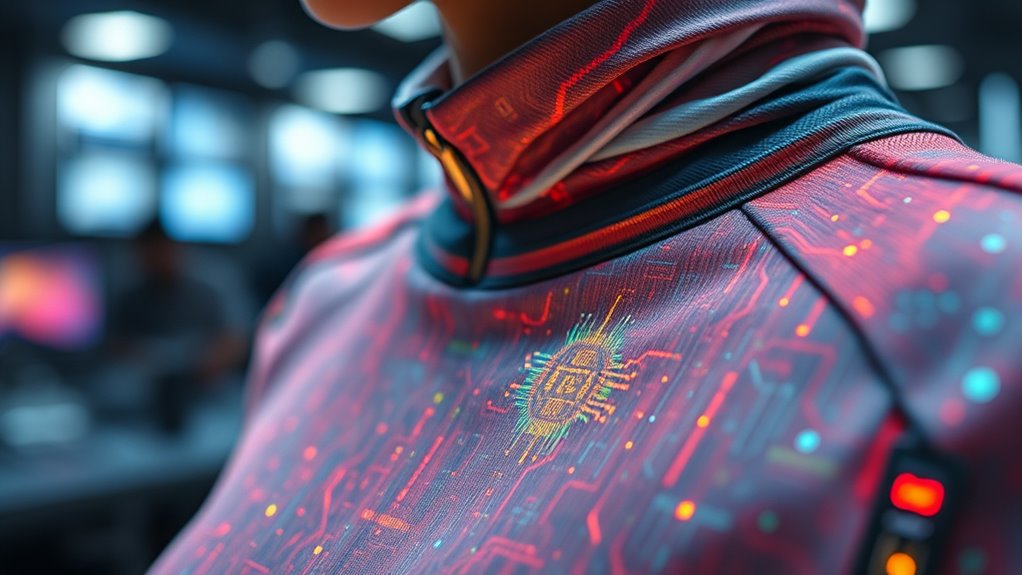
The market for smart textiles is experiencing rapid growth driven by advances in technology and increasing demand across various industries. You’ll see this reflected in forecasts estimating the industry will reach USD 5.56 billion by 2030, growing at an impressive CAGR of 18.2%. The wearable technology segment alone is projected to expand by over USD 4.2 billion by 2032, with a CAGR of 17.65%. Consumer interest in health, fitness, and safety features fuels this surge, prompting companies to innovate continuously. Smart fabrics are becoming more integrated into everyday products, from athletic wear to medical garments. As industries embrace these innovations, you’ll notice a shift toward more durable, functional textiles that respond to environmental stimuli and user needs, reshaping the future of fashion and wearable tech. European cloud servers are also supporting the development and deployment of these advanced textiles through scalable and secure data solutions, facilitating the integration of cloud computing with smart textile manufacturing. Additionally, digital infrastructure plays a crucial role in enabling real-time data processing and analysis, further accelerating innovation in this field. Moreover, smart sensors embedded in fabrics allow for real-time health monitoring and environmental response, opening new avenues for customization and functionality. The integration of sustainable practices in manufacturing processes is also gaining importance, ensuring that the growth of smart textiles aligns with environmental responsibility.
Exploring the Different Types of Smart Fabrics and Their Capabilities
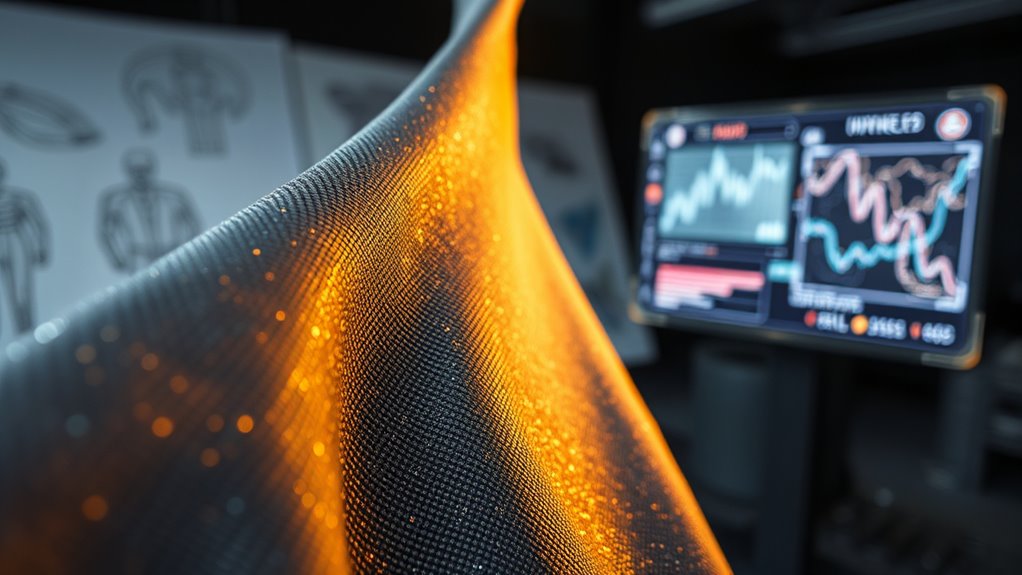
You’ll find that smart fabrics fall into passive and active types, each with unique strengths. Passive fabrics excel in durability and basic sensing, making them ideal for straightforward applications, while active fabrics can modify properties like breathability in real-time. Additionally, energy harvesting technologies are transforming textiles by generating power from movement and environmental sources, enabling more autonomous smart clothing. Water-resistant features are increasingly integrated into active fabrics to enhance functionality in various weather conditions.
Passive vs. Active Fabrics
Passive and active fabrics represent two distinct categories within smart textiles, each offering unique capabilities for different applications. Passive fabrics enhance durability, comfort, or basic sensing without changing their properties in response to stimuli. You’ll find them in everyday wear, providing long-lasting performance with minimal maintenance. Active fabrics, on the other hand, can modify their properties—like breathability or insulation—when triggered by environmental factors or wearer input. They respond dynamically, making them suitable for high-performance sportswear, medical garments, or adaptive clothing. While passive fabrics dominate the market due to their simplicity and reliability, active fabrics push the boundaries of functionality. Understanding these differences helps you select the right textile for your needs, whether you prioritize durability or responsiveness in your smart clothing choices. Additionally, advancements in AI-powered textiles are opening new possibilities for customization and functionality in fashion technology, including the integration of sustainable fabrics that further enhance eco-friendly practices. Moreover, ongoing research into environmentally friendly smart textiles aims to reduce the ecological impact of these innovative materials.
Energy Harvesting Technologies
Have you ever wondered how smart fabrics can power themselves without relying on external batteries? Energy harvesting technologies enable fabrics to generate power directly from environmental sources or wearer movements. These textiles incorporate nanogenerators, supercapacitors, and piezoelectric materials to convert mechanical energy into electrical energy. This innovation reduces dependence on bulky batteries, enhancing comfort and durability. Here’s an overview of key methods:
| Technology | Functionality |
|---|---|
| Nanogenerators | Convert motion into electrical energy |
| Piezoelectric fibers | Generate power from bending or touch |
| Textile supercapacitors | Store harvested energy for device use |
| Triboelectric effects | Use friction to produce electricity |
| Bioenergy harvesting | Capture energy from body heat or sweat |
Additionally, energy harvesting techniques are increasingly integrated into wearable systems to ensure continuous power supply without external sources. These advances make smart fabrics more autonomous, supporting continuous monitoring and interaction, and self-powered textiles are becoming a key focus for researchers aiming to develop truly sustainable wearable technology.
Key Technologies Powering Smart Fabric Innovations

You need to understand how conductive fiber technologies and embedded sensor systems are revolutionizing smart fabrics. These innovations enable fabrics to sense, react, and connect seamlessly with digital devices. By integrating these key technologies, you’re paving the way for smarter, more responsive garments. Additionally, local automation principles are increasingly applied within smart clothing to enable personalized and adaptive functionality. The incorporation of digital integration also facilitates real-time data exchange and enhanced user interaction within wearable systems. Furthermore, understanding the pinball machine weight helps designers consider the durability and portability of tech-integrated garments.
Conductive Fiber Technologies
Conductive fiber technologies are at the core of smart fabric innovations, enabling textiles to sense, react, and connect seamlessly with electronic systems. These fibers contain conductive materials like metal nanoparticles, carbon nanotubes, or conductive polymers, which are woven into or coated onto textiles. This integration transforms ordinary fabrics into interactive platforms capable of carrying electrical signals. You can use conductive fibers to create garments that detect movement, measure temperature, or monitor physiological signals. They are flexible, lightweight, and durable, making them ideal for wearable applications. Advances in manufacturing have improved the conductivity, stretchability, and washability of these fibers. Additionally, ongoing research is driving improvements in biocompatibility and environmental sustainability of these fibers, ensuring their safe use in diverse applications, and fostering the development of eco-friendly conductive materials. Furthermore, innovations in manufacturing processes are enhancing the scalability and cost-effectiveness of these fibers, broadening their potential for commercial adoption.
Embedded Sensor Systems
How do smart fabrics sense and respond to their environment? You’ll find that embedded sensor systems are the core technology enabling this. These systems incorporate tiny, fabric-integrated sensors made from conductive fibers and nanomaterials that detect changes like temperature, pressure, humidity, or movement. They communicate data through low-power wireless protocols, allowing real-time transmission to connected devices or AI algorithms. Sensor miniaturization ensures these systems remain flexible, stretchable, and comfortable, seamlessly blending into your clothing. Energy-harvesting elements, such as nanogenerators, power sensors without external batteries, making garments more sustainable. On-textile electronics interpret signals via neural networks, enabling garments to react automatically or provide feedback. This integration of sensing, data processing, and adaptation is transforming apparel into intelligent, responsive tools for health, sports, and safety applications. Additionally, advancements in wireless communication protocols facilitate efficient data transfer, improving responsiveness, and enhancing functionality. These innovations are driven by ongoing research into conductive fibers and nanomaterials, which are crucial for improving sensor performance and durability.
Industry Applications Transforming Healthcare, Defense, and Sports

Have smart fabrics truly revolutionized industries like healthcare, defense, and sports? Absolutely. They enable real-time monitoring, improve safety, and enhance performance. In healthcare, wearable sensors track essential signs, alerting patients and providers to potential issues early. Military applications include uniforms with integrated electronics that monitor soldiers’ health and environmental exposure. Sports gear now adapts dynamically to athlete needs, boosting performance and preventing injuries.
You’ll find smart fabrics used for:
- Continuous health monitoring through embedded sensors
- Protective gear that reacts to environmental threats
- Performance-boosting apparel that adjusts fit and ventilation
These innovations make routines safer, more efficient, and tailored to individual needs, transforming how industries approach safety, health, and performance.
AI’s Role in Revolutionizing Fabric Functionality and Design

AI is transforming fabric functionality and design by enabling intelligent integration of electronics directly into textiles. With AI, you can develop fabrics that sense, respond, and adapt in real time, enhancing performance and comfort. AI algorithms analyze data from embedded sensors, providing personalized feedback and predictive insights. This allows for dynamic adjustments, like regulating breathability or temperature based on your activity or environment. AI also streamlines design processes through generative models, creating innovative patterns and structures faster than traditional methods. additionally, AI-driven simulations optimize fabric properties, reducing waste and accelerating prototyping. By harnessing AI, you can craft smarter textiles that improve user experience, durability, and sustainability, paving the way for a new era of functional, interactive fashion that seamlessly integrates technology into everyday wear.
Cutting-Edge Developments in Sensor Miniaturization and Energy Harvesting
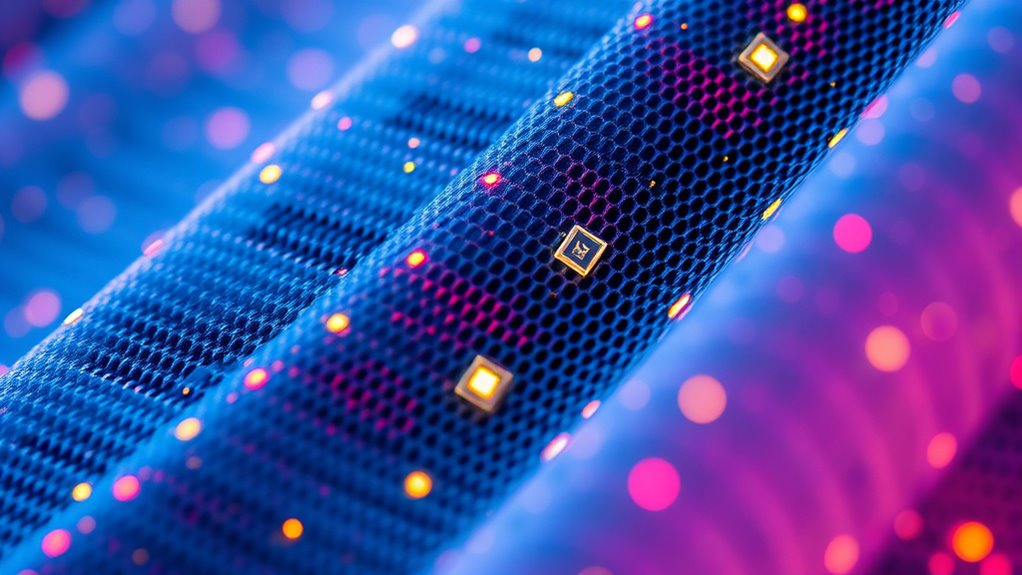
Recent advances in sensor miniaturization and energy harvesting are transforming smart textiles into more efficient and unobtrusive wearable technologies. You now benefit from ultra-small sensors that seamlessly integrate into fabrics without sacrificing comfort or flexibility. Energy harvesting techniques harness your body movements, heat, or ambient light to power these sensors, reducing reliance on batteries. This progress enables longer-lasting wearables with less maintenance.
- Fabric-integrated nanogenerators convert motion into electricity
- Ultra-thin sensors detect vital signs without bulk
- Textile-based supercapacitors store energy efficiently
These innovations allow your clothing to continuously monitor health, environmental conditions, and activity levels without bulky components or frequent charging. The result is smarter, more discreet garments that blend technology effortlessly into your daily life.
The Integration of Connectivity and Data in Modern Smart Clothing

How does connectivity transform modern smart clothing? It enables your garments to collect, transmit, and analyze data in real time. Embedded sensors gather essential signs, environmental conditions, and movement patterns, sending this information via low-power wireless protocols like Bluetooth or 5G. This seamless data flow allows your clothing to adapt instantly—adjusting ventilation, providing health alerts, or triggering embedded features. Connectivity also facilitates integration with smartphones and cloud platforms, giving you access to detailed analytics and personalized insights. By linking your apparel to broader networks, smart clothing becomes more than just fabric; it turns into an active health companion or performance enhancer. This integration elevates functionality beyond traditional garments, making your wardrobe smarter, more responsive, and deeply connected to your lifestyle.
Sustainability and Eco-Friendly Materials Shaping Future Fabrics
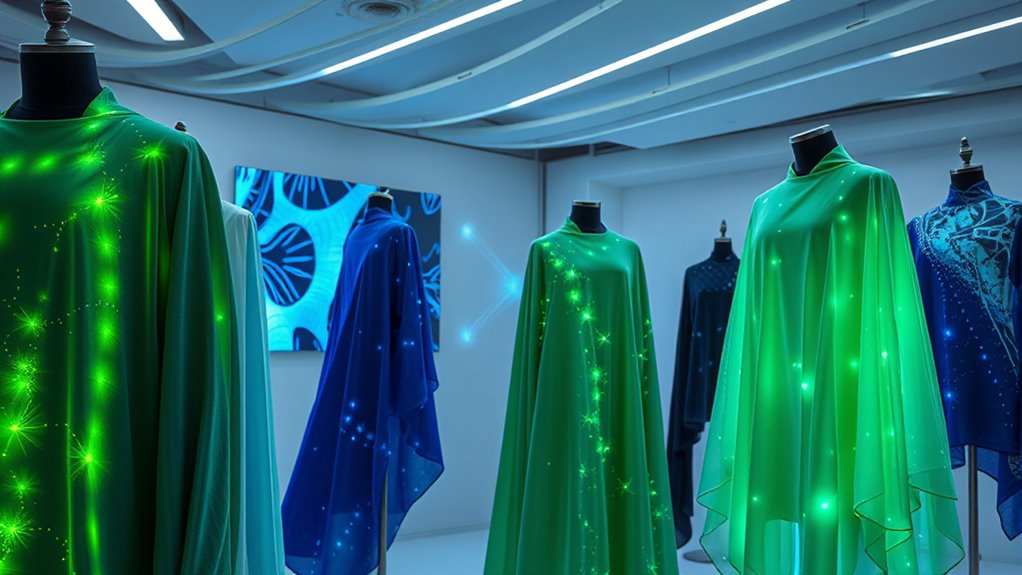
You can expect future fabrics to prioritize sustainability through innovations like bio-based textiles and lab-grown fibers. Circular design approaches are transforming how we create and reuse materials, reducing waste. Eco-friendly dye technologies also play a key role in minimizing environmental impact while maintaining vibrant colors.
Bio-based Textile Innovations
Are bio-based textiles the key to transforming the future of sustainable fashion? They’re revolutionizing fabrics by offering eco-friendly alternatives that reduce environmental impact. These materials are derived from renewable sources like plants, fungi, and algae, making them biodegradable and less resource-intensive. You’ll find innovations such as:
- Plant-based fibers like hemp, bamboo, and organic cotton that grow quickly and need fewer chemicals.
- Lab-grown fibers, including mycelium leather, mimicking animal products without harm.
- Bio-dyes and coatings that minimize chemical runoff and improve fabric recyclability.
Circular Design Approaches
Circular design approaches are reshaping the future of sustainable fashion by prioritizing resource efficiency and waste reduction throughout a product’s lifecycle. You can now design garments with reuse, recycling, and longevity as core principles, ensuring fabrics are either biodegradable or easily recyclable. Using eco-friendly materials like plant-based fibers, recycled textiles, and bio-derived polymers minimizes environmental impact. You’ll focus on modular designs that allow easy repair or component replacement, extending product life. Waste is cut through material optimization and zero-waste patterning, reducing excess fabric. Additionally, adopting take-back programs encourages consumers to return garments for recycling or repurposing. This approach not only conserves resources but also fosters a circular economy, making fashion more sustainable, resilient, and aligned with environmental goals.
Eco-Friendly Dye Technologies
Have traditional dyeing methods taken a toll on the environment? You’re not alone. Conventional dyeing consumes massive water resources, releases toxic chemicals, and generates pollution. Luckily, innovative eco-friendly dye technologies are changing that. Here are key developments:
- Bio-Based Dyes: Derived from plants, fungi, and bacteria, these dyes reduce chemical waste and lower toxicity.
- Waterless Dyeing: Using supercritical CO₂, this method eliminates water use, drastically cutting waste and energy.
- Low-Impact Dyes: Utilizing natural or recycled materials, these dyes produce less wastewater, require less energy, and minimize environmental harm.
These technologies help you create stylish, sustainable fashion without sacrificing ecological responsibility. As industry shifts, adopting eco-friendly dyes becomes essential to reducing fashion’s environmental footprint and promoting a greener future.
Trends Shaping the Next Generation of Fashion and Wearables

Advancements in smart textiles and integrated electronics are driving the next generation of fashion and wearables toward unprecedented levels of functionality and personalization. You’ll see garments that adapt to environmental conditions, like fabrics that regulate breathability or temperature automatically. Energy harvesting textiles, powered by nanogenerators and supercapacitors, reduce reliance on external batteries, making wearables more sustainable. Miniaturized sensors embedded within fabrics enable real-time health monitoring, tracking vital signs and activity seamlessly. Connectivity through 5G allows devices to communicate instantly, enhancing user experience. Invisible tech ensures this innovation remains comfortable and durable, blending seamlessly into daily life. Meanwhile, bio-based and lab-grown fibers are offering eco-friendly alternatives, aligning sustainability with technological progress. These trends are transforming fashion into a dynamic, intelligent ecosystem tailored to individual needs and lifestyles.
Envisioning the Future: How AI and Bio-Science Will Redefine Apparel

As AI and bio-science converge, they are set to transform apparel into highly intelligent, personalized ecosystems. You’ll experience garments that adapt to your body, environment, and activity in real time. Imagine clothing that:
- Uses bio-sensors to monitor your health and provide instant feedback.
- Employs AI-driven neural networks to learn your habits and predict needs.
- Incorporates bio-fabricated materials for sustainability and enhanced performance.
This integration will redefine comfort, safety, and personalization, making your wardrobe smarter and more responsive. Clothing will no longer be passive; instead, it’ll actively support your well-being, optimize your performance, and reduce environmental impact. The future of fashion is about seamless, intelligent collaboration between technology and biology, creating apparel tailored precisely to you.
Frequently Asked Questions
How Secure Is Data Transmission in Smart Textiles?
Data transmission in smart textiles is becoming more secure as manufacturers implement encryption protocols and secure wireless connections, like low-power Bluetooth and 5G. You should know that ongoing advancements aim to address vulnerabilities, ensuring your personal data stays protected. While no system is completely invulnerable, these measures markedly reduce risks, making smart textiles safer for everyday use. Stay updated on security features to better protect your sensitive information.
What Are the Main Challenges in Integrating AI With Fabrics?
You face challenges like miniaturizing sensors, which need to stay sensitive yet unobtrusive, a task that grows more complex as smart fabrics are expected to grow at a CAGR of 18.2%. Integrating AI requires seamless data processing, reliable connectivity, and durability under wear and tear. Balancing comfort with advanced functionality remains tough, but overcoming these hurdles will release smarter, more adaptive textiles that transform fashion and beyond.
Are Smart Fabrics Safe for Long-Term Human Contact?
Smart fabrics are generally safe for long-term contact, but you should stay aware of potential risks. Some textiles contain conductive or electronic components that might cause skin irritation or allergic reactions over time. Manufacturers often test for biocompatibility, but it’s wise to monitor your skin for any discomfort. As technology advances, safety standards improve, making smart fabrics more reliable and comfortable for daily wear.
How Do Smart Textiles Impact Environmental Sustainability?
Smart textiles act like eco-friendly warriors, fighting pollution and waste. They reduce landfill by enabling garments to last longer and adapt to needs, minimizing discarded clothing. Energy-harvesting fabrics cut reliance on batteries, lowering environmental impact. Sustainable materials like bio-based fibers decrease reliance on non-renewable resources. By integrating smart fabrics, you help promote a greener future, turning your wardrobe into a conscientious choice that supports environmental health and innovation.
What Regulatory Standards Govern Smart Fabric Manufacturing?
You need to follow regulatory standards like ISO 9001 for quality management, ISO 14001 for environmental responsibility, and OEKO-TEX certifications to guarantee safety and sustainability. Many regions also enforce REACH regulations for chemical safety and GDPR for data privacy in smart textiles with embedded electronics. Staying updated on local laws and industry standards helps you ensure your manufacturing processes are compliant, safe, and environmentally responsible.
Conclusion
As you explore the future of fashion, imagine a smart jacket that adapts to your body temperature and tracks your health in real-time. With AI and bio-science advancing rapidly, you’ll see clothing that not only looks great but actively improves your wellbeing. This fusion of technology and style promises a smarter, more sustainable world of apparel—where innovation is seamlessly woven into your everyday life. The future of fashion is truly exciting and personal.