Virtual influencers are transforming fashion on Instagram, with digital personalities like Lil Miquela, Shudu, and Imma leading the way. These CGI models collaborate with top brands, offer complete creative control, and engage millions of followers—especially Gen Z—more effectively than traditional models. They create innovative campaigns using cutting-edge tech like AI and AR, offering unique experiences while reducing costs. To discover how these virtual models are shaping the future of fashion and marketing, keep exploring.

Get your wardrobe favorites delivered free — and shop member deals
- Fast, free delivery on millions of items
- Access to Prime Big Deal Days deals on October 6–7
- Prime Video, Amazon Music and more included
Key Takeaways
- Virtual influencers like Lil Miquela and Shudu are transforming fashion marketing with high engagement and brand collaborations on Instagram.
- They enable brands to craft hyper-realistic, customizable digital models for campaigns, ensuring consistent messaging.
- These CGI-powered models lead to increased consumer interaction, especially among Gen Z audiences, boosting brand loyalty.
- Virtual influencers support innovative marketing strategies such as virtual try-ons, AR experiences, and exclusive product drops.
- The virtual influencer market is projected to reach nearly USD 46 billion by 2030, highlighting their growing impact in fashion.
virtual influencer fashion models
As an affiliate, we earn on qualifying purchases.
As an affiliate, we earn on qualifying purchases.
The Rise of Virtual Influencers in the Fashion Industry

The fashion industry is experiencing a significant shift as virtual influencers gain prominence. You might notice these digital personalities dominating social media platforms, especially Instagram, where they engage millions. Their rise is driven by advanced CGI, AI, and real-time rendering that create hyper-realistic models with total creative control. Brands see virtual influencers as cost-effective, versatile tools for campaigns, product launches, and virtual experiences. With high engagement rates and the ability to tailor messaging precisely, they outshine traditional human models in some metrics. The market for virtual influencers is projected to reach billions by 2030, with North America leading and Asia-Pacific showing rapid growth. As technology advances, these virtual personalities are reshaping how fashion brands connect with audiences worldwide. Innovative European cloud servers are supporting the infrastructure behind these digital models, ensuring secure and sustainable digital environments for their development and deployment.
As an affiliate, we earn on qualifying purchases.
Leading Digital Models Shaping Instagram Trends
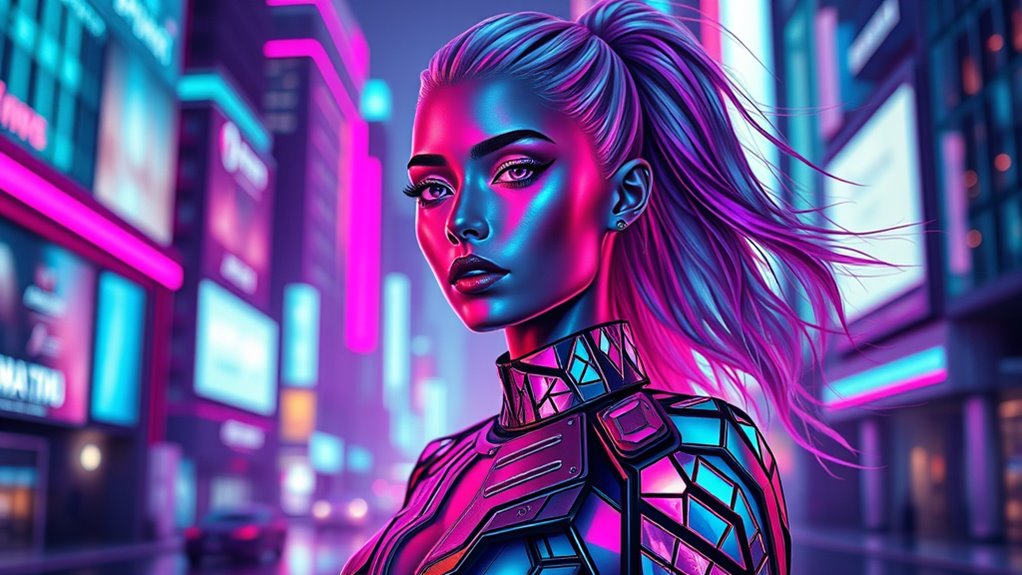
Leading Digital Models Shaping Instagram Trends. Digital influencers like Lil Miquela and Shudu are revolutionizing the fashion industry with their trendsetting campaigns that outperform human counterparts in engagement and reach. Their innovative content shapes fashion trends and influences consumer behavior worldwide. Additionally, their presence highlights the growing importance of digital influencers in modern marketing strategies, reflecting a shift towards virtual representation in media.
Top Digital Models
Leading digital models are revolutionizing Instagram trends by blending cutting-edge CGI technology with strategic branding. You’ve likely seen Lil Miquela, a virtual influencer with millions of followers, collaborating with top brands like Prada and Dior. Imma from Japan is another standout, known for her fashion partnerships and innovative campaigns. Shudu and Noonoouri also lead the scene, showcasing luxury and beauty collaborations that captivate audiences. These models offer brands complete creative control over appearance, messaging, and timing, making campaigns highly targeted and risk-free. Their high engagement rates—often outperforming human influencers—drive sales and brand awareness. As they continue to evolve with advances in AI and real-time rendering, these digital models are shaping the future of fashion marketing on Instagram.
Trendsetting Virtual Campaigns
Digital models like Lil Miquela and Imma are transforming Instagram campaigns by setting new trends in virtual fashion marketing. They enable brands to craft highly targeted, visually striking content that resonates with audiences in real time. These virtual influencers often launch exclusive product drops, virtual try-ons, and immersive AR experiences, elevating engagement and brand awareness. Their ability to maintain a perfect, consistent aesthetic allows for seamless storytelling aligned with brand values. Campaigns featuring Lil Miquela or Imma have driven significant buzz, increasing followers and interaction rates. With customizable appearances and messaging, brands can adapt campaigns instantly to market trends. These trendsetting virtual campaigns demonstrate the power of digital models to reshape how fashion brands connect with consumers, making virtual influencers a core element of modern marketing strategies.
augmented reality try-on glasses
As an affiliate, we earn on qualifying purchases.
As an affiliate, we earn on qualifying purchases.
Key Technologies Powering Virtual Persona Creations

The creation of virtual personas relies on a combination of advanced technologies that enable lifelike appearances, realistic behaviors, and dynamic interactions. You leverage AI, CGI, and real-time rendering to craft convincing digital models. AI-driven deep learning enhances facial expressions and movements, making interactions seamless. Photorealistic CGI generates detailed textures and environments, while motion capture records natural gestures. Generative AI helps create varied content and personalized messaging at scale. Augmented reality (AR) and virtual try-ons expand engagement, blending digital and real-world experiences. These technologies work together to produce authentic, versatile virtual influencers. Additionally, understanding contrast ratio can be essential when designing visual content for virtual environments, ensuring clarity and depth.
As an affiliate, we earn on qualifying purchases.
Major Brands Collaborating With Digital Influencers

Major fashion and luxury brands are increasingly partnering with virtual influencers to enhance their marketing strategies and reach new audiences. These collaborations allow brands to showcase new collections, launch exclusive campaigns, and create innovative virtual experiences that resonate with digital-native consumers. For example, Prada, Dior, and Calvin Klein have worked with digital personalities like Lil Miquela and Imma, leveraging their high engagement rates and visual appeal. These partnerships provide brands with creative flexibility, enabling precise messaging and controlled brand representation. Additionally, virtual influencers help brands reduce costs and logistical challenges associated with traditional models, while expanding their reach through social media platforms. As virtual influencer collaborations grow, they become an essential part of brands’ digital transformation, helping to shape modern marketing and connect authentically with tech-savvy audiences. Free Floating content and virtual models are shaping the future of digital marketing strategies.
Benefits and Challenges of Using Virtual Influencers

Using virtual influencers offers brands significant advantages, but it also introduces unique challenges that can impact their marketing efforts. One key benefit is control; you can tweak appearance, messaging, and timing without the unpredictability of human talent. Cost savings also stand out, since virtual models are reusable and eliminate scheduling and PR risks. Additionally, access to a wide range of trusted resources can streamline collaboration with content creators. However, challenges exist:
Virtual influencers offer brands control and cost savings, but face trust, representation, and legal challenges.
- Trust and authenticity concerns—audiences may question whether virtual influencers are genuine or transparent.
- Representation issues—while virtual models can promote diversity, they can also reinforce unrealistic beauty standards.
- Legal complexities—ownership rights, licensing, and intellectual property require careful management to avoid disputes.
Balancing these benefits and challenges is *vital* to leveraging virtual influencers effectively in your marketing strategy.
Audience Engagement and Consumer Impact
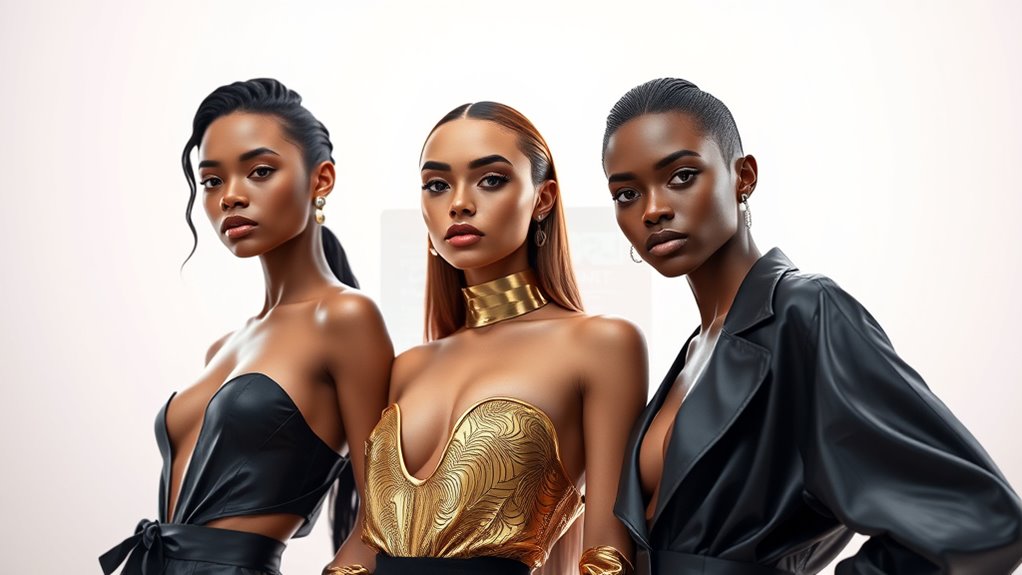
Audience engagement with virtual influencers is remarkably high, especially among younger demographics like Gen Z. You’re likely to see virtual personalities with engagement rates around 5.9%, outpacing human influencers’ roughly 1.9%. Surveys show about 75% of Gen Z actively follow and interact with virtual models, highlighting their strong appeal. Campaigns featuring virtual influencers often experience significant boosts; for example, Calvin Klein’s collaboration with Lil Miquela saw engagement increase by approximately 60%. Nearly 35% of consumers report making purchases influenced by virtual influencer promotions. You can also see how brands benefit from this engagement, as virtual models enable precise messaging, creative control, and cost savings. This heightened interaction not only drives brand loyalty but also shapes consumer perceptions and purchasing behaviors, emphasizing the importance of self-expression in luxury fashion branding.
Future Outlook for Virtual Models in Fashion and Beyond
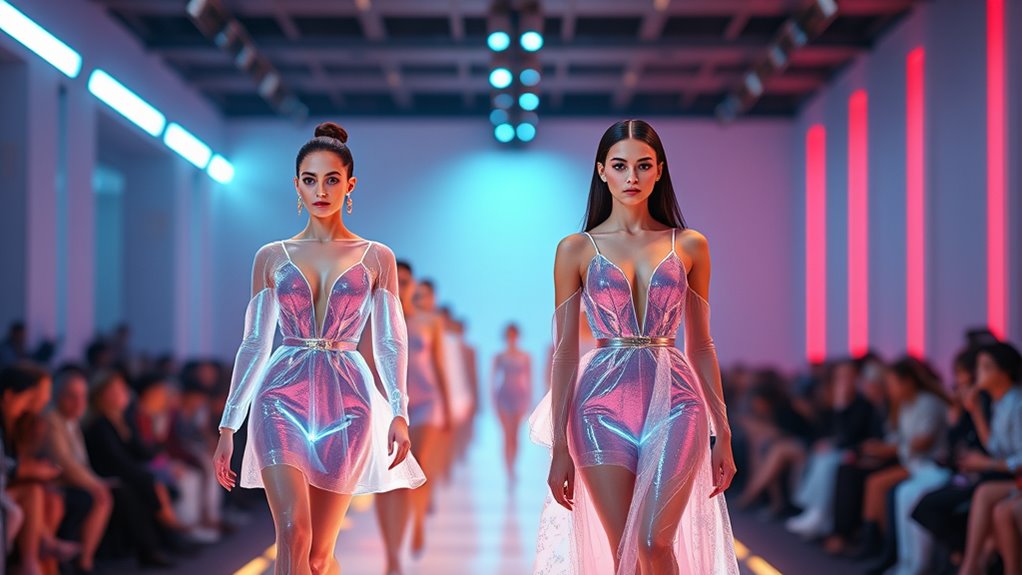
The rapid growth in virtual influencer engagement and technological advancements suggests their role in fashion will only expand and evolve in the coming years. You can expect virtual models to become more integrated into mainstream marketing and beyond. As the market size approaches USD 45.88 billion by 2030, virtual influencers will likely: 1. Increase personalized experiences through AI-driven content tailored to individual preferences. 2. Expand into new industries like entertainment, education, and healthcare, leveraging their customizable nature. 3. Drive innovation in sustainability by reducing resource-intensive photo shoots and fashion waste. Additionally, market trends indicate a rising consumer interest in digital authenticity and innovative brand storytelling. With continued improvements in CGI, AR, and real-time rendering, virtual models will offer even more interactive, authentic experiences. You’ll see them shape brand identities and influence consumer behavior on an unprecedented scale.
Frequently Asked Questions
How Do Virtual Influencers Maintain Authenticity With Audiences?
You can think of virtual influencers maintaining authenticity by consistently engaging with your interests and values, just like real influencers do. They often share relatable stories, respond to comments, and showcase genuine emotions through realistic CGI and AI-driven interactions. By aligning their messaging with current trends and being transparent about their digital nature, they build trust and credibility, making you feel connected despite knowing they’re virtual.
What Are the Legal Rights Involved in Creating Virtual Models?
Imagine owning a digital clone with its own legal rights—it’s like creating a living, breathing artwork you control. When you craft virtual models, you hold rights over their likeness, images, and content, including licensing and ownership. You must navigate intellectual property laws, protect your creations, and manage permissions. This legal framework guarantees your virtual model’s identity stays secure, giving you full control over their digital existence and commercial use.
Are Virtual Influencers More Cost-Effective Than Human Models?
Yes, virtual influencers are more cost-effective than human models. You save on expenses like travel, wardrobe, and scheduling, since virtual models are reusable and always available. Plus, you eliminate risks associated with unpredictable schedules or PR issues. With real-time rendering and digital assets, you can tailor campaigns precisely, reducing costs over time. Overall, virtual influencers offer a scalable, budget-friendly option that maximizes your marketing ROI.
How Do Brands Ensure Diversity and Representation With Virtual Personas?
How can you guarantee your virtual personas reflect true diversity? By intentionally designing your avatars to embody different ethnicities, body types, ages, and backgrounds, you create more authentic representation. Use inclusive creative briefs and collaborate with diverse artists and communities. Regularly review your virtual models to avoid stereotypes. Isn’t it time your digital influencers mirror the rich variety of your real-world audience? Embrace intentional diversity for genuine connections.
What Ethical Concerns Surround the Use of Synthetic Digital Influencers?
You should consider that using synthetic influencers raises ethical concerns like transparency and authenticity, making audiences question if they’re being misled. There’s also the risk of perpetuating unrealistic beauty standards or exclusion if not carefully managed. Additionally, issues about ownership rights, data privacy, and potential displacement of human creatives challenge the morality of relying heavily on virtual figures. Addressing these concerns openly helps maintain trust and aligns with responsible marketing practices.
Conclusion
As virtual influencers continue to grow, you might wonder if they’ll ever replace real models. But think of them as a creative tool that amplifies your brand’s vision without limitations—no fatigue, no scheduling conflicts. They’re a chance to showcase your designs in innovative ways, engaging your audience like never before. Embrace these digital models and open new possibilities, knowing they’re here to inspire, not replace, the authentic human touch in fashion.
Fall Picks
fall essentials
As an affiliate, we earn on qualifying purchases.