
TL;DR
Thanksgiving table decor brings together linens, dishes, place settings, lighting, and seasonal accents to make dinner feel welcoming. Start with the space your guests and food need, then add a simple palette, a low centerpiece, and personal details you can reuse or enjoy after the meal.
A beautiful Thanksgiving table can still fail if the gravy boat has nowhere to land. The secret to Thanksgiving table decor is making the meal feel festive while leaving enough room for plates, elbows, and one more helping.

Get your wardrobe favorites delivered free with Prime
- Fast, free delivery on millions of items
- Prime Video, Amazon Music and more included
- Member-only deals all year
You can build that welcome with things you already own: a linen runner, everyday plates, a bowl of pears, and a handwritten place card. In this guide, you’ll plan a comfortable layout, choose colors and textures, create a simple centerpiece, and add personal touches without turning the table into an obstacle course.
Set out plates and serving dishes before choosing a centerpiece so the decor fits the actual meal.
Use a neutral base with one or two autumn accents, such as rust napkins or olive greenery.
Layer a place setting with items you own; matching dishes are not needed for a welcoming table.
Choose clean, dry natural materials and keep candles away from foliage, sleeves, and serving traffic.
Use handwritten place cards, family recipes, or edible fruit for personal details that feel useful and easy to clear.
Start with a layout that leaves room for dinner
Thanksgiving table decor works best when it supports the meal, so begin by counting guests and deciding where serving dishes will go. Leave room for plates, glasses, elbows, and shared food before you add the runner or centerpiece. A table should feel dressed, not crowded.
For instance, if eight people are gathering around a rectangular table, set out the dinner plates first and see how much open space remains down the middle. That quick rehearsal can reveal whether a long runner will fit or whether a small cluster near one end makes more sense. On a round table, a compact bowl or low vase often leaves more useful space than a sprawling arrangement.
Think of the table like a busy kitchen counter: you want a pleasing focal point, but everyone still needs room to work. Keep the centerpiece low enough that people can see each other across it. If the turkey, rolls, and vegetables will all be passed at the table, consider placing the decorations on a sideboard and letting the table stay simpler.
Comfort counts as much as color. Check that each guest can reach their glass and utensils without bumping a candle or tugging a branch. A little planning can make a full table feel generous instead of cramped.
Popular right now

Bose QuietComfort Wireless Over-Ear Noise-Cancelling Headphones, Sandstone

De'Longhi Stilosa Compact Manual Espresso Machine with Milk Frother

Ninja Crispi 4-in-1 Portable Glass Air Fryer, Grey, FN101GY
As an affiliate, we earn on qualifying purchases.
Choose autumn colors you can use again
Thanksgiving table decor does not need every familiar autumn color at once; a neutral base with one or two rich accents can make the table feel seasonal and calm. Try cream, natural linen, or white with rust, burgundy, olive, or muted gold. The restrained palette gives your dishes and food room to shine.
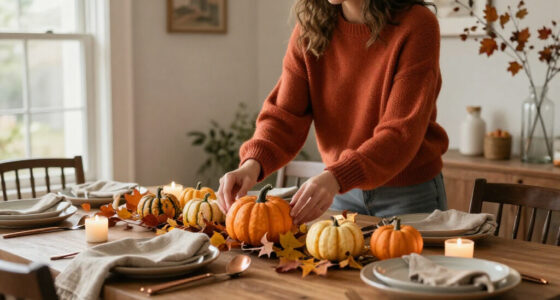
For instance, put cream plates on a natural linen runner, then add rust napkins and a few green pears. Their matte skin and soft color bring autumn to the table without turning it into a sea of orange. If your everyday dishes already have a blue rim or floral pattern, treat that as part of the palette rather than buying a whole new set.
Good styling balances color with texture. A smooth ceramic plate beside a nubby cloth napkin and a woven placemat can look layered even when the colors stay quiet. You might also mix inherited glassware with simple modern plates; the small differences make the setting feel lived in.
There’s a practical bonus to choosing reusable colors: a cream tablecloth and olive napkins can work for winter dinners, spring brunch, or an ordinary Sunday meal. Your seasonal accents can come from fruit or leaves that you already have, rather than decorations you’ll store for eleven months.
Layer place settings with what you already own
A welcoming place setting combines the basics with a few thoughtful layers: a placemat or charger, dinner plate, napkin, flatware, glass, and—if you like—a place card. You do not need matching sets. A functional place setting makes every item easy to find while adding texture and personality.
Here’s one simple arrangement: place a woven charger beneath a plain dinner plate, fold a cloth napkin beside the fork, and set a small handwritten card above the plate. If your family uses a mix of dishes, repeat one detail—such as the same napkin color—to help everything feel connected. For a casual meal, skip the charger and let the plate sit on the table or a washable placemat.
Place cards can do more than decorate. If relatives are unfamiliar with one another, a seating plan can get conversation started and keep a child’s cup away from the candle. Write each name by hand, or tuck a short family recipe or note of gratitude under the napkin for a personal surprise.
These layers should still be easy to reach and clear away. Set a plate and glass at each seat before adding extra details; if a place card or favor makes the setting awkward to use, move it to the sideboard. A lovely table feels good to sit at, too.
Make a centerpiece that stays out of the way
A Thanksgiving centerpiece should add color and texture without blocking faces, taking over serving space, or competing with dinner’s aroma. A low, stable arrangement is often the easiest choice: think a bowl of apples and pears, a few small pumpkins, or greenery in a short vase. Height matters because guests need to see each other to follow conversation; width matters because the meal needs somewhere to go. The right scale depends on whether dishes are passed at the table or served from a sideboard.
For instance, set three small gourds along a narrow runner and fill the gaps with pears or a few clean branches. The shapes add interest, but guests can still pass rolls across the table. If you prefer flowers, choose a low arrangement with a gentle or no scent so the meal’s savory smells stay in the spotlight. Strong fragrance can mingle unpleasantly with food, while a restrained arrangement lets the meal remain the main sensory focus.
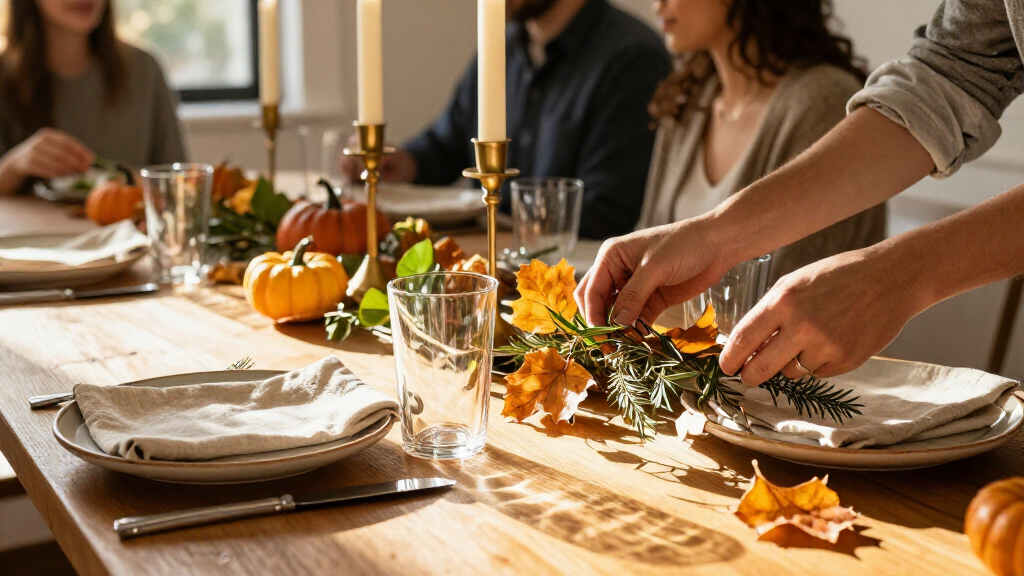
Natural materials offer lovely texture, from smooth fruit to papery leaves and pinecones. Gathered leaves and branches should be clean and dry before they come near food; damp or brittle pieces can shed or leave marks. Edible centerpieces also make cleanup simple: move the fruit to a bowl in the kitchen after dinner and enjoy it later. That convenience comes with a tradeoff: fruit may need replacing if it gets handled or bruised during the meal.
Before guests arrive, check that the arrangement is steady and doesn’t wobble when someone bumps the table. Keep candle flames away from leaves, sleeves, and serving traffic. If kids will be reaching across the table or you want an easier evening, battery-powered candles provide a warm glow without an open flame, though they may not give quite the same flicker as real candles.
Add cozy details without crowding the table
Small details can make Thanksgiving table decor feel personal, but each one should earn its space. A cloth napkin, handwritten note, or heirloom dish often says more than a row of ornaments. Let each detail give guests a reason to smile or a useful part of the meal.
Imagine a table with plain white plates and family silver: a sprig of rosemary tucked into each folded napkin brings a fresh, woodsy scent, while recipe cards set by the serving dishes tell guests who first made the stuffing. These touches feel connected to the gathering. An unrelated pile of decorations can look polished but leave the table harder to use.
Think about lighting as well. Soft room light and a few safe candles can make an evening table glow, while a strong scented candle can compete with roast vegetables and pie. Keep candles away from foliage and sleeves, and put them where guests won’t need to reach over a flame to pass food.
Cleanup is part of the design. Washable linens and reusable dishes take some washing, but they can serve many meals; paper options may make clearing up faster. Choose what fits your evening. A relaxed host with room to enjoy the meal is part of the welcome.
Pull the whole table together in 20 minutes
You can put together a comfortable Thanksgiving table in about 20 minutes by setting the practical pieces first and adding decorations last. This four-step plan helps you spend your time on choices guests will notice and keeps last-minute styling from crowding the meal.
- Clear and measure the space. Count the seats, place the chairs, and decide whether dishes will be passed or served from a sideboard.
- Set the foundation. Add a tablecloth or runner, then set out plates, napkins, glasses, and flatware. Use mixed dishes if that’s what you have.
- Add one focal point. Choose a low bowl of fruit, a short vase of greenery, or a few small gourds, and check that it leaves room for serving dishes.
- Finish with personal touches. Add place cards or a small note, then walk around the table and make sure everyone can see, reach, and sit comfortably.
For instance, a last-minute host with a bare table might use a folded linen as a runner, everyday plates, and a bowl of apples from the kitchen. The result can still feel intentional because the colors repeat and the layout works.
Do one final check from a seated position. If your guest across the table disappears behind the centerpiece, lower it; if the serving bowl has nowhere to go, move a decoration to a sideboard. The right arrangement is the one that makes the meal easier to enjoy.
Frequently Asked Questions
How do I decorate a Thanksgiving table on a budget?
Start with dishes and linens you already own, then add an inexpensive seasonal accent such as apples, pears, or a few small gourds. A handwritten place card or a folded cloth napkin can make an everyday setting feel considered without a shopping trip.
What colors work best for Thanksgiving table decor?
Cream, white, and natural linen pair easily with rust, burgundy, olive, deep green, or muted gold. Choose one or two accents so the table feels seasonal without competing with your patterned dishes or the meal.
How do I make a simple Thanksgiving centerpiece?
Put seasonal fruit in a low bowl, or group a few small pumpkins and gourds on a runner. Keep the arrangement stable and compact so guests can see one another and serving dishes still fit.
How tall should a Thanksgiving centerpiece be?
Keep it low enough that guests can comfortably see across the table while seated. A short vase or fruit bowl is a practical choice; if you use a taller arrangement, place it where it won’t block conversation or access to food.
How can I make the table festive without cluttering it?
Choose one focal point and a small number of repeated details, such as matching napkins and handwritten place cards. Leave open space for glasses, utensils, and serving dishes so the decorations support dinner instead of interrupting it.
Conclusion
Start with the people and the food, then dress the table around them. A calm palette, comfortable place settings, and one low seasonal centerpiece can make dinner feel special without taking over the room.
Use what you own, leave space for the gravy boat, and add one detail that belongs to your family. When the candles glow and the first dish gets passed, the best decoration will be the table everyone can gather around.