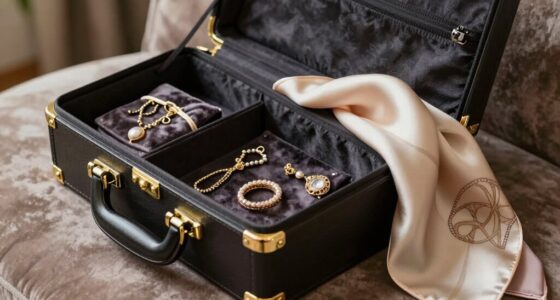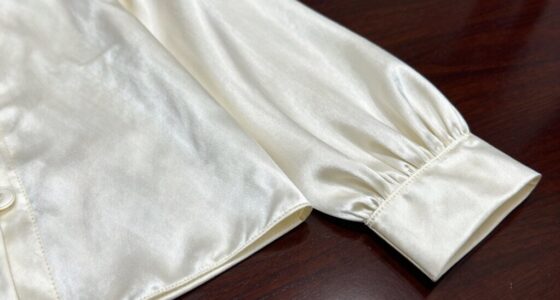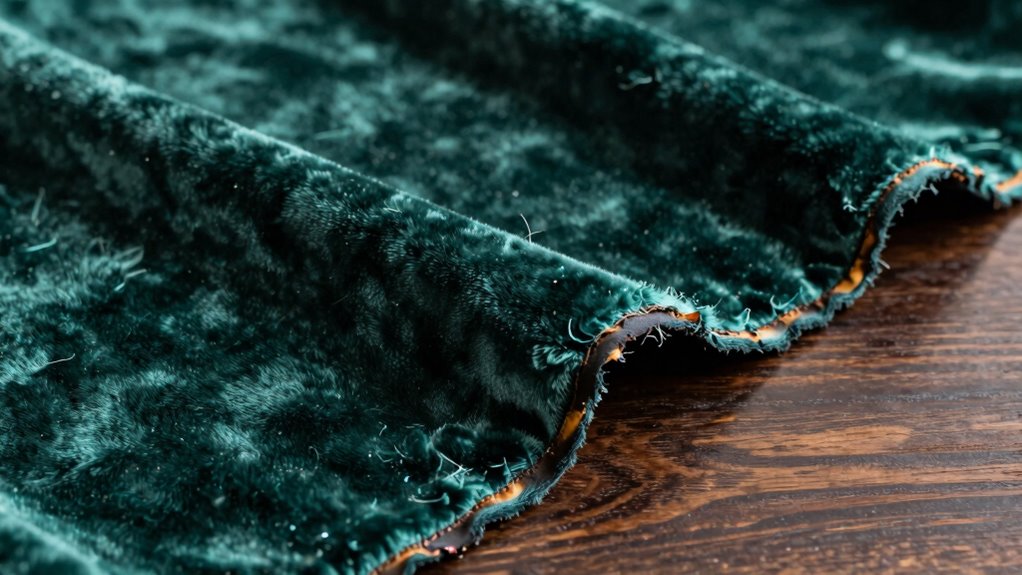

You damage luxury fabrics faster by using harsh cleaning chemicals, exposing them to direct sunlight, and washing or ironing at high temperatures. Rubbing against rough surfaces, folding them repeatedly, or storing them improperly can cause fibers to weaken, pill, or snag. Neglecting care instructions and handling fabrics roughly accelerates wear and tear. If you want to understand how to properly protect your belongings, keep going to learn more about preserving their beauty and longevity.

Get your wardrobe favorites delivered free — and shop member deals
- Fast, free delivery on millions of items
- Access to Prime Big Deal Days deals on October 6–7
- Prime Video, Amazon Music and more included
Key Takeaways
- Using harsh chemicals or high heat during cleaning weakens delicate fibers like silk and cashmere.
- Exposure to sunlight, moisture, and pollutants accelerates fiber deterioration and fading.
- Rubbing or folding fabrics improperly causes pilling, snags, and fiber stress.
- Inadequate storage, such as non-breathable covers or improper hanging, promotes mold and fabric damage.
- Modern manufacturing processes may introduce vulnerabilities, requiring careful maintenance to preserve fabric quality.

Luxury fabrics, prized for their softness and elegance, can quickly lose their allure if not cared for properly. These materials, often woven from rare fibers, demand careful handling to preserve their beauty and integrity. Understanding what damages them faster than expected helps you extend their lifespan and maintain their luxurious appeal.
Proper care is essential to preserve the softness and elegance of luxury fabrics and extend their lifespan.
Historical fashion provides insight into how these fabrics have been valued and treated over centuries. In the past, artisans and textile manufacturing techniques focused on durability and craftsmanship, but even then, delicate fabrics faced risks from rough handling or exposure to elements. Today, many of these fabrics are still rooted in centuries-old traditions, but modern textile manufacturing has introduced new challenges. Industrial processes and mass production can sometimes compromise the quality of fibers, making them more vulnerable to damage if not properly cared for.
One of the primary culprits in damaging luxury fabrics is improper cleaning. Harsh chemicals, high heat, and aggressive washing can weaken delicate fibers like silk, cashmere, or fine wool. These materials are sensitive to environmental factors, and exposure to direct sunlight or moisture can cause fading, shrinkage, or deterioration. You need to be gentle—hand washing or dry cleaning with specialized solvents is often the safest choice. Ignoring care instructions can accelerate wear and tear, diminishing their luxurious feel and look faster than you’d like. Additionally, fiber sensitivity makes these fabrics particularly prone to damage from improper care.
Friction and rough handling are also significant enemies. Rubbing against rough surfaces, frequent folding, or sitting on textured furniture can create pilling and snags. Over time, this mechanical stress leads to thinning fibers and even holes, especially in fabrics like velvet or brocade. You might not notice the damage immediately, but repeated friction wears down the fabric’s natural softness and luster. Proper storage methods, such as using padded hangers or protective covers, can help reduce this kind of damage. You should also be cautious with fabric protection techniques to extend their lifespan. Using appropriate cleaning methods can further help maintain the fabric’s original quality.
Environmental factors beyond cleaning and handling also play a role. Exposure to air pollutants, cigarette smoke, or even household cleaning products can stain or weaken fibers subtly but surely. Additionally, improper storage—such as folding fabrics for long periods or storing them in non-breathable containers—can cause creases, mold, or fiber degradation.
In essence, the history of fashion and advances in textile manufacturing have created luxurious materials that require dedicated care. You must be mindful of how you handle, clean, and store these fabrics. They’re delicate, and even small lapses in care can cause damage faster than expected. Protecting your investment means respecting their origins and treating them with the gentle attention they deserve.
luxury fabric dry cleaning solvent
As an affiliate, we earn on qualifying purchases.
As an affiliate, we earn on qualifying purchases.
Frequently Asked Questions
Do Certain Cleaning Products Accelerate Fabric Deterioration?
Yes, certain cleaning agents can accelerate fabric aging and damage luxury fabrics. Harsh chemicals, like bleach or strong solvents, weaken fibers, causing them to deteriorate faster. Even some detergents with high pH levels can strip natural oils, making fabrics brittle over time. To preserve your luxury textiles, always choose gentle, fabric-specific cleaning products and follow care instructions carefully, preventing premature aging and maintaining their original beauty.
How Does Exposure to Sunlight Affect Luxury Fabrics Over Time?
You might notice sunlight fading your luxury fabrics faster than expected, especially if they’re near windows. Over time, UV degradation causes colors to dull and fibers to weaken, subtly but surely damaging your cherished pieces. It’s a coincidence that something so beautiful—sunlight—can also be so harmful. To preserve your fabrics, consider using UV-protective window treatments or rotating items regularly, shielding them from prolonged exposure and extending their luxurious lifespan.
Can Regular Wear and Tear Significantly Reduce Fabric Lifespan?
Yes, regular wear and tear can considerably reduce fabric lifespan. You might notice the fabric’s durability weakening over time, especially if it’s exposed to constant friction or pressure. Material resilience varies across fabrics, but luxury fabrics often have delicate fibers that can deteriorate faster without proper care. To preserve their beauty, you should handle them gently, avoid rough rubbing, and follow cleaning instructions closely to maintain their original elegance longer.
Are There Specific Storage Methods That Extend Fabric Quality?
Ever wondered how to keep your luxury fabrics looking pristine? Proper storage techniques are key to fabric preservation. You should store fabrics in a cool, dry place away from direct sunlight, preferably in breathable covers to prevent moisture buildup. Avoid hanging delicate pieces to prevent stretching. By following these storage methods, you’ll extend your fabric’s life and maintain its luxurious feel and appearance longer. Isn’t that worth the effort?
What Role Does Humidity Play in Fabric Damage?
Humidity effects can considerably damage your luxury fabrics by causing fabric moisture buildup, which weakens fibers and promotes mold or mildew growth. When humidity levels are high, your fabrics absorb excess moisture, leading to staining, odor, and faster deterioration. To protect your textiles, keep humidity low and consistent in storage areas. Proper ventilation and dehumidifiers help maintain ideal conditions, ensuring your fabrics stay pristine and last longer.
silk and cashmere gentle detergent
As an affiliate, we earn on qualifying purchases.
As an affiliate, we earn on qualifying purchases.
Conclusion
Remember, even the most exquisite fabrics aren’t invincible—like Icarus flying too close to the sun, you risk damage when neglecting proper care. Treat your luxury textiles with the respect they deserve, avoiding harsh treatments and environmental hazards. By doing so, you preserve their beauty and value longer than you might expect. After all, the true test of luxury isn’t just in owning it, but in safeguarding it for generations to come.
padded hangers for delicate fabrics
As an affiliate, we earn on qualifying purchases.
As an affiliate, we earn on qualifying purchases.
fabric protection covers for luxury clothing
As an affiliate, we earn on qualifying purchases.
As an affiliate, we earn on qualifying purchases.
Fall Picks
fall essentials
As an affiliate, we earn on qualifying purchases.