In the ultimate luxury showdown, Chanel stands out with its timeless Parisian elegance, exclusivity, and artisanal craftsmanship, while Louis Vuitton pushes boundaries with its innovative travel-inspired designs and global reach. Chanel’s focus on heritage and high-margin fragrances contrasts with Louis Vuitton’s extensive retail network and diversified product lines. Both brands continue to evolve through collaborations and sustainability efforts. To explore how their strategies shape the luxury landscape, uncover the full story ahead.

Get your wardrobe favorites delivered free — and shop member deals
- Fast, free delivery on millions of items
- Access to Prime Big Deal Days deals on October 6–7
- Prime Video, Amazon Music and more included
Key Takeaways
- Chanel emphasizes timeless elegance, artisanal craftsmanship, and exclusivity, while Louis Vuitton focuses on travel heritage, versatility, and modern innovation.
- Chanel’s brand value exceeds $37.9 billion, prioritizing rarity and Parisian heritage, whereas Louis Vuitton’s valuation varies but emphasizes accessibility and global reach.
- Chanel maintains high profit margins through luxury fragrances and limited distribution; Louis Vuitton drives revenue via leather goods and extensive retail presence.
- Chanel’s iconic symbols include interlocking “CC” and quilted patterns, contrasting with Louis Vuitton’s monogram canvas and luggage motifs.
- Chanel’s exclusive, controlled boutiques foster scarcity, while Louis Vuitton’s broad network enhances visibility and consumer engagement worldwide.
As an affiliate, we earn on qualifying purchases.
Brand Valuation and Market Positioning
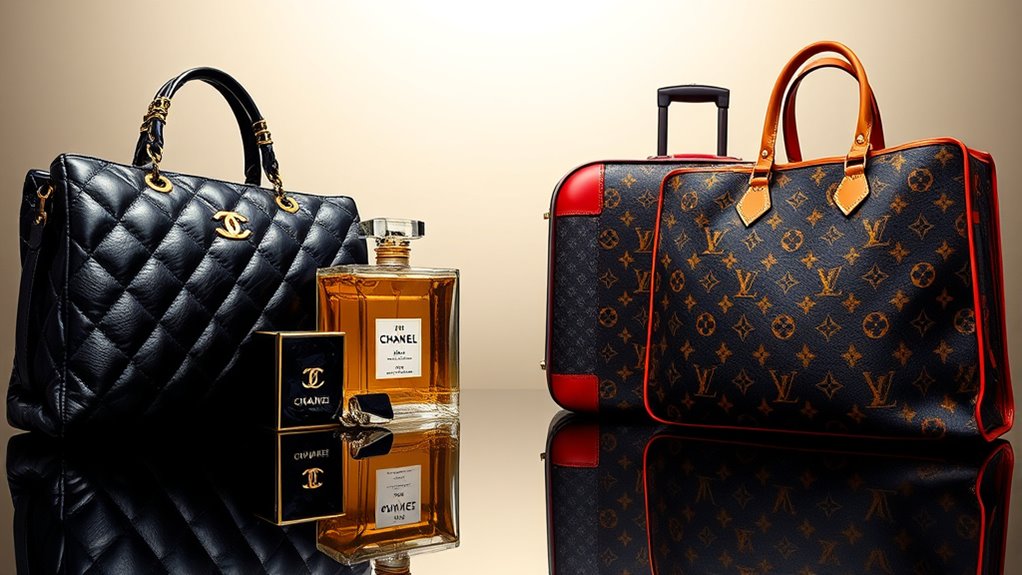
When comparing the brand valuation and market positioning of Chanel and Louis Vuitton, it’s clear that both houses hold dominant yet distinct roles in the luxury landscape. Chanel’s brand value surged to approximately $37.9 billion in 2025, overtaking Louis Vuitton in several apparel rankings thanks to increased awareness and customer satisfaction. In contrast, Louis Vuitton’s valuation varies widely—from around $32.9 billion to over $124 billion—reflecting differences in measurement scope and data sources. Chanel emphasizes exclusivity, artisanal craftsmanship, and timeless Parisian elegance, maintaining strong brand prestige. Louis Vuitton leverages its global reach, iconic monogram, and innovative collaborations. While Chanel’s private ownership offers strategic long-term control, Louis Vuitton’s positioning within LVMH provides broader market exposure and resource advantages. Additionally, brand valuation metrics are continually evolving, influenced by market trends and consumer perceptions.
As an affiliate, we earn on qualifying purchases.
Revenue Streams and Profit Margins

Chanel and Louis Vuitton generate their revenue from distinct yet overlapping streams that reflect their brand strategies and product focus. You should note three key areas:
- Leather Goods – Louis Vuitton’s monogram luggage and bags drive a significant portion of its revenue, benefiting from high demand and rapid product turnover. The brand’s focus on product diversification allows it to adapt quickly to market trends and consumer preferences. Moreover, their ability to innovate within luxury craftsmanship sustains customer interest and premium pricing.
- Fashion and Ready-to-Wear – Both brands see substantial income here, but Chanel emphasizes exclusivity with limited collections, while Louis Vuitton pushes volume through collaborations.
- Fragrances and Cosmetics – Chanel’s iconic N°5 perfume contributes high margins, whereas Louis Vuitton’s expanding beauty line complements its core leather and fashion lines.
Additionally, brand recognition plays a crucial role in maintaining their market dominance and customer loyalty, helping these brands sustain their appeal across diverse markets.
Despite differences, both brands maintain strong profit margins—Chanel’s high 20s percentage and Louis Vuitton’s solid group-level cash flow—highlighting their financial resilience.
As an affiliate, we earn on qualifying purchases.
Core Products and Business Strategies
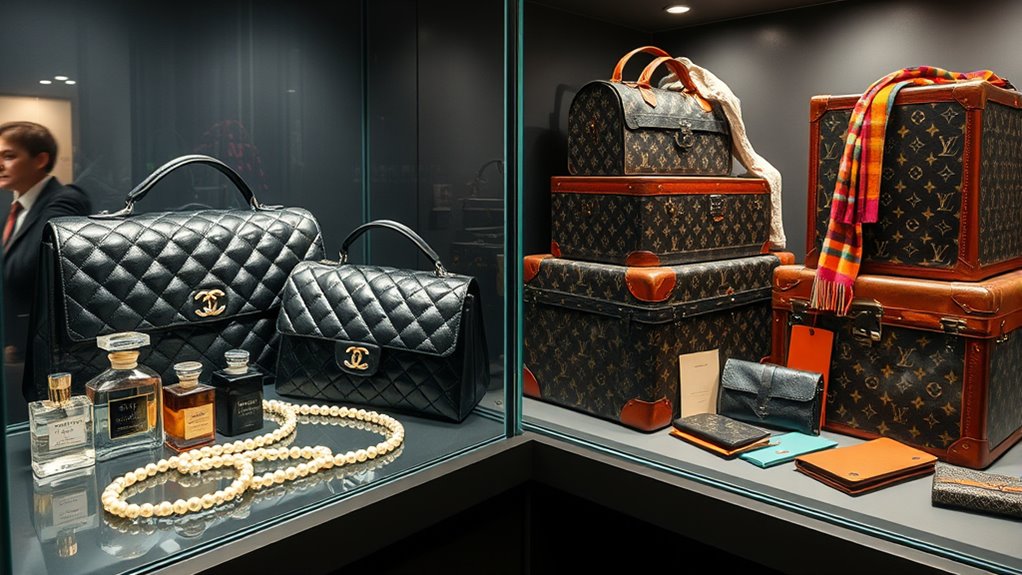
You’ll see that Chanel and Louis Vuitton focus on different core products—Chanel emphasizes haute couture, jewelry, and iconic fragrances, while Louis Vuitton centers on leather goods and travel-inspired accessories. Their distribution models also differ: Chanel maintains tight control with owned boutiques to preserve exclusivity, whereas Louis Vuitton leverages a vast global retail network for widespread reach. Both brands continuously evolve through innovation and strategic brand positioning to stay relevant in a competitive luxury landscape. Additionally, their approaches to brand heritage and storytelling play crucial roles in maintaining customer loyalty and brand prestige. The distribution strategies employed by each brand reflect their unique positioning—Chanel’s selective boutique approach fosters a sense of rarity, while Louis Vuitton’s extensive retail presence ensures accessibility. Ensuring a consistent brand narrative is essential for reinforcing their unique identities and fostering emotional connections with consumers. Recognizing how each brand manages market positioning helps explain their distinct consumer engagement techniques.
Product Focus & Heritage
Both brands focus heavily on their core products to reinforce their unique identities and sustain their market positions. To understand their strategies, consider these key aspects:
- Chanel emphasizes timeless elegance with products like the classic flap bag, N°5 perfume, and tweed suits, rooted in Parisian couture heritage.
- Louis Vuitton concentrates on iconic leather goods, such as monogram luggage, travel accessories, and expanding into jewelry and fragrances, blending craftsmanship with modern trends.
- Their heritage shapes brand perception: Chanel’s legacy is built on haute couture, artisanal savoir-faire, and exclusivity, while Louis Vuitton’s roots lie in travel heritage, craftsmanship, and innovative collaborations. Both leverage their histories to reinforce their market dominance.
Distribution & Retail Models
Distribution and retail strategies are essential in shaping how Chanel and Louis Vuitton maintain their brand exclusivity and market reach. Chanel keeps a tight grip on its brand by limiting distribution to owned boutiques and carefully selected wholesale partners, ensuring a controlled, luxurious shopping experience. This approach preserves scarcity, boost exclusivity, and reinforces its high-fashion image. Chanel’s selective distribution also involves brand control strategies, which are vital for maintaining its luxury status in a competitive market. Chanel’s emphasis on brand control helps protect its heritage and craftsmanship, ensuring consistent quality across all outlets. Additionally, Chanel’s focus on exclusive retail locations complements its brand positioning by reinforcing a sense of rarity and prestige. Louis Vuitton, on the other hand, leverages LVMH’s extensive global retail network, combining a broad physical presence with strategic collaborations and pop-ups to generate buzz and accessibility. LV’s widespread footprint fuels demand and visibility while maintaining high standards. Both brands also harness online channels, but Chanel emphasizes a more curated, selective digital presence, whereas Louis Vuitton integrates digital innovation into its retail strategy to reach a wider audience without diluting brand prestige. Furthermore, the customer experience at Louis Vuitton stores is often designed to create a sense of discovery and engagement, aligning with its global retail approach. Additionally, the brands’ respective distribution models reflect their unique brand philosophies and target markets.
Innovation & Brand Evolution
How do Chanel and Louis Vuitton innovate within their core products to stay relevant in a rapidly evolving luxury market? They focus on strategic product evolution, design innovation, and exclusive collaborations. Additionally, they incorporate technological advancements—Chanel with augmented reality try-ons and Louis Vuitton with digital storytelling—to enhance customer engagement. This approach keeps their offerings fresh, appeals to younger audiences, and preserves exclusivity. By balancing tradition with innovation, they sustain their relevance and strong brand equity in a competitive landscape.
As an affiliate, we earn on qualifying purchases.
Creative Heritage and Brand Identity

You recognize that Chanel’s heritage is rooted in Parisian couture and Coco Chanel’s timeless innovations, shaping a brand identity centered on elegance and exclusivity. Meanwhile, Louis Vuitton’s legacy is built on travel, craftsmanship, and a bold monogram that signals luxury and adventure. Both brands leverage distinctive symbols and design philosophies to reinforce their unique appeal and cultural significance. Additionally, their brand recognition is reinforced through iconic logos and consistent branding strategies that maintain their status in the luxury market. The brands also utilize heritage storytelling to connect emotionally with consumers and strengthen brand loyalty, often emphasizing their luxury heritage to highlight their longstanding reputation in the industry. Furthermore, their ability to adapt to modern trends while maintaining core elements ensures their timeless appeal continues to resonate across generations.
Heritage Foundations and Legacy
Heritage is the cornerstone of both Chanel and Louis Vuitton’s brand identities, shaping how you connect with consumers and maintain their luxury status. You’ll see that each brand leverages its legacy differently: 1. Chanel emphasizes its Parisian couture roots, Coco Chanel’s pioneering spirit, and iconic products like the little black dress and N°5 perfume. 2. Louis Vuitton highlights its travel heritage, craftsmanship in leather goods, and innovative collaborations that blend tradition with modernity. 3. Both brands use their histories to reinforce exclusivity—Chanel through scarcity and heritage codes, Louis Vuitton through global reach and monogram ubiquity. Their distinct legacies create powerful narratives, helping each brand sustain a prestigious, authentic image that resonates across generations. Additionally, both brands carefully curate brand storytelling to evoke emotional connections rooted in their unique histories, with each emphasizing different aspects of their heritage to appeal to diverse consumer bases.
Design Philosophy and Aesthetics
The design philosophies of Chanel and Louis Vuitton reflect their distinct brand identities and creative visions, shaping how each house communicates its aesthetic to the world. Chanel’s style embodies timeless elegance, emphasizing simplicity, clean lines, and iconic details like tweed, quilting, and the camellia. Its aesthetic is rooted in Parisian sophistication and artisanal craftsmanship, often blending classic with modern. Conversely, Louis Vuitton champions innovation within tradition, merging its travel heritage with contemporary trends. Its signature monogram and bold collaborations create a recognizable, adaptable look that appeals globally. While Chanel’s design exudes understated luxury and exclusivity, Louis Vuitton’s aesthetic focuses on versatility, accessibility, and a dynamic mix of heritage and modernity, reflecting their different approaches to luxury storytelling through design.
Brand Symbols and Codes
Both Chanel and Louis Vuitton leverage distinct symbols and codes that powerfully communicate their brand identities and foster deep emotional connections with consumers. You’ll notice Chanel’s symbols rooted in Parisian elegance:
- The iconic interlocking “CC” logo, symbolizing timeless luxury.
- The quilted pattern, evoking sophistication and craftsmanship.
- Camellia flowers, representing femininity and refinement.
In contrast, Louis Vuitton’s brand codes emphasize travel and adventure:
- The monogram canvas, reflecting heritage and exclusivity.
- Luggage-inspired motifs, emphasizing craftsmanship and history.
- The LV initials, a mark of global recognition and status.
These symbols encapsulate each house’s essence—Chanel’s classic refinement versus Louis Vuitton’s adventurous spirit—deepening their emotional appeal and brand loyalty.
Global Reach and Regional Performance

Global reach and regional performance considerably shape the competitive dynamics between Chanel and Louis Vuitton. You’ll find Louis Vuitton’s extensive retail network, especially in Asia and the U.S., helps it dominate market share, while Chanel’s selective boutiques maintain exclusivity. Louis Vuitton’s broad presence fuels visibility and accessibility, whereas Chanel’s controlled distribution preserves prestige. Regional demand shifts, particularly in China, impact both brands’ revenues and valuations. Here’s a comparison:
| Aspect | Chanel | Louis Vuitton |
|---|---|---|
| Market Focus | Europe, North America, Asia | Asia (China), U.S., Europe |
| Distribution Strategy | Owned boutiques, selective wholesale | Deep LVMH retail network, collaborations |
| Performance Variability | Steady growth, high brand resonance | Variable regional growth, strong global presence |
This balance influences each brand’s ability to adapt and thrive across regions.
Retail Footprint and Distribution Tactics
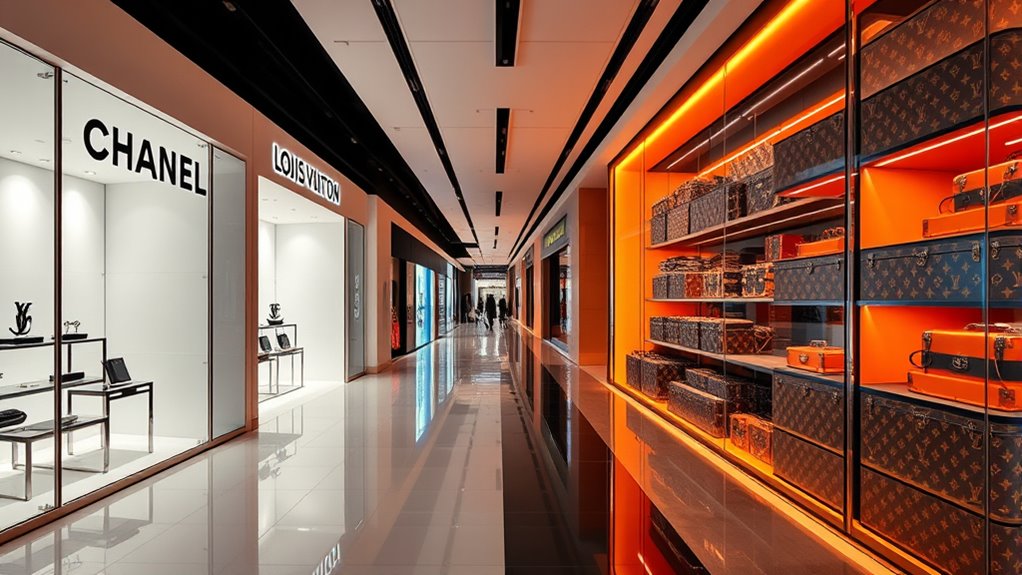
Chanel and Louis Vuitton deploy distinct distribution strategies that shape their brand presence and consumer experience. You’ll notice that Chanel maintains a tightly controlled retail footprint, prioritizing owned boutiques in key locations to guarantee exclusivity. Meanwhile, Louis Vuitton leverages LVMH’s extensive retail network, blending owned stores with selective wholesale channels. Consider these key tactics:
- Chanel limits distribution to owned boutiques and select partners, preserving scarcity.
- Louis Vuitton’s global reach is amplified through a dense network of flagship stores and collaborations.
- Both brands use flagship stores to enhance brand storytelling, but LV’s retail presence emphasizes accessibility, while Chanel’s focuses on exclusivity.
These approaches influence how consumers experience each brand, balancing accessibility with prestige and exclusivity.
Innovation, Collaborations, and Trendsetting

Have you noticed how innovation and collaborations are reshaping the luxury fashion landscape? Chanel and Louis Vuitton are leading the charge, constantly pushing boundaries to stay trendsetting. Chanel stays true to its heritage by blending artisanal craftsmanship with modern design, like its recent use of sustainable materials in limited-edition collections. Meanwhile, Louis Vuitton thrives on high-profile collaborations—partnering with artists like Jeff Koons or Virgil Abloh—to bring fresh perspectives and generate buzz. Both brands leverage innovative retail experiences, such as Louis Vuitton’s immersive fashion shows and pop-ups, and Chanel’s augmented reality initiatives. These strategies keep their offerings exciting and relevant, appealing to a new generation of consumers enthusiastic for exclusivity and innovation. This continuous push fuels their status as trendsetters in the luxury world.
Navigating Industry Challenges and Risks

Steering industry challenges and risks requires brands to stay agile amid shifting consumer preferences, economic uncertainties, and rising sustainability expectations. To succeed, you must address key issues:
- Price Sensitivity & Demand Fluctuations – As consumers become more value-conscious, maintaining pricing power without sacrificing exclusivity is essential.
- Sustainability & Traceability – Meeting increasing demands for transparency, sourcing, and eco-friendly practices is crucial to protect reputation and investor confidence.
- Geopolitical & Economic Risks – Currency shifts, regional downturns, and global instability directly impact sales and brand valuation, demanding flexible strategies.
Both Chanel and Louis Vuitton navigate these risks by balancing heritage, innovation, and operational resilience, ensuring they remain relevant and competitive in a constantly evolving landscape.
Future Outlook and Strategic Directions
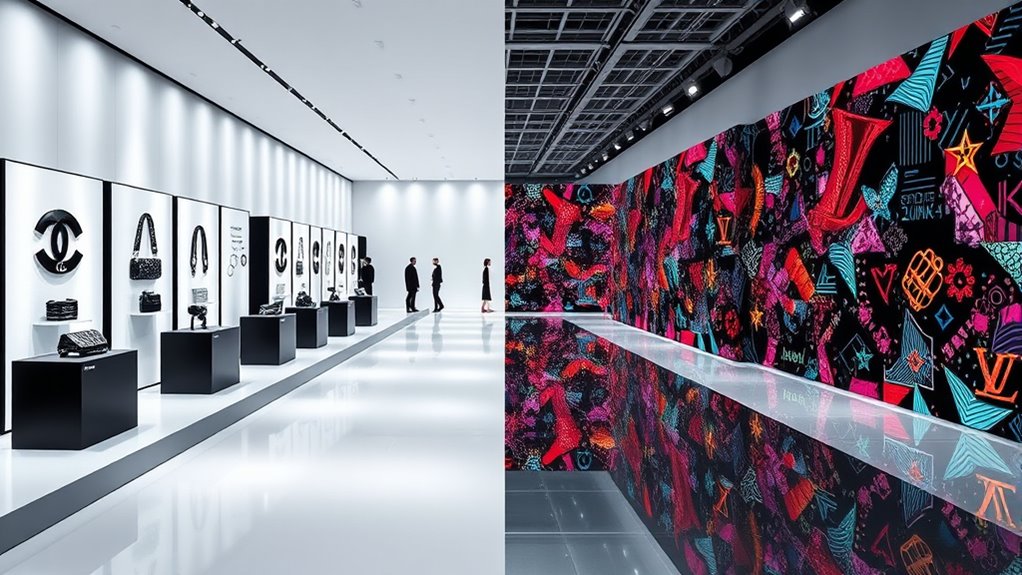
Looking ahead, both Chanel and Louis Vuitton are positioning themselves to adapt to rapid industry changes by embracing innovation while preserving their core brand identities. They’re investing in digital experiences, sustainable practices, and product diversification to stay relevant. Chanel focuses on maintaining exclusivity through limited distribution and artisanal craftsmanship, while Louis Vuitton leverages its global retail network and collaborations to boost visibility. Their strategic directions aim to balance heritage with trendsetting, ensuring long-term growth.
| Strategy Focus | Chanel | Louis Vuitton | Common Objective |
|---|---|---|---|
| Innovation | Digital couture, NFTs | Tech-driven retail, collaborations | Staying ahead in tech trends |
| Sustainability | Sourcing transparency | Eco-friendly materials | Enhancing brand responsibility |
| Distribution | Controlled, selective | Broad retail network | Protecting exclusivity |
| Product Diversification | Cosmetics, jewelry | Fragrances, travel accessories | Expanding revenue streams |
| Heritage & Modernity | Timeless craftsmanship | Trend-forward collaborations | Balancing legacy with innovation |
Frequently Asked Questions
How Do Private Ownership and Public Groups Influence Brand Strategy?
Private ownership lets you focus on long-term brand strategy, prioritizing exclusivity and craftsmanship without quarterly pressures. You can make bold decisions and maintain tight control over brand image. In contrast, being part of a public group, like LVMH, pushes you to balance short-term financial results with brand growth. You benefit from capital access and collaboration opportunities but must navigate shareholder expectations and broader conglomerate priorities.
What Role Does Sustainability Play in Brand Valuation Differences?
Sustainability’s like that trendy accessory everyone talks about but few truly wear—yet it’s shaping brand value more than you’d expect. You might think luxury brands could ignore this trend, but investors and consumers now see eco-consciousness as a reflection of long-term stability. Chanel’s private stance offers flexibility, while Louis Vuitton’s public commitments boost visibility. In this game, being green isn’t just good ethics; it’s a savvy move to boost valuation.
How Do Resale Values Impact Consumer Perception and Brand Strength?
Resale values directly influence how you perceive a brand’s strength and desirability. When pieces from Chanel or Louis Vuitton hold high resale prices, it boosts your confidence in their lasting value and exclusivity. This perception encourages you to invest in their products, knowing they’re not just luxury items but also potential assets. Strong resale markets reinforce the brands’ prestige, making you feel part of an elite community with enduring worth.
In What Ways Do Heritage and Innovation Balance Within Each Brand?
You’ll notice that Chanel perfectly balances heritage and innovation, with its timeless Parisian couture roots complemented by modern designs under new creative leadership. notably, Chanel’s brand awareness and customer satisfaction scores are among the highest globally, showing how heritage fuels loyalty while fresh collections attract new audiences. Meanwhile, Louis Vuitton leverages its travel heritage with innovative collaborations, blending tradition with trend-forward ideas to stay relevant and constantly evolve.
How Do Regional Market Shifts Affect Long-Term Brand Positioning?
You see regional market shifts impact your brand’s positioning by altering consumer perceptions, demand, and sales in key areas like China and the US. When demand drops, you must adapt marketing, product offerings, and pricing strategies to maintain relevance. Long-term, these shifts can influence your brand’s prestige and exclusivity, requiring you to balance local responsiveness with global consistency to sustain your luxury image and market strength.
Conclusion
As you walk through this luxury landscape, you see Chanel’s timeless elegance shimmering like a classic pearl, while Louis Vuitton’s bold patterns echo like a vibrant city street. Both brands paint a dazzling canvas of craftsmanship and innovation, each carving their unique path through a sea of global influence. In this fierce showdown, your admiration grows for their artistry, resilience, and vision—guiding you into a world where luxury isn’t just worn, it’s experienced.
Fall Picks
fall essentials
As an affiliate, we earn on qualifying purchases.
![10 Things To Do For This Saturday in L.A. [7-4-2026]](https://itsfashionhub.com/wp-content/uploads/2026/07/10-things-to-do-for-this-saturday-in-l-a-7-4-2026-featured-560x300.jpg)