
Discover how high fashion transforms art movements into stunning collections that become wearable masterpieces. Designers draw inspiration from Impressionism’s soft pastels and natural motifs, Mondrian’s precise color blocks, Pop Art’s bold graphics, Surrealism’s sculptural forms, Art Nouveau’s ornate details, and Cubism’s geometric shapes. By blending these styles, they create innovative, artistic garments that challenge conventions. If you keep exploring, you’ll uncover even more fascinating ways fashion becomes a canvas for artistic expression.
Key Takeaways
- Many iconic fashion collections draw inspiration from art movements like Impressionism, Art Nouveau, Cubism, and Pop Art, blending artistic techniques with high couture.
- Designers use specific motifs, color palettes, and fabric techniques—such as embroidery, mosaics, and draping—to translate art styles into wearable masterpieces.
- Architectural and structural design elements in fashion mirror the geometric and structural principles of movements like Constructivism and Minimalism.
- Collage, graphic prints, and multimedia techniques in fashion collections reflect Pop Art’s influence and challenge traditional art-fashion boundaries.
- Surrealist-inspired designs often feature sculptural forms, optical illusions, and fantasy elements, transforming garments into artistic, performative statements.
Impressionism: Romantic Couture and Light-Diffused Fabrics
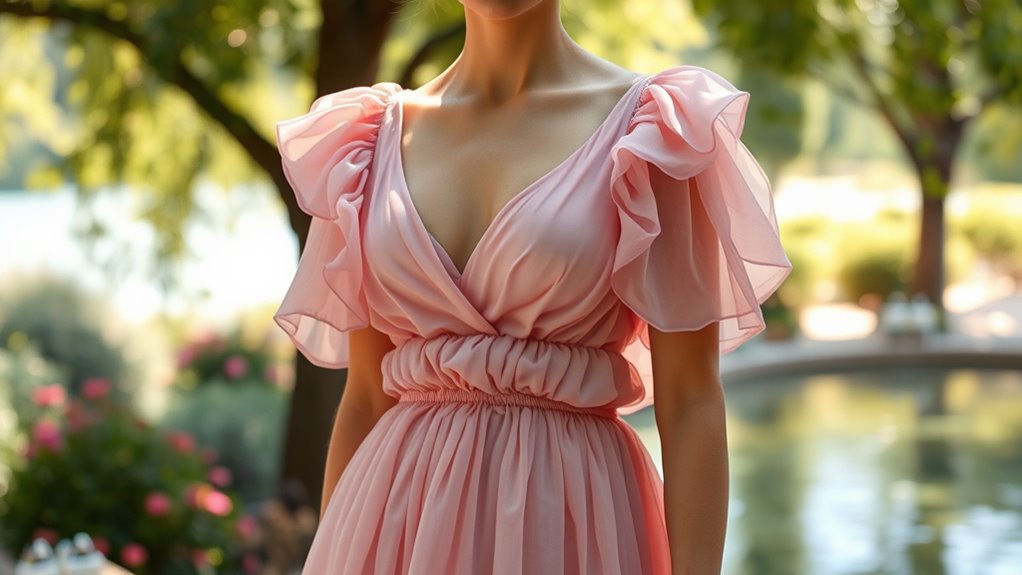
Impressionism has profoundly influenced romantic couture by emphasizing the interplay of light, color, and atmosphere in fashion. You’ll notice designers draw inspiration from Monet’s palette, using soft pastels and layered embroidery that mimic impressionist brushstrokes. Fabrics like chiffon, organza, and tulle help diffuse light, creating a dreamy, ethereal effect on garments. Floral motifs and petal appliqués evoke the natural, spontaneous quality of impressionist paintings. You’ll see this influence in collections that blend delicate textures with subtle color gradations, capturing fleeting moments of light and mood. Couture houses often incorporate graduated dyeing techniques and hand embroidery, translating the painterly qualities into wearable art. Contemporary ready-to-wear continues this tradition, with watercolor prints and digital floral effects, making impressionist aesthetics accessible and timeless. Color accuracy plays a key role in ensuring that the subtle nuances of pastel shades are faithfully represented, enhancing the overall impressionist-inspired aesthetic.
Geometric Minimalism: Mondrian’s Abstract Grid in Haute Couture
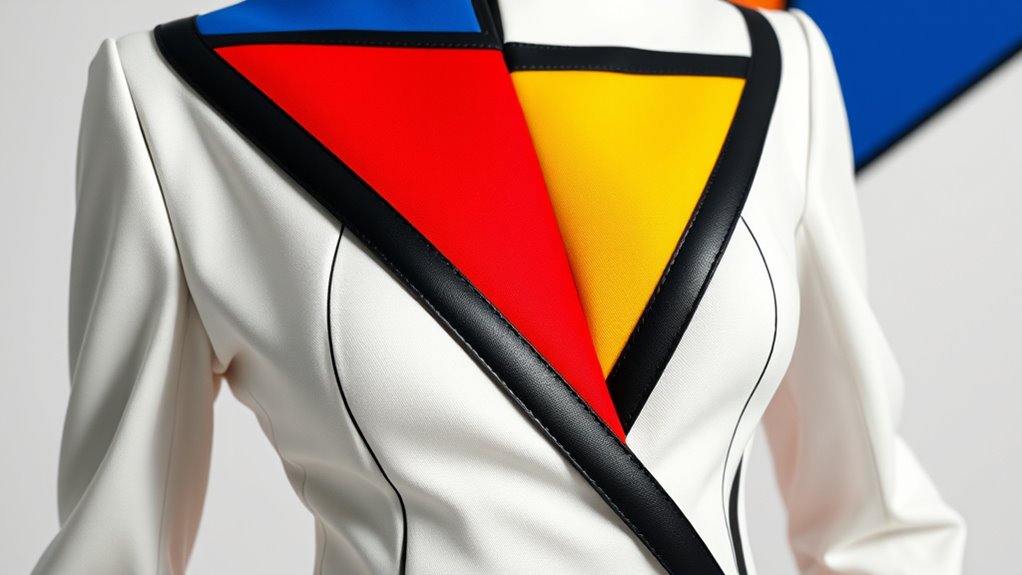
Yves Saint Laurent revolutionized fashion by translating Piet Mondrian’s iconic grid-and-primary-color compositions into haute couture during the 1960s. You see, he crafted shift dresses featuring rigid black lines, bold blocks of red, blue, and yellow, and stark neutrals, all maintaining geometric integrity. The garments’ straight silhouettes and precise pattern-cutting showcased Mondrian’s abstract style. When you observe these pieces, imagine:
Yves Saint Laurent’s Mondrian-inspired dresses transformed fashion into geometric wearable art with bold lines and primary colors.
- Color-blocked panels with seamless alignment, mimicking painted surfaces
- Sharp, clean lines forming strict grids across the fabric
- Minimal yet striking contrasts that emphasize shape and structure
This approach didn’t just dress the body; it transformed fashion into wearable art. The Mondrian-inspired collections sparked a movement, cementing geometric minimalism as a staple in high fashion and museum retrospectives alike. Additionally, this influence extended beyond fashion into sustainable design practices, emphasizing clean lines and efficient use of materials to create timeless, eco-conscious pieces.
Pop Art: Bold Graphics and Consumer Culture in Fashion

Building on the geometric foundations of Mondrian’s abstract grids, designers embraced the bold, irreverent spirit of Pop Art to make a statement in fashion. You encounter bright palettes, graphic prints, and playful appropriations of consumer icons. Collaborations like Louis Vuitton and Takashi Murakami fuse high luxury with mass-media imagery, turning everyday symbols into artful statement pieces. Repetitive motifs, Ben-Day dots, and collage techniques evoke the visual language of comic strips and advertisements. These designs challenge traditional notions of art and commerce, encouraging you to see clothing as both cultural critique and collectible object. The vibrant energy of Pop Art infuses collections with a sense of immediacy and rebellion, transforming fashion into a canvas of consumer culture. Additionally, these movements have influenced how brands incorporate art movements into their collections, blending high art with streetwear.
Surrealism: Sculptural and Unexpected Elements in Haute Couture
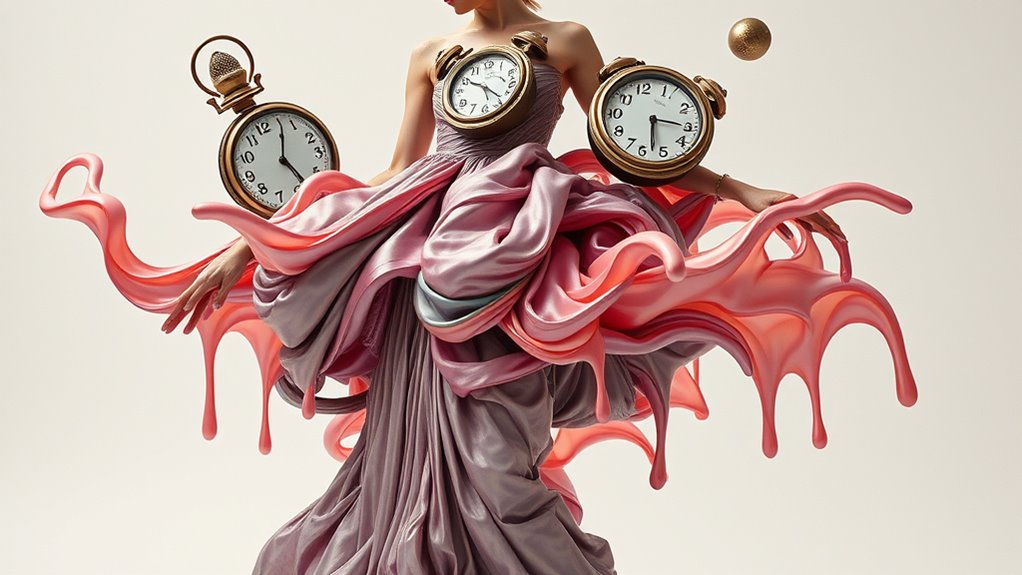
You notice how surrealist silhouettes challenge conventional shapes with sculptural forms and unexpected details. Designers use innovative materials like molded plastics, metal armatures, and mixed media to create wearable art that blurs the line between fashion and sculpture. These techniques produce striking, often illusionary effects that reflect the imaginative spirit of Surrealism. Incorporating connected technology into fashion design allows for dynamic, interactive elements that enhance the surreal aesthetic.
Surrealist Silhouettes and Forms
Surrealist silhouettes and forms revolutionize haute couture by introducing sculptural, unexpected elements that challenge traditional notions of dress. You’re drawn to designs that defy gravity and convention, transforming garments into wearable art. Imagine:
- Extravagant, exaggerated shapes that distort the body’s natural lines, like oversized shoulders or sculpted busts.
- Detachable or illusionary features that create a sense of surprise, such as floating fabric or hidden compartments.
- Molds and armatures shaping the clothing into fantastical, surreal structures, blending fantasy with craftsmanship.
- Incorporating Free Floating techniques allows designers to create garments that seem to hover or drift, enhancing the surreal effect.
These elements push boundaries, turning fashion into a performative statement. Designers use innovative techniques—metal armatures, molded plastics, mixed media—to craft pieces that evoke dreamlike worlds. The result is a bold, theatrical expression of artistic rebellion.
Artistic Techniques and Materials
Innovative techniques and unconventional materials define the sculptural and astonishing elements that characterize surrealist-inspired haute couture. You’ll see designers push boundaries with metal armatures, molded plastics, and mixed media to craft surreal proportions and shapes. Trompe-l’œil prints create optical illusions that challenge perceptions, while detachable and illusionary components add a playful, disruptive edge. Techniques like sculptural draping, exaggerated forms, and unexpected textures transform fabrics into artistic statements. Designers often incorporate unconventional materials such as foam, resin, or lightweight metals to achieve otherworldly silhouettes. These methods result in garments that function as wearable art, blurring the line between fashion and sculpture. The focus on material innovation and craftsmanship elevates surrealist couture into a fascinating, performative form of artistic expression. Additionally, local automation technologies can be integrated into the design process to enhance precision and customization in creating complex sculptural pieces.
Art Nouveau and Symbolism: Ornamental Details and Metallic Accents
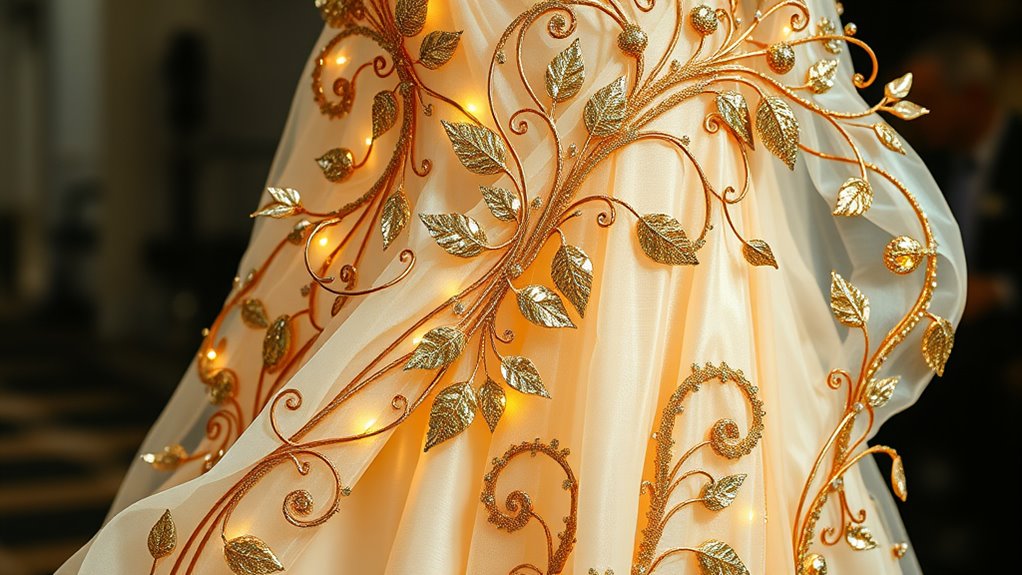
You notice how designers incorporate gilded embellishments and metallic accents to evoke the luxurious, decorative spirit of Art Nouveau and Symbolism. Ornamental patterns and motifs—like flowing lines and nature-inspired details—are often woven into textiles through intricate embroidery and prints. These artistic influences translate into fabric techniques that highlight craftsmanship, creating pieces that serve as wearable art. Additionally, the use of metallic accents enhances the visual richness and texture of the designs, emphasizing the opulence characteristic of these art movements.
Gilded Embellishments and Metallics
Gilded embellishments and metallic accents draw directly from Art Nouveau and Symbolist aesthetics, emphasizing ornate, decorative details that highlight craftsmanship and luxury. You envision intricate gold leaf appliqués, shimmering sequins, and mosaic-like embroidery that evoke the opulence of late-19th-century ornamentation. These metallic touches serve as focal points, transforming garments into wearable art. You might see:
- Elaborate metal-thread embroidery weaving shimmering patterns into flowing fabrics
- Gold leaf accents highlighting floral and organic motifs for a luminous effect
- Sequin mosaics creating textured, reflective surfaces reminiscent of stained glass or decorative panels
- The thoughtful use of ornamental details enhances the overall artistic expression and elevates couture into a high form of visual and tactile art.
Ornamental Patterns and Motifs
Ornamental patterns and motifs inspired by Art Nouveau and Symbolism infuse fashion with intricate, flowing designs that celebrate beauty and craftsmanship. You’ll notice sinuous lines, organic shapes, and floral motifs that mimic nature’s elegance, often rendered through embroidery, lace, or printed fabrics. Designers incorporate mosaics, gold leaf, and detailed ornamentation reminiscent of Klimt’s gilded surfaces, creating luxurious, body-as-canvas effects. These motifs serve as visual storytelling, blending art and dress seamlessly. Metallic accents highlight the ornamental details, adding shimmer and depth. The craftsmanship emphasizes handwork and precision, elevating garments into wearable art objects. Whether through flowing embroidery or elaborate embellishments, these designs evoke a sense of sensuality and reverence for decorative arts, making each piece a tribute to the ornate beauty of the Art Nouveau and Symbolist movements. The use of Metallic accents enhances the luxurious feel and draws attention to the detailed craftsmanship.
Artistic Inspirations and Fabric Techniques
The intricate motifs and decorative details inspired by Art Nouveau and Symbolism have profoundly influenced fashion design, especially through innovative fabric techniques. You might notice how designers incorporate flowing, sinuous lines and ornamental patterns using advanced methods. For example:
- Metal-thread embroidery creates shimmering, textured surfaces that resemble Klimt’s gilded surfaces.
- Sequined mosaics mimic ornate patterns, adding a reflective, luxurious quality.
- All-over ornamental prints translate sinuous, organic motifs onto flowing fabrics like chiffon and silk.
- Fabric preservation techniques ensure that these delicate, artist-inspired textiles maintain their beauty over time.
These techniques allow you to experience the rich, tactile quality of Art Nouveau and Symbolism, turning fabrics into miniature works of art. They emphasize craftsmanship, combining metallic accents and intricate detailing to evoke a sense of opulence and artistic harmony in haute couture.
Cubism and Constructivism: Deconstructed Forms and Architectural Shapes
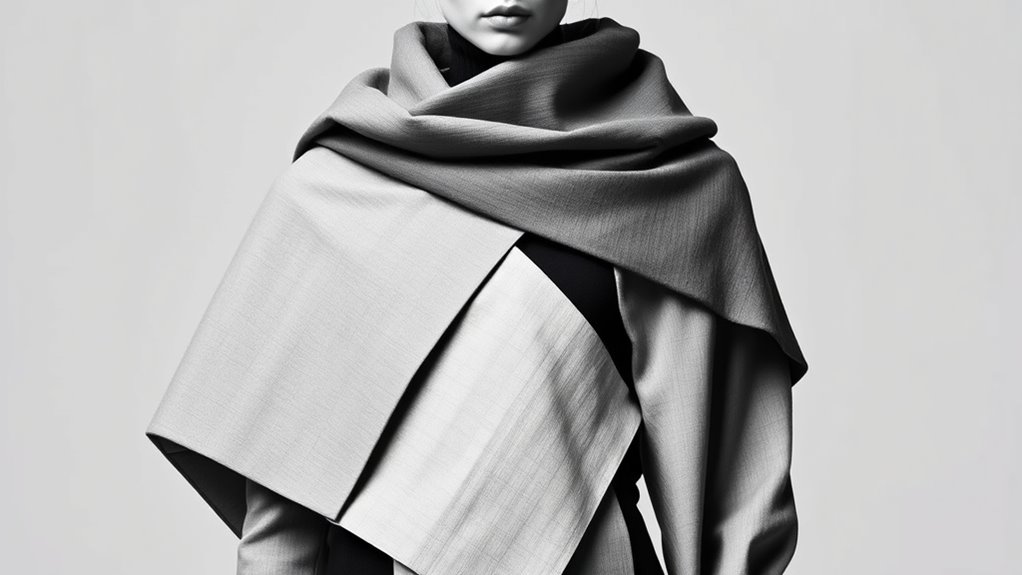
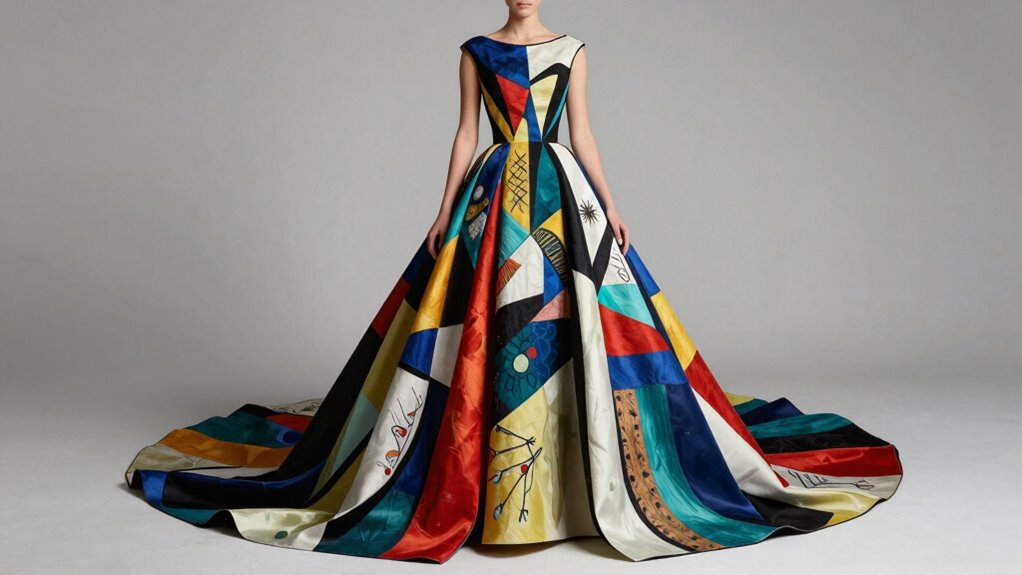
Cubism and Constructivism have profoundly influenced fashion by introducing deconstructed forms and architectural shapes that challenge traditional silhouette conventions. You notice designers experiment with fragmented panels, asymmetrical layers, and geometric structures that mirror cubist collage techniques and constructivist emphasis on utility. These collections often feature angular seams, sharp lines, and layered, three-dimensional forms, transforming the body into a sculptural canvas. You see how pattern-making innovations—like paneling and angular seaming—break apart classic tailoring, creating garments that resemble architectural models. These styles emphasize form over function, highlighting structural beauty and spatial complexity. Whether on the runway or in high-end prêt-à-porter, these designs push boundaries, positioning fashion as a form of wearable art that explores deconstruction and spatial innovation.
The Modern Synthesis: Blending Artistic Movements in Contemporary Fashion
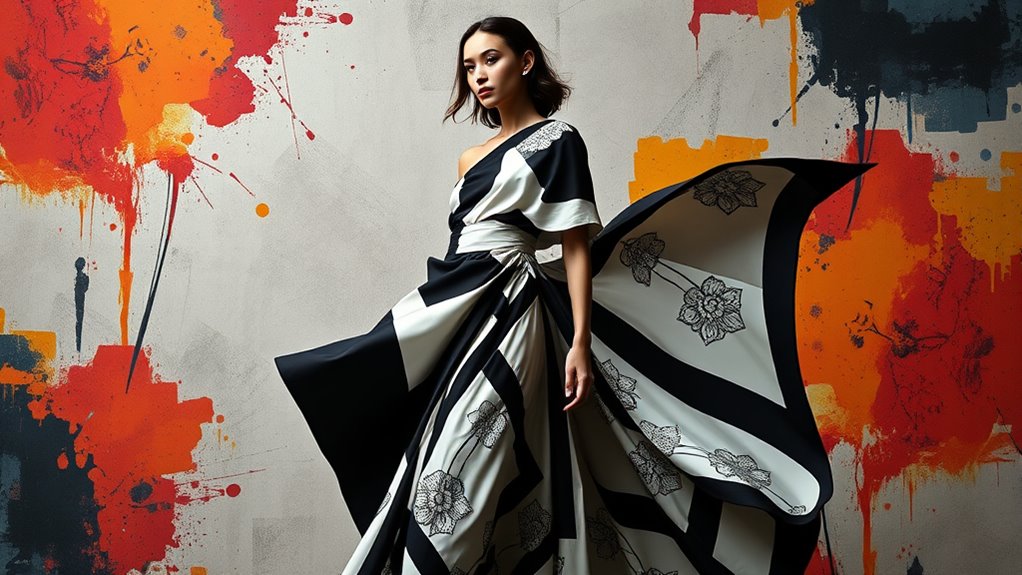
Contemporary fashion constantly blends multiple artistic movements to create innovative and dynamic collections that defy traditional boundaries. You might see a gown that combines impressionist soft pastels with geometric Mondrian grids, or streetwear featuring bold Pop Art graphics layered with surrealist sculptural details. Designers are merging styles to produce fresh visuals:
- Combining fluid watercolor effects with sharp, angular tailoring for a hybrid of softness and structure
- Integrating metallic embroidery inspired by Klimt with minimalist silhouettes for a luxurious, understated look
- Mixing collage techniques from Cubism with vibrant pop imagery to craft eye-catching, multi-layered prints
This synthesis pushes creativity forward, challenging conventions and encouraging new interpretations. Instead of sticking to a single movement, designers craft multidimensional pieces that celebrate the fluidity of art and fashion’s evolving dialogue.
Frequently Asked Questions
How Do Designers Choose Specific Art Movements for Inspiration?
You choose specific art movements based on their visual language, themes, and cultural relevance that resonate with your creative vision. You consider how the movement’s motifs, color schemes, or philosophies can translate into textile patterns, silhouettes, or details. You also look at the movement’s historical impact, ensuring it aligns with your message or aesthetic goals, making your designs meaningful, innovative, and appealing to your audience.
What Materials Are Favored for Translating Art Into Textile Designs?
You prefer soft, lightweight fabrics like chiffon, organza, and tulle to mimic impressionist light and atmosphere. For example, Dior’s 1949 “New Look” used layered embroidery and petal-like appliqué on these fabrics to evoke Monet’s brushwork. These materials help translate art’s subtle nuances into textiles, allowing designers to create dreamy, atmospheric effects that capture the essence of painted scenes or artistic motifs seamlessly.
How Do Historical Art Influences Impact Modern Fashion Sustainability?
You can see that historical art influences promote sustainability in modern fashion by inspiring designers to reuse techniques, motifs, and materials that emphasize craftsmanship and timeless aesthetics. By referencing art movements like Art Nouveau or Cubism, fashion brands often produce durable, high-quality pieces with artisanal details, reducing waste and encouraging slow fashion. This connection also fosters appreciation for craftsmanship, encouraging consumers to invest in pieces with cultural and artistic significance that last longer.
Are There Ethical Considerations in Appropriating Art for Couture?
Appropriating art in couture is like borrowing a neighbor’s garden without asking; it can cause friction if done insensitively. You should respect the original artist’s cultural, historical, and personal significance, giving credit where it’s due. Ethical concerns arise when designs exploit or misrepresent the art’s meaning or community. Being mindful, transparent, and honoring the source helps guarantee your fashion respects and preserves artistic integrity.
How Does Audience Perception Change With Art-Inspired Fashion Collections?
Your perception shifts when you see art-inspired fashion collections because they blur the boundaries between art and clothing, making you view garments as wearable art. You might appreciate the creativity and craftsmanship more deeply, recognizing the dialogue between different artistic mediums. These collections can evoke emotional responses, challenge your ideas about fashion’s purpose, and enhance your understanding of cultural and artistic significance, making the experience more engaging and thought-provoking.
Conclusion
You see how art and fashion intertwine, inspiring your wardrobe with creativity, innovation, and expression. You embrace the boldness of pop art, the elegance of Impressionism, and the structure of Cubism. You celebrate the unexpected with Surrealism, the ornamentation of Art Nouveau, and the sleek minimalism of geometric designs. You wear art like a second skin, making every outfit a statement, a story, a masterpiece. Because in fashion, as in art, your style is your most personal canvas.