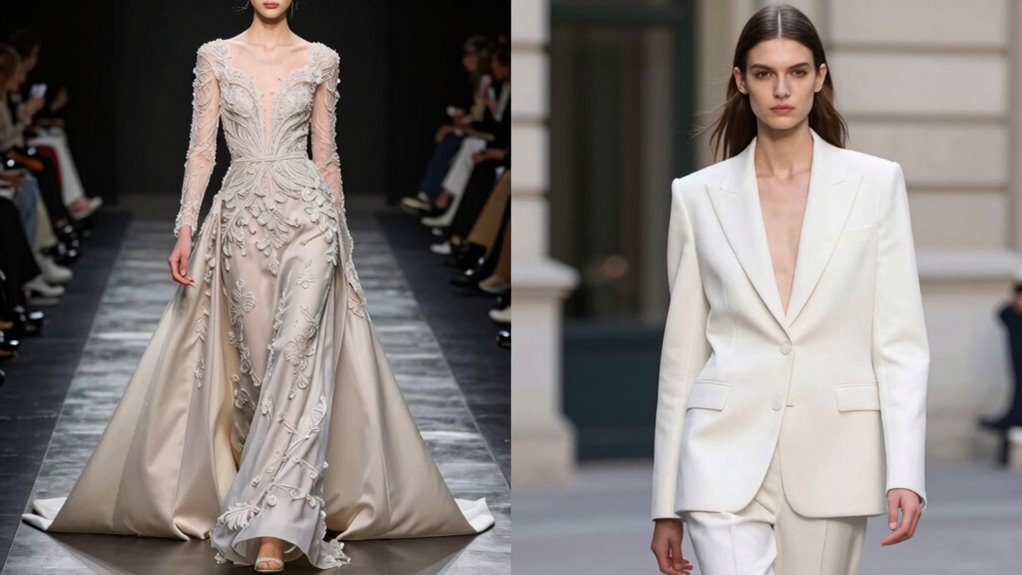

Haute couture and prêt-à-porter differ mainly in craftsmanship, exclusivity, and target audiences. Haute couture involves custom-made, handcrafted pieces from elite Paris ateliers, with prices that reflect their meticulous work and limited availability. Prêt-à-porter offers ready-to-wear designs that are mass-produced for broader markets, focusing on affordability and accessibility. If you want to understand how these two sectors influence fashion today, there’s more to explore beneath the surface.

Get your wardrobe favorites delivered free — and shop member deals
- Fast, free delivery on millions of items
- Access to Prime Big Deal Days deals on October 6–7
- Prime Video, Amazon Music and more included
Key Takeaways
- Haute couture is custom-made, handcrafted for exclusive clients, while prêt-à-porter is mass-produced ready-to-wear clothing.
- Haute couture requires approval from the Chambre Syndicale and has strict standards; prêt-à-porter has no formal regulation.
- Haute couture garments are extremely expensive, often bespoke, and showcased in exclusive Paris fashion shows; prêt-à-porter is more affordable and widely available.
- Haute couture emphasizes artistic craftsmanship and unique designs; prêt-à-porter focuses on accessibility, trends, and practicality.
- Haute couture caters to elite, wealthy clients seeking exclusivity; prêt-à-porter targets a broader market including luxury consumers and everyday shoppers.
Origins and Historical Development
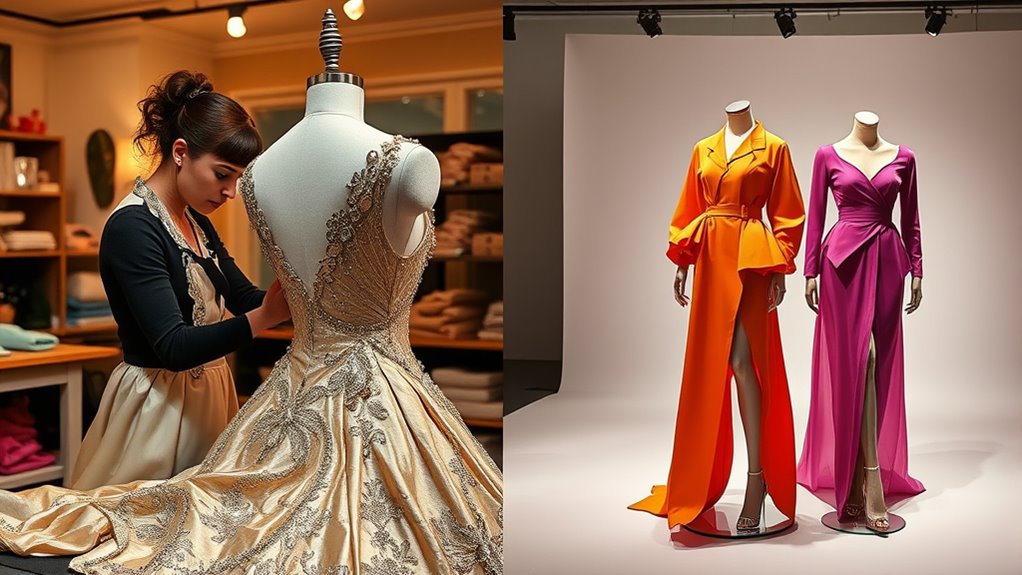
The origins of haute couture and prêt-à-porter reflect the evolving landscape of fashion, shaped by technological advances and shifting consumer demands. Haute couture started in 1868 when Charles Frederick Worth opened the first couture house in Paris, creating bespoke garments for elite clients. It emphasized craftsmanship, exclusivity, and artistic expression, serving a select clientele. It also established fundamental standards for fashion craftsmanship, which continue to influence design practices today. Prêt-à-porter, however, emerged in the early 20th century as a response to increasing demand for affordable, ready-to-wear clothing. Designers like Coco Chanel popularized mass-produced fashion that was accessible to a broader audience. While haute couture remained a symbol of luxury and artistry, prêt-à-porter aimed to combine style with practicality, making fashionable clothing available quickly and at a lower cost. Both evolved to meet different consumer needs, shaping the modern fashion industry. Additionally, the influence of fashion education and certification has played a significant role in advancing design standards and industry professionalism. The development of industrial manufacturing techniques further revolutionized how clothing is produced on a large scale.
Craftsmanship and Production Techniques
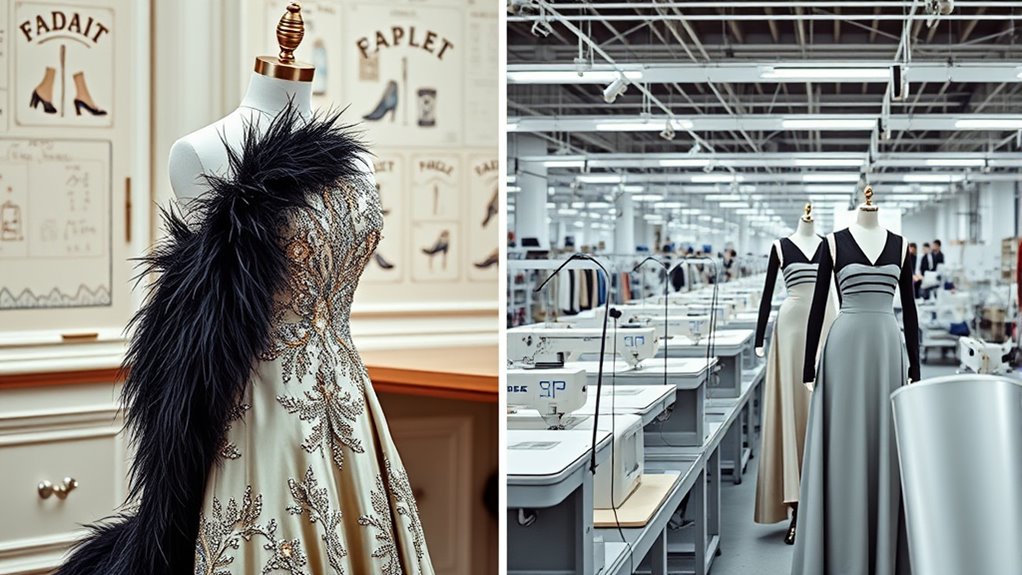
Craftsmanship and production techniques distinguish haute couture from prêt-à-porter by their focus on artistry and precision. With haute couture, you work closely with skilled artisans who hand-sew every detail, using complex techniques like embroidery, beadwork, and couture tailoring. Each piece is custom-made for individual clients, requiring multiple fittings and countless hours of craftsmanship. In contrast, prêt-à-porter relies on industrial machines and standardized patterns, producing garments quickly and efficiently. You see factories mass-producing clothing in standard sizes, emphasizing speed and scale. Haute couture demands meticulous attention to detail, often involving months of labor for a single piece. Prêt-à-porter prioritizes uniformity and affordability, making fashion accessible without sacrificing quality, but with less emphasis on handcrafted artistry. Additionally, the use of Free Floating techniques allows for innovative design elements that set high fashion apart from ready-to-wear collections. Furthermore, the integration of sustainable practices is becoming increasingly important in haute couture, reflecting a commitment to environmental responsibility within the craftsmanship process. Incorporating advanced techniques and innovative materials is also shaping the future of high-end fashion, blending tradition with modern technology. A focus on artisan collaboration highlights the importance of skilled craftsmanship in creating unique and luxurious garments.
Regulatory Standards and Industry Recognition
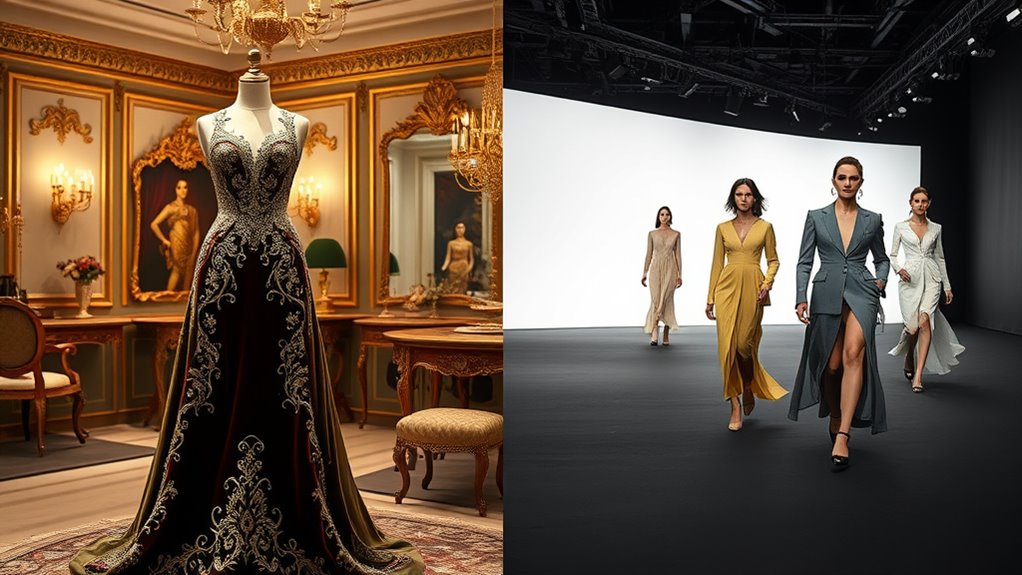
Regulatory standards and industry recognition set clear boundaries between haute couture and prêt-à-porter. Haute couture’s legitimacy depends on approval from the Chambre Syndicale de la Haute Couture, which requires houses to meet strict criteria, including having a Paris atelier, at least 15 full-time staff, and producing two couture collections annually. Only those meeting these standards can use the “Haute Couture” title legally. In contrast, prêt-à-porter has no formal regulation, allowing any designer or brand to produce ready-to-wear lines without official oversight. This lack of regulation means industry recognition for prêt-à-porter is based on reputation and market presence rather than official certification. Recognized haute couture brands enjoy prestige and exclusivity, while prêt-à-porter remains accessible and diverse without formal industry accreditation.
Market Target and Clientele
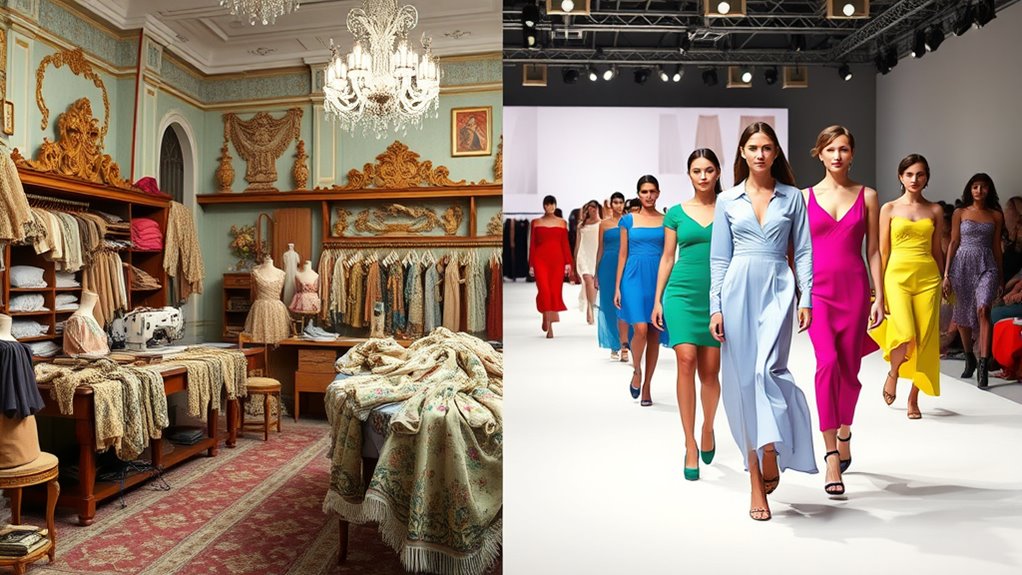
Who exactly are the audiences for haute couture and prêt-à-porter, and how do their preferences shape each market? Haute couture appeals to an elite clientele—royalty, celebrities, and the ultra-wealthy—who seek exclusivity and personalized artistry. These clients want one-of-a-kind pieces that reflect their status and individual style. Haute couture also adheres to strict regulations governing haute couture, which ensure that the craftsmanship and exclusivity of haute couture remain unparalleled in the fashion industry. Additionally, the process of creating haute couture involves meticulous attention to detail and bespoke craftsmanship, making each piece a true work of art. Prêt-à-porter, on the other hand, targets a broader audience, from affordable fashion seekers to luxury consumers. It’s designed for everyday wear, offering accessible, stylish options available in stores and online. Your preferences influence these markets: if you value rarity and bespoke craftsmanship, haute couture caters to you. If you prefer convenience, variety, and affordability, prêt-à-porter provides designs that fit your lifestyle and budget.
Pricing, Availability, and Fashion Shows
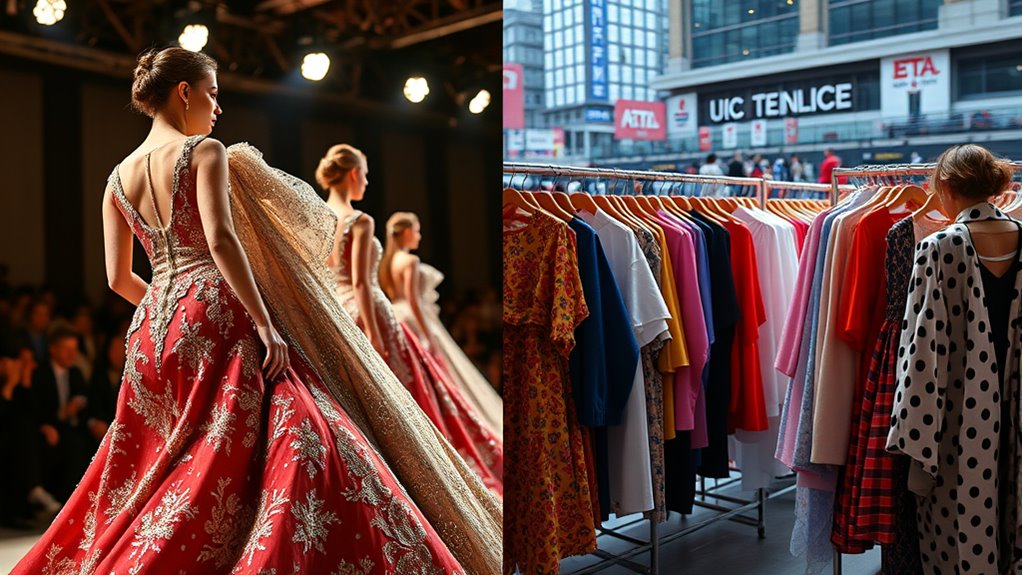
Pricing and availability are two key factors that distinguish haute couture from prêt-à-porter. Haute couture garments are incredibly expensive because they involve handcrafted techniques, premium materials, and personalized fitting processes, making them inaccessible to most. These exclusive pieces are often priced beyond the cost of a luxury car. In contrast, prêt-à-porter offers more affordability, with ready-to-wear designs produced in bulk using industrial methods, making them widely available in stores and online. Haute couture pieces are typically custom-made for individual clients and rarely seen outside exclusive shows in Paris. Prêt-à-porter lines are showcased at fashion weeks and are designed for mass consumption, allowing a broader audience to access current trends without the wait or high cost.
Frequently Asked Questions
How Does Sustainability Differ Between Haute Couture and Prêt-À-Porter?
You’ll find that sustainability differs markedly between haute couture and prêt-à-porter. Haute couture often emphasizes craftsmanship and uses luxurious, sometimes rare materials, which can lead to higher environmental impacts. However, its limited production and focus on quality can mean garments last longer. In contrast, prêt-à-porter’s mass production may generate more waste and use less sustainable materials, but it promotes affordability and accessibility, making sustainable choices more widespread.
Can Haute Couture Pieces Be Worn Daily?
Sure, you can wear haute couture daily—if you enjoy spending more on a single outfit than most people make in a month. These pieces are crafted for art, status, and special occasions, not for everyday wear and tear. So, while technically possible, your couture might turn heads for the wrong reasons—like traffic accidents or jealous stares—making it more of a museum piece than your daily wardrobe staple.
Are There Any New Technological Innovations Impacting Both Sectors?
New technological innovations are impacting both sectors markedly. You’ll see 3D printing used for intricate details in haute couture, reducing production time and allowing for complex designs. In prêt-à-porter, automation and AI streamline manufacturing, making collections faster and more affordable. Additionally, virtual fittings and augmented reality enhance shopping experiences for both, letting you try on clothes virtually. These advancements increase efficiency, creativity, and accessibility across high fashion and ready-to-wear industries.
How Does Branding Influence Consumer Perception in Each Segment?
Branding shapes how you perceive each segment— Haute Couture is seen as exclusive, luxurious, and artistic, making you feel part of an elite world. Prêt-à-Porter’s branding emphasizes accessibility, style, and affordability, appealing to your everyday needs. Strong branding for haute couture builds prestige and desire, while for prêt-à-porter, it promotes variety and value. Your perception is influenced by how brands position themselves and communicate their unique qualities.
What Role Do Social Media and Influencers Play in Marketing These Fashion Types?
You see social media and influencers play a major role in marketing both haute couture and prêt-à-porter. They create buzz, showcase new collections, and reach a wider audience quickly. For haute couture, influencers enhance its exclusivity and prestige by sharing behind-the-scenes content. For prêt-à-porter, they make trendy, affordable fashion more relatable and accessible, boosting sales and brand visibility across diverse consumer groups.
Conclusion
Understanding the difference between haute couture and prêt-à-porter is like comparing a handcrafted masterpiece to a ready-made work of art. Haute couture offers exclusivity, craftsmanship, and timeless elegance, while prêt-à-porter provides accessible style and everyday wear. Both serve unique roles in the fashion world, catering to different tastes and needs. Whether you seek luxury or convenience, knowing these distinctions helps you appreciate the artistry behind each, like a fine tapestry woven with passion and precision.
Fall Picks
fall essentials
As an affiliate, we earn on qualifying purchases.