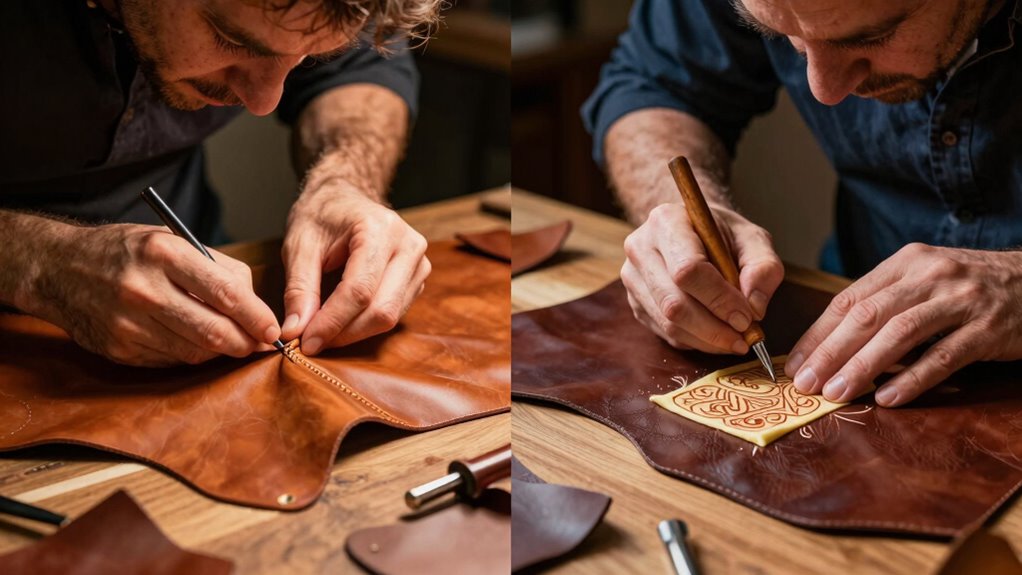

Italian and French leather artisans each excel in craftsmanship, with Italy emphasizing heritage, traditional techniques, and durability, while France focuses on innovation, bold aesthetics, and trendsetting designs. Italy’s meticulous hand-stitching and authentic raw materials guarantee timeless quality, whereas France experiments with advanced finishes and artistic surface treatments. Both regions maintain high standards and ethical sourcing. Want to discover which craftsmanship style truly stands out? Keep exploring to uncover the details behind their legendary skills.

Get your wardrobe favorites delivered free — and shop member deals
- Fast, free delivery on millions of items
- Access to Prime Big Deal Days deals on October 6–7
- Prime Video, Amazon Music and more included
Key Takeaways
- Italian craftsmanship emphasizes traditional techniques, artisanal mastery, and durability, focusing on heritage and authenticity.
- French artisans excel in innovative finishes, avant-garde aesthetics, and surface treatments that push fashion boundaries.
- Italy’s strict raw material sourcing ensures transparency, traceability, and high-quality raw materials for long-lasting products.
- France combines high-quality leather with artistic surface treatments, emphasizing aesthetic resilience and trendsetting designs.
- Both regions uphold rigorous quality control; Italy prioritizes robustness, while France emphasizes aesthetic durability.
Italian full-grain leather wallet
As an affiliate, we earn on qualifying purchases.
As an affiliate, we earn on qualifying purchases.
Heritage and Philosophy: Underlying Values of Italian and French Leather Artisans
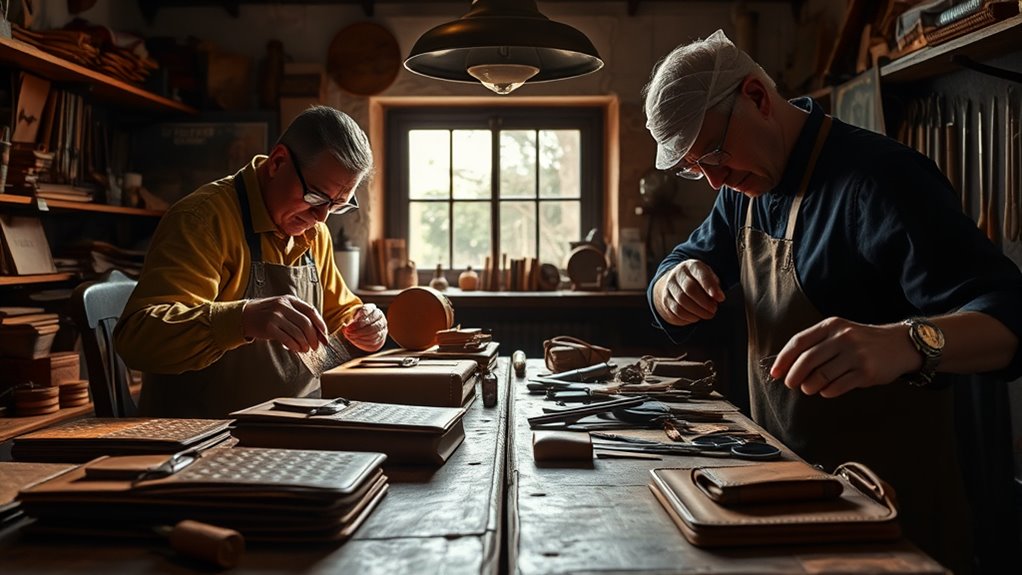
Italian and French leather artisans each bring a distinct heritage and philosophy that shape their craft. Italian artisans focus on authenticity and tradition, emphasizing the importance of high-quality raw materials and meticulous craftsmanship. They believe that genuine leather, like full-grain and vegetable-tanned hides, forms the foundation of durable, luxurious products. Their approach values heritage, craftsmanship, and the integrity of materials. Conversely, French artisans emphasize innovation, aesthetics, and the transformative power of leather. They see leather as a canvas for artistic expression, exploring finishes and textures to create visually striking pieces. Prestige and branding are central to their philosophy, often aligning with high fashion and luxury markets. Both traditions uphold excellence, but Italian craftsmanship leans more toward heritage and authenticity, while French artisans prioritize style and innovation. Additionally, color accuracy plays a significant role in evaluating the quality and visual appeal of leather goods, especially in high-end products.
As an affiliate, we earn on qualifying purchases.
Material Sourcing and Raw Material Authenticity
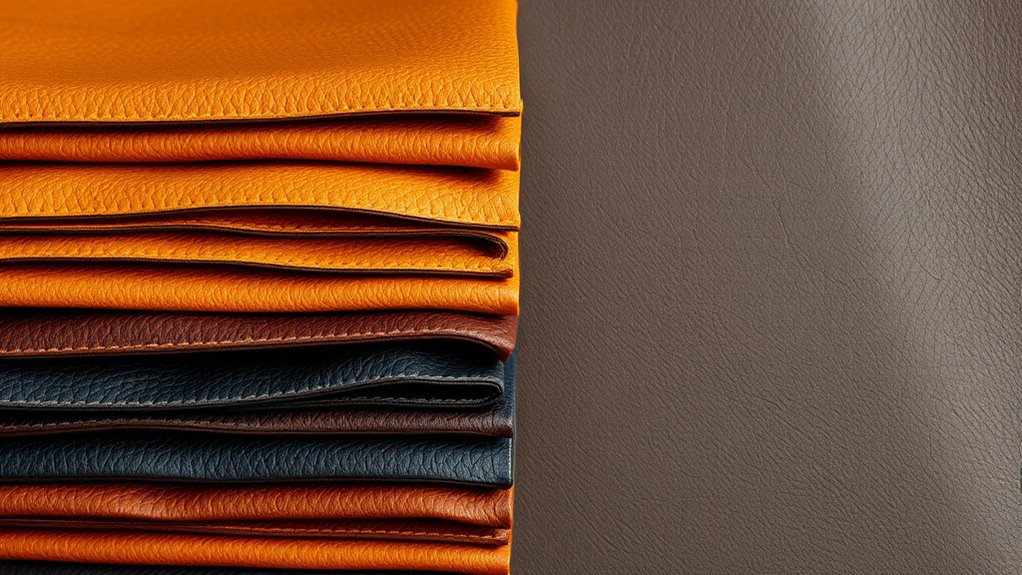
How do artisans guarantee the authenticity of their raw materials? They carefully select suppliers who meet strict standards, prioritizing genuine, full-grain, and vegetable-tanned leathers. Italian artisans emphasize transparency, often sourcing from trusted tanneries in Florence and Milan renowned for their heritage and quality control. They inspect raw materials personally, ensuring full traceability from source to finished product. French artisans, meanwhile, focus on partnerships with prestigious, globally recognized tanneries that produce authentic, high-quality leathers like matte or caviar finishes. Both regions value raw material integrity as foundational to craftsmanship. They often require certification or documentation proving the leather’s origin, ensuring authenticity isn’t compromised. Ultimately, their commitment to sourcing genuine materials underpins their reputation for durability, luxury, and excellence. Additionally, many artisans incorporate quality assurance processes to verify the authenticity and consistency of their raw materials throughout production.
As an affiliate, we earn on qualifying purchases.
Craftsmanship Techniques and Production Processes
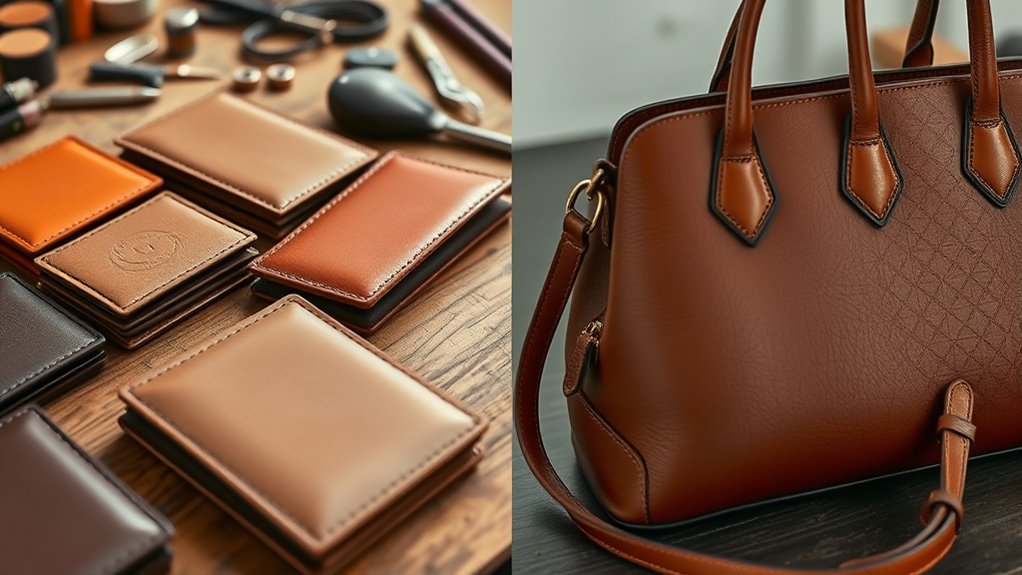
Artisans employ highly specialized techniques to transform raw leather into luxurious, durable products. In Italy, they focus on meticulous craftsmanship, including hand-stitching, edge finishing, and traditional tanning methods like vegetable tanning. They often create prototypes and perform rigorous quality checks, ensuring each piece meets high standards. French artisans emphasize innovation and aesthetic refinement, experimenting with finishes like matte or dull caviar leather. They utilize advanced tools and techniques to achieve unique textures and looks, often collaborating with fashion houses for tailored designs. Both countries prioritize craftsmanship, but Italy leans toward durability and tradition, while France pushes boundaries with artistic finishes and modern aesthetics. Additionally, traditional tanning methods play a crucial role in determining the leather’s quality and appearance.
hand-stitched Italian leather briefcase
As an affiliate, we earn on qualifying purchases.
As an affiliate, we earn on qualifying purchases.
Design Innovation and Aesthetic Approaches
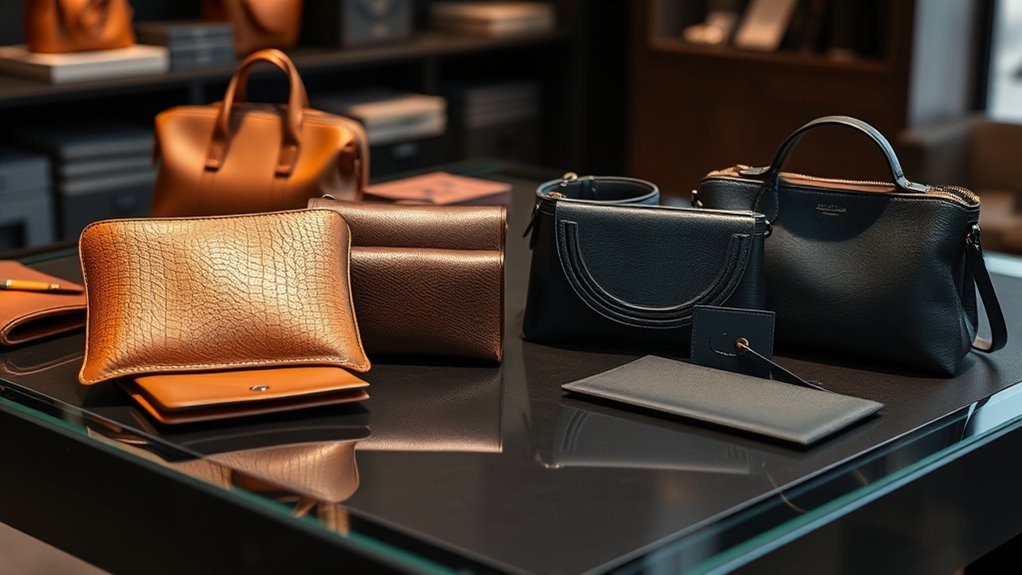
You’ll notice how Italian and French brands approach design with distinct philosophies—Italy emphasizing raw material authenticity, while France explores innovative finishes. Material transformation techniques like embossing or dyeing play a key role in shaping each aesthetic. Staying current with fashion-forward trends, designers push boundaries to create bold, modern leather goods that stand out. Additionally, Free Floating techniques are often employed to give each piece a unique character and tactile appeal.
Material Transformation Techniques
Material transformation techniques serve as the backbone of design innovation and aesthetic expression in luxury leather goods. Italian artisans often emphasize preserving raw material authenticity, using vegetable tanning and full-grain leathers to create natural textures and aging effects. They explore surface treatments that enhance durability while maintaining a refined look. French manufacturers focus on innovative finishes, such as matte, dull caviar, and embossed textures, to achieve distinctive visual effects. They experiment with dyeing processes and surface manipulations to produce unique aesthetics aligned with high fashion standards. Both regions push boundaries—Italy through traditional craftsmanship and material integrity, France through avant-garde surface techniques. These approaches allow designers to craft pieces that are not only visually striking but also rich in tactile and material depth. Additionally, material transformation techniques play a crucial role in defining the identity and longevity of luxury leather goods.
Aesthetic Philosophy Differences
Italian and French leather goods manufacturers approach design innovation with distinct aesthetic philosophies that shape their visual and tactile expressions. Italy emphasizes timeless beauty, craftsmanship, and the authenticity of raw materials, creating pieces that celebrate tradition and durability. Conversely, France focuses on avant-garde elegance, exploring material transformation and modern luxury, often incorporating innovative finishes and bold designs. Both regions pay close attention to attention to detail, ensuring that each piece reflects their unique stylistic identity.
Fashion-Forward Design Trends
What drives the latest trends in luxury leather goods? It’s all about pushing boundaries and blending tradition with innovation. Italian brands often emphasize timeless elegance infused with subtle modern twists, favoring classic shapes with unexpected details. French designers, on the other hand, focus on bold, fashion-forward aesthetics that redefine luxury. They explore new textures, experimental finishes, and avant-garde silhouettes to stay ahead of trends. Embracing craftsmanship techniques, these regions showcase their unique approaches to luxury leather design.
- Use of innovative leather finishes and textures
- Bold color palettes and contrasting materials
- Minimalist yet statement-making designs
- Integration of contemporary art influences
These trends reflect each region’s aesthetic philosophy—Italy’s craftsmanship blending heritage with subtle innovation, and France’s focus on pushing fashion boundaries to create standout pieces.
Customization and Bespoke Services
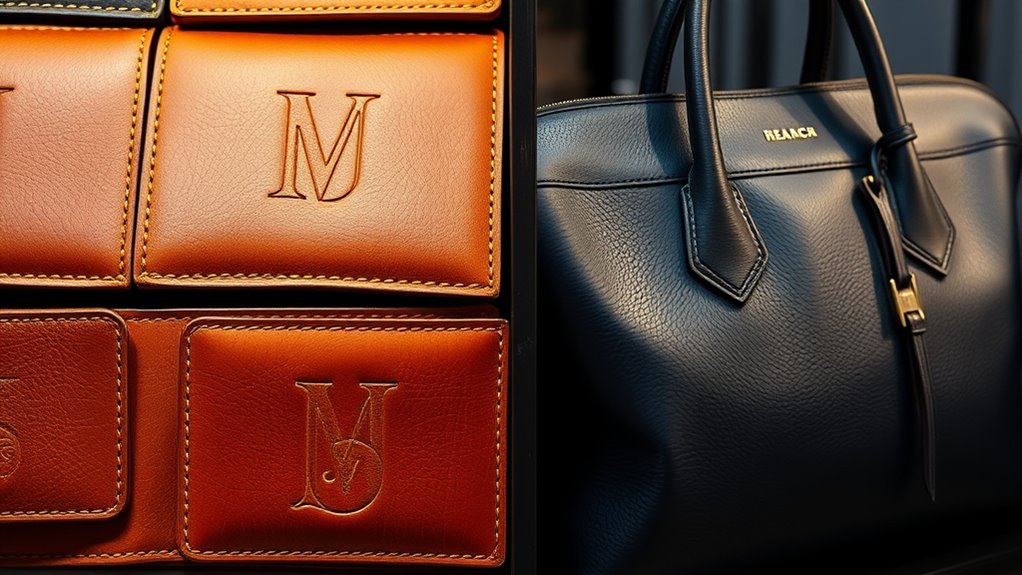
When you choose customization, you open a range of personalized design options that reflect your style. Unique crafting processes guarantee each piece is tailored specifically to your preferences, highlighting craftsmanship and attention to detail. This level of bespoke service transforms a leather item from a simple accessory into a lasting expression of your individuality. Additionally, understanding dark psychology tactics can help consumers recognize manipulation techniques used in marketing or sales strategies.
Personalized Design Options
Have you ever wondered how luxury leather brands tailor their products to your unique preferences? Both Italian and French artisans excel at offering personalized design options, but they do so in distinct ways. Italian brands often emphasize meticulous craftsmanship, allowing you to choose specific leathers, colors, and interior details that reflect your style. French maisons focus on bespoke services that incorporate your vision into innovative, fashion-forward designs. You can expect: – Custom monogramming and engraving options – Selection of exotic or rare leather finishes – Personalized hardware choices – Fully bespoke design consultations. Whether you prefer the artisanal craftsmanship of Italy or the innovative flair of France, both regions prioritize making your leather piece truly one-of-a-kind.
Unique Crafting Processes
Both Italian and French leather artisans excel at transforming personalized visions into reality through their unique crafting processes. Italian artisans focus on meticulous customization, offering bespoke services with attention to detail and raw material authenticity. They use traditional techniques like vegetable tanning and full-grain leather to ensure durability and character, often involving clients directly in the design process. French artisans, on the other hand, emphasize innovation and prestige, blending craftsmanship with high fashion. They excel in creating tailored, one-of-a-kind pieces that reflect their brand’s aesthetic and elegance. French processes often explore different leather finishes and textures, adding a touch of artistic flair. Both approaches prioritize quality and personalization, but Italy leans toward heritage-driven durability, while France champions fashion-forward bespoke luxury. Additionally, smart contracts are increasingly used to enhance transparency and security in the customization process.
Quality Control and Durability Standards
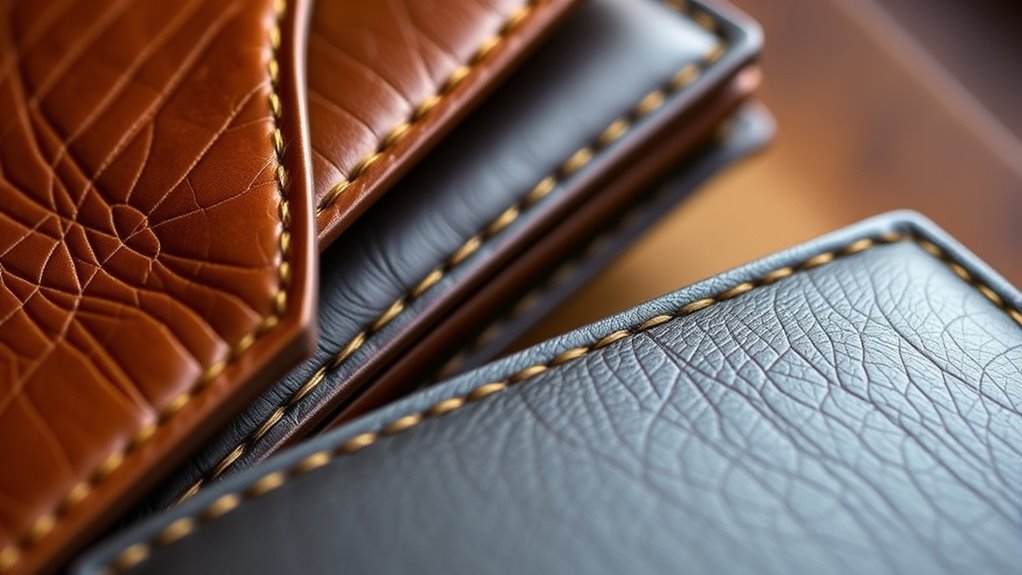
Quality control and durability standards are essential for guaranteeing luxury leather goods meet high expectations. You want products that last and age beautifully, so strict checks are vital. Italian artisans focus on rigorous material selection, often using full-grain and vegetable-tanned leathers that resist wear. French manufacturers prioritize craftsmanship precision, inspecting every detail for imperfections.
- Stringent raw material inspections ensure only the best leathers are used
- Continuous quality checks during production maintain consistency
- Durability tests, like abrasion and stress assessments, guarantee longevity
- Certification standards, such as Sedex, promote ethical sourcing and manufacturing practices
These standards reflect a commitment to excellence, whether in Italy’s heritage of robustness or France’s focus on aesthetic resilience. Both regions ensure their leather goods uphold the highest quality and durability benchmarks.
Production Ecosystems and Manufacturing Infrastructure
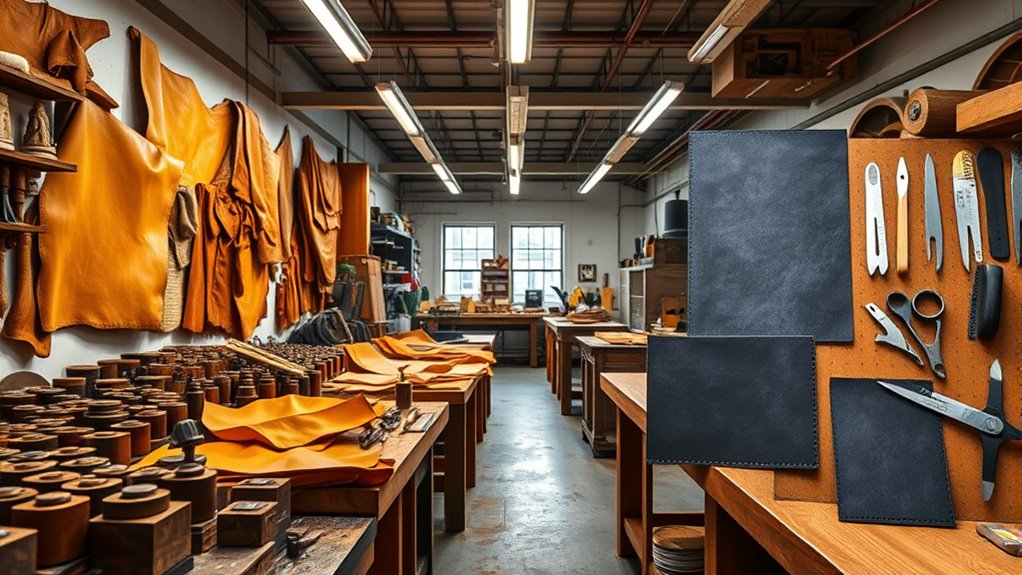
Italy and France each boast highly specialized manufacturing ecosystems that underpin their luxury leather goods industries. In Italy, you find a tightly integrated network of artisans, suppliers, and factories centered around regions like Florence and Milan. These ecosystems prioritize craftsmanship, raw material authenticity, and bespoke services, supporting full control from raw hide to finished product. Italian manufacturers excel in OEM production and customisation, with facilities like Pierotucci offering bespoke options within sustainable frameworks. Conversely, France’s infrastructure focuses on innovation and prestige, with Paris serving as a hub for high-end designers and leather handbag suppliers. French production emphasizes brand image, material transformation, and aesthetic experimentation, often collaborating with global fashion houses. Both countries leverage their unique ecosystems to maintain their luxury leather goods dominance, but their infrastructures serve different strategic priorities.
Brand Positioning and Market Perception

Italian leather brands position themselves as symbols of craftsmanship, authenticity, and bespoke luxury, appealing to consumers who value tradition and personalized quality. You’re drawn to their heritage of artisanal skills, rooted in centuries-old techniques that emphasize durability and elegance. These brands often emphasize their connection to Italy’s rich leather history, reinforcing a sense of exclusivity. French brands, on the other hand, focus on prestige, innovation, and global allure, positioning themselves as leaders in fashion-forward luxury. They appeal to those seeking status and trendsetting designs.
Italian leather brands embody craftsmanship and heritage, while French brands focus on prestige and innovation.
- Italian brands highlight artisanal mastery and heritage.
- French brands emphasize innovation and prestige.
- Italian companies focus on durability and customization.
- French brands prioritize brand image and global appeal.
Sustainability and Ethical Practices in Leather Goods
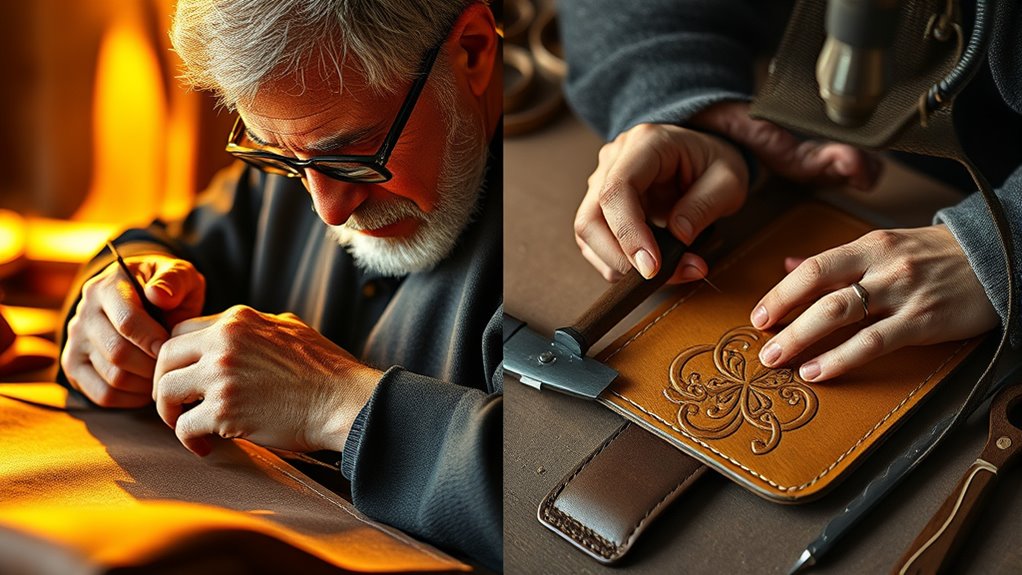
Sustainable and ethical practices are increasingly shaping the luxury leather goods industry, prompting brands to adopt environmentally responsible sourcing and manufacturing methods. In Italy, artisans emphasize raw material authenticity, using full-grain and vegetable-tanned leathers, often sourced locally to reduce environmental impact. Brands like Pierotucci prioritize bespoke services with Sedex-approved facilities, ensuring fair labor and sustainable practices. France also focuses on innovation and prestige but is exploring eco-friendly techniques, such as using alternative finishes and recycled materials. French brands often highlight craftsmanship’s transformation process, emphasizing aesthetic beauty alongside sustainability. Both countries recognize the importance of transparency and ethical sourcing, but Italy’s heritage leans more toward traditional, sustainable methods, while France integrates sustainability with high fashion and innovation.
Frequently Asked Questions
How Do Italian and French Artisans Differ in Leather Craftsmanship Philosophies?
You’ll notice that Italian artisans focus on durability and raw material authenticity, emphasizing full-grain, vegetable-tanned leathers for longevity. They prioritize customization, end-to-end quality control, and sustainable practices. French artisans, on the other hand, emphasize prestige, innovation, and aesthetic transformation, exploring unique finishes and fashion-forward designs. Their philosophy centers on blending craftsmanship with high-end branding, often embracing aesthetics over raw durability, creating luxurious, stylish accessories that appeal globally.
What Are the Unique Sourcing Practices for Raw Materials in Italy and France?
You’ll find that Italy sources raw materials with a focus on authenticity and quality, emphasizing full-grain and vegetable-tanned leathers from trusted suppliers like Italian Artisan. They prioritize raw material integrity to guarantee durability and craftsmanship. In France, sourcing practices highlight innovation and prestige, often selecting unique finishes and high-end leathers from specialized suppliers. Both countries aim for premium quality, but Italy emphasizes traditional authenticity, while France leans toward aesthetic and innovation.
Which Country Leads in Innovation for Leather Design and Aesthetics?
Think of leather design innovation like a dance—Italy and France both lead, but France often takes the spotlight with its fashion-forward moves. You’ll find French brands pushing boundaries with new finishes and aesthetics, blending craftsmanship with trendsetting ideas. Meanwhile, Italy emphasizes durability and tradition, refining leather properties. Both excel, but France’s focus on avant-garde aesthetics and global fashion influence makes it a slightly stronger leader in leather design innovation.
How Do Customization Options Vary Between Italian and French Leather Brands?
You’ll find that Italian brands excel in offering highly customized leather goods, with end-to-end services, bespoke options, and a focus on raw material authenticity. French brands also provide customization but tend to emphasize innovation and prestige, often aligning with luxury fashion houses. While Italy emphasizes durability and craftsmanship, France leans toward aesthetic innovation and exclusive finishes, giving you a broad spectrum of personalized choices depending on your style preferences.
What Sustainability Initiatives Are Prominent in Italian and French Leather Industries?
Imagine a world where your luxury leather piece not only turns heads but also nurtures the planet. In Italy, artisans prioritize sustainable sourcing, using vegetable-tanned leathers and eco-friendly processes, creating products that honor tradition and nature. France champions innovation with initiatives like waste reduction and eco-conscious materials. Both nations are weaving sustainability into their craftsmanship, ensuring your cherished accessory is as kind to the Earth as it is exquisite.
Conclusion
Ultimately, whether you favor Italian passion or French elegance, both worlds craft leather that tells a story—each stitch a testament to tradition and innovation. Think of their craftsmanship as a timeless dance, where heritage and artistry intertwine like a finely woven tapestry. As you choose, remember that behind every exquisite piece lies a symbol of dedication—an enduring legacy you carry with you, transforming everyday essentials into lasting symbols of artistry.
Fall Picks
fall essentials
As an affiliate, we earn on qualifying purchases.