Men’s fashion has transformed from the structured, status-focused styles of the 1700s to more casual, diverse looks today. You’ve seen how early styles emphasized formality and social rank, while the Edwardian era introduced elegance and innovation. Military influences, rebellion in the ’50s and ’60s, and the rise of streetwear have all shaped your wardrobe. If you want to explore how these changes reflect cultural shifts and personal expression, keep exploring this fascinating evolution.

Get your wardrobe favorites delivered free — and shop member deals
- Fast, free delivery on millions of items
- Access to Prime Big Deal Days deals on October 6–7
- Prime Video, Amazon Music and more included
Key Takeaways
- Men’s fashion evolved from structured, formal garments emphasizing social status in the 1700s to practical, military-inspired styles in the early 20th century.
- The mid-20th century introduced rebellion and casual wear, shifting focus from formality to personal expression and comfort.
- Technological advances and mass production made stylish, durable clothing accessible across all social classes.
- Contemporary fashion embraces global influences, sustainability, and gender-fluid styles, reflecting individuality and social values.
- Overall, men’s style transitioned from classic, structured looks to diverse, expressive, and practical modern aesthetics.
The Formal Foundations: 1700s to Early 1800s
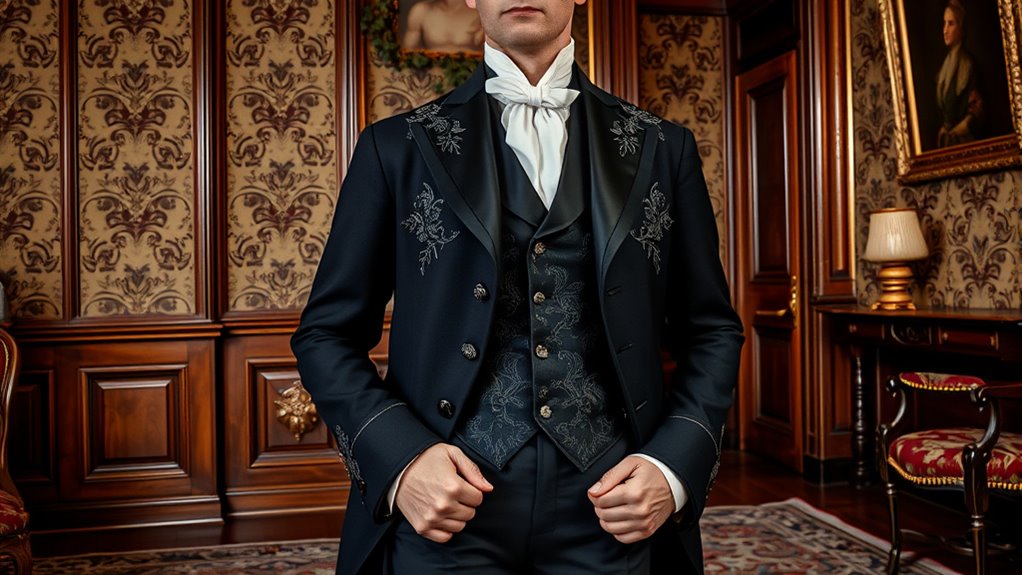
Have you ever wondered how men’s formal fashion took shape during the 1700s and early 1800s? During this period, men’s clothing emphasized structure and status. You’d typically wear a doublet—a fitted, padded jacket—over a shirt with lace cuffs and collars. Breeches, knee-length trousers fastened with buckles or buttons, completed the look. Broad-brimmed hats, often adorned with feathers, signaled social standing. The Regency era brought in tailcoats, waistcoats, and breeches inspired by classical antiquity, giving a refined, elegant appearance. Victorian men favored conservative frock coats and tall top hats, emphasizing formality and decorum. These styles laid the groundwork for modern menswear, blending practicality with social symbolism.
The Edwardian Elegance and Industrial Influence
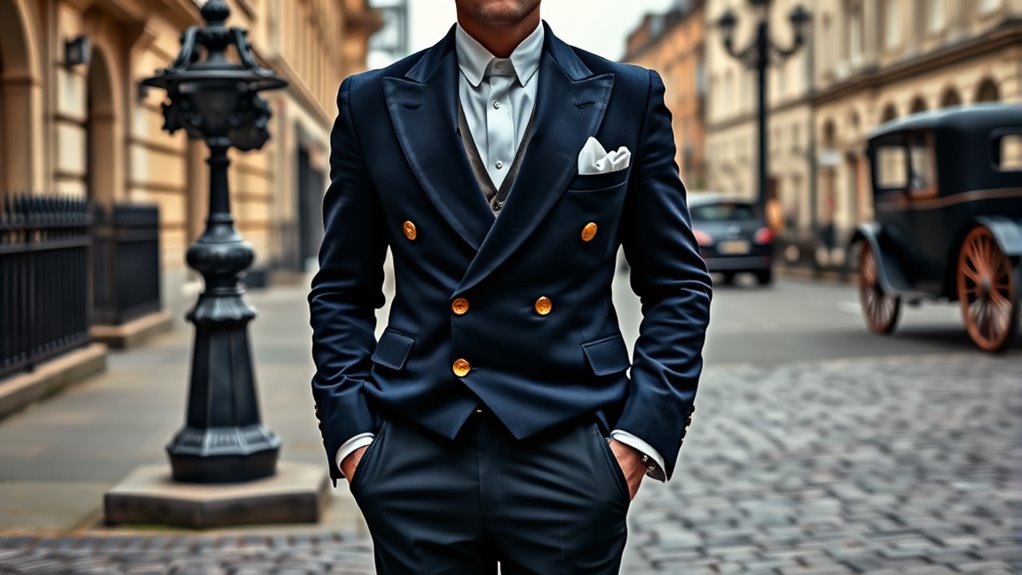
During the Edwardian era, you notice a shift toward a more refined silhouette, with high-buttoned vests and stiff collars defining men’s fashion. The industrial revolution plays a key role, making tailored clothing more accessible through mass production. This blend of elegance and technology transforms everyday menswear into a symbol of status and modernity. Additionally, the rise of mass production techniques allowed for greater consistency and affordability in menswear, further fueling this sartorial evolution. The advancements in clothing manufacturing also contributed to a wider variety of styles and fabrics, enabling men to express their individual tastes more freely. Moreover, innovations in clothing diversity led to an increased adoption of different textures and patterns, broadening the scope of men’s fashion options during this period. Furthermore, the development of new textile technologies allowed for more durable and comfortable fabrics, enhancing both style and practicality in men’s clothing. This era also saw a shift toward ready-to-wear garments, making fashionable attire more accessible to the growing middle class.
Edwardian Silhouette and Style
The Edwardian era marked a shift toward refined elegance in men’s fashion, emphasizing a structured yet polished silhouette. You’ll notice high-buttoned vests and stiff, starched collars defining the look. Jackets become more tailored, with narrower waists and softer shoulders, creating a streamlined appearance. Trousers loosen slightly, offering comfort without sacrificing formality. Accessories like pocket watches, cravats, and walking sticks add sophistication. The industrial revolution influences manufacturing, enabling finer fabrics and precise tailoring. These changes reflect a desire for elegance balanced with practicality. Men’s clothing becomes more restrained and refined, moving away from the ornate Victorian styles. Overall, the Edwardian silhouette combines structure with subtle luxury, embodying a confident but understated style that signals social status and modernity. Incorporating practical tools and quality materials, these styles set the foundation for modern menswear. Additionally, advances in textile production allowed for more consistent and durable fabrics, further enhancing the fabric quality and appearance of Edwardian menswear. Furthermore, the use of innovative manufacturing techniques contributed to the precision and refinement seen in Edwardian clothing, making it more accessible to the middle classes.
Industrial Revolution Impact
The Industrial Revolution dramatically reshaped men’s fashion in the Edwardian era by making fine fabrics and tailored garments more accessible. You now had mass-produced clothing that combined elegance with practicality. This shift allowed more men to adopt sophisticated styles without the cost of bespoke tailoring. The influence extended beyond fabric availability, introducing new accessories and functionality:
- Ready-to-wear suits with high-quality materials became common.
- Automobiles popularized driving caps and goggles, blending fashion with utility.
- Mass production enabled detailed embellishments like embroidery and fine stitching.
- Clothing design incorporated comfort without sacrificing formality, leading to the iconic Edwardian silhouette.
- The era’s mass production techniques also facilitated the spread of fashion trends across different social classes, making stylish attire more democratized.
- Additionally, innovations in textile manufacturing improved fabric durability and variety, further enhancing everyday men’s fashion.
- The increased availability of diverse textiles also allowed for more fashion experimentation, influencing modern menswear styles.
- Furthermore, the development of standardized sizing helped ensure a better fit for a wider range of men, promoting a more unified and accessible approach to fashion.
Military Inspiration and Practicality During the World Wars

During the World Wars, military uniforms heavily influenced men’s fashion, emphasizing durability and practicality. You’ll notice styles like trench coats, combat boots, and khaki that prioritized functionality over formality. These wartime essentials shaped everyday menswear and introduced rugged, utilitarian elements into civilian clothing. Such influences are a prime example of functional design transforming civilian fashion trends.
Military Uniforms and Style
World Wars profoundly transformed men’s fashion by emphasizing practicality and uniformity. You notice soldiers wearing functional gear designed for combat and efficiency. Military uniforms became a source of inspiration for civilian styles, blending utility with modern aesthetics. The focus shifted from formality to practicality, emphasizing durability and ease of movement. Uniform elements like khaki, combat boots, and trench coats entered mainstream fashion, symbolizing resilience and adaptability. You also see these influences reflected in civilian clothing, such as utilitarian jackets and workwear. The war effort prompted mass production, making military-inspired pieces accessible to everyone. This era marked a shift toward functional fashion rooted in necessity, shaping the future of men’s style in both military and civilian wardrobes. Additionally, the integration of military-inspired design contributed to the development of versatile and durable clothing that remains popular today. The widespread adoption of utility clothing set a precedent for modern workwear and streetwear styles, emphasizing practicality without sacrificing style. The emphasis on durability and ease of movement established standards for practical clothing that continue to influence contemporary men’s fashion, with innovations like performance fabrics enhancing comfort and functionality.
Practical Men’s Wardrobe
Practical men’s wardrobes drew heavy inspiration from military uniforms during the World Wars, emphasizing durability, functionality, and versatility. You’ll notice items like trench coats, combat boots, and khaki work their way into everyday clothing, highlighting the need for practicality. Men prioritized sturdy fabrics, multiple pockets, and simple designs that could withstand daily wear and rough conditions. The focus shifted from fashion to function, making clothing more accessible and efficient. During this era, utilitarian styles became the norm, reflecting wartime austerity and resourcefulness. This military influence significantly impacted civilian fashion, encouraging durable, versatile pieces that suited both work and leisure. Post-war, these practical designs influenced civilian fashion, encouraging durable, versatile pieces that suited both work and leisure. This shift marked a significant move towards clothing that prioritized everyday needs over formal or decorative elements. The emphasis on functional design helped shape modern casual wear, making practicality a key aspect of contemporary menswear. Additionally, the integration of technological innovations in fabric manufacturing improved the durability and comfort of clothing, further reinforcing this practical approach.
The Rebellious Spirit of the 1950s and 1960s
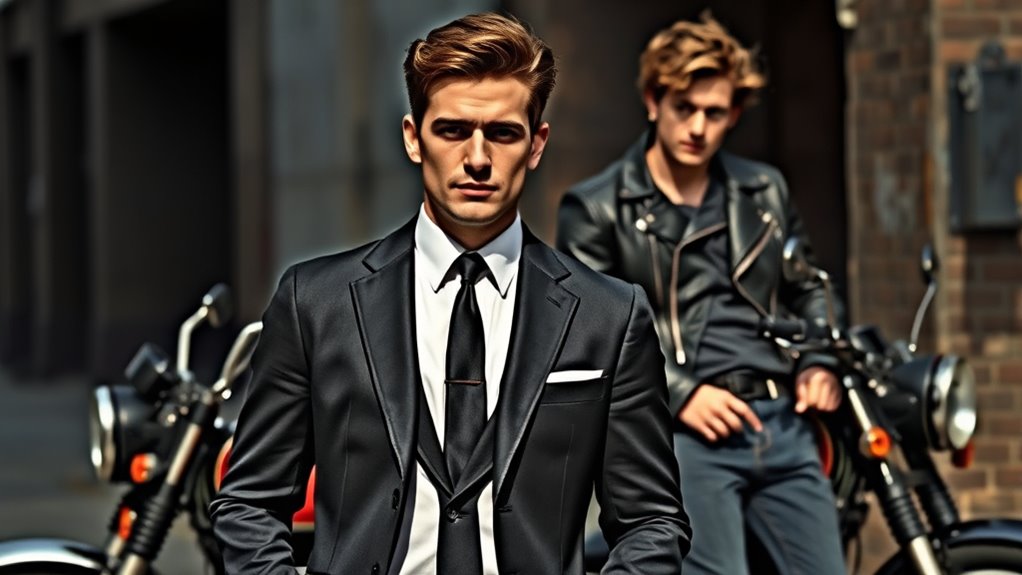
Have you ever wondered how fashion became a tool for expressing rebellion? During the 1950s and 1960s, men’s style shifted from tradition to a statement of individuality. You’d see sharply tailored suits from Savile Row giving way to more daring, unconventional looks. The youth pushed boundaries with bold choices, embracing freedom and nonconformity. This era saw:
Men’s fashion in the 1950s and 1960s became a bold statement of individuality and rebellion.
- Influences from jazz and rock culture, with leather jackets and skinny ties
- The rise of mod fashion, featuring slim-fitting suits and bold patterns
- Eastern influences like Nehru jackets and relaxed silhouettes
- Accessories such as beaded necklaces and rebellious hairstyles
- The evolution of masculinity ideals, challenging traditional notions and embracing a more expressive and diverse fashion identity.
Your wardrobe became a reflection of social change, challenging the old notions of masculinity and embracing a new, expressive spirit.
The Rise of Casual Style From the 1970S to the 1990S

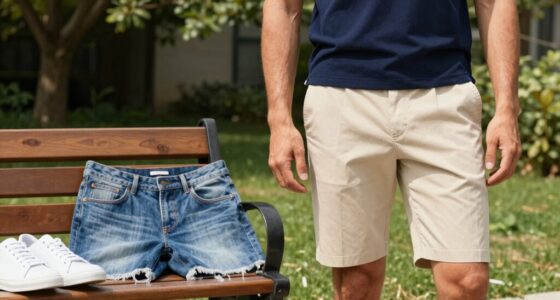
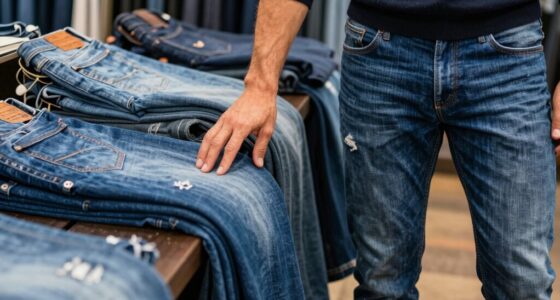
From the 1970s to the 1990s, men’s fashion shifted dramatically toward casualwear, reflecting broader cultural changes and a move away from formal standards. You start to see denim becoming a staple, with jeans symbolizing rebellion and comfort. Fringe jackets, tie-dye shirts, and relaxed fits define the relaxed vibe of the 70s, while the 80s introduce bold colors, oversized shirts, and athletic-inspired styles like tracksuits. The 90s bring minimalism with simple T-shirts, baggy jeans, and sneakers, emphasizing comfort and individual expression. You notice that fashion no longer demands strict adherence to tradition; instead, it celebrates personal style, practicality, and a laid-back attitude. This era marks a significant break from formal attire, shaping the casual wardrobe we still embrace today.
The Modern Era: Personal Expression and Global Trends
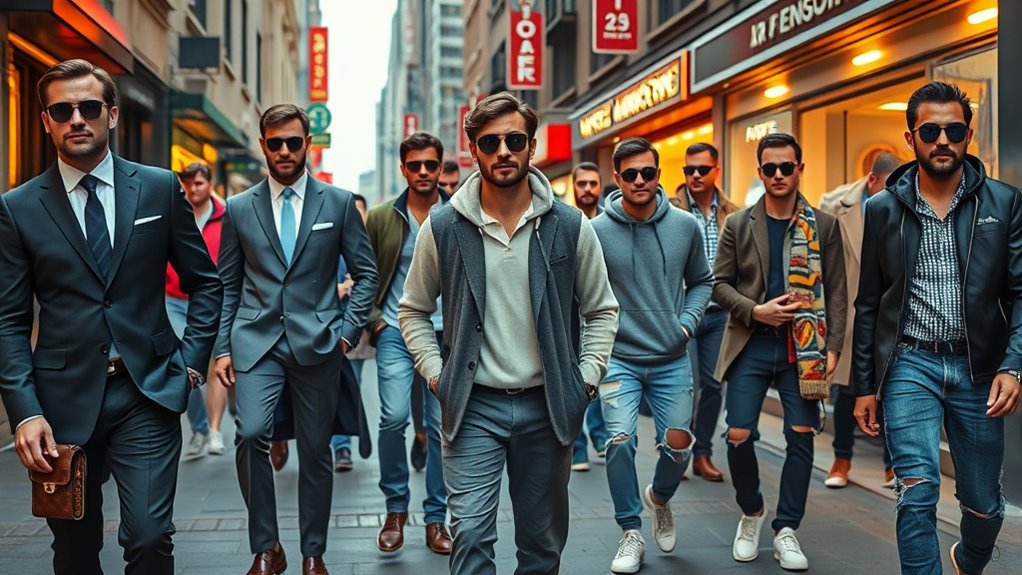
In the modern era, men’s fashion has become a dynamic canvas for personal expression, driven by the rapid exchange of ideas through global connectivity. You now mix styles from different cultures, embracing diversity and individuality. Trends spread instantly online, inspiring you to experiment boldly. Global influences merge seamlessly, creating unique looks that break traditional boundaries. You might incorporate:
Men’s fashion today is a bold blend of global influences, embracing diversity, individuality, and boundary-breaking style.
- Streetwear staples like hoodies and sneakers with formal pieces.
- Cultural elements such as African prints or Asian-inspired silhouettes.
- Sustainable fabrics and eco-conscious designs reflecting values.
- Gender-fluid styles that challenge conventional norms.
This era empowers you to redefine masculinity and style on your terms. Fashion isn’t just about appearance; it’s a statement of identity, values, and creativity in a interconnected world.
Frequently Asked Questions
How Did Men’s Fashion Reflect Social Status Historically?
You see, men’s fashion has long been a mirror of social status. Historically, wearing luxurious fabrics, tailored suits, and accessories like top hats or feathered broad-brimmed hats signaled wealth and power. During different eras, specific styles like Victorian frock coats or 1950s bespoke suits distinguished social classes. Today, brand names and designer labels continue that tradition, subtly indicating your social standing through your clothing choices.
What Influences Led to the Shift From Formal to Casual Menswear?
You see, the shift from formal to casual menswear was driven by social changes like youth culture, economic prosperity, and technological advances. As people embraced individual expression and comfort, fashion adapted accordingly. The influence of music, protests, and the internet encouraged men to choose styles that reflect personality over tradition. This evolution made menswear more accessible, practical, and diverse—breaking away from strict norms to suit modern lifestyles.
How Did Military Uniforms Impact Everyday Men’s Fashion?
Military uniforms have profoundly influenced everyday men’s fashion by introducing practical, durable designs like trench coats, combat boots, and khaki. You’ve probably noticed how these styles made their way into civilian clothing, emphasizing functionality and a rugged look. This military aesthetic became popular among men seeking versatile, comfortable attire, especially during wartime and post-war periods, pushing fashion toward more utilitarian yet stylish options.
In What Ways Did Youth Culture Challenge Traditional Menswear Norms?
You see, youth culture gently nudged traditional menswear norms, encouraging more relaxed, expressive styles. You might find yourself embracing bold patterns, vibrant colors, or even unconventional accessories like beaded necklaces and loose silhouettes. This shift wasn’t about rejection but about personal freedom, blending influences from music and protests. As a result, you now have the freedom to explore fashion that reflects your individuality, breaking away from stiff, formal standards.
How Has Global Culture Shaped Modern Men’s Fashion Trends?
Global culture shapes your modern men’s fashion trends by blending influences from around the world. You now incorporate diverse styles like streetwear from Asia, European tailoring, and African prints, reflecting an interconnected world. This mix encourages personal expression, breaks traditional norms, and fosters inclusivity. You can experiment freely, combining cultural elements to create unique looks that showcase your personality and global awareness, making fashion more dynamic and representative of today’s diverse society.
Conclusion
You’ve seen how men’s fashion has faithfully followed eras, evolving from elegant essentials to expressive ensembles. Today, you can blend bold boundaries with timeless trends, balancing tradition with trendsetting. Embrace your style story, inspired by history’s highlights and modern mindsets. Remember, fashion’s future is in your hands—fearlessly flexible, uniquely you. So step confidently into the style sphere, shaping your signature with spirit, style, and a splash of history!
Fall Picks
fall essentials
As an affiliate, we earn on qualifying purchases.