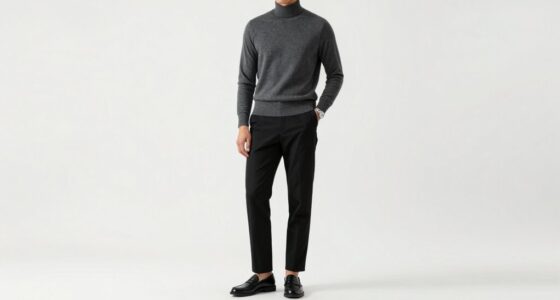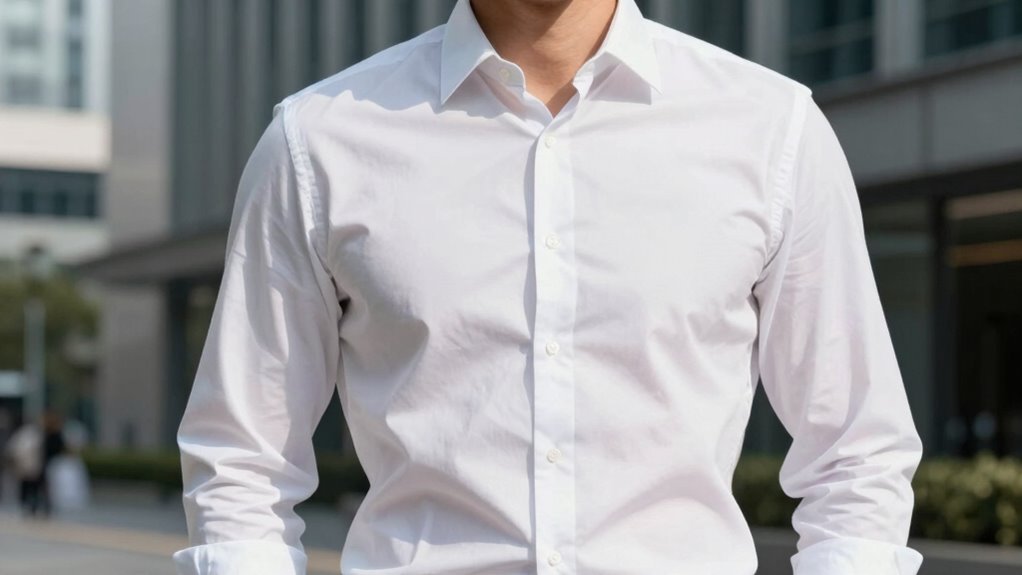

Tucking in your shirt isn’t just about style—it shapes your look, comfort, and confidence. Different methods, like the full tuck, military tuck, French tuck, or knotting, suit various occasions, fabrics, and activity levels. The right tuck keeps your outfit neat longer and boosts your overall appearance. Choosing the best technique depends on your style goals and fabric choice. Keep going, and you’ll discover how to master each tuck for a sharp, polished look that lasts all day.
Key Takeaways
- Different tuck styles, like full, military, French, and front twist, suit various occasions, fabrics, and personal preferences.
- Proper tucking techniques ensure a neat silhouette and prevent fabric shifting or untucking throughout the day.
- Selecting the right fabric and fit is essential for a successful tuck that maintains shape and reduces the need for frequent adjustments.
- Securing the tuck with tools like shirt-stays, elastic bands, or safety pins enhances stability and longevity.
- Regular checks and re-adjustments help keep the tuck neat, especially during active or long wear periods.
The Basic Full Tuck: A Classic Approach

The Basic Full Tuck is the most traditional and polished way to keep your shirt neat and secure. To do it right, put on your underwear first, then your shirt, and finally your pants. Pinch the side seams of your shirt and fold any excess fabric into the rear pleats. Fasten your pants and belt to lock everything in place. This method works best with medium-weight, non-cling fabrics and properly fitted shirts. If your shirt is too loose or short, it might puff out or come untucked. To improve security, use a belt, and consider re-tucking or smoothing your shirt after sitting. Extra buttons or deep hems can also help keep the tuck neat throughout the day. Proper fit and fabric choice are essential for maintaining a neat tuck and preventing slippage.
Achieving a Sleek Silhouette With the Military Tuck
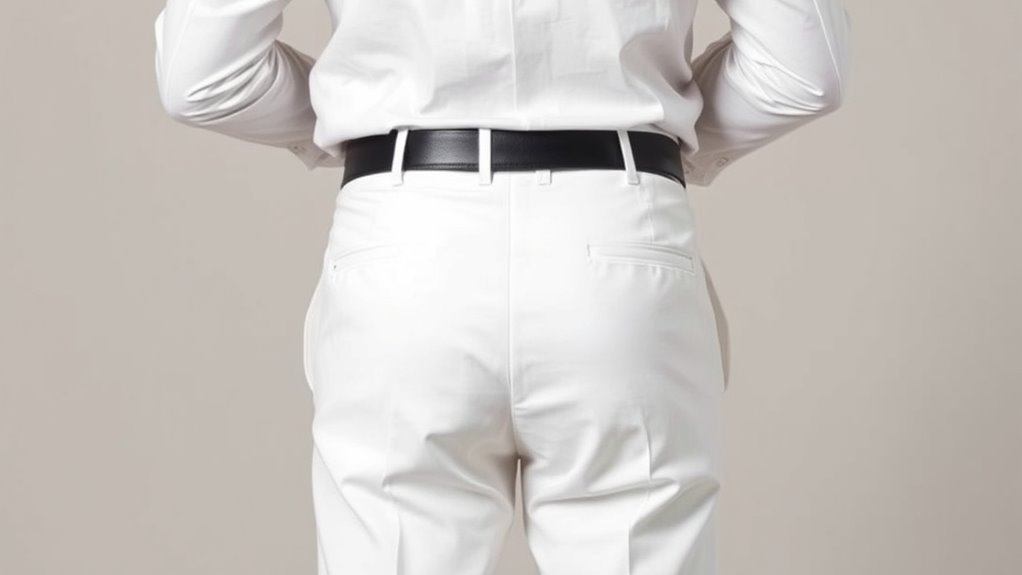
To achieve a sleek silhouette with the military tuck, focus on the precise pinching technique to create sharp, even pleats at your hips. Make sure your fabric and fit are suitable—crisp, structured materials hold the fold better, while softer fabrics may resist. With practice, you’ll master how to distribute fabric evenly for a smooth, tailored look that stays in place. Consistent practice can also help improve your visual and auditory cues, leading to more effective and polished results.
Precise Pinching Technique
Mastering the precise pinching technique is essential for creating a sleek, tailored silhouette with the military tuck. Start by standing in front of a mirror, then pinch the fabric at each side seam, just behind the hips. Use your fingertips to gather the excess fabric, folding it backward into sharp, even pleats. Keep the pinch firm but controlled, ensuring the fabric remains smooth and symmetrical. Once the pleats are formed, fasten your pants and belt to lock everything in place. Focus on maintaining consistent tension as you fold, avoiding bunching or misalignment. Practicing this technique regularly will help you develop muscle memory for a crisp, sharp look that enhances your silhouette and exudes confidence.
Fabric and Fit Tips
Achieving a sleek silhouette with the military tuck hinges on choosing the right fabric and guaranteeing proper fit. Opt for crisp, structured fabrics like cotton or linen that hold the pleats and sharp folds well, avoiding overly soft or stretchy materials that can resist creasing or cause bulk. Your shirt should fit comfortably without being too loose or tight; a well-sized shirt prevents excess fabric from puffing out or pulling. Guarantee the side seams align smoothly when pinched, and the shirt length reaches just past the waistband for a clean tuck. If the fabric is too flimsy, consider a light starch or fabric spray to enhance crispness. Proper fit and fabric choice are key to maintaining a polished, streamlined military tuck throughout the day. Additionally, understanding projector technology can help you select the best setup for your home cinema, ensuring optimal image quality and viewing experience.
Securing Your Shirt With the Underwear Tuck
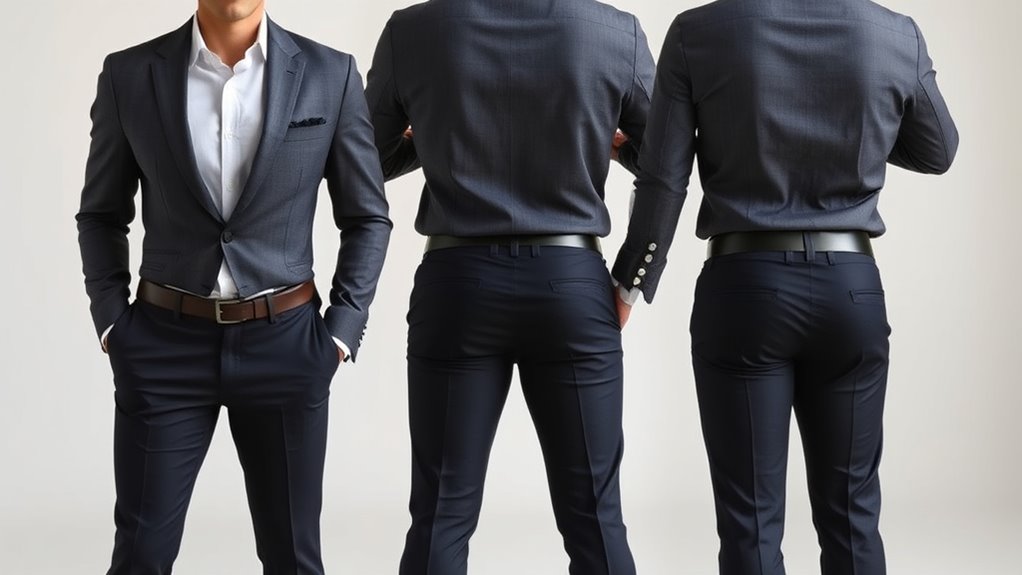
The underwear tuck is a simple yet highly secure method to keep your shirt tucked in during long shifts or active days. To start, put on your underwear, then carefully tuck your shirt into the waistband, smoothing it evenly. Pull your pants on over the tucked shirt, ensuring the fabric stays in place. Fasten your pants and belt to lock everything securely. This technique works best with longer shirts and snug-fitting underwear that creates friction, preventing the shirt from slipping out. Keep in mind, bulky underwear or low-rise pants can reduce effectiveness. The underwear tuck offers excellent retention through movement, making it ideal for physically demanding tasks. However, adjusting might require full removal of pants and underwear, especially for re-tucking during breaks. For added security, choosing a trusted garment can enhance the effectiveness of this tuck.
Styling With the French Tuck and Front Twist
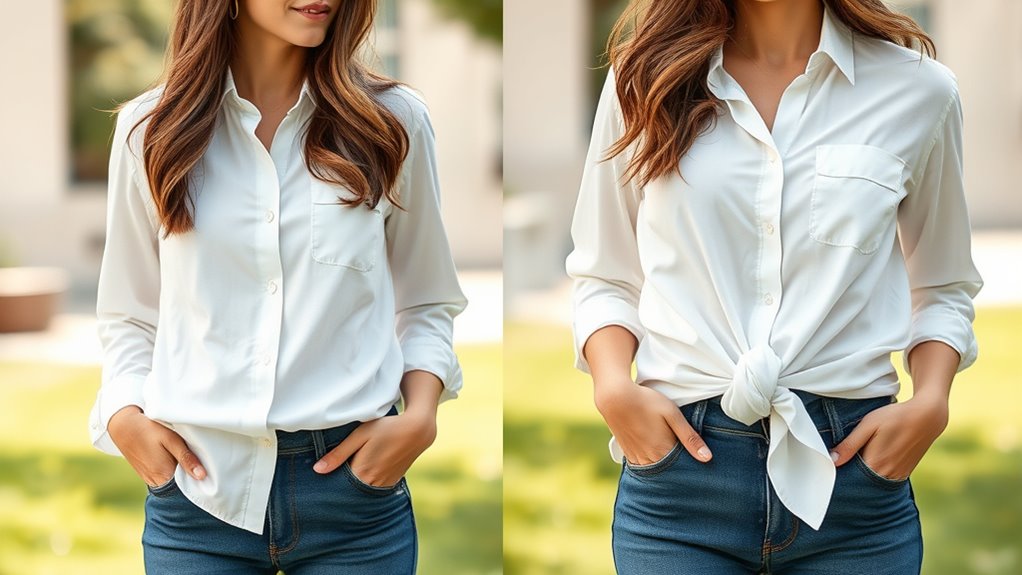
Styling with the French tuck and front twist offers a relaxed yet polished way to add visual interest to casual outfits. The French tuck involves inserting just the front center of your shirt into your waistband, leaving the sides out for a laid-back yet chic look. It accentuates your waist without overdoing it. The front twist, on the other hand, involves twisting the fabric at the center front and tucking it back into the waistband, creating a casual blouseing effect. Both techniques work best with lightweight, flowy fabrics that drape naturally. They’re ideal for high-waisted bottoms and can instantly elevate simple jeans or skirts. Keep in mind, these styles are less secure than full tucks and may require occasional readjustment throughout the day. Incorporating fabric selection can enhance the ease and appearance of these styling techniques.
Casual Looks With Knotting and Tying Techniques

Knotting and tying techniques offer a versatile way to create casual, comfortable looks while adding personal flair to your outfit. You can tie your shirt’s front tails into a simple square knot to shorten the length and create a relaxed vibe. For a more playful style, try the butterfly knot, where you tie the tails into a bow or crossover, then tuck or let the ends hang loosely. These techniques work best with lightweight or medium-weight cotton shirts with long tails. They help define your waist and add visual interest without formal rigidity. Keep in mind that knots can add bulk and may need occasional readjustment during the day. This approach is perfect for oversized shirts or when you want a laid-back, stylish appearance effortlessly. Understanding decoding slang can also inspire more creative ways to describe your personal style and outfit choices.
Enhancing Tuck Longevity With Practical Fixes

To keep your shirt tucked in all day, using shirt-stays can make a big difference by anchoring the shirt to your socks or underwear. Friction enhancers like safety pins or clear elastics can add extra grip without much fuss. Adjusting your hem length and securing it properly guarantees your tuck stays neat and prevents it from slipping out during movement. Incorporating proper clothing materials can also improve tuck stability by reducing fabric slippage and maintaining the shirt’s shape throughout the day.
Use Shirt-Stays Effectively
Shirt-stays are one of the most effective tools for keeping your tuck neat and secure throughout the day. To maximize their benefits, guarantee they’re adjusted properly: the straps should be tight enough to hold your shirt without restricting movement, but not so tight that they cause discomfort. Position the straps from your shirt’s hem or side seams down to your socks or undergarments, depending on the design. Regularly check and readjust during the day to prevent slipping. Proper digital asset management ensures your shirt-stays remain effective and your wardrobe stays organized.
- Use high-quality, adjustable shirt-stays for a secure fit
- Attach straps evenly to avoid uneven tension
- Guarantee straps are taut but comfortable around your legs
- Replace worn or damaged clips promptly
- Pair shirt-stays with a well-fitted belt for added security
Employ Friction Enhancers
Friction enhancers are practical tools that help keep your shirt tucked in longer by increasing the grip between the fabric and your waistband. They work by creating more resistance, preventing slippage during movement or sitting. Common options include clear elastic bands, extra trouser buttons, or safety pins placed discreetly. For example, pin a small elastic loop around the shirt tail and waistband to hold fabric in place. Using these fixes minimizes untucking and reduces the need for frequent adjustments. Be mindful of comfort—over-tightening can cause discomfort. With the right friction enhancers, you’ll enjoy a neater look throughout your busy day. Additionally, selecting properly fitted clothing can naturally help maintain your shirt’s position and reduce the need for additional fixes.
Adjust Hem for Security
Adjusting your hem length can considerably boost tuck security by ensuring the shirt stays in place throughout the day. When your shirt ends just below your belt or waistband, it’s less likely to pull out or shift. Ensuring a proper fit helps maintain a smooth, polished look. You can also tailor the hem for a more secure tuck or fold excess fabric into your waistband for added friction. Additionally, choosing shirts with adjustable or deep hems can improve longevity. Properly sizing your shirt prevents bunching or puffing that can loosen the tuck. Ultimately, pairing your shirt with a belt or belt with a tight buckle can help keep the hem in place longer.
- Opt for shirts with deep or adjustable hems
- Tuck excess fabric into waistband for friction
- Tailor shirts for a precise fit at the hips
- Use a belt to add pressure and hold the hem
- Choose shirts that reach just past your beltline
Fabric Choices and Fit Tips for Tucking Success

Choosing the right fabric and fit is essential for a tuck that stays neat and looks sharp. Medium-weight, non-cling fabrics like poplin, broadcloth, or twill work best because they hold their shape without pulling or puffing. Avoid overly stiff or very soft fabrics, which can either resist smoothness or create bulk. Make sure your shirt fits well—neither too loose nor too tight—so there’s no excess fabric that can shift or bunch up. Proper sizing prevents pulling at the seams or creating unsightly bulges. Additionally, a slightly longer shirt helps maintain a clean tuck, especially when sitting or moving. When fabric and fit align, your tuck stays tidy longer, reducing the need for frequent adjustments.
When and Why to Choose a Specific Tuck Method
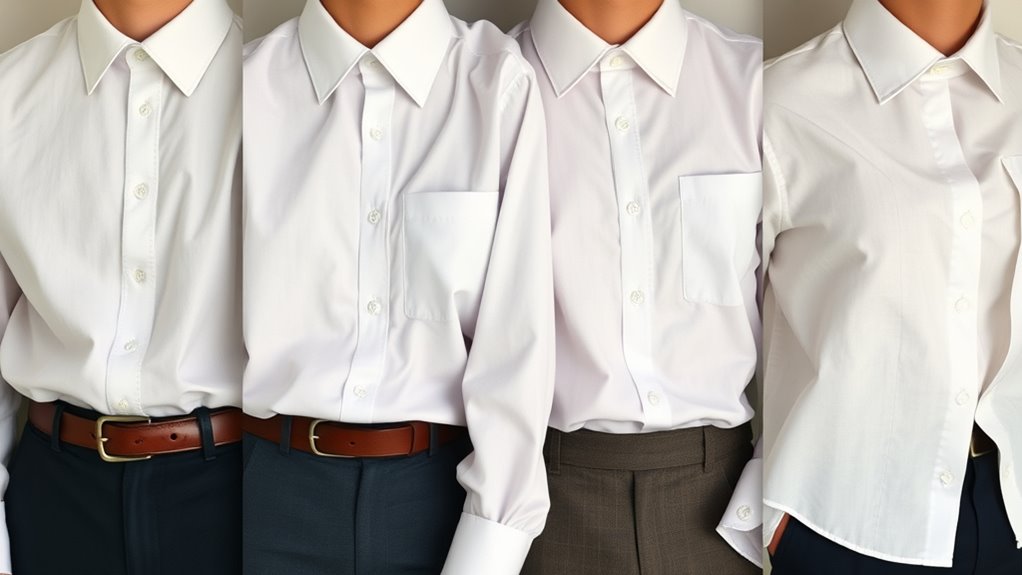
Choosing the right tuck method depends on whether you’re aiming for a formal or casual look, as each style offers different levels of neatness and comfort. Your shirt’s fabric and fit also influence which technique will hold best and look sharp throughout the day. Additionally, consider your activity and movement needs—some tucks stay secure during active moments, while others prioritize ease and flexibility.
Formal Vs Casual Looks
When aiming for a polished, professional appearance, the full tuck is your best choice because it creates a smooth, neat silhouette that works well with dress shirts and suits. For formal settings, this method emphasizes cleanliness and structure, making your look sharp and authoritative. Casual looks, however, often benefit from less structured tucking styles like the French tuck or knotting, which add relaxed charm and personality.
- Formal occasions favor full tucks for a tidy, uniform appearance.
- Casual outings allow for French tucks or knots to add relaxed flair.
- Full tucks stay neat longer, ideal for business environments.
- Casual styles are more forgiving of loose or partially tucked shirts.
- Consider the setting, dress code, and your comfort when choosing the tuck method.
Shirt Fabric & Fit
The fabric and fit of your shirt directly influence which tuck method will work best and how long it will stay in place. Medium-weight, non-stretch fabrics like cotton or linen hold tucks well and stay neat longer. Soft, stretchy knits tend to resist sharp pleats and can cause bulging or slipping, making them unsuitable for military or full tucks. Fit also matters: a properly sized shirt that isn’t too loose or tight will tuck smoothly without bunching or pulling. If your shirt is too short, full tucking may cause it to pull out or puff at the waist. Conversely, a longer shirt offers more security and a cleaner silhouette. Always choose a fabric and fit that complements your tuck style for a polished, lasting look.
Activity and Movement Needs
If your day involves a lot of movement or physical activity, selecting the right tuck method becomes essential to maintaining a neat appearance and comfort. Different tucks offer varying levels of security and flexibility, so choose based on your activity type. For high-intensity or dynamic tasks, the underwear (anchor) tuck or use retention aids like shirt-stays to prevent untucking. For casual or less active days, a French tuck or knotting techniques provide a relaxed look without sacrificing control. Consider fabric stiffness; crisp fabrics hold pleats better, while stretchy materials may require more secure methods. Also, think about the duration—long shifts may need secure full tucks, while quick outings suit more relaxed styles.
- High-movement activities: underwear tuck, shirt-stays
- Casual outings: French tuck, knotting techniques
- Long shifts: full tuck with retention aids
- Soft fabrics: avoid sharp pleats, opt for relaxed tucks
- Quick errands: casual knot or twist tucks
Common Mistakes and How to Avoid Them
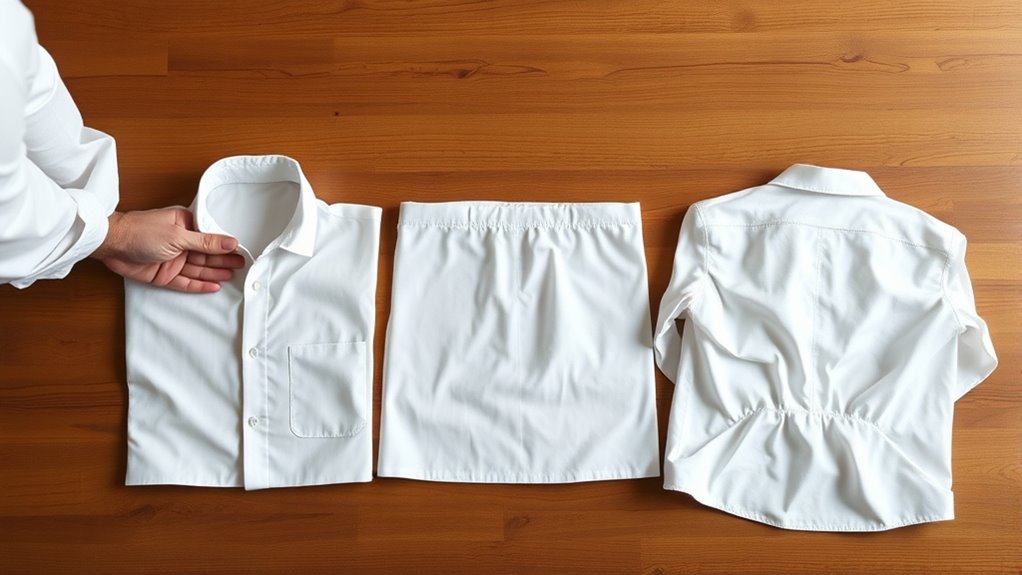
Many common mistakes in tucking your shirt stem from neglecting proper technique or choosing the wrong method for your outfit and fabric. For example, using a full tuck with flimsy or clingy fabrics can cause bulges or unevenness. Failing to smooth out wrinkles before securing your tuck leads to a sloppy look. Over-tightening belts or pants can restrict movement and cause discomfort, pulling the fabric out of place. Another mistake is neglecting to re-adjust after activities like sitting or bending, which can leave your shirt looking untidy. To avoid these issues, choose the right tuck style for your fabric and occasion, ensure your shirt fits well, and make small adjustments throughout the day. Proper technique and awareness keep your tuck neat and sharp.
Tips for Maintaining a Sharp Tuck Throughout the Day

Keeping your shirt tucked neatly all day requires regular adjustments and strategic techniques. To maintain a sharp look, stay mindful of your posture and avoid unnecessary movements that can loosen your tuck. Using the right tuck method, like a full tuck or military tuck, helps lock in your shirt better. Consider adding retention aids like shirt-stays or extra buttons for extra security. Regularly check your waistband and smooth out any fabric that shifts during the day. When sitting or bending, re-tuck and straighten your shirt promptly to prevent wrinkles or puffiness.
- Use shirt-stays or elastic anchors for extra hold
- Keep a small safety pin or clip handy for quick fixes
- Re-adjust your belt and waistband regularly
- Choose shirts with proper length and fabric stiffness
- Practice your tuck technique to improve consistency
Frequently Asked Questions
Which Tuck Method Works Best for Very Stretchy or Clingy Fabrics?
For very stretchy or clingy fabrics, the military (pinch-and-fold) tuck works best. You pinch the side seams and fold the fabric backward into sharp pleats, then fasten your pants and belt to hold everything in place. This method creates a slim, tailored silhouette and helps prevent the fabric from pulling or puffing out. Just make sure your fabric is crisp enough to hold the pleats and avoid excess stretch.
How Do I Prevent My Tuck From Loosening During Long Activities?
Did you know that a well-secured tuck can last up to 8 hours? To prevent your tuck from loosening during long activities, use retention aids like shirt-stays or extra trouser buttons. Tuck your shirt tightly, especially at the sides, and consider a belt with good tension. For extra security, try a belt with grip or a pinch-and-fold method, which helps keep everything in place no matter how active you are.
Can I Combine Different Tuck Styles for a Unique Look?
Yes, you can mix tuck styles to create a unique look. For example, try a front French tuck with a military pinched-and-folded side for a casual yet tailored vibe. You might combine a full tuck with a knot at the hem for added flair. Play with contrasting fabrics and tuck techniques to express your style, but guarantee the combined method feels comfortable and stays secure throughout your day.
What Are the Signs My Tuck Needs Re-Adjustment?
If your tuck needs re-adjustment, look for signs like sagging fabric, uneven hems, or visible bunching. Feel for looseness around your waist, notice your shirt pulling out, or see creases forming where the fabric isn’t lying flat. Detect the shift in your silhouette, observe the appearance of wrinkles, or experience discomfort from fabric slipping. These cues indicate it’s time to tidy up your tuck for a sharp, neat look.
How Do I Choose the Right Tuck Method for Formal Versus Casual Settings?
To choose the right tuck for formal versus casual settings, consider your outfit’s level of polish. For formal occasions, go with a full or military tuck for a sleek, structured look that stays neat. For casual wear, opt for a French tuck, knotting, or a loose front tuck to create a relaxed vibe. Adjust based on your fabrics and comfort, ensuring your style matches the occasion’s tone.
Conclusion
Mastering different tucking techniques lets you switch up your style effortlessly, making your look sharp and put-together. Whether you’re going for a sleek military tuck or a casual knot, choosing the right method guarantees you stay polished all day long. Remember, a well-tucked shirt is the finishing touch that can turn “just okay” into “wow.” So don’t put off what you can tuck in today—small details often make the biggest difference.