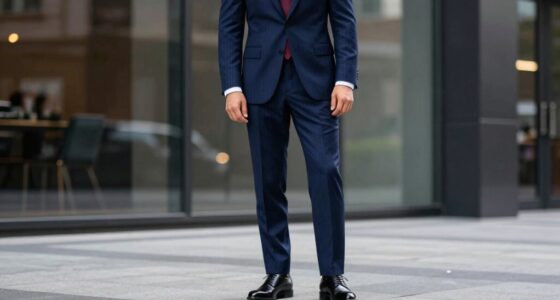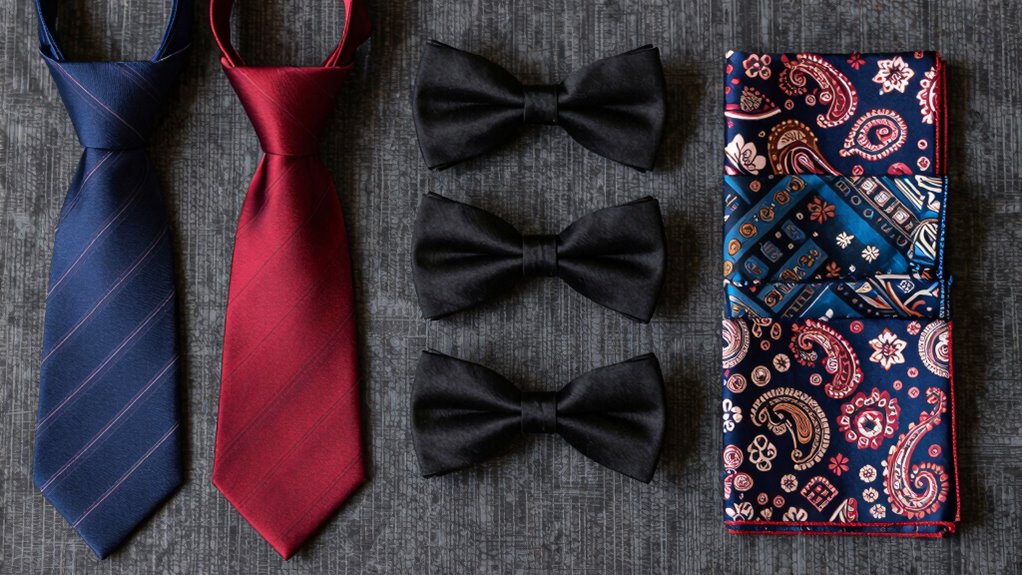
Matching your ties, bowties, and pocket squares becomes easy when you coordinate colors, patterns, and textures with your outfit and occasion. Opt for complementary hues and balance bold prints with subtle ones to avoid clashing. Keep metal tones in harmony with your skin undertones for a polished look. Focus on proportion and style to guarantee your accessories enhance your outfit. Keep exploring to discover how to master every detail for a cohesive, stylish appearance.

Get your wardrobe favorites delivered free — and shop member deals
- Fast, free delivery on millions of items
- Access to Prime Big Deal Days deals on October 6–7
- Prime Video, Amazon Music and more included
Key Takeaways
- Match pocket square colors and patterns with your shirt or suit for cohesive coordination.
- Choose tie and bowtie styles and fabrics based on occasion, balancing formality and personality.
- Ensure patterns and textures complement each other; pair large with small patterns for visual harmony.
- Coordinate metal tones with skin undertones and outfit metals for a polished look.
- Maintain balance and simplicity in accessories to create a refined, stylish appearance.
As an affiliate, we earn on qualifying purchases.
Understanding Color Coordination for Men’s Accessories
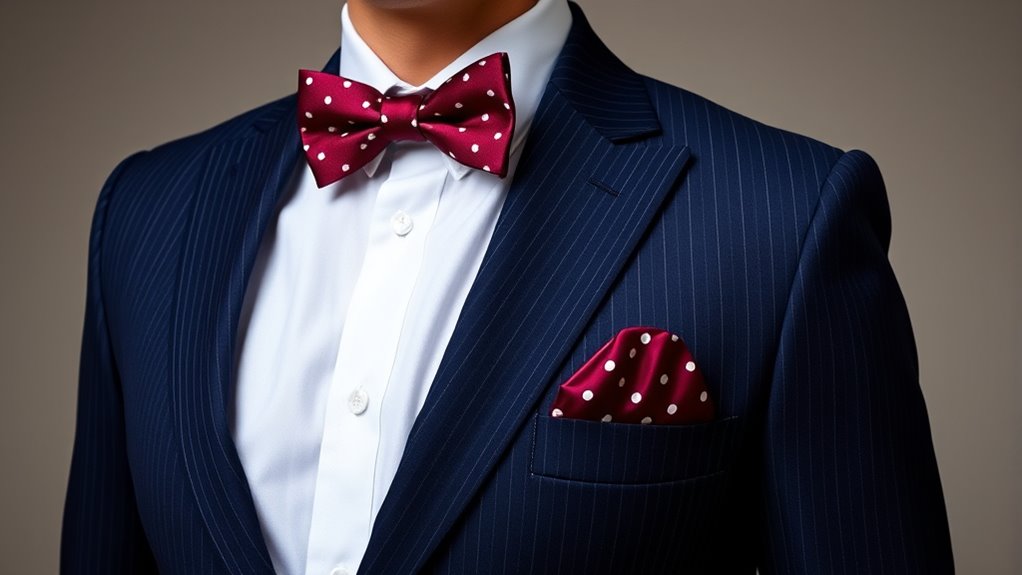
Understanding color coordination for men’s accessories is essential to creating a polished and cohesive look. You want your accessories to complement your outfit without clashing or overwhelming it. Start by matching your pocket square’s color family to your shirt or suit for consistency, but add one contrasting accent color to create visual interest. When choosing a tie, match it to your shirt first, ensuring the pattern and scale work well together. The pocket square should serve as a secondary accent, not an exact match of the tie color. Also, keep your belt and shoes in the same tone—black with black, brown with brown—to maintain harmony. Finally, coordinate metal tones across accessories, choosing warm metals for warm skin tones and cool metals for cooler complexions. Incorporating color harmony principles can further enhance your overall look and ensure all accessories work seamlessly together.
As an affiliate, we earn on qualifying purchases.
Selecting the Right Tie for Every Occasion
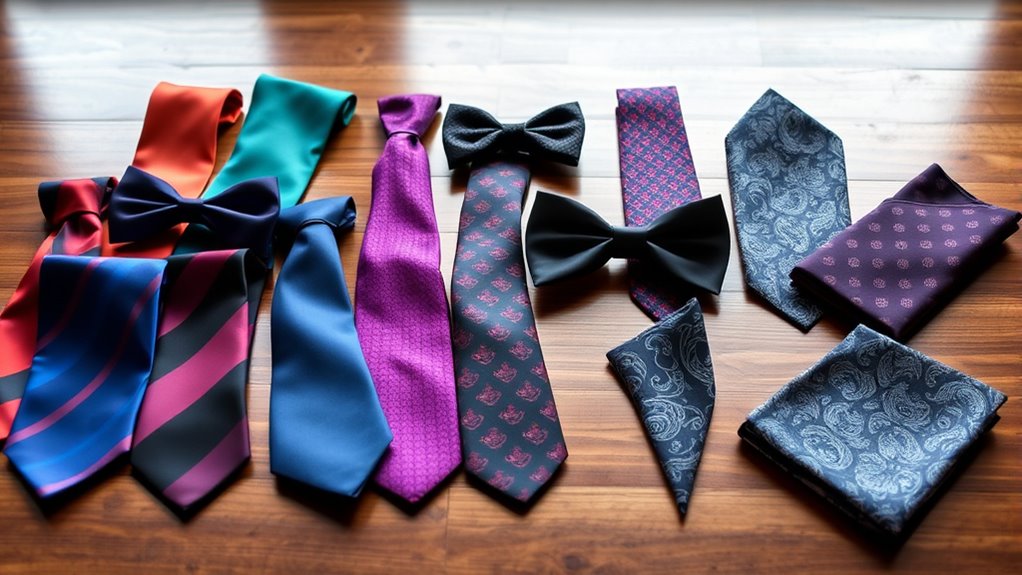
Choosing the right tie depends on the occasion and your outfit’s formality. For formal events, opt for silk and classic knots that complement your collar style, while casual settings allow knit or textured ties with relaxed knots. Always guarantee your tie’s width and knot size balance with your collar and suit lapels for a sharp, cohesive look. Additionally, considering the color harmony between your accessories and clothing can elevate your overall appearance. Incorporating free floating principles can also help you achieve a more dynamic and personalized style, tailoring your accessories to reflect your unique personality.
Formal vs. Casual Styles
Have you ever wondered how to pick the right tie for any occasion? The key is matching your accessories to the event’s formality level. For formal settings like business meetings or black-tie events, choose sleek silk ties in solid or subtle patterns, paired with a white shirt and minimal accessories. Opt for a Windsor knot to add sophistication. For casual outings, go for textured knit, wool, or cotton ties with relaxed patterns or bold colors. Pair these with open collars or less structured shirts. Keep the overall look balanced: avoid overly flashy accessories in formal environments, and don’t shy away from expressive styles in casual settings. Matching your tie choice to the occasion guarantees your style is appropriate, polished, and confident.
Knot and Collar Compatibility
Selecting the right knot for your tie depends heavily on your collar style and the occasion. A narrow, point collar pairs well with a slim four-in-hand knot, perfect for casual or business settings. Spread collars look best with a fuller Windsor knot, ideal for formal events. For a tab or button-down collar, a simple four-in-hand offers a neat look. Consider this guide:
| Collar Type | Knot Style | Occasion |
|---|---|---|
| Narrow Point | Four-in-hand | Casual, Business |
| Spread | Windsor | Formal, Evening |
| Button-down | Four-in-hand | Smart casual |
| Club or Tab | Small knot | Business casual |
Matching knot size and collar shape ensures a balanced, stylish appearance suited to any event.
men's bowtie and pocket square combo
As an affiliate, we earn on qualifying purchases.
As an affiliate, we earn on qualifying purchases.
How to Match a Bowtie With Your Outfit
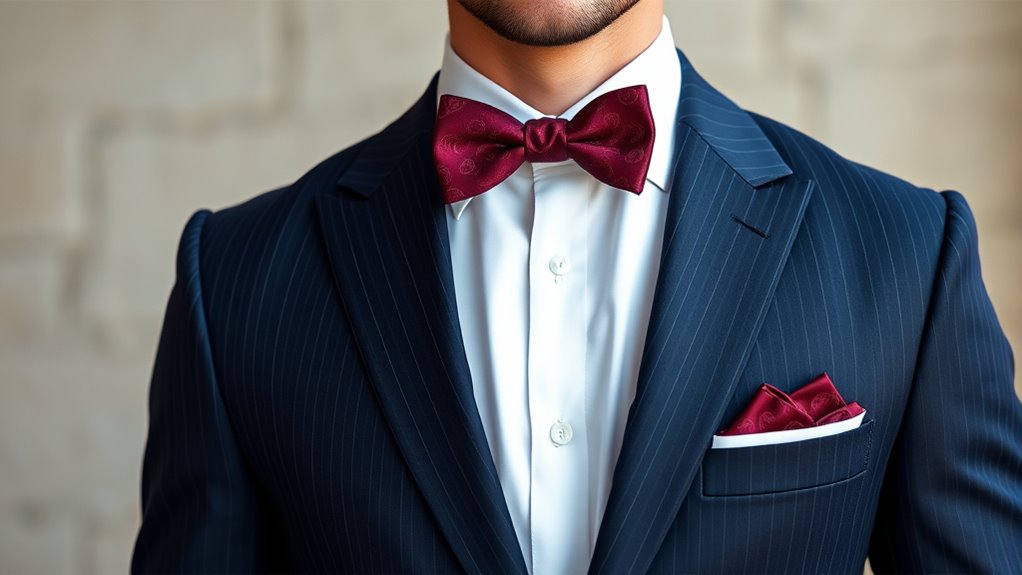
Matching a bowtie with your outfit hinges on understanding the occasion and the overall style you aim to achieve. For formal events, opt for a silk, satin, or velvet bowtie in classic colors like black, navy, or deep burgundy. These understated choices exude sophistication and pair seamlessly with tuxedos or evening wear. For casual or creative settings, experiment with patterned or textured bowties in linen, cotton, or wool, choosing colors that complement your shirt and suit. Keep the style and scale of the bowtie in harmony with your collar and lapel width. Remember, a well-matched bowtie enhances your look without overpowering it. Balance formality with color and fabric choices to create a cohesive, polished appearance that suits the event and your personal style.
men's coordinating tie and pocket square
As an affiliate, we earn on qualifying purchases.
As an affiliate, we earn on qualifying purchases.
Pocket Square Styles and Folding Techniques
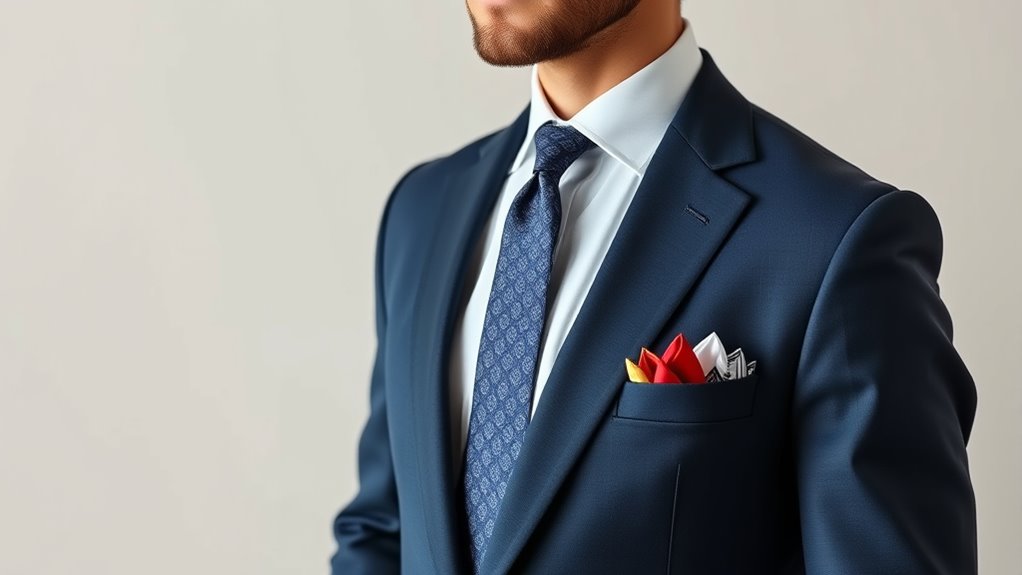
Pocket square styles and folding techniques add personality and polish to your outfit, allowing you to express your individual taste while maintaining proper formality. For formal occasions, opt for a plain white silk or linen pocket square folded in a presidential or flat fold for a sleek, refined look. Casual settings invite patterned or colored squares, folded in puff or puff-variant styles for a relaxed vibe. When choosing a fold, consider the occasion and your suit’s style—smaller, tighter folds suit business attire, while looser, more creative folds fit casual looks. Keep the pocket square proportionate to the pocket size to avoid imbalance. Match fabric weights to the season: silk or linen for summer, wool blends for winter. Proper pocket square folding techniques can elevate your overall style, ensuring a cohesive and polished appearance. Using the right matching accessories can further enhance your look and create a harmonious ensemble. Paying attention to rug quality assessment can also inspire you to select accessories that complement your overall aesthetic. Being aware of fabric compatibility and how different textures and weights interact can help you select the most suitable options for each outfit. Incorporating proper skin protection tips from tanning advice can also serve as inspiration for choosing accessories that protect and enhance your skin’s appearance. Combining these tips ensures your pocket square complements your entire look effortlessly.
Coordinating Metals and Hardware for a Cohesive Look
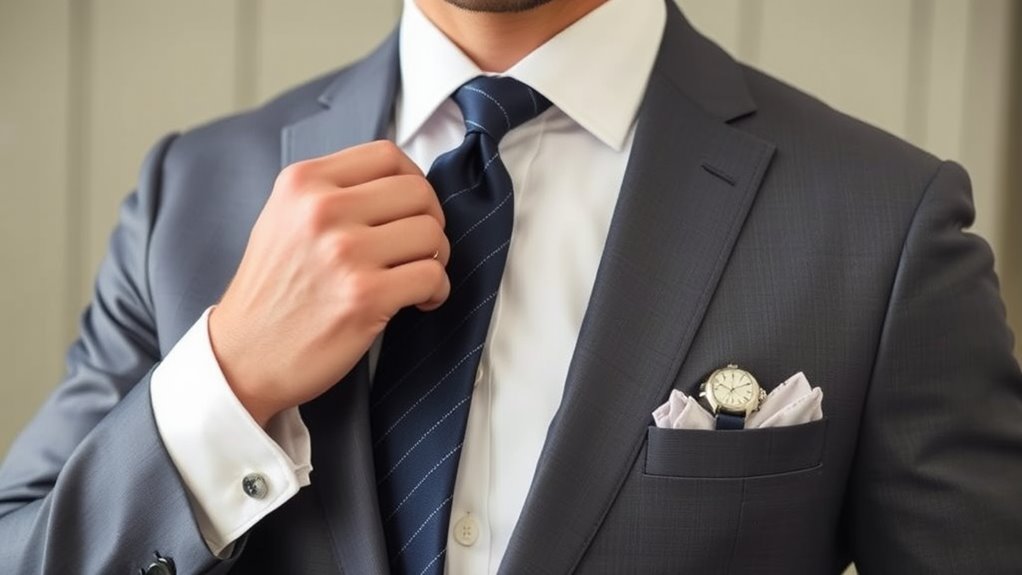
To achieve a polished and harmonious appearance, you should coordinate the metal finishes of all your visible accessories. Consistency creates a unified look that subtly enhances your outfit’s sophistication. Match your watch case, cufflinks, tie bar, belt buckle, and lapel pin in the same metal tone—gold, silver, or black. When mixing metals, introduce a bridging element, like two-tone cufflinks, to avoid dissonance. Consider the overall style: polished metals suit formal settings, while matte or brushed finishes work well casually. Here’s a visual guide:
| Metal Tone | Accessories | Style Tip |
|---|---|---|
| Gold | Watch, cufflinks, lapel pin | Warm skin tones, evening events |
| Silver | Tie bar, belt buckle, cufflinks | Cool skin tones, versatile, daytime |
| Black | Accessories with matte or polished finish | Modern, minimal, adaptable |
Additionally, understanding metal matching principles can help you make more confident pairing choices.
Pattern and Scale Matching Tips

When coordinating patterns and scale in your accessories, it’s essential to create visual harmony without overwhelming your outfit. Pair large-patterned ties with small or solid shirts to prevent clutter. Use pocket squares to pick up a color from your tie, but avoid mirroring the pattern exactly—layering subtlety adds interest. Keep the width of your tie proportional to your lapel and collar, ensuring balance. Match the fold size of your pocket square to your pocket’s size and the overall outfit’s scale. Mixing textures, like a silk tie with a linen pocket square, adds depth without conflict. For striped or checked suits, opt for accessories with simpler patterns or solids to maintain a clean, cohesive look. Aim for harmony, not competition. Pattern and scale matching is crucial for achieving a polished appearance. Incorporating Italian fashion principles, such as refined subtlety and attention to detail, can elevate your style further. Additionally, paying attention to paint sprayer zone concepts, like appropriate tip sizes and proper filtration, can be a metaphor for balancing your accessories—ensuring each element works together seamlessly for a sophisticated overall effect. Recognizing the importance of consistent scale helps prevent visual clutter and maintains elegance. Paying close attention to proportionality ensures that each accessory complements your overall look without competing for attention.
Formal vs. Casual Accessory Pairings

When choosing accessories, matching their formality level to the occasion is key to pulling off a cohesive look. You’ll want to take into account pattern and texture harmony—opting for simpler, more refined details for formal events and relaxed, textured pieces for casual outings. By aligning these elements, you ensure your accessories complement your overall style and setting seamlessly.
Formality Level Alignment
Matching accessories appropriately depends on the event’s formality level, ensuring your look is both polished and suitable. For formal occasions, opt for sleek, understated pieces like a white silk pocket square, a simple silk tie, and polished metal accessories that match in tone. Avoid bold patterns or oversized cufflinks. For casual events, feel free to experiment with patterned or colored pocket squares, textured ties, and more expressive metals. Your accessories should complement the overall vibe—refined and elegant for formal settings, relaxed and fun for casual gatherings. Keep the level of formality consistent across all accessories to avoid clashing styles. When in doubt, lean towards simplicity for formal events and add personality in casual environments. Proper alignment between your accessories and the occasion guarantees a cohesive, stylish appearance.
Pattern & Texture Harmony
Ever wondered how to seamlessly blend patterns and textures in men’s accessories for different occasions? Mastering pattern and texture harmony involves balancing boldness and subtlety. Here’s how you can do it:
- Mix large-patterned ties with solid or small-patterned shirts to prevent visual overload.
- Pair textured accessories, like linen pocket squares, with smooth silk ties for depth without clashing.
- Keep formal events simple: coordinate polished metals and plain fabrics, while casual settings allow for patterned or textured combinations.
Metal Tones and Skin Undertones: Finding Your Perfect Match
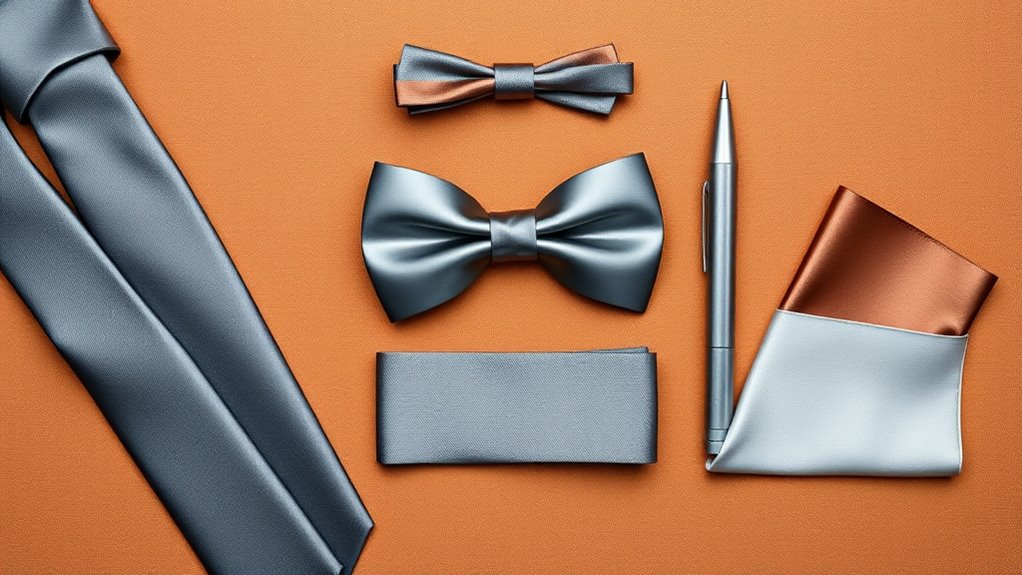
Your skin’s undertone plays a crucial role in choosing metal accessories that enhance your appearance. If your skin has warm undertones—golden, peachy, or yellow hues—opt for golds, bronzes, and warm-toned metals. These tones complement your natural warmth and create a harmonious look. For cool undertones—pink, blue, or red hues—silver, steel, or platinum metals work best, highlighting your cooler complexion. If you have neutral undertones, you can confidently wear both warm and cool metals, giving you greater flexibility. Consider your overall outfit and occasion when selecting metal tones; polished metals suit formal settings, while matte or brushed finishes work well for casual styles. Matching your accessories to your skin’s undertone ensures a cohesive, polished appearance that enhances your natural glow. Additionally, understanding your metal tone compatibility can help you make more confident choices and elevate your overall style. Exploring eco-friendly jewelry options can also add a sustainable touch to your accessories collection while staying fashionable. Being aware of water-resistant and durable materials can also ensure your jewelry maintains its appearance over time, especially if you wear accessories frequently. Incorporating craftsmanship and artistry into your jewelry choices allows you to appreciate the intricate details and unique artistry that make haute couture accessories stand out. Recognizing personal style preferences can help you select accessories that truly reflect your individual taste and personality.
Tips for Achieving a Balanced and Polished Appearance
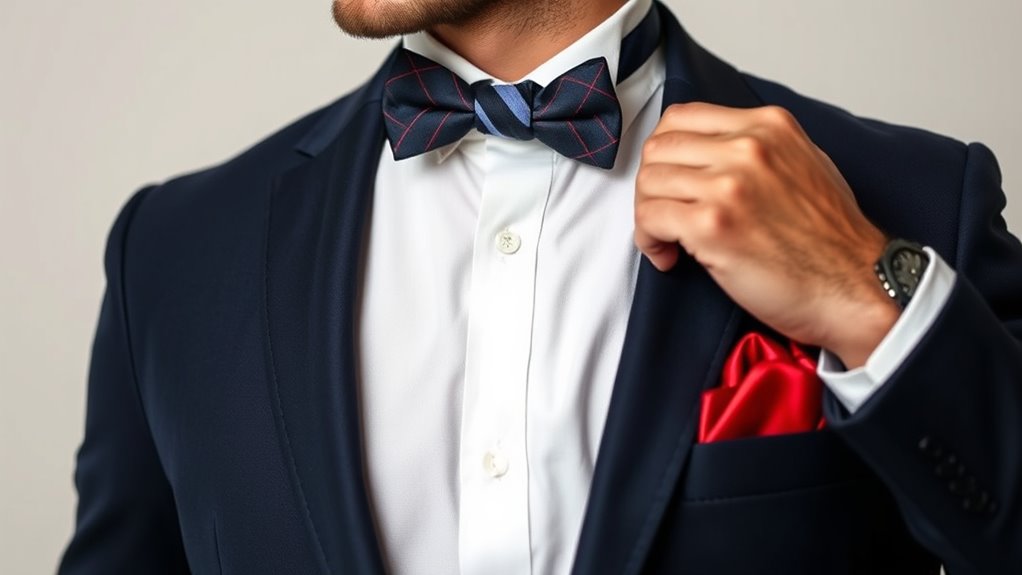
Achieving a balanced and polished look starts with paying attention to proportion and harmony in your accessories. To do this effectively:
- Match sizes and scales – Ensure your tie, pocket square, and lapel widths are proportional. A wide lapel calls for a broader tie, while a slim lapel suits a narrow tie.
- Coordinate colors thoughtfully – Pick a dominant hue and add complementary or accent colors, avoiding exact duplicates. For example, match a navy tie with a light blue pocket square and a subtle contrasting accent.
- Balance textures and metals – Pair smooth silk with sleek metals, and mix matte with shiny finishes carefully. Keep metal tones consistent across accessories to maintain visual cohesion.
Frequently Asked Questions
Can I Mix Different Metal Tones in My Accessories?
You can mix different metal tones in your accessories, but do so deliberately. Introduce a bridging piece, like two-tone cufflinks or a mixed metal watch, to create harmony. Keep the overall look cohesive by balancing shiny and matte finishes, and coordinate metals with your outfit’s formality and color scheme. Avoid random mismatches; instead, aim for intentional contrasts that add visual interest without appearing cluttered.
What’s the Best Pocket Square Fold for a Formal Event?
For a formal event, you’ll want to go with the presidential or flat fold—think of it as the classic, understated gesture of elegance. You fold the pocket square neatly into a crisp, flat rectangle that sits perfectly in your breast pocket, exuding sophistication without drawing too much attention. Keep the fold clean and sharp, choosing a white silk or linen square for timeless refinement that complements your entire look effortlessly.
How Do I Choose a Tie Knot That Suits My Collar Style?
You should choose a tie knot that complements your collar style. For narrow collars, go with a smaller knot like the four-in-hand to keep a balanced look. If you have a spread collar or wider lapels, opt for a fuller knot like the Windsor for a more proportional appearance. Match the knot size to your collar’s width, ensuring your tie sits neatly and creates a polished silhouette.
Should I Match My Belt Color to My Shoes or Outfit?
Think of your belt and shoes as a team, working together to tell a unified story. You should match their colors to create harmony, which signals attention to detail and confidence. For formal occasions, sticking to black or brown guarantees a sleek, cohesive look. If you want to add personality, subtle variations work, but the key is consistency—matching your belt to your shoes keeps your outfit polished and intentional.
How Do I Coordinate Patterns Without Clashing Visually?
To coordinate patterns without clashing, start by pairing large patterns with smaller, subtle ones. Keep your tie pattern simple if your shirt or suit has a bold design, and choose a pocket square that echoes one color from your tie without matching exactly. Mix textures and keep pattern scales proportionate. This approach creates visual interest while maintaining balance, ensuring your outfit looks polished rather than chaotic.
Conclusion
By mastering color coordination, pattern matching, and metal tones, you can effortlessly elevate your style. For example, imagine pairing a navy suit with a burgundy tie and a harmonizing pocket square—attention to scale and fabric choices guarantees a polished look. With practice, selecting accessories becomes intuitive, allowing you to confidently express your personality while maintaining a balanced, sophisticated appearance. Ultimately, thoughtful pairing transforms simple details into a powerful style statement.
Fall Picks
fall essentials
As an affiliate, we earn on qualifying purchases.