
To master men’s fashion, focus on how your clothes fit, choose fabrics suitable for each season, and coordinate colors and patterns thoughtfully. Guarantee your shirts sit comfortably around your neck and shoulders, opt for suits in breathable fabrics and classic colors, and pick pant lengths and breaks that suit your style. Watch out for common casual mistakes and maintain your shoes and garments properly. Keep these tips in mind, and you’ll build a sharp, versatile wardrobe that lasts.

Get your wardrobe favorites delivered free — and shop member deals
- Fast, free delivery on millions of items
- Access to Prime Big Deal Days deals on October 6–7
- Prime Video, Amazon Music and more included
Key Takeaways
- Provides essential tips on proper shirt fit, focusing on collar comfort and shoulder seam alignment.
- Covers suit selection, fabric choices, color coordination, and suitable accessories for various occasions.
- Explains seasonal fabric options and how to choose the right suit material for different climates.
- Offers guidance on pant length, break styles, and proper garment maintenance for a polished look.
- Highlights common casual style mistakes, shoe matching, and accessory tips to elevate everyday men’s fashion.
men's dress shirt with perfect collar fit
As an affiliate, we earn on qualifying purchases.
As an affiliate, we earn on qualifying purchases.
How Should a Well-Fitting Shirt Fit Around the Neck and Shoulders?

Have you ever noticed that the fit around your neck and shoulders can make or break your overall look? When it comes to shirts, a perfect fit starts with these areas. Your collar should sit comfortably around your neck without feeling tight or loose—there should be enough room to fit two fingers between your neck and the collar. Shoulders are critical; the seam should sit directly at the edge of your shoulder bone, not drooping or pulling. If the shoulders are off, the shirt will look ill-fitting, no matter how good the rest of it is. Avoid shirts that are too tight or baggy in this area. A well-fitting shirt enhances your silhouette and creates a sharp, polished appearance effortlessly. Additionally, understanding proper fit standards can help you select shirts that complement your body shape and ensure a sleek, professional look.
slim fit men's suit for professional wear
As an affiliate, we earn on qualifying purchases.
As an affiliate, we earn on qualifying purchases.
What Are the Key Considerations When Choosing the Right Suit for a Professional Setting?

When selecting a suit for a professional setting, focus on the fit and cut that flatter your body shape, especially around the shoulders and waist. Choose fabrics and colors that project professionalism, like navy or charcoal in classic materials such as wool or tropical wool blends. Make sure the suit’s style aligns with your work environment, balancing versatility and formality. Incorporating boho-inspired accessories can also add a touch of personality while maintaining professionalism.
Suit Fit and Cut
Choosing the right suit for a professional setting hinges on understanding key fit and cut considerations. First, guarantee the shoulders fit perfectly—this is the most critical and difficult part to alter, so try on different sizes to find a natural shoulder line without padding or sagging. The jacket should contour your body smoothly, with sleeves ending just at the wrist bone, showing a half-inch of shirt cuff. The jacket length should cover your seat and balance your proportions. For trousers, aim for a slim but comfortable fit around the waist and hips, with a slight break at the shoes. Avoid excess fabric or tightness that restricts movement. A well-cut suit creates a sharp silhouette, projecting confidence and professionalism.
Appropriate Fabric and Color
What fabric and color you select for your suit can considerably influence your professional appearance and comfort. Opt for fabrics like tropical wool or high-twist cotton blends—they breathe well and hold shape, perfect for a polished look. For colder months, merino wool or wool blends add warmth without bulk. Choose classic colors like navy, charcoal, or dark gray—they’re versatile, timeless, and suitable for most professional settings. Lighter shades like light gray or beige work for summer or less formal environments. Avoid flashy colors or bold patterns, which can distract or seem inappropriate. Focus on subtle textures and solid hues for a refined, professional vibe. Remember, the right fabric and color help you look sharp and feel comfortable during long workdays. Additionally, color accuracy in your clothing choices can influence how well your outfit complements your skin tone and overall professional image.
As an affiliate, we earn on qualifying purchases.
How Can I Determine the Correct Pant Length and Break?
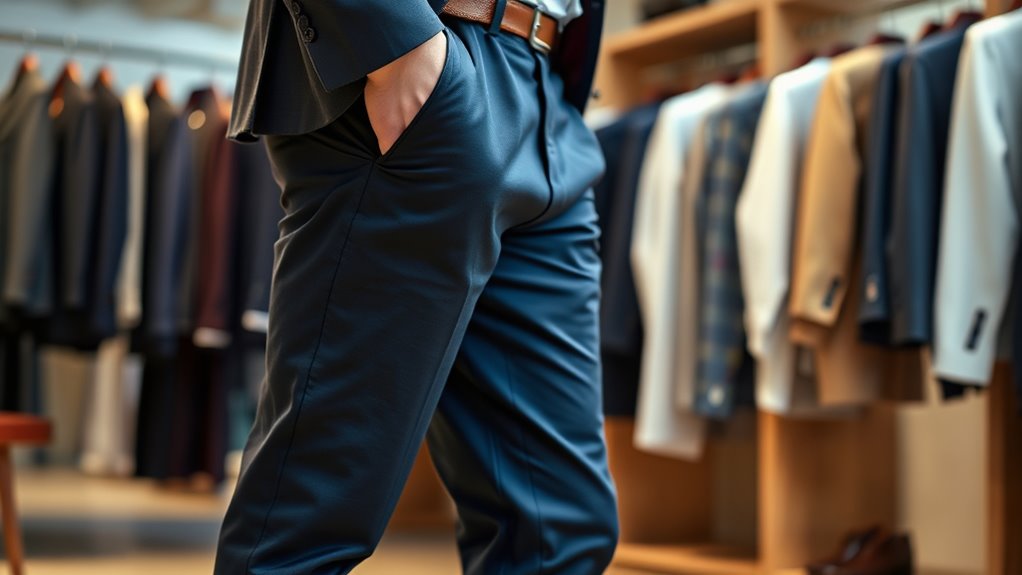
Finding the right pant length and break starts with understanding your preferred style and occasion. You should measure your inseam accurately and consider the ideal break that complements your footwear and overall look. Once you know these points, you can choose a length that offers a sharp, tailored appearance.
Ideal Pant Break Style
Determining the correct pant break style is essential for achieving a polished and balanced look. Your choice depends on your personal style and occasion. A no-break or slightly cropped pant creates a modern, sleek appearance, perfect for a minimalist or contemporary vibe. Slight or medium breaks are versatile, offering a classic look suitable for most settings and body types. A full break, where fabric stacks over shoes, leans toward traditional and formal styles, but can appear bulky if not tailored properly. Consider your shoe choice and pants fabric; thinner materials work best with minimal breaks, while thicker fabrics can handle more break. Ultimately, your goal is a clean line that complements your height and shoe style without excessive bunching. Understanding free floating can help ensure your pants sit correctly without unnecessary fabric bunching.
Proper Pant Length Measurement
Measuring the correct pant length starts with understanding how the fabric should sit relative to your shoes. To get it right, follow these steps:
- Put on the shoes you’ll wear with the pants to ensure accurate measurement.
- Stand naturally with your legs slightly apart, keeping your posture relaxed.
- Use a tape measure to mark where the pant hem should touch your shoe’s top or break point.
- For a modern look, aim for just touching the top of your shoes, creating a slight break or none at all. For a classic break, let the fabric rest with a small fold over your shoe. Avoid overly long cuffs that bunch or drag. Proper measurement ensures your pants look sharp and fit comfortably. Additionally, understanding the proper fit can help you choose the right pant length for your body type.
men's casual shoes for everyday style
As an affiliate, we earn on qualifying purchases.
As an affiliate, we earn on qualifying purchases.
What Are the Best Fabrics for Different Seasons and Occasions?
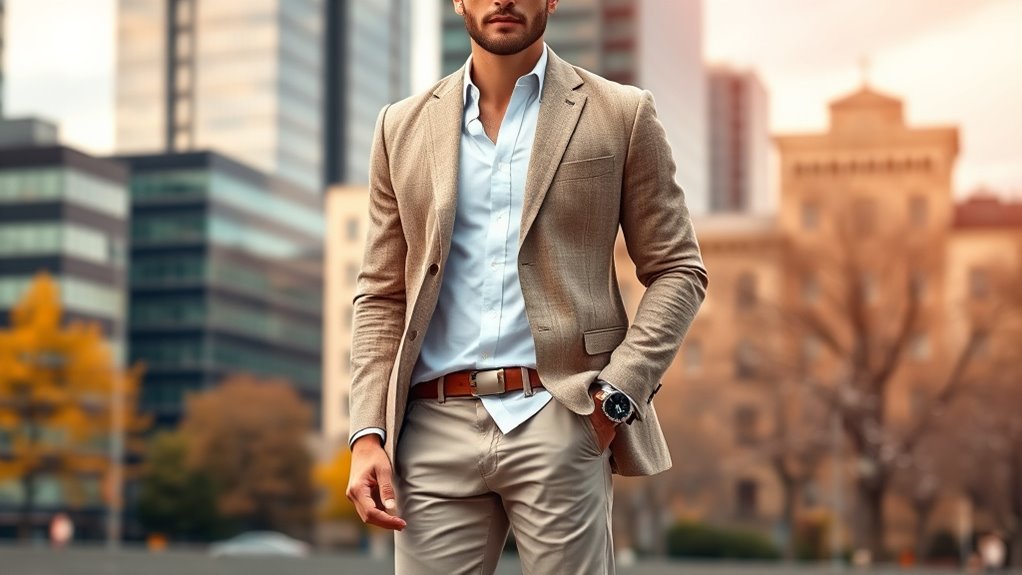
Choosing the right fabrics for different seasons and occasions is essential to look sharp and stay comfortable. In warmer months, opt for lightweight cotton, linen, or linen-blend fabrics—they’re breathable, quick-drying, and perfect for casual or semi-formal settings. Merino wool and tropical wool are excellent for spring and summer dress wear because they resist wrinkles and wick moisture while maintaining a polished look. For colder months, choose wool, lambswool, or cashmere—these insulate well and look refined for formal or office wear. Blends like wool/silk offer a balance of durability and softness. For casual outings, performance fabrics like moisture-wicking blends or technical knits work well. Always consider the occasion’s formality, your comfort, and the climate when selecting fabrics to ensure you stay stylish and comfortable.
How Do I Select Versatile Colors and Patterns for a Capsule Wardrobe?
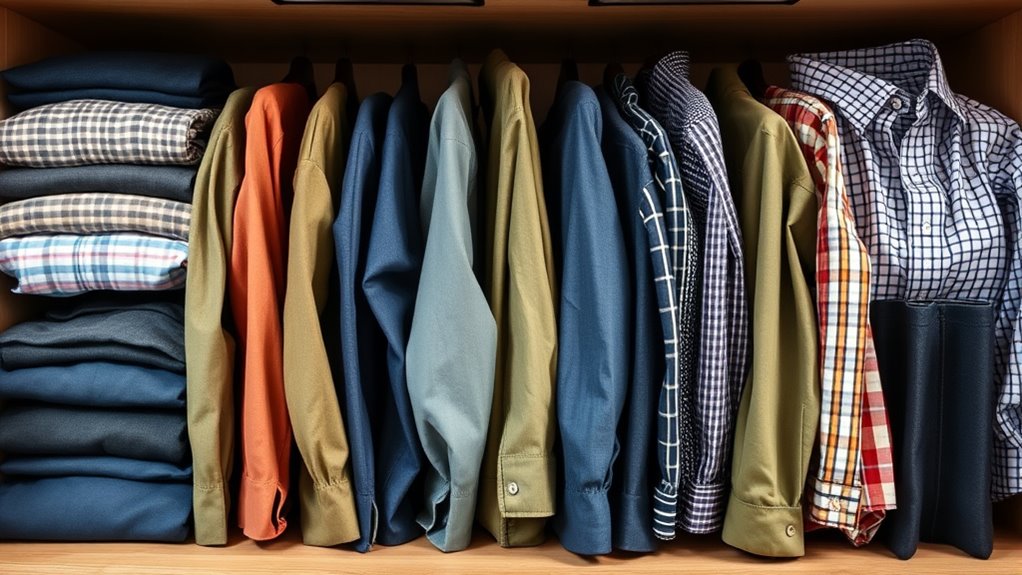
Selecting versatile colors and patterns for your capsule wardrobe starts with sticking to a neutral palette that easily mixes and matches. Focus on colors like navy, gray, cream, and olive—these shades work well together and suit most occasions. To build flexibility, consider these steps:
- Choose classic patterns like solid, stripes, or subtle checks that won’t quickly go out of style.
- Limit bold patterns to one or two statement pieces, keeping the rest simple.
- Prioritize neutral tones for larger items, then add pops of color through accessories or secondary pieces.
- Ensure your patterns and colors coordinate across different garments, making it easier to create multiple outfits from fewer pieces.
- Incorporate timeless design principles into your choices to maintain a long-lasting, versatile wardrobe.
This approach keeps your wardrobe cohesive, stylish, and adaptable for various settings.
What Are the Essential Accessories Men Should Own for a Polished Look?
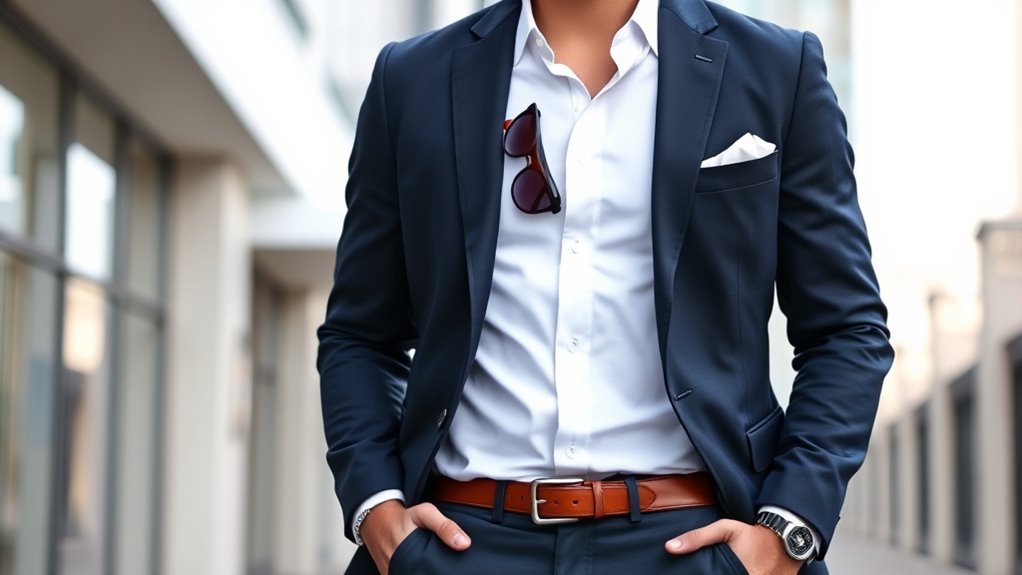
A well-curated set of accessories can elevate your look from simple to polished in an instant. Start with a quality leather belt that matches your shoes; it’s a subtle but crucial detail. A versatile watch adds sophistication and practicality—opt for a classic design that works for both casual and formal settings. A pocket square can inject personality into a blazer without overdoing it, so choose one in a neutral or complementary color. Stick to minimal jewelry—perhaps a simple bracelet or ring—to avoid clutter. Consider a pair of well-made sunglasses for sunny days, and keep a clean, functional wallet. These essentials support a sharp appearance, ensuring you look thoughtful and put-together in any situation.
How Can I Ensure My Outerwear Complements My Overall Style?
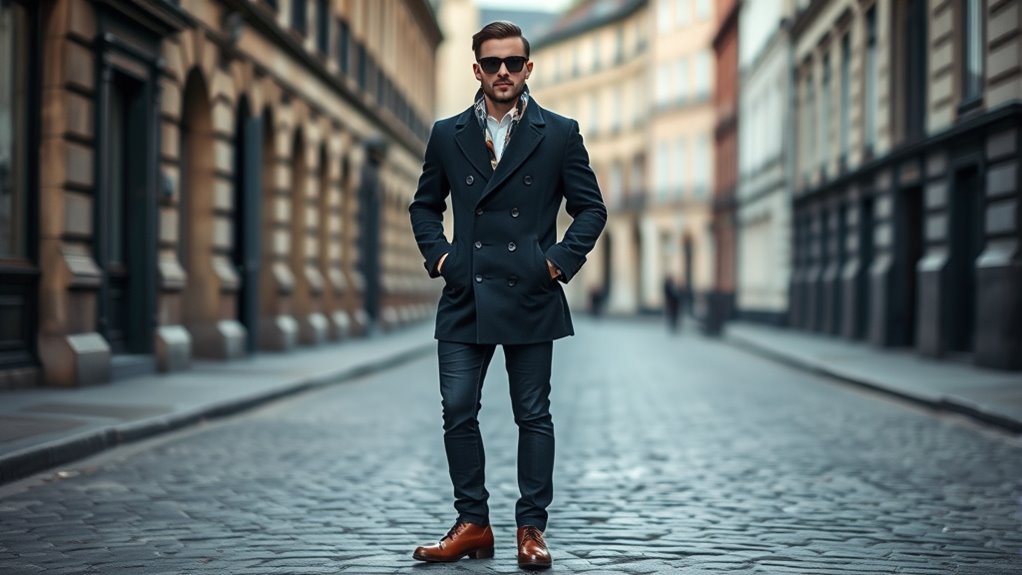
To guarantee your outerwear complements your overall style, focus on how each piece integrates seamlessly with your wardrobe’s color palette and formality level. Choose versatile outerwear that matches or enhances your core colors like navy, gray, or cream. Make sure it aligns with your typical dress code—sleek overcoats work for formal settings, while bomber jackets suit casual looks.
Consider these tips:
- Match outerwear color to your outfit’s dominant tones.
- Opt for classic styles that suit multiple occasions.
- Prioritize fit so the jacket complements your silhouette.
- Select materials appropriate for the climate and your style—wool for sophistication, lighter fabrics for casual wear.
- Be aware of investment pieces that can elevate your wardrobe and provide long-term style consistency.
This approach keeps your outerwear stylish and cohesive with your overall look.
What Are Common Mistakes in Casual and Streetwear Styling?

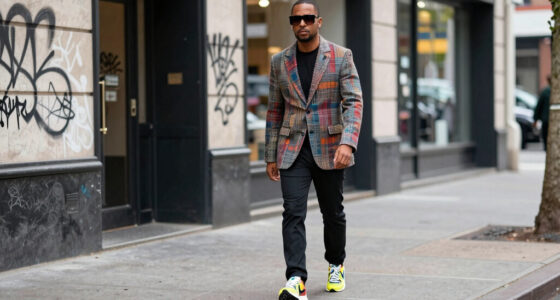
Many common mistakes in casual and streetwear styling stem from neglecting fit and coherence. When clothes don’t fit properly, your look appears sloppy regardless of brands or trends. Avoid wearing oversized or baggy pants and shirts that are too tight, as they disrupt proportions. Mismatched washes or colors, like pairing different denim shades, can make outfits look chaotic. Stick to a consistent color palette to keep your look cohesive. Overdoing trends without considering versatility leads to wardrobe clutter; focus on timeless pieces that mix easily. Shoes should complement the outfit’s style—clean sneakers with casual looks or minimal designs that don’t overpower your outfit. Prioritize fit, simplicity, and balance to create effortless, street-ready style.
How Should I Approach Shoe Selection for Various Outfits?

When selecting shoes, you should match their formality to your outfit to keep your look cohesive. Opt for versatile styles like loafers or clean sneakers that can work across multiple occasions, but always prioritize quality and proper maintenance. This approach guarantees your footwear complements your wardrobe while lasting longer and looking sharp.
Match Formality Levels
Matching shoe style to the occasion is essential for pulling together a cohesive look, whether you’re aiming for formality or a relaxed vibe. Shoes are a key detail that can elevate or undermine your outfit’s intent. To match formality levels effectively:
- Opt for Oxford or Derby shoes with a sleek finish for formal events.
- Choose loafers or brogues for business casual settings.
- Go for clean sneakers when dressing down, especially with casual suits or chinos.
- Use minimalist sneakers or boots for smart-casual or streetwear-inspired ensembles.
Keep in mind that the material also matters—leather for formal, suede or canvas for casual. Correctly matching shoes to the occasion guarantees your look is polished and appropriate.
Choose Versatile Styles
Choosing versatile shoes starts with understanding how different styles can adapt to various outfits and occasions. You want footwear that easily *shift* from casual to semi-formal settings. Classic loafers or desert boots are great for smart-casual looks, pairing well with chinos or jeans. Oxfords or brogues work nicely with suits or dressier outfits, offering a polished touch. For casual days, clean sneakers in neutral colors provide comfort and style without sacrificing versatility. Stick to a neutral palette—black, brown, or navy—to maximize pairing options. Avoid overly trendy or statement footwear that may limit your outfit choices. By selecting timeless styles and colors, you create a foundation of shoes that can elevate your wardrobe across multiple scenarios, saving you time and effort while maintaining a sharp look. Additionally, choosing energy-efficient cloud solutions can help you implement sustainable practices in your wardrobe management or other lifestyle choices.
Prioritize Quality and Maintenance
Investing in high-quality shoes considerably enhances your overall look and durability across different outfits. Well-made shoes not only elevate your style but also last longer with proper care. To approach shoe selection wisely:
- Choose versatile styles like oxfords or loafers that match both formal and casual outfits.
- Prioritize quality materials such as full-grain leather or suede for durability and a refined appearance.
- Match shoe color to your wardrobe—black for formal, brown or tan for casual or business casual looks.
- Maintain shoes regularly by cleaning, conditioning, and rotating them to prevent wear and tear. Proper maintenance extends their lifespan and keeps them looking sharp.
What Are the Best Practices for Maintaining and Caring for My Garments?
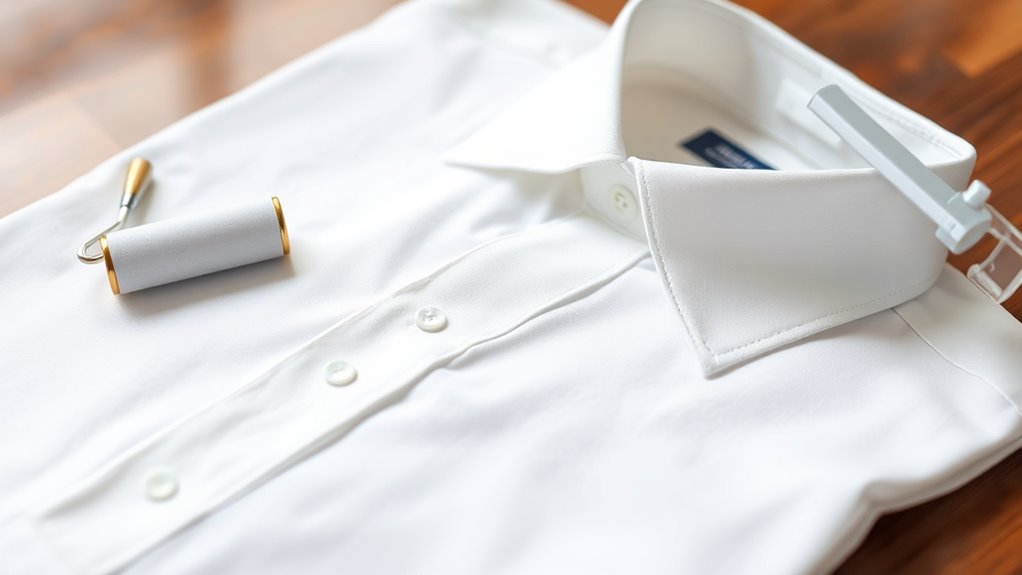
Proper garment care starts with understanding the labels and following the manufacturer’s instructions, as different fabrics require specific treatments. Always read washing and drying labels carefully to avoid damage. Use the appropriate water temperature, cycle, and detergent for each fabric type. Invest in good-quality hangers for jackets and shirts to maintain their shape, and rotate your shoes regularly to prevent uneven wear. Regularly clean and condition leather accessories and footwear to extend their lifespan. Spot-treat stains promptly with suitable products, and avoid over-washing garments—airing them out can often suffice. When in doubt, dry clean delicate or complex pieces to preserve their structure and appearance. Consistent, proper care keeps your wardrobe looking sharp, maximizes longevity, and protects your style investment. Incorporating attention to detail in your garment maintenance routine ensures that every piece stays in top condition for years to come.
Frequently Asked Questions
How Can I Tailor My Wardrobe to Fit My Body Shape Effectively?
You can tailor your wardrobe to fit your body shape by prioritizing well-fitted pieces that highlight your best features. Focus on customizing shoulders, waist, and sleeve lengths, since these areas make the biggest difference. Avoid baggy or tight clothing; instead, choose garments that complement your proportions. Use a tailor to make adjustments where needed, and invest in versatile basics that you can easily alter for a sharp, personalized look.
What Are Versatile Wardrobe Staples That Transition From Casual to Formal?
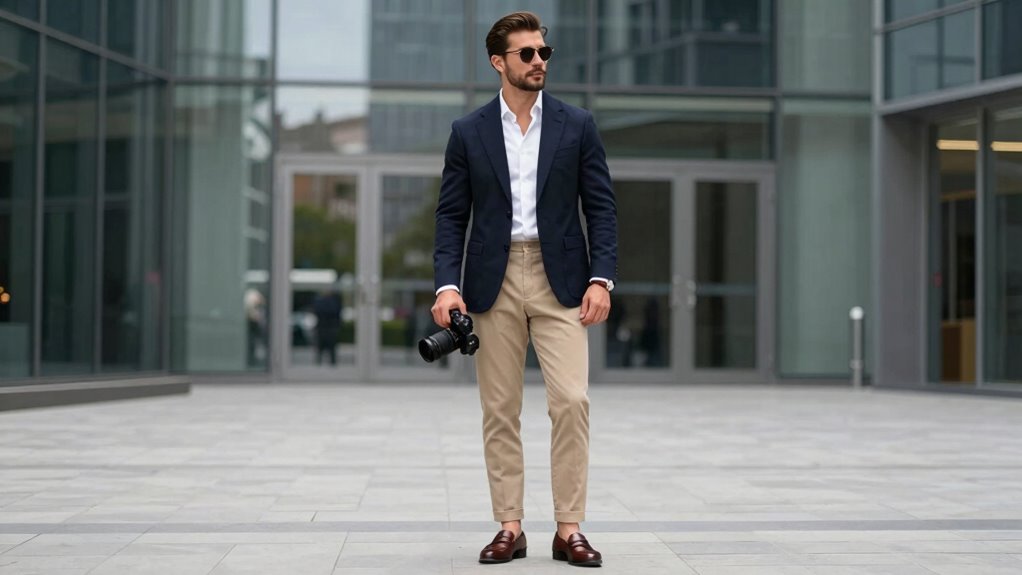
You should prioritize versatile staples like a well-fitted navy blazer, crisp white dress shirts, dark jeans, and neutral chinos. These pieces mix easily for casual or formal looks. Add a tailored overcoat for colder months and simple accessories like a watch and belt to elevate your style effortlessly. Focus on quality fabrics and good fit, which makes these staples adaptable across different occasions without needing many extra items.
How Do I Choose the Right Accessories for Different Occasions?
When choosing accessories for different occasions, focus on simplicity and fit. For formal events, opt for a classic watch, a silk tie, and a pocket square to add subtle personality. In casual settings, go for minimal jewelry, a versatile belt, and clean sneakers. Keep your accessories cohesive with your outfit’s color palette and level of formality. Less is often more, so select pieces that enhance your look without overdoing it.
What Color Combinations Make Outfits Look More Cohesive and Stylish?
You might think mixing every color under the sun creates excitement, but it actually just looks chaotic. Instead, stick to neutral palettes—navy, gray, cream—and add pops of color sparingly. Pair a navy blazer with gray trousers and a cream shirt, then introduce a subtle accent like a burgundy pocket square. This effortless coordination elevates your style, making your outfits look intentional, cohesive, and undeniably sharp—without the headache of clashing.
How Often Should I Update or Replace Key Pieces in My Wardrobe?
You should update or replace key wardrobe pieces every 2 to 3 years, depending on wear and style trends. Regularly inspect your clothes for signs of damage, fading, or outdated fits. Prioritize replacing items that no longer serve your needs or look fresh, especially those you wear often like shirts, shoes, or jackets. Investing in quality and tailoring can extend their lifespan, but staying current keeps your style sharp and versatile.
Conclusion
Now that you know the essentials, your wardrobe can become a canvas of confidence and style. Picture yourself stepping out, every piece fitting perfectly like a tailored suit, colors harmonizing effortlessly, and shoes that complete your look. With these tips, you’ll navigate fashion choices with ease, turning everyday outfits into expressions of your unique personality. Embrace the journey—your wardrobe is your personal runway, ready to showcase the best version of you.
Fall Picks
fall essentials
As an affiliate, we earn on qualifying purchases.