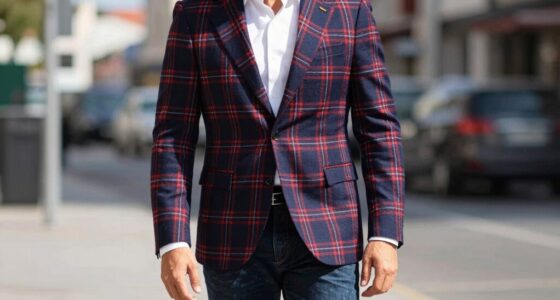
To build a minimalist menswear wardrobe with fewer pieces, focus on 25–35 versatile, high-quality staples like white T-shirts, dark denim, neutral blazers, and chinos. Prioritize timeless designs, perfect fits, and natural fabrics that can be mixed easily for different occasions. Regularly declutter to keep only items that serve you well. By choosing adaptable pieces and organizing seasonally, you’ll create a sleek, functional closet. Keep exploring how to refine your style even further.
Key Takeaways
- Focus on selecting high-quality, versatile staples in neutral colors for easy mixing and matching.
- Prioritize well-fitting, timeless pieces made from durable natural fibers to maximize longevity.
- Limit your wardrobe to a core set of 25–35 essential items, removing duplicates and unused pieces regularly.
- Incorporate layering and adaptable garments to transition seamlessly between seasons and occasions.
- Maintain simplicity by avoiding clutter, repairing garments, and adhering to a one-in, one-out rule.
Defining Your Core Wardrobe Foundations
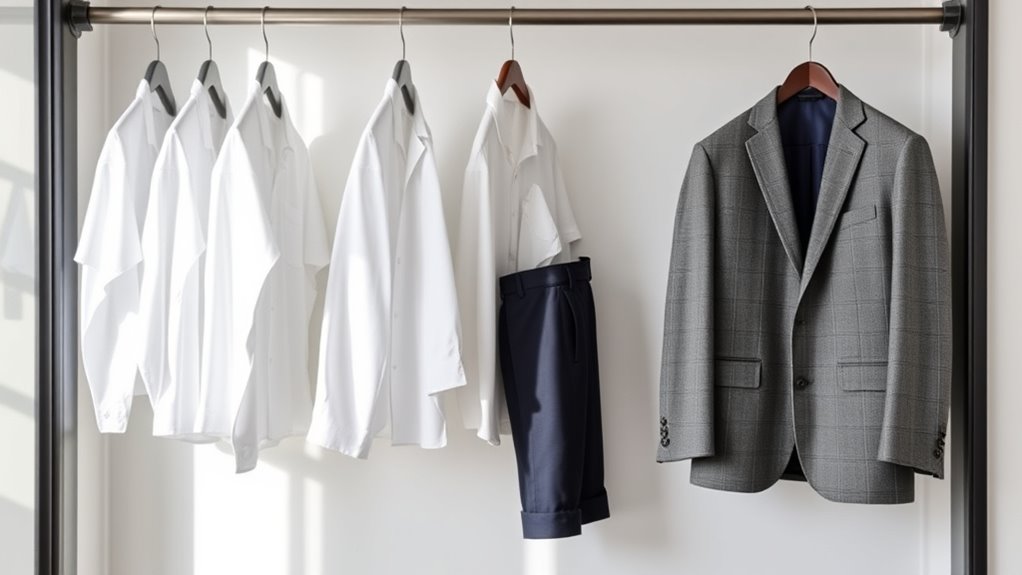
Building a strong core wardrobe foundation starts with selecting versatile, high-quality staples that can mix and match effortlessly across different outfits. Focus on around 25 to 35 pieces, including essentials like white T-shirts, a crisp dress shirt, dark denim, a neutral blazer, and chinos. These items should be durable, well-fitted, and made from natural fibers or quality blends. Limit your color palette to 3–4 core colors—neutrals plus one accent—to maximize interchangeability. Prioritize fit and fabric over brand, investing more in outerwear and shoes for longevity. Declutter regularly, removing items that no longer serve you. Stick to purchase rules like one-in, one-out, and aim for timeless pieces that support your lifestyle, climate, and personal style. Additionally, choosing projectors with good color accuracy can enhance the visual appeal of your home setup.
Choosing Versatile Pieces for Maximum Flexibility

Focus on selecting pieces that can serve multiple purposes and pair seamlessly with your existing wardrobe. Versatile items should easily *shift* between casual, business casual, and even semi-formal settings, giving you maximum outfit options with fewer pieces. For example, a well-fitted navy blazer can be dressed up with chinos or down with jeans. Neutral-colored chinos or dark denim are adaptable and work across different outfits. Stick to a simple color palette—neutrals like black, gray, navy, and beige—so each piece complements others effortlessly. Prioritize classic designs that don’t go out of style, and look for items with subtle textures or details that add visual interest without clutter. Additionally, selecting energy-efficient fabrics can contribute to a more sustainable wardrobe. By choosing versatile pieces, you create a flexible wardrobe that simplifies dressing and reduces clutter.
Prioritizing Fit, Fabric, and Quality

Prioritizing fit, fabric, and quality is essential to creating a minimalist wardrobe that looks polished and lasts over time. You should focus on well-tailored pieces that fit your body perfectly; inexpensive items with poor fit won’t look refined. Choose natural fibers like cotton, wool, and linen for durability, breathability, and a premium feel. Higher-quality fabrics tend to age better and withstand frequent wear, reducing the need for replacements. Invest more in outerwear and shoes, as these endure the most stress and are easier to repair. Proper care—like gentle laundering and timely repairs—extends garment life and keeps your wardrobe looking sharp. Subtle textures and varied weights add visual interest without cluttering your minimal set, ensuring each piece functions and looks its best.
Strategizing for Seasonal Rotation and Adaptability
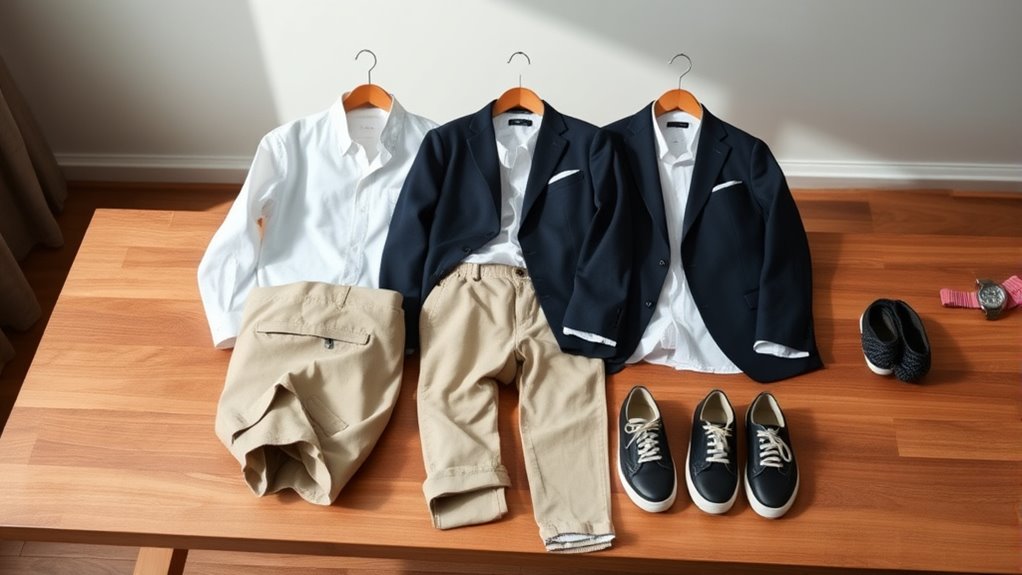
To effectively manage a minimalist wardrobe across seasons, you should adopt a strategic approach to seasonal rotation that maintains core pieces while adapting to climate changes. Keep a stable set of versatile essentials—like your white T-shirt, dark denim, and neutral blazer—that work year-round. Swap out or layer seasonal items such as lightweight shirts, sweaters, and outerwear to suit weather fluctuations. Limit changes to 5–10 items per season, focusing on high-utility pieces like a warmer coat or lighter trousers. Use a color palette of 3–4 core shades to ensure everything mixes easily. This approach prevents wardrobe expansion, maximizes outfit options, and keeps your clothing functional and fresh. Regularly reassess your wardrobe to ensure seasonal pieces still serve your needs and style. Incorporating clothing versatility can further enhance your wardrobe’s adaptability and reduce clutter.
Practical Tips for Maintaining and Evolving Your Capsule
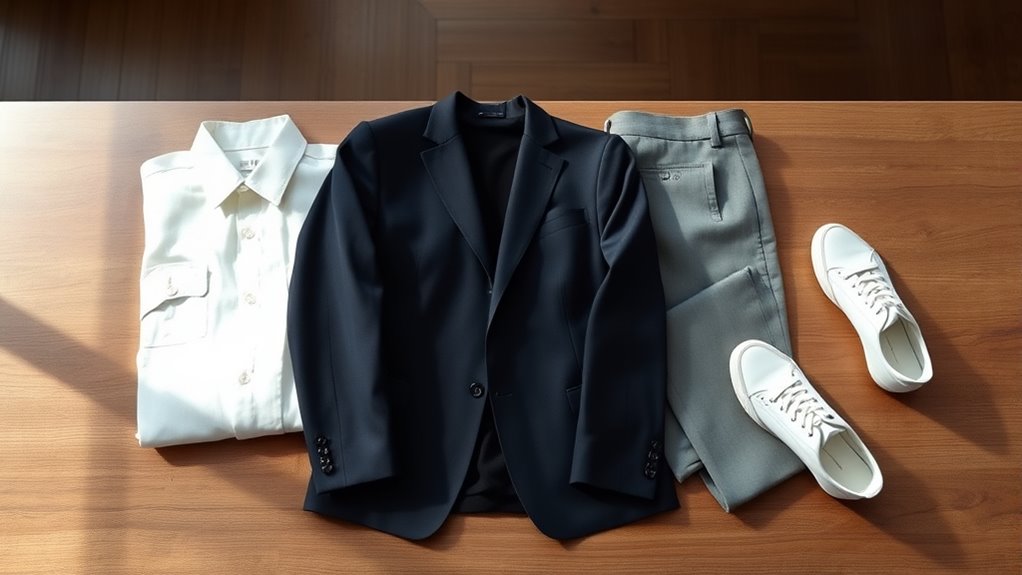
Maintaining a capsule wardrobe requires regular attention to guarantee it stays functional and aligned with your evolving style. Start by decluttering periodically—remove items you haven’t worn in 6–12 months or that no longer fit or suit your lifestyle. Keep an inventory, either digitally or physically, to track what you have and identify gaps or duplicates. Practice the one-in, one-out rule to prevent unnecessary expansion. Focus on quality over quantity; repairing and caring for your pieces extends their lifespan. Adjust your capsule seasonally by swapping or adding a few key items without overhauling the entire wardrobe. Stay mindful of your needs and preferences, and don’t be afraid to refine your choices as your style develops or your circumstances change. Additionally, consider incorporating versatile pieces that can serve multiple functions, similar to choosing a reliable outdoor pizza oven that adapts to different occasions and seasons.
Frequently Asked Questions
How Do I Personalize a Minimal Wardrobe for My Unique Style?
You personalize your minimalist wardrobe by selecting versatile pieces that reflect your lifestyle, preferences, and personality. Choose your core colors and incorporate subtle textures or patterns to add interest. Add a few statement accessories or unique shoes that showcase your style. Focus on fit and comfort, and don’t be afraid to swap seasonal items or experiment with layering. This way, your wardrobe remains functional yet distinctly yours.
What Are the Best Ways to Prevent Wardrobe Overexpansion?
You prevent wardrobe overexpansion by setting strict purchase rules like one-in, one-out, and sticking to a monthly spending cap. Focus on high-quality, timeless pieces that suit your lifestyle and avoid impulse buys. Regularly declutter by removing items not worn in 6–12 months, and use tools like wardrobe apps or spreadsheets to track your collection. This disciplined approach keeps your wardrobe compact, functional, and aligned with your minimalist goals.
How Can I Incorporate Sustainable Practices Into Minimal Menswear?
You can incorporate sustainable practices into minimal menswear by choosing high-quality, durable pieces that last longer, reducing your need for frequent replacements. Prioritize natural fibers like cotton, wool, or linen, and invest in versatile items that match multiple outfits. Repair and care for your garments properly, and buy fewer, better items instead of cheap, disposable fashion. This approach minimizes waste, lowers environmental impact, and guarantees your wardrobe remains both stylish and eco-friendly.
What Are Effective Strategies for Mixing and Matching Limited Pieces?
To effectively mix and match limited pieces, focus on versatile, neutral items that easily coordinate. Use layering to create new looks and switch textures for visual interest. Stick to a simple color palette, so each piece pairs well with others. Keep accessories minimal but impactful—like a watch or belt—to change outfit tones. Plan your outfits ahead of time, rotate weekly, and experiment with different combinations to maximize variety without adding pieces.
How Do I Decide Which Accessories Are Essential in a Capsule Wardrobe?
You should choose accessories that add versatility and elevate your outfits without cluttering your wardrobe. Start with a classic watch, a simple belt that matches your shoes, and a functional bag or wallet. Opt for neutral colors like black, brown, or navy to maximize interchangeability. Limit yourself to 2–4 essential accessories; they should seamlessly shift across multiple outfits and seasons, helping you look polished with minimal effort.
Conclusion
By building a balanced, versatile wardrobe, you’ll boost confidence and simplify style. Focus on fitting, fabric, and quality to foster fashion flexibility. Regularly refresh and rotate your pieces to stay fresh and functional. With mindful maintenance and minimalism, you’ll master a modern, manageable wardrobe that maximizes your style, saves space, and saves time. Embrace the essentials, elevate your ensemble, and enjoy effortless elegance every day. Minimalist men’s wear makes mastering your look remarkably simple.