
The best Timberland boots balance the protection, comfort, and look you need without asking you to buy more boot than your routine requires. My best overall pick is the Timberland Men’s Premium 6-Inch Waterproof Boot for its classic shape and waterproof focus; the White Ledge Mid is a more trail-oriented choice, while the Britton Road Waterproof Boot offers a lower-key everyday alternative. The main tradeoff is between the familiar 6-inch style and lighter, more specialized options for hiking, work, or easy on-and-off wear. Fit, intended use, and how much structure you want matter as much as the Timberland name. Read on for the full comparison and help matching each boot to your needs.

Get your wardrobe favorites delivered free with Prime
- Fast, free delivery on millions of items
- Prime Video, Amazon Music and more included
- Member-only deals all year
Key Takeaways
- The Premium 6-Inch Waterproof Boot leads for all-around wear because it combines Timberland‘s signature silhouette with weather protection; it is less purpose-built for trail use than the White Ledge or Flume.
- The White Ledge and Flume serve different hiking priorities: the White Ledge is the more structured mid-height option, while the Flume is a simpler alternative for buyers who want a hiking-specific design.
- Britton Road models are the everyday-style alternatives to the classic 6-inch boots, with a waterproof boot and a Chelsea version for shoppers who value easier entry.
- Waterproof labels do not make every boot interchangeable. A work boot, casual waterproof boot, and hiking boot can differ in support, outsole purpose, and suitability for long days on varied ground.
- Several models share familiar Timberland styling, but their use cases differ. Choose the Women’s Linden Woods for its women’s-specific offering, Redwood Falls for a less iconic alternative, and the 6-inch Premium or Wheat work-style boot for the classic look.
| Timberland Men’s Earthkeepers 6-Inch Boot |  | Best for Everyday Wear | Upper material: Full-grain leather | Fabric type: 100% leather | Lining: ReBOTL fabric, 50% recycled PET | VIEW LATEST PRICE | See Our Full Breakdown |
| Timberland Men’s Britton Road Waterproof Boot |  | Best for Cold, Wet Days | Shaft height: Ankle | Shaft circumference: 9.75 inches | Waterproof construction: Yes; seam-sealed | VIEW LATEST PRICE | See Our Full Breakdown |
| Timberland 6″ Classic Premium Waterproof Work Boots – Wheat |  | Best for Rugged Six-Inch Coverage | Shaft height: 6 inches | Upper: Waterproof leather | Construction: Waterproof and seam-sealed | VIEW LATEST PRICE | See Our Full Breakdown |
| Timberland Women’s Linden Woods Waterproof Boots |  | Best Women’s Recycled-Lining Pick | Shaft height: 5.63 inches | Shaft circumference: 9 inches | Waterproof: Yes | VIEW LATEST PRICE | See Our Full Breakdown |
| Timberland Redwood Falls Waterproof |  | Best for Insulated Ankle Coverage | Shaft height: Ankle | Shaft circumference: 9.75 inches | Waterproof construction: Yes; seam-sealed | VIEW LATEST PRICE | See Our Full Breakdown |
| Timberland 6″ Premium Boot |  | Best Classic Cold-Weather Pick | Upper: Waterproof premium leather | Sole: Rubber | Shaft height: 6 inches | VIEW LATEST PRICE | See Our Full Breakdown |
| Timberland Men’s Premium 6-Inch Waterproof Boot |  | Best for Cold, Wet Conditions | Upper: Nubuck leather | Waterproofing: Seam-sealed waterproof construction | Insulation: 400 grams PrimaLoft | VIEW LATEST PRICE | See Our Full Breakdown |
| Timberland Men’s White Ledge Mid Waterproof Hiking Boots | 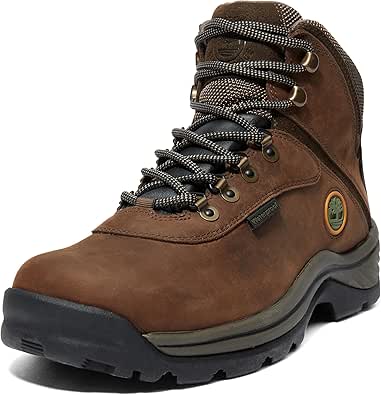 | Best for Trail Hiking | Upper: Waterproof premium Timberland leather | Construction: Seam-sealed | Lining: ReBOTL fabric | VIEW LATEST PRICE | See Our Full Breakdown |
| Timberland Men’s Flume Mid Waterproof Hiking Boot |  | Best Lightweight-Feature Hiking Alternative | Upper: Waterproof Timberland leather | Sole: Rubber | Shaft height: Mid | VIEW LATEST PRICE | See Our Full Breakdown |
| Timberland Britton Road Mid Chelsea Boot |  | Best Pull-On Everyday Boot | Material: Timberland leather and ReBOTL fabric | Shaft height: Ankle | Shaft circumference: 9.75 inches | VIEW LATEST PRICE | See Our Full Breakdown |
| Timberland boot | Shaft height | Lining | Shaft circumference | Upper |
|---|---|---|---|---|
| Timberland Men’s Earthkeepers | — | ReBOTL fabric, 50% recycled PET | — | — |
| Timberland Men’s Britton Road | Ankle | Leather | 9.75 inches | — |
| Timberland 6" Classic Premium | 6 inches | Leather | — | Waterproof leather |
| Timberland Women’s Linden Wood | 5.63 inches | ReBOTL fabric containing at least 50% recycled plastic | 9 inches | Premium leather |
| Timberland Redwood Falls Water | Ankle | Leather | 9.75 inches | Premium leather |
| Timberland 6" Premium Boot | 6 inches | Leather | 8.75 inches | Waterproof premium leather |
| Timberland Men’s Premium 6-Inc | Ankle | — | 9.75 inches | Nubuck leather |
| Timberland Men’s White Ledge M | Ankle | ReBOTL fabric | 9.75 inches | Waterproof premium Timberland leather |
| Timberland Men’s Flume Mid Wat | Mid | Mesh | 9.25 inches | Waterproof Timberland leather |
| Timberland Britton Road Mid Ch | Ankle | — | 9.75 inches | — |
More Details on Our Top Picks
Timberland Men’s Earthkeepers 6-Inch Boot
The Earthkeepers 6-Inch Boot suits buyers who want a classic leather boot with a lighter, more everyday feel than the insulated waterproof options in this lineup. Its full-grain leather upper gives it a durable, traditional look, while the lining made with recycled PET adds breathability rather than extra warmth. A removable anti-fatigue footbed is useful for long days on your feet, and can be taken out to accommodate a preferred insole. Compared with the Timberland 6″ Classic Premium Waterproof Work Boots, this model is the less weather-focused choice: the supplied details do not specify waterproof construction or insulation. The tradeoff is a synthetic sole, which may not hold up as well as the rubber soles on several alternatives. Fit also needs attention; the product recommends going half a size down from sneaker size.
Pros:- Premium full-grain leather upper offers a durable, classic appearance.
- Breathable ReBOTL lining uses fabric made with 50% recycled PET.
- Removable anti-fatigue footbed allows insole changes and adds underfoot comfort.
- Everyday-focused construction avoids the insulation of heavier cold-weather alternatives.
Cons:- Waterproof construction and insulation are not specified.
- The synthetic sole may wear faster than the rubber soles on other picks.
- Sizing guidance calls for going half a size down from sneaker size.
Best for: Buyers seeking a versatile leather boot for everyday wear who value a removable comfort footbed and a recycled-material lining.
Not ideal for: People who regularly walk through wet or cold conditions, or buyers who want a rubber sole and confirmed waterproof construction.
- Upper material:Full-grain leather
- Fabric type:100% leather
- Lining:ReBOTL fabric, 50% recycled PET
- Footbed:Removable anti-fatigue
- Sole material:Synthetic
- Origin:Imported
- Fit guidance:Recommended to purchase half a size down from sneaker size
Our verdict“Choose the Earthkeepers for a breathable, everyday leather boot with a removable comfort footbed, but pick a waterproof insulated model for persistent rain or cold.”
Timberland Men’s Britton Road Waterproof Boot
The Britton Road Waterproof Boot is a strong match for buyers who need warmth and rain protection in one ankle-height boot. Its seam-sealed waterproof construction addresses wet-weather use directly, while PrimaLoft insulation adds warmth without relying on a bulky, tall shaft. The anti-fatigue technology also makes it more suited to extended wear than a boot chosen mainly for appearance. Compared with the Timberland Men’s Earthkeepers 6-Inch Boot, Britton Road is the more weather-ready pick, but its insulated, rugged build can feel heavier and may need a break-in period. It also differs from the 6″ Classic Premium Waterproof Work Boots in its ankle shaft, offering a lower profile rather than the familiar six-inch format. Buyers should choose it for practical coverage, not a lightweight, uninsulated everyday boot.
Pros:- Seam-sealed waterproof construction helps keep feet dry in wet conditions.
- PrimaLoft insulation provides warmth while remaining lightweight for an insulated boot.
- Anti-fatigue technology supports extended wear.
- Leather is sourced from Leather Working Group certified tanneries.
Cons:- Rugged construction may feel heavy compared with the Earthkeepers.
- A break-in period may be needed before the boot feels comfortable.
- Ankle-height shaft provides less coverage than six-inch alternatives.
Best for: Men who spend long stretches outdoors in wet, chilly weather and want waterproofing, insulation, and underfoot support in an ankle-height boot.
Not ideal for: Buyers prioritizing a lightweight boot, a six-inch shaft, or a minimal design for mild-weather daily wear.
- Shaft height:Ankle
- Shaft circumference:9.75 inches
- Waterproof construction:Yes; seam-sealed
- Insulation:PrimaLoft
- Lining:Leather
- Sole material:Rubber
- Comfort technology:Anti-fatigue
- Leather sourcing:Leather from Leather Working Group certified tanneries
Our verdict“Pick Britton Road if wet-weather warmth and all-day support matter more than a lighter, lower-insulation everyday boot.”
Timberland 6″ Classic Premium Waterproof Work Boots – Wheat
For buyers set on a traditional six-inch boot that can handle wet, cold conditions, the Classic Premium Waterproof Work Boots combine seam-sealed protection with PrimaLoft insulation and a supportive rubber lug outsole. That mix makes them better suited to demanding outdoor wear than the Earthkeepers, whose supplied specifications do not list waterproofing or insulation. Compared with the ankle-height Britton Road, this pair offers the appeal of a taller six-inch profile, though the rugged build may feel heavy during long walks or everyday commuting. Anti-fatigue technology is a helpful counterbalance for extended wear, but it does not make this a lightweight boot. The wheat color gives this version a recognizable Timberland look, while the limited color selection leaves less room for buyers seeking a less traditional finish.
Pros:- Waterproof leather and seam-sealed construction provide wet-weather protection.
- PrimaLoft insulation adds warmth for colder conditions.
- Rubber lug outsole offers a supportive, durable base.
- Anti-fatigue technology is aimed at all-day comfort.
Cons:- Rugged construction may feel heavy during long walks or daily commuting.
- Limited color options may not suit buyers seeking a less traditional look.
- The six-inch insulated design is more boot than needed for mild, dry conditions.
Best for: Buyers who want a classic wheat six-inch Timberland boot for cold, wet outdoor use and prefer a rubber lug outsole.
Not ideal for: Commuters seeking a light, flexible boot or shoppers who need a broad choice of colors.
- Shaft height:6 inches
- Upper:Waterproof leather
- Construction:Waterproof and seam-sealed
- Insulation:PrimaLoft
- Sole material:Rubber
- Lining:Leather
- Comfort technology:Anti-fatigue
- Color:Wheat
- Origin:Imported
Our verdict“Choose this model for insulated waterproof protection in a classic six-inch shape, and skip it if low weight is your priority.”
Timberland Women’s Linden Woods Waterproof Boots
The Linden Woods Waterproof Boots give women a weather-ready lace-up option with a shorter profile than the six-inch men’s boots elsewhere in this selection. The 5.63-inch shaft offers some coverage without the taller feel of the Classic Premium Waterproof Work Boots, while the rubber sole and waterproof construction suit changeable conditions. Its ReBOTL lining, made with at least 50% recycled plastic, is a clear differentiator from the leather-lined Britton Road and Redwood Falls models. The tradeoff is limited warmth information: unlike those PrimaLoft-insulated boots, the provided details do not specify insulation, so I would not make this my first choice for cold weather. Its more compact shaft may also disappoint shoppers who prefer a taller boot or extra ankle coverage.
Pros:- Waterproof construction is suited to wet-weather use.
- ReBOTL lining contains at least 50% recycled plastic.
- Rubber sole provides a durable base.
- Lace-up design and 5.63-inch shaft offer a more compact alternative to six-inch boots.
Cons:- Insulation and cold-weather warmth are not specified.
- The 5.63-inch shaft may feel too short for buyers wanting a taller boot.
- The supplied product details do not specify the waterproof construction method.
Best for: Women seeking a waterproof lace-up boot with a recycled-material lining and a shaft shorter than a traditional six-inch style.
Not ideal for: Buyers who need documented insulation for cold conditions or prefer a taller shaft for added coverage.
- Shaft height:5.63 inches
- Shaft circumference:9 inches
- Waterproof:Yes
- Sole material:Rubber
- Lining:ReBOTL fabric containing at least 50% recycled plastic
- Style:Lace-up
- Upper:Premium leather
- Origin:Imported
Our verdict“Choose Linden Woods for a women’s waterproof lace-up boot with recycled lining and a shorter shaft, but look elsewhere for stated insulation or taller coverage.”
Timberland Redwood Falls Waterproof
The Redwood Falls Waterproof brings the main cold-weather features of the Britton Road into an ankle-height boot: seam-sealed waterproofing, PrimaLoft insulation, and anti-fatigue comfort technology. That makes it a practical alternative for buyers who want warmth and wet-weather protection without choosing the six-inch Classic Premium Work Boots. Compared with the Britton Road, the listed specifications are similar, so the decision comes down largely to the individual model and fit rather than a clear feature advantage in the supplied details. Leather lining gives it a different feel from the ReBOTL-lined Linden Woods, but it lacks that model’s specified recycled-content lining. Expect a heavier feel than a non-waterproof everyday boot, and note that the product details do not specify shaft height beyond identifying it as ankle height.
Pros:- Seam-sealed waterproof protection is suited to wet conditions.
- PrimaLoft insulation adds warmth and is described as retaining warmth when wet.
- Anti-fatigue technology supports extended wear.
- Rubber sole and premium leather construction suit rugged use.
Cons:- May feel heavier than non-waterproof boots.
- The supplied specifications do not give an exact shaft measurement.
- Offers no clear listed feature advantage over the similarly equipped Britton Road.
Best for: Buyers who need an insulated, waterproof ankle boot for wet, chilly conditions and extended wear.
Not ideal for: Shoppers seeking a lightweight warm-weather boot, a six-inch shaft, or a lining with specified recycled content.
- Shaft height:Ankle
- Shaft circumference:9.75 inches
- Waterproof construction:Yes; seam-sealed
- Insulation:PrimaLoft
- Lining:Leather
- Sole material:Rubber
- Comfort technology:Anti-fatigue
- Upper:Premium leather
Our verdict“Pick Redwood Falls for an insulated, waterproof ankle boot, but compare it with Britton Road since the supplied feature sets overlap closely.”
Timberland 6″ Premium Boot
The Timberland 6″ Premium Boot keeps the familiar lace-up silhouette while adding 200 grams of PrimaLoft insulation for cooler days. Its waterproof premium leather upper and rubber sole make it a more weather-ready everyday choice than a basic fashion boot, while the padded leather collar adds cushioning around the ankle. Compared with the Timberland Men’s Premium 6-Inch Waterproof Boot, this model has less insulation, so it is the more flexible pick for everyday wear rather than prolonged exposure to cold. That lighter warmth still comes with tradeoffs: the boot may need breaking in, and its build can feel heavy beside a lighter hiking style such as the White Ledge Mid. Choose it for classic Timberland styling and moderate cold-weather use, not for the lightest possible step.
Pros:- Waterproof premium leather upper is suited to wet-weather wear
- 200 grams of PrimaLoft adds warmth without the heavier insulation level of the 400-gram Premium 6-Inch Waterproof Boot
- Padded leather collar cushions the ankle
- Classic lace-up design works for casual everyday outfits
Cons:- May require a break-in period before the fit feels comfortable
- Can feel heavy compared with hiking-focused options such as the White Ledge Mid
- The supplied product details indicate limited color availability
Best for: Buyers who want the classic 6-inch Timberland look with waterproof leather and moderate insulation for everyday wear in cool, wet weather
Not ideal for: People who need maximum insulation for sustained cold or want a lightweight boot for long hikes
- Upper:Waterproof premium leather
- Sole:Rubber
- Shaft height:6 inches
- Shaft circumference:8.75 inches
- Insulation:200 grams PrimaLoft
- Lining:Leather
- Closure:Lace-up
- Collar:Padded leather
Our verdict“Choose this boot for classic Timberland styling and moderate cold-weather protection, but pick the 400-gram Premium 6-Inch Waterproof Boot for harsher cold.”
Among these Timberland options, the Premium 6-Inch Waterproof Boot is the clear choice when warmth is the priority: its 400 grams of PrimaLoft insulation exceeds the 200 grams in the Timberland 6″ Premium Boot. Seam-sealed waterproof construction, a nubuck leather upper, and a rubber lug outsole give it a sturdy setup for wet, cold days, while anti-fatigue technology is designed to support longer periods on your feet. The direct-attached, Goodyear welt construction adds a durable build, but this is a more substantial boot than the White Ledge Mid, which is geared toward hiking with an EVA midsole and multidirectional lugs. The extra insulation can feel too warm in mild weather, and the available details do not establish how it fits or breaks in. Pick it for cold-weather work and daily wear, not warm-weather versatility.
Pros:- 400 grams of PrimaLoft provides more insulation than the 200-gram Timberland 6″ Premium Boot
- Seam-sealed construction is designed to keep water out
- Anti-fatigue technology is intended to support all-day wear
- Rubber lug outsole offers a traction-focused tread
Cons:- The high insulation level may feel too warm in mild conditions
- Its substantial build may be less appealing for long hikes than the White Ledge Mid
- The supplied details do not specify break-in needs or fit characteristics
Best for: People who spend long days outdoors in cold, wet weather and want substantial insulation with a supportive, lugged sole
Not ideal for: Buyers in mild climates or hikers seeking a lighter, more breathable boot for extended warm-weather trails
- Upper:Nubuck leather
- Waterproofing:Seam-sealed waterproof construction
- Insulation:400 grams PrimaLoft
- Shaft height:Ankle
- Shaft circumference:9.75 inches
- Outsole:Rubber lug outsole with 10% plant-based materials
- Construction:Direct-attached; Goodyear welt
- Comfort technology:Anti-fatigue technology
- Hardware:Rust-resistant
Our verdict“Choose this model for insulated protection on cold, wet days; skip it if you need a lighter boot for mild-weather hiking.”
Timberland Men’s White Ledge Mid Waterproof Hiking Boots
The White Ledge Mid earns its place as the most trail-oriented pick here. Its EVA footbed and midsole are built around cushioning, while multidirectional rubber lugs offer a more hiking-specific tread than the classic styling of the Timberland 6″ Premium Boot. Seam-sealed waterproof leather and a fully gusseted tongue help limit water entry, and rustproof speed-lace hardware makes adjustments more convenient when gearing up outdoors. Compared with the Flume Mid Waterproof Hiking Boot, this model lists both an EVA footbed and midsole, giving buyers clearer detail about its cushioning setup. The tradeoff is that it does not list insulation, so it is less suited to cold-weather use than either insulated 6-inch option. Choose it for wet trails and day hikes rather than warmth-first winter wear.
Pros:- Seam-sealed waterproof leather construction helps protect against wet conditions
- EVA footbed and midsole provide a cushioning-focused setup
- Multidirectional rubber lugs are suited to outdoor traction
- Rustproof speed-lace hardware with top hooks supports quick lacing
Cons:- No insulation is listed, making it a weaker choice for cold-weather use than the Premium 6-Inch Waterproof Boot
- Its hiking-focused design is less suited to buyers seeking a classic everyday 6-inch style
Best for: Day hikers who want waterproof leather, trail-oriented tread, and EVA cushioning for wet outdoor routes
Not ideal for: Buyers who need built-in insulation for cold weather or prefer the classic look of Timberland’s 6-inch lifestyle boots
- Upper:Waterproof premium Timberland leather
- Construction:Seam-sealed
- Lining:ReBOTL fabric
- Footbed:EVA
- Midsole:EVA
- Outsole:Rubber with multidirectional lugs
- Shaft height:Ankle
- Shaft circumference:9.75 inches
- Lace hardware:Rustproof speed-lace hardware with top lace hooks
Our verdict“Choose the White Ledge Mid for wet day hikes and cushioning, but opt for an insulated 6-inch model when warmth matters more than trail focus.”
Timberland Men’s Flume Mid Waterproof Hiking Boot
The Flume Mid offers a straightforward hiking setup: waterproof Timberland leather, a gusseted tongue, mesh lining, and an EVA footbed. Rustproof speed-lace hardware helps make it practical for outdoor use, while the rubber sole gives it a durable base. Unlike the White Ledge Mid, which specifies both an EVA midsole and multidirectional lugs, the Flume listing provides less detail about its midsole and tread pattern. That makes the White Ledge the more clearly trail-focused choice on paper; the Flume is better for buyers who want a simpler waterproof mid boot for general outdoor activity. It also has no listed insulation, so it cannot match the cold-weather protection of the 400-gram Premium 6-Inch Waterproof Boot. The product information flags potential weight and limited color options, which may matter to hikers prioritizing a light, versatile pack.
Pros:- Waterproof Timberland leather upper is suited to wet outdoor use
- Gusseted tongue helps limit debris and water entry
- Mesh lining offers a different, less insulated interior than the leather-lined Premium 6-Inch models
- Rustproof speed-lace hardware supports practical outdoor lacing
Cons:- Potentially heavy for hikers seeking a lightweight boot
- No insulation is listed for cold-weather use
- The supplied description indicates limited color options
Best for: Casual hikers and outdoor users who want a waterproof leather mid boot with a mesh lining and simple lacing
Not ideal for: Trail users who want specified multidirectional lugs and midsole cushioning, or buyers who need insulated winter footwear
- Upper:Waterproof Timberland leather
- Sole:Rubber
- Shaft height:Mid
- Shaft circumference:9.25 inches
- Lining:Mesh
- Insole:EVA footbed
- Tongue:Gusseted
- Lace hardware:Rustproof speed-lace hardware
Our verdict“Choose the Flume Mid for straightforward waterproof outdoor wear, but select the White Ledge Mid for more clearly specified trail cushioning and traction.”
Timberland Britton Road Mid Chelsea Boot
The Britton Road Mid Chelsea Boot brings waterproof construction and PrimaLoft warmth to a pull-on Chelsea format, making it the most convenient option here for buyers who do not want a lace-up boot. Its seam-sealed build and rubber outsole suit damp everyday conditions, while ReBOTL fabric adds recycled material to the lining. Compared with the lace-up Timberland 6″ Premium Boot, the Chelsea design is easier to put on and offers a cleaner profile, but the supplied details do not give an insulation weight or describe a lacing system for a more adjustable fit. Waterproof construction may also feel less breathable, and this is not as explicitly trail-focused as the White Ledge Mid. Consider it for casual, wet-weather wear when easy entry matters more than trail-specific details or precise control over fit.
Pros:- Pull-on Chelsea style avoids the lacing routine of the 6-inch boots
- Waterproof, seam-sealed construction suits wet conditions
- PrimaLoft insulation adds warmth for cooler days
- ReBOTL fabric incorporates recycled material
Cons:- Waterproof construction may reduce breathability
- The insulation weight is not specified, making warmth harder to compare with the 200- and 400-gram models
- The supplied description indicates limited color options
Best for: Everyday wearers who want a pull-on Chelsea boot with waterproof construction, PrimaLoft insulation, and recycled lining material
Not ideal for: Hikers who need trail-specific outsole details or buyers who prefer adjustable lace-up fit and a more breathable boot
- Material:Timberland leather and ReBOTL fabric
- Shaft height:Ankle
- Shaft circumference:9.75 inches
- Sole:Rubber
- Waterproofing:Yes; seam-sealed construction
- Insulation:PrimaLoft; weight not specified
- Lining material:Leather
- Closure style:Chelsea pull-on
Our verdict“Choose the Britton Road Chelsea for convenient, insulated wet-weather wear, but pick a lace-up hiking boot for trail use and more adjustable fit.”

How We Picked
I ranked these 10 Timberland boots by how well each model suits its intended buyer, rather than treating the classic 6-inch design as the answer for everyone. My main criteria were weather protection, practical comfort, support for the boot’s intended setting, ease of wear, and how versatile the design is across everyday use, work, and hiking. I also weighed the compromises: a taller boot can feel more substantial, while a mid boot or Chelsea style can be easier to wear but may offer a different level of coverage or structure.
The Premium 6-Inch Waterproof Boot ranks first as the strongest all-around fit for shoppers seeking the recognizable Timberland look and practical wet-weather coverage. The White Ledge and Flume rank as more specific hiking choices, while the Britton Road models earn their place for everyday wear and easier entry. Work-style, women’s, and other casual models round out the list for shoppers whose priorities differ. These rankings reflect the product names and stated category distinctions; fit and performance can vary by wearer and conditions.
| Timberland boot | Lining | Sole material | Upper |
|---|---|---|---|
| Timberland Men’s Earthkeepers | ReBOTL fabric, 50% recycled PET | Synthetic | — |
| Timberland Men’s Britton Road | Leather | Rubber | — |
| Timberland 6" Classic Premium | Leather | Rubber | Waterproof leather |
| Timberland Women’s Linden Wood | ReBOTL fabric containing at least 50% recycled plastic | Rubber | Premium leather |
| Timberland Redwood Falls Water | Leather | Rubber | Premium leather |
| Timberland 6" Premium Boot | Leather | — | Waterproof premium leather |
| Timberland Men’s Premium 6-Inc | — | — | Nubuck leather |
| Timberland Men’s White Ledge M | ReBOTL fabric | — | Waterproof premium Timberland leather |
| Timberland Men’s Flume Mid Wat | Mesh | — | Waterproof Timberland leather |
| Timberland Britton Road Mid Ch | — | — | — |
Factors to Consider When Choosing Best Timberland Boots
Before choosing a Timberland boot, start with the job it needs to do. Similar-looking models can be built around different routines, and a boot that feels versatile in a product listing may be unnecessarily heavy or insufficiently supportive for your actual use. I would decide in this order: intended terrain, required weather protection, fit, ease of wear, then style.
Match the Boot to Your Main Setting
Decide whether most of your time in the boots will be on pavement, at a work site, or on uneven trails. Hiking models are made for outdoor use, but that does not automatically make them the best choice for daily city wear; the shape and structure may feel more specialized than you need. A classic 6-inch boot can suit casual wear and wet commutes, while work-oriented models should be chosen for the demands of the job rather than appearance alone. A common mistake is buying a boot for an occasional activity and then wearing it daily despite its bulk or stiffness. If your routine spans settings, prioritize the one where a poor match would be most uncomfortable. For mixed use, accept that one pair may not be ideal for every surface.
Read Waterproofing as a Use Feature, Not a Promise for Every Condition
Waterproof construction can help with rain and damp ground, but it does not mean a boot is suited to standing in water indefinitely or keeping feet comfortable in every temperature. Think about the weather you face, how long you are outdoors, and whether breathability matters as much as keeping moisture out. Higher coverage can be useful in wet conditions, but it may feel warmer and less flexible than a lighter design. Do not choose solely by the word “waterproof”; look at the boot’s intended category and the rest of its construction. Also plan for care: dirt and moisture can affect materials over time, and cleaning and drying practices matter. For occasional rain, you may not need the most substantial boot in the lineup.
Treat Fit as a Priority, Especially With Thick Socks
Timberland models can differ in shape and feel, so a size that works in one style is not a guarantee for another. Try boots with the socks you expect to wear, and check that your toes have room without your heel lifting excessively. A snug fit that feels acceptable indoors can become uncomfortable during a long day, especially when feet swell or the boot is worn on slopes. Avoid sizing up automatically to make room; excess movement can cause rubbing and reduce control on uneven ground. Check the retailer’s current fit guidance and return terms before ordering online. When choosing between two styles, prioritize the one that fits your foot securely over the one with the more familiar silhouette.
Choose Height and Entry Style for Your Routine
Boot height affects coverage, ankle feel, and how easily you can put a pair on and take it off. A 6-inch lace-up design allows adjustment around the foot and ankle, but it takes longer to lace than a Chelsea boot. Mid-height hiking options can offer a more compact feel, though they provide less coverage than taller boots. Buyers who regularly remove their footwear may value easy entry more than a traditional lace-up profile. Do not assume the tallest option is automatically more supportive or comfortable; fit and construction still matter. Think through the small repeated tasks of your day, not just how the boot looks when new.
Decide When a Specialized Boot Is Worth It
Paying for a more specific design makes sense when its purpose matches a regular part of your week. A dedicated hiking boot is easier to justify for frequent trail use than for occasional walks on maintained paths, while a work-style boot makes sense when the work environment calls for its particular features. For general wear, a versatile waterproof model may be a better use of your footwear budget than a highly specialized pair. The mistake is paying for a category label without checking whether its features solve a real problem for you. Compare what the boot is designed to do with the conditions you actually face. If your needs are occasional and mild, favor comfort and versatility over extra structure you may rarely use.
Account for Care and Long-Term Wear
Boot maintenance affects how well a pair handles repeated exposure to dirt and moisture. Before buying, consider whether you are willing to clean the uppers, dry the boots properly, and follow care guidance for the materials. Letting wet boots dry near intense heat can damage materials, so a slower drying routine is a safer habit. Lighter or more casual options may suit buyers who want less boot around the foot, while substantial styles can make sense when their added coverage is useful. Replacement timing depends on how often and where you wear them, so avoid assuming that every Timberland model will age the same way. Choose a pair whose care needs you can realistically maintain.
Frequently Asked Questions
Which Timberland boot is the best choice if I want just one pair for everyday wear?
I would start with the Men’s Premium 6-Inch Waterproof Boot if you want the signature Timberland look and a versatile waterproof design. It is a stronger all-around choice than a hiking-specific model when most wear will be around town. If you prefer a less traditional silhouette or easier entry, compare it with the Britton Road Waterproof or Chelsea styles. Your usual weather and comfort with a taller lace-up boot should guide the final choice. One pair cannot be equally specialized for work, trails, and casual wear, so prioritize your most frequent use.
Are the White Ledge and Flume suitable for everyday city wear as well as hiking?
Both are hiking-oriented options, so they make the most sense if outdoor use is a regular part of your routine. For occasional walks on maintained paths, either may also work for casual wear, but a classic 6-inch boot or Britton Road model may feel more aligned with an everyday wardrobe. Consider how much structure and boot-like coverage you want on pavement, where trail-focused design may be more than you need. The White Ledge is the more structured mid-height pick in this lineup, while the Flume is a simpler hiking alternative. Check the fit with your usual walking socks before committing to either.
Does a waterproof Timberland boot work for long periods in heavy rain?
Waterproof construction can help keep feet dry in wet conditions, but the label alone cannot tell you how a boot will perform during prolonged exposure or in standing water. Coverage, condition of the materials, care, and how water enters around the opening all matter. Match the boot to the conditions you face rather than assuming every waterproof model offers the same protection. For frequent wet-weather use, inspect the product’s specific construction details and follow its care instructions. If you expect extended exposure, choose for that use case rather than relying on a casual boot’s waterproof feature alone.
Should I choose a 6-inch boot or a mid-height Timberland boot?
A 6-inch boot offers a taller profile and more coverage, while a mid-height boot can feel less substantial and suit buyers who prefer a more compact fit around the ankle. Neither height is automatically more comfortable or supportive; your foot shape, sock thickness, and activity matter. For frequent trails, compare the hiking models by fit and intended use rather than height alone. For everyday wear, consider how the boot feels during a full day and whether you value easier movement over extra coverage. Try both styles if you are uncertain, since familiar appearance is not a reliable guide to fit.
Can I use a Timberland work-style boot as a hiking boot?
A work-style boot may handle casual walking, but that does not make it a substitute for a hiking model on rough or uneven trails. Hiking boots are the more relevant starting point when traction, terrain, and extended outdoor walking are your priorities. Work-style designs are better chosen around the needs of the job and the surfaces you encounter there. If you plan to use one pair for both settings, compare the boot’s stated purpose and fit against your longest or most demanding use. Do not rely on appearance or waterproofing alone to judge trail suitability.
Conclusion
For most shoppers seeking one versatile pair, I recommend the Men’s Premium 6-Inch Waterproof Boot as the best overall choice. The Britton Road Waterproof Boot is my best-value-style alternative for everyday wear when you want a less traditional profile, while the 6-Inch Premium Boot is the best premium pick for buyers set on the classic Timberland silhouette and its substantial feel. Beginners who are unsure what style suits them should start by matching a familiar everyday boot to their most common weather and walking conditions, then compare fit before choosing; the Britton Road is a sensible starting point for that approach. For specific needs, choose the White Ledge or Flume for hiking, the Classic Premium Waterproof Work Boots for a work-oriented option, the Linden Woods for a women’s model, or the Britton Road Mid Chelsea for easy on-and-off wear. Pick by routine first and silhouette second.
Halloween Picks
halloween
As an affiliate, we earn on qualifying purchases.