
The best Japanese designer fashion books balance designer insight, historical context, and visual appeal, and my best overall pick is Future Beauty: 30 Years of Japanese Fashion for its broad view of the movement. Japanese Fashion Designers is a strong choice for readers focused on Issey Miyake, Yohji Yamamoto, and Rei Kawakubo, while Japanese Dress in Detail suits readers drawn to construction and historical garments. The main tradeoff is between wide-ranging context and a narrower, more visual look at a designer, city, or style scene. I also compare street-style photography, Tokyo guides, and books on individual designers so you can choose by interest rather than title alone. Continue reading for the full breakdown and recommendations by reader type.

Get your wardrobe favorites delivered free with Prime
- Fast, free delivery on millions of items
- Prime Video, Amazon Music and more included
- Member-only deals all year
Key Takeaways
- Future Beauty stands out as the broadest starting point in this lineup, while designer-specific titles offer more concentrated coverage.
- Japanese Fashion Designers centers on three internationally influential figures, making it a more focused choice than a general history.
- The street-style books, Fruits and Style on the Street, prioritize people and visual subcultures over designer biographies.
- Japanese Dress in Detail approaches fashion through garments and construction, a different lens from contemporary trend and city guides.
- Ametora and the Tokyo district guide widen the scope beyond runway design, showing how cultural exchange and place shape fashion.
| New Wave in Fashion: Three Japanese Designers |  | Best for a Focused Designer Introduction | Title: New Wave in Fashion: Three Japanese Designers | ASIN: 0910407010 | Product type: Book | VIEW LATEST PRICE | See Our Full Breakdown |
| Ametora: How Japan Saved American Style | 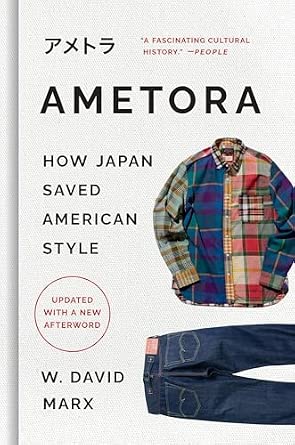 | Best for Fashion History and Cultural Context | Title: Ametora: How Japan Saved American Style | ASIN: 1541604334 | Product type: Book | VIEW LATEST PRICE | See Our Full Breakdown |
| Yumi Katsura: The Fairy Godmother of Japanese Fashion |  | Best for a Single-Designer Spotlight | Title: Yumi Katsura: The Fairy Godmother of Japanese Fashion | ASIN: 1788842634 | Product type: Book | VIEW LATEST PRICE | See Our Full Breakdown |
| Japanese Fashion Designers: The Work and Influence of Issey Miyake, Yohji Yamamoto, and Rei Kawakubo |  | Best for the Major Designer Triad | Title: Japanese Fashion Designers: The Work and Influence of Issey Miyake, Yohji Yamamoto, and Rei Kawakubo | ASIN: B00ECWBKJC | Product type: Book | VIEW LATEST PRICE | See Our Full Breakdown |
| Style on the Street: From Tokyo and Beyond |  | Best for Street-Style Inspiration | Title: Style on the Street: From Tokyo and Beyond | ASIN: 0847868729 | Product type: Book | VIEW LATEST PRICE | See Our Full Breakdown |
| Little Book of Issey Miyake: The Story of the Iconic Fashion Designer |  | Best Concise Issey Miyake Introduction | Format: Book | Series: Little Books of Fashion | Subject: Fashion design | VIEW LATEST PRICE | See Our Full Breakdown |
| Little Book of Tokyo Style: The Fashion History of the Iconic City |  | Best for Tokyo Fashion Context | Series: Fashion Destinations | Subject: Tokyo fashion history | Geographic focus: Tokyo | VIEW LATEST PRICE | See Our Full Breakdown |
| Japanese Dress in Detail (V&A Fashion in Detail) |  | Best for Close Study of Japanese Dress | Series: V&A Fashion in Detail | Subject: Japanese dress | Format: Book | VIEW LATEST PRICE | See Our Full Breakdown |
| Future Beauty: 30 Years of Japanese Fashion |  | Best Broad Fashion-History Survey | Subject: Japanese fashion | Coverage: 30 years | Format: Book | VIEW LATEST PRICE | See Our Full Breakdown |
| Issey Miyake: 45th Edition |  | Best Collectible Designer-Focused Pick | Featured designer: Issey Miyake | Edition designation: 45th Edition | Subject: Fashion design | VIEW LATEST PRICE | See Our Full Breakdown |
| Tokyo Fashion City: A Detailed Guide to Tokyo’s Trendiest Fashion Districts |  | Best for Tokyo Fashion Districts | Format: Book | Subject: Tokyo fashion districts | Geographic focus: Tokyo | VIEW LATEST PRICE | See Our Full Breakdown |
| Fruits |  | Best for Buyers Seeking a Distinctive Visual Record | Format: Book | Product title: Fruits | ASIN: 0714840831 | VIEW LATEST PRICE | See Our Full Breakdown |
| Japanese designer fashion | ASIN | Subject | Format | Title |
|---|---|---|---|---|
| New Wave in Fashion: Three Jap | 0910407010 | Three Japanese fashion designers | — | New Wave in Fashion: Three Japanese Designers |
| Ametora: How Japan Saved Ameri | 1541604334 | Japan’s adoption and reshaping of American style | Not specified in the available product data | Ametora: How Japan Saved American Style |
| Yumi Katsura: The Fairy Godmot | 1788842634 | — | Not specified in the available product data | Yumi Katsura: The Fairy Godmother of Japanese Fashion |
| Japanese Fashion Designers: Th | B00ECWBKJC | Japanese fashion designers | — | Japanese Fashion Designers: The Work and Influence of Issey Miyake, Yohji Yamamoto, and Rei Kawakubo |
| Style on the Street: From Toky | 0847868729 | — | — | Style on the Street: From Tokyo and Beyond |
| Little Book of Issey Miyake: T | 1035420635 | Fashion design | Book | — |
| Little Book of Tokyo Style: Th | 1802794972 | Tokyo fashion history | Book | — |
| Japanese Dress in Detail | 0500480575 | Japanese dress | Book | — |
| Future Beauty: 30 Years of Jap | 1858945461 | Japanese fashion | Book | Future Beauty: 30 Years of Japanese Fashion |
| Issey Miyake: 45th Edition | 3754402862 | Fashion design | Book | Issey Miyake: 45th Edition |
| Tokyo Fashion City: A Detailed | 0804857202 | Tokyo fashion districts | Book | — |
| Fruits | 0714840831 | — | Book | — |
More Details on Our Top Picks
New Wave in Fashion: Three Japanese Designers
A focused look at three Japanese designers makes this a more contained introduction than Japanese Fashion Designers: The Work and Influence of Issey Miyake, Yohji Yamamoto, and Rei Kawakubo, whose scope is explicitly centered on those three influential figures. The title suggests a compact way to encounter a small group of designers, which may suit readers who want a starting point rather than a broad survey of Japanese fashion. However, the available product information does not identify the designers, describe the book’s format, or explain how much visual or historical context it offers. That uncertainty makes it harder to choose for a specific designer or research need. I would place it ahead of street-style books for readers seeking designer-focused material, but below better-documented titles when depth and coverage matter.
Pros:- Focuses on Japanese fashion designers rather than street style or general fashion history.
- A three-designer scope may offer a more approachable starting point than a wide-ranging survey.
- Its subject makes it relevant to readers exploring Japanese designer fashion.
Cons:- The available description does not name the three designers.
- No information is provided about format, imagery, depth, or publication context.
- The limited stated scope may leave readers wanting broader historical context.
Best for: Readers seeking an introductory, designer-focused book who are comfortable choosing without knowing which three designers it covers.
Not ideal for: Buyers researching a particular Japanese designer or seeking confirmed coverage of Miyake, Yamamoto, or Kawakubo; the available details do not identify the three subjects.
- Title:New Wave in Fashion: Three Japanese Designers
- ASIN:0910407010
- Product type:Book
- Subject:Three Japanese fashion designers
- Number of designers covered:Three, according to the title
- Named designers:Not specified in the available product data
Our verdict“Choose this as a narrow designer-focused introduction only if the unidentified subjects and unspecified depth are acceptable.”
Ametora: How Japan Saved American Style
Ametora earns a distinct place in this roundup by tracing how Japan adopted and reshaped American style, rather than focusing on the work of individual designers. That cultural lens makes it a stronger choice for readers who want to understand the forces behind Japanese fashion than New Wave in Fashion: Three Japanese Designers, which is framed around three designers. It also offers a useful counterpoint to designer-centered books: its stated subject is the exchange between Japanese and American style, not a survey of runway careers. The tradeoff is focus. Readers seeking profiles, garment construction, or a visual guide to particular collections may find the premise less direct. The available information gives no details about format, images, or the eras covered, so I would treat it as a subject-led history pick, not a confirmed reference book.
Pros:- Explores Japanese fashion through cultural exchange with American style.
- Provides a different angle from designer-by-designer books in the roundup.
- Its stated subject can help readers place Japanese fashion in a wider historical context.
Cons:- The focus is Japanese reinterpretation of American style, not a broad survey of Japanese designers.
- Available product details do not specify the periods or designers covered.
- No format or image information is provided for readers choosing a visual reference.
Best for: Readers interested in how Japanese fashion absorbed and reinterpreted American clothing and style.
Not ideal for: Shoppers seeking designer biographies, outfit inspiration, or confirmed visual documentation of Japanese collections.
- Title:Ametora: How Japan Saved American Style
- ASIN:1541604334
- Product type:Book
- Subject:Japan’s adoption and reshaping of American style
- Geographic focus:Japan and the United States
- Format:Not specified in the available product data
Our verdict“Pick this for the history of Japan’s relationship with American style, not for a designer-profile or fashion-image survey.”
Yumi Katsura: The Fairy Godmother of Japanese Fashion
Yumi Katsura: The Fairy Godmother of Japanese Fashion is the clearest single-designer choice among these five titles: its subject is named directly, while New Wave in Fashion: Three Japanese Designers does not identify its three designers in the supplied details. That makes this title easier to match to a reader already interested in Katsura and her place in Japanese fashion. Its narrow subject is also its main limitation. Unlike Ametora: How Japan Saved American Style, which takes a broader cultural-history angle, this book appears centered on one designer, so it is less suited to readers seeking a map of the wider fashion scene. The available data provides no description beyond the title, leaving the book’s period coverage, format, and visual content unconfirmed. I would choose it for focused interest, not as a general introduction.
Pros:- Names its central designer, making the subject clear before purchase.
- Offers a single-designer focus distinct from broader fashion-history titles.
- Its stated Japanese fashion subject fits a focused designer-book collection.
Cons:- The available product data does not describe the book’s contents beyond its title.
- A single-designer scope provides less breadth than multi-designer surveys.
- Format, imagery, and historical coverage are not specified.
Best for: Readers specifically researching Yumi Katsura or looking for a book centered on one Japanese fashion designer.
Not ideal for: Readers who want a broad account of Japanese fashion history or confirmed coverage of multiple designers and movements.
- Title:Yumi Katsura: The Fairy Godmother of Japanese Fashion
- ASIN:1788842634
- Product type:Book
- Named subject:Yumi Katsura
- Subject area:Japanese fashion
- Format:Not specified in the available product data
Our verdict“Choose this if Yumi Katsura is your main subject; choose a broader survey if you want context across Japanese fashion.”
Japanese Fashion Designers: The Work and Influence of Issey Miyake, Yohji Yamamoto, and Rei Kawakubo
For readers choosing among these titles by named designer coverage, Japanese Fashion Designers has the clearest defined scope: it covers the work and influence of Issey Miyake, Yohji Yamamoto, and Rei Kawakubo. That makes it a more targeted pick than New Wave in Fashion: Three Japanese Designers, whose designers are not identified in the available information. It also differs from Yumi Katsura: The Fairy Godmother of Japanese Fashion by pairing three major figures rather than centering one. The tradeoff is that a three-designer focus cannot stand in for the full range of Japanese fashion, and the supplied data does not describe its format, depth, or image content. I would rank it highest for readers who want these three names together, but not for those seeking street style or a broad cultural history.
Pros:- Explicitly names all three designers covered.
- Combines discussion of designer work with their influence.
- Offers a more clearly defined subject than the unspecified trio in New Wave in Fashion.
Cons:- Coverage is limited to three named designers.
- The available data gives no details about the book’s format or visual content.
- The supplied description does not indicate how much depth each designer receives.
Best for: Readers who want a focused introduction to the work and influence of Issey Miyake, Yohji Yamamoto, and Rei Kawakubo.
Not ideal for: Readers seeking a broad survey of Japanese fashion, street-style imagery, or a book focused on a different designer.
- Title:Japanese Fashion Designers: The Work and Influence of Issey Miyake, Yohji Yamamoto, and Rei Kawakubo
- ASIN:B00ECWBKJC
- Product type:Book
- Subject:Japanese fashion designers
- Designer:Issey Miyake
- Designer:Yohji Yamamoto
- Designer:Rei Kawakubo
- Stated focus:The designers’ work and influence
Our verdict“Choose this for a defined look at Miyake, Yamamoto, and Kawakubo; choose another title for broader scene or street-style coverage.”
Style on the Street: From Tokyo and Beyond
Style on the Street: From Tokyo and Beyond points toward street fashion rather than designer biographies, making it the most distinct choice here for readers interested in how style appears beyond the runway. That angle separates it from Japanese Fashion Designers: The Work and Influence of Issey Miyake, Yohji Yamamoto, and Rei Kawakubo, which explicitly centers three designers and their influence. The title also suggests a geographic reach beyond Tokyo, though the supplied information does not confirm which places are included or whether the book is primarily photographic. That lack of detail is a real drawback for anyone buying specifically for images or a particular city. I would place this ahead of designer-focused titles for readers seeking street-style reference, but behind them for documented coverage of named Japanese designers.
Pros:- The title signals a street-style perspective distinct from designer biographies.
- Connects its subject to Tokyo while suggesting a scope beyond the city.
- Can complement designer-focused books with a broader street-fashion angle.
Cons:- No description is available to clarify locations or subject coverage.
- The supplied data does not confirm whether the book includes photographs.
- It may not meet readers’ needs for named designer profiles or fashion history.
Best for: Readers looking for a street-fashion perspective connected to Tokyo and interested in style beyond designer profiles.
Not ideal for: Readers seeking confirmed photography, named designer coverage, or a detailed history of Japanese fashion movements.
- Title:Style on the Street: From Tokyo and Beyond
- ASIN:0847868729
- Product type:Book
- Stated subject:Street style
- Named location:Tokyo
- Geographic scope:Tokyo and beyond, as stated in the title
Our verdict“Choose this for a street-style angle, but seek more product detail if photography or specific locations are central to your decision.”
Little Book of Issey Miyake: The Story of the Iconic Fashion Designer
This is the most approachable entry in this group for readers who want to focus on Issey Miyake rather than Japanese fashion as a whole. Its concise format and place in the Little Books of Fashion series give it a clear introductory role; Future Beauty: 30 Years of Japanese Fashion promises a broader view across designers and decades. That narrow focus can help a new reader get oriented around Miyake’s life and work without starting with a wider survey. The tradeoff is limited depth: the available description does not specify its length, imagery, or coverage, so readers seeking detailed garment analysis may prefer Japanese Dress in Detail. I would choose this as a focused starting point, not as a definitive reference on the designer.
Pros:- Dedicated focus on Issey Miyake’s life and work
- Concise format suits readers seeking an introductory overview
- Part of the Little Books of Fashion series
Cons:- Its concise scope may leave limited room for detailed design analysis
- The available product information does not specify image content or depth of coverage
Best for: Readers new to Issey Miyake who want a concise, designer-specific introduction before exploring wider Japanese fashion histories
Not ideal for: Fashion students or collectors seeking extensive garment documentation, detailed analysis, or a broad account of multiple Japanese designers
- Format:Book
- Series:Little Books of Fashion
- Subject:Fashion design
- Featured designer:Issey Miyake
- Coverage:The designer’s life and work
- ASIN:1035420635
Our verdict“Choose this for a compact introduction to Issey Miyake, but pick a broader or more detail-focused book for deeper study.”
Little Book of Tokyo Style: The Fashion History of the Iconic City
This book shifts the focus from individual designers to Tokyo’s fashion history, making it the city-centered choice in this lineup. Compared with Little Book of Issey Miyake, it offers a broader setting for understanding fashion rather than concentrating on one designer’s career. Its place in the Fashion Destinations series also signals a fashion-led approach to the city, though the available description gives no detail about its periods, neighborhoods, or visual coverage. That uncertainty matters: readers looking for a practical district guide may find Tokyo Fashion City a closer match, while this title is framed around history. I would select it for cultural and historical context, not for shopping recommendations or an exhaustive academic account.
Pros:- Centers Tokyo’s fashion history rather than a single designer
- Connects fashion with the identity of a major style city
- Part of the Fashion Destinations series
Cons:- The available description does not identify which eras or movements receive attention
- No details are provided about imagery, research depth, or practical city guidance
Best for: Readers interested in how Tokyo’s fashion history shaped the city’s style culture, rather than in a single designer’s biography
Not ideal for: Visitors seeking current shopping routes, detailed neighborhood advice, or a heavily documented academic history
- Series:Fashion Destinations
- Subject:Tokyo fashion history
- Geographic focus:Tokyo
- Format:Book
- Title focus:The fashion history of Tokyo
- ASIN:1802794972
Our verdict“Choose this for a city-level history of Tokyo style; pick Tokyo Fashion City instead if your priority is navigating fashion districts.”
Japanese Dress in Detail (V&A Fashion in Detail)
Japanese Dress in Detail is the most specifically garment-focused title here: its subject is Japanese dress, and its V&A Fashion in Detail series framing points toward looking closely at clothing rather than following one designer’s biography. That makes it a different kind of resource from Little Book of Issey Miyake, which concentrates on one fashion figure, and from Future Beauty, which surveys several decades of Japanese fashion. The product information does not describe the garments, periods, or image selection, so I would not assume a particular historical range or level of technical annotation. Its narrow subject is a strength for readers who want to study dress itself, but may feel limiting to anyone after street style, city culture, or a broad designer overview.
Pros:- Direct focus on Japanese dress
- Belongs to the V&A Fashion in Detail series
- A garment-centered complement to designer biographies and fashion-history surveys
Cons:- The available description does not specify the garments or historical periods covered
- Its focused subject may not satisfy readers seeking a broad overview of Japanese fashion
- No details are provided about the book’s illustrations or depth of garment analysis
Best for: Readers, students, and dress-history enthusiasts who want a book centered on Japanese clothing rather than a single designer or city
Not ideal for: Readers primarily seeking biographies, current Tokyo street style, or a broad narrative of contemporary Japanese fashion
- Series:V&A Fashion in Detail
- Subject:Japanese dress
- Format:Book
- Editorial focus:Dress and clothing
- Publisher identifier:0500480575
- ASIN:0500480575
Our verdict“Choose this for a dress-centered study of Japanese fashion, but opt for Future Beauty if you want a wider historical survey.”
Future Beauty: 30 Years of Japanese Fashion
Among these five titles, Future Beauty has the clearest promise for readers who want a wide view of Japanese fashion: it covers 30 years rather than one designer, a single city, or dress as a category. That scope makes it a stronger starting point for tracing change across the field than Little Book of Issey Miyake, whose focus is intentionally narrower. It also differs from Japanese Dress in Detail, which centers clothing rather than a multi-decade fashion story. The tradeoff is breadth: a survey may give less space to any one designer or garment, and the available description does not name the period boundaries, contributors, or specific designers included. I would choose it for an overview, while pairing it with a focused title for deeper study.
Pros:- Explicitly covers three decades of Japanese fashion
- Offers a broader scope than the designer-specific books in this group
- Works as a survey alongside more focused titles
Cons:- Its broad span may leave less room for detailed treatment of individual designers
- The available description does not identify the designers, movements, or exact years covered
Best for: Readers seeking a broad account of Japanese fashion across several decades before choosing designers or movements to study in depth
Not ideal for: Buyers looking for an individual designer biography, a close garment study, or a guide to present-day Tokyo style
- Subject:Japanese fashion
- Coverage:30 years
- Format:Book
- Title:Future Beauty: 30 Years of Japanese Fashion
- ASIN:1858945461
- Edition details:Not specified in the provided product information
Our verdict“Choose this as the broadest starting point in the group, then add a designer-focused book for close analysis.”
Issey Miyake: 45th Edition
This title is the other dedicated Issey Miyake pick, but its “45th Edition” designation gives it a distinct identity from the introductory Little Book of Issey Miyake. The provided information confirms its focus on Miyake, but does not explain what the edition number means, how the book is structured, or whether it adds visual or archival material. I would treat it as the more edition-led choice, not assume it offers more depth than the concise biography. Compared with Future Beauty, it trades a multi-designer history for a single designer’s work; that focus suits collectors and committed Miyake readers but narrows its appeal. The main drawback is uncertainty about contents, so buyers should check the edition details before choosing it as a reference.
Pros:- Dedicated focus on Issey Miyake
- The 45th Edition designation distinguishes it from the Little Books of Fashion title
- A focused alternative to multi-designer surveys such as Future Beauty
Cons:- The provided description does not explain the edition designation
- No details are available about contents, format, imagery, or depth
- Its single-designer scope is narrower than a Japanese fashion survey
Best for: Issey Miyake enthusiasts and fashion-book collectors who specifically want a publication centered on the designer
Not ideal for: Readers who need a clearly described introduction, a broad history of Japanese fashion, or confirmed details about imagery and contents
- Featured designer:Issey Miyake
- Edition designation:45th Edition
- Subject:Fashion design
- Format:Book
- Title:Issey Miyake: 45th Edition
- ASIN:3754402862
Our verdict“Choose this if you specifically want an Issey Miyake publication and can confirm its edition details; otherwise, the Little Book offers a clearer introductory brief.”
Tokyo Fashion City: A Detailed Guide to Tokyo’s Trendiest Fashion Districts
I’d choose Tokyo Fashion City when my interest is less in a single designer’s career and more in the neighborhoods where fashion scenes take shape. Its stated focus on Tokyo’s trendiest districts gives it a different purpose from Little Book of Tokyo Style, which centers on the city’s fashion history, and from Style on the Street: From Tokyo and Beyond, which points toward street-style imagery. That district-led angle can help readers connect Japanese fashion to place and local scenes. The limitation is that the available product information confirms only this broad focus; it gives no details about specific neighborhoods, maps, photographs, or practical travel guidance. I’d treat it as a subject-specific companion, not a verified itinerary or a substitute for books on individual designers.
Pros:- Centers Tokyo’s fashion districts, giving the subject a geographic focus
- Offers a different angle from designer-centered titles such as New Wave in Fashion: Three Japanese Designers
- May suit readers connecting fashion interests with Tokyo neighborhood research
Cons:- The available product data does not identify which districts are covered
- No confirmed information about maps, images, shop listings, or travel advice
- Its broad city focus may offer less designer-specific detail than Japanese Fashion Designers: The Work and Influence of Issey Miyake, Yohji Yamamoto, and Rei Kawakubo
Best for: Readers planning fashion-focused Tokyo research or travel who want a guide organized around fashion districts rather than designer biographies
Not ideal for: Buyers seeking confirmed maps, current shop recommendations, detailed designer profiles, or a richly specified visual book; the available information does not establish those features
- Format:Book
- Subject:Tokyo fashion districts
- Geographic focus:Tokyo
- Stated coverage:The city’s trendiest fashion districts
- Product title:Tokyo Fashion City: A Detailed Guide to Tokyo’s Trendiest Fashion Districts
- ASIN:0804857202
Our verdict“Choose this for a district-focused perspective on Tokyo fashion, but skip it if you need verified maps, practical listings, or detailed designer coverage.”
Fruits
Fruits has a title that suggests a concise, visually oriented entry in a Japanese fashion reading list, but the supplied product information includes no description or specifications to confirm its subject, format, imagery, or scope. That makes it harder to recommend confidently than Style on the Street: From Tokyo and Beyond, whose title explicitly signals a street-style focus, or Future Beauty: 30 Years of Japanese Fashion, which promises a broader account of Japanese fashion. I’d place this pick only for readers already drawn to the book and willing to verify the edition and contents before buying. Without those details, I can’t responsibly claim it documents particular designers, trends, or subcultures. Its appeal in this roundup is therefore its potential as a visual counterpoint, paired with substantial uncertainty about what the book actually offers.
Pros:- Provides a concise title that may appeal to readers browsing visually oriented fashion books
- Could complement the explicitly historical focus of Future Beauty: 30 Years of Japanese Fashion
- Has a distinct title within a roundup otherwise featuring clearly named designer and city subjects
Cons:- No product description is provided to verify its subject or contents
- No format, image, author, or coverage details are available in the supplied data
- Hard to compare reliably with Style on the Street: From Tokyo and Beyond without confirmed scope
Best for: Readers already interested in Fruits who can check the edition and contents before purchase and want to add a potentially visual title to a Japanese fashion shelf
Not ideal for: Readers who need a confirmed account of Japanese designers, fashion history, street style, or specific visual content before choosing a book
- Format:Book
- Product title:Fruits
- ASIN:0714840831
- Description:Not provided
- Subject details:Not provided
- Edition details:Not provided
Our verdict“Consider Fruits only if you can verify the edition and contents first; readers seeking dependable subject details should choose a more fully described title.”

How We Picked
I ranked these books by how well they answer different interpretations of Japanese designer fashion: an overview of the movement, focused coverage of major designers, close attention to garments, or a look at street and city style. I weighed the usefulness of each title’s subject and scope, how clearly it serves a particular reader, and whether its approach adds a distinct perspective to the lineup. Because the list includes both designer histories and adjacent fashion-culture books, I treated relevance to Japanese fashion as more important than a book’s breadth alone.
Future Beauty ranks first for readers seeking a wide-ranging introduction, while more specialized books rank higher for particular interests rather than overall coverage. Titles such as Fruits, Tokyo Fashion City, and Ametora are not substitutes for designer surveys; they earn their places by offering street, place, or cultural context. I also considered practical fit: a beginner may want a broad overview, while a collector or student may prefer a focused visual or historical reference. The ranking reflects those differences, not a claim that every book serves the same purpose.
| Japanese designer fashion | Format |
|---|---|
| New Wave in Fashion: Three Jap | — |
| Ametora: How Japan Saved Ameri | Not specified in the available product data |
| Yumi Katsura: The Fairy Godmot | Not specified in the available product data |
| Japanese Fashion Designers: Th | — |
| Style on the Street: From Toky | — |
| Little Book of Issey Miyake: T | Book |
| Little Book of Tokyo Style: Th | Book |
| Japanese Dress in Detail | Book |
| Future Beauty: 30 Years of Jap | Book |
| Issey Miyake: 45th Edition | Book |
| Tokyo Fashion City: A Detailed | Book |
| Fruits | Book |
Factors to Consider When Choosing Best Japanese Designer Fashion
These books cover several related but distinct subjects, so I’d choose by the question you want the book to answer. A title about a designer’s career will not necessarily explain street style or garment construction, and a city guide may offer little runway history. Use these factors to match the book’s scope, format, and point of view to your interests.
Choose a subject before choosing a title
Decide whether you want designer biographies, a movement-wide history, garment analysis, street photography, or a guide to fashion districts. Those subjects overlap, but they are not interchangeable: a book on Miyake or Katsura may provide depth on one career without mapping the wider scene. A common mistake is to assume that any book with “Japanese fashion” in its subject will cover the designers, eras, and styles you care about. Read the subtitle and contents when available, and look for the names or topics you want to encounter. If you are still exploring, a broad survey can help you identify which narrower subjects deserve a closer look.
Match the level of context to your familiarity
Newcomers often benefit from a book that links designers to the periods and ideas around them, rather than a highly specific visual archive. Readers already familiar with the major names may get more from a focused study or a book organized around garments and influence. Do not assume that a compact title is automatically an easy introduction; some concise books depend on background knowledge and leave little room for context. Conversely, a survey can feel too general if you are seeking detailed discussion of one designer. Pick the amount of explanation you want, not just the most recognizable name on the cover.
Decide whether images or analysis matter more
Fashion books can work as visual references, written histories, or a mix of both. Street-style titles such as Fruits can be most useful when you want to study dress and subculture through images, while historical and designer-focused books may place more weight on context and interpretation. If the book is meant for browsing, check that its visual subject matches your taste; photography centered on one era or scene may not represent Japanese fashion as a whole. For study, captions, chronology, and explanatory text can matter more than image count. The tradeoff is simple: a strong visual record can be inspiring, but it may not answer every historical question.
Separate Japanese design from fashion influenced by Japan
Some titles focus on designers and fashion made in Japan, while others trace cultural exchange or the influence of Japanese style elsewhere. Ametora, for example, takes a broader cultural route through Japan’s relationship with American clothing, rather than serving as a designer directory. That perspective can add useful context, but it may not suit someone seeking a close account of Japanese runway collections. Check whether the book’s central subject is Japanese creators, Japanese dress, Tokyo style, or international influence. This distinction helps prevent a relevant but adjacent title from disappointing you.
Think about how you will use the book
A reference for study, a shelf book for visual browsing, and a guide for planning a Tokyo visit call for different formats and levels of detail. A district guide is tied to place and may be most useful to readers interested in Tokyo’s neighborhoods, whereas an enduring designer history can remain relevant beyond a particular trip. For a gift, a single-designer title can feel personal if the recipient already follows that designer; a broad survey is safer when their interests are less specific. Avoid choosing only by an attractive cover when the intended use is research or trip planning. Let the reader’s purpose determine whether scope, images, or practical location information matters most.
Frequently Asked Questions
Which book is the best starting point if I know very little about Japanese fashion?
I’d start with Future Beauty: 30 Years of Japanese Fashion because its broad scope can introduce readers to multiple designers and developments rather than centering on a single career. It is a better first step than a narrowly focused biography if you have not yet settled on a favorite designer. If you prefer a compact introduction centered on major names, Japanese Fashion Designers offers a more concentrated route through Issey Miyake, Yohji Yamamoto, and Rei Kawakubo. Choose based on whether you want a movement-wide view or a closer look at three influential figures. Neither choice replaces a specialized book once you know what you want to study next.
Are these books mainly about runway designers, or do they cover street fashion too?
The lineup includes both, but the emphasis differs considerably. Fruits and Style on the Street: From Tokyo and Beyond are the clearest picks for readers interested in street dress and personal style rather than designer careers. Books such as Future Beauty and Japanese Fashion Designers are more closely tied to designers and fashion history. A Tokyo district guide focuses on place and shopping areas, which is another distinct angle. If street photography is your priority, do not choose a runway-centered title expecting it to provide the same kind of visual record.
Should I choose a book about one designer or a general history?
A general history is usually the more useful first purchase when you want context across several designers, eras, or approaches. A single-designer book makes more sense if you already follow that person’s work or want a focused reference, as with the Issey Miyake titles or the book on Yumi Katsura. One common mistake is buying several narrow books before learning which designers or periods hold your interest. A broad survey can help you make that choice, while a focused book can then add detail. If your goal is a gift for a committed fan, the focused option may feel more tailored.
Is Ametora a good choice if I specifically want Japanese designer biographies?
Ametora: How Japan Saved American Style is a better fit for readers interested in cultural exchange and the evolution of clothing in Japan than for readers seeking a set of designer biographies. Its subject can help explain the wider fashion culture around Japanese style, but it is not a direct substitute for Japanese Fashion Designers or an individual designer title. Choose it when the connection between Japanese and American clothing is part of your interest. If your main aim is to learn about particular designers’ careers and work, start with a book built around those designers instead.
Which title makes the most sense for studying garments rather than trends?
Japanese Dress in Detail is the most directly suited to readers who want to look closely at clothing as constructed objects, rather than follow a broad account of trends or street scenes. It offers a different kind of value from titles centered on designer careers, photography, or Tokyo districts. Before choosing it, check whether historical dress and garment detail match your intended subject; it may not answer questions about contemporary street fashion or a single designer’s full career. For a wider timeline of Japanese fashion, pair that interest with a survey such as Future Beauty. The right choice depends on whether you want to examine clothing itself or the culture around it.
Conclusion
For the best overall introduction, I recommend Future Beauty: 30 Years of Japanese Fashion for its broad scope. My best value in coverage is Japanese Fashion Designers for readers who want a focused route through three major figures without starting with separate biographies. Beginners should choose Future Beauty; readers seeking a premium visual centerpiece may prefer the substantial designer-focused presentation of Issey Miyake: 45th Edition. For specific interests, pick Fruits or Style on the Street for street style, Japanese Dress in Detail for garments, or Tokyo Fashion City for district-focused exploration. The best choice is the one whose subject matches what you want to learn or look at, rather than the title with the broadest-sounding promise.
Columbus Day / Indigenous Peoples' Day Picks
long weekend sales
As an affiliate, we earn on qualifying purchases.