
Milan Fashion Week is one of the four great pillars of the global fashion calendar, and the best way to study it beyond the runway is through the archive books it has inspired. After comparing the leading titles tied to Milan’s most influential houses, I’ve settled on three that each serve a distinctly different reader. Prada: The Complete Collections stands out as my top pick for its unmatched breadth across decades of Milan runway history, while Milano&Fashion: The Story Behind Dolce&Gabbana is the stronger choice if you want narrative depth and cultural context rather than pure visuals. WWD Men’s Collections Fall 2009 rounds out the lineup as a specialist archive pick for anyone focused on menswear.

Get your wardrobe favorites delivered free — and shop member deals
- Fast, free delivery on millions of items
- Access to Prime Big Deal Days deals on October 6–7
- Prime Video, Amazon Music and more included
The main tradeoff you’re weighing across all three is scope versus depth. The Prada volume gives you the widest view of a single Milanese house, the Dolce&Gabbana book goes deepest into the story behind one aesthetic, and the WWD issue captures a single season across many designers. Price and physical size also differ considerably: these are coffee-table-scale publications, and the specialized art-book pricing of the Dolce&Gabbana title is a real consideration if you’re a casual buyer rather than a collector.
Key Takeaways
- Prada: The Complete Collections is the best overall pick because it documents every runway season from one of Milan’s most influential houses in a single visual archive
- Milano&Fashion: The Story Behind Dolce&Gabbana is the best narrative choice — it explains the Sicilian design philosophy behind the clothes rather than just showing them
- WWD Men’s Collections Fall 2009 is the best niche pick for menswear researchers, but its single-season scope makes it a supplement rather than a starting point
- The core tradeoff is breadth versus depth: the Prada book covers the most ground, while the Dolce&Gabbana title offers the richest storytelling
- All three are visual, coffee-table-format books, so shelf space and specialized pricing matter more here than with standard fashion paperbacks
| Prada: The Complete Collections (Catwalk) |  | Best Overall — the definitive visual archive of a Milan powerhouse | Subject: Prada | Series: Catwalk | Format: Hardcover coffee-table book | VIEW LATEST PRICE | See Our Full Breakdown |
| Milano&Fashion: The Story Behind Dolce&Gabbana | 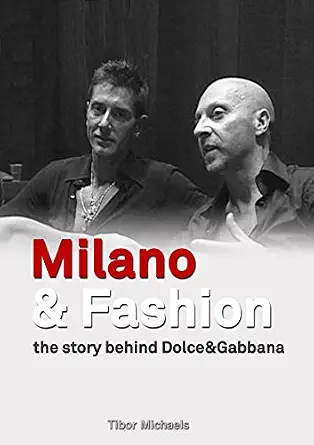 | Best for Design Philosophy — the story behind the Sicilian aesthetic | Subject: Dolce&Gabbana | Theme: Fashion History, Sicilian Culture | Format: Illustrated art book | VIEW LATEST PRICE | See Our Full Breakdown |
| WWD Men’s Collections Fall 2009 |  | Best Niche Archive — a time capsule of one menswear season | Subject: Men’s Fall 2009 collections | Publisher Type: Trade press (WWD) | Coverage: Multiple designers, single season | VIEW LATEST PRICE | See Our Full Breakdown |
| Milan fashion week collection | Subject | Format | Best Use | Depth of Text |
|---|---|---|---|---|
| Prada: The Complete Collection | Prada | Hardcover coffee-table book | Reference and study | Minimal — brief contextual notes |
| Milano&Fashion: The Story Behi | Dolce&Gabbana | Illustrated art book | Reading and cultural study | Substantial narrative content |
| WWD Men’s Collections Fall 200 | Men’s Fall 2009 collections | Seasonal periodical | Archival and historical research | Reporting-led with imagery |
More Details on Our Top Picks
Prada: The Complete Collections (Catwalk)
This volume earns the top spot because it does something no other book in this lineup attempts: it documents every Prada runway collection from the house’s debut through its most recent seasons, in chronological order, with hundreds of full look photographs. For anyone whose interest in Milan Fashion Week centers on the city’s most intellectually influential house, this is the closest thing to attending every show for the past several decades.
Compared with Milano&Fashion: The Story Behind Dolce&Gabbana, this book trades narrative for coverage. Where the Dolce&Gabbana title tells you why a house thinks the way it does, the Prada volume shows you what was actually sent down the runway, season after season — including the famous minimalist collections of the early nineties, the conceptual prints of the 2000s, and the boundary-pushing silhouettes of recent years. That chronological sweep is what makes it a reference work rather than a coffee-table book you read once.
The tradeoff is real, though. Text is minimal, limited largely to brief contextual notes rather than essays, so if you’re new to fashion history you may find yourself wanting more explanation of why certain collections mattered. The book is also physically substantial, which is a pleasure on a table but a problem on a crowded shelf. This pick makes the most sense for readers who already love Prada’s aesthetic and want the complete visual record; it makes less sense for someone who wants a guided tour through Italian fashion as a whole.
Pros:- Complete chronological archive of every Prada runway collection
- High-quality photographic reproduction that captures fabric and silhouette detail
- Part of the respected Catwalk series, so it pairs with volumes on other major houses
- Functions as a genuine research reference, not just a display book
Cons:- Limited narrative text — commentary is brief and assumes some fashion knowledge
- Single-house focus means no coverage of the wider Milan calendar
- Large and heavy format demands serious shelf or table space
Best for: Fashion students, designers and Prada devotees who want a complete season-by-season visual reference from one of Milan’s defining houses
Not ideal for: Readers who want rich storytelling or an introduction to Milan fashion broadly — the minimal text and single-house focus will leave them wanting more
- Subject:Prada
- Series:Catwalk
- Format:Hardcover coffee-table book
- Content:Every runway collection, chronologically arranged
- Visual Style:Full-look runway photography
- Best Use:Reference and study
- Depth of Text:Minimal — brief contextual notes
- House Focus:Prada only
Our verdict“If you buy one book to understand a single Milan Fashion Week institution, this complete Prada archive is the strongest and most lasting choice.”
Milano&Fashion: The Story Behind Dolce&Gabbana
Where the Prada volume is an archive, this book is a biography of an aesthetic. It traces how Domenico Dolce and Stefano Gabbana built a global luxury house on Sicilian-inspired design — the lace, the tailoring, the Catholic imagery, the Mediterranean color palette — and explains the creative logic that turned regional Italian culture into one of Milan’s most recognizable runway signatures. If you’ve ever watched a Dolce&Gabbana show and wondered what you were actually looking at, this is the book that answers the question.
Compared with Prada: The Complete Collections, it inverts the formula: less exhaustive imagery, far more interpretation. That makes it the better second purchase for someone who already owns a visual archive and wants context to go with it, and in my ranking it sits just below Prada because its narrower interpretive scope serves fewer readers. Against WWD Men’s Collections Fall 2009, the difference is even starker — the WWD issue documents a moment, while this book explains a legacy.
The drawbacks are worth stating plainly. This is a specialized art book, and its pricing reflects that: it costs more per page than a general fashion title, which stings if you’re only casually curious. The subject matter is also unapologetically niche — if Sicilian culture and maximalist Italian glamour don’t appeal to you, no amount of beautiful imagery will fix that. This option stands out for committed fans of Italian fashion and readers who value the thinking behind the clothes as much as the clothes themselves.
Pros:- Deep narrative insight into the heritage and philosophy of a major luxury house
- Showcases Sicilian culture and its translation into sartorial design
- High-quality imagery and production typical of collector art books
- Strong complement to visual archive books like the Prada volume
Cons:- Niche subject matter limits appeal for general fashion audiences
- Specialized art-book pricing makes it a bigger commitment than a standard fashion title
- Not a comprehensive collection-by-collection reference
Best for: Fans of Dolce&Gabbana and readers who want cultural and historical context behind one of Milan’s loudest and most beloved runway identities
Not ideal for: Budget-conscious casual buyers or readers interested in the breadth of Milan fashion rather than one house’s philosophy
- Subject:Dolce&Gabbana
- Theme:Fashion History, Sicilian Culture
- Format:Illustrated art book
- Content Focus:Brand history and design philosophy
- Visual Style:Editorial and runway imagery with design detail
- Best Use:Reading and cultural study
- Depth of Text:Substantial narrative content
- House Focus:Dolce&Gabbana only
Our verdict“This is the pick for readers who want to understand the story and culture behind a Milan house, not just flip through its runway looks.”
WWD Men’s Collections Fall 2009
This is the specialist’s pick of the group, and I want to be upfront about what it is: a single-season trade publication covering the Fall 2009 men’s collections as reported by Women’s Wear Daily, the industry’s long-standing paper of record. Unlike the two house-focused books above, it spans many designers and many runway shows, giving you a snapshot of what the entire menswear calendar looked like in one season — including the Milan shows that anchor it.
That breadth across designers is its unique selling point, but it’s also why it ranks third. Where Prada: The Complete Collections gives you decades of one house, this gives you one season of everyone. For a researcher tracking how a specific trend moved through multiple houses at once, that horizontal view is genuinely useful and unavailable in the other two books. For everyone else, the 2009 content is simply dated, documenting a moment in menswear that has since been reinterpreted several times over.
The tradeoff comes down to purpose. If you’re building a fashion library and want primary-source material from a specific era, the industry-standard coverage here has real archival value. If you want to understand Milan Fashion Week as it exists now, or dive deep into a single house’s evolution, this model is better suited as a supplement — one you buy after one of the books above, not instead of them. Its affordability relative to heavyweight art books is a plus, but it can’t compete on visual richness or long-term relevance.
Pros:- Captures multiple designers and shows across one season, unlike the single-house books
- Primary trade-press documentation from an industry-standard source
- Useful archival reference for late-2000s menswear research
- More affordable than large-format art books
Cons:- Content is over a decade old and reflects a single season only
- Niche appeal limited to researchers and vintage fashion fans
- Smaller production values than the two illustrated books in this lineup
Best for: Fashion historians, vintage menswear enthusiasts and researchers who want primary trade-press coverage of the Fall 2009 season
Not ideal for: Anyone seeking current trend coverage or a deep single-house archive — this is a dated, single-season snapshot
- Subject:Men’s Fall 2009 collections
- Publisher Type:Trade press (WWD)
- Coverage:Multiple designers, single season
- Format:Seasonal periodical
- Content Focus:Runway and industry reporting
- Best Use:Archival and historical research
- Depth of Text:Reporting-led with imagery
- Era:Fall/Winter 2009
Our verdict“A worthwhile time capsule for menswear researchers, but a supplement to — not a substitute for — the Prada and Dolce&Gabbana volumes.”
How We Picked
Because Milan Fashion Week itself is an event rather than a product, I judged these books on how well they capture and contextualize the collections that define it. My first criterion was runway relevance — each title had to document or interpret collections actually shown in Milan, whether across a single house’s history or a single season’s schedule. I gave preference to books connected to houses that anchor the Milan calendar, since that’s what a reader searching for Milan Fashion Week material actually wants.
The second criterion was editorial balance between images and text. A book that is all photographs serves a different purpose than one that explains the thinking behind a collection, and I wanted the lineup to reflect both approaches so buyers can match a title to how they like to study fashion. I also weighed build quality and presentation, since all three are large-format publications where printing quality and reproduction of fabric detail matter enormously.
Finally, I considered audience fit. A design student, a collector, and a casual fashion fan each need something different, so I eliminated nothing for being niche — instead, I made the niche nature of each title explicit. Where a book had an obvious weakness, such as the WWD issue’s dated season or the Prada volume’s sparse commentary, I treated that as a defining characteristic of the pick rather than a reason to exclude it, because no single book in this category does everything well.
| Milan fashion week collection | Subject | Format | Visual Style | Best Use |
|---|---|---|---|---|
| Prada: The Complete Collection | Prada | Hardcover coffee-table book | Full-look runway photography | Reference and study |
| Milano&Fashion: The Story Behi | Dolce&Gabbana | Illustrated art book | Editorial and runway imagery with design detail | Reading and cultural study |
| WWD Men’s Collections Fall 200 | Men’s Fall 2009 collections | Seasonal periodical | — | Archival and historical research |
Factors to Consider When Choosing Best Milan Fashion Week Collections
Choosing between these three books comes down to how you want to study Milan Fashion Week: through one house’s complete runway history, through the cultural story behind an aesthetic, or through a single season’s industry snapshot. These are the factors I’d weigh before buying.Breadth vs. Depth
The single biggest decision is whether you want wide or deep. The Prada book covers one house across its entire runway history; the Dolce&Gabbana book goes deep into the philosophy of one house; and the WWD issue spreads across many designers but only one season. None of them covers all of Milan Fashion Week comprehensively, so start by deciding which lens matters most to you.
Images vs. Narrative
If you learn visually and want to study silhouettes, styling and fabric, the Prada archive is the better fit. If you want to understand why collections look the way they do — the cultural references, the biographies, the design decisions — the Dolce&Gabbana title delivers far more readable content. The WWD issue sits in between, with trade reporting rather than either polished imagery or long-form essays.
Budget and Format
All three are physical publications, but they occupy different price tiers. Specialized art books like the Dolce&Gabbana volume command collector pricing, while seasonal trade publications like the WWD issue are typically the most affordable entry point. The two illustrated books are also large and heavy, so measure your shelf or table space before committing — these are not books you’ll slip into a bag.
Current vs. Historical Interest
If your goal is to understand contemporary Milan runways, prioritize the books with the longest timelines — the Prada volume carries its story into recent seasons. If your interest is historical, particularly in late-2000s menswear, the WWD Fall 2009 issue becomes the more relevant pick despite its age. Datedness is only a drawback when it doesn’t match your purpose.
Frequently Asked Questions
Which book is the best starting point for someone new to Milan Fashion Week?
For most readers, Prada: The Complete Collections is the best entry point because it shows decades of runway evolution in one place, letting you trace how one of Milan’s most influential houses changed over time. That said, it assumes some familiarity with fashion terminology since its text is minimal. If you prefer learning through stories rather than images, Milano&Fashion: The Story Behind Dolce&Gabbana is the gentler introduction, because its narrative explains context that a pure photo archive leaves out. The WWD Fall 2009 issue is the weakest starting choice, since its single-season, dated scope teaches you about one moment rather than the event as a whole.
Do these books cover Milan Fashion Week as an event, or just individual designers?
None of the three documents the full Milan Fashion Week calendar — no single book really does. The Prada and Dolce&Gabbana titles approach Milan through one house each, showing how those brands shaped the event’s identity over decades. The WWD issue comes closest to event coverage in that it spans multiple designers, but it captures only one season and skews toward menswear across the international calendar rather than Milan alone. If you want broad event coverage, the honest answer is that you’d need to combine titles or add general Italian fashion histories to your library.
Is the WWD Men’s Collections Fall 2009 issue worth buying if it’s outdated?
It depends entirely on your purpose. For researchers, vintage menswear sellers and fashion historians, primary trade-press coverage of a specific season has real archival value that no retrospective book replaces — it shows how collections were received and reported at the time, across many designers at once. For general readers or anyone tracking current trends, the age is a genuine liability: styles, styling conventions and industry context have all moved on. I’d treat it as a supplement to a stronger library rather than a first purchase, and its lower cost relative to art books makes that supplementary role easier to justify.
Are these books suitable for fashion students, or are they more for casual fans?
Fashion students get the most value from Prada: The Complete Collections, because a chronological visual archive is exactly the kind of reference you return to across multiple projects — you can trace silhouettes, styling decisions and print development season by season. The Dolce&Gabbana book is equally valuable for students focused on brand identity and cultural referencing, since it demonstrates how a regional aesthetic becomes a global luxury language. Casual fans will still enjoy both, but should know the art-book pricing and minimal narrative in the Prada volume favor repeated study over a one-time read.
Which book has the best photography and production quality?
The two illustrated titles lead here, in different ways. The Prada volume offers consistent, high-quality reproduction of full runway looks across its entire span, which is remarkable given how many collections it packs in. The Dolce&Gabbana book leans into luxury art-book production, with editorial and campaign imagery that showcases fabric detail and Sicilian styling more lushly than straightforward runway photography. The WWD issue, as a seasonal trade publication, has competent but utilitarian visuals — serviceable for research, but not something you’d display on a coffee table.
Conclusion
After comparing all three, my recommendations split cleanly by buyer type. If you want the single best purchase — the book that best captures a Milan Fashion Week institution — choose Prada: The Complete Collections. Its complete chronological runway archive, strong photographic reproduction and reference-book longevity make it the pick I’d hand to almost any serious fashion reader.
If you’re a reader rather than a browser — someone who wants essays, biography and cultural context over pages of runway looks — Milano&Fashion: The Story Behind Dolce&Gabbana is worth the specialized art-book pricing. Pair it with the Prada volume and you’ll have both the imagery and the interpretation, which is the strongest two-book combination in this category.
Finally, if you’re a researcher, archivist or vintage menswear enthusiast, WWD Men’s Collections Fall 2009 earns its place as primary-source material spanning multiple designers in one season. Everyone else should treat it as optional. Whatever you choose, decide first whether you value breadth, depth or a historical snapshot — because in this trio, no single book delivers all three.
Fall Picks
fall essentials
As an affiliate, we earn on qualifying purchases.