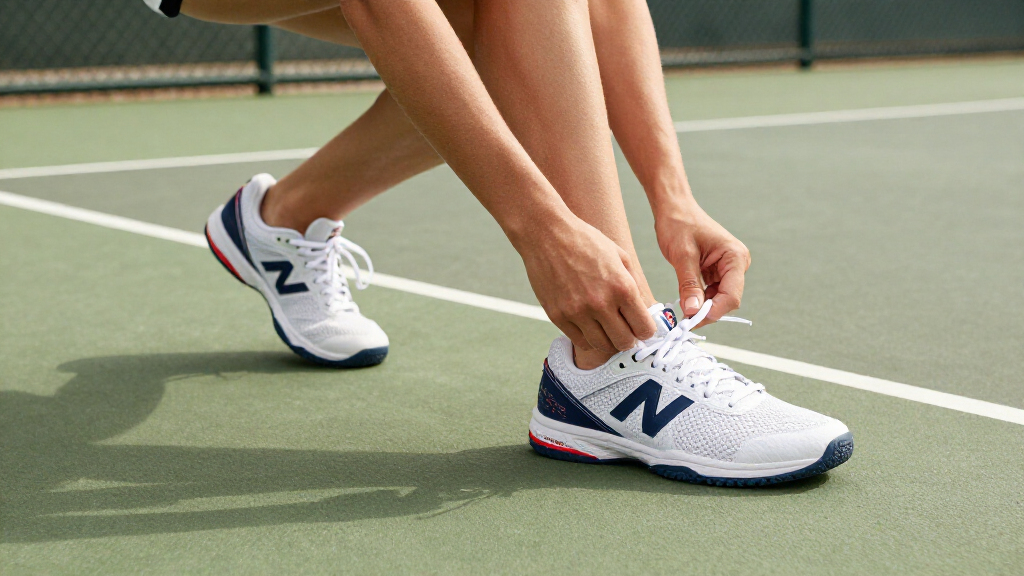

For most players, I’d start with the New Balance Men’s FuelCell 996v7 as the best overall New Balance tennis shoe in this lineup, while the Fresh Foam X CT-Rally v2 stands out for cushioning and the 806 V1 for structured support. The main tradeoff is between a lighter, quicker feel and the added stability or durability that can suit longer matches and frequent court use. The lineup also includes more accessible options, such as the 696v7, plus women’s models tailored to different fit and play preferences. My ranking weighs court-ready performance, support, construction, and versatility rather than treating every shoe as interchangeable. Read on for the full breakdown and help matching a model to your game.

Get your wardrobe favorites delivered free with Prime
- Fast, free delivery on millions of items
- Prime Video, Amazon Music and more included
- Member-only deals all year
Key Takeaways
- The FuelCell 996v7 is the best all-around starting point because it offers a performance-focused balance; players seeking a softer, more cushioned ride may prefer the CT-Rally v2.
- The 806 V1 prioritizes support over a light, quick feel, making it a better fit for players who value structure and court stability than for those seeking a nimble shoe.
- The 696v7 and FuelCell 796 V5 fill different approachable roles: the 696v7 is a straightforward court option, while the 796 V5 leans toward a more performance-oriented feel.
- The two men’s FuelCell 996 generations should not be treated as identical; the v7 leads this ranking, while the V6 remains a useful comparison for shoppers focused on that earlier model.
- The women’s lineup serves distinct needs: the Coco CG2 adds a player-signature option, while the women’s FuelCell 996 V6 and Delray V2 offer alternate routes into the FuelCell range.
| New Balance Men’s FuelCell 996v7 Tennis Shoe |  | Best for Responsive Cushioning | Upper: Synthetic and mesh | Midsole: FuelCell | Sole material: Rubber | VIEW LATEST PRICE | See Our Full Breakdown |
| New Balance Men’s Fresh Foam X CT-Rally v2 Tennis Shoes |  | Best for Stability-Focused Players | Upper material: Synthetic and textile | Midsole: Fresh Foam X | Sole material: Rubber | VIEW LATEST PRICE | See Our Full Breakdown |
| New Balance Men’s 806 V1 |  | Best for a Traditional Leather Build | Upper: Full-grain leather | Fabric composition: 90% leather, 10% synthetic | Sole material: Rubber | VIEW LATEST PRICE | See Our Full Breakdown |
| New Balance Men’s FuelCell 996 V6 Tennis Shoe |  | Best for Durability and Lockdown | Foam: FuelCell | Upper technology: NDure | Outsole technology: NDurance rubber | VIEW LATEST PRICE | See Our Full Breakdown |
| New Balance Men’s 696v7 Tennis Shoe |  | Best for Multi-Court Versatility | Upper: Mesh with synthetic support | Cushioning: FuelCell foam | Sole material: Rubber | VIEW LATEST PRICE | See Our Full Breakdown |
| New Balance Women’s FuelCell Delray V2 Tennis Shoes |  | Best for Multi-Surface Versatility | Midsole: FuelCell foam | Outsole: Non-marking Ndurance rubber | Shank: Nylon | VIEW LATEST PRICE | See Our Full Breakdown |
| New Balance Women’s FuelCell 996 V6 Tennis Shoes |  | Best for Heel Lockdown | Midsole: FuelCell foam | Upper material: NDure upper | Outsole: NDurance rubber | VIEW LATEST PRICE | See Our Full Breakdown |
| New Balance Men’s FuelCell 796 V5 Tennis Shoe |  | Best for Quick Court Movement | Midsole technology: FuelCell | Sole material: Rubber | Outer material: Canvas | VIEW LATEST PRICE | See Our Full Breakdown |
| New Balance Women’s Coco CG2 Tennis Shoe |  | Best Premium Performance Design | Model: Coco CG2 | Sport: Tennis | Midsole: Dual-density FuelCell with carbon fiber plate | VIEW LATEST PRICE | See Our Full Breakdown |
| New Balance tennis shoe | Sole material | Midsole | Closure | Outsole |
|---|---|---|---|---|
| New Balance Men’s FuelCell 996 | Rubber | FuelCell | Lace-up | — |
| New Balance Men’s Fresh Foam X | Rubber | Fresh Foam X | Lace-up | — |
| New Balance Men’s 806 V1 | Rubber | — | — | — |
| New Balance Men’s FuelCell 996 | Rubber | — | — | Non-marking |
| New Balance Men’s 696v7 Tennis | Rubber | — | Lace-up | Multi-court, non-marking |
| New Balance Women’s FuelCell D | Rubber | FuelCell foam | Lace-up | Non-marking Ndurance rubber |
| New Balance Women’s FuelCell 9 | Rubber | FuelCell foam | — | NDurance rubber |
| New Balance Men’s FuelCell 796 | Rubber | — | Lace-up | — |
| New Balance Women’s Coco CG2 T | — | Dual-density FuelCell with carbon fiber plate | — | Ndurance rubber with hexagonal treads |
More Details on Our Top Picks
New Balance Men’s FuelCell 996v7 Tennis Shoe
The FuelCell 996v7 is my pick for players who want cushioning with a lively feel rather than a leather-heavy, more traditional court shoe. Its FuelCell midsole is designed to add energy return, while the breathable mesh upper can feel less substantial than the full-grain leather upper on the New Balance Men’s 806 V1. Lateral support and a rubber court outsole suit players who move side to side, making this a more court-focused choice than a general trainer. The removable insole also leaves room for personal insole adjustments. The tradeoff is that the product data does not specify outsole technology or a durability reinforcement system like the 996 V6’s NDurance rubber. It also needs damp-cloth cleaning and is not machine washable.
Pros:- FuelCell midsole is designed for cushioning and energy return
- Breathable mesh helps keep the upper airy during play
- Designed for lateral support and court grip
- Removable insole allows personal fit adjustments
Cons:- No specific outsole durability technology is listed
- Requires damp-cloth cleaning and cannot be machine washed
- Court-focused design is less suited to buyers seeking an all-purpose shoe
Best for: Men who play tennis regularly and prefer a breathable upper with cushioned, responsive underfoot feel.
Not ideal for: Players who prioritize a substantial leather upper or specifically want documented NDurance wear protection; the 806 V1 and 996 V6 better match those preferences.
- Upper:Synthetic and mesh
- Midsole:FuelCell
- Sole material:Rubber
- Closure:Lace-up
- Fit:Regular
- Insole:Removable
- Lining:Textile
- Care:Clean with a damp cloth; do not machine wash
Our verdict“Choose the 996v7 if responsive cushioning and a breathable fit matter more to you than a leather upper or specified high-wear outsole reinforcement.”
New Balance Men’s Fresh Foam X CT-Rally v2 Tennis Shoes
The Fresh Foam X CT-Rally v2 puts court stability and cushioning ahead of the lighter, more speed-oriented feel associated with the FuelCell 996v7. Its description specifically highlights lateral support, court grip, and stability during quick direction changes—useful priorities for players who plant and push off frequently. Fresh Foam X adds cushioning, while the synthetic-and-textile upper aims to balance comfort with durability. Compared with the New Balance Men’s 806 V1, this model has a more modern cushioning emphasis rather than a full-grain leather upper and herringbone outsole. The available details do not specify a removable insole or a particular outsole wear technology, so buyers seeking those details may prefer another option. Like the other court shoes here, it calls for damp-cloth cleaning, not machine washing.
Pros:- Designed for lateral stability and court support
- Tennis-tread rubber outsole is intended to provide court grip
- Fresh Foam X midsole supplies cushioning
- Synthetic and textile upper balances comfort with durability
Cons:- Specific outsole wear technology is not listed
- Removable insole availability is not specified
- Damp-cloth care only; not machine washable
Best for: Men who make frequent lateral cuts and want a tennis shoe described around stability, support, and cushioned court movement.
Not ideal for: Players seeking a lighter, speed-led option or a full-grain leather upper; the FuelCell 996v7 or 806 V1 may better fit those preferences.
- Upper material:Synthetic and textile
- Midsole:Fresh Foam X
- Sole material:Rubber
- Closure:Lace-up
- Fit:Regular
- Lining:Textile
- Court support:Designed for lateral stability and support
- Care:Clean with a damp cloth; do not machine wash
Our verdict“Pick the CT-Rally v2 if stability through lateral changes is your priority and you prefer Fresh Foam X cushioning over the 996v7’s FuelCell emphasis.”
New Balance Men’s 806 V1
The 806 V1 takes the most traditional approach in this group: its full-grain leather upper gives it a more substantial build than the mesh-led FuelCell 996v7 or the synthetic-and-textile CT-Rally v2. Underfoot, the rubber herringbone outsole is designed to provide traction during lateral movement, while LIGHTNING DRY fabric helps wick moisture away. That combination makes this a sensible choice for players who value a classic court-shoe construction over the newer foam story found in the FuelCell 996 V6. The tradeoff is that the listed details do not identify a cushioning foam or a removable insole, so players looking for a clearly specified responsive midsole have less information to go on. Its approximately 10 mm drop can also vary during manufacturing.
Pros:- Full-grain leather upper offers a more substantial construction than the mesh options
- Herringbone rubber outsole is designed for traction during lateral movement
- LIGHTNING DRY fabric helps wick moisture away
- Approximate 10 mm drop is provided in the product details
Cons:- Approximate drop may vary between pairs
- No specific cushioning foam is listed
- Leather construction may feel less airy than the mesh uppers on the 996v7 and 696v7
Best for: Men who prefer a full-grain leather tennis shoe and want a herringbone outsole designed for lateral traction.
Not ideal for: Players prioritizing a lightweight, breathable mesh build or a named responsive foam midsole; the FuelCell 996v7 is a closer match.
- Upper:Full-grain leather
- Fabric composition:90% leather, 10% synthetic
- Sole material:Rubber
- Outsole pattern:Herringbone
- Drop:Approximately 10 mm; may vary
- Moisture management:LIGHTNING DRY
- Origin:Imported
- Medicare / HCPCS code:A5500
Our verdict“Choose the 806 V1 if you want leather construction and herringbone traction more than a lightweight mesh upper or specified FuelCell cushioning.”
New Balance Men’s FuelCell 996 V6 Tennis Shoe
The FuelCell 996 V6 is the durability-and-fit-security pick: its NDure upper, reinforced heel and saddle lockdown, and NDurance rubber outsole target wear resistance and stability. That makes it a more reinforced choice than the 996v7, whose supplied details emphasize a breathable mesh upper and removable insole instead. FuelCell foam gives the V6 a propulsive feel, so the sturdier build does not abandon a responsive ride. It also has a non-marking outsole, a useful detail for indoor courts. The main compromise is fit feel: the higher collar and tighter heel lockdown may feel restrictive to some players. Compared with the 696v7’s lightweight, multi-court positioning, the V6 is more specifically built around secure court movement and reinforcement.
Pros:- FuelCell foam is designed to provide a propulsive feel
- NDure upper targets durability
- Reinforced heel and saddle lockdown support stability
- NDurance rubber outsole targets high-wear areas and is non-marking
Cons:- Higher collar may feel restrictive to some wearers
- Tighter heel lockdown may not suit players who prefer a more relaxed fit
- Designed specifically for court use rather than general wear
Best for: Men who play frequently, want reinforced high-wear areas, and prefer a secure heel and saddle fit for court movement.
Not ideal for: Players who dislike a higher collar or snug heel hold, or who want a more open, lightweight feel like the 696v7.
- Foam:FuelCell
- Upper technology:NDure
- Outsole technology:NDurance rubber
- Outsole:Non-marking
- Sole material:Rubber
- Inner material:Synthetic
- Fit support:Reinforced heel and saddle lockdown
- Origin:Imported
Our verdict“Choose the 996 V6 if reinforcement and secure lockdown matter more to you than the 996v7’s removable insole and breathable mesh emphasis.”
New Balance Men’s 696v7 Tennis Shoe
The 696v7 stands out for its multi-court, non-marking outsole, which makes it the most surface-flexible pick in this set based on the product details. Its lightweight mesh and supportive synthetic upper favor airflow and lower bulk, unlike the leather-built 806 V1, which suits players who want a more substantial upper. FuelCell foam adds a propulsive feel, putting this model closer to the 996v7 in cushioning character than to the 806 V1. The stated advantage is versatility across court surfaces, not specialized reinforcement: unlike the FuelCell 996 V6, the 696v7 description does not name NDurance rubber or reinforced heel and saddle lockdown. It is also not water resistant, so it is a less suitable choice for damp conditions or players who need weather protection.
Pros:- Multi-court outsole is designed for traction across different surfaces
- Non-marking rubber outsole suits indoor court use
- Lightweight build with breathable mesh and synthetic support
- FuelCell foam is designed for a propulsive feel
Cons:- Not water resistant
- Specific outsole durability technology is not listed
- Does not have the leather upper construction of the 806 V1
Best for: Men who play on different court surfaces and want a lightweight, breathable shoe with a non-marking outsole.
Not ideal for: Players who need water resistance, a leather upper, or clearly specified high-wear reinforcement; the 806 V1 or 996 V6 better addresses those needs.
- Upper:Mesh with synthetic support
- Cushioning:FuelCell foam
- Sole material:Rubber
- Outsole:Multi-court, non-marking
- Closure:Lace-up
- Water resistance:Not water resistant
- Weight profile:Lightweight design
Our verdict“Pick the 696v7 if you want a light, breathable shoe for varied court surfaces and do not need water resistance or named durability reinforcement.”
New Balance Women’s FuelCell Delray V2 Tennis Shoes
The FuelCell Delray V2 suits players who move between court surfaces and want one shoe that can also handle casual wear. Its FuelCell foam gives each step a propulsive feel, while a nylon shank helps resist twisting during directional changes. The Ndurance rubber outsole reinforces high-wear areas, and its non-marking finish is suitable for indoor courts. Compared with the more stability-focused FuelCell 996 V6, the Delray V2 is positioned as a versatile, less specialized option; its low collar also means less ankle coverage than that model’s higher-collar design. A film toe guard adds protection for toe drags, though players who need a shoe tailored to one surface may prefer a more court-specific choice. The tradeoff is flexibility across uses rather than maximum support or surface specialization.
Pros:- FuelCell foam offers a propulsive feel for court movement.
- Ndurance rubber reinforces high-wear outsole areas.
- Non-marking outsole is suitable for indoor courts.
- Nylon shank supports torsional stability, while a film guard protects against toe drags.
Cons:- Low-ankle collar provides less coverage than the higher-collar FuelCell 996 V6.
- Multi-surface design may not suit players seeking specialized traction for a single court type.
Best for: Players who rotate between different court surfaces and want a tennis shoe that can also serve for casual wear.
Not ideal for: Players who want higher ankle coverage, or who need a shoe optimized for one specific court surface.
- Midsole:FuelCell foam
- Outsole:Non-marking Ndurance rubber
- Shank:Nylon
- Upper material:Mesh
- Sole material:Rubber
- Closure:Lace-up
- Toe protection:Film guard for toe drags
- Intended surfaces:Multiple court surfaces
Our verdict“Choose the Delray V2 if you want a propulsive, durable shoe for varied courts and occasional casual wear, not a high-collar or surface-specialist design.”
New Balance Women’s FuelCell 996 V6 Tennis Shoes
For players who value a held-in feel during lateral movement, the FuelCell 996 V6 puts stability ahead of easygoing fit. Its higher collar and tighter heel lockdown are designed to help keep the foot secure through direction changes, while FuelCell foam adds a propulsive response. The NDure upper and NDurance outsole target durability where tennis shoes take repeated wear, and the outsole is non-marking for court use. Compared with the more adaptable FuelCell Delray V2, this model makes a stronger case for a secure, court-focused fit rather than casual versatility. That added hold has a real downside: the heel may feel restrictive to players who prefer more room or a less locked-in sensation. I’d favor it for stability-minded players, but not as a relaxed all-purpose option.
Pros:- Higher collar and tighter heel lockdown are designed to improve stability.
- FuelCell foam provides a propulsive feel.
- NDure upper and NDurance outsole are built to resist wear in high-use areas.
- Non-marking outsole suits indoor court play.
Cons:- Tight heel lockdown may feel restrictive or uncomfortable for some players.
- More court-focused fit is less suited to buyers seeking a relaxed casual shoe.
Best for: Women players who make frequent lateral cuts and prefer a snug, secure heel fit on court.
Not ideal for: Players sensitive to heel pressure or those who prefer a flexible fit for both tennis and everyday wear.
- Midsole:FuelCell foam
- Upper material:NDure upper
- Outsole:NDurance rubber
- Outsole finish:Non-marking
- Collar:Higher collar
- Fit feature:Tighter heel lockdown
- Sole material:Rubber
- Origin:Imported
Our verdict“Pick the FuelCell 996 V6 if a secure heel and added on-court stability matter more to you than a forgiving fit.”
New Balance Men’s FuelCell 796 V5 Tennis Shoe
The men’s FuelCell 796 V5 is the movement-first option here: its lightweight build and responsive cushioning suit players who prioritize quick steps and rapid changes of direction. The FuelCell midsole is meant to give a lively ride, while the rubber outsole is designed to handle lateral movement and hard stops. Its breathable upper can help keep feet cooler over longer matches. Compared with the women’s FuelCell Delray V2, the 796 V5 is framed more specifically around tennis and court play, rather than carrying the same stated casual-wear versatility. That focus is also its main limitation: this is not the pick for someone wanting a shoe for mixed everyday use. The product details identify a canvas outer material alongside a breathable-upper claim, so buyers should check the listing’s material information if upper fabric is a deciding factor.
Pros:- Lightweight construction is suited to quick court movement.
- FuelCell midsole provides responsive cushioning.
- Rubber outsole is designed for lateral movement and hard stops.
- Breathable upper is intended to help manage heat during longer matches.
Cons:- Designed primarily for tennis and court play rather than general-purpose wear.
- Provided specifications do not identify outsole tread details or specific stability features.
Best for: Men who play tennis regularly and want a lightweight shoe built for quick movement, lateral cuts, and hard stops.
Not ideal for: Buyers seeking one shoe for court play and broad everyday use, or those who need detailed support and fit specifications before choosing.
- Midsole technology:FuelCell
- Sole material:Rubber
- Outer material:Canvas
- Inner material:Cotton
- Closure:Lace-up
- Intended use:Tennis
Our verdict“Choose the FuelCell 796 V5 if quick, responsive court movement is your priority and you do not need a versatile everyday shoe.”
New Balance Women’s Coco CG2 Tennis Shoe
The Coco CG2 is the most performance-specialized design in this group, pairing a dual-density FuelCell midsole with a carbon fiber plate for energy return and stability. Its mid-cut shape offers more ankle coverage than the low-collar FuelCell Delray V2, while the hexagonal-tread Ndurance outsole is built for traction across multiple court surfaces. A mesh upper supports breathability during intense play. This combination makes the CG2 a stronger fit for players who want a structured, performance-oriented shoe than for those seeking an easygoing court-to-casual option. The same mid-cut construction that adds coverage may feel restrictive to players who favor a low-profile shoe, and its specialized tennis build is less suited to everyday wear. I’d choose it for its plate-assisted, supportive design rather than versatility.
Pros:- Dual-density FuelCell midsole and carbon fiber plate are designed for energy return and stability.
- Mid-cut silhouette provides more ankle coverage than the low-collar Delray V2.
- Ndurance outsole with hexagonal treads is designed for traction on multiple court surfaces.
- Mesh upper promotes breathability during intense play.
Cons:- Mid-cut design may restrict players who prefer a low-profile feel.
- Specialized tennis construction is less suited to casual everyday wear.
Best for: Women players seeking a structured mid-cut tennis shoe with a carbon fiber plate, added ankle coverage, and multi-court traction.
Not ideal for: Players who prefer low-profile shoes or need a tennis model that doubles comfortably as an everyday casual shoe.
- Model:Coco CG2
- Sport:Tennis
- Midsole:Dual-density FuelCell with carbon fiber plate
- Outsole:Ndurance rubber with hexagonal treads
- Upper material:Mesh
- Lining material:Woven fabric
- Silhouette:Mid-cut
- Origin:Imported
Our verdict“Choose the Coco CG2 if you want a structured, mid-cut performance shoe with a plate and multi-court traction, not a flexible everyday option.”
How We Picked
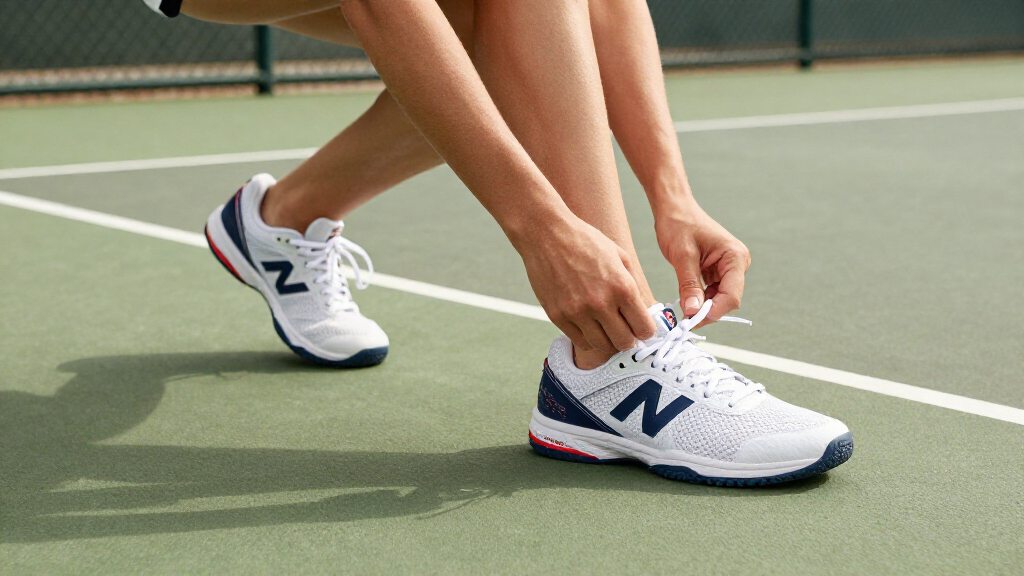
I compared these nine shoes as tennis footwear, focusing on the qualities that affect actual court decisions: support during lateral movement, cushioning over repeated play, likely durability, traction-oriented design, fit considerations, and how versatile each model appears for different levels of play. I also considered whether each shoe’s apparent role is clear enough to help a buyer choose without paying for features they may not use. Since fit and court surface can change how a shoe feels, I avoid treating any single model as the right choice for every player.
The ranking favors a balanced, tennis-focused option at the top, then separates shoes by their strongest use case and tradeoffs. Models with a clearer emphasis on support, comfort, or accessible everyday play rank well for those needs, but sit below the all-around pick when their focus may not suit as many players. Men’s and women’s versions are compared within the full lineup while recognizing that fit and model names do not make them interchangeable. I did not use price, ratings, or sales rank to determine placement.
| New Balance tennis shoe | Midsole | Outsole |
|---|---|---|
| New Balance Men’s FuelCell 996 | FuelCell | — |
| New Balance Men’s Fresh Foam X | Fresh Foam X | — |
| New Balance Men’s 806 V1 | — | — |
| New Balance Men’s FuelCell 996 | — | Non-marking |
| New Balance Men’s 696v7 Tennis | — | Multi-court, non-marking |
| New Balance Women’s FuelCell D | FuelCell foam | Non-marking Ndurance rubber |
| New Balance Women’s FuelCell 9 | FuelCell foam | NDurance rubber |
| New Balance Men’s FuelCell 796 | — | — |
| New Balance Women’s Coco CG2 T | Dual-density FuelCell with carbon fiber plate | Ndurance rubber with hexagonal treads |
Factors to Consider When Choosing Best New Balance Tennis Shoes
Choosing among New Balance tennis shoes is easier when I start with the demands of the player and court, rather than the model name alone. These decisions can matter more than small differences in cushioning labels or version numbers.
Match support to how you move
Think about what your feet do during a point: frequent lateral cuts, sudden stops, and recovery steps put different demands on a shoe than mostly baseline rallies. A more structured option may feel reassuring during side-to-side movement, but can seem less free or quick than a lighter-feeling design. Avoid choosing the softest or most supportive shoe automatically; either can feel wrong if it does not suit your movement and fit. If you have a history of instability or play aggressively across the court, prioritize a secure hold and stable platform. If you move lightly and value quick changes of direction, seek a model that does not feel overly built up. A proper fit still matters more than a feature label.
Choose cushioning for session length, not softness alone
Cushioning is a tradeoff between comfort over time and the direct court feedback some players want. A softer ride can help during long sessions or for players who dislike a firm feel, while a more responsive setup may feel better when quick movement and connection to the court are priorities. Do not assume maximum cushioning means the best match: a shoe that feels plush while standing may feel less natural when stopping or changing direction. Consider how often you play and whether fatigue or court feel is the bigger concern. For frequent, long practices, comfort deserves more weight; for shorter sessions focused on speed, responsiveness may matter more.
Check the outsole against your court surface
Tennis shoes are not automatically suited to every surface or facility, so check the model’s intended use and the venue’s rules before buying. Outsole pattern, rubber coverage, and court-specific design can affect grip and wear, while clay and indoor courts may call for different traction behavior. A shoe that grips well on one surface may feel too sticky or wear differently on another. Common mistakes include assuming all tennis courts are alike and using a court shoe as a general running shoe. If you play on multiple surfaces, favor a versatile option that matches your most frequent court and confirm any restrictions at your club.
Prioritize fit and sizing over the model’s gender label
New Balance offers men’s and women’s models, but the right choice comes down to the actual fit, available sizing, and how securely the shoe holds your foot. Tennis movement makes heel slip, toe pressure, or a loose midfoot more noticeable than during casual walking. Check the brand’s sizing guidance and try shoes with the socks you wear to play, leaving enough room at the toes without allowing the foot to slide. Do not assume a model will fit like another New Balance shoe just because the name or cushioning family is similar. If you are between sizes or need a particular width, verify availability for the exact version before deciding.
Pay for the feature you will use
A more specialized shoe can make sense if you play often and know what your current footwear lacks, such as extra structure, cushioning, or a more performance-focused feel. For a newer player or someone on court occasionally, a simpler model may be a better match than a shoe with features that do not affect their game. Think about replacement frequency as well: heavy play puts more wear on the outsole and upper, so durability can matter more than small comfort differences. Avoid choosing by the newest version number alone; compare the exact model’s fit and intended role. Spending more only makes sense when the added design features solve a real need for you.
Treat similar model names as separate choices
Version numbers and shared family names can make two shoes seem nearly identical, but they may differ in fit, construction, and feel. This roundup’s 996 options are a good reason to compare the exact men’s or women’s model and generation rather than relying on the family name. Check the product listing for the correct version, court use, and size range before ordering. If you are replacing a previous pair, do not assume the newer model will feel the same on day one. A change in fit or ride can matter more than a small change in the name.
Frequently Asked Questions
Which New Balance tennis shoe is the safest starting point if I play several times a week?
I’d begin with the Men’s FuelCell 996v7 because it is the strongest all-around pick in this comparison rather than a shoe aimed at only one narrow need. If comfort and cushioning matter more to you than a quicker court feel, compare it with the Fresh Foam X CT-Rally v2. Players who want a more structured option should also look at the 806 V1. Before choosing, check the exact fit and court-surface guidance for your intended version. Frequent play makes fit and outsole suitability especially important.
Should I choose the 996v7 or the 996 V6?
Both belong in the comparison, but I rank the men’s FuelCell 996v7 higher as the lineup’s best overall option. The V6 can still make sense if you are specifically shopping for that generation or find that its fit and feel suit you better. Do not assume the number alone guarantees a meaningful improvement for your foot or playing style. Compare the exact product details and check sizing rather than choosing only by generation. For women’s sizing, the women’s FuelCell 996 V6 is a separate listed model, not a direct substitute by name alone.
Is the 806 V1 a better choice than a lighter-feeling tennis shoe?
It depends on whether you value structure more than a nimble feel. The 806 V1 stands out for players who want a supportive, substantial court shoe, while options such as the FuelCell 996v7 are better suited to shoppers prioritizing a performance-oriented balance. A more built-up shoe can feel reassuring, but may not appeal to someone who prefers less bulk during quick exchanges. Consider your movement, comfort preferences, and time on court before deciding. If possible, try the shoe with the socks and fit you use for tennis.
What should a beginner prioritize: cushioning, support, or a low-cost model?
I’d put secure fit and court suitability ahead of a particular cushioning label or a low-cost target. A shoe that slips at the heel or does not suit your court can distract you even if it feels comfortable while standing. The 696v7 is a straightforward option to compare, while the 996v7 offers a more performance-focused all-around choice. Beginners who play only occasionally may not need a specialized premium design, but they still need tennis footwear suited to lateral movement. Decide based on how often you play and whether comfort, stability, or a lighter feel is your main concern.
Can I wear these New Balance tennis shoes for running or everyday use?
They are selected as tennis shoes, so I would not treat them as replacements for running shoes designed for forward motion and repeated road impact. Court shoes focus on demands such as lateral movement and stopping, which differ from a running shoe’s purpose. For casual wear, occasional use may be comfortable, but everyday use can wear the outsole faster and leave you without a fresh pair for court sessions. Check the maker’s intended-use guidance for the exact model. If you need one pair for regular running and tennis, separate shoes are the more sensible choice.
Conclusion
For the best overall, I’d choose the Men’s FuelCell 996v7 for its balanced, court-focused role. The best value-minded pick is the 696v7 for players who want a straightforward option without prioritizing a specialized performance feel; compare the exact listing and fit before buying. For a premium-feeling, cushioning-focused choice, look at the Fresh Foam X CT-Rally v2, while the 806 V1 is my pick for players who want more structure. Beginners can start by comparing the 696v7 with the 996v7 based on how often they play and whether they prefer a simpler or more performance-oriented shoe. For women seeking a specific fit and style, compare the FuelCell 996 V6, Delray V2, and Coco CG2 by their individual fit and intended role rather than choosing by name alone.