To find the perfect jeans for your body type, start by identifying your silhouette—hourglass, pear, apple, rectangle, or inverted triangle. Choose styles that balance your proportions, like high-rise waistbands for hourglass shapes or wide-leg cuts for pears. Pay attention to fabric stretch and construction details for comfort and fit. Experiment with different rises and leg styles, and don’t hesitate to adjust or size up for the best results. Keep exploring for more tailored tips!

Get your wardrobe favorites delivered free — and shop member deals
- Fast, free delivery on millions of items
- Access to Prime Big Deal Days deals on October 6–7
- Prime Video, Amazon Music and more included
Key Takeaways
- Identify your body shape (hourglass, pear, apple, rectangle, inverted triangle) to select styles that flatter your silhouette.
- Choose the right rise and waistline (high, mid) to define your waist and avoid fit issues like gaping or tightness.
- Select leg styles (straight, skinny, bootcut) that balance your proportions and enhance your natural curves.
- Prioritize fabric with the right weight and stretch for comfort, durability, and shape retention.
- Always try on with movement, check fit around hips and thighs, and consider tailoring for the perfect fit.
Understanding Your Body Shape and Its Impact on Fit
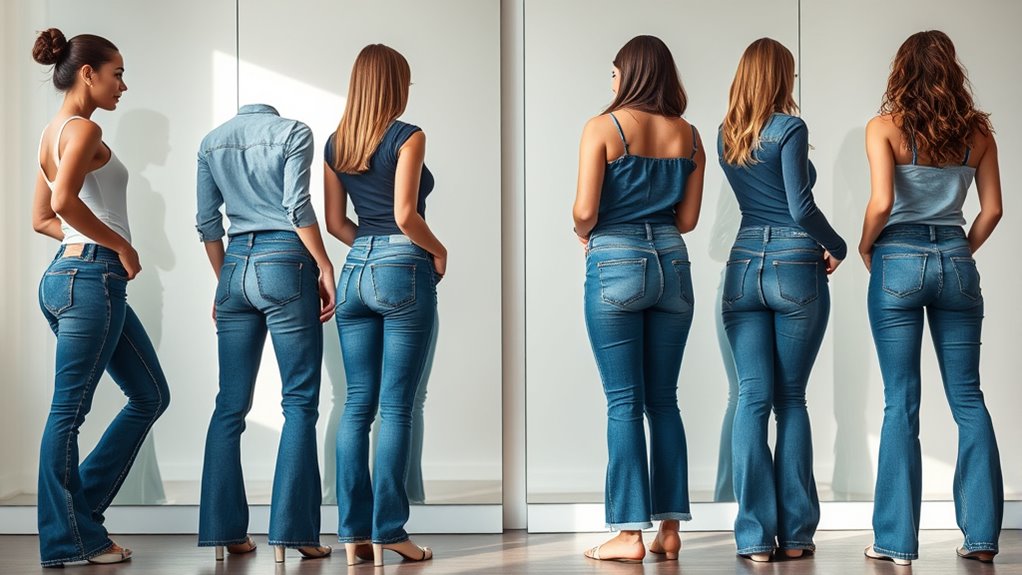
Understanding your body shape is essential for finding denim that fits well and feels comfortable. When you know your silhouette—whether it’s hourglass, pear, apple, rectangle, or inverted triangle—you can choose styles that flatter your natural proportions. For example, hourglass and pear shapes benefit from high-rise waistbands that define the waist and smooth curves, while rectangle shapes may prefer mid-rise jeans for a balanced look. Recognizing your body’s specific measurements—waist, hips, thighs—helps you avoid common fit issues like gaping or tightness. Fabric choice matters too; midweight denim with some stretch offers versatility and comfort for most body types. Additionally, considering Free Floating styles can help create a relaxed, effortless look that complements various body shapes. By understanding your shape, you can select jeans that enhance your features and provide a confident, comfortable fit every time.
Selecting the Right Rise and Waistline for Comfort and Flattering Silhouettes

Choosing the right rise and waistline can make a significant difference in how your jeans fit and how you feel wearing them. If you have an hourglass or pear shape, a high-rise flatters your waist and smooths your hips, creating a sleek silhouette. For rectangle or average builds, mid-rise jeans offer comfort and versatility, sitting comfortably at your natural waist. If you carry weight in your midsection, avoid low-rise styles that can shorten your torso and cause discomfort. Contoured waistbands and stretch panels help reduce gaping and improve fit, especially for curvier body types. When selecting the waistline, consider your daily activities and comfort preferences. The right rise enhances your natural shape while providing the support and comfort you need throughout your day. Additionally, understanding body shape analysis can help you choose the most flattering denim styles for your unique silhouette.
Choosing the Perfect Leg Style to Enhance Your Natural Proportions
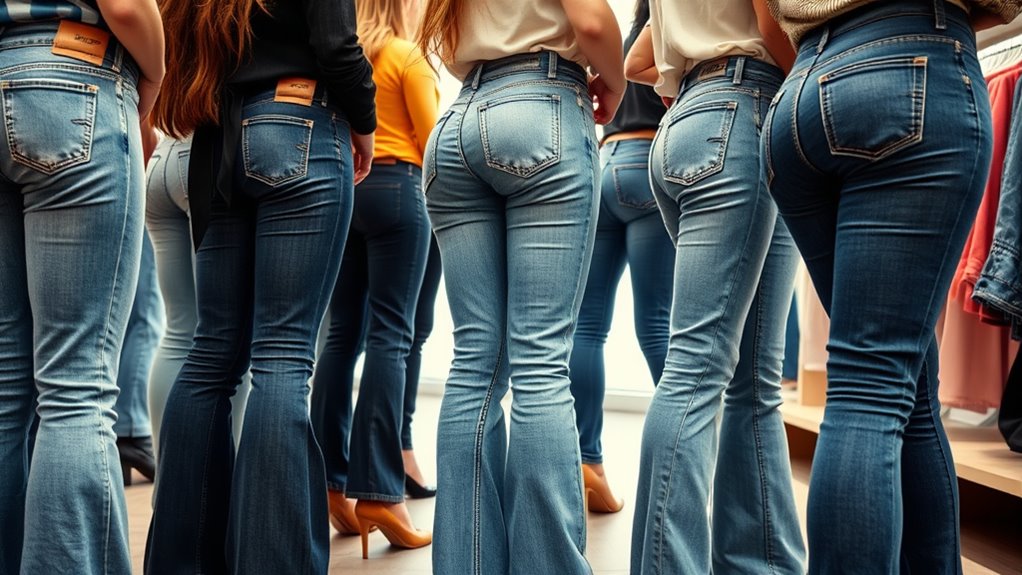
Selecting the right leg style can dramatically enhance your natural proportions and create a flattering silhouette. If you want to balance broader hips or thighs, opt for straight or relaxed-leg jeans—these add length and streamline your shape. For a more curvy or hourglass figure, skinny or slim legs emphasize your curves without overwhelming your frame. If you aim to add volume to your lower half, wide-leg or bootcut styles create harmony and elongate your legs. Here’s a visual guide:
| Body Type | Best Leg Style | Visual Effect |
|---|---|---|
| Pear | Wide-leg, bootcut | Balance hips, add volume |
| Hourglass | Skinny, slim | Highlight curves |
| Rectangle | Straight, relaxed | Create curves, elongate legs |
| Inverted Triangle | Tapered, slim | Add proportion to lower half |
| Athletic | Relaxed, tapered | Comfort, balance muscular build |
Additionally, understanding your body proportions can help you choose the most flattering styles for your unique shape.
Fabric Properties and Construction Details That Maximize Comfort and Fit

Fabric properties and construction details play a vital role in guaranteeing your denim fits comfortably and maintains its shape over time. The fabric weight, measured in ounces, influences how structured or lightweight your jeans feel; midweight denim (13.5–16.5 oz) offers versatility and durability. Stretch content, typically 1–3% elastane, enhances comfort and recovery, making jeans more forgiving and shape-retentive. The way denim is constructed—such as the yoke shape and pocket placement—affects fit, especially at the back. Details like inseam length, rise-to-inseam ratio, and seaming help prevent issues like gaping or tightness. Higher-quality, low-stretch fabrics with good recovery and thoughtful construction ensure your jeans stay comfortable, flattering, and supportive as you move through your day. Understanding fabric properties can help you select jeans that hold their shape and feel great over time. Additionally, construction techniques like double-stitched seams and reinforced areas contribute to the durability and longevity of your jeans, ensuring they remain in good condition after multiple wears and washes.
Practical Tips for Trying and Adjusting Jeans to Achieve Your Ideal Fit

Trying on jeans effectively starts with a systematic approach—don’t rely solely on the size label. Measure your waist, hips, and thighs beforehand, and compare these to brand charts. When trying on jeans, focus on fit around your thighs and hips first—these are critical for comfort and appearance. Check the back rise and yoke shape for gaping or pulling; these details reveal if the jeans suit your body shape. Move around, sit, and bend to ensure flexibility. If the waist feels tight but the hips fit well, consider sizing up or opting for styles with stretch. Don’t hesitate to try different rises or leg shapes. If needed, a tailor can adjust waistbands, inseams, or hems for a perfect fit. Remember, the right fit feels comfortable and enhances your shape. Additionally, understanding body proportions can help you choose styles that flatter your unique figure. Being aware of fit and comfort can also guide you in selecting jeans that provide both style and ease of movement. Incorporating proper measurement techniques and understanding body measurements can help you find jeans that truly suit your body.
Frequently Asked Questions
How Can I Tell if Jeans Will Fit Well Without Trying Them On?
You can tell if jeans will fit well without trying them on by checking measurements first. Measure your waist, hips, thigh, and inseam, then compare them to the brand’s size chart. Look for jeans with a comfortable rise that suits your body shape, and consider fabric stretch and weight. Inspect the back yoke and pocket placement for fit issues. If possible, read reviews for fit tips and fabric details.
What Signs Indicate a Pair of Jeans Won’T Suit My Body Type?
About 70% of women experience fit issues with jeans, often because they ignore body shape cues. Signs your jeans won’t suit you include gaping at the waistband, tight thighs or hips, and bunching or sagging over time. If the jeans feel uncomfortable, pull or gap in key areas, or alter your natural silhouette negatively, it’s a clear indicator they aren’t right for your body type.
How Do I Select Jeans for Different Seasons or Climates?
When choosing jeans for different seasons or climates, opt for lightweight denim (under 13.5 oz) for warm weather to stay cool. In colder months, go for midweight or heavyweight fabrics (13.5–16.5 oz) for warmth and durability. Consider adding stretch to increase comfort, especially if you’ll wear them all day. Dark washes are versatile for winter, while lighter shades work well in summer. Adjust styles for layering and breathability as needed.
Can Alterations Improve the Fit of Jeans That Are Slightly Off?
A stitch in time saves nine, and alterations can definitely improve jeans that are slightly off. If your waist gapes or thighs feel tight, a skilled tailor can adjust the waistband, inseams, or taper the legs for a better fit. Simple fixes like adding darts or taking in seams can transform an imperfect pair into your perfect fit, boosting comfort and confidence without buying new jeans.
What Are the Best Ways to Care for My Jeans to Maintain Their Fit?
To keep your jeans fitting well, wash them inside out in cold water and avoid over-washing. Hang or lay flat to dry instead of using a dryer, which can cause shrinkage and wear. Limit washing to when necessary, and avoid harsh detergents. Spot clean stains instead of full washes. Store jeans folded or hung properly to prevent stretching. These steps help preserve their shape, color, and overall fit longer.
Conclusion
Finding the perfect pair of jeans isn’t just about style—it’s about feeling confident, comfortable, and true to yourself. Like a trusted armor in your wardrobe, the right fit can boost your mood and set you apart, just as a fine suit did for a dashing gent of yore. So, take your time, try on different styles, and remember: when your jeans feel just right, you’re ready to face whatever the day brings with a spring in your step.
Fall Picks
fall essentials
As an affiliate, we earn on qualifying purchases.