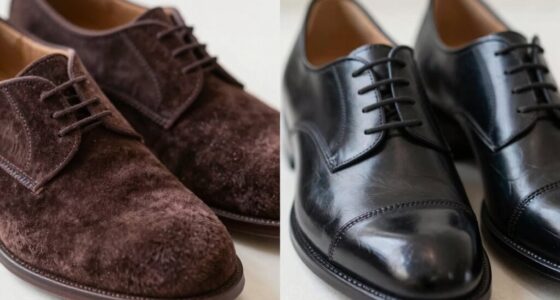

To mix metals successfully, consider your personal style and space. Choose a dominant metal like gold or silver to create cohesion, and add accent metals sparingly for contrast. Use finishes like matte or polished to build visual interest, and vary scale and texture thoughtfully. Repeating finishes and colors helps unify your look, while strategic pairing of warm and cool tones keeps it balanced. For more tips, explore how to master the art of combining metals effortlessly.
Listen free for 30 days with Audible
Thousands of audiobooks and originals — cancel anytime.
As an affiliate, we earn on qualifying purchases.
Key Takeaways
- Choose a dominant metal to create a cohesive look, adding accent metals sparingly for subtle contrast.
- Match metal color temperatures (warm or cool) for harmony or intentionally mix them for visual interest.
- Incorporate different finishes (matte, polished, brushed) to add texture and prevent monotony.
- Vary the scale and texture of jewelry and hardware to achieve balanced, intentional contrast.
- Draw inspiration from interior decor and personal style to decide whether to match or mismatch for your aesthetic.
As an affiliate, we earn on qualifying purchases.
Understanding Your Style and Space: When to Match or Mismatch
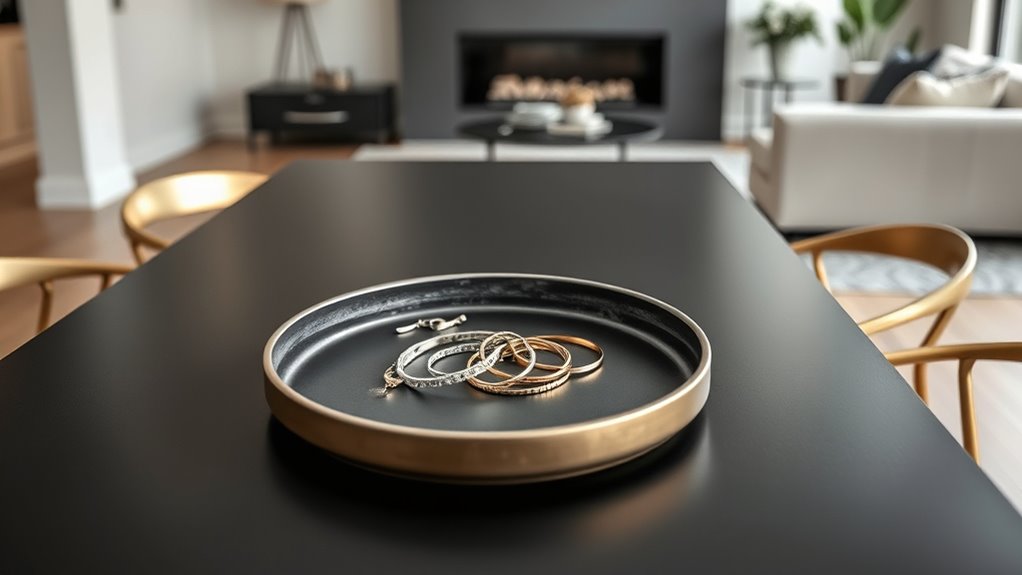
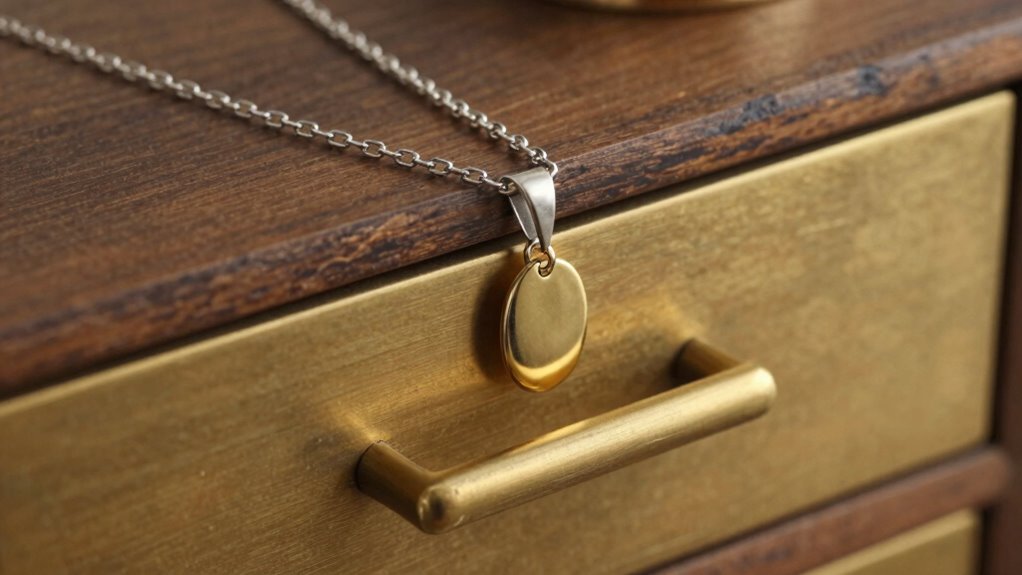
Understanding your style and space is key to deciding when to match or mismatch metals in jewelry and hardware. If your environment and wardrobe lean toward classic, cohesive looks, sticking with matching metals creates harmony and sophistication. For example, gold jewelry paired with gold fixtures enhances a warm, unified aesthetic. Conversely, if your style is eclectic, modern, or playful, mismatching metals can add visual interest and personality. Think silver jewelry with matte black hardware for contrast or mixing metals within your accessories for a layered look. Consider your space’s function and atmosphere—minimalist interiors suit matching metals for clean lines, while bold, layered spaces embrace deliberate mismatches. Additionally, understanding the natural environment of your space can influence your choices, as outdoor-inspired settings often accommodate more varied metal combinations. Ultimately, your personal taste guides whether you blend or contrast metals to express your unique style.
As an affiliate, we earn on qualifying purchases.
Choosing a Dominant Metal to Create Cohesion
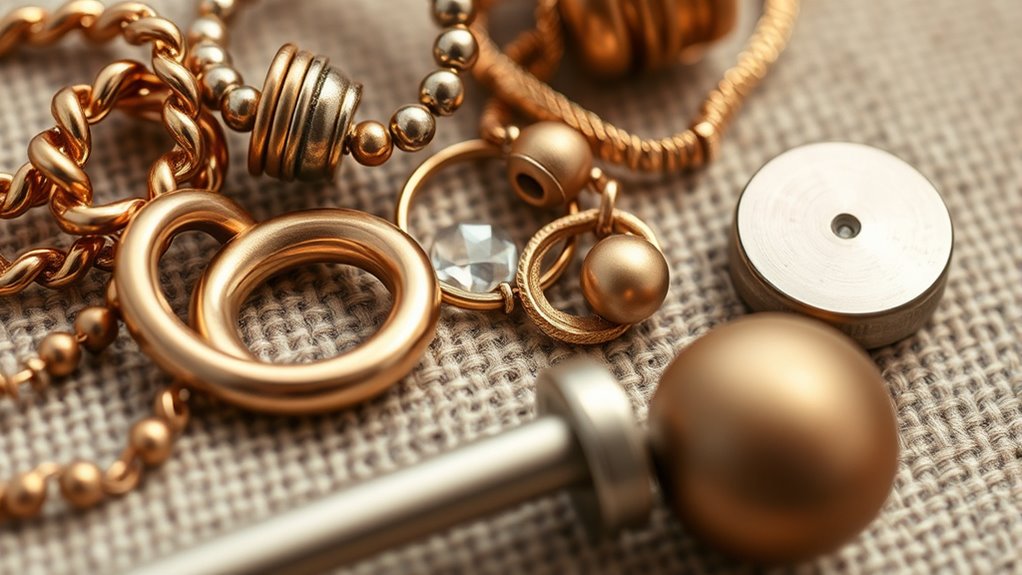
Choosing a dominant metal is the foundation of creating a cohesive jewelry look. Pick one metal that will serve as your visual anchor—like yellow gold, silver, or rose gold. This metal sets the tone and guides your other choices. Once selected, incorporate accent metals sparingly to avoid visual chaos. For example, if you choose silver as your main metal, add small touches of platinum or cool-toned metals for contrast. Paying attention to color temperature ensures your metals complement each other well and enhances overall harmony.
As an affiliate, we earn on qualifying purchases.
Incorporating Mixed-Metal Pieces for Seamless Transitions
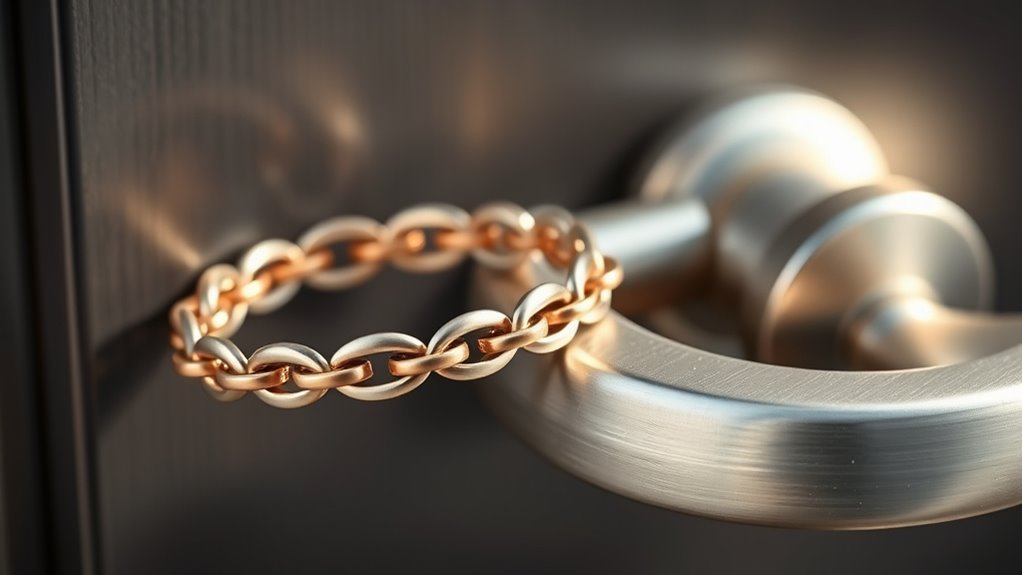
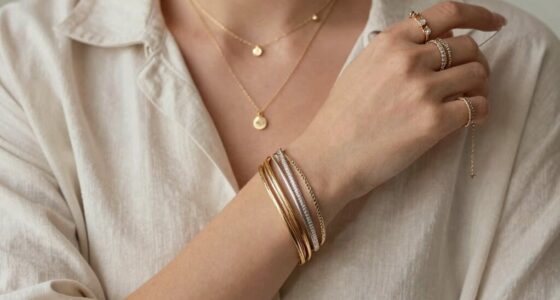
Incorporating mixed-metal pieces into your jewelry collection creates smooth visual shifts and adds versatility to your styling. To achieve seamless progressions, start with jewelry that already combines metals—these serve as natural bridges between tones and help your look flow effortlessly. Match the style of your jewelry, whether minimalist or chunky, to your overall aesthetic to prevent dissonance. Vary the scale and texture—pair delicate chains with bold rings or matte finishes with polished surfaces—to create intentional contrast without clutter. Place mixed-metal pieces strategically, such as on your wrists or ears, where they can be easily mixed without overwhelming your outfit. This approach fosters cohesion, making your jewelry look thoughtfully curated rather than mismatched. Additionally, understanding home decor inspiration can help you draw parallels between styling accessories and designing cohesive interior spaces.
As an affiliate, we earn on qualifying purchases.
Layering Jewelry and Hardware for Visual Balance
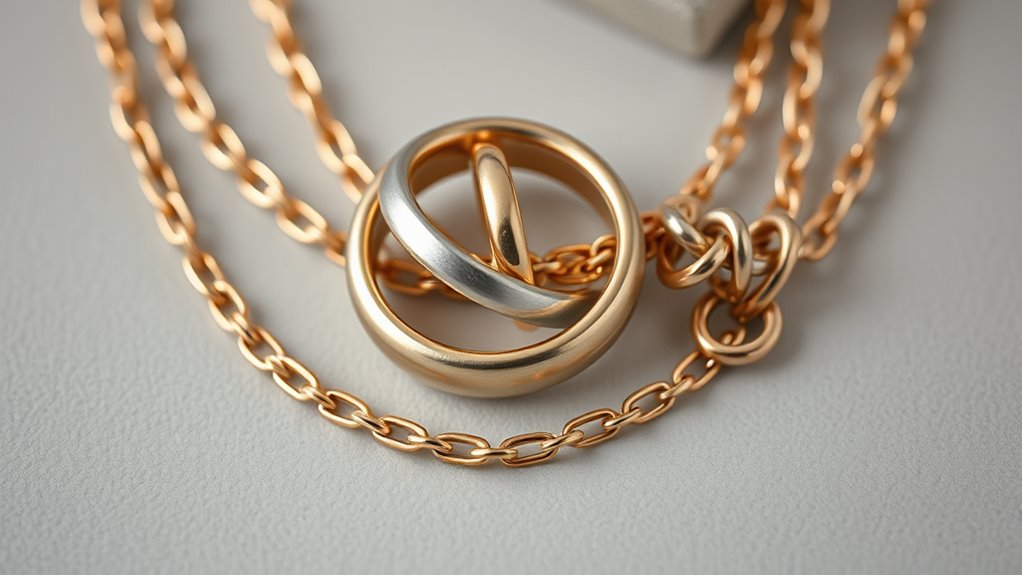
Layering jewelry and hardware effectively creates a cohesive visual balance that enhances your overall style. Start by choosing a dominant metal to anchor your look, then add accent metals to create harmony or deliberate contrast. When layering jewelry, vary the size, shape, and texture—think dainty chains with chunky rings—to keep the eye moving naturally. For hardware, match finishes such as polished or matte to unify different metals in the space. Place statement pieces in visible areas first, then layer smaller items or accessories nearby. In your styling, consider the scale and proportion of each element, ensuring they complement rather than compete. This balance helps your jewelry and hardware work together seamlessly, elevating your fashion and interior design alike. Paying attention to the thermal behavior of metals can also guide your choices, ensuring your layered look remains harmonious over time.
Applying Color Theory to Enhance Metal Pairings
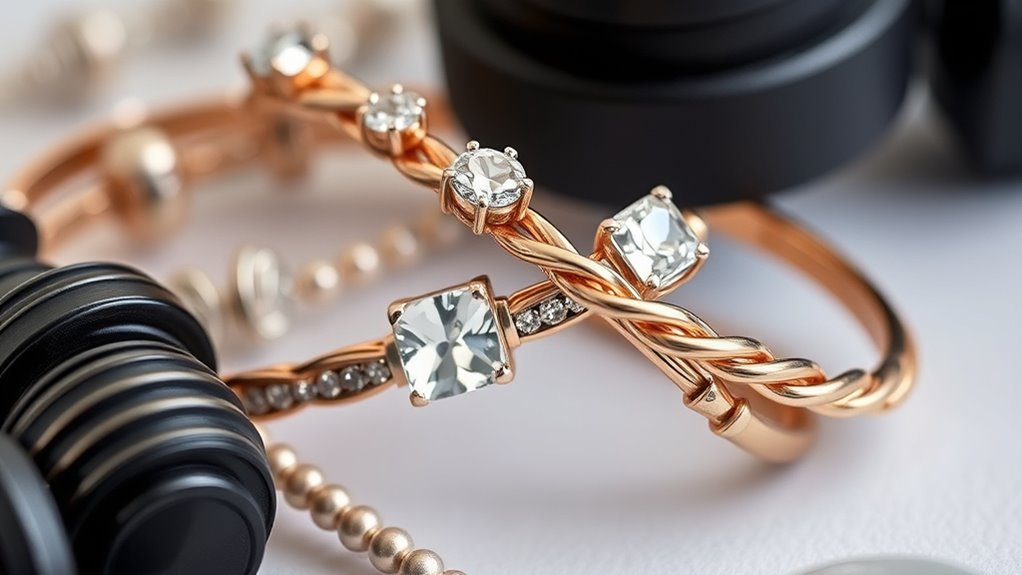
Understanding how warm and cool undertones interact can help you choose metals that complement your skin and outfits. Mixing metals intentionally neutralizes contrasts, making your jewelry and hardware more versatile. Using contrast strategically creates focal points that draw attention and add visual interest. Incorporating innovative cloud solutions can also inspire creative jewelry pairings by encouraging sustainable and forward-thinking design choices.
Warm vs. Cool Undertones
Matching jewelry to your skin’s undertones can substantially enhance your overall look. If you have warm undertones—yellow, peach, or golden hues—gold, brass, and copper jewelry will complement your skin beautifully. Cool undertones—pink, red, or blue hues—are flattered by silver, platinum, or white gold. To make your accessories pop, consider pairing warm-toned metals with earth tones in your clothing, and cool metals with jewel tones or monochromes. Mixing warm and cool metals intentionally can create visual interest and harmony, especially if you choose one dominant tone and introduce accent metals thoughtfully. Always test how different metals look against your skin to find the most flattering combinations, and remember, balancing warm and cool tones can add depth and sophistication to your style. Incorporating sound healing frequencies into your daily routine can also enhance your personal harmony and well-being, reflecting the importance of intentional choices in both fashion and self-care.
Neutralizing With Mixed Metals
When you mix metals deliberately, you can neutralize contrasting tones and create a more cohesive, versatile look. Applying color theory helps you balance warm and cool hues, making your jewelry and hardware feel intentional rather than mismatched. For example, pairing warm yellow gold with cool silver or platinum creates a visual harmony that softens stark contrasts. Using neutral tones like rose gold or brushed finishes can also act as intermediaries, blending different metals smoothly. Incorporate pavé or gemstone accents to connect warm and cool elements visually, guiding the eye seamlessly across your accessories and fixtures. Halal certification is another important aspect to consider when selecting materials, ensuring your choices adhere to ethical standards. By thoughtfully combining metals, you achieve a balanced, unified aesthetic that enhances your style while embracing variety. This approach ensures your look feels intentional, polished, and effortlessly adaptable.
Creating Visual Contrast
Applying color theory to your metal pairings turns simple mixing into a strategic tool for creating striking visual contrast. You can use warm and cool tones deliberately to draw attention or create focal points. For example, pairing yellow gold with silver highlights the differences and adds vibrancy. Contrasting dark and light metals, such as matte black hardware with shiny platinum jewelry, creates depth and visual interest. Think about the color wheel: complementary colors—like blue and orange—can be translated into cool and warm metals to energize your look. Alternatively, pairing similar tones with different finishes (polished versus matte) enhances contrast without clashing. By intentionally balancing these elements, you’ll craft dynamic combinations that captivate the eye and elevate your overall style. Recognizing cryptid mysteries and their origins can also inspire bold, unexpected pairings that evoke curiosity and intrigue in your jewelry choices.
Considering Material Durability and Maintenance Needs
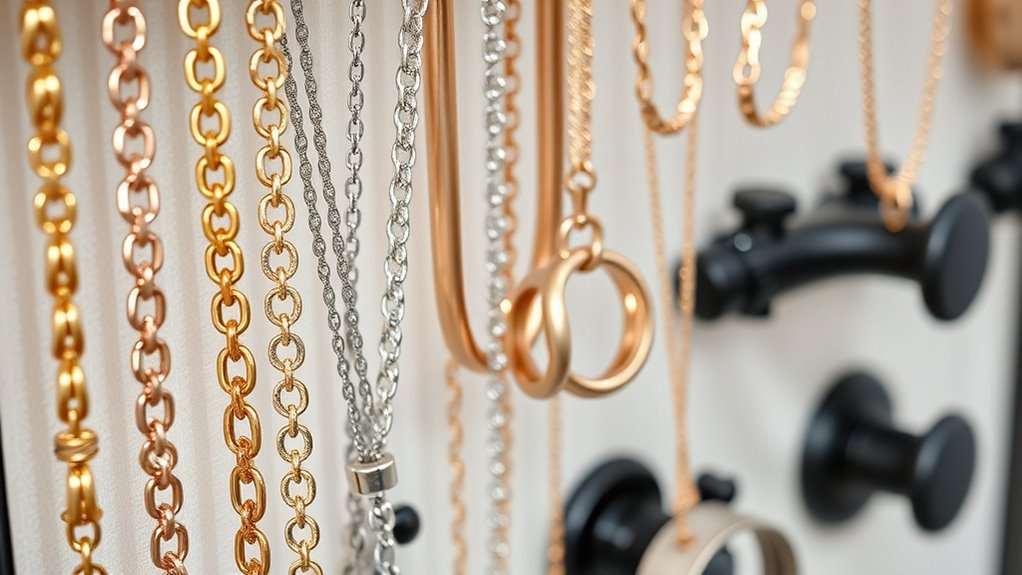
You should consider how durable your chosen materials are and how much maintenance they require over time. Harder metals like platinum and stainless steel resist scratches better, but softer options like gold and silver may need more frequent care. Keep in mind that plated pieces can wear faster and tarnish more easily, affecting their long-term appearance. Additionally, some metals possess antimicrobial properties that can help maintain hygiene with less frequent cleaning for oral health.
Material Wear Resistance
Material wear resistance plays a crucial role in choosing and maintaining mixed-metal jewelry and hardware, as different metals respond uniquely to daily use. Some metals, like platinum and stainless steel, are highly scratch-resistant and hold up well over time, making them ideal for pieces subjected to frequent wear. Gold and silver, while attractive, are softer and more prone to scratching and tarnishing. Plated metals may initially look pristine but can reveal base metals with wear, affecting their appearance. Keep in mind that tarnish-prone metals like silver require regular cleaning to preserve their look, especially when mixed with more durable metals. Considering these differences helps you select pieces that will retain their beauty longer and require less maintenance, ensuring your jewelry and hardware stay attractive and functional over time. Understanding material properties can further guide you in choosing the right combinations for longevity and ease of care.
Maintenance and Longevity
Considering the varying durability and maintenance needs of different metals, choosing mixed-metal jewelry and hardware requires careful attention to longevity. Harder metals like platinum and stainless steel resist scratches and wear better over time, while softer metals like gold and silver may tarnish or scratch more easily. Plated pieces can lose their finish faster, revealing base metals and affecting appearance. Sterling silver tarnishes quickly, needing regular cleaning, whereas gold and platinum demand less upkeep. Some metals contain nickel, which can cause skin reactions; opting for hypoallergenic options helps prevent issues. Repairs and resizing become more complex with mixed metals, so work with experienced jewelers and professionals. Regular cleaning, proper storage, and mindful wear extend the life of your pieces, keeping their beauty intact longer.
Using Finishes and Textures to Build Rhythm and Interest
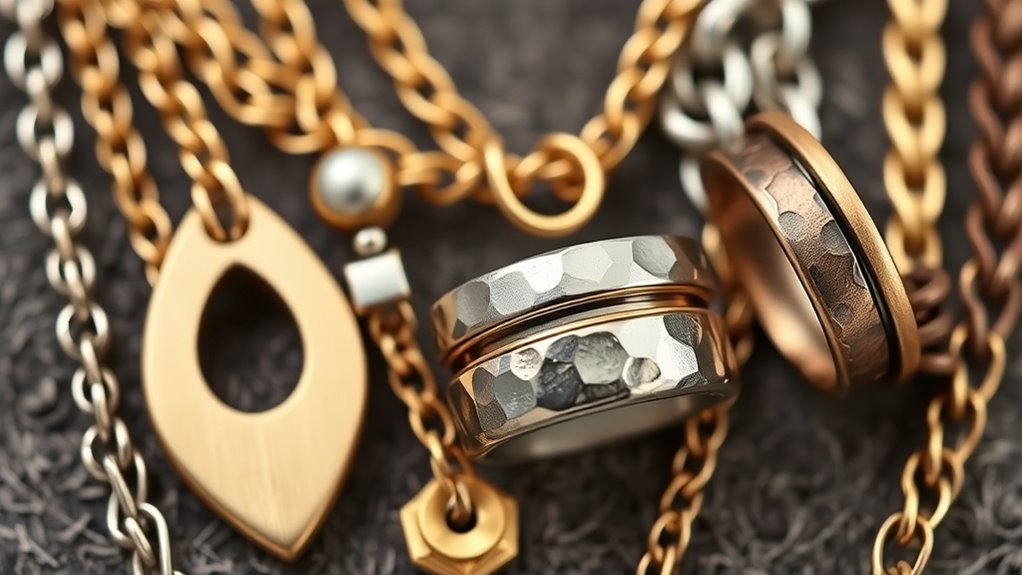
Using finishes and textures strategically can energize your jewelry and hardware designs by creating visual rhythm and interest. The key is to mix polished, matte, brushed, and textured surfaces intentionally. For example, pairing a shiny bracelet with a matte ring adds contrast that draws the eye. You can also build rhythm by repeating finishes across different pieces, creating a cohesive flow. Incorporate varied textures like hammered metal, smooth surfaces, or engraved details to keep the visual movement dynamic. This approach prevents monotony and emphasizes each element’s unique character. To keep your design engaging, consider:
Mix finishes and textures to create visual rhythm and interest in jewelry and hardware designs.
- Alternating glossy and matte finishes for visual depth
- Using textured surfaces to highlight specific pieces
- Repeating finishes in different objects for consistency and flow
Creating a Harmonious Environment Through Repetition and Scale

Creating a harmonious environment relies on the strategic repetition of design elements and thoughtful consideration of scale. You can achieve this by repeating metals, finishes, or textures throughout your space, creating visual rhythm that feels cohesive. For example, if you have brushed nickel hardware, incorporate brushed finishes in lighting or accessories to reinforce consistency. Vary scale intentionally; use larger pieces, like a bold chandelier, balanced by smaller accents, such as matching hardware or jewelry. This contrast enhances interest without overwhelming. Keep proportions in mind—smaller fixtures should complement larger furniture. Repetition and scale work together to create flow, guiding the eye naturally across your space and accessories, establishing an environment that feels unified, balanced, and intentionally designed.
Frequently Asked Questions
How Do I Decide if Mismatched Metals Suit My Personal Style?
You decide if mismatched metals suit your style by considering your overall aesthetic. If you love eclectic, bold looks, mismatched metals add personality and contrast. You’re confident mixing warm and cool tones, or enjoy a layered, textured vibe. Try experimenting with different combinations in small doses, like jewelry or hardware accents, to see if it feels authentic and enhances your look. Trust your instincts and choose what makes you feel most stylish.
Can Mixed Metals Make a Small Space Appear Larger or More Dynamic?
Yes, mixed metals can make a small space feel larger and more dynamic. By thoughtfully combining warm and cool tones, you create visual contrast that guides the eye around the room, adding depth and interest. Strategic placement of different metals in hardware, accents, or decor breaks monotony, giving the illusion of expanded space. Don’t be afraid to experiment—sometimes, a daring mix reveals a surprisingly spacious and lively atmosphere.
What Are the Best Metals for Sensitive Skin When Mixing?
For sensitive skin, stick with hypoallergenic metals like surgical-grade stainless steel, platinum, titanium, or 14k+ gold. These metals rarely cause reactions and work well when mixing. You can also look for nickel-free options, as nickel often triggers dermatitis. Always check for labels indicating hypoallergenic or nickel-free jewelry. By choosing these metals, you’ll reduce irritation and enjoy stylish mixed-metal pieces confidently and comfortably.
How Often Should I Clean Mixed-Metal Jewelry and Hardware?
Studies show that jewelry and hardware in daily contact can accumulate up to 10 times more dirt and oils than less handled items. You should clean mixed-metal jewelry and hardware at least once every two weeks to prevent tarnish, buildup, and wear. Use gentle, non-abrasive cleaners suited for each metal type, and dry thoroughly. Regular cleaning keeps your pieces shiny, prevents damage, and maintains their cohesive look over time.
Do Certain Finishes or Textures Work Better Together in Design?
You’ll find that pairing similar finishes like polished with polished or matte with matte creates a cohesive look, while mixing textures such as brushed with polished adds visual interest. To make your design flow smoothly, choose finishes that complement each other and maintain consistency. Using deliberate contrasts, like matte hardware with shiny jewelry, can also highlight specific pieces, making your space or style feel intentional and balanced.
Conclusion
Think of your jewelry and hardware as a symphony, where each note—or metal—must work together to create harmony. When I first experimented with mixing metals, it was like tuning an orchestra; at first, it seemed chaotic, but with patience, I found the perfect balance. Remember, whether you match or mismatch, trust your eye and style. After all, your space is your masterpiece—let your metals sing in beautiful harmony or bold contrast.
Baby shower & registry season Picks
baby registry must-haves
As an affiliate, we earn on qualifying purchases.