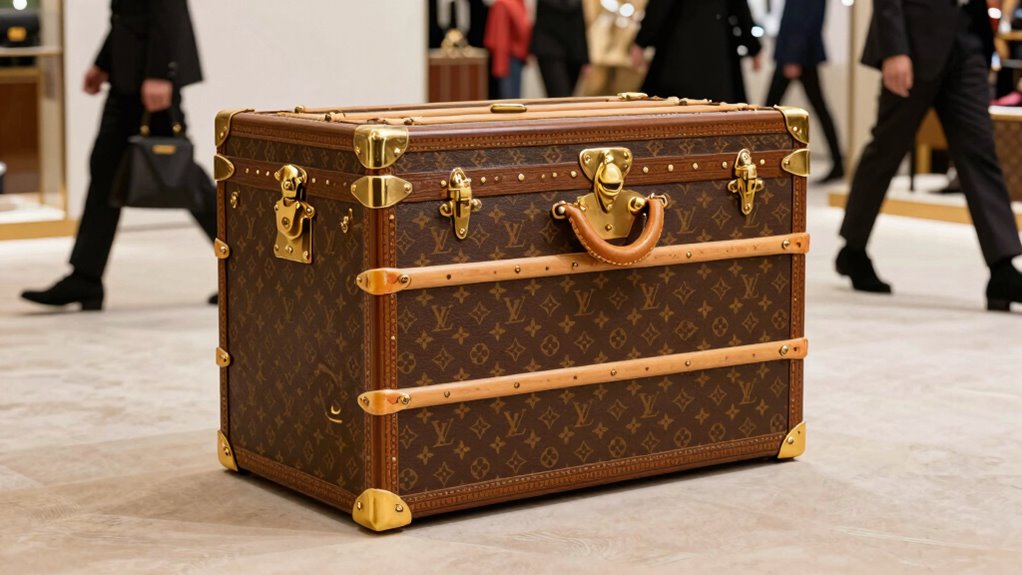

Louis Vuitton started in 1854 in Paris, making durable, innovative trunks and luggage. His focus on craftsmanship, practicality, and unique designs, like the iconic Monogram and Damier patterns, helped him build a luxury reputation. As the brand expanded globally, it introduced timeless handbags and collaborated with artists, blending tradition with modernity. If you want to discover how Vuitton grew from trunks to a fashion empire, there’s much more behind its enduring legacy.
Key Takeaways
- Founded in 1854 by Louis Vuitton in Paris, initially specializing in luxury trunks and luggage.
- Introduced iconic patterns like Monogram and Damier to establish brand identity and prevent counterfeits.
- Expanded product offerings to leather goods, accessories, and apparel, emphasizing craftsmanship and innovative materials.
- Grown into a global luxury powerhouse through strategic leadership, boutique expansion, and the 1987 LVMH merger.
- Maintains relevance via collaborations, marketing, and technological innovations while honoring its heritage.

Louis Vuitton Women's Pre-Loved Musette Tango Short Bag, Brown, One Size
Fabric: Coated canvas
As an affiliate, we earn on qualifying purchases.
As an affiliate, we earn on qualifying purchases.
The Humble Beginnings and Parisian Apprenticeship
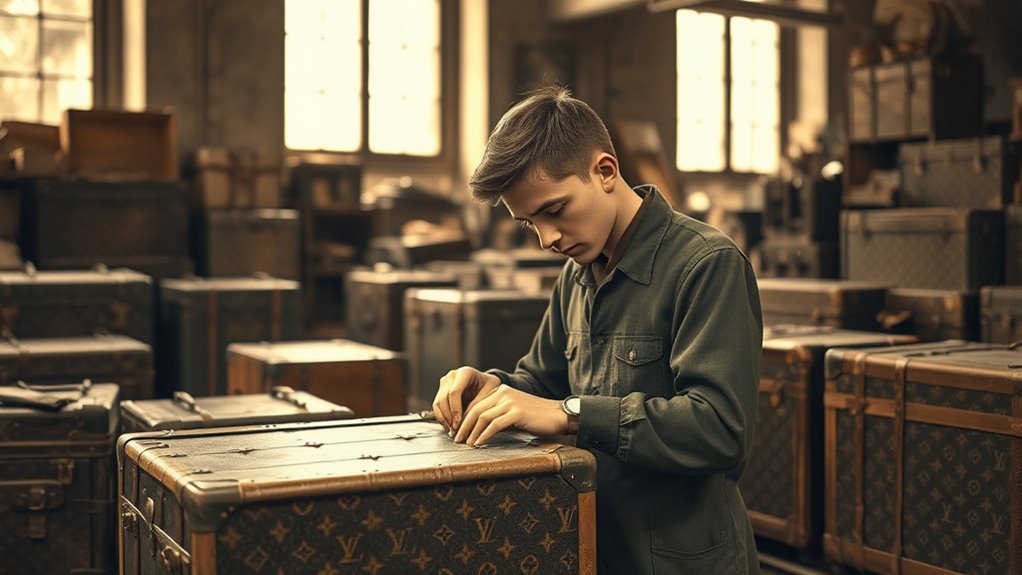
Louis Vuitton’s journey began humbly when he arrived in Paris at just 16, seeking to master his craft. You step into his shoes and realize that, in 1837, he apprenticed with a Parisian box-maker, honing skills that would underpin his future innovations. By 1854, you witness him opening his first workshop and boutique at 4 Rue Neuve-des-Capucines, marking the official start of the Maison. Vuitton revolutionized travel luggage in 1858 by introducing flat-topped, stackable trunks that replaced traditional domed ones, making travel more efficient. His early focus on craftsmanship and innovation laid the foundation for a brand that would later become synonymous with luxury. This period reflects Vuitton’s dedication to quality, practicality, and pioneering design, with color accuracy becoming a key element in showcasing his innovative designs effectively.

Louis Vuitton, Pre-Loved Atoll Organizer Wallet Damier Graphite, Black
Imported
As an affiliate, we earn on qualifying purchases.
As an affiliate, we earn on qualifying purchases.
Pioneering Travel Luggage and Modern Manufacturing
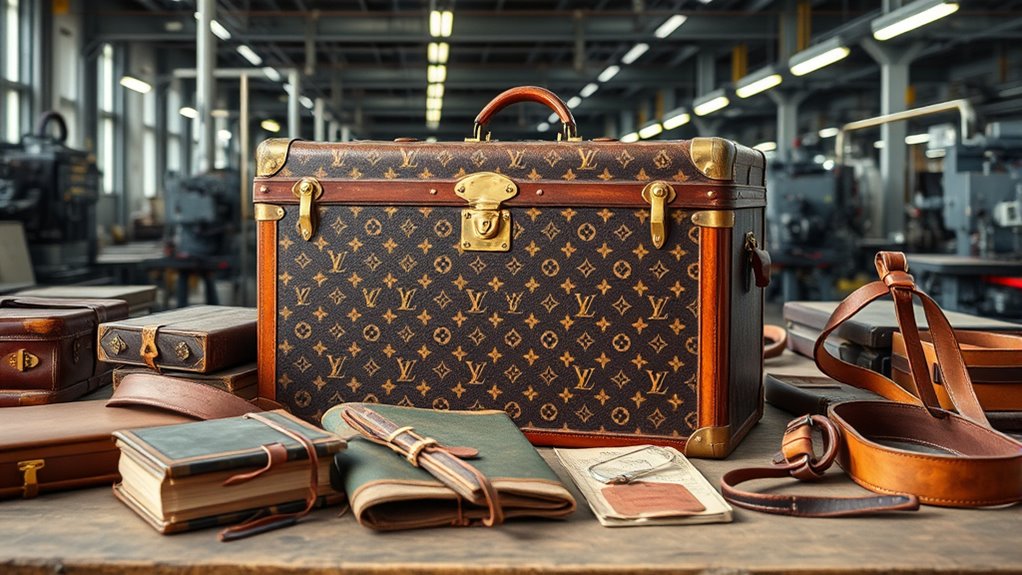
You’ll see how Louis Vuitton revolutionized travel with innovative trunk designs that made stacking and transport easier. His team adopted advanced manufacturing techniques, like modern metal-and-glass workshops, to scale production and improve quality. These innovations set new standards for modern luggage, blending functionality with craftsmanship. Additionally, he emphasized Free Floating design principles, ensuring that each piece could adapt to the evolving needs of travelers and reflect the changing landscape of luxury travel accessories.
Innovative Trunk Designs
Innovative trunk designs revolutionized travel luggage by combining functionality with craftsmanship, setting new standards for durability and convenience. You’ll notice these key innovations:
- Flat-topped trunks in 1858, making stacking easier and transport more efficient.
- Reinforced metal corners and frames, increasing impact resistance during travel.
- Locking mechanisms like Georges Vuitton’s spring lock, enhancing security.
- Lightweight yet sturdy materials, balancing portability with durability.
- Safe installation practices ensured that these trunks could be securely used and transported without risk of damage or injury.
These features transformed trunks from bulky storage into sophisticated travel companions. Louis Vuitton prioritized durability, security, and ease of use, making their trunks trusted worldwide. The focus on craftsmanship and clever engineering ensured that each piece could withstand the rigors of travel while maintaining elegance. This innovative approach set the stage for Louis Vuitton’s dominance in both travel gear and luxury accessories.
Advanced Manufacturing Techniques
Advanced manufacturing techniques have played a crucial role in elevating Louis Vuitton’s reputation for quality and innovation. You benefit from cutting-edge methods like modern metal-and-glass construction in the Asnières workshops, allowing for efficient trunk production and improved working conditions. Precision crafting of signature canvases, such as the Monogram and Damier, involves sophisticated printing and coating processes that ensure durability and authenticity. Automated cutting and sewing machines streamline leather goods production, maintaining consistency across high-volume lines while preserving craftsmanship. Louis Vuitton also employs advanced lock systems and tamper-proof mechanisms to secure products, reinforcing trust. These techniques balance traditional artisanal skills with modern technology, enabling the brand to produce luxurious, resilient products at scale, all while safeguarding its heritage of innovation and excellence. Additionally, integrating energy-efficient technology into manufacturing processes demonstrates Louis Vuitton’s commitment to sustainability and environmentally responsible practices.

VH&GRED Fashionable & Durable Leather Suitcase – Lightweight Large Travel Luggage for Women with 4 Spinner Wheels, TSA Lock, Water-Resistant Elegant Design
Elegant & Durable Leather Design: Crafted from high-quality, water-resistant leather, this suitcase combines sophisticated style with exceptional durability….
As an affiliate, we earn on qualifying purchases.
As an affiliate, we earn on qualifying purchases.
Securing Identity: Trademarks and Signature Patterns
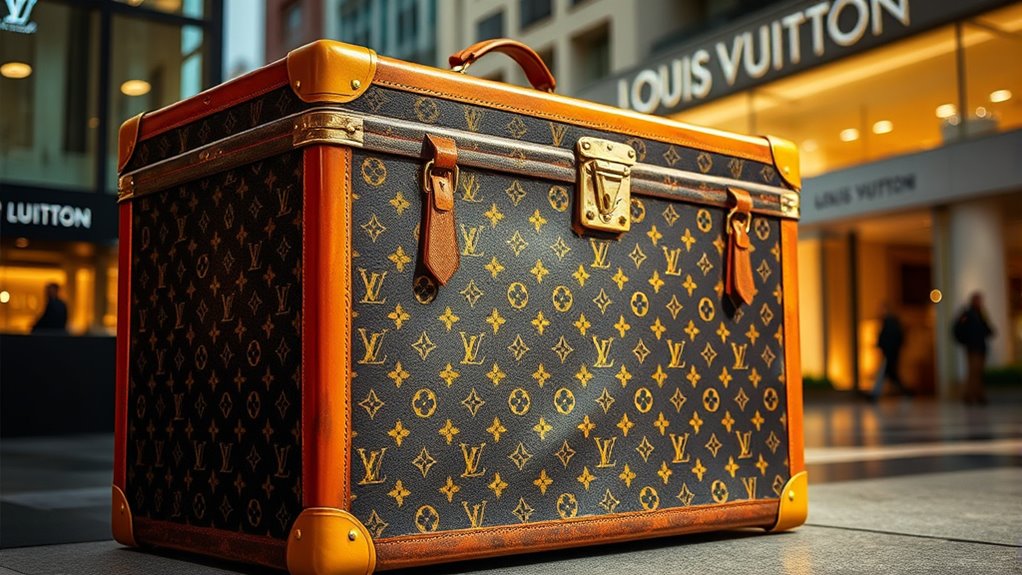
How does Louis Vuitton protect its iconic identity amid a sea of imitators? They’ve built a robust system of trademarks and signature patterns that act as barriers against counterfeits. Here’s how they do it:
Louis Vuitton safeguards its iconic identity through trademarks and signature patterns that deter counterfeits.
- They created the Damier checkerboard canvas in 1888 to mark products and deter copies.
- They patented the LV Monogram Canvas in 1896, combining initials with floral motifs inspired by Japanese design.
- They use visible branding and registered trademarks on their patterns to legally defend their designs.
- They periodically reissue classic patterns, like the Damier, to reinforce heritage and validate authenticity.
- They also incorporate Global Eco-Destinations into their brand ethos, emphasizing sustainable practices that enhance their luxury image and appeal to environmentally conscious consumers.
These measures help maintain exclusivity, protect their signature look, and keep counterfeiters at bay while reinforcing their luxury status.

Leather Totes Handbag Shoulder Bag Sling Hobo Commuter Crossbody Bag Large Capacity Locker Versatile Casual Luxury (E)
Material:leather
As an affiliate, we earn on qualifying purchases.
As an affiliate, we earn on qualifying purchases.
Evolving Craftsmanship: Leather Goods and Iconic Designs
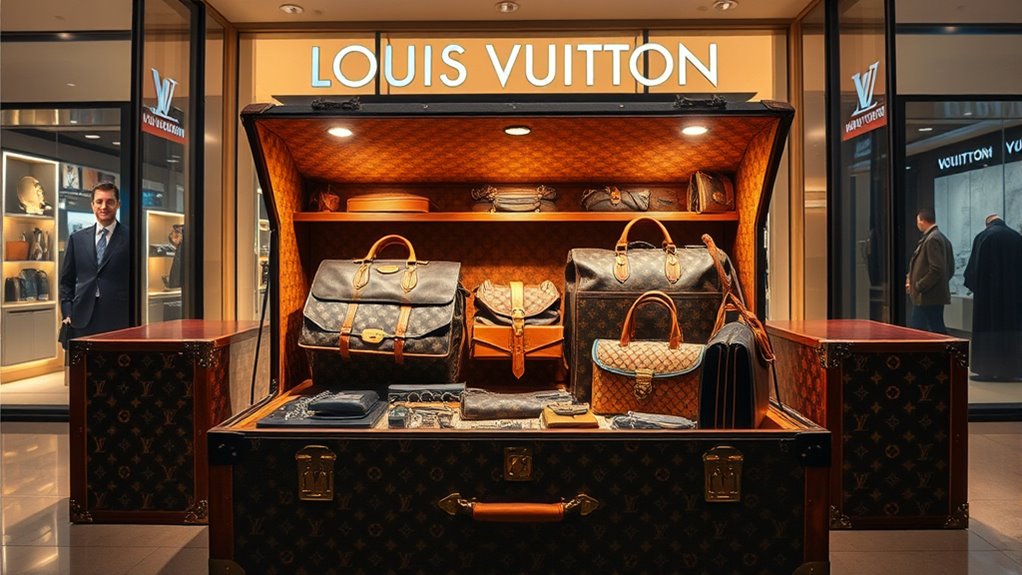
You’ve seen how Louis Vuitton’s signature Monogram was introduced to protect its unique style and combat counterfeiting. Now, explore how iconic bag designs like the Speedy and Alma have become symbols of craftsmanship and innovation. Finally, discover how material innovations, from coated canvases to refined leathers, have kept the brand at the forefront of luxury fashion. Mastering power tools and heavy‑duty equipment has also played a key role in the brand’s ability to produce high-quality, durable accessories.
Signature Monogram Adoption
Have you ever noticed how Louis Vuitton’s signature monogram has become a symbol of luxury and craftsmanship? You might not realize that its adoption was a strategic move to protect the brand and establish a distinct identity. Here’s how it unfolded:
- In 1888, Louis Vuitton introduced the Damier checkerboard canvas to secure trademarks and curb counterfeiting.
- The groundbreaking LV Monogram Canvas debuted in 1896, featuring initials, quatrefoils, and floral motifs inspired by Japanese design.
- Visible branding and registered trademarks on products served as legal and visual deterrents from the late 19th century onward.
- Reissues of historic patterns, like the Damier in 1996, reinforced heritage while fighting counterfeit markets.
- The use of trademark protection has been essential for maintaining the exclusivity and authenticity of Louis Vuitton products.
This monogram not only signifies quality but also acts as a powerful badge of authenticity.
Iconic Bag Designs
Louis Vuitton’s iconic bag designs have evolved from functional travel accessories to symbols of luxury and timeless style. You’ll notice the instantly recognizable shapes like the Speedy, introduced in the 1930s, which combines practicality with elegance. The Alma, inspired by Art Deco design, became a favorite among fashionable women in the early 20th century, especially after Coco Chanel popularized it. In 1959, the Monogram canvas was adapted for softer, more versatile handbags, making luxury accessible and desirable. These designs reflect a perfect blend of craftsmanship and innovation, balancing durability with style. Over time, collaborations and reinterpretations have kept LV’s bags fresh, yet they remain rooted in the brand’s rich heritage, embodying a legacy of elegance and craftsmanship that continues to influence fashion worldwide.
Material Innovations
Material innovations have played a crucial role in transforming Louis Vuitton’s craftsmanship, allowing the brand to balance durability with luxury. You’ll find that these advancements have kept Louis Vuitton ahead in the industry:
- The development of coated canvases, like Monogram Canvas, which offer water resistance and flexibility for everyday use.
- The creation of Damier and Monogram patterns, registered to prevent counterfeiting while adding iconic visual appeal.
- The shift to softer, more supple leathers, enabling elegant, lightweight handbags and accessories.
- Incorporation of modern materials, such as vernished leather and leather trims, which combine resilience with luxury finishes.
These innovations have helped Louis Vuitton craft products that are both functional and stylish, setting new standards in the world of luxury accessories.
Family Leadership and International Expansion
The leadership of Louis Vuitton has evolved through a combination of family succession and strategic international expansion. After Louis Vuitton’s death, his son Georges took charge, guiding the brand’s global growth and establishing key markets outside France. Georges expanded the brand’s footprint through new boutiques in major cities like London and New York, setting the stage for worldwide recognition. Throughout the 20th century, family members maintained leadership, balancing tradition with innovation. The 1987 merger forming LVMH marked a turning point, consolidating resources and accelerating global reach. Under Bernard Arnault’s leadership from 1989, Louis Vuitton expanded rapidly, opening flagship stores worldwide and positioning itself as a global luxury powerhouse. This blend of family stewardship and strategic expansion fueled the brand’s worldwide dominance.
The Rise of LVMH and Global Luxury Consolidation
As luxury brands sought to expand and strengthen their market positions in the late 20th century, LVMH emerged as a dominant force by strategically consolidating multiple prestigious maisons under one umbrella. You see, this move allowed LVMH to control diverse brands, share resources, and leverage economies of scale. Here’s how they did it:
- Merged with Moët Hennessy in 1987, creating a powerful luxury conglomerate.
- Acquired brands like Dior, Fendi, and Bulgari, broadening their portfolio.
- Centralized operations to streamline production and marketing efforts.
- Invested heavily in global retail expansion, opening flagship stores worldwide.
- The use of advanced technology offerings further enhanced their ability to innovate and improve the customer experience.
This consolidation solidified LVMH’s position, making it the world’s leading luxury group and setting the stage for Louis Vuitton’s continued rise on the global stage.
Strategic Marketing and Cultural Collaborations

You see how Louis Vuitton leverages celebrity endorsements and patronage to boost its prestige and reach new audiences. Creative directors like Marc Jacobs and Virgil Abloh have transformed the brand through innovative collaborations, blending heritage with contemporary culture. Limited-edition and capsule collections further create exclusivity, driving demand and keeping the brand at the forefront of fashion trends. As a leader in haute couture, Louis Vuitton continues to set standards for craftsmanship and innovation within the luxury fashion industry.
Celebrity Endorsements and Patronage
How has Louis Vuitton harnessed celebrity endorsements and patronage to elevate its status? You see, the brand strategically leverages high-profile figures to boost its image. Here’s how:
- They’ve collaborated with icons like Audrey Hepburn and Grace Kelly, positioning LV as timeless elegance.
- They’ve designed bespoke pieces for celebrities, creating buzz and exclusivity around their collections.
- They’ve sponsored major events, such as fashion shows and art exhibitions, aligning LV with cultural prestige.
- They’ve used celebrity appearances in campaigns, making the brand aspirational and relatable simultaneously.
Through these tactics, Louis Vuitton turns celebrity influence into a powerful tool, reinforcing its luxury status while connecting with diverse audiences worldwide.
Creative Director Collaborations
Creative director collaborations have become a cornerstone of Louis Vuitton’s strategy to stay relevant and culturally influential. You see, partnering with artists and designers allows the brand to blend its rich heritage with contemporary art and fashion trends. These collaborations create buzz, attract new audiences, and solidify LV’s position as a cultural tastemaker. When Louis Vuitton teams up with innovators like Takashi Murakami, Virgil Abloh, or Yayoi Kusama, it’s not just about limited editions; it’s about shaping the conversation around luxury and creativity. These partnerships often lead to iconic pieces and immersive experiences that elevate the brand’s aura. By continuously engaging with diverse creative minds, Louis Vuitton maintains its reputation as a forward-thinking, trendsetting powerhouse in the luxury world.
Limited-Edition and Capsule Collections
Limited-edition and capsule collections have become essential tools for Louis Vuitton’s strategic marketing, allowing the brand to generate excitement and exclusivity around its offerings. You can see this strategy in action through:
- Collaborations with artists like Jeff Koons and Yayoi Kusama, blending art with fashion.
- Limited releases tied to cultural moments or events, creating buzz and urgency.
- Special collections inspired by historical patterns, reaffirming heritage while appealing to collectors.
- Partnerships with designers such as Virgil Abloh, transforming classic silhouettes into contemporary icons.
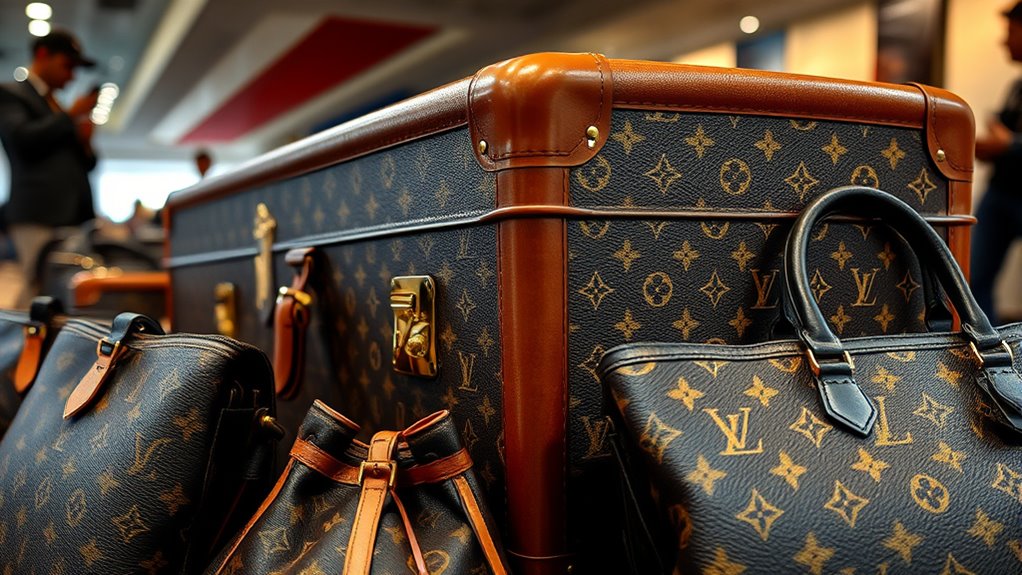
Counterfeit and market controversies pose ongoing challenges for Louis Vuitton, threatening its brand integrity and exclusivity. You must stay vigilant against knockoffs that flood the market, eroding the value of genuine products. Louis Vuitton combats this by implementing strict anti-counterfeiting measures like registered trademarks, signature patterns, and tamper-proof locks. You’ll notice the brand periodically revives historic designs, reinforcing authenticity and deterring counterfeiters. The company also takes legal action to shut down illegal operations and collaborates with customs to intercept fake goods. Additionally, you’re part of a broader effort to educate consumers about authentic Louis Vuitton products. While these strategies help preserve the brand’s prestige, constant innovation and legal vigilance remain essential to navigate the persistent threat of imitation and market controversies.
Innovation and Artisanal Excellence in the Modern Era

Louis Vuitton continues to push the boundaries of innovation by blending timeless craftsmanship with cutting-edge materials and techniques. You’ll see this in how the brand constantly evolves, balancing tradition with modernity. Here are four ways LV leads in innovation:
- Material Innovation: Using coated canvases, vernished leathers, and sustainable textiles to enhance durability and environmental responsibility.
- Design Collaborations: Partnering with artists like Jeff Koons and Virgil Abloh, creating limited-edition collections that fuse art with fashion.
- Technological Integration: Incorporating RFID chips and smart features into accessories for security and convenience.
- Artisanal Excellence: Maintaining strict craftsmanship standards through in-house ateliers, ensuring every piece reflects masterful skill and heritage.
This synergy keeps Louis Vuitton at the forefront of luxury innovation.
The Legacy and Future of Louis Vuitton
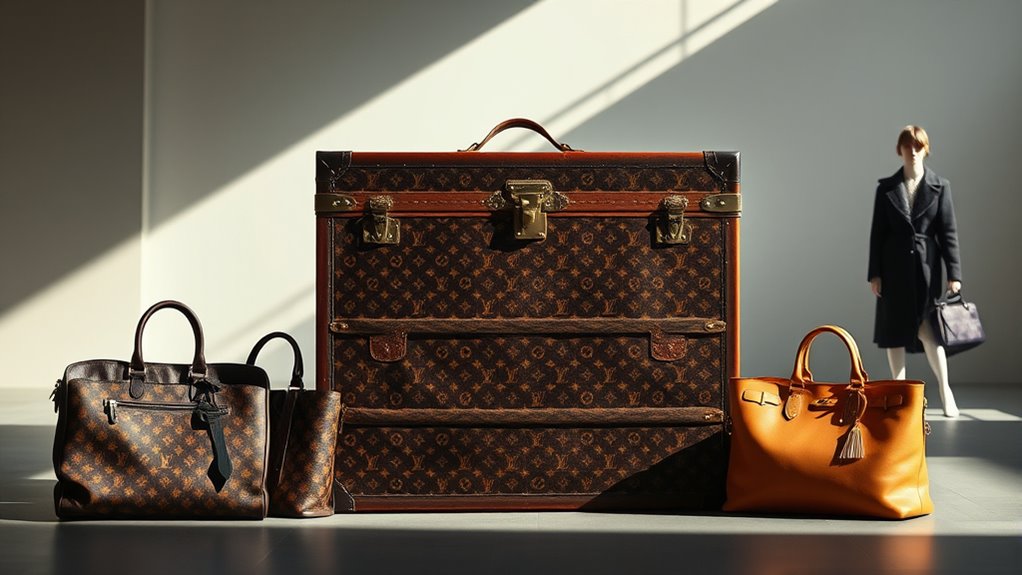
The enduring legacy of Louis Vuitton lies in its ability to honor heritage while boldly shaping the future of luxury. You see, the brand’s rich history of craftsmanship and innovation continues to influence fashion globally. Louis Vuitton’s iconic patterns, like the Monogram and Damier, serve as symbols of authenticity and prestige. Moving forward, the brand leverages collaborations with artists and designers, blending tradition with modernity to stay relevant. Digital initiatives, exclusive boutiques, and limited-edition collections help maintain its exclusivity. You’ll also notice efforts to address sustainability and combat counterfeiting, ensuring its legacy endures. Ultimately, Louis Vuitton’s ability to adapt without losing sight of its roots secures its place as a leader in luxury for generations to come.
Frequently Asked Questions
How Did Louis Vuitton Innovate in the Design of Travel Trunks?
You see Louis Vuitton innovate by introducing flat-topped, stackable steamer trunks in 1858, which replaced the bulky, domed trunks. These new trunks made travel easier and more efficient, allowing you to stack and transport your belongings with fewer worries. He also used modern materials and construction techniques, like metal reinforcements and airtight fittings, ensuring durability and style. These innovations set new standards in luggage design and functionality.
What Are the Key Anti-Counterfeiting Measures Used by Louis Vuitton?
You’ll see Louis Vuitton uses several key anti-counterfeiting measures. They created distinctive patterns like Damier in 1888 and patented the LV Monogram Canvas in 1896, making imitation harder. They also introduced tamper-proof locks and registered trademarks on their patterns to deter knockoffs. Additionally, they periodically reissue historic designs and reinforce their signature branding, ensuring authenticity and protecting their legacy against counterfeit products.
How Has Louis Vuitton Expanded Into Contemporary Fashion Markets?
You can’t judge a book by its cover, and Louis Vuitton proves it by expanding into contemporary fashion markets. You’re likely to see the brand collaborating with top designers, launching ready-to-wear collections, and embracing streetwear influences. They’ve also opened flagship stores worldwide and used influential personalities to stay relevant. This strategic move keeps the brand fresh, appealing to younger audiences while preserving its luxury heritage.
What Role Did Family Leadership Play in the Brand’s Growth?
Family leadership played a vital role in Louis Vuitton’s growth by guiding the brand’s expansion and maintaining its heritage. You see, Louis’s son Georges took over in 1892, pushing international reach and brand consistency. As leadership passed through generations, they prioritized innovation, craftsmanship, and exclusivity, which helped the brand adapt to changing markets. Their vision guaranteed Louis Vuitton remained a symbol of luxury, blending tradition with modernity to sustain global success.
How Does Louis Vuitton Balance Tradition With Modern Sustainability Efforts?
Think of Louis Vuitton as a vintage app, blending tradition with sustainability. You’re encouraged to respect the craftsmanship, like their artisanal workshops, while embracing eco-friendly materials and practices. They innovate with recycled leathers and reduce waste, yet stay true to iconic designs. This balance keeps the brand relevant in a digital age, proving that respecting heritage and protecting the planet can go hand-in-hand for a truly modern luxury label.
Conclusion
You see, Louis Vuitton’s journey isn’t just about luxury; some believe the brand’s rise was fueled by a secret alliance with early industrialists, enabling rapid expansion and innovation. While unproven, this theory adds a layer of intrigue, suggesting that behind the elegant craftsmanship lies a calculated push toward global dominance. Regardless of the truth, Louis Vuitton’s story proves that blending tradition with strategic daring can turn humble beginnings into a lasting empire.