
To keep your jewelry sparkling, use gentle cleaning methods suited to each material. For gold, soap and water work well, but avoid harsh chemicals. Silver benefits from baking soda and aluminum foil, while delicate stones like pearls or opals need extra care—skip ultrasonic cleaners. Store jewelry separately in soft pouches and keep it dry to prevent tarnishing or scratches. For detailed tips on cleaning and storing properly, discover more insights that help preserve your jewelry’s beauty longer.
Key Takeaways
- Use gentle cleaning methods like soap and water for gold and platinum; avoid harsh chemicals.
- Store jewelry separately in soft pouches or padded compartments to prevent scratches and tarnish.
- Avoid ultrasonic cleaners for delicate stones like opal, emerald, or loose settings to prevent damage.
- Regularly inspect and polish jewelry to maintain its shine and identify potential issues early.
- Keep jewelry dry, away from humidity, and remove before swimming or exercising to preserve its condition.
Understanding Different Jewelry Materials and Their Care Needs
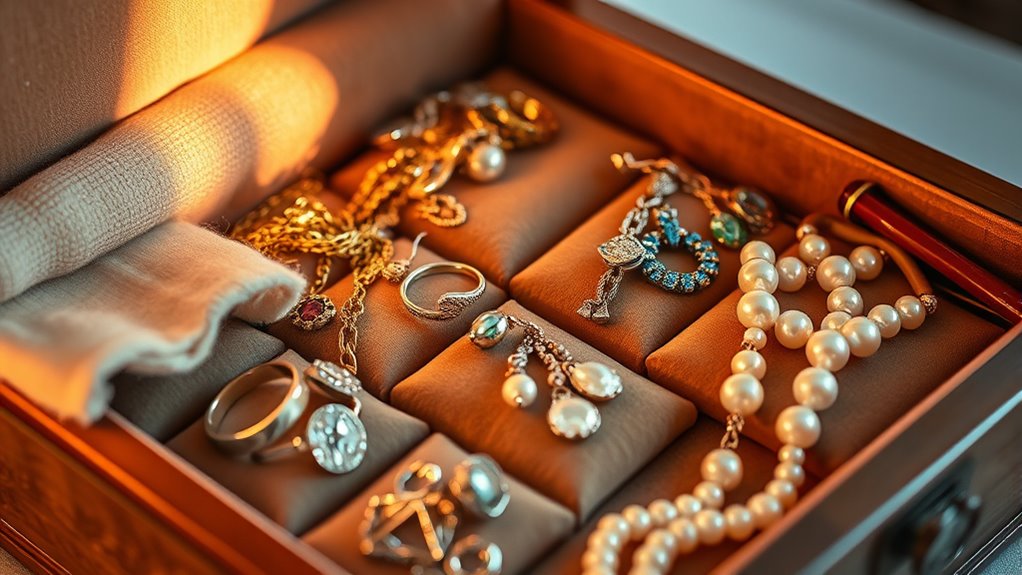
Understanding the different materials used in jewelry is essential for proper care. Each material reacts differently to cleaning methods and environmental factors. For example, gold is durable and responds well to gentle cleaning with soap and water, but avoid harsh chemicals. Silver tarnishes easily and benefits from regular polishing with soft cloths or home tarnish removal methods like baking soda paste. Precious stones like diamonds are typically sturdy, but softer stones like opals, pearls, and certain sapphires need gentle handling and specific cleaning techniques. Avoid ultrasonic cleaners for delicate stones to prevent damage or dislodging. Metals and stones also vary in their sensitivity to acids, heat, and chemicals, so always identify your jewelry’s materials before choosing a cleaning or storage method to guarantee longevity and beauty. Additionally, understanding material-specific cleaning instructions can help in maintaining your jewelry’s appearance and value over time. Proper documentation and secure record-keeping of your collection cloud solutions can also assist in tracking the care history and provenance of your pieces. Recognizing material-specific cleaning instructions ensures that each piece is cared for in the most appropriate way, maintaining its luster and value over time.
Selecting the Right Cleaning Techniques for Your Jewelry Types
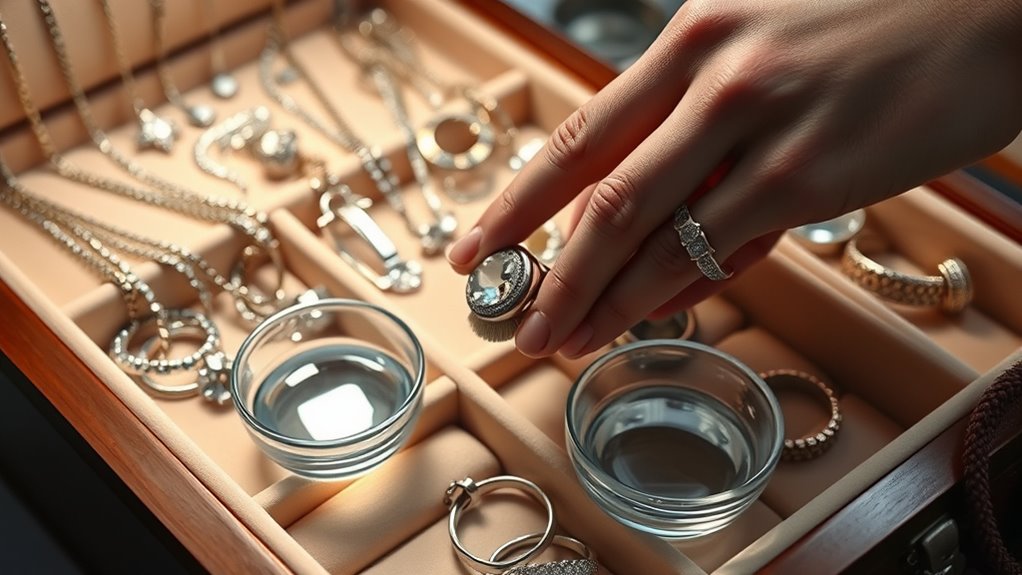
Choosing the right cleaning method depends on your jewelry’s materials and construction. You need to contemplate which techniques effectively clean without causing damage or dislodging stones. Being aware of potential risks helps you avoid costly mistakes and keeps your jewelry looking its best. Additionally, understanding proper safety procedures ensures you handle cleaning agents and tools safely, preventing accidental damage or injury. Considering free floating jewelry pieces is also important, as they may require gentle handling to prevent loss or damage during cleaning.
Jewelry Material Considerations
Different jewelry materials require tailored cleaning approaches to prevent damage and maintain their beauty. For example, delicate stones like opal, emerald, ruby, and sapphire shouldn’t be cleaned with ultrasonic or steam methods, as these can cause cracks or loosen settings. Pearls and soft gemstones also need gentle treatments, such as wiping with a damp cloth and avoiding harsh chemicals. Gold and platinum jewelry are generally more durable but still benefit from mild soap and soft brushing. Sterling silver responds well to baking soda and aluminum foil methods for tarnish removal. Always consider the stone’s hardness and sensitivity. Knowing the proper jewelry care practices can extend the lifespan and preserve the luster of your pieces over time, especially when paired with appropriate storage solutions. Incorporating knowledge of jewelry materials can help you select the most effective cleaning methods and avoid accidental damage. Additionally, understanding the cleaning limitations for each type of jewelry ensures you use the safest techniques tailored to your jewelry’s specific material properties. Furthermore, being aware of the recent advancements in jewelry cleaning can help you stay updated on effective and safe cleaning options.
Appropriate Cleaning Methods
Selecting the proper cleaning method depends on your jewelry’s materials and stones. Use the right technique to avoid damage. For example:
| Jewelry Type | Suitable Cleaning Method |
|---|---|
| Silver | Baking soda paste, vinegar soak, mild soap |
| Gold | Dish soap soak, ammonia, commercial polish |
| Diamonds | Ammonia soak, gentle brushing, ultrasonic (if safe) |
| Opal, Emerald, Sapphire | Avoid ultrasonic, steam, harsh chemicals |
| Gold with Stones | Gentle cleaning, avoid abrasives and acids |
Be cautious: ultrasonic cleaners work well for many, but harm delicate stones like opals and emeralds. Always check stone compatibility before cleaning. Proper selection keeps your jewelry sparkling without risk.
Risk Management Strategies
To protect your jewelry from damage during cleaning, you need to understand the risks associated with various techniques and materials. Ultrasonic cleaners are effective but can harm opals, emeralds, rubies, sapphires, or damaged stones, so avoid using them for delicate or loose settings. Vinegar and baking soda can cause corrosion on certain precious stones or gold-plated jewelry. Rubbing alcohol works well for removing grease but may damage some coatings or stones. Use soft brushes and gentle cloths to prevent scratching, and always verify if your jewelry’s materials are safe for specific cleaning methods. When in doubt, consult a professional jeweler before using aggressive techniques. Proper risk management ensures your jewelry stays beautiful without unintended damage.
Step-by-Step Guide to Safe Home Jewelry Cleaning

Cleaning your jewelry at home can be simple and effective when you follow the right steps. First, gather gentle cleaning solutions like dish soap or a mixture of vinegar and baking soda. Soak your jewelry for 5-10 minutes, then gently brush with a soft toothbrush, paying attention to crevices. Rinse thoroughly with warm water and dry with a lint-free cloth. Avoid harsh abrasives or ultrasonic cleaners on delicate stones. Keep in mind the materials you’re cleaning:
| Material | Cleaning Tip |
|---|---|
| Silver | Use baking soda paste or aluminum foil soak |
| Gold | Soak in mild soap solution, then polish |
| Diamonds | Soak in ammonia solution, brush gently |
| Opals & Pearls | Wipe with damp cloth, avoid soaking |
| Gemstones | Check compatibility before cleaning |
Always handle jewelry gently to preserve its sparkle.
Professional Cleaning Methods for Optimal Results

Professional cleaning techniques combine ultrasonic cleaning, polishing, and final touches to restore your jewelry’s brilliance. Ultrasonic cleaners use sound waves and safe solutions to remove dirt effectively, but they aren’t suitable for all gemstones. Proper equipment maintenance can extend the lifespan of your cleaning tools and ensure optimal performance. Regular equipment calibration helps maintain cleaning accuracy and efficiency. After cleaning, polishing with high-speed wheels and careful finishing guarantee your jewelry looks its best. Incorporating automated testing into your routine can further ensure consistent quality and prevent issues before they reach the customer. Additionally, understanding ventilation considerations can help maintain a safe environment during professional cleaning processes.
Ultrasonic Cleaning Process
Have you ever wondered how ultrasonic cleaning achieves such sparkling results? It uses high-frequency sound waves to create tiny cavitation bubbles in a cleaning solution. When you place your jewelry in the ultrasonic machine, these bubbles rapidly form and collapse, gently dislodging dirt, grease, and grime from every crevice. The process is thorough, reaching areas that manual cleaning might miss. Ultrasonic cleaners are designed to work with non-toxic solutions safe for most jewelry types, but avoid using them on opals, emeralds, or damaged stones. The cleaning cycle typically lasts a few minutes, depending on the level of dirt. Afterward, you’ll notice your jewelry looks visibly brighter, cleaner, and more radiant—restoring its original sparkle efficiently and effectively.
Polishing and Final Touches
To achieve a truly polished finish, jewelers often use high-speed polishing wheels and compounds designed specifically for jewelry metals. This process smooths out scratches and restores shine, giving your jewelry a professional look. Start by choosing the right polishing compound based on the metal type—gold, silver, or platinum. Use gentle pressure and keep the piece moving to prevent uneven spots. After polishing, inspect your jewelry for any remaining tarnish or scratches, then apply a final wipe with a soft cloth. Here’s a quick guide:
| Metal Type | Polishing Compound | Tips |
|---|---|---|
| Gold | Yellow or white | Use a chamois cloth for buffing |
| Silver | Silver polish | Avoid over-polishing |
| Platinum | Platinum polish | Use slow, steady motion |
Additionally, understanding proper jewelry maintenance can help prolong the shine and integrity of your pieces.
Tips for Proper Jewelry Storage to Prevent Damage
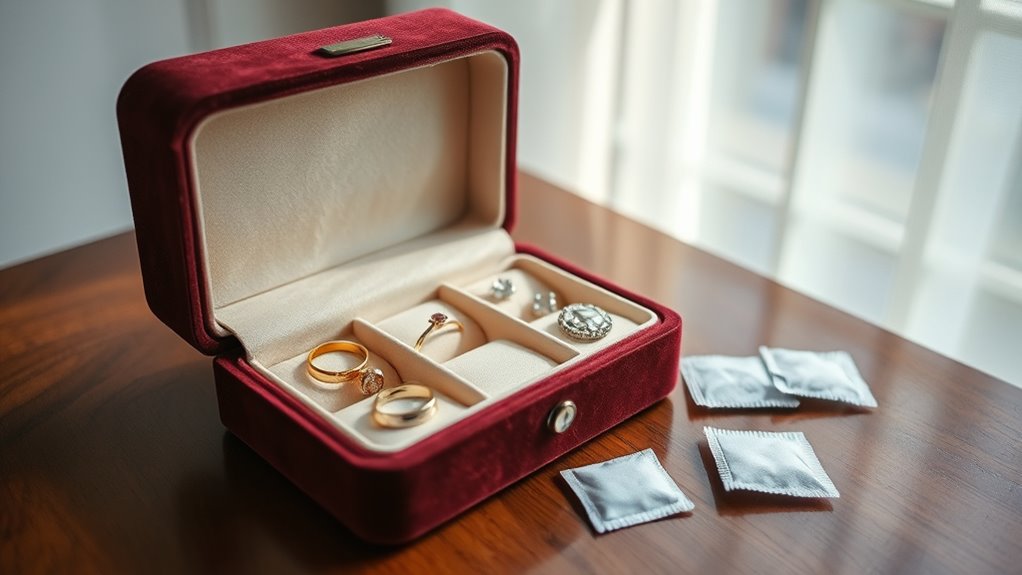
Proper jewelry storage is essential to prevent scratches, tarnish, and damage. Store each piece separately in soft, padded compartments or soft cloth pouches to avoid contact with harder jewelry. Use individual boxes or jewelry trays with individual slots to keep items organized and prevent tangling. Keep jewelry away from humidity and direct sunlight, which can cause tarnishing or fading. For silver, consider anti-tarnish strips or cloths to slow oxidation. Avoid hanging jewelry in a crowded jewelry box, as this can lead to scratches or bending. Store delicate pieces like pearls and opals in a soft, padded container, away from other jewelry. Regularly inspect your storage setup to ensure it remains clean, dry, and organized, helping your jewelry stay beautiful and damage-free over time. Additionally, incorporating proper storage techniques can help maintain the integrity of your jewelry and extend its lifespan. Using appropriate organizational tools can further optimize your storage space and reduce the risk of accidental damage. To further protect your jewelry, consider implementing climate-controlled storage to prevent environmental damage. Keeping your storage environment clean and dust-free also contributes significantly to preserving jewelry quality over time.
Common Mistakes to Avoid When Cleaning Jewelry

One common mistake people make when cleaning jewelry is using harsh or unsuitable cleaning methods that can damage delicate stones or metal settings. For example, ultrasonic cleaners can be risky for opals, emeralds, rubies, sapphires, or jewelry with loose stones, potentially causing loosening or cracks. Using vinegar on gold-plated jewelry may erode the thin layer of gold or damage sensitive stones. Scrubbing vigorously with abrasive pastes or brushes can scratch or dislodge gems. Additionally, steaming jewelry isn’t safe for pearls or soft stones, which can crack or discolor. Rushing the cleaning process or soaking jewelry too long can also lead to damage. Always choose gentle, appropriate cleaning techniques, and avoid aggressive chemicals or tools that could compromise your jewelry’s integrity. Proper maintenance practices and understanding of cleaning dos and don’ts can help preserve the sparkle and longevity of your jewelry. Being aware of precious versus soft stones and their specific care requirements can prevent inadvertent damage. For delicate pieces, it’s especially important to seek professional cleaning advice to ensure proper care.
Maintaining Your Jewelry’s Shine and Integrity Over Time

Regular maintenance is key to keeping your jewelry looking its best over time. To preserve its shine and integrity, clean your jewelry regularly using gentle solutions like dish soap and soft brushes. Avoid harsh chemicals that can damage delicate stones or metals. Store your jewelry properly—separate pieces to prevent scratching and tarnishing, especially for silver or softer metals. Gently polish metal surfaces with appropriate cloths, avoiding set stones to prevent dislodging. Keep jewelry dry and remove it before activities like swimming or exercising to prevent exposure to moisture and sweat. Periodic inspections help identify loose settings or damage early, so you can address issues promptly. Consistent, careful handling guarantees your jewelry retains its beauty and lasts for years.
When to Seek Professional Jewelry Maintenance and Repairs

Knowing when to seek professional jewelry maintenance and repairs is essential to preserving your pieces’ beauty and longevity. If your jewelry shows signs of loose stones, bent prongs, or damaged clasps, it’s time to visit a jeweler. Persistent tarnish or scratches that cleaning can’t remove also indicate professional attention is needed. Additionally, if your jewelry has been subjected to impact or shows signs of discoloration, a professional can assess and address potential structural issues. Regular inspections ensure settings remain secure, and repairs prevent further damage. Don’t delay if you notice any changes or damage; timely professional maintenance helps extend your jewelry’s lifespan and keeps it looking its best. Trust experts to handle complex repairs and delicate cleaning safely.
Frequently Asked Questions
How Often Should I Professionally Clean My Jewelry?
You should have your jewelry professionally cleaned at least once a year, or more often if you wear it daily and notice any dullness or buildup. Regular professional cleaning helps maintain its sparkle and guarantees any loose stones or damage are addressed early. If you have delicate or valuable pieces, consider scheduling cleanings every 6 to 12 months. Always follow your jeweler’s recommendations for ideal care.
Can I Use Household Bleach to Clean My Jewelry?
Using household bleach to clean your jewelry is like pouring acid on a delicate flower—it’s too harsh and can cause irreversible damage. Bleach can discolor, weaken, or even ruin your pieces entirely. Instead, stick to gentle solutions like mild dish soap, baking soda, or professional cleaning methods. Your jewelry deserves care that preserves its beauty, not harsh chemicals that threaten to tarnish or damage it beyond repair.
Is It Safe to Wear Jewelry During Cleaning?
Yes, it’s safe to wear jewelry during cleaning if you’re using gentle methods like mild soap and water. Just avoid wearing jewelry during ultrasonic, steam, or chemical cleanings, as these can loosen stones or damage delicate materials. Always remove jewelry before using harsh chemicals or ultrasonic cleaners. After cleaning, dry your jewelry thoroughly and check for any loose stones or damage before wearing it again.
How Do I Remove Stubborn Tarnish From Silver?
Remember, where there’s smoke, there’s fire—so stubborn tarnish on silver needs extra attention. You can try a vinegar and baking soda soak for 2-3 hours to fizz away tarnish. Alternatively, make a paste with baking soda and water, then gently rub it onto the silver with a soft cloth. Rinse thoroughly and dry with a lint-free cloth. For heavy tarnish, repeat the process or consider professional cleaning.
What Precautions Should I Take When Storing Jewelry?
When storing jewelry, you should keep each piece separate to prevent scratches and tangling. Use soft, lint-free cloth pouches or individual compartments in a jewelry box. Avoid humid areas, which can cause tarnishing, and keep jewelry away from direct sunlight to prevent fading. Make sure your jewelry is clean and completely dry before storing. Regularly check for loose stones or damage, and store pieces flat or hanging to maintain their shape.
Conclusion
Taking good care of your jewelry isn’t just about cleaning—it’s about respecting its unique materials and history. Think of jewelry as a mirror to your memories; neglecting proper care can dull their sparkle and stories. Just like a well-maintained garden, consistent attention preserves its beauty over time. Remember, a little effort now prevents costly repairs later, proving that investing in proper care truly keeps your jewelry shining and meaningful for years to come.