To understand leather grades in fashion, look at the quality of the hide and how it’s processed. Higher-grade leathers come from carefully selected hides and are usually gentle-tanned, giving them better durability and appearance. Lower-grade leathers might have more flaws or be treated with chemicals that affect longevity. Knowing how to identify these differences helps you choose pieces that last longer and match your values. If you keep exploring, you’ll discover even more about making smart leather choices.

Get your wardrobe favorites delivered free — and shop member deals
- Fast, free delivery on millions of items
- Access to Prime Big Deal Days deals on October 6–7
- Prime Video, Amazon Music and more included
Key Takeaways
- Higher-grade leathers come from premium hides with fewer defects and a smoother, more uniform grain.
- Leather grades are often categorized as full-grain, top-grain, genuine, and bonded, indicating quality levels.
- Full-grain leather retains the original hide layer, offering durability and better aging; lower grades may have processed surfaces.
- The tanning method impacts leather quality; vegetable-tanned leathers generally have higher quality and eco-friendliness.
- Inspect the leather for consistent texture, minimal flaws, and quality markings to assess its grade and value.
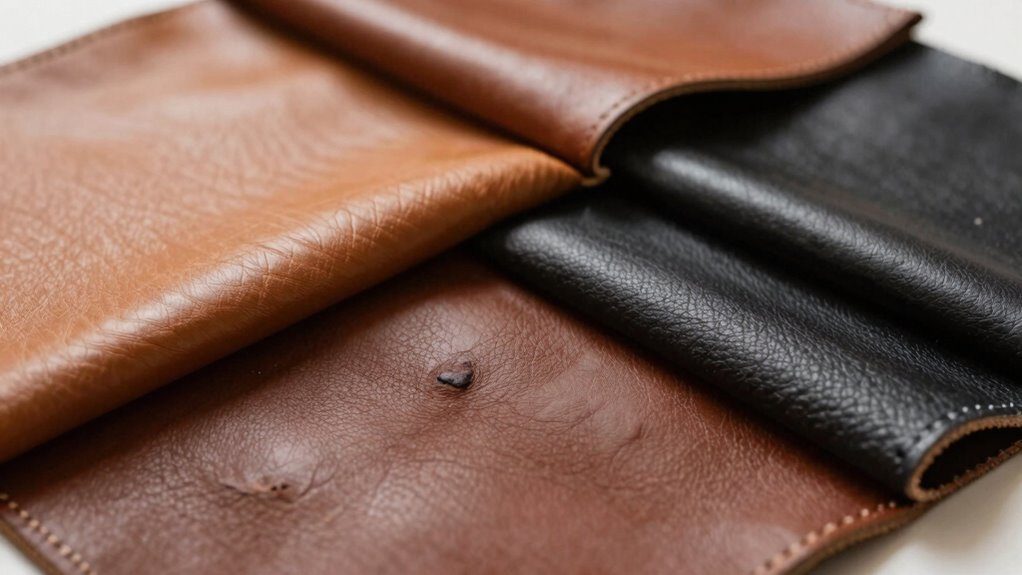
Have you ever wondered what sets different types of leather apart in fashion? The answer lies in understanding how leather is processed and sourced, which directly affects its quality, appearance, and durability. One essential aspect to consider is leather tanning, a process that transforms raw animal hides into the supple material used for your favorite accessories. Tanning methods vary widely, from traditional chrome tanning to more eco-friendly options like vegetable tanning. Chrome tanning, while efficient and cost-effective, often involves chemicals that can be harmful to the environment. Conversely, vegetable tanning uses natural tannins from plants and is more sustainable, aligning with the growing demand for sustainable sourcing. Knowing how the leather is tanned can give you insight into its environmental impact and how it might age over time. Understanding tanning methods can help you better evaluate the ecological footprint of your leather products.
Sustainable sourcing is another key factor that influences leather quality and integrity. When you choose leather made from sustainably sourced materials, you’re supporting ethical practices that prioritize animal welfare, environmental preservation, and fair labor conditions. Leather that comes from suppliers committed to sustainable sourcing often undergoes stricter quality controls, ensuring the final product is not only eco-friendly but also of higher quality. These practices tend to produce leather with better grain structure and fewer defects, resulting in a more durable and attractive product. Recognizing these ethical sourcing practices allows you to make more informed decisions and support brands that prioritize responsible practices. Additionally, transparent supply chains help consumers verify the origins of their leather and ensure it aligns with their values. Furthermore, understanding where and how the leather is sourced helps you make more informed decisions, especially as transparency becomes a greater concern in fashion.
The grade of leather you encounter in the market is often a reflection of how meticulously it was processed and sourced. Higher-grade leathers typically come from premium hides that are carefully selected for their size, grain, and overall quality. These leathers undergo gentle tanning processes and are often sourced from suppliers with responsible practices. Lower-grade leathers, on the other hand, may include more defects, thinner hides, or more aggressive chemical treatments, which can affect their longevity and appearance. Recognizing these differences can help you assess the value and expected lifespan of a product, whether it’s a luxury handbag or a pair of boots. The grading system for leather is an important tool for consumers to understand in order to gauge the quality and durability of their purchases. Being familiar with leather grading can also guide you in making smarter investments in your wardrobe.
As an affiliate, we earn on qualifying purchases.
Frequently Asked Questions
Are Genuine Leather and Real Leather the Same?
Genuine leather and real leather are often used interchangeably, but they aren’t exactly the same. Genuine leather is usually lower-quality and made from the leftover scraps during leather tanning, sourced from various animals. Real leather, on the other hand, refers to authentic, high-quality leather that’s been properly tanned and sourced. Knowing about leather sourcing helps you identify true leather, ensuring your product’s durability and value, not just marketing terms.
How Does Leather Grade Affect Durability?
Think of leather as a sturdy tree; the higher the grade, the more resilient its branches. Leather grade directly impacts durability—higher grades, like full-grain, resist leather aging better because they have consistent grain and fewer imperfections. As you use it, lower-grade leathers may show signs of wear faster, with uneven grain and quicker deterioration. So, selecting a higher grade guarantees your item ages gracefully and lasts longer.
Can Lower-Grade Leather Be Stylish?
Yes, lower-grade leather can be stylish if it has a appealing leather finish and is sourced sustainably. Look for finishes that enhance the leather’s appearance, like embossing or special coatings, to add flair. Sustainable sourcing guarantees the leather is environmentally friendly, making your choice both fashionable and responsible. Even lower-grade leather can look trendy and unique when crafted thoughtfully, giving you a stylish accessory that aligns with eco-conscious values.
What Is the Best Leather Grade for Everyday Wear?
For everyday wear, full-grain leather is your best bet—it’s tougher than titanium and ages beautifully. You’ll want to focus on proper leather care to keep it looking sharp, especially with daily use. While it’s slightly more expensive, the cost considerations pay off because it’s more durable and develops a unique patina over time. Choosing full-grain leather means investing in style and longevity, making every day’s wear worth it.
How Do I Identify High-Quality Leather?
To identify high-quality leather, look for even, tight grain types like full-grain or top-grain, which showcase natural textures and minimal imperfections. Check how it feels—smooth yet durable—and observe the tanning process; vegetable-tanned leather develops a rich patina over time. High-quality leather often has a subtle scent, indicating proper tanning. Avoid overly shiny or stiff options, as they may use lower-grade materials or synthetic finishes.
vegetable tanned leather handbag
As an affiliate, we earn on qualifying purchases.
As an affiliate, we earn on qualifying purchases.
Conclusion
By understanding leather grades, you can envision the journey from raw hide to luxurious accessory. Picture the finest, top-grade leather as a smooth, flawless canvas—ready to showcase craftsmanship—while lower grades resemble a rugged, textured landscape, full of character and stories. Knowing these differences helps you choose pieces that truly speak to your style and values. With this knowledge, you’ll see every leather piece as a chapter in a rich, tactile story, waiting to be worn and appreciated.
As an affiliate, we earn on qualifying purchases.
As an affiliate, we earn on qualifying purchases.
Halloween Picks
halloween
As an affiliate, we earn on qualifying purchases.