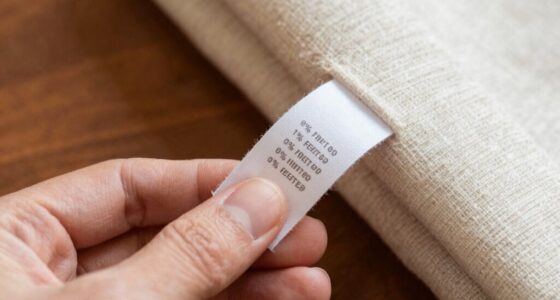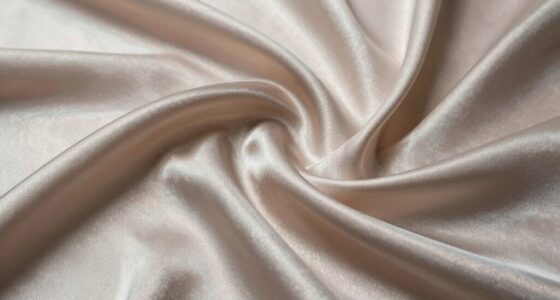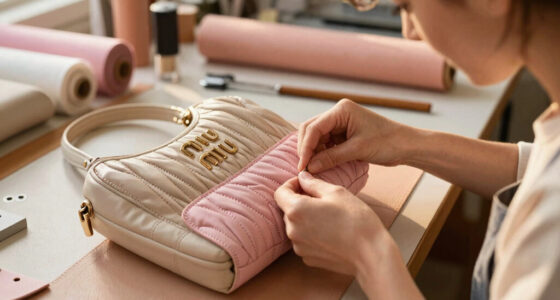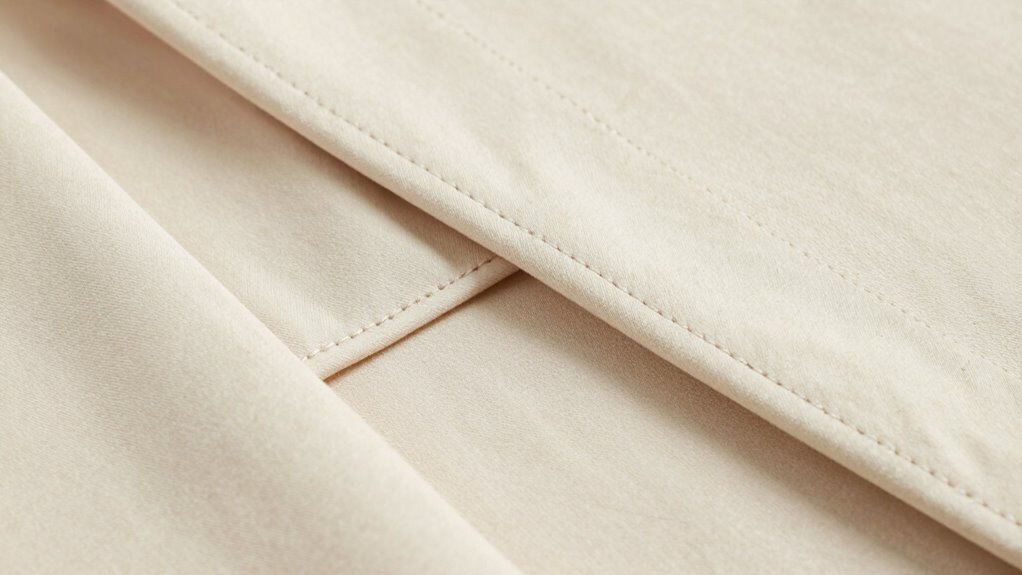

Your stitching, lining, and finishing techniques greatly affect how a garment feels on your skin. Strong seams and reinforced stitches provide durability and a sturdy feel, while delicate stitches keep lightweight fabrics smooth and comfortable. Adding lining enhances comfort and reduces static, making the garment softer against your skin. Proper finishing guarantees clean edges, preventing fraying and allowing the fabric to drape naturally. Want to discover more about how these details create a polished, comfortable garment?

Get your wardrobe favorites delivered free — and shop member deals
- Fast, free delivery on millions of items
- Access to Prime Big Deal Days deals on October 6–7
- Prime Video, Amazon Music and more included
Key Takeaways
- Strong, even stitching enhances durability and provides a smooth, comfortable feel against the skin.
- Proper lining adds softness, reduces static, and creates a more luxurious, polished touch.
- Finishing details like neat hems and edge treatments improve garment drape and overall comfort.
- High-quality stitches prevent irritation and fraying, maintaining a consistent feel over time.
- Well-executed finishes contribute to a refined appearance and a confident, comfortable wear.
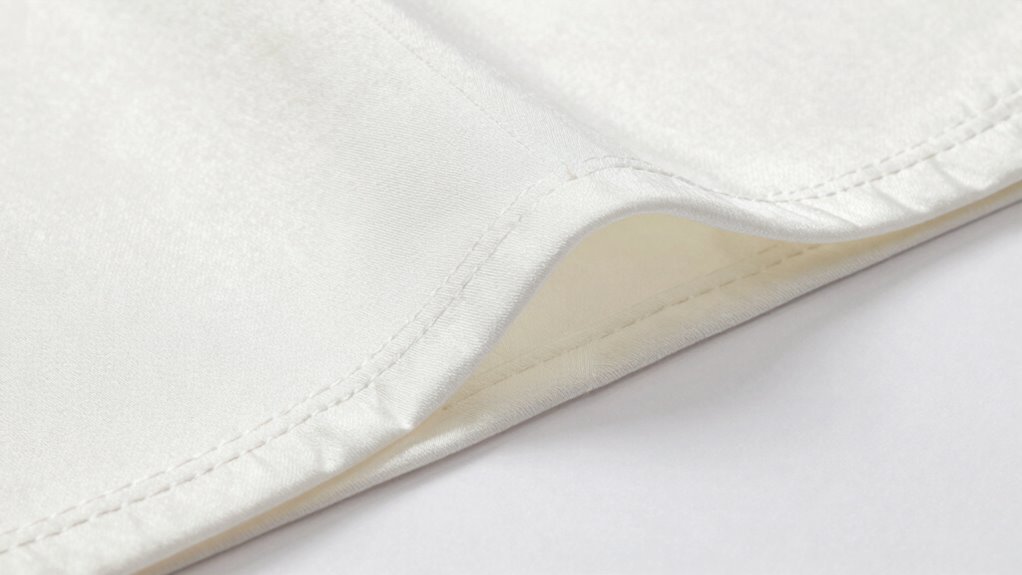
Have you ever wondered what makes a garment both durable and visually appealing? The secret lies in the details—specifically, sewing techniques, fabric selection, and how the finishing touches come together. When you’re creating or choosing clothing, understanding how stitching, lining, and finishing influence the overall feel can transform a simple piece into something extraordinary. Proper sewing techniques determine not only the garment’s longevity but also how it drapes and feels against your skin. Fabric selection plays a critical role in how the final garment feels and looks. The right fabric can make or break the overall impression. Natural fibers like cotton, silk, or wool tend to feel softer and more luxurious, while synthetics might offer more durability or stretch. When selecting fabric, consider the garment’s purpose and the environment where it will be worn. The weight, weave, and finish of the fabric influence not only how it looks but also how it behaves when sewn. For instance, a lightweight chiffon requires delicate handling and specific sewing techniques to prevent fraying or puckering, while a sturdy denim demands strong stitches and reinforced seams. Choosing quality fabric also impacts how the garment ages; high-quality fabrics tend to maintain their shape and color longer, enhancing the overall feel of the piece. Additionally, understanding fabric properties helps in selecting the most appropriate material for each project, ensuring that the finished garment performs as intended. The fabric composition directly affects the garment’s comfort, breathability, and durability. Finally, the finishing touches—like lining, hems, and edge finishes—alter how a garment interacts with your body and how it appears to others. A smooth lining can add comfort, reduce static, and give the interior a polished look. Properly finished edges prevent fraying and give the garment a clean, professional appearance. These details also influence how the garment drapes and moves. When you pay attention to these elements, you’re not just making a piece that looks good; you’re creating something that feels good to wear and stands the test of time. Essentially, the combination of sewing techniques, fabric selection, and finishing details shapes the overall experience of a garment—making it durable, attractive, and uniquely suited to your style.
high quality sewing stitches for garments
As an affiliate, we earn on qualifying purchases.
As an affiliate, we earn on qualifying purchases.
Frequently Asked Questions
How Do Different Stitching Types Affect Garment Durability?
Different stitching patterns greatly influence a garment’s durability. Stronger stitches like double-stitched or reinforced seams withstand more wear, while decorative or lighter stitches may not last as long. Thread quality also matters; high-quality, tightly spun threads resist fraying and breaking over time. By choosing appropriate stitching types and premium threads, you guarantee your garment stays intact longer, offering better longevity and resistance to everyday stress.
Can Lining Materials Impact Garment Breathability?
Lining materials considerably impact garment breathability, especially based on their fiber types. Natural fibers like cotton or silk promote better moisture control, allowing air to pass through and keep you comfortable. Synthetic linings such as polyester tend to trap heat and moisture, reducing breathability. So, choosing the right lining with breathable fibers helps your garment stay fresh and comfortable, especially during warmer weather or active use.
How Does Finishing Influence Garment Flexibility?
Imagine you’re designing a sports jacket; the finishing process can make it more flexible. For example, using a soft, stretch-friendly finish enhances seam flexibility, allowing the fabric to move naturally with your body. This improves fabric drape and overall comfort. The right finish reduces stiffness, making the garment more adaptable and ensuring it retains its shape without feeling restrictive, perfect for active wear or casual styles.
Are There Eco-Friendly Options for Lining and Finish?
Yes, there are eco-friendly options for lining and finish. You can choose linings made from recycled fabrics, which reduce waste and lower environmental impact. Biodegradable dyes are also a great choice, as they break down naturally without polluting water sources. These options help you create sustainable garments that feel good on the skin and are better for the planet, aligning your fashion choices with eco-conscious values.
What Are the Cost Differences Between Various Finishing Techniques?
You’ll find that cost-effective options like simple finishing techniques, such as overlocking or plain hem stitches, are more affordable. Luxury finishing techniques, like hand-stitched details, bound edges, or intricate embroidery, tend to be pricier due to the labor and skill involved. Your choice depends on your budget and desired quality; investing in luxury finishes elevates the garment’s feel but increases production costs considerably.
As an affiliate, we earn on qualifying purchases.
Conclusion
Just like a master painter adds the final brushstrokes to bring a canvas to life, your choices in stitching, lining, and finishing transform a simple fabric into a statement piece. These details, though subtle, hold the power to elevate comfort, durability, and style, shaping the garment’s story. When you pay attention to these finishing touches, you’re not just sewing; you’re crafting confidence—your own version of a masterpiece, reminiscent of the artisans of old who understood that perfection lies in the details.
professional garment finishing tools
As an affiliate, we earn on qualifying purchases.
As an affiliate, we earn on qualifying purchases.
As an affiliate, we earn on qualifying purchases.
Halloween Picks
halloween
As an affiliate, we earn on qualifying purchases.