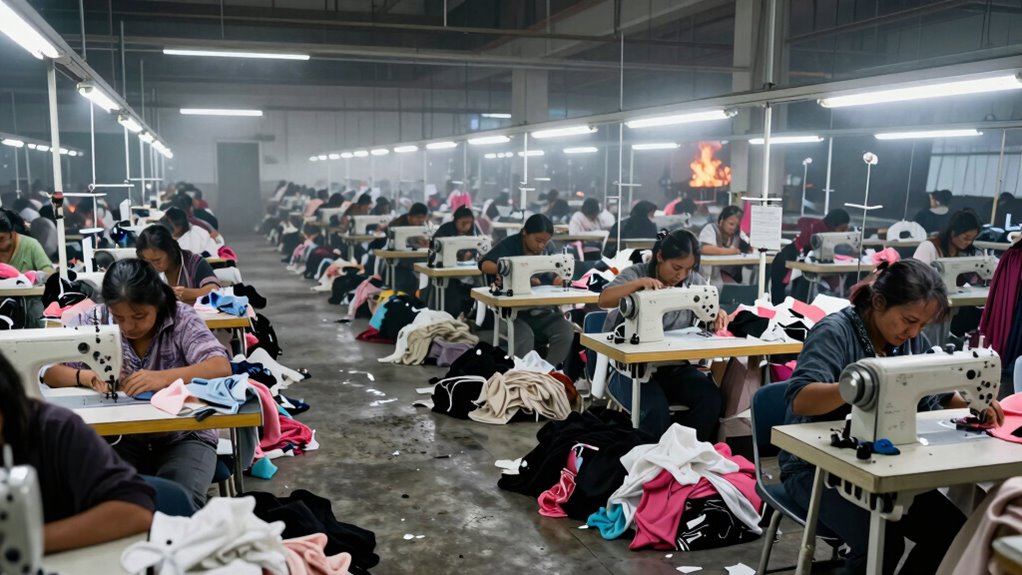

Fast fashion harms both people and the environment. It accounts for over 10% of global greenhouse emissions and uses massive amounts of water, polluting rivers and ecosystems. Microplastics from synthetic garments contaminate oceans, harming marine life and human health. Most discarded clothes end up in landfills, taking decades to decompose, while toxic chemicals from factories threaten communities. By understanding these impacts, you can make more sustainable choices—there’s much more to uncover about this urgent issue.
Key Takeaways
- Fast fashion significantly contributes to climate change, generating over 1.2 billion tons of greenhouse gases annually.
- Textile production requires vast water resources and pollutes water sources with toxic chemicals and wastewater.
- Washing synthetic garments releases microplastics that harm marine ecosystems and human health.
- Most textiles end up in landfills, taking decades or centuries to decompose and releasing microplastics into the environment.
- Toxic chemicals used in manufacturing and tanning pose serious health risks to workers and communities.

Pact Men's Organic Softspun Crew Neck T-Shirt, 5 Pack, Maritime Navy
ORGANIC COTTON: The crew neck t-shirts for men pack of 5 is the perfect choice for men who…
As an affiliate, we earn on qualifying purchases.
As an affiliate, we earn on qualifying purchases.
The Carbon Footprint of Fast Fashion
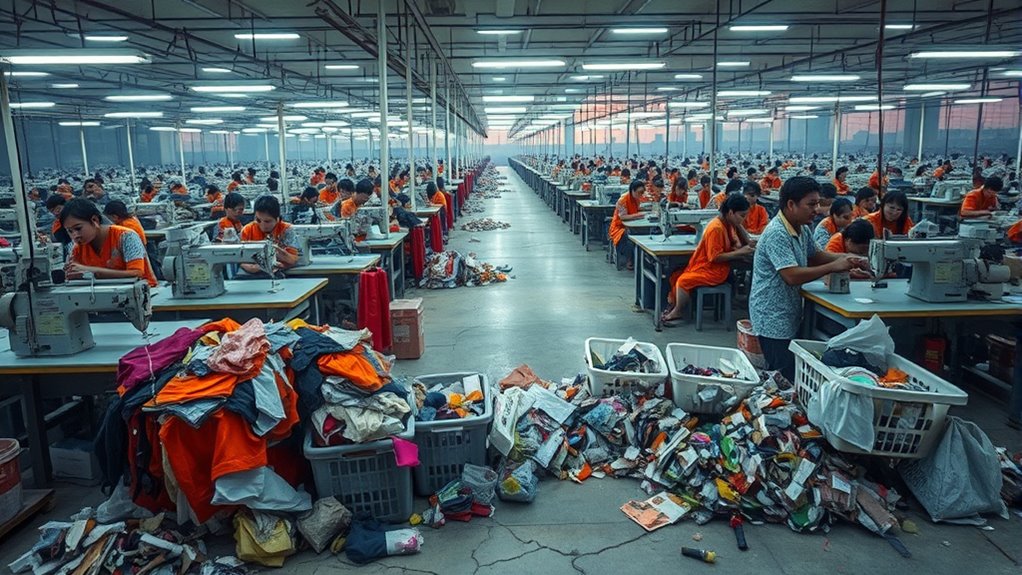
How much do you realize about the carbon footprint of fast fashion? This industry accounts for about 10% of global greenhouse gas emissions, more than international flights and maritime shipping combined. It releases roughly 1.2 billion tons of greenhouse gases annually, and this number is expected to grow by 50% by 2030. Producing just one kilogram of fabric can generate 23 kilograms of greenhouse gases, mainly due to reliance on fossil fuels. In the EU alone, textile purchases in 2022 emitted 355 kg of CO2 per person—equivalent to driving 1,800 km in a petrol car. Fast fashion’s extensive supply chain, quick turnover, and heavy resource use make it a significant contributor to climate change, impacting the planet long after you buy that trendy new piece. Discover Trusted Businesses and Services Near You.

Aeropostale Women's Aero Baggy Wide Leg Light Wash Clean Jean, Orzo
Recycled Cotton | Crafted from a mix of pre- and post-consumer waste to help reduce landfills
As an affiliate, we earn on qualifying purchases.
As an affiliate, we earn on qualifying purchases.
Water Usage and Pollution in Textile Production
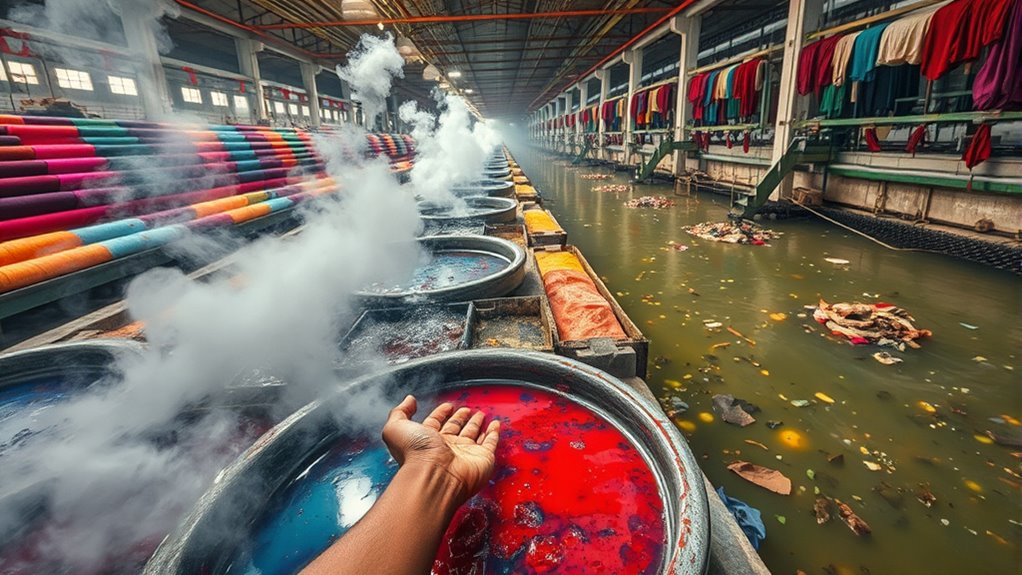
Textile production consumes vast amounts of water, making it the second-largest global water user. For example, producing one cotton T-shirt requires about 2,700 liters of water—enough for 2.5 years of drinking water for one person. Denim jeans demand even more—around 2,000 gallons. This high water use strains local water supplies, especially in drought-prone regions. Additionally, the industry pollutes water sources through pesticide runoff, fertilizers, and toxic chemicals used in dyeing and finishing fabrics. Many factories discharge untreated wastewater directly into rivers and lakes, contaminating drinking water and harming ecosystems. The reliance on water-intensive crops like cotton, combined with pollution, worsens environmental degradation and impacts communities’ health. Organic cotton offers a better alternative, using 91% less water and fewer chemicals. The horsepower of electric dirt bikes demonstrates their capable performance, often rivaling traditional gas-powered bikes.

100 Pack Upgraded Lint Traps for Washing Machine Hose with Double-Layer Bottom Filter – Pet Hair Remover & Drain Hose Filter to Prevent Clogs, Universal Laundry Lint Snare for Washer
Upgraded Dual-Layer Nylon Mesh Filter:This premium washing machine lint trap features an upgraded dual-layer filter design at the…
As an affiliate, we earn on qualifying purchases.
As an affiliate, we earn on qualifying purchases.
Microplastics and Marine Ecosystems

The environmental impact of textile production extends beyond water pollution to its significant contribution to microplastic contamination in our oceans. When you wash synthetic garments like polyester and nylon, tiny fibers called microplastics are released—about 500,000 tons annually, equivalent to 50 billion plastic bottles. These microfibers find their way into marine ecosystems, harming aquatic life and, eventually, human health. Here’s what you should know:
- Synthetic fibers, which make up 73% of textiles by 2030, shed microplastics during washing.
- Microplastics account for 35% of ocean microplastics, impacting marine food chains.
- These fibers are non-biodegradable, lingering in the environment for hundreds of years, disrupting ecosystems and biodiversity.
Reducing synthetic textile use helps protect our oceans and their inhabitants.

The Ultimate Capsule Wardrobe Guide – Workbook Edition: Capsule wardrobe essentials book
As an affiliate, we earn on qualifying purchases.
As an affiliate, we earn on qualifying purchases.
Textile Waste and Landfill Concerns
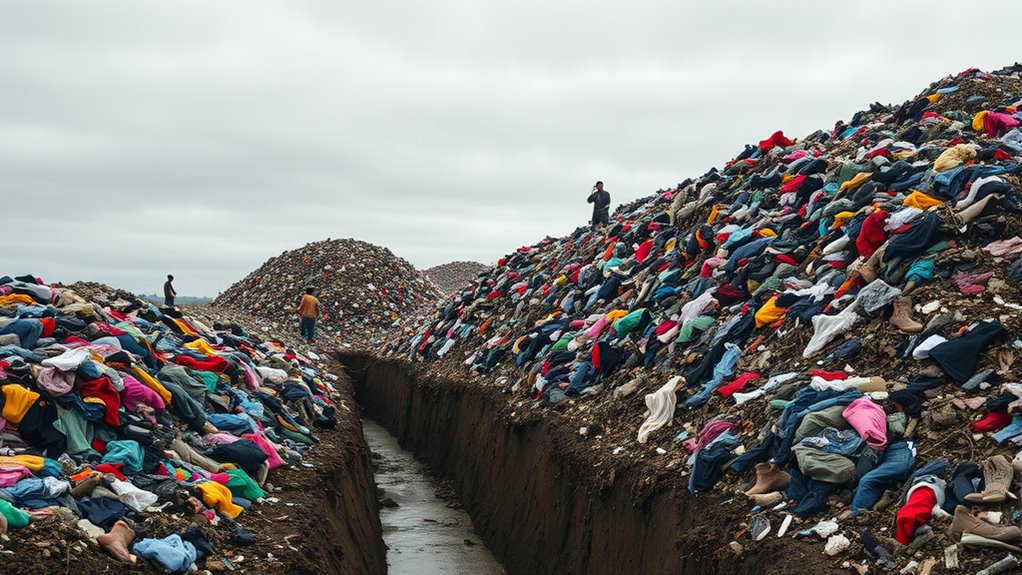
Despite growing awareness, a staggering 85% of textiles still end up in landfills each year, contributing to environmental degradation. When you discard clothing, much of it isn’t recycled or repurposed; it simply piles up, taking decades or even centuries to decompose. Synthetic fibers like polyester, which dominate fast fashion, don’t break down easily, releasing microplastics into soil and water as they degrade. Landfills become toxic dumps, costing billions annually in waste management. As an individual, your fast fashion purchases contribute to this cycle—garments are often worn fewer than ten times before being discarded. This waste not only wastes resources used in production but also pollutes ecosystems, highlighting the urgent need for more sustainable choices and proper textile recycling practices. Additionally, Free Floating textiles can travel long distances via waterways, spreading microplastics across the globe and affecting marine life.
Toxic Chemicals and Environmental Hazards

Many chemicals used in fashion production pose serious environmental and health risks. You might not realize that factories discharge untreated water filled with hazardous substances into rivers and oceans, contaminating ecosystems. Here are three key issues:
- Tanning processes use toxic substances like formaldehyde and coal-tar derivatives, polluting water and harming wildlife.
- Over 3,500 chemicals are in textile manufacturing, with about 10% hazardous to humans and 5% to the environment.
- Synthetic fibers such as polyester release volatile acids and carbon emissions during production, contributing to pollution and climate change.
- Chemical safety measures are often inadequate, allowing dangerous substances to enter the environment and affect communities nearby.
Frequently Asked Questions
How Does Fast Fashion Impact Local Communities and Workers’ Health?
You might not realize it, but fast fashion harms local communities and workers’ health. You contribute to unsafe working conditions, exposure to toxic chemicals, and low wages. Factories often lack proper safety measures, causing health issues like skin problems, respiratory illnesses, and long-term diseases. By buying fast fashion, you support a system that prioritizes cheap labor over workers’ well-being, perpetuating cycles of exploitation and environmental contamination.
What Are Sustainable Alternatives to Traditional Synthetic Fibers?
Like the phoenix rising from ashes, sustainable fibers reinvent fashion’s future. You can choose materials like hemp, organic cotton, and Tencel, which require less water, land, and chemicals. Recycled fibers from plastics or textiles help reduce waste and microplastic pollution. These alternatives lower environmental impact, support eco-friendly practices, and promote a circular economy. By opting for them, you actively contribute to a healthier planet for generations to come.
How Can Consumers Reduce Their Fashion-Related Carbon Footprint?
You can reduce your fashion-related carbon footprint by choosing sustainable materials like organic cotton or hemp, which use less water and chemicals. Opt for quality over quantity, buying fewer, longer-lasting pieces. Support brands committed to eco-friendly practices, and wash clothes less often using eco-conscious detergents. Additionally, donate or recycle your garments instead of discarding them. These steps help cut emissions and lessen environmental harm caused by fast fashion.
What Policies Are in Place to Regulate Textile Chemical Usage?
You might think regulations fully control textile chemical use, but evidence shows gaps remain. Policies like the EU’s REACH restrict hazardous chemicals, requiring safety data and bans on certain substances. However, enforcement varies globally, and many factories still discharge toxic chemicals untreated. You can support brands committed to transparency and sustainable practices, knowing that stronger policies and stricter enforcement are essential to truly reduce chemical harm in the fashion industry.
How Does Fast Fashion Affect Biodiversity and Ecosystems?
Fast fashion harms biodiversity and ecosystems by releasing toxic chemicals into water sources, which poisons aquatic life and disrupts habitats. It also contributes to microplastic pollution from synthetic fibers, harming marine organisms and food chains. The massive land use for cotton and leather depletes ecosystems and reduces biodiversity. Additionally, greenhouse gases from production and transportation accelerate climate change, further threatening ecosystems and biodiversity worldwide.
Conclusion
Understanding the true cost of fast fashion reveals a landscape scarred by environmental and human tolls, like a wound that refuses to heal. By choosing ethical fashion, you become part of the solution, turning away from harm and toward sustainability. Every conscious purchase is a step toward reducing pollution, conserving resources, and protecting communities. Remember, your choices ripple out like drops in a pond—powerful enough to inspire lasting change.