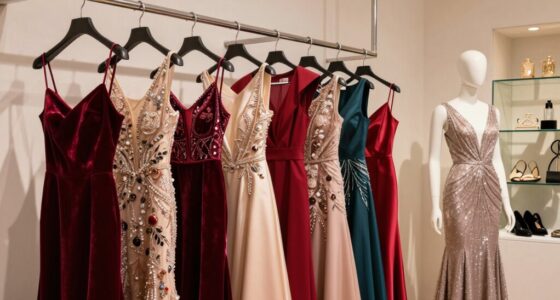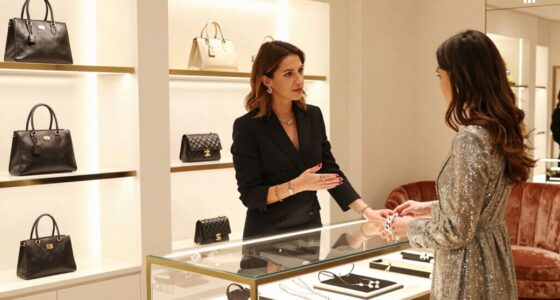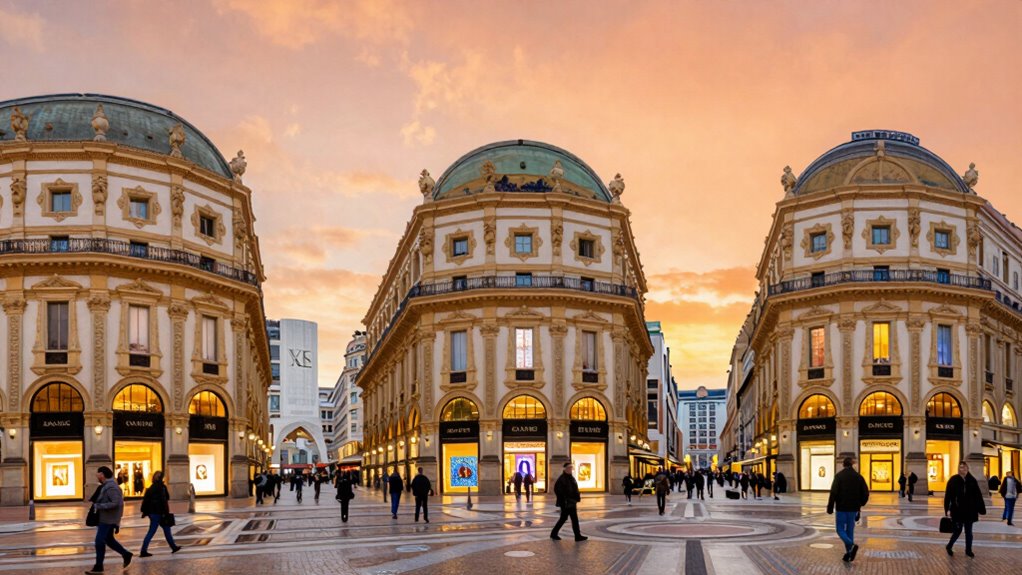

If you’re comparing Paris, Milan, and New York as luxury fashion capitals, you’ll find each city has a unique edge. Paris leads with its historic haute couture roots and focus on craftsmanship and heritage, while Milan excels in artisanal craftsmanship, bold designs, and manufacturing strength. New York brings practical, trend-focused styles and mass-market innovation. Want to discover how these cities shape the global fashion scene and what makes each one stand out? Keep exploring to uncover more.
Get ready for Prime Big Deal Days — try Prime free
Exclusive member deals on October 6–7, plus fast free delivery. Cancel anytime.
As an affiliate, we earn on qualifying purchases.
Key Takeaways
- Paris is renowned for its haute couture heritage, artistic innovation, and €10 billion in luxury orders during Fashion Week.
- Milan excels in artisanal craftsmanship, leatherwork, and industry-focused manufacturing, contributing €423 million per season.
- New York leads in mass-market fashion, with a US$1 billion annual impact, emphasizing trend-driven, accessible styles.
- All three cities are increasingly integrating sustainability, digital innovation, and wellness initiatives into their fashion ecosystems.
- Each city’s unique identity—from Paris’s elegance to Milan’s craftsmanship and New York’s practicality—shapes their global luxury fashion influence.
Historical Foundations and Heritage Significance
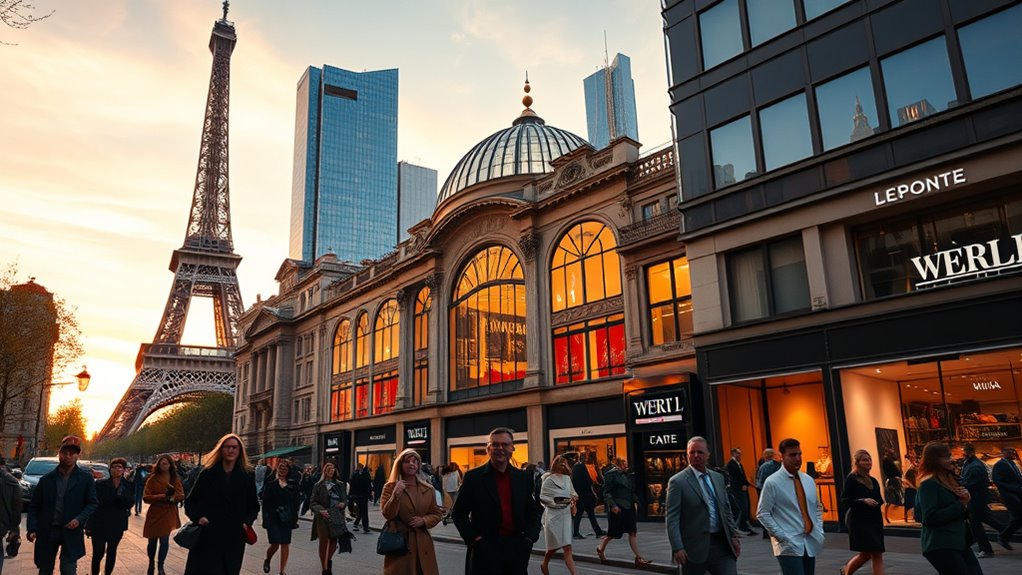
Paris’s role as a fashion capital is rooted in its mid-19th-century emergence as the birthplace of haute couture, establishing maisons like Chanel and Dior that continue to define elegance and craftsmanship today. You can see how this heritage shapes Paris’s identity, emphasizing artistic innovation and meticulous tailoring. The city’s long-standing traditions foster an environment where craftsmanship and artistic expression thrive, reinforcing its global prestige. Unlike Milan’s textile roots or New York’s commercial evolution, Paris’s historic focus on haute couture creates a cultural legacy that elevates its influence beyond trends. Its institutions, such as the Chambre Syndicale, help preserve this heritage, ensuring Paris remains synonymous with timeless elegance, innovation, and the artistry of fashion’s origins. Additionally, Paris’s commitment to fashion heritage preservation ensures that its historic craftsmanship continues to inspire contemporary design.
Economic Contributions and Industry Impact

You can see how each fashion capital drives significant revenue, from Paris’s multi-billion euro orders to New York’s $1 billion annual boost. These cities also shape the industry’s influence, with rankings shifting as Paris gains ground over New York in global prestige. Understanding their economic scale and industry impact reveals why they remain central to the global fashion scene. Additionally, the evolving industry dynamics driven by technological advancements and changing consumer preferences continue to redefine their positions in the global market.
Economic Scale & Revenue
The economic impact of the world’s leading fashion capitals is substantial, with each contributing billions annually through their runway shows, retail operations, and related industries. Paris’s Fashion Week alone generates around €10 billion in orders, driven by luxury brands like LVMH and Kering, and supports high-end manufacturing, couture ateliers, and retail. Milan’s fashion events contribute approximately €423 million per season, emphasizing manufacturing, artisanal production, and luxury exports. Meanwhile, New York Fashion Week boosts the city’s economy by about US$1 billion annually, fueled by buyers, tourists, and media. Each city’s industry shapes local employment, supply chains, and retail ecosystems, reinforcing their global economic roles. While Paris leads in luxury retail investment, Milan excels in manufacturing, and New York dominates mass-market and commercial fashion revenue streams. Unearthing the Secrets of the Supernatural Realm
Industry Influence & Global Rankings
Global industry influence rankings reveal shifting power dynamics among the world’s top fashion capitals, reflecting their evolving economic contributions and cultural prestige. Paris continues to lead in heritage, haute couture, and global rankings, with Milan excelling in manufacturing and craftsmanship, and New York dominating in commercial reach and trend pace. These rankings influence brand positioning, investment, and talent flow across cities. Additionally, industry impact is increasingly shaped by innovation and sustainability efforts that are gaining prominence in these fashion hubs.
Distinct Creative Identities and Design Aesthetics
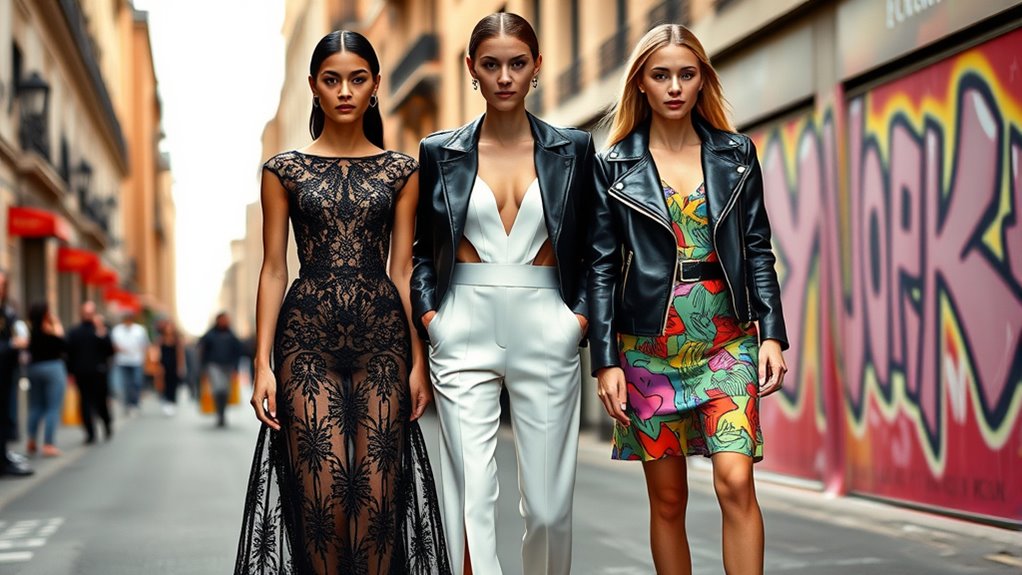
Each fashion capital cultivates a distinctive creative identity that shapes its aesthetic language and influences global trends. Paris champions haute couture, emphasizing refinement, artistic innovation, and heritage-inspired designs. You see this in intricate craftsmanship and timeless silhouettes. Milan’s style exudes luxury craftsmanship, with bold textures, sculpted shapes, and rich materials that radiate opulence. You notice impeccably tailored pieces crafted for commercial impact. New York’s identity is all about practicality and trend velocity, featuring oversized, streetwear-infused looks that appeal to a mass audience. You observe:
- Paris’s delicate embroidery and conceptual artistry.
- Milan’s luxurious fabrics and bold textures.
- New York’s utilitarian, oversized silhouettes.
Though cross-pollination occurs, each city’s signature aesthetic continues to define its runway narrative.
Structural Variations in Industry Organization and Calendar

You’ll notice that each fashion capital structures its industry calendar differently, shaping how buyers, designers, and media engage with shows. For example, New York kicks off the season with its trade-focused presentations, while Milan schedules intense, segmented weeks dedicated to both menswear and womenswear. Paris, on the other hand, combines haute couture and ready-to-wear in a cycle that emphasizes tradition and prestige.
Fashion Week Scheduling
Have you ever wondered why fashion weeks around the world follow different schedules? It’s because each city has its unique industry rhythm and priorities. In New York, the season kicks off in September, setting the tone with a focus on commercial ready-to-wear and mass-market trends. Milan follows with a packed calendar, featuring:
- Back-to-back shows for women’s and men’s collections,
- Intense multi-week segments dedicated to luxury craftsmanship,
- A clear sequence that builds momentum toward the finale.
Paris, meanwhile, blends haute couture with ready-to-wear, often overlapping shows for prestige and artistic expression. Paris’s schedule emphasizes tradition and craftsmanship, making its calendar more integrated and prestigious. Milan’s focus is on production hubs, while New York’s is on rapid industry response.
Presentation Formats
Presentation formats in the fashion industry vary markedly across the major capitals, reflecting their distinct priorities and industry structures. In Paris, haute couture weeks combine runway shows with intimate salons, emphasizing artistry and heritage. Milan’s presentations focus on multi-week, concentrated segments for both women’s and men’s collections, highlighting craftsmanship and luxury production. New York favors showroom appointments and consumer-facing events, promoting commercial appeal and trend immediacy. Digital formats are increasingly adopted across all cities, with digital lookbooks, virtual showrooms, and sustainable venues gaining prominence. Each capital balances spectacle and practicality differently: Paris and Milan emphasize theatricality and heritage, while New York prioritizes accessibility and market-driven displays. The adoption of Free Floating concepts such as digital and sustainable formats reflects the evolving landscape of the global fashion industry, influencing buyer engagement, brand positioning, and future innovation.
Talent Development, Education, and Institutional Support
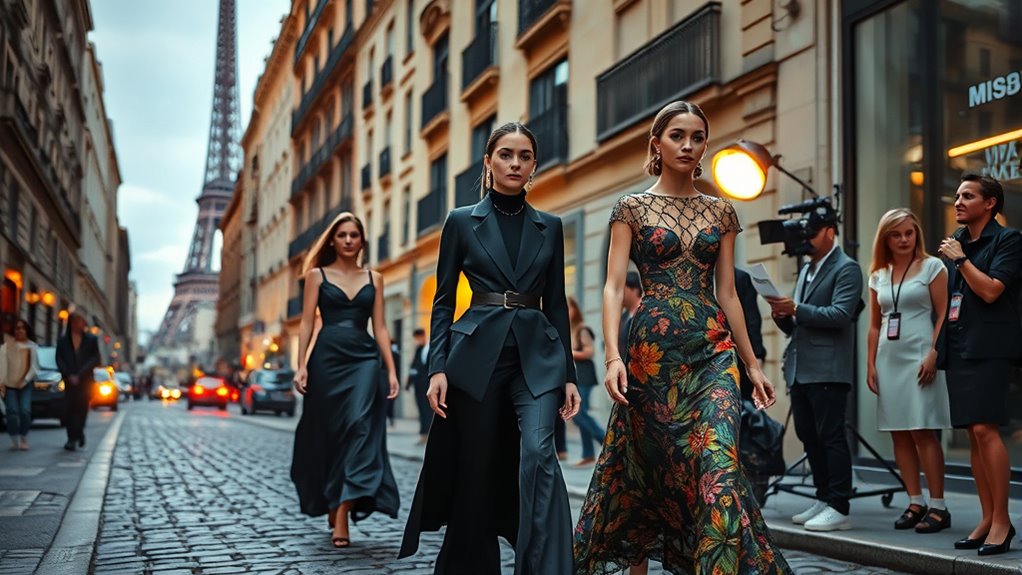
Talent development, education, and institutional support form the backbone of each fashion capital’s creative ecosystem, shaping the future of industry innovation. You visualize Paris’s historic ateliers, where master artisans pass skills to emerging designers. In Milan, you see bustling tailoring schools, leather workshops, and industry associations fueling craftsmanship. Meanwhile, New York’s design schools and fashion programs nurture a diverse talent pool ready to disrupt markets. Each city’s support system crafts unique talent pipelines, ensuring industry evolution. Moreover, essential oils for talent nurturing play a role in fostering creativity and well-being among designers and students alike.
Influence of Market Trends and Sustainability Initiatives
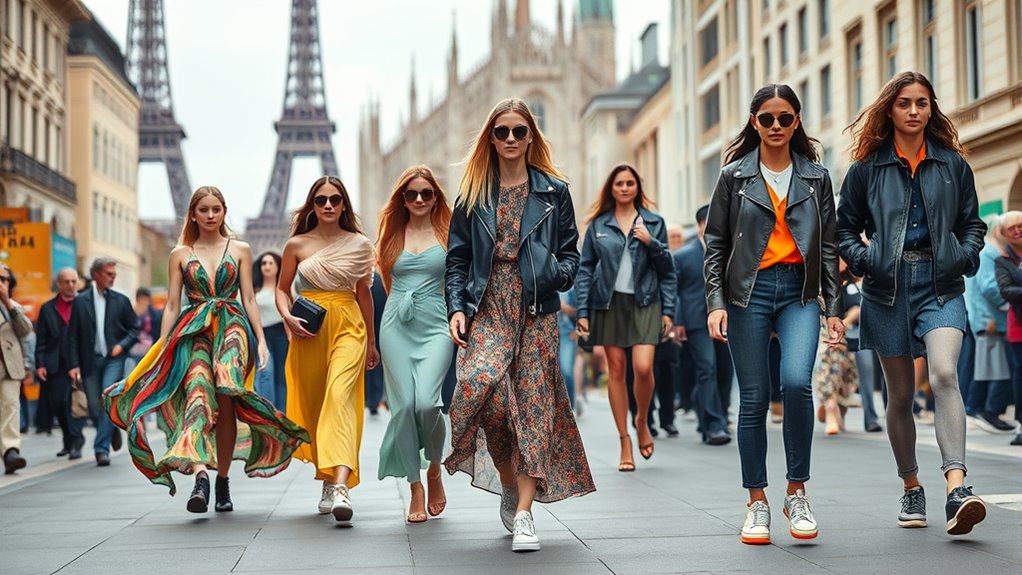
Market trends and sustainability initiatives are reshaping the landscape of global fashion capitals, influencing both creative direction and industry priorities. You’ll notice brands prioritizing eco-friendly materials, transparent supply chains, and circular design approaches. Paris leads with high-end maisons championing sustainable luxury, blending heritage with innovation. Milan emphasizes craftsmanship and eco-conscious manufacturing, integrating sustainability into its renowned artisanal practices. New York champions practicality and mass-market sustainability, pushing streetwear brands toward greener options and digital presentations. These shifts are driven by consumer demand, regulatory pressure, and industry activism, prompting designers to rethink sourcing, production, and marketing strategies. As sustainability becomes a core industry value, your favorite fashion capitals are racing to lead in sustainable innovation, shaping future trends, and redefining luxury standards for a more responsible industry. The integration of halal-certified materials and processes is also becoming an emerging aspect of sustainable fashion, influencing brands to adopt ethical sourcing standards.
Role of Haute Couture and Ready-to-Wear Sectors
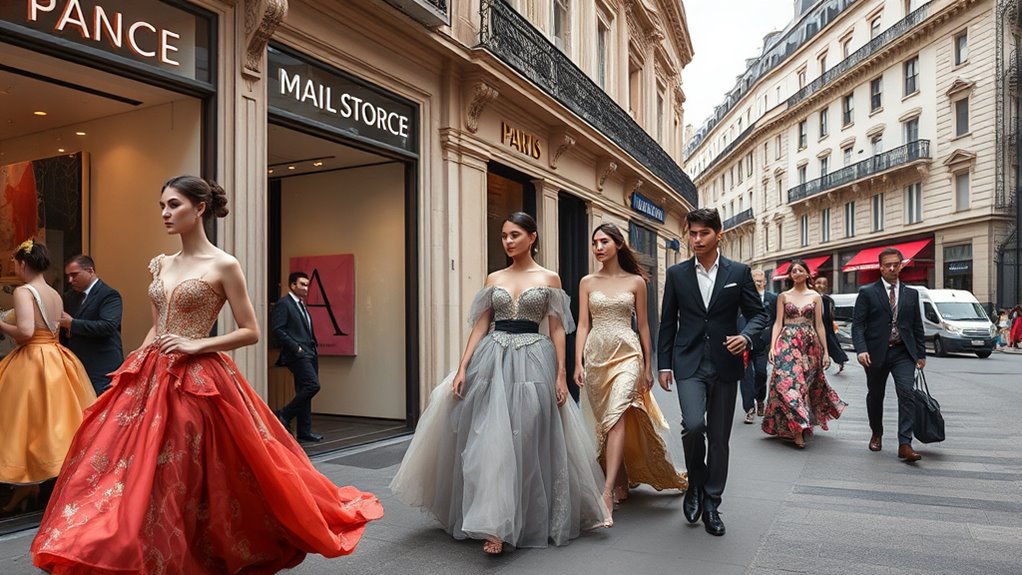
The haute couture and ready-to-wear sectors serve distinct yet interconnected roles in shaping each fashion capital’s identity and economic landscape. Imagine:
- Paris’s ateliers, where master artisans craft intricate, one-of-a-kind garments that embody tradition and artistic innovation.
- Milan’s factories, producing luxurious, impeccably tailored pieces ready for global markets, blending craftsmanship with commercial appeal.
- New York’s showrooms, showcasing accessible, trend-driven collections that reach mass audiences through fast-paced retail cycles.
In Paris, couture elevates brand prestige and creative heritage, while ready-to-wear fuels its global influence. Milan’s focus on craftsmanship and production strengthens its reputation. Meanwhile, New York’s ready-to-wear drives commercial success, shaping everyday fashion and rapid trend adoption.
Geographic and Logistical Advantages in Production
You can’t ignore how manufacturing clusters and supply chain infrastructure give certain fashion capitals a competitive edge. Milan’s concentration of ateliers and production hubs streamlines luxury goods creation, while Paris’s integrated supply networks support high-end couture. These geographic and logistical advantages help each city maintain its influence and efficiency in the global fashion industry.
Manufacturing Clusters Concentration
Manufacturing clusters in fashion capitals offer distinct geographic and logistical advantages that shape global production networks. You can picture Milan’s dense ateliers, where artisans craft luxury shoes and leather goods with precision. Think of Paris’s ateliers and couture houses, tightly clustered around historic districts, enabling quick collaboration. Finally, picture New York’s sprawling factories and workshops, blending mass production with artisanal studios. These clusters often incorporate hydrotherapy techniques in some facilities to enhance worker wellness and productivity, further supporting efficient manufacturing processes. In these clusters, you’ll notice:
- Proximity of suppliers, ateliers, and designers that streamline communication and reduce lead times.
- Concentrated infrastructure supporting logistics, shipping, and distribution, ensuring rapid delivery.
- Strong industry ecosystems, where talent, materials, and resources flow seamlessly, fueling innovation and efficiency.
This geographic concentration keeps each city’s manufacturing power central to their luxury fashion identity.
Supply Chain Infrastructure
Supply chain infrastructure shapes how quickly and efficiently fashion capitals turn design concepts into finished products. Paris boasts a dense network of haute couture ateliers and luxury suppliers, enabling precise craftsmanship and rapid turnaround times. Milan’s geographic advantage lies in its proximity to Italy’s extensive manufacturing hubs, supporting high-quality production and export capacity. New York benefits from a well-developed logistics system, with seamless shipping connections and a strong domestic supply chain that accelerates delivery to North American markets. Each city’s infrastructure allows brands to optimize production costs, manage inventory, and respond swiftly to trends. Milan’s manufacturing clusters, Paris’s artisanal ateliers, and New York’s logistic networks collectively shape their ability to produce luxury goods efficiently and at scale, reinforcing their competitive edge in the global fashion industry. Additionally, supply chain infrastructure plays a crucial role in adapting to changing market demands and ensuring timely responses to fashion cycles.
Digital Transformation and Future Industry Directions
Digital transformation is rapidly reshaping the fashion industry, driving new ways for brands to connect with consumers and streamline operations. You can now envision:
- Virtual showrooms replacing physical runways, where buyers explore collections through immersive digital experiences.
- AI-driven personalization, crafting tailored shopping suggestions that feel uniquely yours.
- Blockchain technology ensuring transparency and authenticity in luxury purchases, giving you trust in every item.
These innovations make the industry more agile, accessible, and transparent. Paris, Milan, and New York are investing heavily in digital platforms—some emphasizing high-tech couture, others focusing on mass-market engagement, and some blending both. As digital becomes central, future industry directions will prioritize sustainable, inclusive, and innovative experiences that reshape how you discover and buy fashion.
Emerging Competitors and the Evolution of Global Fashion Powerhouses

As the traditional fashion capitals solidify their influence, emerging markets and cities are rapidly gaining prominence on the global stage. Cities like Shanghai, Seoul, and Moscow are investing heavily in local talent, sustainable practices, and digital innovation, challenging the dominance of Paris, Milan, and New York. These emerging hubs leverage unique cultural identities, modern infrastructure, and evolving consumer bases to carve out their space in luxury fashion. They’re also reshaping global supply chains, offering fresh perspectives and increasing competition. Here’s a comparison highlighting key strengths:
| City | Strengths |
|---|---|
| Shanghai | Growing luxury market, digital focus |
| Seoul | Innovative design, youthful energy |
| Moscow | Rich heritage, developing luxury scene |
| Dubai | Strategic location, retail hub |
| São Paulo | Emerging talent, regional influence |
Frequently Asked Questions
How Do Fashion Capitals Influence Global Luxury Branding Strategies?
You influence global luxury branding strategies by understanding each city’s unique identity. Paris emphasizes heritage, couture, and artistic innovation, shaping a refined image. Milan highlights craftsmanship and opulence, appealing to luxury consumers seeking quality. New York’s focus on commercial appeal and trendsetting creates a dynamic, accessible image. By aligning your brand with a city’s strengths—heritage, craftsmanship, or trendiness—you craft a compelling narrative that resonates worldwide and boosts your market position.
What Role Does Technology Play in Shaping Each City’s Fashion Ecosystem?
Technology transforms each city’s fashion scene by enhancing design, production, and marketing. In Paris, digital tools preserve haute couture artistry and facilitate virtual showrooms, expanding global reach. Milan leverages advanced manufacturing tech to optimize craftsmanship and supply chains, boosting luxury exports. New York relies on digital platforms and e-commerce to connect designers with consumers quickly, fostering trend acceleration and broadening access. Overall, technology accelerates innovation, efficiency, and global engagement across all three fashion capitals.
How Do Local Cultural Trends Impact International Consumer Preferences?
Think of local cultural trends as the roots of a tree, shaping its growth and reaching beyond borders. You see, Paris’s emphasis on haute couture and artistic innovation influences global tastes for elegance and refinement. Milan’s focus on craftsmanship and bold textures appeals worldwide, while New York’s streetwear and practicality inspire casual, trend-driven preferences. These cultural nuances blend into the global fashion garden, guiding consumer choices across the world.
In What Ways Are Sustainability Policies Integrated Into Each City’s Fashion Calendar?
You’ll notice each city incorporates sustainability differently into its fashion calendar. Paris emphasizes eco-friendly haute couture and hosts sustainable showcases within its couture weeks, promoting transparency and innovation. Milan integrates sustainability through dedicated eco-friendly collections and green manufacturing practices during fashion weeks. In New York, brands focus on eco-conscious ready-to-wear, using runway shows and showrooms to highlight sustainable materials and practices, shaping consumer expectations worldwide.
How Might Emerging Markets Alter the Future Dominance of Paris, Milan, and New York?
You might think Paris, Milan, and New York will keep their throne, but emerging markets are quietly rewriting the script. Countries like China, South Korea, and India boast booming luxury sectors, talented designers, and digital savvy audiences. They challenge traditional influence by reshaping consumer power, supply chains, and innovation. So, don’t be shocked if in a few years, these rising hubs don’t just participate—they dictate the future of fashion dominance.
Conclusion
As you consider the fierce competition among Paris, Milan, and New York, remember that each city’s unique history and innovation shape the future of fashion. Imagine a young designer from Milan’s fashion schools debuting a groundbreaking collection that redefines global trends, proving that these capitals aren’t just history—they’re the birthplace of tomorrow’s style. No matter the winner, their collective influence continues to inspire and transform the fashion world you love.
Fall Picks
fall essentials
As an affiliate, we earn on qualifying purchases.