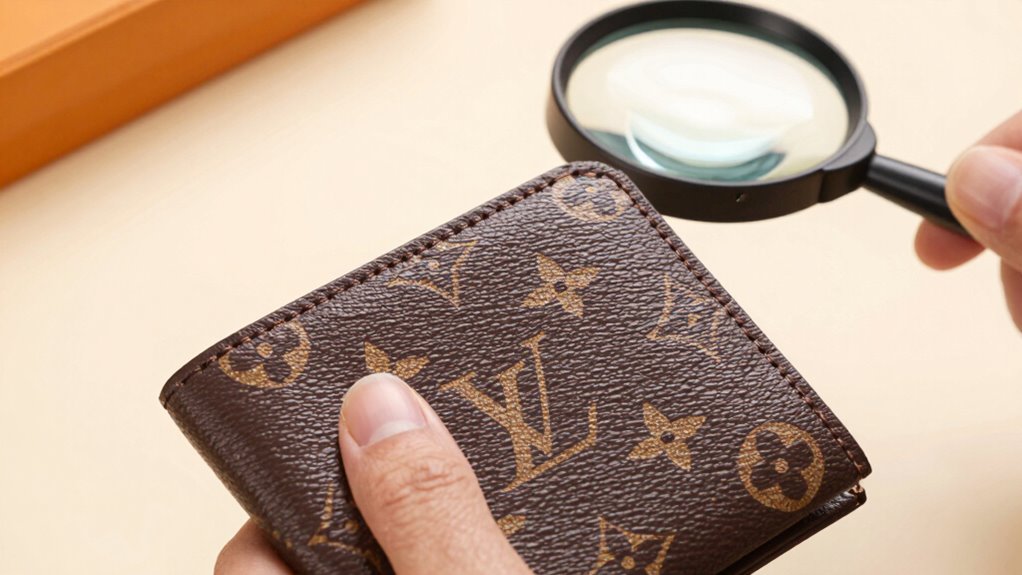

Luxury brands fight the counterfeit market by employing advanced authentication tools like AI scanners, blockchain, RFID tags, and digital watermarks to verify product authenticity. They broaden collaborations with tech firms and law enforcement, pursue legal actions, and shut down fake websites and social media accounts. These combined efforts make counterfeiting more risky and less profitable. To discover how these strategies help protect craftsmanship and your confidence as a consumer, keep exploring these innovative approaches.

Get your wardrobe favorites delivered free — and shop member deals
- Fast, free delivery on millions of items
- Access to Prime Big Deal Days deals on October 6–7
- Prime Video, Amazon Music and more included
Key Takeaways
- Luxury brands deploy advanced authentication technologies like AI, blockchain, RFID tags, and digital watermarks to verify product authenticity.
- They collaborate with industry partners, law enforcement, and e-commerce platforms to identify and shut down counterfeit operations.
- Legal actions such as lawsuits, seizures, and takedown notices are used to dismantle counterfeit networks and deter illegal activity.
- Continuous innovation in security measures helps brands stay ahead of counterfeiters’ evolving tactics.
- Consumer education and transparent verification methods foster trust and empower buyers to identify genuine luxury products.
As an affiliate, we earn on qualifying purchases.
The Scope of the Global Counterfeit Market

Have you ever wondered how widespread counterfeit goods really are? Counterfeit products make up about 3.3% of global trade, valued at roughly $467 billion in 2021—and that number has likely grown since then. Fakes account for 2.3% of all imports worldwide, according to OECD data. In the European Union, fake imports cost around $117 billion, representing 4.7% of total imports. In the U.S., customs scans have identified over $61 million worth of fake luxury items from a total of $640 million scanned. These figures show counterfeit goods are not just a minor nuisance—they’re a massive, intricate part of international trade, affecting economies and consumers alike. You’re impacted by this, whether through purchasing counterfeit or unknowingly supporting the illegal market.
RFID security tags for designer handbags
As an affiliate, we earn on qualifying purchases.
As an affiliate, we earn on qualifying purchases.
Top Targeted Brands and Their Vulnerabilities
Luxury brands like Louis Vuitton, Prada, and Chanel are the most targeted by counterfeiters because of their high demand and prestige. Louis Vuitton leads, with 33% of scanned handbags unidentified and over 32% of all counterfeit submissions. Its iconic designs and strong brand recognition make it a prime target. Prada follows, with 14.42% of handbags flagged as fakes, often replicating its signature styles. Chanel’s counterfeits have an estimated resale value exceeding $500 million, highlighting its vulnerability. Goyard’s St. Louis Totes see 18.4% fake volume, exposing weaknesses in supply chain security. These brands’ popularity makes them attractive for counterfeiters seeking high profits, prompting ongoing efforts to combat fake products through advanced authentication and legal actions. Their vulnerabilities lie in high demand and the difficulty in distinguishing genuine items from replicas. Innovative security measures are increasingly being adopted to address these challenges and protect brand integrity.
digital watermarks for luxury products
As an affiliate, we earn on qualifying purchases.
As an affiliate, we earn on qualifying purchases.
Advances in Authentication Technologies

Advances in authentication technologies are transforming how brands protect their products from counterfeiting. You now have access to cutting-edge tools like AI-powered scanners, which analyze minute details impossible to duplicate, such as micro-patterns, stitching, and material composition. Mobile apps allow consumers and retailers to authenticate items instantly, decreasing reliance on manual checks. Blockchain technology creates digital certificates of authenticity, making it nearly impossible to forge genuine products. RFID tags and smart labels embed secure, trackable data directly into items, enabling real-time verification across supply chains. These innovations enhance accuracy, speed, and security, helping brands combat counterfeiters more effectively. By adopting these advanced methods, you strengthen your brand’s integrity and protect your customers from fake products, ultimately safeguarding your reputation and market share.
As an affiliate, we earn on qualifying purchases.
Consumer Purchasing Trends and Their Impact

Did you know that nearly 40% of U.S. consumers have purchased counterfeit luxury items, whether intentionally or unknowingly? Your buying habits significantly influence the counterfeit market’s growth. Many shoppers seek luxury goods at lower prices, often turning to online marketplaces or fast-fashion outlets like Shein and Temu, which saw 40% of U.S. shoppers participating in 2023. This demand fuels counterfeiters, making fake products more sophisticated and widespread. When you buy fakes, even unknowingly, you support illegal activities and undermine brands’ efforts to protect their craftsmanship. Conversely, your preference for genuine items encourages brands to invest in advanced authentication and anti-counterfeit measures. Understanding your purchasing trends helps shape industry responses and highlights the importance of consumer awareness in combating the counterfeit trade. Consumer purchasing trends directly impact the growth of counterfeit markets and the effectiveness of brand protection efforts.
Strategies Employed by Luxury Brands to Combat Fakes

Luxury brands are actively fighting counterfeits by deploying advanced authentication technologies like AI-based scans and blockchain tracking. They also strengthen legal enforcement actions to seize fake goods and pursue counterfeiters across markets. Additionally, brands collaborate with industry partners to develop shared initiatives that enhance detection and protection efforts. These collaborative efforts help create a unified front against illicit counterfeit operations and protect consumers from purchasing fake products.
Advanced Authentication Technologies
To effectively combat the booming counterfeit market, luxury brands are turning to cutting-edge authentication technologies that detect fakes with greater accuracy and speed. You’ll find brands using AI-powered tools like Entrupy, which analyze microscopic details and material patterns impossible for counterfeiters to replicate. QR codes, holograms, and RFID tags are embedded into products, allowing quick digital verification via smartphones or specialized scanners. Blockchain technology records each item’s history, making it tamper-proof and easy to authenticate across supply chains. These innovations help you verify genuine products instantly, reducing reliance on traditional labor-intensive checks. By leveraging advanced tech, brands strengthen their defenses against sophisticated fakes, protect their reputation, and give you confidence in purchasing authentic luxury items. Vetted
Legal Enforcement Actions
Brands are actively deploying legal strategies to shut down counterfeit operations and protect their intellectual property. They file lawsuits against counterfeiters, pressing charges for trademark infringement and copyright violations. They also work with authorities to seize counterfeit goods and shut down illegal marketplaces. Additionally, brands pursue takedown notices to remove fake listings from online platforms. They are increasingly utilizing Free Floating concepts to monitor and combat counterfeit activities effectively. These efforts aim to dismantle counterfeit networks and safeguard brand reputation, making it harder for counterfeiters to operate openly.
Brand Collaboration Initiatives
Collaborating across industry boundaries has become a pivotal strategy for luxury brands fighting counterfeiters. You team up with tech firms, online platforms, and even other brands to strengthen defenses. These partnerships help develop shared databases, advanced authentication tools, and better detection systems. For example, brands work with e-commerce sites to flag and remove fake listings quickly. Technology companies create blockchain-based solutions to verify genuine products. Social media platforms also collaborate to identify and shut down fake accounts and advertisements.
| Industry Partner | Role in Combating Fakes |
|---|---|
| Tech Companies | Develop advanced authentication tools |
| E-commerce Sites | Detect and remove counterfeit listings |
| Social Platforms | Monitor fake accounts and ads |
| Other Brands | Share intelligence and best practices |
Emerging Tactics and Sophisticated Counterfeit Methods

As counterfeiters evolve their tactics, they’re adopting more sophisticated methods to evade detection and infiltrate legitimate markets. You’ll notice they now ship unassembled parts through waterways, making customs inspections harder. They also utilize social media sponsored posts to promote highly convincing superfakes that mimic authentic designs. Additionally, cyber threats have grown more advanced; impersonation scams spike during holidays, tricking consumers into buying fake products online. Here’s what you should watch for:
- Shipping small parcels and mail to bypass bulk detection.
- Creating superfakes that challenge resale platforms’ authentication processes.
- Using social media influencers and targeted scams to promote counterfeit items.
Staying vigilant means understanding these tactics and recognizing the signs of increasingly sophisticated fakes.
The Role of Legal and Regulatory Actions
You can see how strengthening intellectual property laws makes it harder for counterfeiters to operate. International enforcement partnerships are essential to crack down on cross-border fake shipments and online sales. By working together, brands and governments can create a stronger legal framework to protect authenticity and combat counterfeits effectively. Implementing comprehensive quality assurance practices ensures that genuine products maintain high standards and discourages counterfeit infiltration.
Strengthening Intellectual Property Laws
Strengthening intellectual property laws is essential in the fight against counterfeit luxury goods because robust legal frameworks can deter counterfeiters and enable effective enforcement. When laws are clearer and stricter, it becomes harder for counterfeiters to operate without consequence. Additionally, incorporating provisions that address the role of contrast ratio in detecting and preventing counterfeit products can further support enforcement efforts. To achieve this, you can focus on: 1. Updating legal definitions to cover emerging counterfeit tactics, like unassembled parts and digital fakes. 2. Increasing penalties and fines, making counterfeit operations financially unviable. 3. Streamlining enforcement procedures to allow quicker action against counterfeiters across jurisdictions.
International Enforcement Partnerships
International enforcement partnerships play a crucial role in combating the global counterfeit luxury goods trade by enabling countries to coordinate legal actions and share essential intelligence. By working together, you can target cross-border operations, shut down counterfeit networks, and seize illegal shipments more effectively. These collaborations facilitate information exchange about counterfeiters’ tactics, shipment routes, and online marketplaces, helping you stay a step ahead. International agencies and law enforcement agencies across different jurisdictions align their efforts to implement joint investigations, raids, and legal prosecutions. This cooperation also strengthens your ability to shut down websites, social media accounts, and e-commerce platforms selling fakes. Additionally, these partnerships can assist in intellectual property enforcement, making the counterfeit trade riskier and less profitable, helping luxury brands protect their intellectual property and consumers worldwide.
Collaborations and Future Innovations in Brand Defense
Collaborations between luxury brands and technology firms are becoming pivotal in strengthening defenses against counterfeits. You’ll see brands leveraging advanced tools to stay ahead of counterfeiters. Here are three innovations shaping the future:
- Blockchain technology tracks authentic products from creation to sale, making fakes easier to identify.
- AI-powered authentication platforms, like Entrupy, analyze images to verify genuine items quickly.
- Digital watermarking embeds invisible codes into products, enabling instant verification via smartphones.
- Incorporating financial education into brand strategies helps consumers understand the importance of authentic products and recognize counterfeit risks.
These collaborations help brands protect their craftsmanship and reputation while empowering consumers to spot fakes. By integrating blockchain, AI, and digital watermarks, luxury brands create a multi-layered defense. This proactive approach not only deters counterfeiters but also enhances transparency, building trust with customers and securing their market share against evolving threats.
Frequently Asked Questions
How Do Counterfeiters Evade Current Authentication Measures?
Counterfeiters evade current authentication measures by shipping unassembled parts through waterways, making detection harder. They use sophisticated techniques like creating superfakes that mimic authentic items closely. Social media helps promote these fakes via sponsored posts, and cybercriminals impersonate brands during holidays. They also exploit small parcel shipments and mail, avoiding traditional checks. To stay ahead, counterfeiters continually adapt their tactics, challenging even advanced authentication systems.
What Are the Economic Impacts of Counterfeit Goods on Genuine Brands?
You might not realize it, but counterfeit goods cost genuine brands billions each year, undermining their value and profits. When fake products flood the market, you could see a decline in brand prestige and innovation. This economic hit leads to job losses and reduced investments. Ultimately, it’s your purchasing choices that can help combat this issue, supporting authentic brands and preserving their craftsmanship and reputation.
How Effective Are Legal Actions in Reducing Counterfeit Markets?
Legal actions can be quite effective in reducing counterfeit markets when brands actively seize fake goods, pursue prosecutions, and collaborate with authorities. You see, Chanel seized over 7 million items in 2023, which disrupts supply chains and discourages counterfeiters. However, counterfeiters adapt quickly, using unassembled parts and sophisticated methods. So, while legal measures help, they’re most effective when combined with technological innovations and consumer education to truly curb fakes.
What Role Does Consumer Awareness Play in Combating Fakes?
Think of consumer awareness as a flashlight in a dark room filled with counterfeit goods. When you recognize authentic signs—like quality craftsmanship or unique branding—you help spotlight fakes, making them easier to spot and avoid. Data shows 40% of U.S. consumers buy fakes, but informed shoppers can reduce demand. Your knowledge disrupts counterfeiters’ plans, turning their marketplace into a less profitable, less appealing space.
How Will Emerging Technologies Change Future Counterfeit Detection?
Emerging technologies like AI, blockchain, and advanced authentication tools will revolutionize how you detect fakes. You’ll benefit from faster, more accurate scans that identify counterfeits in real-time, even for sophisticated superfakes. With blockchain, you can verify authenticity instantly, reducing fraud and counterfeit circulation. These innovations will make it harder for counterfeiters to deceive, empowering you to confidently authenticate products and protect genuine luxury goods more effectively.
Conclusion
You now see how luxury brands are fighting an uphill battle against counterfeits, constantly evolving to stay one step ahead. While technology and legal actions act as your shield, counterfeiters keep finding new ways to slip through. It’s a constant game of cat and mouse, but with innovation and collaboration, brands are better equipped to protect their reputation. Stay vigilant and remember, in this fight, you can’t afford to let your guard down for even a moment.
Fall Picks
fall essentials
As an affiliate, we earn on qualifying purchases.