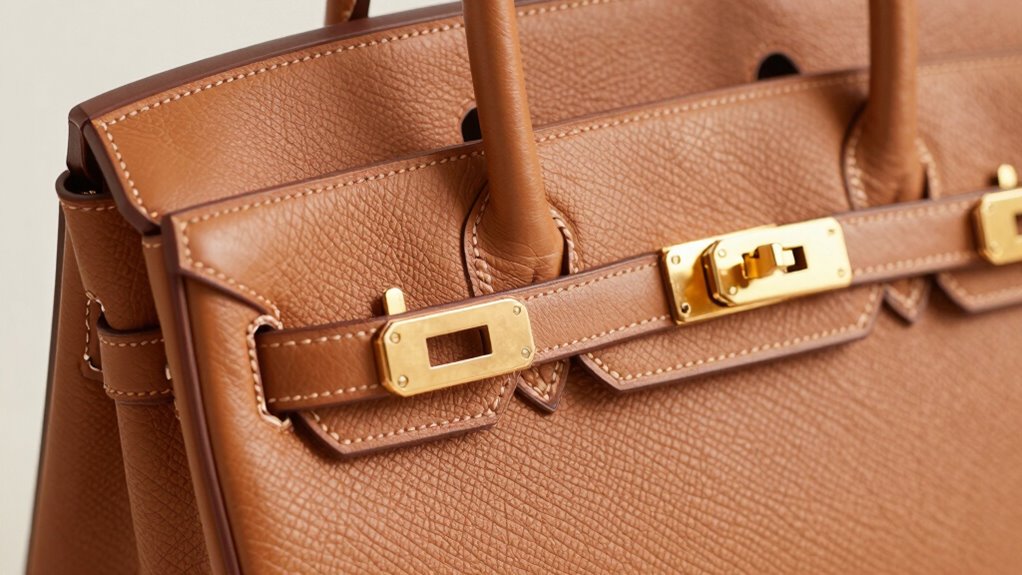

The House of Hermès is a story of extraordinary craftsmanship rooted in its origins as a saddle workshop in 1837, evolving into a symbol of timeless luxury. From pioneering leather goods and innovative fashion to iconic accessories like the Kelly and silk scarves, Hermès combines art, culture, and family tradition. With global stores and cutting-edge watchmaking, it remains dedicated to craftsmanship and innovation. Explore further to discover how this heritage continues to influence modern luxury.
Key Takeaways
- Hermès was founded in 1837 as a harness workshop, emphasizing artisanal leather craftsmanship rooted in equestrian tradition.
- The brand evolved from saddle-making to luxury handbags, silk scarves, jewelry, and watches, blending traditional techniques with innovation.
- Family ownership for six generations has preserved Hermès’ focus on craftsmanship, heritage, and artisanal mastery.
- Iconic products like the Kelly and Constance bags symbolize elegance, craftsmanship, and cultural significance beyond the Birkin.
- Hermès’ global boutiques and strategic locations maintain its reputation for timeless luxury, craftsmanship, and artistic influence.
Origins and Early Equestrian Craftsmanship

The origins of Hermès are rooted in a dedication to exceptional craftsmanship, starting with Thierry Hermès, who opened a harness workshop in Paris in 1837 after apprenticing in Normandy. You’ll find that from the beginning, the focus was on creating high-quality, durable leather goods for the elite, especially for equestrians. Located on Rue Basse-du-Rempart in the 9th arrondissement, the workshop quickly gained recognition for its meticulous work on harnesses, saddles, and bridles. Thierry’s expertise earned awards at the Expositions Universelles in 1855 and 1867, cementing Hermès as a leader in leather craftsmanship. This foundation in equestrian gear shaped the brand’s identity, emphasizing precision, luxury, and artisanal skill that would guide Hermès through generations of refinement and innovation. The meticulous attention to detail and mastery of leatherwork set a standard that continues to influence the brand’s luxurious products today, especially in the realm of craftsmanship.
Pioneering Leather Goods and Fashion Innovations
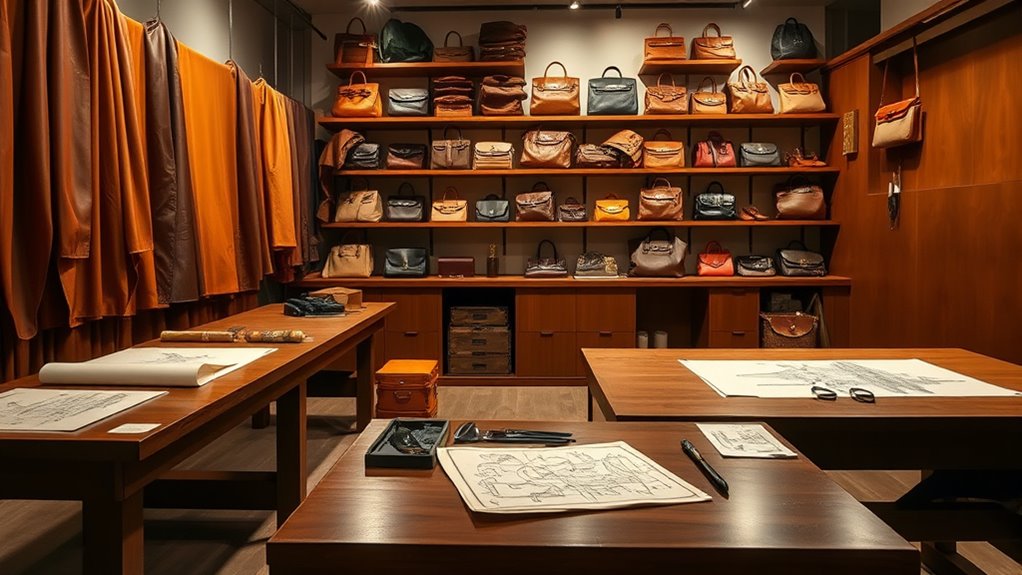
Hermès revolutionized luxury by pioneering innovative leather goods that combined craftsmanship with functional design. You see, they didn’t just create beautiful accessories—they crafted items that served real purposes with elegance. The Haut à courroies bag in 1900 was a breakthrough, offering a top-handle design for saddles and boots. In 1922, they launched their first leather handbag, responding to practical needs while elevating style. The brand’s craftsmanship extended to sportswear, with the first ready-to-wear golf jacket in 1925, and jewelry and watches followed soon after. Hermès also secured exclusive rights to zippers in 1914, leading to the iconic leather golf jacket with zippers in 1918. Their innovations set new standards, blending function and luxury seamlessly and shaping the future of fashion accessories. Additionally, Hermès has been committed to European cloud innovation, ensuring their operations remain sustainable and secure in an increasingly digital world.
Expanding Product Range and Artistic Influences

As Hermès expanded its product range beyond leather goods, it drew inspiration from diverse artistic influences that enriched its designs. You’ll notice how the brand seamlessly integrates art, architecture, and craftsmanship into its creations. Silk scarves, introduced in 1937, feature intricate patterns inspired by paintings and historical motifs, often collaborating with renowned artists. Jewelry and watches, launched in the late 1920s and 1950s respectively, showcase unique craftsmanship rooted in artistic tradition. The brand’s venture into automobiles and sportswear also reflects a focus on elegance and precision, influenced by modern design movements. This blending of art and utility elevates Hermès from a leather specialist to a creator of timeless, multi-disciplinary pieces, maintaining its reputation for craftsmanship while embracing new creative horizons. Additionally, the incorporation of modern design movements demonstrates Hermès’ ability to adapt and innovate within the evolving landscape of luxury fashion.
Leadership and Family Legacy Through the Years

As you explore Hermès, you’ll notice how the family has kept control for six generations, ensuring the brand’s integrity. Leadership has passed smoothly from one generation to the next, preserving artisanship and craftsmanship. This enduring family legacy continues to shape Hermès’s identity and success today. Moreover, their commitment to consistent storytelling has helped reinforce their brand values and foster a loyal customer base.
Family Control and Succession
Since its founding in 1837, the Hermès family has maintained a remarkable legacy of control and leadership, passing the reins through six generations of artisans and entrepreneurs. You’ll notice how each generation has upheld the brand’s craftsmanship and values, ensuring continuity while embracing innovation. Leadership stayed within the family for most of its history, with key members like Charles-Émile and Émile-Maurice steering the company’s growth. When Émile-Maurice bought out his brother, the family’s influence expanded into new markets and product lines. Even as the company went public in 1993, family members remained integral to its strategic direction. This blend of family control and professional management preserves Hermès’ identity, allowing it to evolve while staying true to its artisanal roots. Family governance has been a crucial element in maintaining the brand’s enduring legacy.
Generational Artisanship Legacy
The Hermès legacy of craftsmanship has been carried forward through six generations of artisans and family leaders, each maintaining a deep commitment to quality and tradition. You recognize how this continuity guarantees that the brand’s standards remain uncompromised, blending heritage with innovation. Each generation has passed down technical skills, emphasizing meticulous handcrafting and attention to detail. You see how family members have steered the company through expansion, embracing new markets while preserving core values. Leadership transitions, often within the family, have reinforced a sense of identity and purpose. This enduring lineage fosters a culture where craftsmanship isn’t just a skill but a family tradition, creating a legacy that’s both timeless and evolving, guaranteeing Hermès retains its revered status across generations. Additionally, the concept of Free Floating highlights how innovation and tradition can coexist seamlessly, inspiring continuous evolution within the brand.
Crafting Excellence: From Saddles to Haute Couture
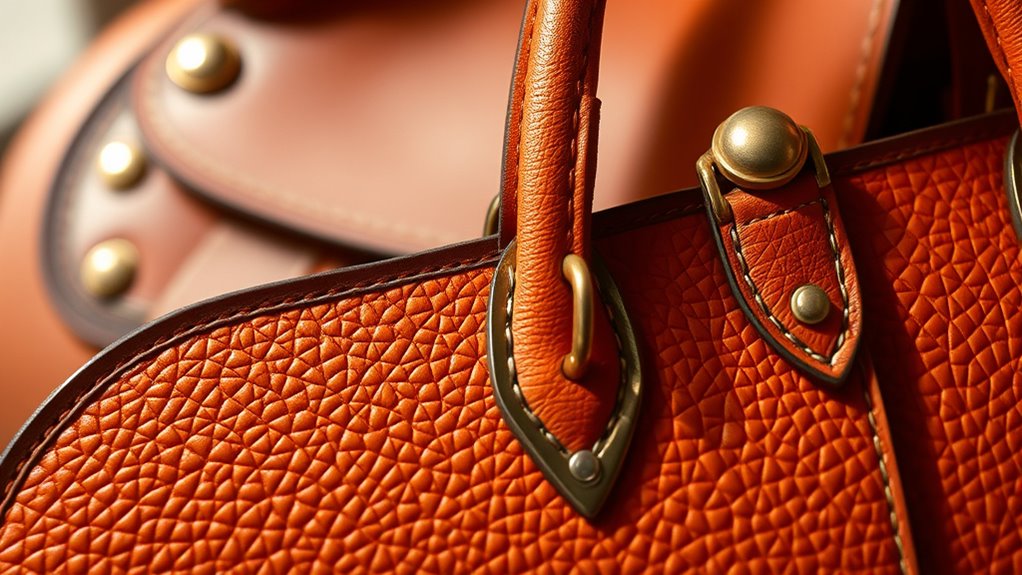
Hermès has built a reputation for exceptional craftsmanship that seamlessly connects its origins in saddle-making with its modern status as a leader in haute couture. You see, everything begins with meticulous leatherwork, honed over generations of artisans dedicated to perfection. The same skills used to craft saddles and harnesses are now applied to create luxurious handbags, apparel, and accessories. Each piece undergoes rigorous handcrafting, emphasizing attention to detail, durability, and elegance. As the company expanded beyond equestrian gear, it adapted techniques to new forms, blending traditional methods with innovative designs. This seamless progression from saddles to haute couture reflects Hermès’ unwavering commitment to craftsmanship. You can appreciate how these timeless skills elevate their fashion collections, making every item not just a product but a work of art. Furthermore, Hermès continues to prioritize sustainability and eco-friendly decor choices, ensuring that their craftsmanship aligns with modern values of environmental responsibility.
Iconic Accessories and Their Cultural Impact
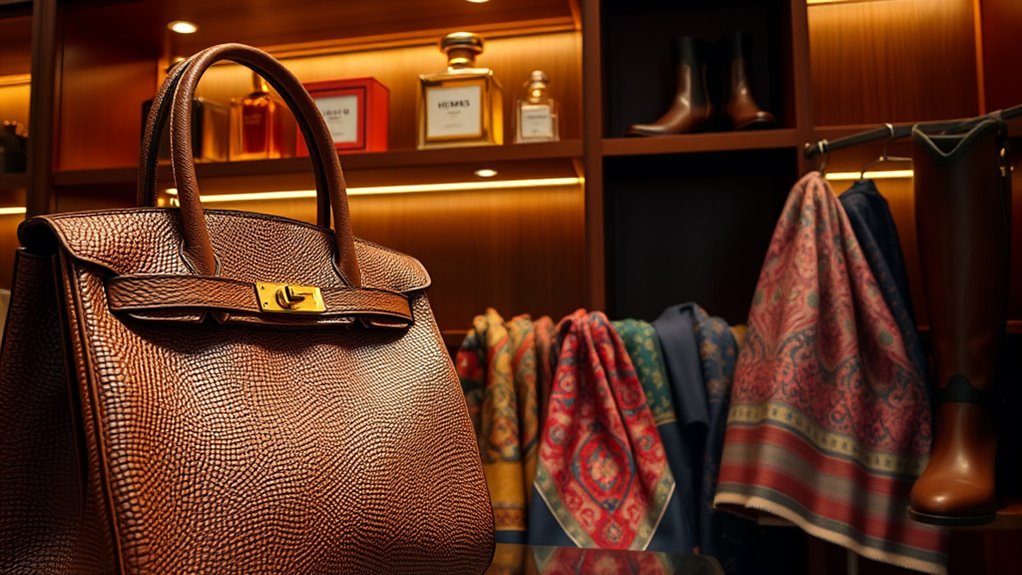
Hermès’s mastery of craftsmanship extends beyond functional saddles to creating iconic accessories that define luxury and style. The brand’s silk scarves, Kelly and Constance bags, and the famous Birkin have become symbols of status and elegance worldwide. These accessories, crafted with meticulous detail, influence fashion and culture, often representing more than just wealth—they embody artistry and heritage. Their exclusivity fuels desire, turning them into cultural icons. The enduring appeal of these items is rooted in their timeless craftsmanship, which ensures their value and desirability persist across generations. The table below highlights their cultural significance:
| Accessory | Symbolism | Impact |
|---|---|---|
| Birkin | Power, sophistication | Global fashion icon |
| Kelly | Elegance, refinement | Celebrity and royal favorite |
| Silk scarves | Artistic expression, tradition | Pop culture and fashion statements |
| Constance bag | Timeless style, craftsmanship | Collector’s item |
| Leather goods | Heritage, craftsmanship | Enduring luxury |
Market Expansion and Global Presence

You see how Hermès has expanded its retail presence worldwide, opening stores in key cities and iconic locations. Their strategic placement in places like Paris, New York, and Tokyo helps reinforce their luxury status. As a result, Hermès continues to grow its market share and reach new customers globally.
International Retail Expansion
How did Hermès expand its reach beyond France to become a truly global luxury brand? You see, Hermès strategically opened stores in sought-after seaside resorts in the U.S. starting in 1924, tapping into affluent markets. They carefully chose locations to appeal to an international clientele, emphasizing exclusivity and craftsmanship. Over time, Hermès expanded into major cities worldwide, including New York, Tokyo, and Hong Kong, establishing flagship boutiques that showcase their heritage and artistry. They maintained a focus on exceptional service and limited availability, reinforcing their luxury status. This deliberate approach, blending selective retail expansion with a commitment to quality, allowed Hermès to build a global presence while preserving the exclusivity that defines its brand identity. All-Waterparks
Presence in Iconic Locations
Hermès’s strategic placement of stores in iconic locations has solidified its status as a global luxury powerhouse. You’ll find these boutiques in prestigious addresses like Paris’s Rue du Faubourg Saint-Honoré, New York’s Fifth Avenue, and Tokyo’s Ginza district, reinforcing the brand’s exclusivity. Each store’s location complements Hermès’s heritage, blending historic charm with modern elegance. These flagship stores don’t just serve as retail spaces; they are destinations that embody craftsmanship and tradition, attracting discerning clients worldwide. By establishing a presence in these legendary areas, Hermès ensures its visibility among the elite, strengthening its reputation for timeless luxury. Location strategy is a key element in maintaining Hermès’s position in the competitive luxury market. This careful placement fortifies its identity as a symbol of sophistication, craftsmanship, and heritage across major fashion capitals.
Growing Market Share
Hermès has strategically expanded its global footprint over the years, establishing flagship stores in key fashion capitals such as Paris, New York, Tokyo, and Hong Kong. This deliberate presence helps you access luxury markets worldwide and attract a diverse clientele. By opening stores in prime locations, Hermès enhances its visibility and reinforces its status as a symbol of exclusivity. The brand also leverages online platforms to reach new audiences, integrating digital innovation with traditional craftsmanship. These efforts drive growth, increase sales, and strengthen brand loyalty. As you engage with Hermès, you notice their focus on maintaining high standards and tailored customer experiences across markets. This balance between global reach and personalized service fuels their ongoing market share expansion and solidifies their position in the luxury industry.
Innovation in Watchmaking and Modern Luxuries

Innovating at the intersection of tradition and technology, Hermès has made significant strides in modern watchmaking by blending craftsmanship with cutting-edge design. You’ll notice how they seamlessly incorporate their artisanal expertise into innovative timepieces, creating a perfect harmony between heritage and modernity. Hermès’s watches often feature unique complications, refined materials, and minimalist aesthetics, reflecting their commitment to quality and innovation. Their collaborations with renowned watchmakers, like the partnership with Movado in 1928, showcase their forward-thinking approach. The launch of La Montre Hermès in 1978 marked their dedication to precision horology, expanding their presence in the luxury watch market. This fusion of traditional handcrafting and modern technology underscores Hermès’s vision to redefine modern luxury while honoring timeless craftsmanship.
Continuing the Heritage: Artisanship in the 21st Century

As the brand continues to evolve in the 21st century, it remains deeply committed to preserving its centuries-old craftsmanship traditions. You see this in how Hermès invests heavily in training new artisans, ensuring skills are passed down with meticulous attention. Modern technology complements traditional techniques, allowing artisans to refine their work without compromising quality. Each piece still requires hours of manual labor, from hand-stitching leather to intricate embroidery. Hermès maintains strict quality controls and emphasizes sustainability, sourcing the finest materials responsibly. Younger artisans bring fresh perspectives, but the core values of excellence and authenticity stay central. This blend of tradition and innovation keeps Hermès relevant, ensuring that every product embodies the timeless craftsmanship that defines its heritage.
Frequently Asked Questions
How Has Hermès Maintained Its Family-Owned Status for Six Generations?
You see, Hermès stays family-owned through strong leadership, dedication to craftsmanship, and strategic succession planning. They prioritize passing skills and values down generations, ensuring quality remains paramount. By resisting outside influence and keeping control within the family, they preserve their heritage. You also notice how they adapt to markets while maintaining tradition, which helps sustain their independence across six generations. This focus on legacy reinforces Hermès’s timeless family ownership.
What Role Did Hermès’ Equestrian Roots Play in Its Luxury Branding?
Your journey with Hermès is like riding a finely-tuned steed—its equestrian roots remain the heart of its luxury branding. You see it in every meticulously crafted saddle, harness, and accessory, symbolizing timeless elegance and mastery. These roots inspire the brand’s commitment to superior craftsmanship, exclusivity, and tradition, allowing you to carry a piece of noble heritage with you. It’s a legacy that gallops through every luxurious detail.
How Did Hermès Innovate in Leather Craftsmanship Beyond Traditional Saddles?
Hermès innovated in leather craftsmanship by creating the Haut à courroies bag in 1900, the first top-handle bag designed for saddles and boots. They also developed the leather golf jacket in 1918 with a zipper, securing exclusive zipper rights in 1914. Additionally, they crafted silk scarves and jewelry, blending their mastery of leather with other luxury materials, constantly pushing boundaries in design and technique to elevate their craftsmanship beyond traditional saddles.
What Are the Stories Behind Hermès’ Lesser-Known Product Lines?
You might be surprised to learn that Hermès’ lesser-known stories include its early jewelry, inspired by art and riding accessories, and its silk scarves, which gained fame thanks to Jacqueline Kennedy. The brand also ventured into fashion with bathing suits and golf jackets, born from demand for stylish sportswear. These products reflect Hermès’ dedication to craftsmanship and innovation, often sparked by everyday needs and serendipitous opportunities.
How Does Hermès Balance Heritage With Modern Sustainability Efforts?
Hermès balances heritage with modern sustainability by respecting traditional craftsmanship while adopting eco-friendly practices. You’ll see the brand using sustainable materials, reducing waste, and implementing transparent sourcing. They incorporate eco-conscious innovations without compromising quality, ensuring their timeless pieces remain environmentally responsible. By blending a deep respect for artisanal techniques with forward-thinking sustainability efforts, Hermès continues to honor its legacy while actively contributing to a more sustainable future.
Conclusion
As you explore Hermès, you step into a world where craftsmanship is a living, breathing masterpiece, surpassing time itself. Every stitch, every detail whispers stories of centuries, transforming ordinary materials into legendary symbols of luxury. It’s not just a brand; it’s an unstoppable force of artistry, stretching across generations like an eternal tapestry. With Hermès, you don’t just own a piece of history—you hold a universe of timeless brilliance in your hands.