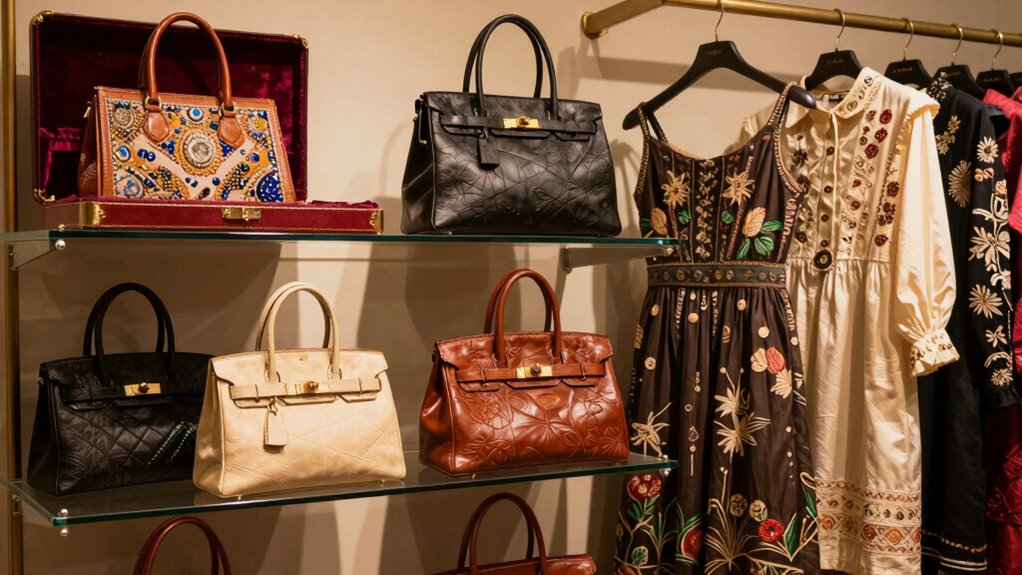

Luxury brands preserve their heritage pieces through expert archiving, conserving items in climate-controlled environments, and using special storage materials to prevent damage. They digitize designs, sketches, and prototypes to make them accessible worldwide and reduce handling risks. These methods protect the brand’s history, craftsmanship, and iconic pieces, inspiring future collections. If you want to discover how these practices connect the past with modern creativity, keep exploring.

Get your wardrobe favorites delivered free — and shop member deals
- Fast, free delivery on millions of items
- Access to Prime Big Deal Days deals on October 6–7
- Prime Video, Amazon Music and more included
Key Takeaways
- Luxury brands maintain designer archives with sketches, prototypes, and iconic pieces to preserve their creative legacy.
- Climate-controlled storage and specialized packaging protect delicate garments and accessories from deterioration.
- Digitalization converts physical heritage items into high-resolution digital assets for long-term preservation and wider access.
- Detailed records of provenance, materials, and conservation history ensure proper care and authenticity of heritage pieces.
- Archives inspire contemporary design by providing historical context, iconic motifs, and craftsmanship techniques for innovative creations.
The Significance of Preserving Fashion Heritage
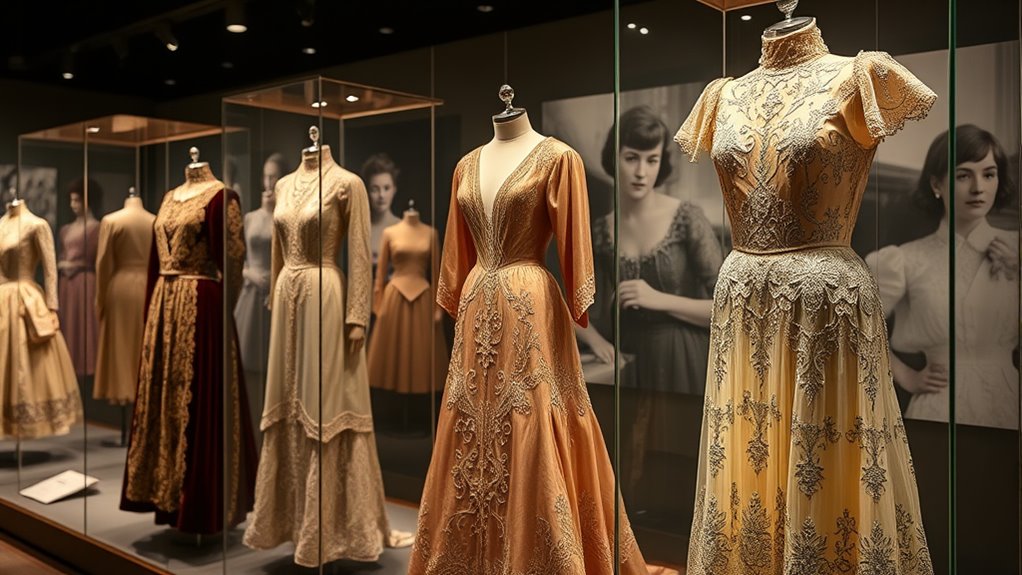
Preserving fashion heritage is crucial because it safeguards the creative innovations and cultural stories embedded in clothing and accessories. When you maintain archives, you protect the evolution of design, craftsmanship, and cultural influences that define a brand’s identity. These archives serve as a record of how fashion has developed across different eras and societies, offering insight into societal values and artistic trends. By preserving iconic pieces, sketches, and prototypes, you ensure that future generations can learn from and be inspired by the heritage. Without proper preservation, valuable pieces risk deterioration or being lost forever, erasing essential chapters of fashion history. Digitization and careful conservation make it possible to keep this heritage alive, accessible, and relevant in a rapidly changing industry.
Types of Archives Maintained by Luxury Fashion Houses
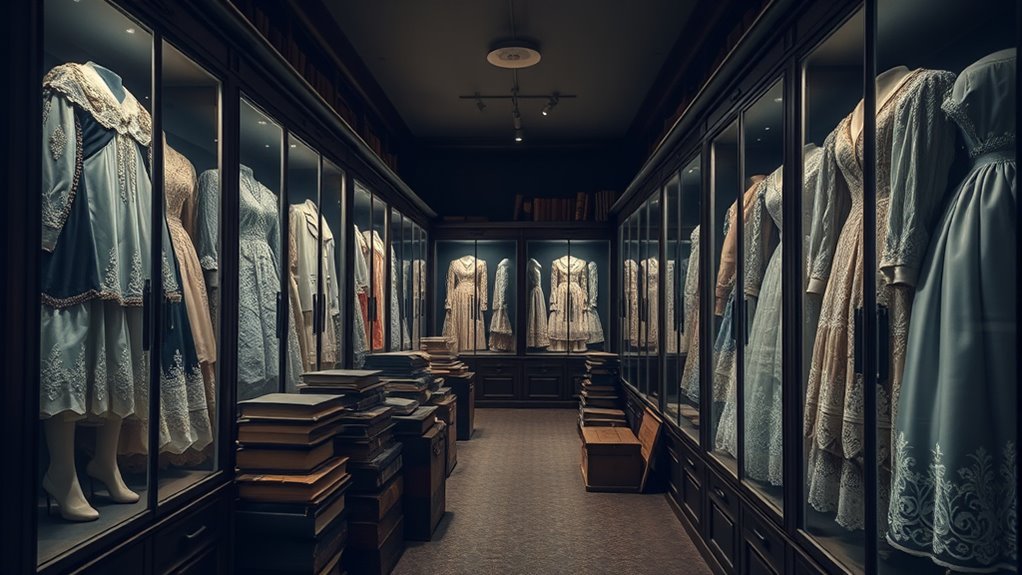
Luxury fashion houses maintain a variety of archives to protect their rich histories and support ongoing creativity. You’ll find designer and brand archives at houses like Chanel, Dior, and Gucci, containing sketches, prototypes, and iconic pieces that define their legacy. Textile archives focus on fabrics, weaving techniques, and patterns, offering insights into craftsmanship. Museum and university collections serve research and educational purposes, while private corporate archives safeguard internal records and rare items. Specialized collections include historic clothing, accessories, and design documents. These archives help preserve the brand’s identity, inspire new collections, and maintain a connection to the past. Each type plays a crucial role in ensuring that the heritage remains accessible, protected, and relevant for future generations. Additionally, color accuracy in displays and documentation ensures the true representation of the original designs.
Techniques for Conserving Historic Garments and Accessories
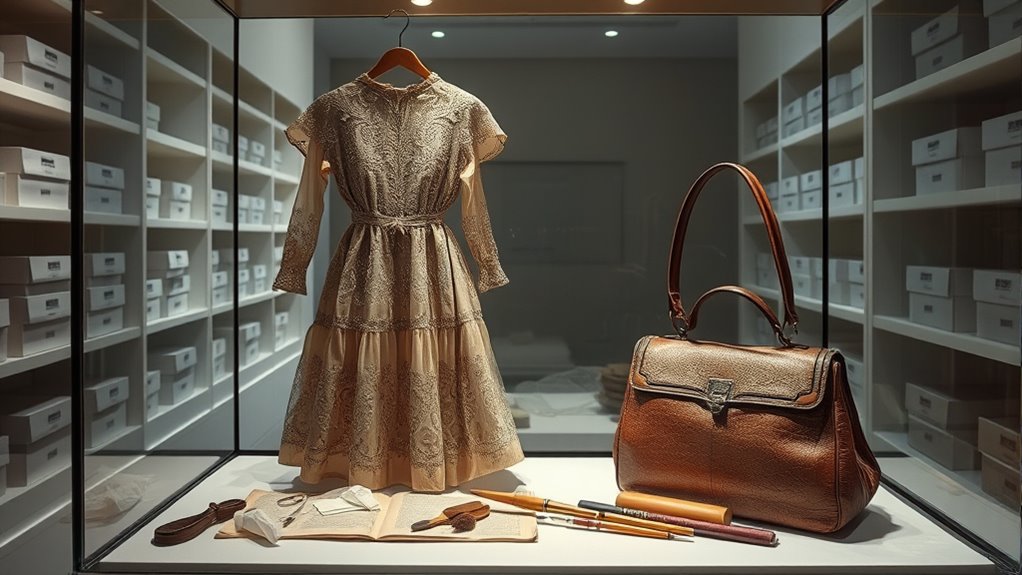
Conserving historic garments and accessories requires meticulous techniques to guarantee their longevity and integrity. You should store items in climate-controlled environments, maintaining around 70°F and 50% humidity to prevent deterioration. Lay garments flat in acid-free boxes or support them on padded, custom hangers to avoid stress on fabrics and seams. Use acid-free tissue paper to cushion delicate areas and prevent fold marks. Keep detailed records of each piece’s provenance, materials, and conservation history for future reference. Employ specialty storage boxes and couture-grade packing materials to reduce handling damage. Regular inspections help identify early signs of deterioration. A well-sourced approach is essential to ensure accurate documentation and preservation practices. By applying these precise methods, you preserve the authenticity and beauty of heritage pieces, ensuring they remain a essential link to fashion history for generations to come.
Digitization: Securing the Future of Fashion History
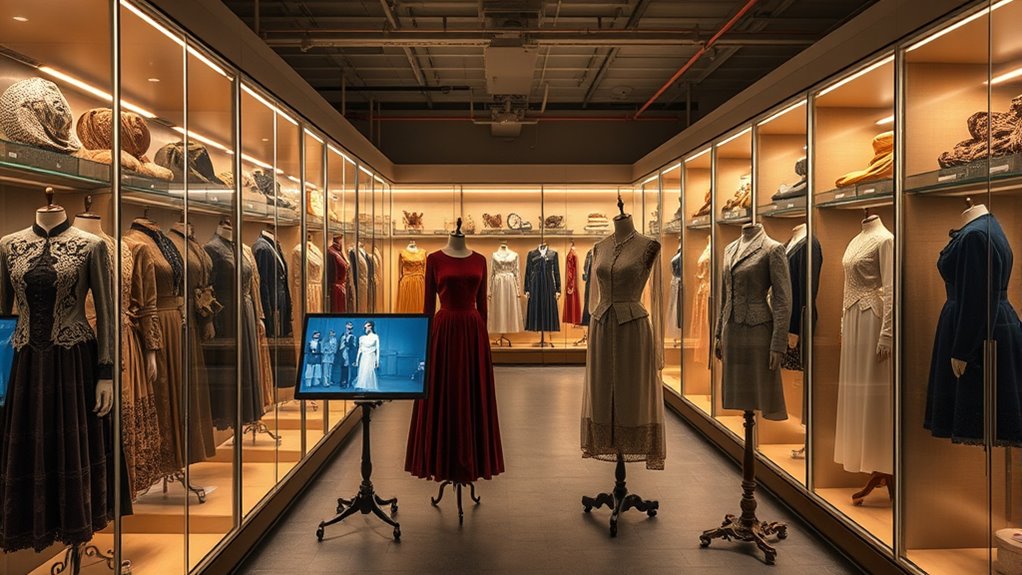
Digitization plays a crucial role in safeguarding fashion history by transforming fragile physical items into accessible digital assets. This process guarantees that iconic pieces, sketches, and documents are preserved beyond the lifespan of their physical counterparts. You can implement strategies like high-resolution scanning, creating digital backups, and hosting archives on secure platforms such as DAM systems or private servers. These measures allow for easy access and distribution, facilitating research and inspiration worldwide. Additionally, digitization enhances security by reducing handling of delicate items and protecting against environmental damage or theft. To deepen the effort, consider:
- Developing consistent cataloging with reference numbers or QR codes
- Investing in on-site digitization with specialized equipment
- Establishing protocols for regular updates and backups
- Leveraging cloud storage solutions to ensure scalable and reliable preservation
This approach secures fashion heritage for future generations while supporting contemporary creative needs.
How Archives Inspire Modern Creativity and Brand Legacy
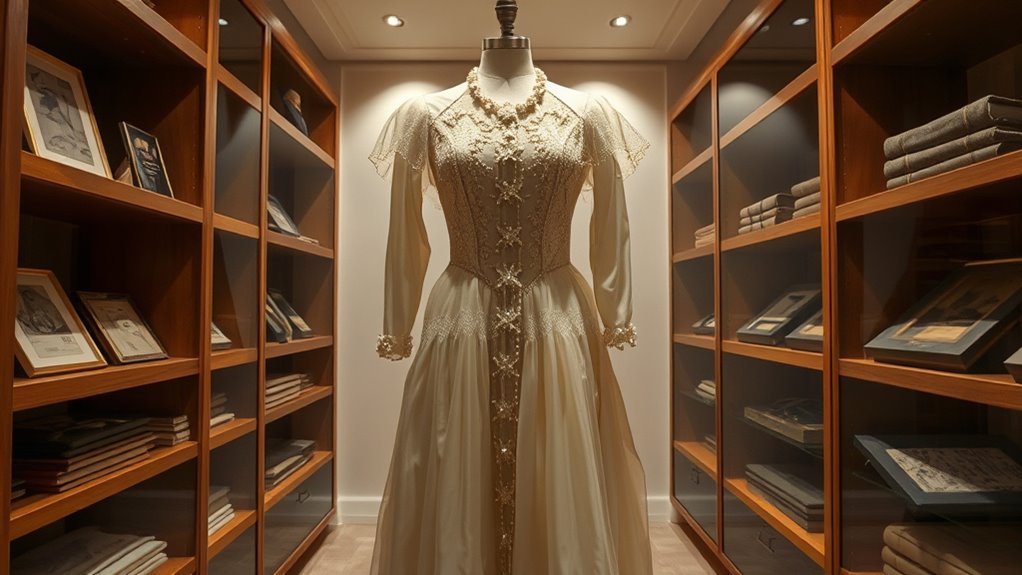
Archives serve as a wellspring of inspiration for modern designers and brands, offering a rich repository of past creations, sketches, and craftsmanship. You can draw on iconic pieces and detailed prototypes to spark innovative ideas, ensuring your designs honor heritage while pushing boundaries. They help you understand evolving trends across eras and cultures, informing your creative process. By studying archived techniques and fabrics, you gain insights into craftsmanship that elevate your work. Archives also reinforce your brand’s legacy, giving you a sense of identity rooted in history. When you incorporate archival elements into new collections or marketing campaigns, you connect emotionally with your audience. Additionally, preservation practices ensure these treasures remain accessible and valuable for future generations. Ultimately, these preserved treasures serve as a continuous dialogue between past and present, fueling creativity and strengthening your brand’s timeless appeal.
Frequently Asked Questions
How Do Brands Decide Which Pieces to Archive and Preserve?
You decide which pieces to archive based on their historical significance, uniqueness, and representative value of your brand’s evolution. Iconic designs, milestone collections, and innovative prototypes are prioritized. You also consider pieces linked to famous clients or events. By carefully selecting these items, you guarantee your archives reflect your brand’s legacy, inspire future creativity, and maintain a thorough record of your fashion journey for research, marketing, and preservation.
What Are the Biggest Challenges in Maintaining Historic Fashion Archives?
Maintaining historic fashion archives is like tending a delicate garden—you must always be vigilant. The biggest challenges include climate control, which prevents fabric deterioration, and digitization, which risks losing the tactile essence. For example, a Chanel gown once nearly faded due to humidity. You need meticulous preservation methods, detailed records, and technological backups to guarantee these treasures survive for future generations.
How Do Archives Influence Current Fashion Trends and Collections?
Archives influence your current fashion trends and collections by serving as a rich source of inspiration. You can draw ideas from past designs, techniques, and cultural references stored in these archives. They help you innovate while respecting tradition, enabling you to create new pieces that resonate with heritage. Digitized collections allow quick access, inspiring your creativity and ensuring your designs stay authentic, relevant, and rooted in a brand’s storied history.
What Role Does Technology Play in Modern Archive Preservation?
Technology acts as a digital guardian, safeguarding your fashion heritage like a vault overflowing with treasures. It streamlines preservation through high-resolution scans, ensuring intricate details are preserved forever. With cloud backups and secure servers, your archives are protected from physical decay and disasters. Digitization enhances accessibility, making it easier for your team to search, study, and revive iconic pieces, ensuring your brand’s story remains vibrant for generations to come.
How Accessible Are Luxury Brand Archives to Researchers and the Public?
You can access luxury brand archives more easily than ever, thanks to digitization. Many brands, like Chanel and Dior, offer digital collections or collaborate with museums and universities, making research and exploration straightforward. Public access varies—some archives are open to scholars or exhibitions, while others remain private. Overall, digital platforms and partnerships have markedly improved your ability to explore and study these heritage pieces.
Conclusion
Preserving fashion heritage is like safeguarding a precious treasure chest, ensuring history remains alive for future generations. By maintaining archives, you keep the stories behind iconic pieces, inspiring innovation and honoring your brand’s legacy. Digitization acts as a bridge to the future, making history accessible at your fingertips. Embrace these practices, and you’ll keep your heritage vibrant and relevant, like a timeless melody that continues to resonate through the ages.
Fall Picks
fall essentials
As an affiliate, we earn on qualifying purchases.