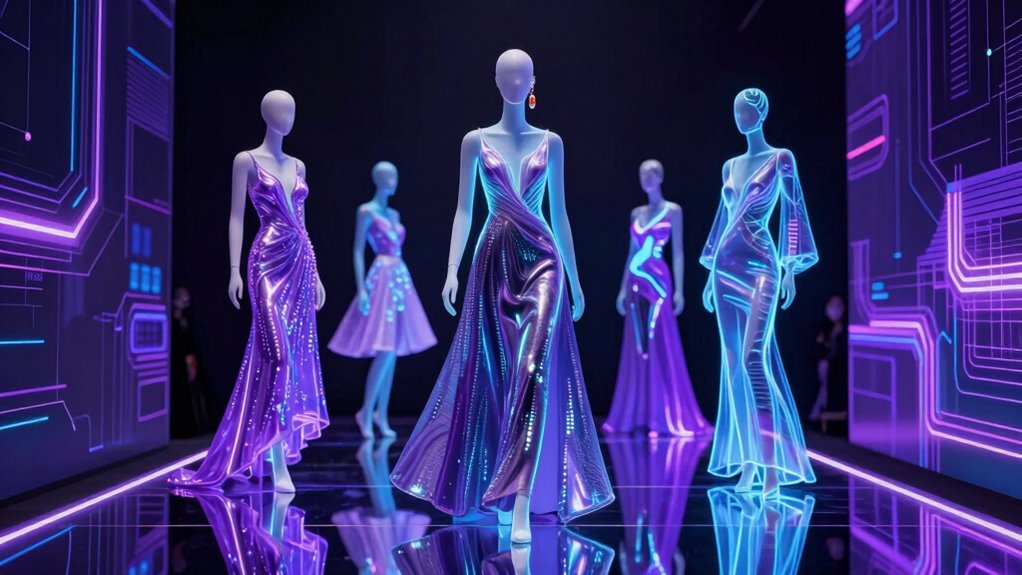

Luxury fashion is quickly entering the metaverse through immersive digital experiences, virtual stores, and customizable avatars. Brands like Gucci and Louis Vuitton are launching virtual runway shows, NFTs, and interactive showrooms that let you express your personal style in innovative ways. Advances in blockchain, AI, and augmented reality power hyper-realistic digital garments, making self-expression more vivid and exclusive. If you want to discover how these innovations reshape your style opportunities, there’s more to explore ahead.

Get your wardrobe favorites delivered free — and shop member deals
- Fast, free delivery on millions of items
- Access to Prime Big Deal Days deals on October 6–7
- Prime Video, Amazon Music and more included
Key Takeaways
- Luxury brands are creating virtual showrooms, digital runways, and NFTs to engage consumers in immersive metaverse experiences.
- Virtual fashion allows customizable avatars and exclusive digital garments, reflecting personal identity and self-expression.
- Blockchain and NFTs establish ownership, authenticity, and resale security for digital luxury apparel.
- Advanced AR and AI technologies enable virtual try-ons, hyper-realistic fittings, and personalized digital wardrobe experiences.
- Virtual events like fashion shows and VIP parties in the metaverse enhance brand engagement and innovative consumer interaction.
The Growing Market for Digital Luxury Fashion

The market for digital luxury fashion is experiencing rapid growth driven by increasing consumer interest and technological advancements. You’ll notice more brands investing heavily in virtual collections and metaverse experiences, with the global fashion metaverse market expected to reach over $26 billion by 2025. Consumers are spending billions on digital fashion items, and this number is projected to surpass $8 billion by 2025. Luxury brands like Gucci and Louis Vuitton are launching virtual experiences, attracting millions of users. As Gen Z and digital natives embrace avatar customization and social sharing, demand for digital clothing skyrockets. This growth isn’t slowing down, with projections showing the luxury metaverse fashion market growing at a CAGR of over 21% through 2033, shaping the future of fashion consumption. Additionally, the integration of color accuracy and high-quality visuals in virtual designs enhances user engagement and authenticity in digital fashion.
Technological Innovations Powering Virtual Couture
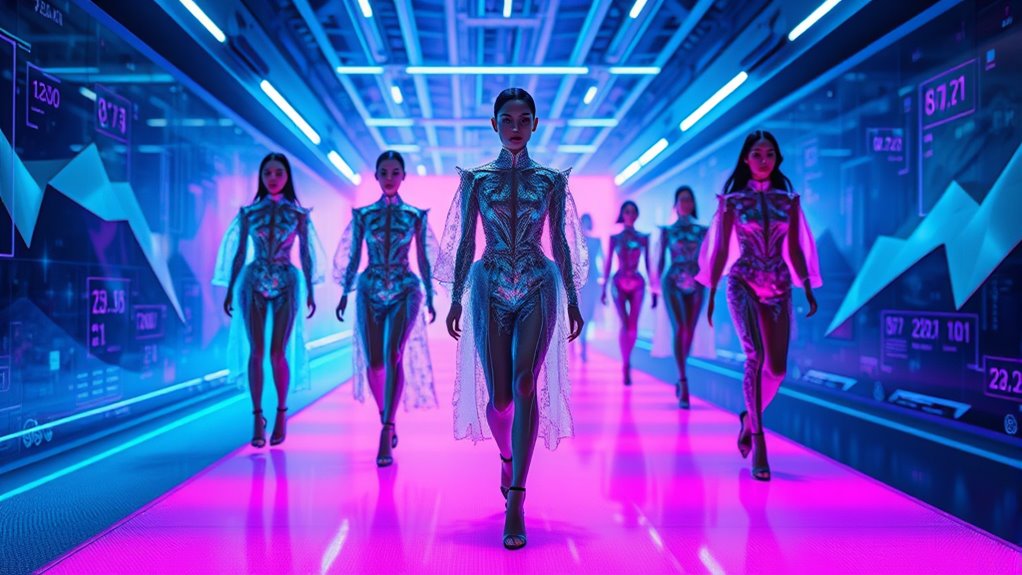
You can see how blockchain and NFTs are transforming ownership and authenticity in virtual fashion, making digital collectibles more valuable and exclusive. Immersive AR experiences let you try on virtual couture effortlessly, blurring the line between physical and digital shopping. AI personalization technologies then tailor your virtual wardrobe, offering endless style options that suit your unique tastes. Additionally, European cloud infrastructure ensures that these innovative virtual fashion platforms operate with optimal security and energy efficiency, supporting sustainable digital fashion ecosystems.
Blockchain & NFT Advances
How are blockchain and NFTs transforming virtual couture? They enable you to establish verifiable ownership, authenticity, and exclusivity for digital fashion items. NFTs serve as unique digital certificates that confirm your virtual garments and accessories are one-of-a-kind, boosting their value. Blockchain technology guarantees transparent transactions, secure provenance, and ease of resale, fostering trust in digital assets. Luxury brands leverage these advances to create limited-edition virtual collections, making digital couture more desirable. You can also trade, showcase, or wear NFT-based fashion across various platforms, enhancing your social media presence and avatar customization. As blockchain and NFTs evolve, they open new opportunities for monetization, digital identity, and immersive experiences, transforming virtual couture from mere novelty into a sustainable, high-value market segment.
Immersive AR Experiences
Immersive augmented reality (AR) experiences are revolutionizing virtual couture by blending digital fashion seamlessly into real-world environments. You can now try on virtual garments in your space, interacting with designs as if they were physically present. This tech allows for hyper-realistic fittings and enhances the shopping journey, making it more engaging. Brands leverage AR for virtual showrooms, interactive displays, and social sharing, creating a personalized and memorable experience. Incorporating safe installation practices ensures that AR setups are reliable and user-friendly, enhancing the overall experience.
AI Personalization Technologies
AI personalization technologies are transforming virtual couture by delivering highly tailored fashion experiences at an unprecedented scale. You can now access hyper-customized virtual outfits that match your style preferences, body measurements, and social identity. These systems analyze your browsing history, avatar data, and social interactions to suggest designs uniquely suited to you. AI-driven algorithms generate endless style combinations, enabling you to experiment with virtual garments that reflect your personality. Virtual fitting rooms powered by AI ensure perfect fit and comfort, enhancing confidence in digital shopping. Brands leverage these tools to create immersive, personalized experiences that foster loyalty and engagement. As a result, your digital wardrobe becomes an extension of your identity, making virtual fashion more relevant, inclusive, and exciting than ever before. Additionally, integrating Free Floating elements allows for more dynamic and adaptable virtual designs that can respond to user preferences in real-time.
How Top Brands Are Pioneering in the Metaverse

Top brands are leading the charge into the metaverse by creating innovative virtual experiences that engage consumers in new ways. Gucci, Louis Vuitton, and others have launched virtual stores, digital runways, and exclusive NFT collections on platforms like Roblox and The Sandbox. These brands use immersive environments to showcase their designs, offering users the chance to explore and interact with virtual fashion. Nike and Adidas are pioneering digital collectibles and avatar apparel through blockchain technology, making ownership verifiable and exclusive. Luxury brands are also experimenting with virtual fashion shows and digital showrooms, blending physical and digital experiences. By pioneering these initiatives, top brands are not only expanding their reach but also shaping the future of luxury fashion in the metaverse. Additionally, integrating connected technology allows for more personalized and interactive virtual shopping experiences that mirror real-world fitness and wellness engagement.
Consumer Preferences and the Rise of Digital Self-Expression
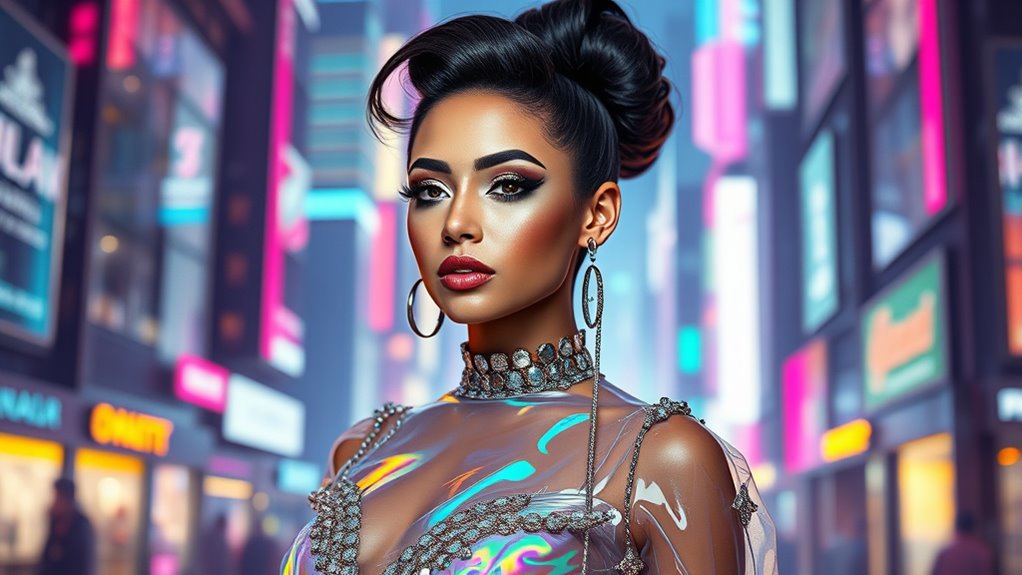
You’re seeing how avatar customization lets consumers showcase their unique style and personality in digital spaces. Social media platforms amplify this self-expression, making virtual fashion a key part of online identity. As digital identity becomes more important, your choices in virtual clothing and accessories reflect who you truly are. Incorporating practical knowledge from various digital upgrade methods can help users navigate and personalize their virtual wardrobes more effectively.
Avatar Customization Trends
As digital fashion continues to surge in popularity, avatar customization has become a key way you express your individuality online. You now design avatars that reflect your style, mood, and identity, moving beyond simple clothing choices. Trends show you prefer hyper-personalized looks, mixing virtual couture with accessories that showcase your unique personality. Platforms like Roblox and The Sandbox let you experiment with diverse aesthetics, from futuristic to avant-garde. Here’s a snapshot of popular customization trends:
| Trend | Description | Popular Platforms |
|---|---|---|
| Hyper-Realistic Avatars | Detailed features mimic real-life expressions | Zepeto, Meta |
| Virtual Accessories | Jewelry, hats, and eyewear for personalization | Decentraland, Roblox |
| Style Fusion | Combining fashion genres for unique looks | Fortnite, Sandbox |
| Self-Expression Skins | Custom skins reflecting mood and identity | Fortnite, VRChat |
| Cultural Influences | Incorporating diverse cultural elements | Zepeto, Roblox |
Social Media Fashion
Social media fashion has become a powerful platform for digital self-expression, allowing you to showcase your unique style and personality through virtual outfits and accessories. With platforms like Instagram, TikTok, and Snapchat, you can experiment with bold looks and share them instantly, influencing trends worldwide. Consumers, especially Gen Z, are drawn to digital fashion for avatars and social media content, seeking immersive ways to stand out. Virtual styling lets you customize virtual wardrobes, mix and match digital garments, and participate in global fashion conversations without physical constraints. As digital wearables become more accessible, your ability to express yourself creatively and authentically grows, making social media a key driver in shaping the future of fashion in the metaverse. Additionally, innovations in nanotechnology are beginning to influence the development of more durable and customizable virtual apparel, enhancing the realism and personalization of digital fashion experiences.
Digital Identity Expression
Why is digital self-expression becoming a defining aspect of modern fashion? Because you crave unique ways to showcase your personality and stand out. In the metaverse, your avatar isn’t just a digital figure—it’s a reflection of your identity. You want to customize outfits, accessories, and styles that resonate with your vibe, making virtual self-expression as meaningful as physical fashion. With blockchain and NFTs, you own exclusive digital garments and collectibles, adding authenticity and status. Platforms like Roblox and The Sandbox empower you to explore and reinvent your look constantly. As over 70% of Gen Z shows interest in digital fashion, your choices are shifting from mere trend-following to deliberate self-representation. Digital identity isn’t just about clothing; it’s about curating your online persona with style and purpose, supported by digital identity management technologies that help you control your digital footprint.
Creating Immersive Virtual Fashion Experiences

Creating immersive virtual fashion experiences transforms how you interact with brands by blending cutting-edge technology with engaging storytelling. You can explore virtual showrooms, attend digital runway shows, or participate in interactive brand events, all from your device. Advanced 3D environments and realistic avatars make you feel as if you’re physically present, heightening engagement. AR and VR enable you to try on digital clothing in real-time, customizing designs to match your style. Virtual worlds like Roblox and The Sandbox host brand-exclusive experiences, giving you access to digital fashion shows, VIP parties, and exclusive NFTs. Additionally, integrating high-quality air purification into virtual environments can enhance comfort and realism, creating a healthier and more immersive experience. These experiences deepen your connection to brands, offering personalized, memorable moments that go beyond traditional shopping, making digital fashion truly immersive and interactive.
Future Outlook and Opportunities in Virtual Couture

The future of virtual couture holds immense potential to reshape how you experience fashion. As the metaverse market expands, you’ll see more luxury brands creating digital collections, virtual showrooms, and exclusive NFTs that enhance authenticity and ownership. With technological advances like blockchain, AR, and AI-driven personalization, your virtual wardrobe will become more customizable and immersive. You’ll have opportunities to attend digital fashion weeks, access VIP virtual events, and explore fashion in interactive environments. Resale and rental markets for digital wearables will promote sustainability and circular economies. As more brands develop Web3 strategies, expect seamless integration of digital and physical luxury, offering innovative ways to express your style and engage with brands on a whole new level. Additionally, understanding how home cleaning systems work can help keep your physical space as pristine as your virtual wardrobe.
Frequently Asked Questions
How Do Virtual Fashion Items Maintain Authenticity and Exclusivity?
You can uphold authenticity and exclusivity of virtual fashion items by leveraging blockchain technology and NFTs, which verify ownership and prevent counterfeiting. Limited editions, digital scarcity, and unique design features enhance their exclusivity. You also create brand collaborations and personalized experiences that only a select few can access, reinforcing their value. By continuously innovating with rare digital collectibles, you guarantee your virtual items remain desirable, authentic, and exclusive in the metaverse.
What Are the Environmental Impacts of Digital Fashion Compared to Physical?
Digital fashion markedly reduces environmental impacts compared to physical clothing. You save water, energy, and raw materials because virtual items don’t require manufacturing, transportation, or waste disposal. Instead, they exist in digital spaces, which consume minimal resources. By choosing digital fashion, you contribute to sustainability efforts, lowering carbon footprints and waste, while still enjoying stylish, customizable, and exclusive looks without harming the planet.
How Do Brands Monetize Virtual Couture Beyond Sales?
You can monetize virtual couture by creating exclusive digital collectibles, NFT wearables, and virtual experiences that fans pay for. Brands also earn through virtual showrooms, sponsored virtual events, and brand collaborations within the metaverse. Offering personalized avatars, virtual storefronts, and immersive brand environments attract users willing to spend on digital fashion. Additionally, licensing virtual designs for use in other platforms extends revenue streams beyond direct sales.
What Challenges Exist in Integrating AR and VR Into Fashion Shopping?
You face significant challenges when integrating AR and VR into fashion shopping, as over 70% of Gen Z consumers are enthusiastic for digital fashion experiences. Technical hurdles like high development costs, seamless user experiences, and device compatibility can hinder adoption. Additionally, ensuring authenticity and ownership through blockchain complicates virtual transactions. Despite these obstacles, embracing AR and VR can revolutionize your brand’s engagement, making shopping more immersive and personalized for digital-savvy customers.
How Will Evolving Consumer Behaviors Shape Virtual Fashion Trends?
Your evolving consumer behaviors will drive virtual fashion trends toward more personalization, social engagement, and immersive experiences. As you seek self-expression and social status online, you’ll crave customizable digital clothing, NFTs, and interactive virtual events. This shift will push brands to innovate with virtual showrooms, digital collectibles, and avatar-based fashion, making digital wardrobes essential for your identity and social presence. Expect virtual fashion to become a core part of your digital lifestyle.
Conclusion
As you explore the rise of virtual couture, you’ll see that the digital luxury market is expected to reach $50 billion by 2030. This growth reflects how more consumers are embracing digital self-expression, valuing immersive experiences and unique virtual fashion. You’re part of a revolution where technological innovations and top brands are reshaping luxury. So, stay tuned—virtual couture isn’t just a trend; it’s the future of fashion, opening endless opportunities for creativity and personalization.
Fall Picks
fall essentials
As an affiliate, we earn on qualifying purchases.