Outlet shopping can offer genuine deals on designer goods, but knowing when and how to shop makes all the difference. Discounts often come from overstock, last season’s items, or outlet-exclusive collections, so it’s essential to check labels, compare prices, and shop during clearance periods. Snagging real savings requires strategic timing, verification, and using digital tools to stack discounts. Want to uncover insider tips that help you score the best deals? Keep exploring to learn more.
Key Takeaways
- Outlets often sell last-season, overstock, or exclusive items, offering genuine discounts but sometimes comparable to regular store sales.
- Comparing prices, labels, and SKU codes helps verify authenticity and identify true deals versus overstock or overhyped discounts.
- Timing visits during end-of-season or holiday markdown periods increases chances of scoring deeper discounts on designer goods.
- Using apps, coupons, and click-and-collect services can stack discounts and maximize savings at outlet stores.
- Digital tools and omnichannel strategies enable shoppers to access personalized deals and verify price differences across online and in-store channels.
Understanding Outlet Market Growth and Trends

The outlet market is experiencing significant growth driven by increasing consumer demand for value and premium brands. In 2025, the U.S. outlet-store industry is valued at about $64.6 billion, with luxury outlet sales rising around 35%, indicating a stronger presence of high-end brands. More shoppers are turning to outlets, with outlet villages and factory centers adding roughly 1 million new visitors between 2022 and 2024. Off-price retailers are outpacing broader market growth, with revenue increasing almost twice as fast from 2023 to 2024. Experts forecast continued expansion through 2028, with some markets seeing outlet sales grow by 30%, reaching €30 billion. This trend reflects outlets’ evolving role as key channels for both value-conscious and premium-seeking consumers. Additionally, the growth is supported by the increasing popularity of outlet shopping secrets and the strategic expansion of outlet locations to meet rising demand.
Decoding Outlet Pricing and Discount Strategies

Decoding outlet pricing and discount strategies requires understanding that the tags often reflect last-season, overstock, or outlet-exclusive items rather than current full-price merchandise. You can’t assume a deep discount means a better deal; sometimes, outlet prices are comparable to regular store sales. To clarify, here’s a comparison:
| Outlet Price | Typical Full-Price Sale Price |
|---|---|
| 20-30% off | 30-50% off at department stores |
| Last-season | Current season, just discounted |
| Overstock | Overstock from previous seasons |
| Outlet-only | Items made exclusively for outlets |
Always verify the item’s origin, compare historical prices, and check for quality differences. Using omnichannel tools like apps and coupons can help you stack savings, making your outlet shopping smarter and more rewarding. Understanding pricing strategies can further help you identify genuine discounts versus marketing tactics.
Recognizing Genuine Deals Versus Overstocked Items

Knowing how to distinguish genuine deals from overstocked items is essential for making smart outlet purchases. First, check labels and SKU codes; outlet-specific tags often indicate overstock or last-season items. Compare prices using retailer apps or archived data to verify the discount is meaningful, not just a marketing ploy. Examine the quality closely—look for differences in materials, stitching, and hardware, especially on items marketed as discounted luxury goods. Be wary of items that seem too perfect or fresh-looking—they might be overstock meant for quick sale. Consider timing your visit for end-of-season clearances or holiday markdowns, when deeper discounts are more common. Additionally, understanding free floating can help you identify items that are genuinely discounted rather than overstocked. Finally, understand return policies, as some outlets have stricter rules that could impact your perceived savings.
Shopper Behavior: Why Consumers Love Outlet Stores
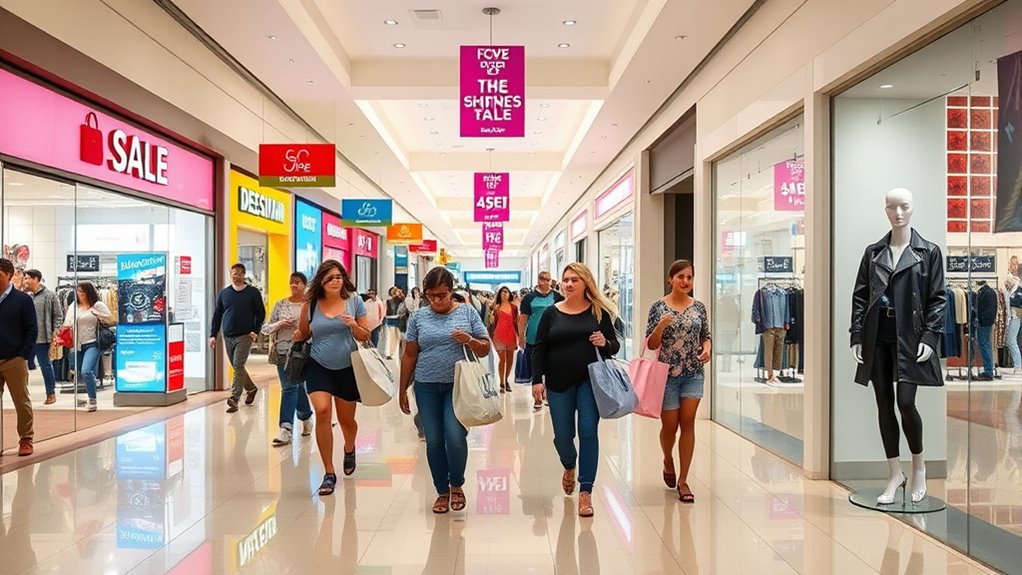
You shop at outlets to find great deals and stretch your budget, especially as cost-of-living pressures grow. The thrill of hunting for bargains keeps you engaged, turning shopping into an exciting experience rather than a routine task. Ultimately, outlet stores combine savings with the fun of discovery, making them a favorite for savvy consumers like you. Additionally, many outlets offer exclusive home décor discounts that you might not find elsewhere, enhancing their appeal.
Bargain-Hunting Motivation
Many shoppers are driven by the desire to find high-quality products at considerably lower prices, making outlet stores a top destination for bargain hunting. Your motivation often stems from wanting premium brands without the full-price tag, or simply the thrill of scoring a deal. Outlets appeal to your need for value, offering discounts on last-season or overstock items. You may also seek variety and exclusivity, knowing some products are outlet-only. Whether saving money or testing new brands, your pursuit of deals keeps outlet shopping popular. Additionally, understanding the best shopping strategies can help maximize savings and ensure you find the best deals.
Shopping as Experience
Shopping at outlet stores offers more than just a chance to score discounts; it transforms purchasing into a memorable experience. You’re not just buying; you’re exploring, hunting for hidden gems, and enjoying the thrill of finding a deal. Outlets create an environment where the act of shopping feels exciting and rewarding. You might:
- Discover exclusive outlet-only collections
- Experience the satisfaction of snagging a high-end item at a fraction
- Enjoy the relaxed, less crowded atmosphere
- Engage with friendly staff enthusiastic to help
- Feel a sense of accomplishment with each find
This experience motivates you to spend more time and money, turning a simple shopping trip into a fun, immersive adventure. It’s about the thrill of the hunt and the joy of getting premium brands at a bargain. Additionally, the shopping environment itself is designed to enhance customer satisfaction and encourage longer visits.
How Brands Use Outlets to Manage Inventory and Protect Brand Image

Brands strategically use outlet stores to clear excess inventory without devaluing their mainline collections. By directing overstock, past-season items, or outlet-exclusive designs to outlets, they prevent these products from competing directly with full-price stores. This approach helps maintain the prestige and perceived value of their mainline collections, especially for luxury brands. Some brands even create outlet-specific collections to uphold quality standards and protect their image. Outlets also serve as testing grounds for new markets and customer preferences, offering insights without risking the brand’s core reputation. Additionally, innovative European cloud servers can support brands’ digital infrastructure, ensuring secure and sustainable operations across their retail channels. While outlets can attract bargain hunters, brands carefully manage assortment quality and differentiation to avoid brand dilution. Overall, outlets become strategic tools to balance inventory, protect brand equity, and cultivate long-term customer relationships.
Practical Tips for Finding Authentic Discounts

To find genuine discounts at outlets, you need to do a bit of homework and strategic planning. First, verify item provenance by checking labels, SKU codes, and construction to assure you’re not mistaking outlet-specific lines for full-price items. Next, compare outlet prices to historical full-price and promotional prices—use retailer apps or archived data to confirm discounts. Timing matters: visit during end-of-season clearances, holiday sales, or post-holiday restocks for deeper markdowns. Leverage omnichannel tools like store apps, email offers, and click-and-collect to stack savings and access exclusive coupons. Finally, inspect items carefully for quality differences and double-check return policies, since outlet returns can differ from those at flagship stores. Understanding the Pinball Machine Weight can also help when shopping in person, as heavier machines may require more planning for transportation and installation.
Comparing Outlet and Full-Price Offers: What to Watch For

When comparing outlet and full-price offers, it’s essential to look beyond the surface discounts. Not all outlet deals are equal; some may only be last season’s items, overstock, or outlet-specific collections. Check labels, SKU codes, and construction details to verify authenticity and origin. Compare outlet prices with past full-price sales or retailer apps to gauge actual savings—sometimes, the discount isn’t as deep as it appears. Be aware that premium brands might offer smaller percentage markdowns but still deliver significant absolute savings on accessories or older collections. Timing matters too: end-of-season clearances and post-holiday markdowns often yield better deals. Use omnichannel tools like store apps and coupons to stack discounts. Always inspect items for quality and confirm return policies, as outlet products can vary from full-price merchandise. Additionally, understanding curiosity can motivate you to seek out the best deals and new shopping strategies.
The Future of Outlet Shopping in a Digital and Economic Landscape

The landscape of outlet shopping is rapidly evolving as digital innovations and economic shifts reshape consumer expectations and retail strategies. You’ll see more brands integrating online tools, like mobile apps and click-and-collect, to enhance your shopping experience. Economic pressures and rising luxury participation mean outlets will offer more exclusive collections and targeted promotions. Expect increased use of retail media and in-store advertising to personalize deals and boost revenue. Outlets will also grow in importance as brand assets for testing new markets and clearing inventory without damaging mainline sales. Additionally, cut-through tech clutter will become essential for consumers to navigate the expanding digital offerings and make informed shopping decisions.
Maximizing Savings Through Omnichannel and Timing Tactics

Maximizing your savings at outlet stores requires strategic use of omnichannel tools and timing. Use retailer apps, email alerts, and click-and-collect options to access exclusive coupons and early sale notifications. Comparing prices across channels helps confirm genuine discounts, especially when leveraging historical pricing data. Visit during end-of-season clearances, holiday sales, or post-holiday restocks, as deeper markdowns are common then. Take advantage of omnichannel promotions—stack app coupons with in-store discounts to maximize savings. Always verify item provenance and quality, and check return policies before purchasing. By combining these timing tactics with digital tools, you can identify the best deals, avoid overpaying, and make smarter outlet shopping choices that stretch your budget while scoring designer bargains.
Frequently Asked Questions
Are Outlet Store Designer Items Always Genuine and Authentic?
Yes, outlet store designer items are generally genuine and authentic. Most brands sell authentic products at outlets to clear excess inventory and reach more customers. However, it’s wise to verify item provenance by checking labels, SKU codes, and construction details. Compare prices with past full-price sales and inspect quality carefully. Being cautious and doing a bit of research guarantees you’re getting real designer items at outlet stores.
How Do Outlet Discounts Compare to Online Flash Sales?
Did you know off-price retailers grew revenue 1.8 times faster than the broader market from 2023 to 2024? Outlet discounts often compare favorably to online flash sales, especially during end-of-season clearances. While flash sales may offer deep, short-term discounts, outlets provide ongoing savings on past-season or overstock items. Both can be worthwhile, but timing, brand, and item type influence which option delivers better value for your money.
Can Outlet Shopping Help Build a Sustainable Wardrobe?
Outlet shopping can help you build a sustainable wardrobe by offering quality pieces at lower prices, encouraging thoughtful buying. You can choose versatile, durable items and avoid fast fashion temptations. By focusing on timeless styles and investing in well-made products, you extend their lifespan, reduce waste, and make smarter fashion choices. Plus, shopping at outlets often supports brands’ efforts to clear excess inventory responsibly, aligning shopping habits with sustainability goals.
What Are the Best Times of Year for Deeper Outlet Discounts?
The best times of year for deeper outlet discounts are during end-of-season clearances and major holiday sales, when prices drop dramatically—sometimes by over 50%. You’ll find the most savings after Christmas, during summer and winter shifts, and around Black Friday. Shopping during these periods increases your chances of snagging premium items at a fraction of their original price, making your outlet hunt truly worthwhile.
Do Luxury Brands’ Outlet Collections Differ Significantly From Mainline Lines?
Luxury brands’ outlet collections often differ from mainline lines, but not always substantially. You’ll find outlet-specific designs created to protect brand image while clearing excess inventory. Sometimes, the quality and materials may vary, and the assortment is tailored to appeal to value-conscious shoppers. To spot genuine deals, compare outlet prices with historical full-price data and check labels and construction to guarantee you’re getting authentic, quality items at a discount.
Conclusion
Ultimately, outlet shopping can be a smart way to save if you know what to look for. For example, you might find a designer handbag marked down considerably because it’s overstocked, not because it’s flawed. By understanding pricing strategies and timing your visits, you can score genuine deals. Just stay cautious of discounts that seem too good to be true, and always compare prices to guarantee you’re truly getting a bargain.