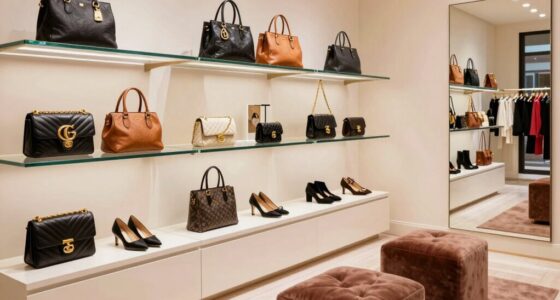
Resale sites are transforming luxury fashion by making high-end pieces more accessible, affordable, and sustainable. They attract buyers seeking unique, quality items at lower prices while promoting circular economy practices that reduce waste. With advanced authentication and regional trends, these platforms boost trust and cater to a global audience. As brands partner with resale sites and new technologies emerge, the luxury game is evolving fast—stay tuned to discover how these shifts continue to reshape your style options.
Key Takeaways
- Resale sites offer authentic, high-quality luxury items at lower prices, making designer fashion more accessible.
- Advanced authentication technologies, like AI and blockchain, ensure product genuineness and build consumer trust.
- Luxury brands are collaborating with resale platforms to maintain brand value and expand their market reach.
- The market promotes sustainability by extending product lifecycles and encouraging circular fashion practices.
- Virtual and augmented reality experiences are transforming online shopping, making resale more immersive and engaging.
The Rise of the Resale Market and Its Key Drivers

What’s fueling the rapid rise of the resale market in luxury fashion? It’s driven by a surge in consumer demand for affordability, sustainability, and exclusivity. Millennials and Gen Z seek high-quality, unique pieces at a fraction of the original cost, making secondhand shopping more appealing. Environmental awareness also plays a key role, as buyers prefer extending the life of luxury items and reducing waste. The growth of easy-to-use platforms with authentication guarantees confidence in purchasing pre-owned goods. Additionally, limited editions and vintage finds attract trendsetters looking to stand out. As luxury brands embrace resale collaborations, the market’s momentum accelerates. Moreover, the adoption of European cloud servers ensures secure and sustainable data management for these platforms, further supporting their growth. Overall, a blend of economic, ecological, and social factors fuels this dynamic shift, making secondhand luxury more mainstream than ever.
Leading Platforms Shaping the Secondhand Luxury Scene

Leading platforms like The RealReal and Vestiaire Collective are transforming the secondhand luxury landscape with their authentication expertise and user-friendly designs. Regional players such as Fashionphile in the U.S. and The Luxury Closet in the Middle East expand access to high-end goods across different markets. Together, these sites shape the growth and accessibility of secondhand luxury worldwide.
Top Resale Market Leaders
Several platforms have emerged as dominant players shaping the secondhand luxury market, driven by their focus on authentication, user experience, and global reach. The RealReal and Vestiaire Collective lead the scene, offering trusted services that guarantee authenticity and seamless shopping. In the U.S., The RealReal’s extensive inventory and concierge services attract serious buyers, while Vestiaire Collective’s global community fosters diverse listings and competitive pricing. Fashionphile is prominent in North America, specializing in luxury handbags and accessories. Meanwhile, The Luxury Closet dominates in the Middle East, and Luxepolis leads in India. Alibaba’s Idle Fish and Vinted also contribute notably, expanding access across Asia and Europe. These platforms continue to shape the resale landscape by prioritizing trust, convenience, and worldwide accessibility. Additionally, platforms emphasizing authenticity verification are crucial in maintaining consumer confidence in the secondhand luxury scene, as consumers increasingly seek trustworthy sources for high-value items. The importance of a secure transaction process further enhances buyer confidence and fosters long-term loyalty.
Regional Influential Platforms
Have you ever wondered which platforms dominate the secondhand luxury market in different regions? You should know that regional leaders shape the local scene considerably.
- In the U.S., The RealReal and Fashionphile set the standard with trusted authentication and seamless experiences.
- The Middle East turns to The Luxury Closet, offering curated high-end pieces tailored to local tastes.
- In India, Luxepolis leads the charge with a focus on luxury brands and regional preferences.
- China’s resale scene is powered by Alibaba’s Idle Fish, leveraging vast reach and integrated e-commerce.
These platforms influence buying behaviors, cater to regional tastes, and adapt to local market dynamics, making them crucial for understanding the global secondhand luxury landscape.
Demographics Fueling the Secondhand Luxury Boom

What drives the surge in secondhand luxury shopping is primarily the changing demographics of consumers. Millennials and Gen Z are leading the charge, seeking affordability, sustainability, and unique, high-quality pieces. You’re more likely to buy secondhand now because it offers access to luxury at a fraction of the original price, reshaping ownership habits. Many younger shoppers, including aspirational buyers, purchase because luxury brands are increasingly out of reach with rising prices. Additionally, 28% of closet items are bought secondhand, showing a clear shift. Affluent consumers also turn to resale to refine their wardrobes, follow trends, or find limited editions. These demographic shifts are transforming the luxury market, making secondhand shopping not just common but a preferred way to access high-end fashion. Vetted – My Dogs’ Names
Sustainability and Circular Economy: A New Paradigm in Fashion

You can see how the shift toward eco-friendly fashion is reshaping the industry by extending product lifecycles through resale and rewearing. This approach not only reduces waste but also aligns with consumers’ growing environmental consciousness. As a result, brands and buyers are embracing a circular economy that prioritizes sustainability and responsible consumption.
Eco-Friendly Fashion Shift
The fashion industry is experiencing a significant shift toward eco-friendly practices, driven by increasing consumer awareness and environmental concerns. You’re now more conscious of how your choices impact the planet, prompting brands to adopt sustainable strategies. This shift emphasizes:
- Embracing circular economy models, where products are reused, recycled, or repurposed.
- Reducing waste through innovative design and material sourcing.
- Prioritizing eco-friendly materials like organic cotton, recycled fibers, and biodegradable textiles.
- Partnering with platforms and brands committed to sustainability, such as those collaborating with resale giants.
- Participating in eco-friendly accommodations and sustainable travel events, which foster awareness and responsible consumption in the industry.
This movement isn’t just a trend—it’s reshaping how luxury fashion operates, making eco-consciousness a core value. Your purchasing decisions now support brands that champion environmental responsibility, aligning style with sustainability.
Extending Product Lifecycles
Extending product lifecycles has become a cornerstone of sustainable fashion, reshaping how brands and consumers approach luxury goods. By buying secondhand or reselling items, you help keep products in use longer, reducing waste and environmental impact. Resale platforms enable you to find high-quality, authentic luxury pieces that still have plenty of life left, often at a fraction of the original price. This practice challenges the traditional throwaway culture, encouraging you to value durability and timeless style. Brands increasingly support this shift through partnerships and initiatives, recognizing that longevity benefits both the environment and brand reputation. As you embrace resale, you contribute to a circular economy, where luxury items are reused and recycled, making fashion more sustainable without sacrificing exclusivity or quality. Incorporating high-quality materials and durable construction in luxury goods further supports this sustainable cycle by ensuring items last longer and retain their value over time. Additionally, vetted platforms prioritize authenticity and quality assurance, giving consumers confidence in their purchases. Moreover, understanding the importance of technology-enabled verification is vital in maintaining trust within resale markets, ensuring that buyers receive genuine products. Implementing advanced filtration and authentication systems plays a crucial role in safeguarding both consumers and brands from counterfeit items, fostering a more secure resale environment.
Regional Trends Transforming Resale Dynamics

Regional trends are markedly reshaping the luxury resale landscape, driven by varying consumer behaviors, economic conditions, and cultural preferences. You’ll notice key differences shaping markets worldwide:
Regional trends are transforming the luxury resale market through diverse consumer behaviors and cultural influences worldwide.
- In the U.S., platforms like The RealReal dominate, appealing to affluent consumers seeking authentication and convenience.
- The Middle East’s market thrives on luxury boutiques like The Luxury Closet, blending local taste with high-end brands.
- India’s growth is led by Luxepolis, emphasizing affordable luxury and regional preferences.
- China’s resale scene benefits from Alibaba’s Idle Fish, driven by a vast, digitally engaged population.
- Understanding product washability and care can influence resale value and customer satisfaction across regions.
These regional dynamics influence inventory, pricing, and platform strategies, making resale a truly global and culturally nuanced sector. Understanding these trends helps you navigate the evolving resale landscape more effectively.
Challenges Facing the Primary Luxury Sector Amid Resale Growth

As resale markets expand rapidly, primary luxury brands face significant challenges to maintain their exclusivity and pricing power. The growing popularity of secondhand luxury goods means more consumers can access high-end items at lower prices, reducing demand for new products. This shift pressures brands to justify premium prices and uphold their prestige. Additionally, the rise of resale platforms erodes the scarcity factor, which has traditionally driven desirability. Brands also worry about brand dilution and counterfeit risks associated with third-party resale. As younger consumers prioritize affordability and sustainability, luxury brands must adapt to stay relevant without sacrificing exclusivity. They’re forced to rethink marketing strategies, authentication processes, and how they position their products amid an increasingly fragmented market landscape. Furthermore, implementing effective product maintenance and authentication techniques becomes crucial to protect brand integrity in this evolving landscape. Developing advanced authentication methods can help ensure the authenticity and value of their products, reinforcing consumer trust and safeguarding brand reputation.
Consumer Motivations: Why Shoppers Turn to Secondhand

Many shoppers turn to secondhand luxury because they want to access high-end fashion at a fraction of the original price. You’re motivated by several factors:
- Affordability — It’s a smart way to own designer pieces without overspending.
- Sustainability — Buying secondhand aligns with eco-conscious values and reduces waste.
- Uniqueness — You seek rare or limited-edition items that aren’t available in stores.
- Trend-Following — Resale offers a chance to stay stylish without paying premium prices for the latest releases.
These motivations drive your interest, making secondhand platforms a practical and appealing alternative to traditional luxury shopping. As resale continues to grow, your reasons for turning to secondhand are only becoming more diverse and compelling.
The Impact of Resale on Brand Value and Prestige

Resale has begun to reshape how brands perceive their value and prestige, as the rise of secondhand luxury challenges traditional notions of exclusivity. You might think resale diminishes a brand’s status, but in reality, it can enhance desirability and reach. Limited editions and vintage pieces become more accessible, attracting younger consumers who value sustainability and affordability. Brands are recognizing this shift, forging partnerships with resale platforms like The RealReal and Vestiaire Collective to control their image and authenticity. While some worry that resale cheapens luxury, it also reinforces brand desirability by creating a broader, more engaged audience. Additionally, the integration of deep product research into resale platforms helps maintain trust and authenticity in the secondary market. This research leverages electrical safety principles to ensure that authentic items are verified, further solidifying consumer confidence. Moreover, the use of advanced authentication technology in resale markets supports accurate verification and reduces counterfeit concerns. The adoption of blockchain verification is also gaining traction, providing an immutable record of an item’s provenance. Implementing rigorous quality control standards across platforms ensures consistency and trustworthiness for buyers. Ultimately, resale fuels a new form of prestige—one rooted in sustainability, history, and inclusivity—rather than just rarity and price tag.
Future Outlook: Trends and Opportunities in Luxury Resale

The luxury resale market is poised for continued growth as evolving consumer preferences and technological advancements open new opportunities. You can expect these key trends shaping the future:
The luxury resale market is set to grow through innovation, new markets, and enhanced consumer trust.
- Increased adoption of AI and blockchain for improved authentication and transparency. Blockchain technology can provide a secure and unchangeable record of authenticity, boosting buyer confidence. Additionally, digital authentication methods will become more sophisticated, reducing counterfeit risks.
- Expansion into emerging markets like India and Asia-Pacific, driven by rising middle classes.
- Greater brand involvement through partnerships and resale platforms, enhancing prestige.
- Integration of virtual and augmented reality to offer immersive shopping experiences.
- Consumer trust will be bolstered by innovations in secure and verifiable digital authentication methods.
These developments will make resale more accessible, trustworthy, and appealing. As younger consumers prioritize sustainability and affordability, you’ll see resale channels becoming central to luxury ownership. The market’s exponential growth, driven by innovation and shifting demographics, indicates a bright outlook for resale’s role in shaping the future of luxury fashion.
Frequently Asked Questions
How Do Resale Platforms Authenticate Luxury Items?
You can guarantee luxury items are authentic by checking how resale platforms authenticate them. These sites typically use expert authentication teams, who examine details like stitching, hardware, logos, and serial numbers. They also compare items against brand standards and use advanced tools like UV light inspection. When you buy from reputable platforms like The RealReal or Vestiaire Collective, you’re getting verified, genuine luxury pieces, giving you confidence in your purchase.
What Impact Does Resale Have on Luxury Brand Exclusivity?
Resale slightly challenges luxury brand exclusivity by broadening access, but it also reinforces desirability. You might think it diminishes rarity, yet it actually increases demand among younger consumers seeking affordable, sustainable options. When you buy secondhand, you still value the brand’s prestige, and brands benefit by extending product lifecycle and maintaining desirability. So, resale can complement exclusivity, making luxury more inclusive while preserving its allure for those who seek uniqueness.
Are Resale Sites More Popular in Specific Regions?
Resale sites are more popular in regions like the U.S., Middle East, India, and China. You’ll find platforms like The RealReal and Fashionphile leading in the U.S., while The Luxury Closet dominates in the Middle East. In India, Luxepolis is key, and Alibaba’s Idle Fish is big in China. These regions show strong growth due to high demand for affordable, sustainable luxury, and unique items, making resale increasingly popular there.
How Does Secondhand Shopping Influence Luxury Pricing Strategies?
Secondhand shopping acts as a mirror, reflecting how luxury brands adjust their pricing strategies. You may notice brands become more strategic, offering limited editions or exclusive collaborations to justify higher prices. They also set premium pricing for new items, knowing resale markets keep prices in check. This dynamic pushes brands to balance exclusivity and affordability, ensuring they stay desirable while preventing their products from flooding the secondhand market.
What Are the Main Challenges for New Resale Entrants?
You face challenges like building trust through authentication, competing with established platforms, and creating a seamless user experience. You need to navigate market saturation, differentiate your brand, and manage inventory quality. Pricing strategies must balance affordability with profitability, all while addressing sustainability expectations. Additionally, understanding regional preferences and regulatory differences is vital as you grow in a competitive, rapidly expanding resale landscape.
Conclusion
As resale sites reshape luxury fashion, remember that the early bird catches the worm—embracing secondhand shopping can unlock unique pieces, sustainability, and savings. By staying adaptable and aware of trends, you’ll thrive in this evolving landscape. Resale isn’t just a passing fad; it’s transforming how we view luxury. So, keep your eyes open and seize opportunities—because in this game, fortune favors the bold.