Controlling humidity in your closet is essential for maintaining the quality and value of your premium fashion pieces. Proper humidity levels prevent fabrics from fading, cracking, or becoming brittle, while also protecting against mold growth and musty odors. Too much moisture risks damage, but too little can cause fabrics to weaken and fade prematurely. Managing humidity helps preserve color, texture, and shape over time. Keep exploring to discover how you can optimize your wardrobe environment effectively.

Get your wardrobe favorites delivered free with Prime
- Fast, free delivery on millions of items
- Prime Video, Amazon Music and more included
- Member-only deals all year
Key Takeaways
- Proper humidity prevents fabric deterioration, fading, and brittleness, preserving the quality of premium garments.
- Controlling moisture inhibits mold growth that can stain and irreparably damage delicate and vintage clothing.
- Maintaining optimal humidity extends the lifespan and preserves the texture, color, and shape of high-end fashion pieces.
- Humidity regulation reduces static, pilling, and fabric cling, keeping garments looking pristine and well-maintained.
- Consistent humidity control safeguards investment in luxury clothing, ensuring collections remain valuable and in pristine condition.
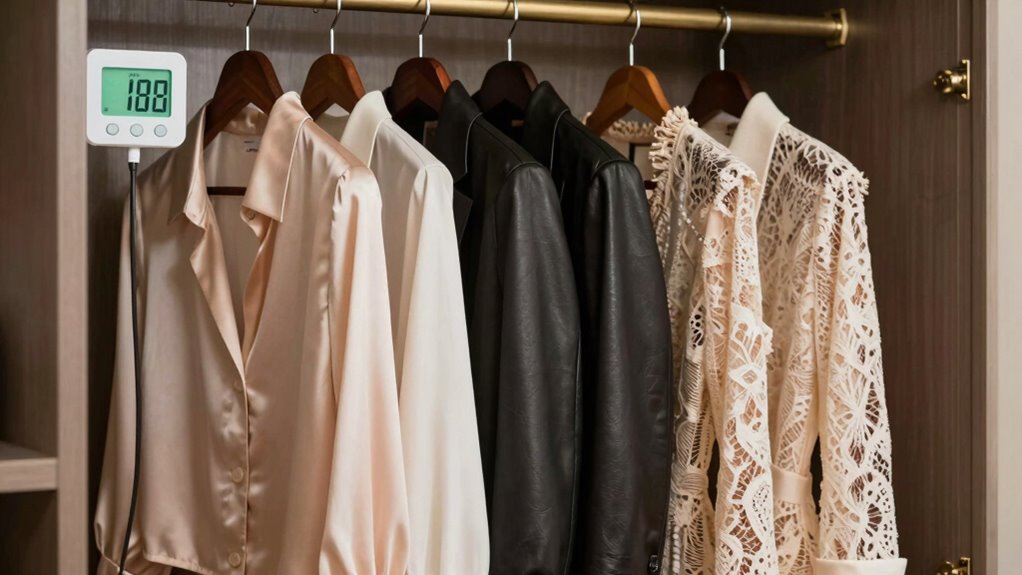
Keeping your closet properly humidified is fundamental to preserving your fashion collection. When humidity levels are too low, your clothing can become brittle, faded, and more vulnerable to damage. Conversely, excessive moisture creates an ideal environment for mold growth, which can ruin your favorite pieces and diminish their value. That’s why maintaining the right humidity isn’t just about comfort; it’s about protecting your investment. Proper humidity control helps prevent mold prevention issues and guarantees fabric preservation over time.
Maintaining proper closet humidity protects garments from damage, mold, and fading, ensuring your collection stays vibrant and valuable over time.
Mold can develop quickly in damp environments, and once it takes hold, it’s difficult to eradicate without professional cleaning or even discarding affected garments. Mold not only stains your clothes but also damages the fabric fibers, making items unusable and unsightly. By keeping your closet humidity in check, you minimize the risk of mold growth, which is especially important if you store delicate or vintage pieces. Using dehumidifiers or humidity control packs can help you maintain a stable environment, discouraging mold spores from settling and thriving. Regular humidity monitoring is essential for early detection of excess moisture, helping you take prompt action.
Fabric preservation relies heavily on controlled humidity levels. Too much moisture causes fabrics to weaken and rot, while overly dry conditions can lead to cracking and fading. Striking the right balance keeps the fibers intact, guaranteeing your clothes remain vibrant and durable for years. Proper humidity also reduces static buildup, which can cause fabrics to cling unnaturally or suffer from pilling. When your closet’s humidity is properly regulated, your garments stay in better condition, preserving their original texture, color, and shape. This is especially essential for high-end, delicate, or heirloom pieces, which require meticulous care to maintain their value and appearance. Maintaining proper humidity levels is key to creating an optimal environment that supports fabric longevity.
You’ll also find that controlling humidity makes it easier to organize and access your wardrobe. When the environment is stable, you won’t have to worry about musty odors or mold spots that can make your clothes smell stale or look unsightly. Regularly monitoring your closet’s humidity levels ensures you catch issues early before they cause irreversible damage. Investing in a good hygrometer allows you to keep track of moisture levels, giving you peace of mind that your collection is safe from the common pitfalls of excess or insufficient humidity. Additionally, understanding humidity levels is crucial for maintaining a healthy storage environment for your garments. Proper humidity control can significantly extend the lifespan of your wardrobe, ensuring your investment remains protected over time.
In the end, maintaining ideal humidity is a simple yet indispensable step in fashion preservation. It safeguards your garments from mold, extends the life of your fabrics, and keeps your wardrobe looking pristine. By paying attention to humidity control, you’re actively protecting your collection, ensuring it remains as stunning and valuable as the day you bought it.
closet humidity control dehumidifier
As an affiliate, we earn on qualifying purchases.
As an affiliate, we earn on qualifying purchases.
Frequently Asked Questions
How Often Should I Check My Closet’s Humidity Levels?
You should verify your closet’s humidity levels at least once a month. Seasonal adjustments are vital because humidity can fluctuate with weather changes. Use reliable humidity monitoring tools to get accurate readings, especially during drastic shifts. Regular checks help you maintain ideal conditions, preventing mold and fabric damage. Staying vigilant ensures your premium fashion stays pristine and protected, giving you peace of mind about your valuable wardrobe.
Can Humidity Control Prevent Mold and Mildew?
Think of humidity control as a shield for your wardrobe. Yes, it can prevent mold and mildew from taking hold, just like a raincoat keeps you dry. Proper humidity levels support mold prevention and fabric preservation, safeguarding your premium clothes from damage. Without it, moisture sneaks in, risking mold growth and fabric deterioration. So, yes, controlling humidity is essential to keep your collection pristine and mold-free.
What Is the Ideal Humidity Range for Luxury Clothing?
The ideal humidity range for luxury clothing is between 50-55%. This range minimizes humidity fluctuations that can damage delicate fabrics, ensuring your garments stay pristine. Proper humidity control optimizes storage conditions, preventing mold, mildew, and fabric deterioration. By maintaining steady humidity levels, you protect your investment and extend the lifespan of your premium fashion collection, keeping your closet organized and your clothing in perfect condition.
Are There Eco-Friendly Humidity Control Options Available?
Yes, eco-friendly humidity control options are available. You can choose sustainable solutions like bamboo charcoal bags, which naturally absorb moisture without chemicals, or use dehumidifiers made from eco-conscious materials that reduce energy consumption. These eco-friendly options help protect your luxury garments while minimizing environmental impact. By opting for sustainable solutions, you guarantee your closet stays climate-controlled responsibly, preserving your fashion investment and supporting eco-conscious practices simultaneously.
How Does Humidity Affect the Longevity of Delicate Fabrics?
Humidity heavily influences the health of your delicate fabrics. Excess moisture accelerates fabric deterioration, causing fibers to weaken and break down faster. It also promotes mold and mildew growth, which can stain and damage your clothes. Additionally, fluctuating humidity levels lead to color fading, diminishing the vibrancy of your prized pieces. Controlling humidity helps preserve fabric integrity, maintains color richness, and extends the life of your wardrobe’s most delicate, treasured textiles.
clothing moisture absorber packs
As an affiliate, we earn on qualifying purchases.
As an affiliate, we earn on qualifying purchases.
Conclusion
Think of your closet as a delicate garden—you wouldn’t leave it exposed to harsh weather, right? Just like plants need the right moisture to thrive, your luxury wardrobe needs controlled humidity to stay pristine. I once saw a vintage designer bag saved from mold simply because the owner used a dehumidifier. Protecting your fashion isn’t just about looks; it’s about preserving your investment. Keep humidity in check, and your wardrobe will thank you for years to come.
luxury wardrobe humidity monitor
As an affiliate, we earn on qualifying purchases.
As an affiliate, we earn on qualifying purchases.
fabric preservation humidity control
As an affiliate, we earn on qualifying purchases.
As an affiliate, we earn on qualifying purchases.
Evergreen bestsellers Picks
bestsellers
As an affiliate, we earn on qualifying purchases.