Choosing the right dress shoes depends on the occasion and your style. Oxford shoes are the most formal, perfect for black-tie events, while Derbys are versatile for business casual looks. Monk straps and loafers work well for semi-formal or smart-casual settings. Dress boots and stylish variations like brogued or wholecut shoes add personality. Knowing when and how to style each type helps you elevate your look—more tips on matching your shoes to any outfit follow.
Key Takeaways
- Understand different dress shoe styles (Oxford, Derby, Monk straps, Loafers, Dress boots) and their appropriate occasions from formal to casual.
- Choose construction and material (leather sole, calfskin, suede) based on durability, comfort, and event formality.
- Recognize design details (toe caps, broguing, wholecuts) to match shoes with dress code and outfit tone.
- Coordinate shoe color with belt and accessories, selecting black for formal settings and brown or tan for casual or business casual looks.
- Maintain shoes properly with cleaning, conditioning, and resoling to extend lifespan and keep them suitable for various occasions.
Understanding Dress Shoe Categories and Their Formalities

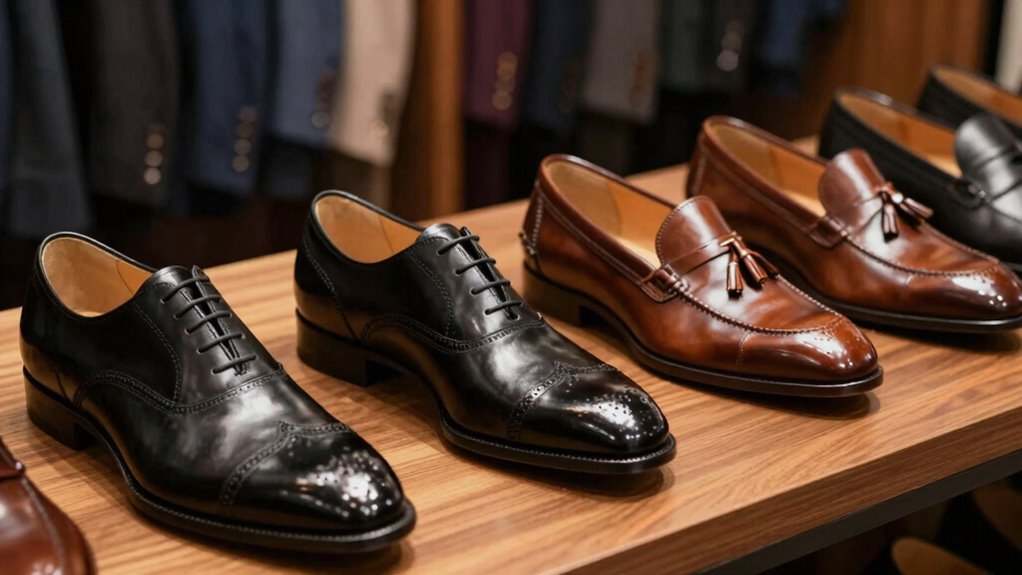
Understanding dress shoe categories is essential for choosing the right footwear for any formal or semi-formal occasion. You’ll find that Oxford shoes, with their closed lacing, are the most formal and perfect for black-tie events or conservative business settings. Derby shoes, featuring open lacing, are more versatile, suitable for business casual to smart-casual looks. Monk straps, with their buckle fastenings, offer a sleek alternative, with single monks leaning understated and double monks making a bold statement. Loafers, without laces, range from casual to semi-formal, depending on style and finish. Dress boots like Chelsea or chukka boots can be dressed up or down, depending on the event. Knowing these categories helps you match your footwear to the occasion and dress code effortlessly.
Exploring Construction Styles and Material Choices

When selecting dress shoes, construction style and material choices play a crucial role in determining their durability, comfort, and overall appearance. A welted construction, like Goodyear-welt or Blake-stitch, allows for resoling, extending the shoe’s lifespan and offering better support. Leather types matter—calfskin provides a sleek, polished look, while full-grain leather offers durability and aging gracefully. Suede lends a casual vibe but is less water-resistant. The sole material influences practicality; leather soles are formal and stylish, while rubber soles improve grip and weather resistance. Full leather linings enhance breathability, and padded insoles boost comfort for long wear. Finishing techniques like burnishing and high shine elevate formality, giving your shoes a refined, polished look suitable for upscale occasions. Construction styles and material choices are fundamental in achieving the desired balance of style and function in dress shoes.
Recognizing Key Design Details and Variations

Recognizing key design details and variations in dress shoes helps you distinguish between different styles and choose the right pair for any occasion. Pay attention to features like toe caps: a cap-toe adds formality with a stitched overlay, while a plain-toe offers a minimalist, modern look. Broguing, or decorative perforations, signals a more casual vibe—wingtip brogues, with their distinctive W-shaped design, are ideal for smart-casual settings. Wholecuts, made from a single piece of leather, exude sleek elegance and are perfect for formal events. Strap styles like monk straps vary in formality—single monks are understated, double monks make bolder statements. Recognizing these details helps you select shoes that align with your outfit’s tone and the occasion’s dress code.
Mastering Color Pairings and Wardrobe Coordination
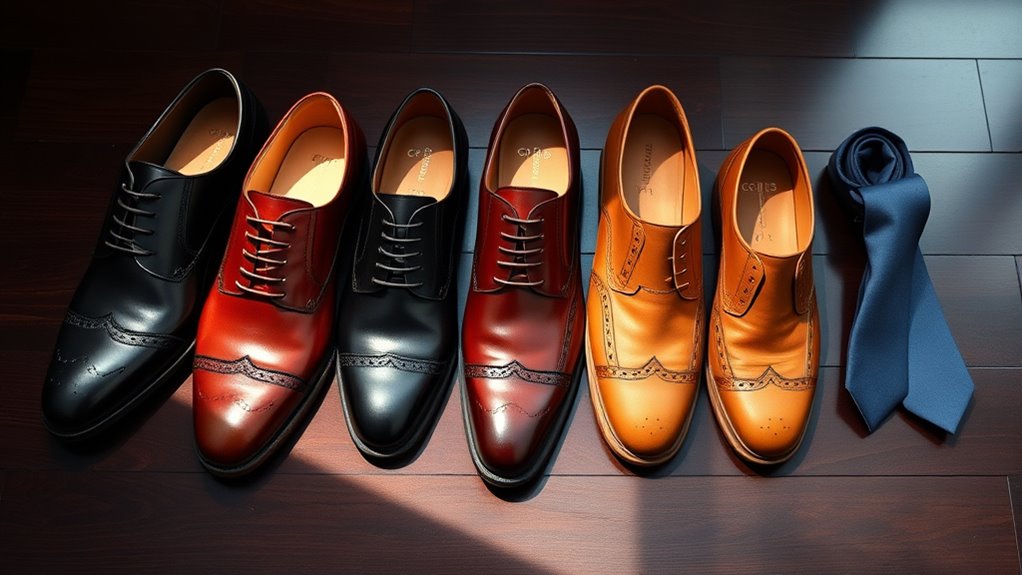
Mastering color pairings and wardrobe coordination is essential for creating polished, cohesive looks with your dress shoes. When choosing footwear, consider the occasion, your outfit’s color palette, and the level of formality. Classic combinations include black shoes with dark suits for formal events and brown shoes for business casual or smart casual settings. For a versatile wardrobe, mix shades of brown and tan, ensuring the shoes complement your trousers and accessories. Pay attention to contrast—light shoes with dark pants for a balanced look, or matching shades for a seamless appearance. Keep these tips in mind:
- Match shoe color with your belt for consistency.
- Opt for darker shoes with conservative suits.
- Use lighter shoes to add contrast to casual outfits.
- Incorporate burgundy or oxblood for stylish variation.
- Balance shoe color with belt, watch strap, or bag hues.
Additionally, understanding the importance of color accuracy in accessories and shoes can elevate your overall style. Proper body jewelry measurements and material choices can also enhance your wardrobe coordination, ensuring your accessories are both functional and fashionable. Being mindful of material durability can help maintain your shoes’ appearance over time and ensure they remain a versatile addition to your wardrobe.
Tips for Buying, Caring, and Extending the Lifespan of Your Shoes

Choosing the right dress shoes starts with understanding how to buy quality options that suit your needs and budget. Look for shoes with durable construction like Goodyear-welt or Blake-stitched soles, which can be resoled and last longer. Prioritize fit—measure your feet carefully and try on shoes later in the day when feet are swollen. Regular maintenance is key: brush after wear, condition leather, and use shoe trees to maintain shape and prevent creases. Rotate your shoes to avoid excessive wear on a single pair. When resoling or repairing, choose reputable cobblers to extend their life. Investing in good-quality leathers and proper care methods guarantees your shoes stay comfortable, stylish, and durable for years to come.
Frequently Asked Questions
How Do I Choose the Right Dress Shoe for My Foot Shape?
You should choose a dress shoe that fits your foot shape comfortably and provides proper support. If you have a wider foot, look for shoes with a wider toe box or consider Derby or loafers, which tend to be more accommodating. For narrower feet, Oxfords with a slim profile work better. Always try on shoes in the afternoon when your feet are slightly swollen, ensuring a comfortable, secure fit that won’t pinch or cause blisters.
Are There Eco-Friendly or Sustainable Materials for Dress Shoes?
Like planting seeds for a greener future, you can choose eco-friendly dress shoes made from sustainable materials. Look for options crafted with vegetable-tanned leather, recycled rubber soles, or innovative plant-based fabrics like Piñatex or mushroom leather. These materials symbolize growth and renewal, letting you walk confidently while reducing your environmental footprint. Your choice supports a more sustainable world, proving that style and responsibility can walk hand in hand.
Can Dress Shoes Be Comfortably Worn All Day Long?
Yes, you can comfortably wear dress shoes all day long if you choose the right pair. Opt for shoes with good arch support, padded insoles, and flexible soles. Break them in gradually, and use shoe trees and quality leather to maintain shape. Prioritize fit and construction, and consider shoes with cushioned insoles and breathable lining. Proper care guarantees comfort, support, and durability throughout your day.
What Are the Signs My Dress Shoes Need Resoling or Repair?
You’ll notice your dress shoes need resoling or repair when the soles show significant wear, like thinning or cracking, or if the tread is nearly gone. If you feel increased flexibility or notice water seeping in, it’s a sign the sole’s compromised. Additionally, creasing or separation at the heel or sole edges indicates repairs are needed. Regularly examining your shoes guarantees they stay comfortable, durable, and looking sharp.
How Do I Transition My Shoes From Casual to Formal Looks?
Think of your shoes as chameleons changing their colors. To shift from casual to formal, start by swapping casual loafers or boots for sleek Oxfords or plain-toe derbies in dark shades like black or deep brown. Keep them polished and in pristine condition. Pair them with tailored suits or dress trousers, and add subtle accessories like a silk tie or cufflinks for a sharp, polished look that commands respect.
Conclusion
Think of your dress shoes as the foundation of your style castle—strong, reliable, and essential. When you choose the right pair, care for them well, and know when to wear each, your wardrobe becomes a fortress of confidence. Mastering these details guarantees your shoes not only elevate your look but stand the test of time. Step confidently into any occasion, knowing your footwear is your steadfast partner in style.