Understanding clothing care labels is key to keeping your garments in great shape. Look for symbols indicating washing methods, bleaching restrictions, drying instructions, ironing guidelines, and dry cleaning instructions. Recognizing these icons helps prevent damage and extends the lifespan of your clothes. Each symbol offers specific instructions, so pay close attention. Keep exploring to uncover detailed tips on decoding these symbols so you can care for your wardrobe properly and confidently.
Key Takeaways
- Understand washing symbols to determine appropriate water temperature, cycle type, and hand or machine washability.
- Recognize bleaching icons to avoid damage, noting whether any bleach, non-chlorine, or no bleach is permitted.
- Follow drying instructions, including tumble drying levels or flat drying, to prevent shrinking or fabric distortion.
- Check ironing symbols for temperature settings and restrictions to avoid scorching or damaging delicate fabrics.
- Interpret dry cleaning symbols and solvents to select proper cleaning methods and protect garment integrity.
Understanding Washing Symbols and Their Meanings
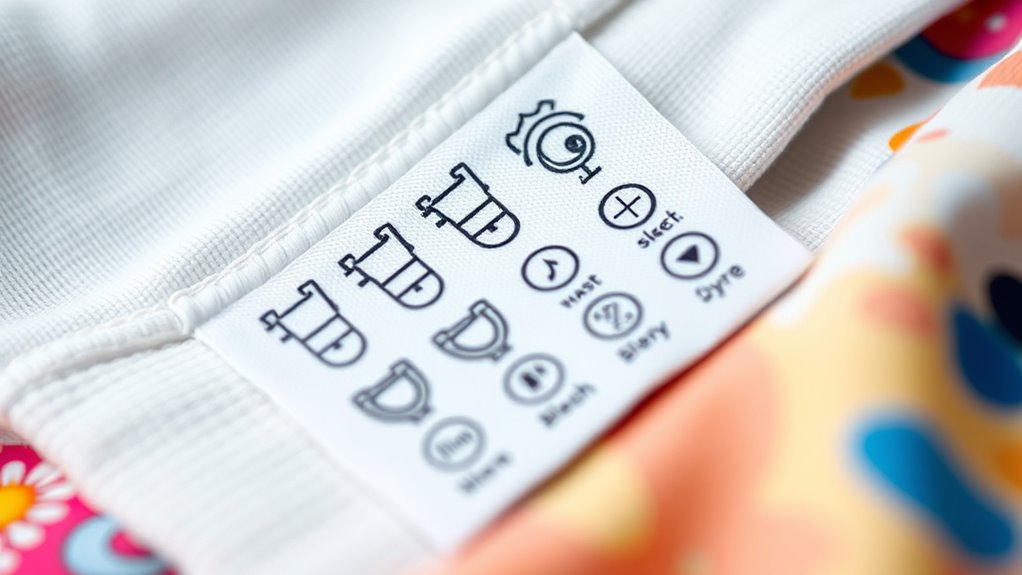
Washing symbols on clothing labels communicate how you should clean your garments to prevent damage. The wash tub icon indicates if a garment can be machine washed and at what temperature. A tub with wavy lines means machine washing is allowed, with the number inside showing the maximum water temperature. If there’s a hand in the tub, you need to hand wash the item gently. A crossed-out tub means no washing at all—these garments require dry cleaning or special care. Bars under the tub suggest spin speed adjustments: none for a normal spin, one bar for reduced, and two bars for mild washing. Understanding these symbols helps you choose the correct washing method, preserving your clothes’ quality and extending their lifespan. Additionally, recognizing the energy efficiency symbols can help you select eco-friendly washing options that save water and power.
Deciphering Bleaching Icons and Restrictions
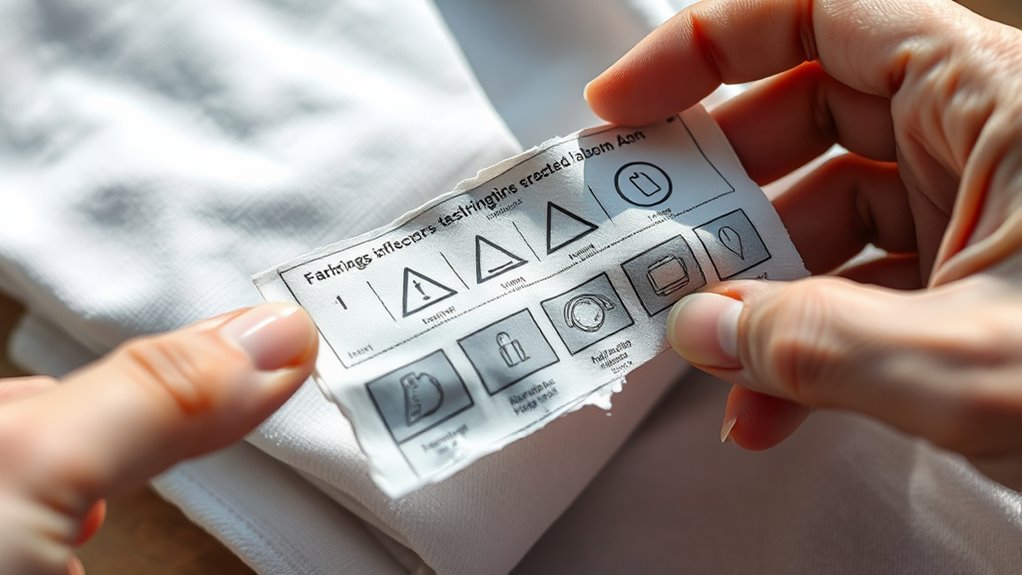
Bleaching symbols on clothing labels provide clear instructions on whether and how you can safely use bleach on your garments. Understanding these icons helps prevent damage and keeps your clothes looking their best. An open triangle means any bleach is safe. A crossed-out triangle indicates no bleaching at all. A triangle with two diagonal lines allows only non-chlorine oxygen bleach. When you see a triangle with “CL” inside, it’s safe to use chlorine bleach. A black triangle with an X is obsolete and should be ignored. Here’s a quick reference:
| Symbol | Meaning |
|---|---|
| Open triangle | Any bleach possible |
| Crossed triangle | No bleach allowed |
| Diagonal lines | Non-chlorine oxygen bleach only |
| CL inside | Chlorine bleach permitted |
| Black X | No bleaching (obsolete) |
Always follow the label to protect your clothes. Proper understanding of fabric care symbols helps maintain their quality and longevity.
Interpreting Drying Instructions for Different Fabrics
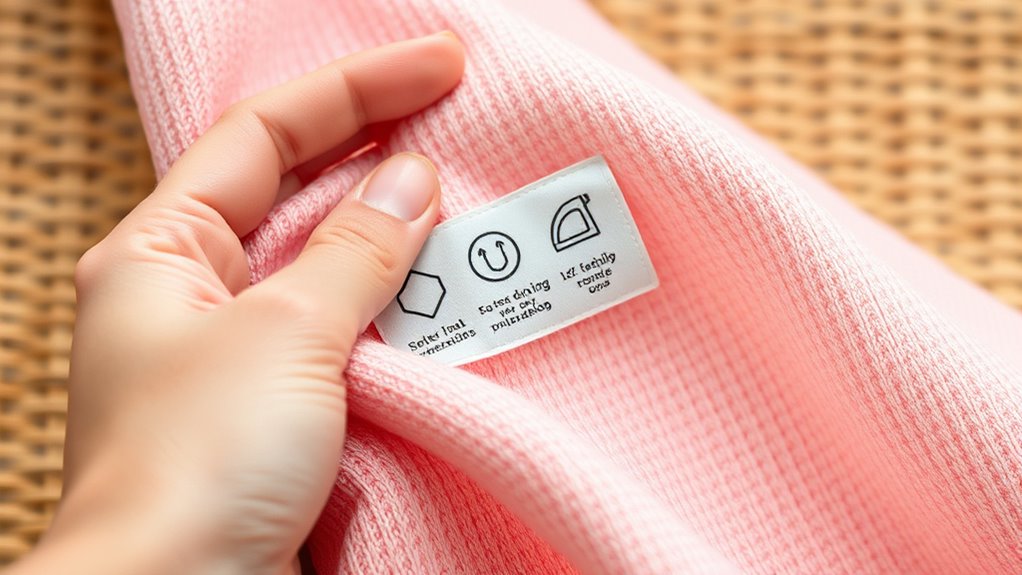
Interpreting drying instructions correctly is essential to maintain your clothes’ shape and fabric integrity. If the label shows a square with a circle inside, tumble drying is allowed. One dot means use low heat, two for medium, and three for high heat. If the drying symbol has a horizontal line beneath it, flat drying is recommended to prevent stretching or distortion. A crossed-out tumble dry symbol indicates you should avoid machine drying altogether. For delicate fabrics like silk or wool, low heat or flat drying preserves their softness and prevents damage. Heavier fabrics like cotton or linen can usually withstand higher heat settings. Always follow these instructions to avoid shrinking, warping, or weakening the fabric, ensuring your clothes stay in top condition longer. Additionally, understanding the cost‑of‑ownership of proper drying methods can help you choose the most efficient and safe techniques for your laundry needs.
Navigating Ironing Symbols to Protect Your Garments
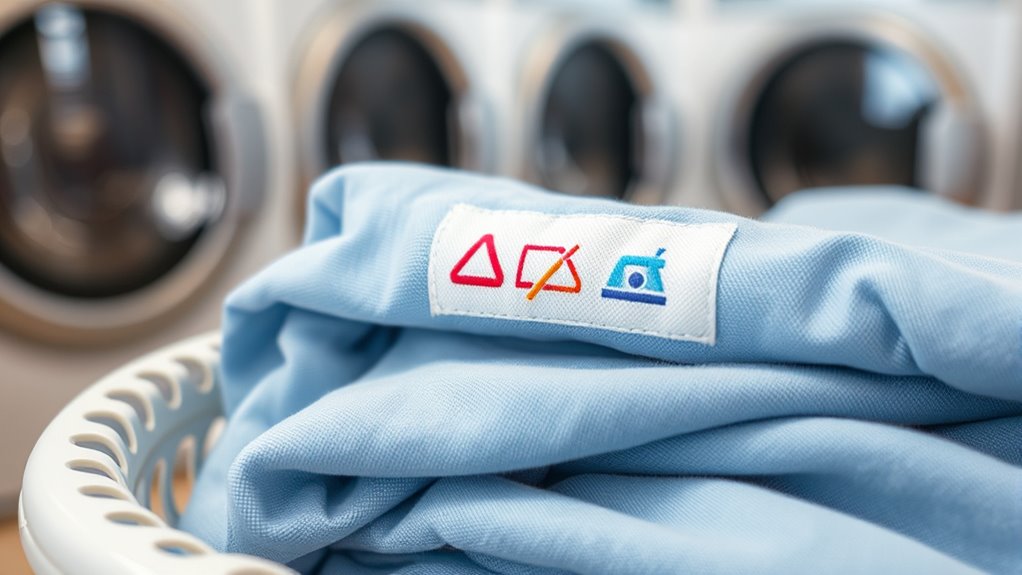
Understanding ironing symbols is essential to prevent damage and keep your garments looking their best. The iron symbol without dots means you can iron at any temperature, but if dots appear, they indicate the recommended heat level. One dot suits delicate fabrics like silk and wool, while two dots are for synthetics, and three dots suit linen or cotton. If there’s a crossed-out iron, it signals you shouldn’t iron the garment at all. Always follow these symbols to avoid scorching or melting fibers. Using too high a heat on delicate fabrics can cause permanent damage, while too low on sturdy fabrics might leave wrinkles. Properly interpreting these symbols ensures your clothing stays in top condition and maintains its appearance over time. Paying attention to credit card security tips can help protect your personal information when shopping online, just as following care labels protects your clothing.
Recognizing Dry Cleaning Labels and Solvent Guidelines

Dry cleaning labels provide essential instructions to guarantee your garments are cleaned safely without causing damage. Look for the circle symbol, which indicates dry cleaning is permitted. A blank circle means any solvent can be used, while letters specify the type: P for all solvents except trichloroethylene, F for petroleum-based solvents, and A for all solvents. If the circle is crossed out, dry cleaning isn’t recommended.
| Symbol | Meaning |
|---|---|
| Open circle | Dry cleaning allowed |
| Crossed circle | No dry cleaning |
| Circle with P | Dry cleaning with any solvent except TCE |
| Circle with F | Dry cleaning with petroleum solvents |
Knowing these symbols helps you communicate clearly with dry cleaners and protect your garments from damage.
Frequently Asked Questions
How Do I Identify the Safest Cleaning Method for Delicate Fabrics?
To identify the safest cleaning method for delicate fabrics, look for the dry cleaning symbols with circles marked ‘P’ or ‘F,’ which indicate suitable solvents. If you prefer washing, choose hand washing or machine washing at low temperatures, as shown by symbols with a hand or a tub with a single dot. Always avoid bleach and high heat, and follow the specific instructions on the label to prevent damage.
What Do the Bars Under Drying Symbols Signify?
Think of the bars under drying symbols as your garment’s speed limits. No bars mean you can tumble dry at any temperature, but one bar signals a reduced spin, and two bars suggest a gentle approach. Always follow these cues to keep your clothes in tip-top shape. Ignoring them is like playing with fire—you risk damaging delicate fabrics or shrinking your favorite pieces.
Can I Bleach Colored or Patterned Garments Safely?
You shouldn’t bleach colored or patterned garments unless the care label specifically allows it. If the triangle has no lines or a single line, you can use non-chlorine or oxygen bleach, but only if the label permits. Avoid using chlorine bleach on delicate colors or patterns, as it can cause fading or damage. Always follow the symbols to protect your clothes and keep their vibrant appearance.
How Do I Know Which Dry Cleaning Solvent Is Best for My Clothing?
You should choose the dry cleaning solvent based on the circle symbol with letters. If it has a “P,” opt for professional cleaning with any solvent except trichloroethylene. If it shows an “F,” stick to petroleum-based solvents. For “A,” all solvents are safe. Visualize the circle with the letter inside, helping you match the right solvent to your garment, ensuring proper care without damage.
What Steps Should I Follow if Care Labels Are Missing or Unreadable?
If care labels are missing or unreadable, start by identifying the fabric type, like cotton, wool, or synthetics. For delicate materials, opt for gentle washing or hand cleaning. When in doubt, test a small hidden area with water or mild detergent first. When uncertain, take the garment to a professional cleaner. Always err on the side of caution to prevent damage and prolong your clothing’s lifespan.
Conclusion
Now that you’ve mastered decoding those tiny symbols, you’re practically a laundry expert. Who knew that reading labels could turn you into a fabric whisperer? Just think—your clothes might actually thank you for caring enough to follow those obscure instructions. So go ahead, embrace the symbols, and enjoy the irony: the more you understand, the less your laundry will suffer. Happy washing—your wardrobe’s secret weapon is finally in your hands!