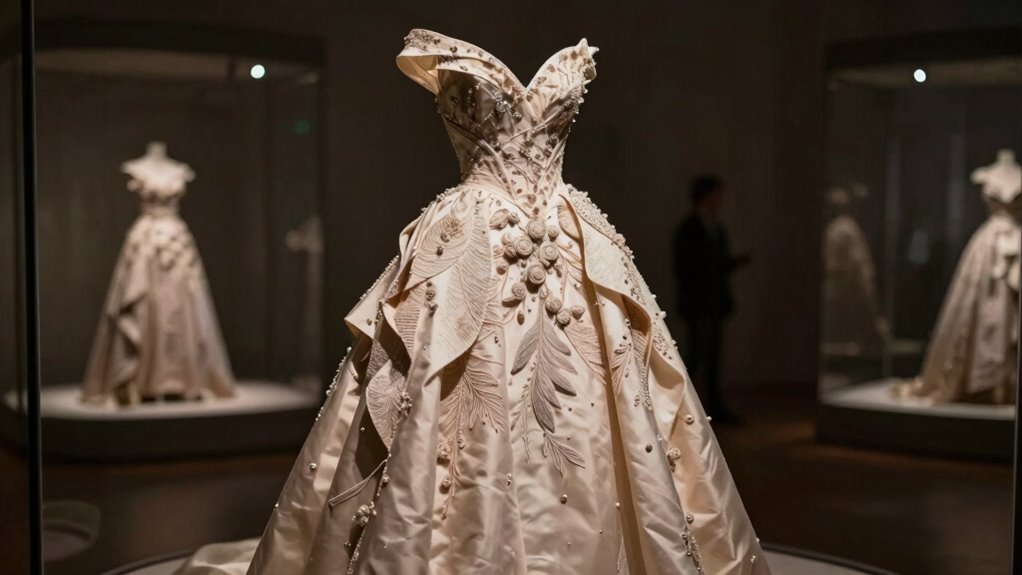
When fashion design transforms into collectible art, it’s no longer just about clothing but a recognized asset rooted in craftsmanship, exclusivity, and artistic innovation. Haute couture pieces, especially those created through collaborations or limited editions, gain cultural significance and often appreciate in value. As trends shift toward authenticity and storytelling, these garments become treasured investments. To discover how fashion crosses into the world of art and what makes a couture piece truly museum-worthy, explore further.
Key Takeaways
- Haute couture is increasingly regarded as wearable art and a valuable collectible, blending craftsmanship with exclusivity.
- Collaborations between designers and artists elevate fashion pieces to museum-worthy status, enhancing their cultural and monetary value.
- Unique, limited-edition couture pieces are considered collectible art, especially when linked to innovative techniques and storytelling.
- Market recognition through auctions and private sales can turn high-end fashion into sought-after art assets.
- The distinction between couture as fashion and as collectible art depends on rarity, craftsmanship, provenance, and cultural significance.
The Evolution of Haute Couture as a Collector’s Asset
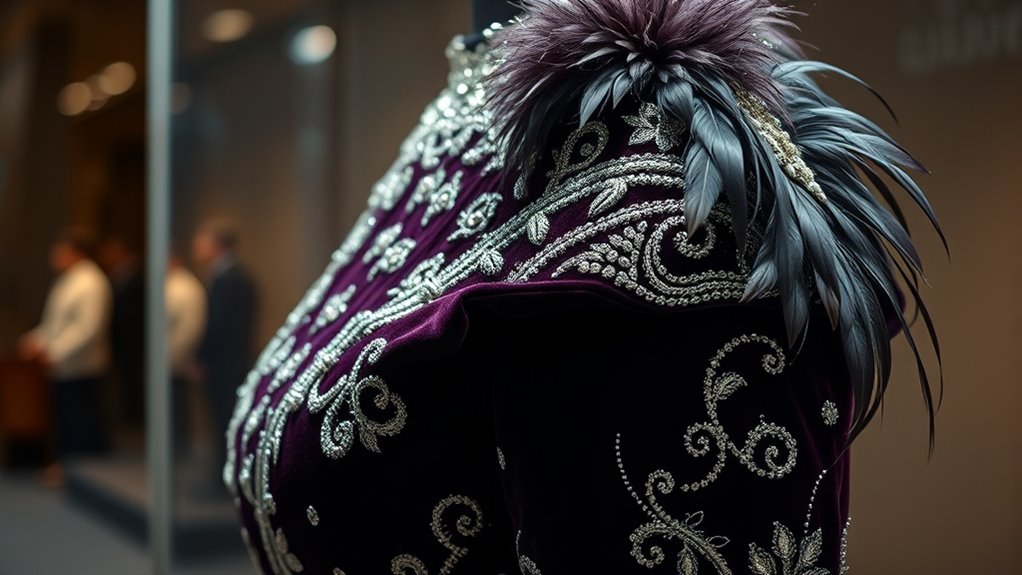
Haute couture has increasingly become a sought-after asset for collectors, driven by its unique blend of craftsmanship, exclusivity, and innovation. Over time, high-end fashion has shifted from fleeting trends to timeless investments, with pieces often regarded as wearable art. The meticulous handwork by skilled artisans—using techniques like hand embroidery and custom tailoring—elevates couture beyond mere clothing. Limited editions and seasonal collections deepen its rarity, fueling demand among elite collectors. As the market evolves, couture’s value is now recognized through auction houses and private sales, with certain designs appreciating considerably. The focus on traceability, sustainable practices, and technological integration also enhances its appeal, positioning haute couture as a meaningful and investment-worthy facet of contemporary collecting. Additionally, the use of innovative materials and color accuracy techniques in fashion design contributes to the uniqueness and desirability of collectible couture pieces.
The Role of Art and Fashion Collaborations in Enhancing Value

Art and fashion collaborations have become a powerful strategy for brands and collectors to boost value and appeal. These partnerships blend creativity and exclusivity, attracting high-end consumers enthusiastic for unique pieces. When a designer teams up with a renowned artist, it elevates the garment’s cultural significance and collectible status. Limited editions and capsule collections generate buzz and create scarcity, driving desirability and higher prices. Such collaborations also strengthen brand storytelling, connecting heritage with contemporary art movements. For collectors, these pieces act as tangible intersections of fashion and art, offering investment potential and cultural cachet. By leveraging the prestige of both worlds, collaborations amplify perceived value, making them highly sought after in a competitive market. This synergy transforms fashion items into cultural artifacts with lasting collectible appeal. Additionally, integrating innovative European cloud servers can enhance the security and sustainability of digital art and fashion assets, ensuring their long-term preservation and provenance verification.
Shifting Preferences: From Status Symbols to Creative Substance

As the art and fashion worlds evolve, collectors and consumers are shifting their focus from owning pieces that signal wealth to valuing creative substance and individual expression. Today, authenticity, innovation, and storytelling matter more than status symbols. You seek designs that reflect identity and craftsmanship, not just prestige. This shift is evident in the rise of upcycled couture, traceable sourcing, and technological integration. Instead of flashy logos, people appreciate meaningful artistry. Here’s a deeper look:
| Status Symbols | Creative Substance |
|---|---|
| Focus on brand prestige | Emphasis on craftsmanship |
| Limited consumer choice | Customization and innovation |
| High resale value | Cultural and personal storytelling |
| Material exclusivity | Sustainable and ethical practices |
| Expression of wealth | Reflection of individual identity |
Market Dynamics: How Collectible Fashion Fits Into the Global Art Scene
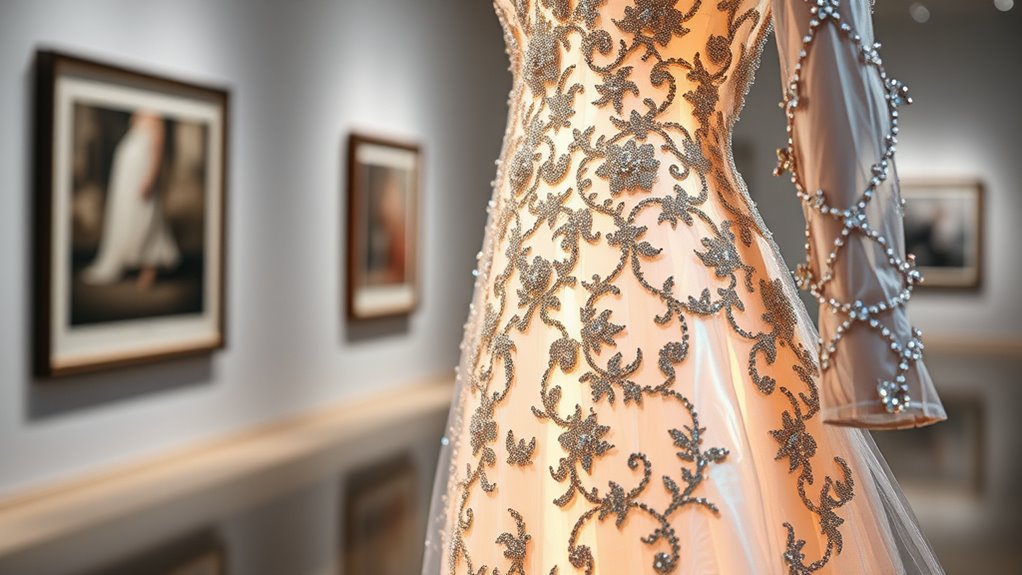
The evolving focus on creative substance over status symbols is reshaping how fashion and art intersect within the global cultural landscape. You’ll notice that collectible fashion is increasingly integrated into the broader art scene through collaborations, exhibitions, and auctions. Luxury brands partner with contemporary artists, turning runway pieces into limited-edition artworks that attract high-end collectors. Market dynamics show a shift toward valuing craftsmanship, innovation, and sustainability, aligning fashion with the principles of fine art. Online sales channels expand access, allowing collectors worldwide to engage with high-concept designs. Despite a contraction in overall art sales, niche markets for couture and designer collectibles grow steadily, driven by a desire for exclusivity and meaningful artistic expression. This convergence elevates fashion to a form of cultural capital within the global art ecosystem.
Challenges and Opportunities for Fashion as a Collectible Investment
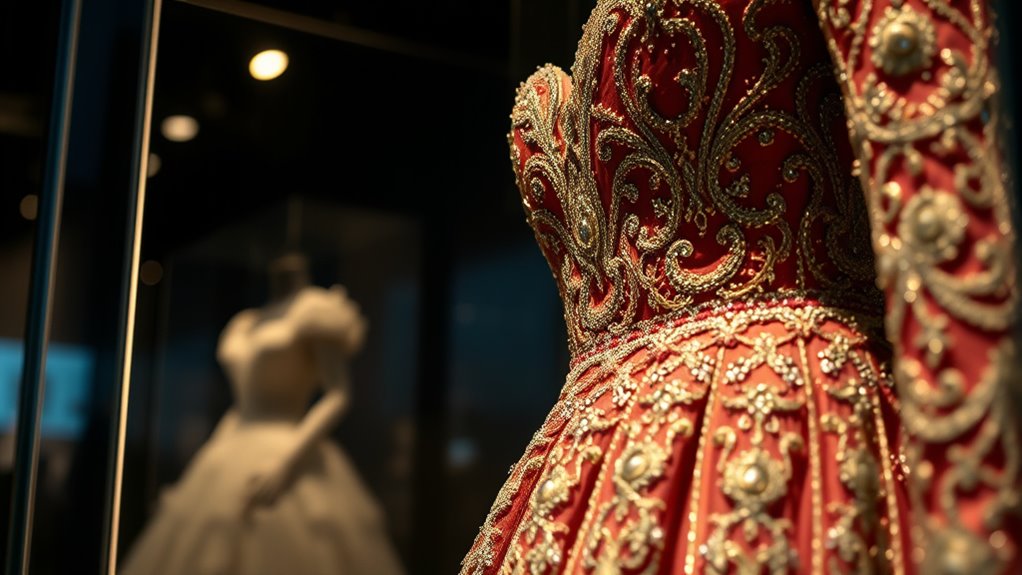
Despite growing interest in fashion as a collectible investment, numerous challenges threaten its stability and long-term value. Market fluctuations, such as declining auction sales and dealer closures, create uncertainty for investors. The volatile income of artists and designers adds risk, with median earnings dropping sharply since 2022. Additionally, the lack of standardized valuation methods makes appraising fashion collectibles difficult, risking overvaluation or undervaluation. Counterfeits and provenance issues further complicate authenticity concerns, discouraging new collectors. However, opportunities exist in sustainability and innovation. Traceability, zero-waste practices, and technological advances like 3D scanning enhance desirability. Collaborations between fashion houses and artists boost market resilience, attracting a broader audience. Embracing these trends can elevate fashion’s status as a valuable, enduring collectible asset. Incorporating appraisal standards and transparent provenance systems can further support market stability and consumer confidence.
Frequently Asked Questions
How Do Provenance and Authenticity Impact the Value of Collectible Fashion Pieces?
Provenance and authenticity greatly impact the value of your collectible fashion pieces. When you verify a piece’s origin and confirm it’s genuine, you boost its desirability and worth. Collectors seek assurance that the item is authentic and has a clear history, which reduces risks and enhances prestige. By focusing on provenance, you ensure your fashion collectibles maintain or even increase their value over time, making them prized assets in the market.
What Are the Key Factors Influencing the Valuation of Fashion as Collectible Art?
You’re about to discover the secret to skyrocketing fashion’s value as collectible art. Provenance and authenticity are just the tip of the iceberg—expert craftsmanship, limited editions, and revolutionary techniques like upcycling and 3D scanning turn everyday pieces into priceless treasures. Market demand, celebrity influence, and the story behind each creation amplify their worth. When these factors align, your fashion collectibles become not just art, but icons that defy time and trends.
How Do Digital Innovations Like 3D Scanning Transform Fashion Collecting?
Digital innovations like 3D scanning revolutionize fashion collecting by enabling precise documentation and customization of designs. You can now virtually try on, alter, and preserve garments with high accuracy, making rare pieces more accessible and valued. These technologies also enhance traceability and sustainability, appealing to collectors who prioritize innovation and authenticity. As a result, 3D scanning increases the desirability and marketability of fashion as a form of collectible art.
What Role Do Cultural and Historical Narratives Play in Fashion’s Collectible Market?
A picture is worth a thousand words, and cultural stories shape fashion’s collectible market profoundly. You see, when designers embed history and identity into their work, they create more than just garments—they craft narratives that resonate. These stories boost a piece’s value, attract passionate collectors, and preserve heritage. Your appreciation deepens as you recognize fashion not only as art but as a living chronicle of culture and history.
How Can Emerging Markets Influence the Future of Fashion as a Collectible Asset?
Emerging markets can profoundly shape the future of fashion as a collectible asset by expanding demand and diversifying the collector base. You’ll see increased investment in local designers and cultural narratives, which adds unique value. These markets also offer fresh perspectives and innovation, driving global trends. By tapping into emerging markets, you help foster a more inclusive, dynamic ecosystem where diverse styles and stories elevate fashion’s status as a valuable, collectible art form.
Conclusion
As you step into the world of collectible fashion, you’re witnessing a tapestry woven with art, innovation, and history. It’s like catching lightning in a bottle—where couture transcends mere clothing to become a cherished masterpiece. Embrace this shifting landscape, where creativity reigns supreme and value evolves beyond status symbols. In this vibrant scene, fashion isn’t just worn; it’s immortalized as a collectible treasure, forever capturing the spirit of an era.