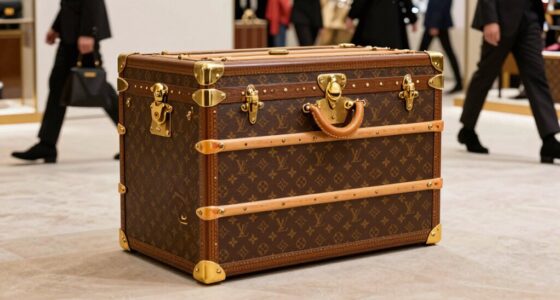
LVMH became a dominant force in luxury fashion through strategic acquisitions of prestigious brands like Fendi, Dior, and Tiffany, expanding its portfolio across categories and regions. They focus on maintaining each maison’s heritage while leveraging scale, innovation, and digital growth. Their vertical integration and global store presence give them control and flexibility. If you explore further, you’ll discover how their smart governance and market strategies continue shaping the industry’s future.
Key Takeaways
- LVMH was formed through a 1987 merger and expanded via strategic acquisitions of prestigious brands like Fendi, Dior, and Tiffany.
- The group maintains brand heritage and creative independence while leveraging cross-category synergies for efficiency.
- Focused on global expansion in high-growth regions such as Asia, U.S., and Europe, with a strong digital and physical presence.
- Implements vertical integration and controls production, distribution, and retail to ensure quality and preserve exclusivity.
- Emphasizes innovation, heritage preservation, and lifestyle branding to strengthen market dominance and attract high-net-worth clients.
The Origins and Early Growth of a Luxury Conglomerate
The origins of LVMH trace back to the 1987 merger of Moët Hennessy and Louis Vuitton, which combined wine and spirits with luxury fashion and leather goods under one umbrella. This union created a diversified luxury conglomerate, leveraging the strengths of both brands. From the start, the company focused on expanding its portfolio through strategic acquisitions, guided by Bernard Arnault’s vision. Early on, LVMH emphasized vertical integration—controlling production, distribution, and retail—to guarantee quality and maximize margins. The company’s global expansion targeted key markets in Europe, the U.S., and Asia, aiming to capture shifting luxury demand. These moves laid the foundation for LVMH’s growth, setting it apart from rivals by building a broad, integrated, and internationally focused luxury empire. Additionally, the company adopted a Free Floating approach to inventory and product distribution, allowing for greater flexibility and responsiveness to market trends.
Strategic Acquisition and Portfolio Diversification
LVMH’s strategic acquisitions focus on selecting prestigious maisons that complement its existing portfolio, strengthening its market position. By preserving each brand’s heritage and creative independence, the group maintains authenticity and consumer loyalty. Cross-category synergies, such as shared retail spaces and procurement, enhance efficiency and support sustainable growth across its diverse brands. Additionally, integrating European cloud solutions enables the group to improve operational agility and data security.
Selective Maison Acquisitions
LVMH strategically targets prestige maisons with strong heritage, creative leadership, and scalable retail presence to diversify its portfolio and strengthen its market position. This focused approach guarantees each acquisition adds value through brand recognition and growth potential. Here are four key strategies they use:
- Prioritize historic prestige and heritage to maintain brand authenticity.
- Select maisons with visionary creative leadership to foster innovation.
- Focus on scalable retail networks for global expansion and reach.
- Preserve maison autonomy to protect unique identity and craftsmanship.
Furthermore, they implement rigorous safety checklists and seasonal prep playbooks to ensure operational resilience and brand integrity across all locations.
This deliberate selection process allows LVMH to expand its luxury portfolio strategically, reduce risks, and capitalize on emerging markets while maintaining the distinct character of each maison. The approach maximizes synergy, brand strength, and long-term growth prospects.
Brand Heritage Preservation
How does a luxury conglomerate guarantee its acquisitions preserve the unique heritage that defines each maison? You focus on maintaining each brand’s creative autonomy and cultural identity. LVMH assigns dedicated creative teams and leadership to ensure the maison’s vision remains intact, even as the group provides financial backing and distribution channels. You also respect historical craftsmanship, incorporating heritage techniques and iconic design elements into new collections. By safeguarding the maison’s story and signature aesthetics, you reinforce its authenticity and emotional appeal. This balance allows you to leverage the prestige and legacy of each brand while integrating them into a diversified portfolio. Additionally, emphasizing preserving craftsmanship helps ensure that traditional techniques continue to thrive within modern collections. Ultimately, you preserve the distinctive DNA that makes each maison valuable and desirable, ensuring its heritage endures amidst strategic growth.
Cross-Category Synergies
Strategic acquisitions across diverse product categories enable the group to leverage cross-category synergies that enhance overall performance. You benefit from shared retail spaces, collaborative marketing, and supply chain efficiencies that cut costs and boost margins. Here are four key advantages:
- Retail Optimization: Using flagship stores and proprietary channels to promote multiple brands simultaneously.
- Supply Chain Integration: Streamlining procurement processes across categories for better cost management.
- Marketing Power: Creating unified campaigns that elevate brand prestige and attract high-net-worth clients.
- Innovation & Creativity: Facilitating cross-pollination of ideas, leading to unique product offerings and customer experiences.
– Additionally, the integration of different categories often involves adopting technology advancements in supply chain and marketing strategies, further enhancing operational efficiency and customer engagement.
These synergies help maximize revenue, strengthen brand positioning, and sustain competitive advantage across luxury segments.
Building Market Power Through Scale and Integration
You can see how strategic mergers and acquisitions have helped LVMH grow its market power by expanding its brand portfolio and global reach. Vertical control over supply chains guarantees quality, margins, and brand integrity, giving the group a competitive edge. By aggressively expanding into key markets like Asia and the U.S., LVMH strengthens its position and captures shifting luxury demand worldwide.
Strategic Mergers and Acquisitions
Mergers and acquisitions serve as essential tools for LVMH to expand its market power, achieve economies of scale, and deepen vertical integration across its luxury portfolio. Through targeted acquisitions, you gain access to prestigious maisons, strengthen your brand presence, and increase market share. Consider these key strategies:
- Acquiring heritage brands with strong creative leadership to enhance your portfolio’s prestige.
- Pursuing scalable retail networks for broader distribution and customer reach.
- Leveraging cross-brand synergies in marketing, supply chain, and real estate to maximize efficiency.
- Maintaining maison autonomy to preserve heritage while integrating operations for growth.
- Conducting seasonal maintenance to ensure your assets and facilities operate at peak efficiency and support your strategic initiatives.
These acquisitions enable you to outpace competitors, diversify revenue streams, and solidify your dominance in the luxury market. Strategic M&A is fundamental to building and sustaining your industry leadership.
Vertical Control of Supply
Vertical control of supply enables LVMH to strengthen its market power by tightly integrating production, distribution, and retail operations. This integration allows you to maintain strict quality standards, safeguard brand exclusivity, and optimize profit margins. By owning key production facilities, you ensure craftsmanship and innovation stay aligned with brand standards. Controlling distribution channels and retail outlets, including flagship stores and online platforms, gives you direct access to consumers and prevents dilution of brand value. Limited outlet exposure and selective retailing reinforce scarcity, supporting premium pricing. This seamless supply chain management enables you to react swiftly to market changes, reduce dependency on external suppliers, and retain a competitive edge. Ultimately, vertical integration consolidates your influence across the entire luxury value chain, bolstering your dominance in the global market. Incorporating lifestyle products into your offerings can further enhance customer engagement and brand loyalty.
Global Market Expansion
Building market power through scale and integration, LVMH has strategically expanded its global footprint to dominate the luxury industry. You’ll notice four key strategies:
- Expanding retail presence with over 6,300 stores worldwide, boosting direct sales and brand visibility.
- Targeting high-growth regions like Greater China, Asia Pacific, and the U.S. through localized stores and marketing.
- Leveraging acquisitions of prestigious maisons such as Fendi, Dior, and Tiffany to diversify and strengthen its portfolio.
- Investing in digital channels and e‑retail partnerships, making online sales a core growth driver.
This blend of physical expansion, regional focus, and digital innovation helps LVMH maintain its dominant market share and adapt to shifting global demand.
Geographic Focus and Global Expansion Strategies
LVMH’s global expansion strategy focuses on capturing high-growth markets through targeted investments in key regions, especially Asia, the United States, and Europe. You prioritize establishing a strong physical and digital presence in these areas, tailoring marketing and store formats to local preferences. In Asia, particularly Greater China, you leverage travel retail and local flagship stores to reach Chinese consumers who shop both domestically and abroad. In the U.S., you expand through flagship stores and strategic partnerships to solidify brand dominance. Europe remains core for heritage and luxury positioning, with investments in historic retail locations. You adapt your distribution channels and marketing efforts to regional demand cycles, ensuring resilience despite geopolitical and economic fluctuations. This focused approach sustains growth, enhances brand visibility, and reinforces your global luxury leadership. Additionally, you continuously analyze regional market trends to refine your strategies and maintain a competitive edge.
Retail Innovation and Digital Transformation

Retail innovation and digital transformation are central to maintaining your leadership in the luxury market. You leverage cutting-edge technology to enhance customer experiences and drive growth. Here are four key strategies you use:
- Investing in flagship stores with immersive, experiential designs that boost brand appeal and encourage higher spending.
- Expanding e-commerce and forming luxury e-retail partnerships to capture online demand and reach global customers.
- Implementing omnichannel solutions that integrate physical and digital touchpoints for seamless shopping journeys.
- Maintaining tight control over distribution and limiting discounting to preserve exclusivity and pricing power.
Additionally, utilizing power tools and heavy‑duty equipment in your retail spaces enables you to create innovative displays and maintain high standards of store presentation. These initiatives help you stay ahead of competitors, strengthen brand loyalty, and adapt to evolving consumer behaviors in a rapidly changing retail landscape.
Governance, Capital Strategy, and Future Outlook
You leverage strong governance and a disciplined capital strategy to sustain your industry dominance and fuel future growth. Centralized management allocates capital efficiently, supporting acquisitions, brand investments, and store refurbishments while maintaining maison autonomy. Your robust free cash flow and solid balance sheet enable opportunistic acquisitions and minority stakes, like the upcoming Armani deal. Long-term value remains a priority, with reinvestments in craftsmanship, sustainability, and flagship real estate protecting brand equity. Your market-leading returns give you a premium valuation and the ability to outbid competitors for strategic targets, reinforcing your industry position. However, risks like China demand cycles, fashion cyclicality, and regulatory scrutiny require ongoing vigilance. Future growth hinges on expanding your digital presence, geographic reach, and strategic acquisitions, ensuring your leadership endures. Emphasizing creative storytelling can further strengthen brand loyalty and differentiation in an increasingly competitive luxury landscape.
Frequently Asked Questions
How Does LVMH Maintain Creative Independence Across Its Maisons?
You maintain creative independence across your maisons by allowing decentralized creative autonomy, so each brand preserves its heritage and unique identity. While the corporate team provides capital, distribution, and strategic support, you let designers and creative teams lead their collections without interference. This approach guarantees that each maison stays authentic and innovative, fostering brand loyalty and creative excellence, which ultimately benefits the entire LVMH group and its diverse portfolio.
What Specific Sustainability Initiatives Is LVMH Implementing?
You’ll find that LVMH actively pursues sustainability by investing in eco-friendly materials, reducing carbon emissions, and promoting responsible sourcing across its maisons. They prioritize circular economy practices, like recycling and upcycling, and set ambitious targets for carbon neutrality by 2030. The group also emphasizes transparency through detailed sustainability reporting, supporting community initiatives, and fostering innovation in sustainable production to balance luxury with environmental responsibility effectively.
How Does LVMH Manage Risk From Geopolitical Tensions?
You can think of LVMH as a seasoned sailor steering stormy seas, carefully adjusting its sails to stay afloat amid geopolitical tensions. They diversify markets across regions like China, the U.S., and Europe, reducing reliance on any single port. By controlling distribution channels, investing in localized retail, and maintaining flexible supply chains, they steer clear of political icebergs, ensuring their voyage remains steady despite turbulent international waters.
What Are Lvmh’s Future Plans for Digital Innovation?
LVMH plans to accelerate its digital innovation by expanding e-commerce platforms, investing in luxury-specific online experiences, and forming strategic partnerships with tech firms. You’ll see a focus on enhancing seamless omnichannel shopping, leveraging data analytics, and improving personalization to boost customer engagement. The group also aims to integrate digital tools into its craftsmanship and marketing efforts, ensuring its brands stay at the forefront of luxury innovation and meet evolving consumer expectations.
How Does LVMH Balance Brand Heritage With Modern Marketing?
You can see LVMH balances brand heritage with modern marketing by respecting each maison’s unique history while embracing innovation. They preserve authenticity through creative autonomy and heritage-driven storytelling, yet leverage digital platforms and experiential marketing to engage new audiences. By blending tradition with cutting-edge techniques, they maintain luxury’s exclusivity while staying relevant, ensuring their brands resonate with both loyal customers and future generations.
Conclusion
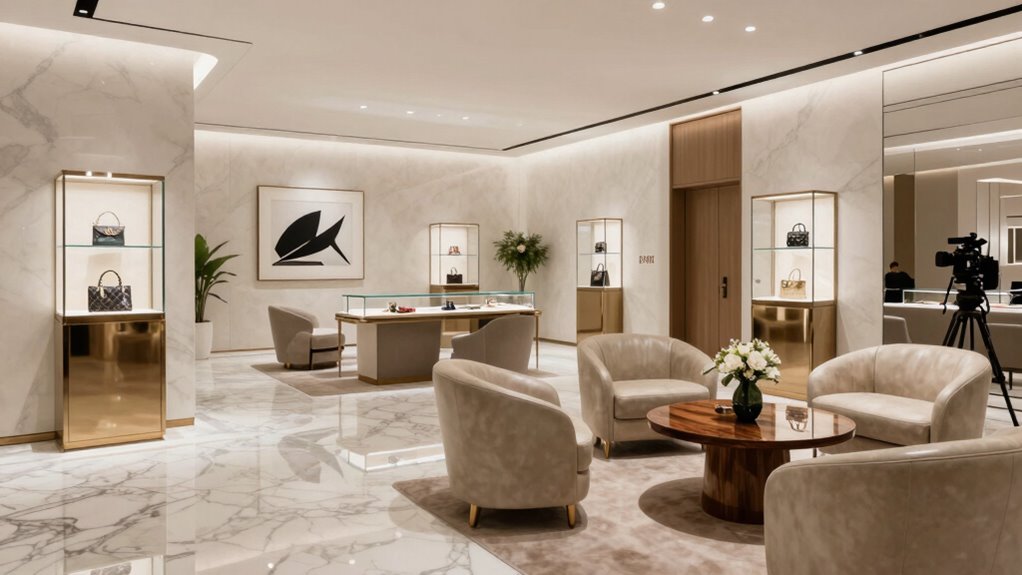
As you walk through a bustling luxury boutique, it’s clear how LVMH’s journey—from humble beginnings to global dominance—mirrors a finely crafted mosaic. Each strategic move, like a carefully placed tile, fits perfectly into a larger picture of innovation, expansion, and mastery. Their seamless blend of tradition and digital evolution paints a vivid scene of power and elegance, reminding you that in this world, success is often a beautiful coincidence of vision, timing, and relentless pursuit.