A higher price often means better fabric quality, tighter stitching, and longer-lasting construction, but it’s not always guaranteed. A $500 shirt may use premium fibers like Supima cotton, have reinforced seams, and resist fading over time, while a $50 shirt might miss out on these details. To truly understand if the higher cost adds value, consider materials, craftsmanship, and durability—if you’re curious, there’s more to explore below.
Key Takeaways
- Higher-priced shirts often use premium long-staple fibers like Supima cotton, offering better softness and durability.
- Construction details such as reinforced seams and precise patterning are typically superior in more expensive shirts.
- Price differences reflect brand value, exclusivity, and design elements, not just material quality alone.
- Cheaper shirts may be less durable, prone to pilling, fading, and shrinking over time compared to premium options.
- Material costs, manufacturing practices, and added features contribute significantly to higher prices, but do not guarantee better quality.
Material & Fabric Differences
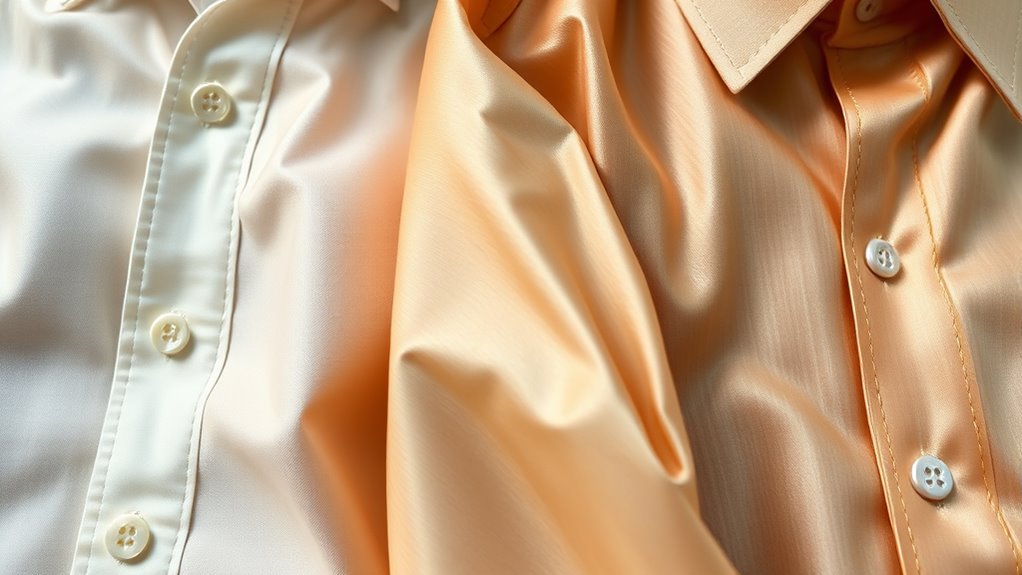
When comparing materials and fabrics, you’ll notice that the type of cotton and fiber quality considerably influence the shirt’s softness, durability, and feel. Premium shirts often use long-staple fibers like Supima or Pima cotton, which create a smoother, more luxurious touch and stronger fibers that resist pilling and tearing. Cheaper shirts typically rely on upland cotton, which is shorter and results in a rougher, less durable fabric. Fabric weight, measured in GSM, also matters: heavier fabrics (200+ GSM) feel denser and drape differently, often signaling higher quality. Finishes and treatments, such as enzyme washes or silicone coatings, further enhance softness and color longevity. Performance blends and specialty fibers add stretch or moisture-wicking properties, justifying higher prices in some cases. Provenance transparency, like organic certification, is more common in premium options. Additionally, the fiber quality directly impacts the overall feel and longevity of the shirt.
Construction & Fit Quality
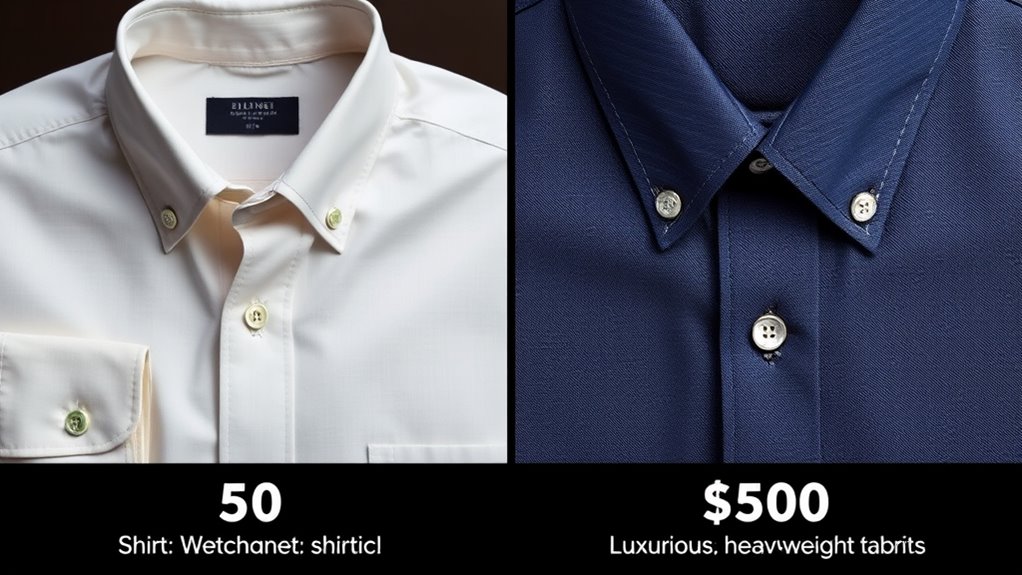
Construction and fit quality distinguish premium shirts from budget options by the craftsmanship behind their design. In higher-priced shirts, you’ll notice tighter stitch counts, double-needle hems, and reinforced seams, all of which boost durability. The collar and neckline construction also matter—premium shirts have collars that lay flat and retain their shape, thanks to better interfacing and patterning. Patterning and grading are more precise in expensive shirts, ensuring consistent fits across sizes. Details like side seams, gussets, and internal taping improve drape and long-term wearability. Additionally, quality control in premium brands reduces defects and size inconsistencies. These elements collectively create a shirt that fits better, lasts longer, and maintains a polished look, justifying a higher price through superior craftsmanship rather than simple fabric quality alone. Moreover, construction quality plays a crucial role in ensuring the shirt’s overall longevity and appearance over time.
Durability & Long-Term Wear
Higher-quality shirts are designed to last markedly longer than their budget counterparts, making them a smarter investment over time. They resist shrinking, fading, and pilling better, which keeps them looking new longer. Premium fabrics like Supima or long-staple cotton provide superior abrasion resistance and maintain their shape. Reinforced seams and high-quality threads reduce failure rates, and pre-shrunk dyes prevent color loss. These factors extend the shirt’s lifespan, decreasing your cost-per-wear. Incorporating energy-efficient manufacturing practices can further enhance sustainability and durability.
Brand and Design Factors

Have you ever considered how much a brand name or design detail influences a shirt’s price? It’s often more than just fabric or craftsmanship. A well-known brand commands a premium because of its reputation, marketing, and perceived status. Limited editions, exclusive patterns, or signature design elements also justify higher prices—they create a sense of uniqueness and exclusivity. Packaging and presentation matter, too, with premium garments often offering better care instructions or special packaging that enhances perceived value. Customer experience, such as personalized fitting or dedicated service, adds to the overall cost. Designer collaborations and seasonal hype can inflate prices further, even if the actual material and construction are similar to more affordable options. Ultimately, brand and design choices notably influence what you pay, often beyond the shirt’s intrinsic quality. Additionally, Free Floating elements like unique textures or innovative materials can further elevate the perceived value and price.
Cost Drivers and Value Proposition
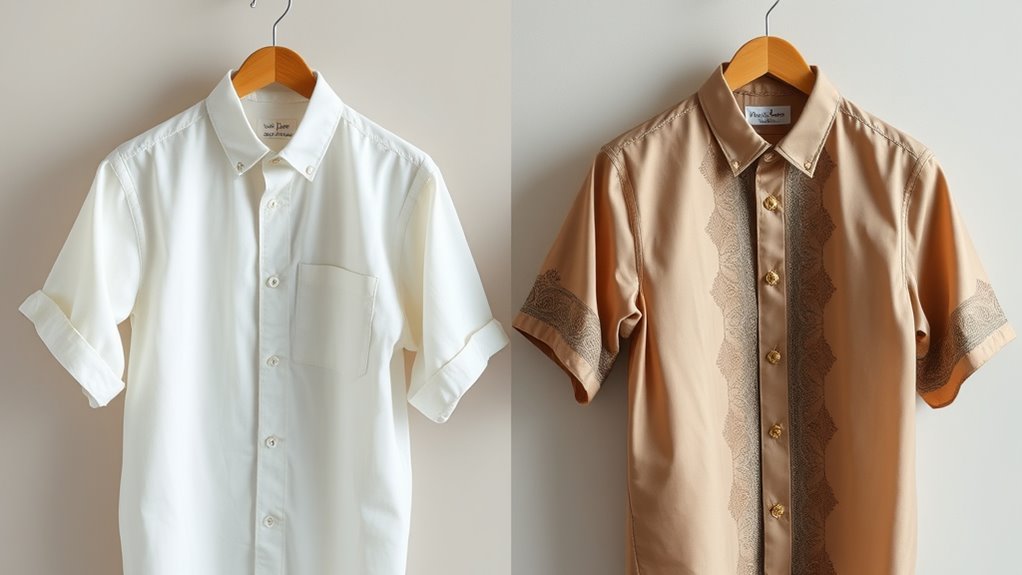
Cost drivers directly shape a shirt’s final price by influencing how much it costs to produce, distribute, and market. You should consider these key factors:
- Material costs: Premium fibers like Supima or organic cotton markedly raise raw material expenses.
- Labor and manufacturing: Ethical and nearshore production increases wages, raising unit costs compared to offshore mass manufacturing.
- Overheads and margins: Brand marketing, retail markups, and distribution expenses add to the final price.
- Production scale: Small-batch or artisanal runs cost more per unit than large-volume manufacturing, justifying higher prices.
Understanding these drivers helps you see why a $500 shirt often involves more than just better quality—it reflects the costs behind its creation and the value proposition it offers.
Frequently Asked Questions
Can a Cheaper Shirt Perform as Well in High-Stress Environments?
A more affordable shirt can sometimes perform well in high-stress environments if it uses technical fibers like moisture-wicking polyester or elastane blends. You should check its construction, like reinforced seams and proper fit, which help durability and movement. However, it may lack the long-term durability or advanced finishes of higher-end shirts. Always look for features that support your activity, regardless of the price, to guarantee it meets your performance needs.
How Do Ethical and Sustainability Practices Impact Shirt Quality and Price?
Did you know that ethically produced shirts often cost 20-30% more? Ethical and sustainable practices can boost a shirt’s price because they involve organic fibers, fair wages, and transparent sourcing, which raise production costs. These factors can improve quality through better fibers and durable construction. So, when you pay more, you’re often supporting higher standards that lead to longer-lasting, more responsibly-made shirts without necessarily sacrificing style or comfort.
Do Designer Collaborations Genuinely Improve Shirt Durability or Design?
Designer collaborations often bring fresh, unique designs and exclusive details that elevate a shirt’s style. However, they don’t necessarily improve durability or construction quality. You might get limited-edition fabrics or special patterns, but the core materials and craftsmanship depend on the manufacturer. If durability is your priority, focus on fabric quality, stitching, and construction rather than just the collaboration’s name, as design alone doesn’t guarantee longer-lasting wear.
Does Premium Packaging and Branding Influence Perceived Shirt Quality?
Premium packaging and branding markedly influence your perception of shirt quality. When you buy a product with elegant packaging, detailed care instructions, and reputable branding, you often feel more confident in its value and durability. This perceived quality can lead you to believe the shirt is better made, even if the actual materials and construction are similar to less expensive options. It enhances your overall shopping experience and perceived worth.
Are Higher-Priced Shirts Easier to Repair or Alter Than Lower-Cost Options?
Higher-priced shirts are generally easier to repair and alter because they use better-quality threads, reinforced seams, and more precise construction. You might worry about the cost of repairs, but premium shirts often feature details like spare buttons and internal taping that simplify fixing issues. Plus, their durable fabrics resist damage, making future alterations smoother and more cost-effective, so you get longer-lasting wear and easier customization.
Conclusion
Ultimately, higher price often reflects better quality, but that’s not always the case. For example, a $50 shirt might use premium fabric and expert craftsmanship, outshining a $500 one from a less reputable brand. When shopping, focus on material, fit, and durability rather than price alone. By doing so, you make certain your investment truly matches the value you expect—because sometimes, paying more doesn’t guarantee better quality, but informed choices do.