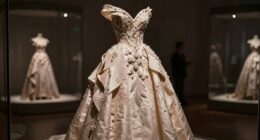
You want to stand out with subtle sophistication, and logo-free high fashion is the latest way to do that. Consumers now favor timeless designs, craftsmanship, and quality over loud branding or logos. Social media amplifies this trend, making understated pieces a symbol of exclusivity and authenticity. Brands focus on storytelling, heritage, and sustainability to appeal to this shift. If you explore further, you’ll discover how this discreet style continues to redefine luxury’s true meaning.
Key Takeaways
- Consumers now favor subtle, logo-free designs that emphasize craftsmanship, quality, and exclusivity over loud branding.
- Social media trends and viral moments promote understated elegance as a symbol of sophistication and individuality.
- Brands focus on heritage storytelling, artisanal techniques, and sustainability to convey authenticity without overt logos.
- The decline in logo-heavy luxury sales reflects a shift toward timeless, versatile pieces valued for their discreet luxury.
- Understated fashion aligns with modern values of authenticity, longevity, and eco-consciousness, making it the new status symbol.
The Rise of Understated Elegance in Luxury Fashion
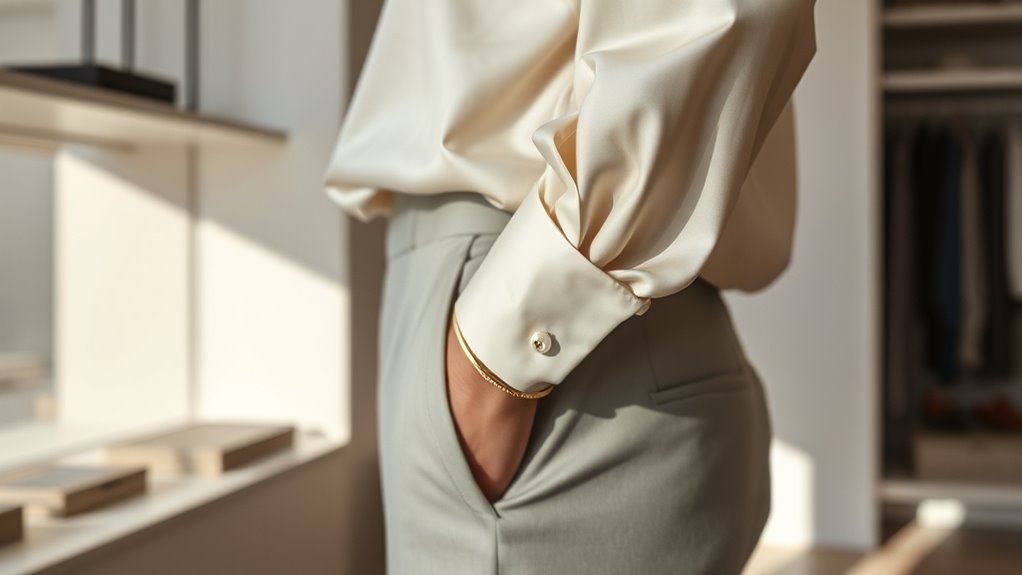
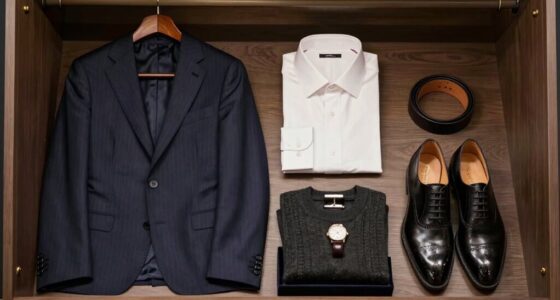
As consumers grow more discerning, understated elegance is reshaping luxury fashion. You’re shifting away from loud branding and flashy logos toward subtle sophistication. Today’s high-end shoppers value craftsmanship, quality materials, and timeless design over overt identifiers. This evolving preference underscores the importance of discreet branding as a key element of quiet luxury. This trend reflects a desire for exclusivity rooted in discretion, not conspicuous displays. Instead of bold logos, brands focus on refined details—discreet stitching, luxurious fabrics, and minimalist silhouettes—that signal status quietly. Younger affluent consumers especially see understated pieces as more genuine and versatile, aligning with their values of authenticity and sustainability. As a result, the luxury market is evolving, favoring subtlety over spectacle. This movement toward quiet luxury allows you to express your taste without shouting, embracing elegance that’s both refined and enduring.
Shifting Consumer Preferences Toward Logo-Free Designs

You’re noticing how consumers now prefer subtle, logo-free designs over loud branding. This shift reflects a desire for understated elegance and a move away from overexposure. Social media trends and cultural cues are fueling this change, making discreet luxury more desirable than ever. Additionally, home décor inspiration often emphasizes minimalist aesthetics that align with this trend toward refined simplicity.
Rising Understated Elegance
A shift toward understated elegance is reshaping consumer preferences in the luxury market, driven by a growing desire for subtlety and authenticity. You now prefer pieces that emphasize craftsmanship, quality materials, and timeless design over loud branding. Consumers see understated elegance as a way to express sophistication without shouting for attention. This trend is evident in the decline of heavily-logoed products and the rise of minimalist, refined styles. Younger buyers, especially Gen Z and Millennials, associate quiet luxury with status and longevity. Social media trends, such as TikTok and influencer endorsements, reinforce this shift by highlighting subtle, well-made items as aspirational. As a result, brands are focusing on discreet details, heritage storytelling, and limited editions to meet this demand for refined, logo-free elegance. Additionally, understanding Gold IRA Rollovers can be a valuable part of a long-term financial strategy that complements a lifestyle centered on understated luxury.
Decline of Logo Obsession
The focus on understated elegance has naturally shifted consumer attention away from heavily branded, logo-drenched designs. You’re now seeking subtlety over conspicuous labels, valuing craftsmanship and material quality more than visible branding. Overexposure and the widespread presence of logos have dulled their status as symbols of exclusivity, leading many to tire of constant logo displays. Retail data supports this shift: sales of heavily-logoed products dropped 40% in North America during 2023. Social media trends, like TikTok and cultural moments such as “Succession,” boost minimalist, logo-free aesthetics. Younger luxury buyers associate understated designs with sophistication, and resale platforms reinforce the desirability of timeless, discreet pieces. As a result, brands now focus on subtle signatures, craftsmanship, and limited editions to appeal to this evolving consumer preference. Additionally, the rise of Free Floating design elements emphasizes the importance of understated, versatile pieces that blend seamlessly into everyday life.
Influence of Social Media
Social media platforms, especially TikTok and Instagram, have dramatically accelerated the shift toward logo-free luxury designs by amplifying minimalist aesthetics and subtle branding. Viral trends and influencer endorsements highlight understated styles, making quiet luxury aspirational and accessible. TikTok’s short-form videos showcase minimalist looks, fueling consumer desire for discreet, high-quality pieces. Brands leverage these platforms to tell stories of craftsmanship, provenance, and exclusivity rather than relying on overt logos. As a result, consumers increasingly favor subtle signals of status—fabrics, construction, and rarity—over visible branding. Resale platforms also reflect this shift, with demand rising for timeless, logo-free items. European cloud innovation and social media’s power to shape perceptions foster a cultural move toward elegance, sophistication, and restraint, fundamentally transforming luxury fashion’s branding and consumer expectations.
How Social Media and Cultural Trends Drive Quiet Luxury

Social media platforms like TikTok are shaping how you perceive style, making understated, logo-free fashion more desirable. Influencers and viral moments highlight the elegance of simplicity, shifting cultural norms away from visible branding. As these trends spread, quiet luxury becomes a symbol of sophistication embraced by younger, trend-conscious audiences. Additionally, the increasing popularity of learning about craftsmanship emphasizes quality and authenticity over overt branding.
TikTok’s Influence on Style
TikTok’s rapid rise as a cultural influencer has considerably shaped style trends, especially in the luxury segment. You see, TikTok’s short videos and viral challenges promote a minimalist, understated aesthetic that aligns perfectly with quiet luxury. Users showcase subtle, logo-free outfits, emphasizing craftsmanship, quality fabrics, and timeless pieces. Popular trends—like “effortless elegance” and “understated sophistication”—spread quickly, influencing consumer preferences. This platform also amplifies the appeal of brands focusing on discreet signatures and refined details, making quiet luxury more desirable among younger audiences. As a result, TikTok drives demand for logo-free pieces, shifting the luxury market toward subtlety and authenticity. Its viral nature accelerates the adoption of minimalist styles, reshaping how luxury brands communicate and position themselves for future growth.
Influencers Promote Understatement
How do influencers shape the shift toward understated luxury? They set the tone by showcasing subtle, logo-free styles that emphasize quality over branding. Social media platforms like TikTok and Instagram amplify these trends, making minimalist looks aspirational. Influencers highlight craftsmanship, discreet details, and refined materials, steering followers away from flashy logos. Additionally, they often discuss the importance of professional image, encouraging followers to adopt understated yet elegant styles.
Viral Cultural Moments
Viral cultural moments on social media are fueling the rise of quiet luxury by making minimalist, logo-free styles desirable and aspirational. When platforms like TikTok and Instagram showcase understated outfits associated with luxury brands, you see a shift in what signals exclusivity. Trends linked to popular shows like “Succession” or celebrities embracing subtle elegance amplify demand for discreet, high-quality pieces. These moments normalize understated aesthetics, encouraging you to choose timeless, refined items over loud logos. As a result, brands benefiting from these viral trends report rapid growth in logo-free collections. Social media’s power to shape perceptions means you’re more likely to associate quiet, logo-free fashion with sophistication and status—making it the new standard for luxury consumers seeking subtlety and exclusivity.
Market Data Reveals Decline in Logo-Heavy Product Sales

Recent market data clearly shows a significant decline in sales of logo-heavy luxury products, reflecting a broader shift toward understated, logo-free designs. North American retailers sold 40% fewer heavily-logoed items in 2023 compared to 2022, highlighting this trend. As consumer preferences evolve, you’ll notice:
- A move toward minimalist styles, with brands like Zegna and Loro Piana reporting rapid growth in logo-free categories.
- Social media trends, especially on TikTok, amplifying the appeal of subtle, refined aesthetics.
- Resale platforms gaining popularity, with buyers favoring timeless pieces over conspicuous logos, extending product lifecycles.
- Increased awareness of halal dietary practices influences consumer choices, encouraging brands to adopt more discreet branding to appeal to diverse markets.
This shift is driven by younger buyers seeking subtle signals of luxury, along with an increased focus on craft and heritage rather than overt branding.
Strategies Luxury Brands Use to Emphasize Heritage and Craftsmanship

Luxury brands focus on showcasing timeless craftsmanship and rich heritage to appeal to understated consumers. They tell compelling stories about their origins, artisans, and traditional techniques through subtle marketing and product details. By emphasizing these elements, they create a sense of authenticity and exclusivity that resonates with quiet-luxury buyers. Incorporating a mood board into their storytelling helps convey the essence of their design philosophy and heritage.
Emphasizing Timeless Craftsmanship
To stand out in a market increasingly driven by understated elegance, luxury brands are emphasizing timeless craftsmanship and heritage as key differentiators. They do this by highlighting their artisanal techniques, focusing on high-quality materials, and sharing stories of their longstanding traditions. This approach appeals to your desire for authenticity and durability, making the pieces feel more valuable and exclusive. You’ll notice brands:
- Showcasing the skill of their artisans through detailed storytelling and behind-the-scenes content
- Using only premium, carefully sourced materials that age beautifully over time
- Designing timeless silhouettes that resist fleeting trends and maintain relevance
- Emphasizing quality woods for durability and aesthetic appeal in their craftsmanship
Highlighting Heritage Stories
Brands aiming to stand out in a quiet-luxury landscape turn to heritage stories that resonate deeply with consumers seeking authenticity. You’ll notice they highlight their origins, founding principles, and long-standing traditions through compelling narratives. These stories emphasize craftsmanship passed down through generations, showcasing timeless techniques and rare materials. Instead of overt logos, brands craft subtle cues—discreet signatures rooted in history—that reinforce exclusivity. They often incorporate archival imagery, storytelling campaigns, and heritage-focused events to deepen emotional connections. By emphasizing their legacy, brands position themselves as custodians of tradition, appealing to consumers who value authenticity and craftsmanship over conspicuous branding. This strategy not only enhances perceived value but also fosters loyalty among buyers who seek meaningful, story-driven luxury experiences.
The Role of Resale Platforms in Promoting Timeless Style

Resale platforms play a pivotal role in promoting timeless style by making high-quality, classic pieces more accessible and sustainable. They allow you to buy and sell pre-owned luxury items that embody understated elegance, extending their lifecycle and reducing waste. This shift encourages a focus on durability, craftsmanship, and subtlety over fleeting trends.
You benefit by:
- Accessing rare, well-maintained pieces that highlight quality over branding
- Participating in a circular economy that supports eco-conscious choices
- Discovering hidden gems that resist fast-fashion cycles and logo obsession
Resale platforms also help reshape luxury consumption, shifting emphasis from new, logo-heavy items to enduring, understated pieces. They foster a community committed to authenticity, sustainability, and timeless style, making quiet luxury more attainable and meaningful.
Demographic Factors Fueling the Logo-Free Movement

Demographic shifts are particularly accelerating the shift toward logo-free luxury. Younger consumers, especially Gen Z and early Millennials, see understated designs as a mark of sophistication and individuality. They value subtlety over overt branding, viewing it as a smarter, more authentic way to signal status. Influencers and social media play a big role, normalizing logo-free aesthetics as aspirational and fashionable. Economic factors like post-pandemic recalibration and inflation also influence their preferences, pushing them toward timeless, durable pieces that emphasize quality over conspicuous logos. Additionally, this demographic tends to prioritize experiences and eco-conscious choices, favoring brands that highlight craftsmanship and provenance. While Western markets embrace quiet luxury, some emerging markets still associate visible logos with status, reflecting regional cultural differences.
Regional Variations in Luxury Branding and Consumer Behavior

Regional differences profoundly shape how luxury consumers view and adopt branding strategies. In Western markets, especially North America and Europe, there’s a clear shift toward quiet luxury, with consumers favoring understated, logo-free designs that emphasize craftsmanship and exclusivity. Conversely, in some emerging markets, visible logos still signal status and wealth, making conspicuous branding more relevant. You’ll notice that:
- Western consumers increasingly prefer subtlety, valuing material quality over logos.
- Resale platforms thrive more in the West, reinforcing the demand for timeless, logo-free pieces.
- In regions like Asia, especially China, logo prominence remains an important status marker, though shifts toward understated styles are emerging.
Understanding these regional nuances helps brands tailor strategies that resonate locally, balancing global quiet-luxury trends with cultural preferences.
Reimagining Marketing: From Logos to Storytelling and Provenance

As consumers grow more interested in understated luxury, brands are shifting their marketing focus away from prominent logos toward compelling stories and authentic provenance. You’re now more drawn to brands that share their heritage, craftsmanship, and ethical practices rather than just visible branding. Marketers are emphasizing the narrative behind each piece—highlighting artisanal techniques, sustainable sourcing, and rare materials—to create a deeper emotional connection. This approach elevates the product’s value beyond its design, making it more desirable for those seeking subtlety and authenticity. Instead of loud advertising, brands invest in storytelling through content, social media, and private experiences. Provenance becomes a key differentiator, reassuring you of quality and exclusivity without relying on overt branding or logos.
Future Outlook: The Enduring Appeal of Discreet Luxury
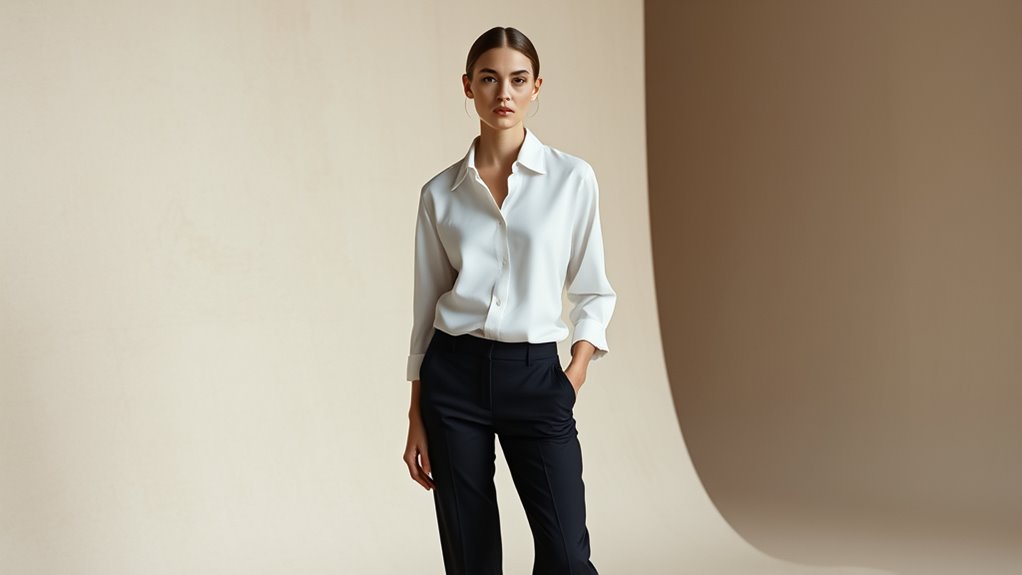
Discreet luxury is poised to maintain its appeal, driven by evolving consumer values that prioritize authenticity, craftsmanship, and subtlety over overt branding. As younger buyers seek timeless pieces that signal sophistication without shouting for attention, the trend toward logo-free designs will persist. This shift is supported by data showing declines in logo-heavy sales and rising resale of understated items. You’ll see brands focusing on heritage, quality, and limited editions to foster exclusivity.
- Increased demand for craftsmanship and provenance storytelling
- Growing importance of sustainability and eco-friendly materials
- Shift toward timeless staples like tailored outerwear and leather goods
Expect consumers to value rarity and material quality over visibility, making discreet luxury a lasting symbol of status in the evolving fashion landscape.
Frequently Asked Questions
How Do Luxury Brands Measure Success With Quiet-Luxury Strategies?
You measure success with quiet-luxury strategies through customer engagement, retention, and long-term value rather than just awareness. Tracking resale platform activity, inventory turnover, and sales of logo-free pieces reveals shifting preferences. You also monitor client feedback, private-client conversions, and the effectiveness of storytelling around craftsmanship and provenance. Additionally, you evaluate KPIs like exclusivity, rarity, and brand perception, ensuring these subtle cues align with evolving consumer demand for understated sophistication.
What Role Does Sustainability Play in the Shift to Logo-Free Fashion?
Sustainability is the backbone of the shift to logo-free fashion. You’ll find that eco-friendly materials, timeless designs, and ethical production resonate deeply with modern consumers, especially younger ones. They see these choices as a way to kill two birds with one stone—standing out quietly while supporting a better planet. This emphasis on sustainability reinforces the appeal of understated, high-quality pieces, making them a smarter, more meaningful investment in the long run.
How Are Resale Platforms Influencing Brand Perception and Consumer Loyalty?
Resale platforms boost brand perception by emphasizing sustainability and timelessness, which appeals to your desire for quality over logos. They foster loyalty by allowing you to invest in pre-owned, high-end pieces, creating a sense of exclusivity and value. As you see brands maintaining desirability through resale, you’re more likely to trust their craftsmanship and long-term worth, strengthening your loyalty and encouraging repeat purchases of subtle, logo-free items.
Which Demographics Are Most Driving the Popularity of Understated Luxury?
They say, “Still waters run deep,” and it’s true for the demographics fueling understated luxury. You’ll find younger affluent buyers, like Gen Z and Millennials, leading the charge, associating subtlety with sophistication and status. They prefer logo-free, timeless pieces, valuing quality and rarity over overt branding. Social media and cultural influences amplify this trend, making understated elegance a modern symbol of exclusivity among these groups.
How Will Regional Differences Impact the Future of Logo-Free High Fashion?
You’ll see regional differences shaping the future of logo-free high fashion. Western markets, like North America and Europe, embrace understated, discreet luxury, driven by younger, affluent consumers seeking subtle status signals. Meanwhile, emerging markets still value visible branding as a status symbol. This means brands must tailor their strategies regionally, balancing quiet luxury’s growth in the West with maintaining recognizable branding where it still signals prestige.
Conclusion
You’ll notice that nearly 60% of luxury buyers now prefer logo-free designs, showing a shift toward understated elegance. This trend highlights a desire for timeless quality over flashy branding and indicates that true luxury is about craftsmanship and story, not just visible logos. As this movement grows, embracing subtlety can help you stand out in a competitive market where discreet luxury continues to redefine status and sophistication.